



















































































Following statements have been made about removal of supercoiling produced by DNA unwinding at the replication fork: Accumulation of supercoils is the result of DNA helicase activity during unwinding of […]
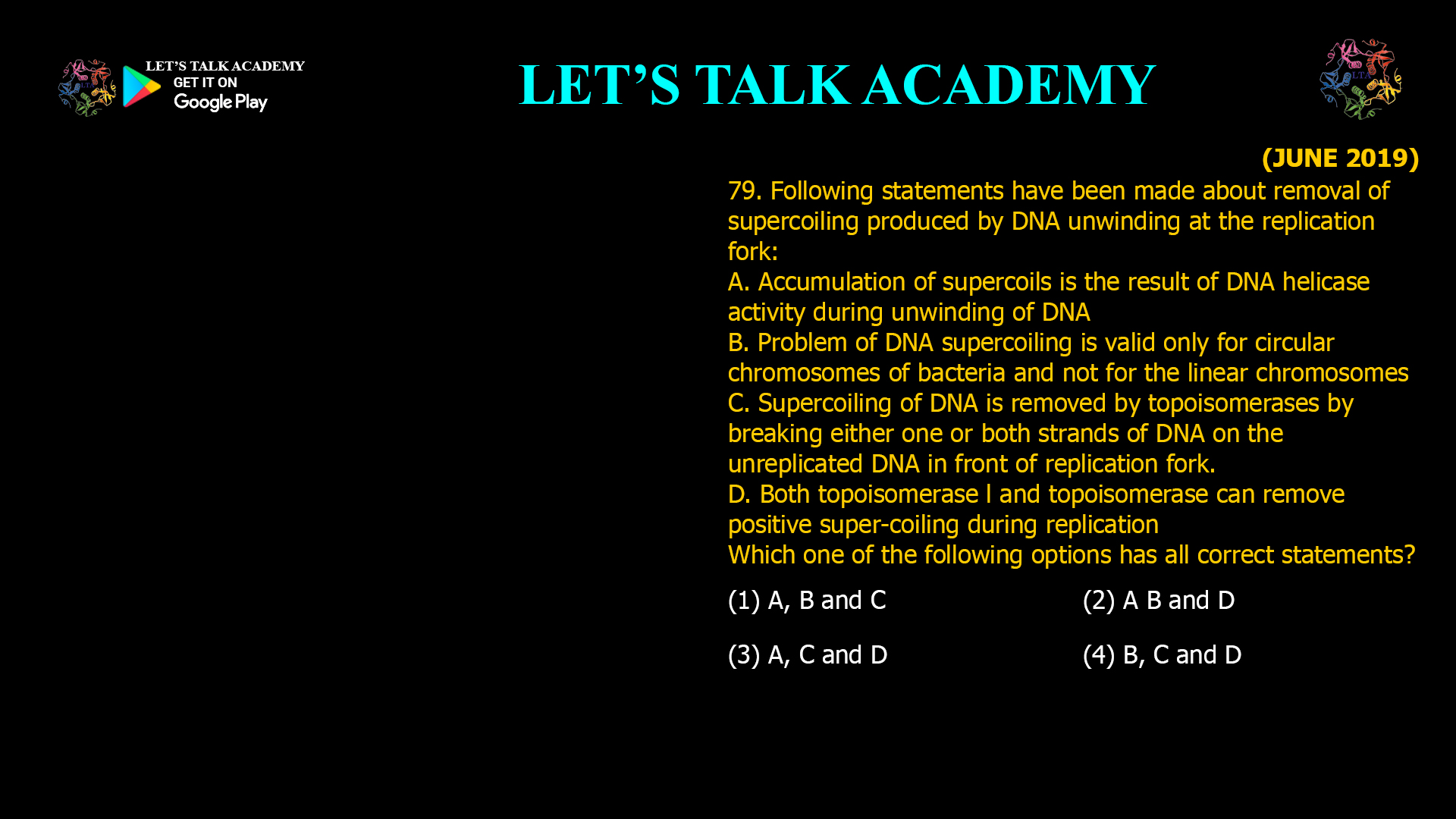

Following statements have been made about removal of supercoiling produced by DNA unwinding at the replication fork: Accumulation of supercoils is the result of DNA helicase activity during unwinding of […]
As topoisomerases play an important role during replication, a large number of anticancer drugs have been developed that inhibit the activity of these enzymes. Which of the following statements is […]
A polypeptide antibiotic isolated from the genus Streptomyces which intercalates into DNA, preventing the progression of RNA polymerase(s) and initiation of DNA replication both prokaryotes and eukaryotes is (1) Rifampicin […]
Ciprofloxacin is a synthetic chemotherapeutic antibiotic of the fluoroquinolone drug class. The target of antibiotic ciprofloxacin is (1) Replication (2) Protein synthesis (3) Cell wall synthesis (4) Membrane structure […]
When circular plasmids having a centromere sequence are transformed into yeast cells, they replicate and segregate in each cell division. However, if a linear chromosome is generated by cutting the […]
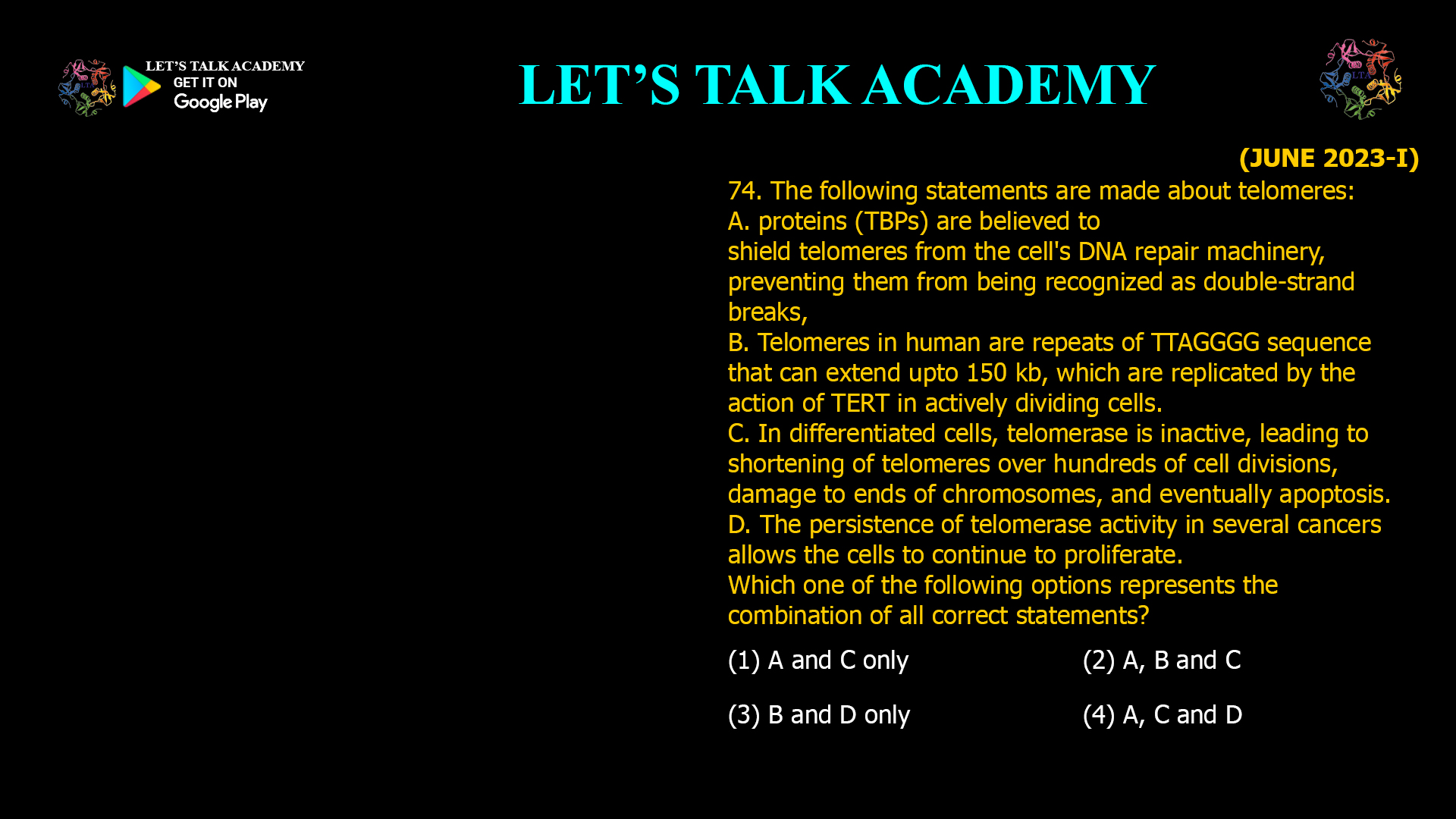
The following statements are made about telomeres: A. proteins (TBPs) are believed to shield telomeres from the cell’s DNA repair machinery, preventing them from being recognized as double-strand breaks, B. […]
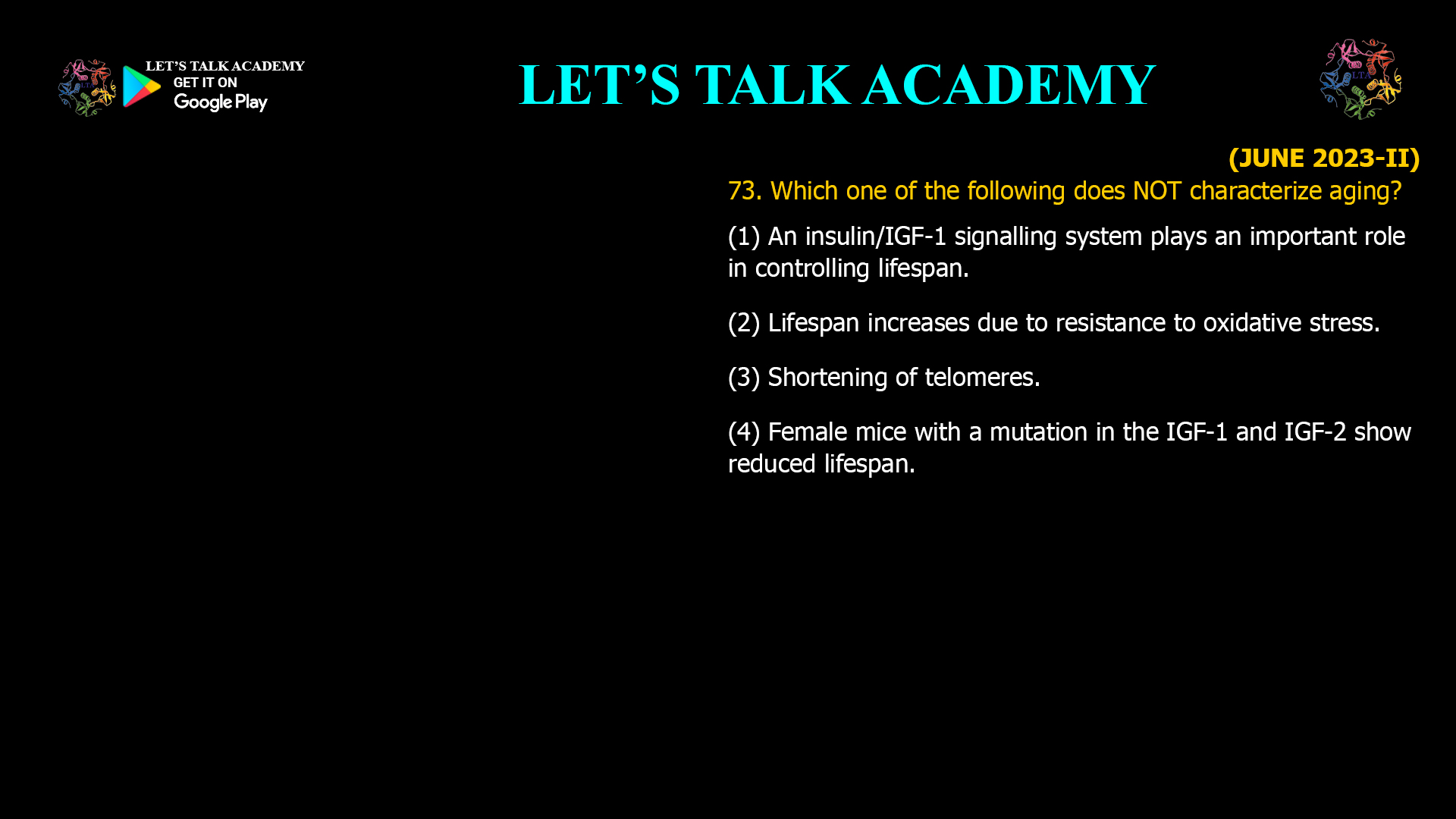
Which one of the following does NOT characterize aging? (I) An insulin/IGF-I signaling system plays an important role in controlling lifespan. (2) Lifespan increases due to resistance to oxidative stress. […]
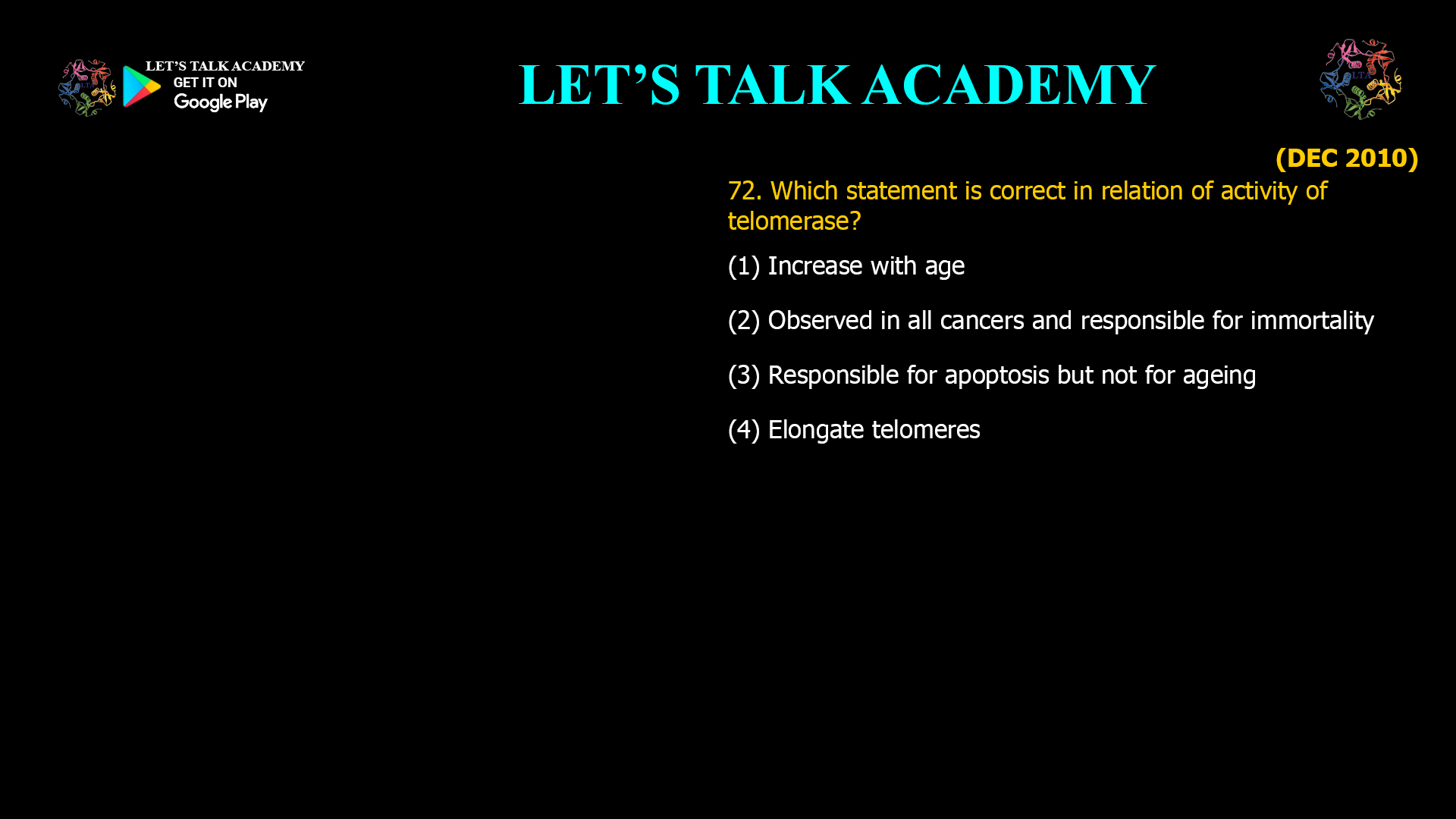
Which statement is correct in relation of activity of telomerase? (1) Increase with age (2) Observed in all cancers and responsible for immortality (3) Responsible for apoptosis but not for […]
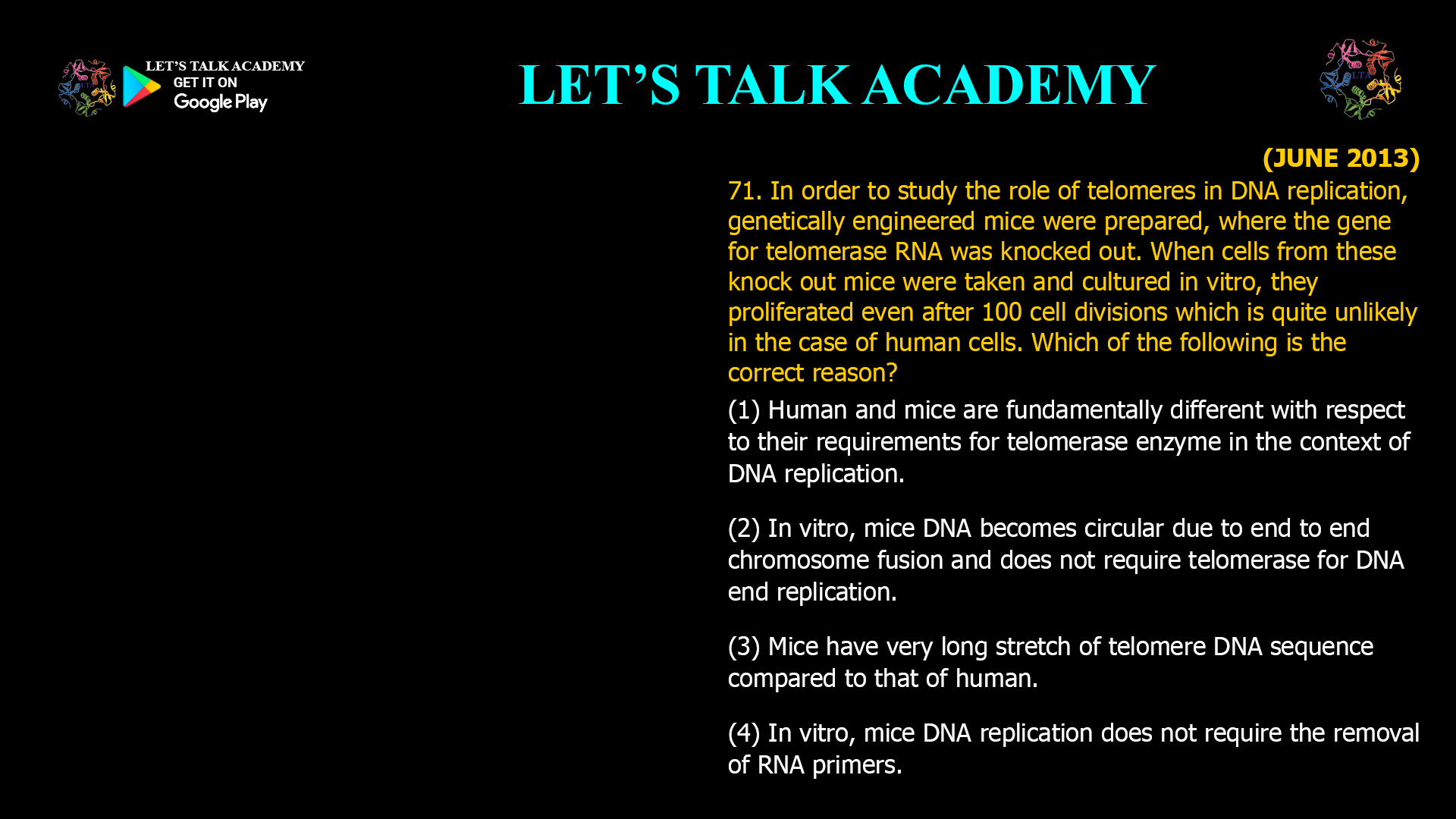
In order to study the role of telomeres in DNA replication, genetically engineered mice were prepared, where the gene for telomerase RNA was knocked out. When cells from these knock […]
70 Telomerase, a RNA-protein complex which completes the replication of telomeres during DNA synthesis, is a specialized (1) RNA dependent DNA polymerase (2) DNA dependent DNA polymerase (3) DNA dependent […]


