














































































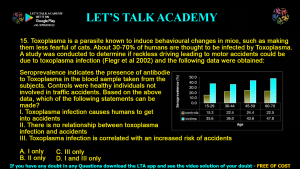


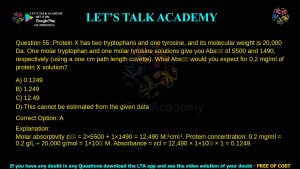

The most commonly used molecular tool for phylogentic analysis involves sequencing of (1) mitochondrial DNA. (2) mitochondrial RNA. (3) ribosomal RNA. (4) nuclear DNA. Why Ribosomal RNA Sequencing Is […]


The most commonly used molecular tool for phylogentic analysis involves sequencing of (1) mitochondrial DNA. (2) mitochondrial RNA. (3) ribosomal RNA. (4) nuclear DNA. Why Ribosomal RNA Sequencing Is […]

Similarities in sequence and function of two proteins indicate that they are members of a family that share a common ancestor. If they are from different species, they are called […]

1.Column A lists names of evolutionary biologists and column B lists descriptions of evolutionary mechanisms proposed by them in random order (1) A-(i), B-(ii), C-(iv), D-(iii) (2) A-(ii), B-(iii), C-(i), […]
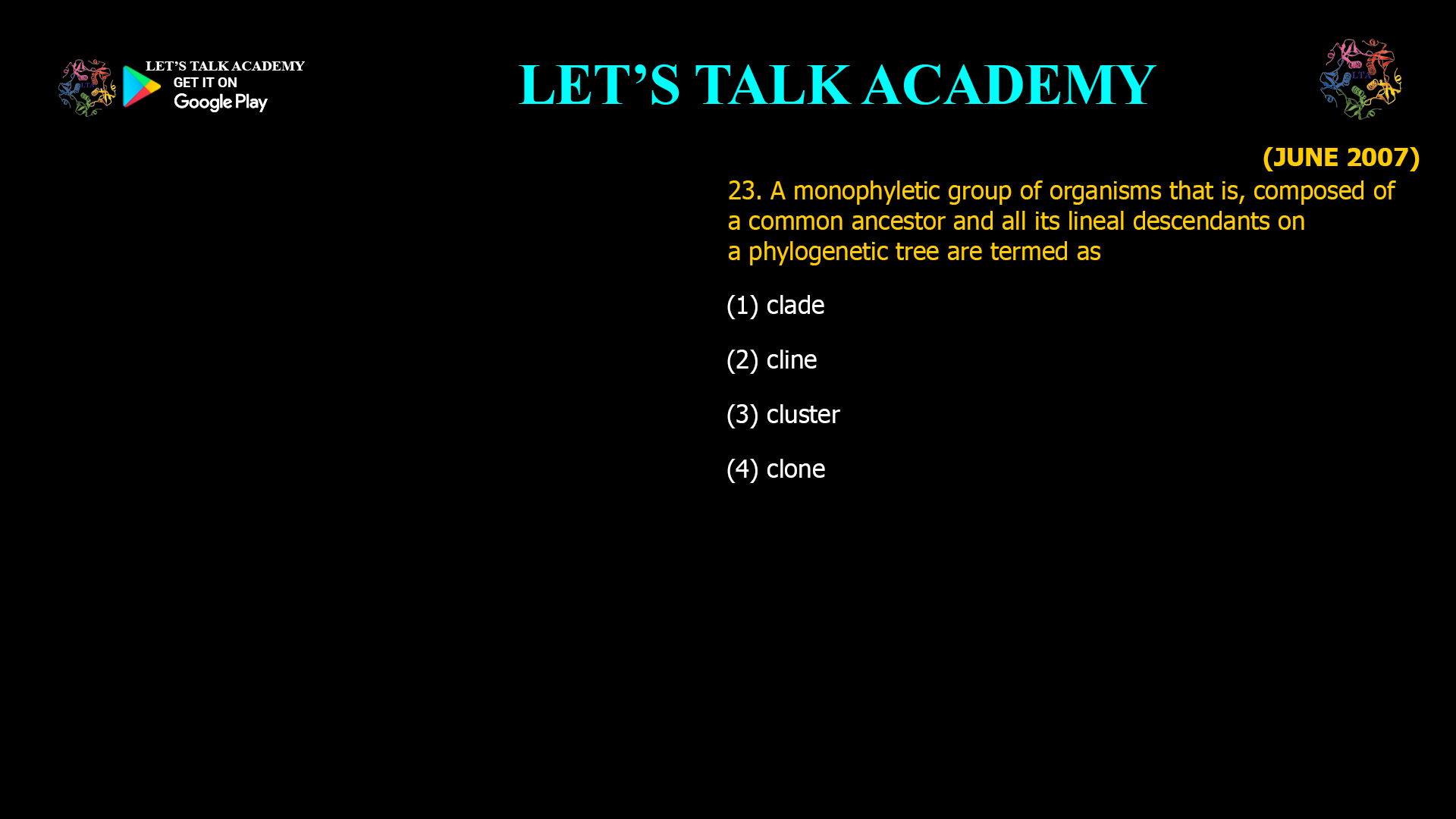
A monophyletic group of organisms that is, composed of a common ancestor and all its lineal descendants on a phylogenetic tree are termed as (1) clade (2) cline (3) cluster […]

At present, the relationship between human and monkey can be stated as (1) They both have common ancestors (2) Human have evolved from monkey (3) Both have very distinct phylogeny […]

If a gene sequence in Species A is 95 % similar to gene sequence in Species B. Such genes are termed as (1) Orthologous (2) Perilogous (3) Paralogous (4) Allologous […]
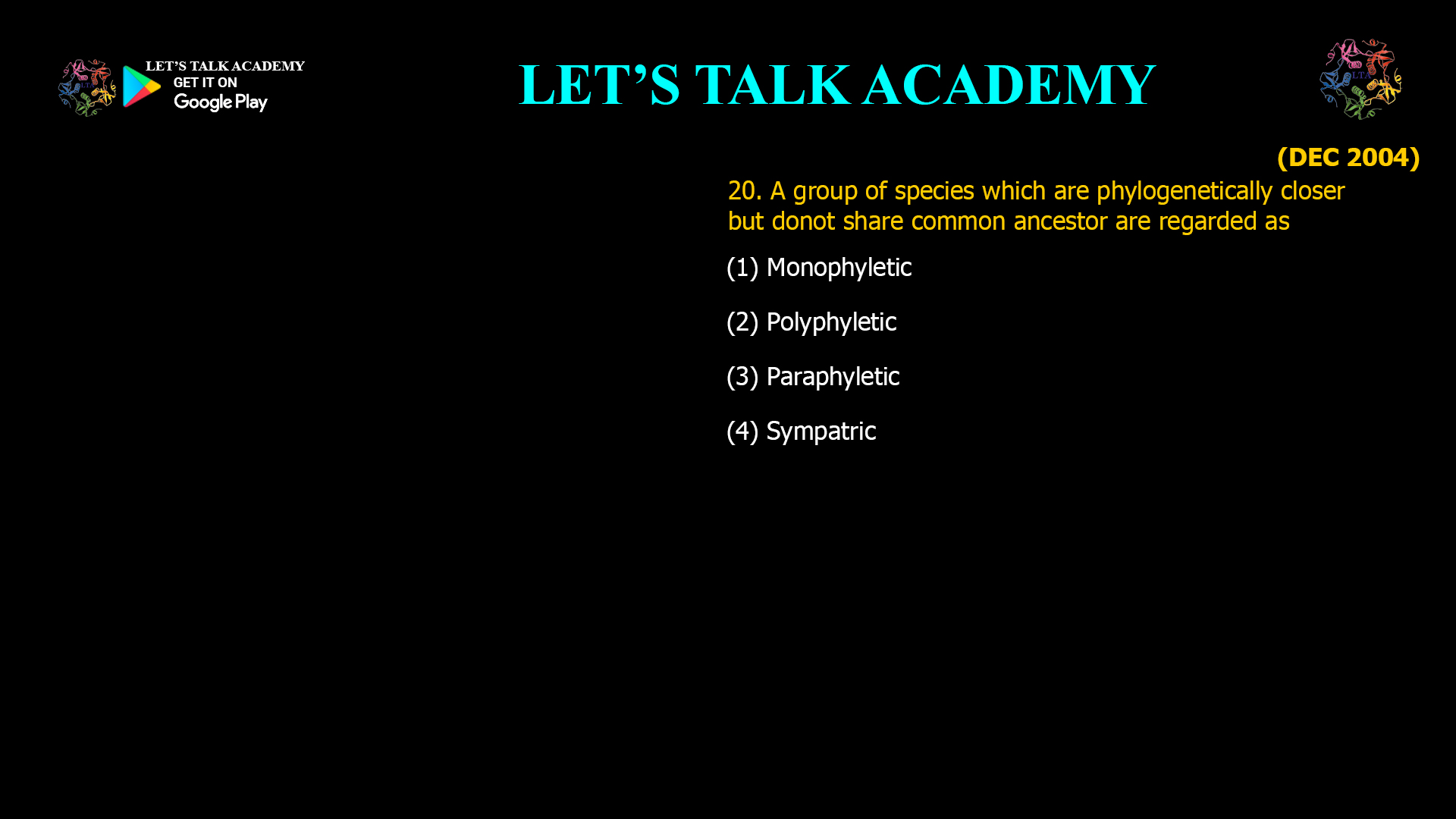
A group of species which are phylogenetically closer but donot share common ancestor are regarded as (1) Monophyletic (2) Polyphyletic (3) Paraphyletic (4) Sympatric Polyphyletic Groups: When Phylogenetically Close […]

Phylogenetic relationship can be best established by- (1) Allozymes (2) Alakaloids (3) Molecular markers (4) Morphology Molecular Markers: The Gold Standard for Establishing Phylogenetic Relationships Establishing accurate phylogenetic relationships—uncovering […]

Phylogenetic relationship among organisms cannot be established on basis of- (1) 5 S r-RNA (2) t-RNA sequencing (3) 16 S r-RNA (4) Mitochondrial DNA Which Molecular Markers Cannot Establish […]
Human phylogeny is characterized by- (1) Y chromosome (2) Mitochondrial genes (3) Both 1 & 2 (4) VNTR Human Phylogeny: The Role of Y Chromosome and Mitochondrial Genes in […]


