




























































































5.In a certain genetic cross, 1/16 proportion of progeny shows mutant phenotype. It means (1) Two independent assorting genes are involved for trait (2) Two independently assorting duplicate genes are […]

5.In a certain genetic cross, 1/16 proportion of progeny shows mutant phenotype. It means (1) Two independent assorting genes are involved for trait (2) Two independently assorting duplicate genes are […]

4. In a hybridization experiment a plant shows phenotypic ratio of 15:1. How many genes control the trait for observed phenotypic ratio? (1) One (2) Two (3) Three (4) Polygene […]

3. In a genetic test 9: 7 ratio in F2 generation represents (1) Epitasis (2) Co-dominance (3) Incomplete dominance (4) Complete dominance Explanation In a typical dihybrid cross with independent […]

2. F2 phenotype ration for comb shape in chicken was observed to be walnut, rose, peanut and single as 8:3:4:1. What is probable genotype of parents? (1) PPrr X PPrr […]

1. The dihybrid F2 ratio 9:7 represents (1) Dominance (2) Independent assortment (3) Epistasis (4) Co-dominance Explanation of the Dihybrid F2 Ratio 9:7 The dihybrid F2 phenotypic ratio 9:7 is […]
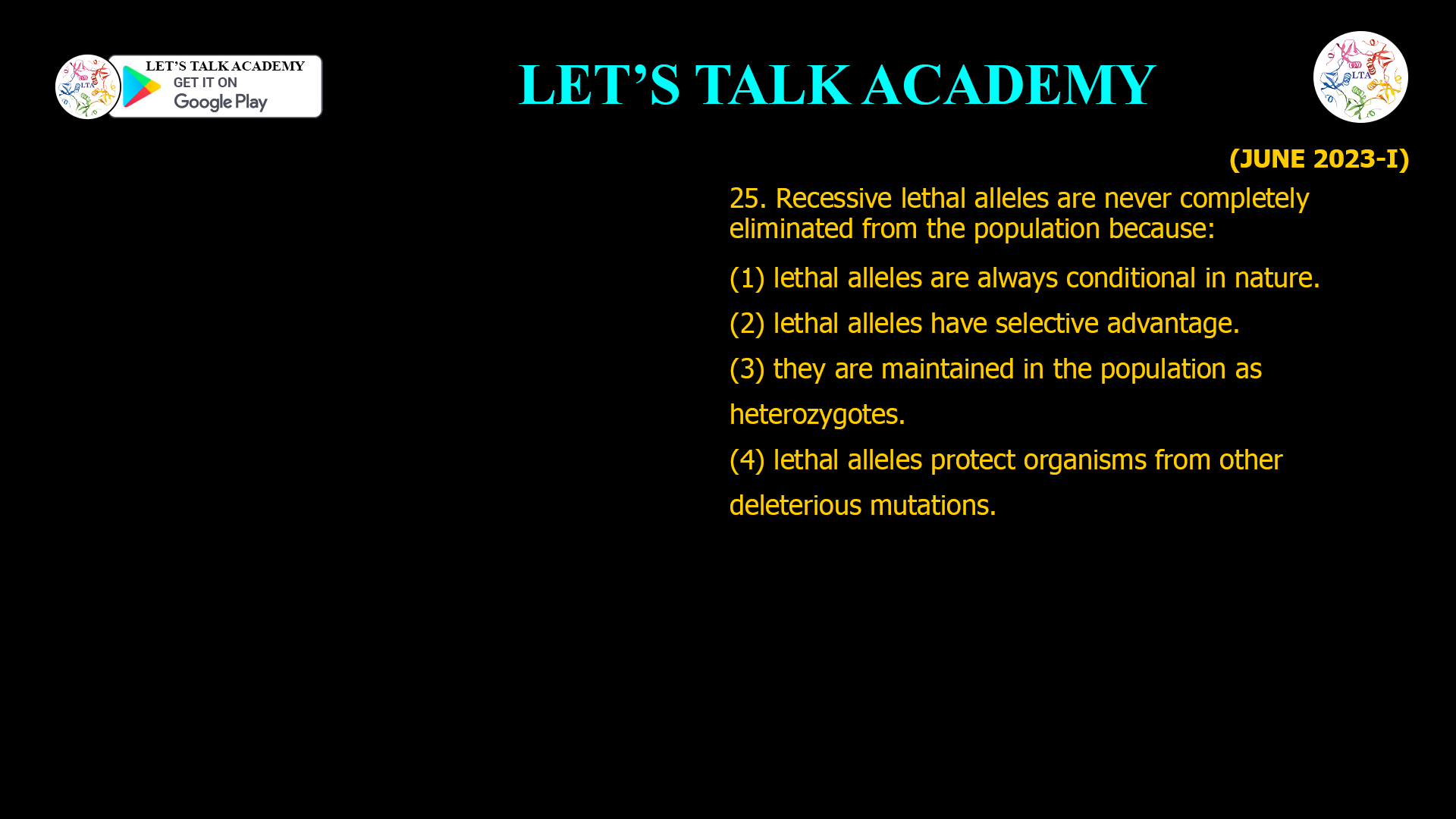
Recessive lethal alleles are never completely eliminated from the population because: (1) lethal alleles are always conditional in nature. (2) lethal alleles have selective advantage. (3) they are maintained in […]
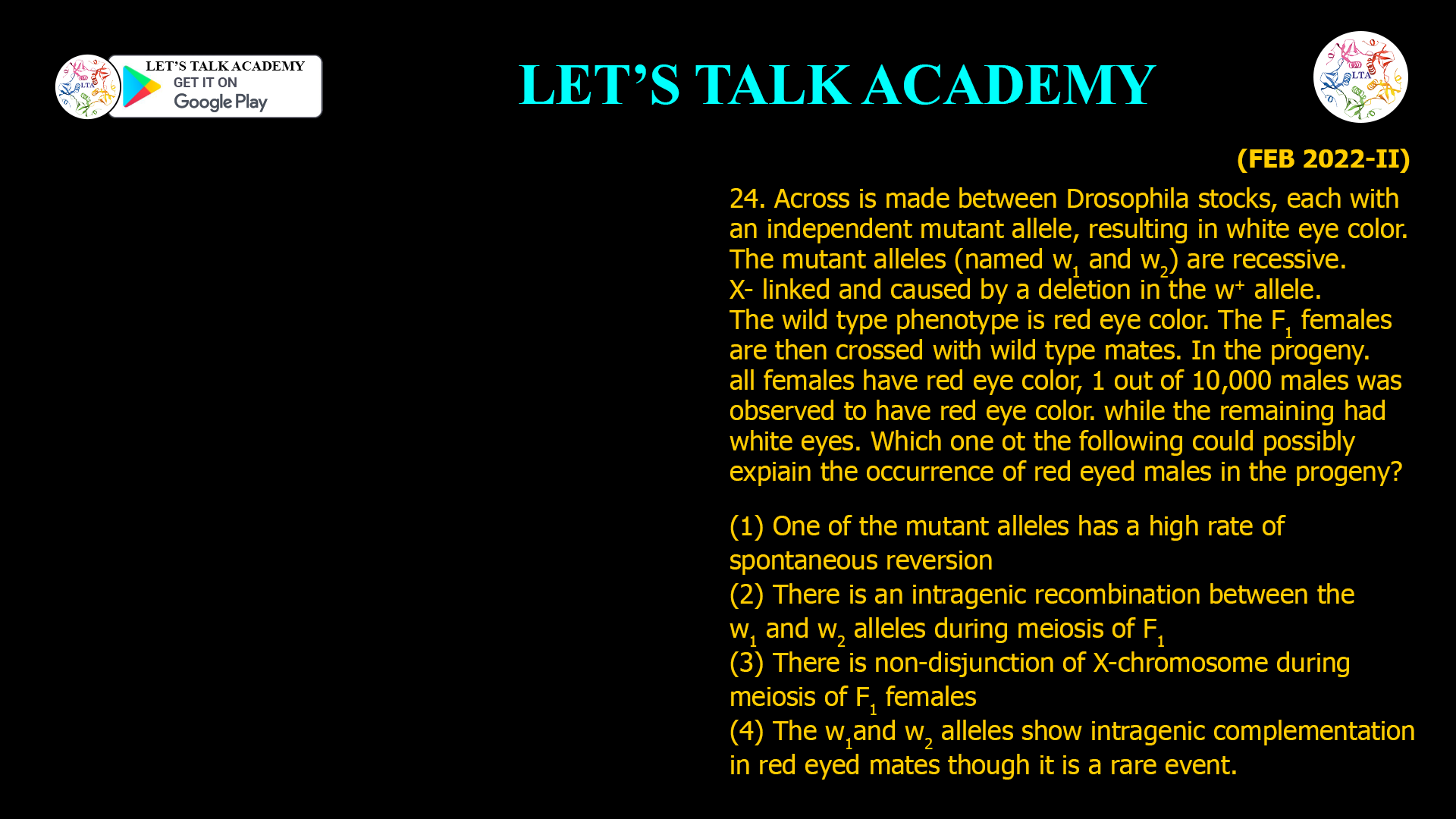
24. Across is made between Drosophila stocks, each with an independent mutant allele, resulting in white eye color. The mutant alleles (named w1 and w2) are recessive. X- linked and […]
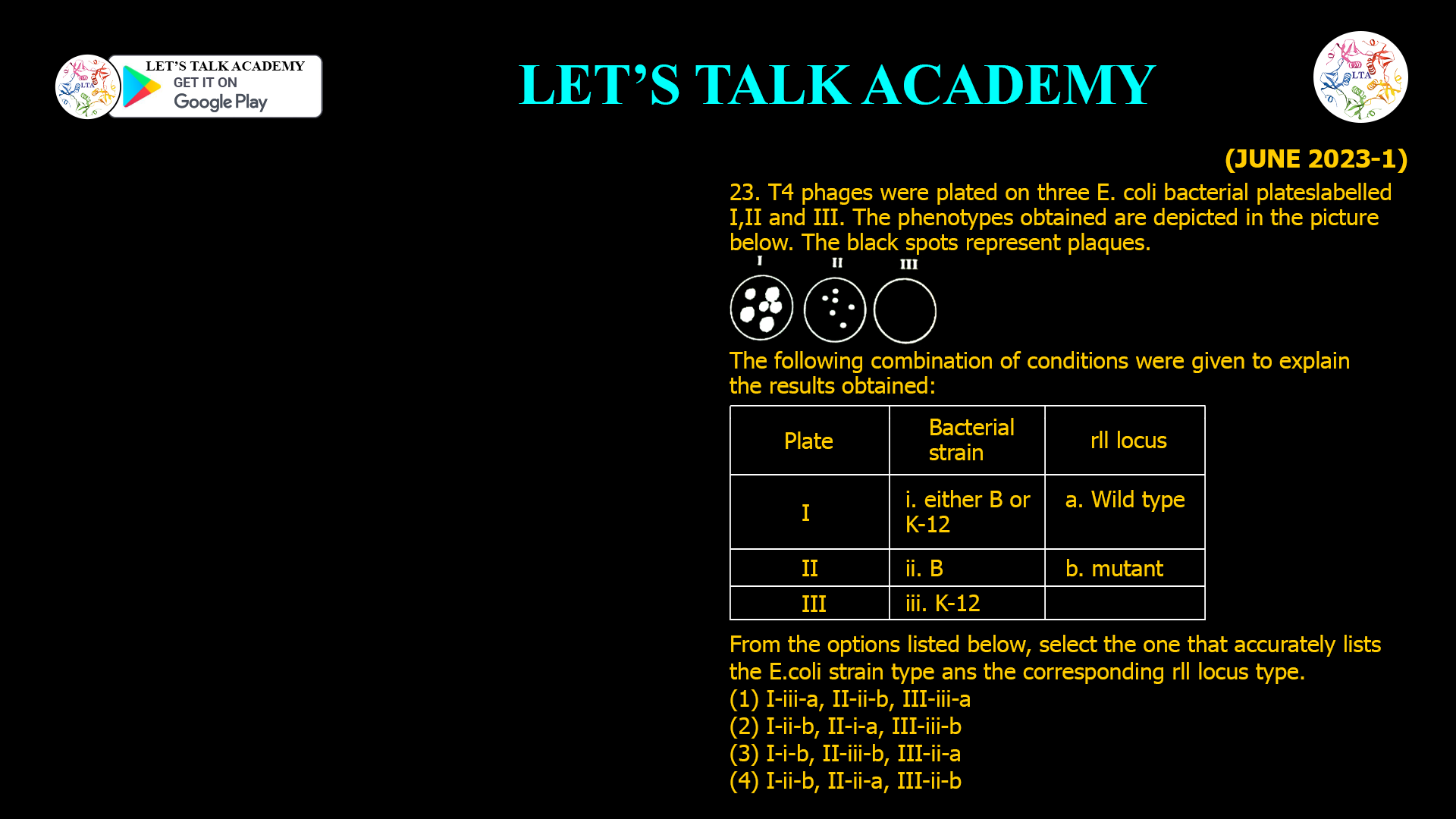
T4 phages were plated on three E. coli bacterial plateslabelled I,II and III. The phenotypes obtained aredepicted in the picture below. The black spotsrepresent plaques. The following combination of conditions […]

22. Wild type T4 bacteriophage can grow on Band K strains of E. coli forming small plaques. rll mutants of T4bacteriophage cannot grow on E. coli strain K (non- permissive […]

21. upon studying a considerable number of different crosses in Drosophila, Morgan reached the conclusion that all genes of this fly were clustered into four linked groups corresponding to the […]


