




















































































Q.58 The following table summarizes the flowering time behavior (days to flower) and the transcript levels in four genotypes of a plant species. Genotype Days to flower Transcript level of […]


Q.58 The following table summarizes the flowering time behavior (days to flower) and the transcript levels in four genotypes of a plant species. Genotype Days to flower Transcript level of […]

Q.57 Correctly match the photosynthetic pathways (Group I) with their first stable products (Group II) in respective plants (Group III) Group I Group II Group III (P) C3 cycle (1) […]
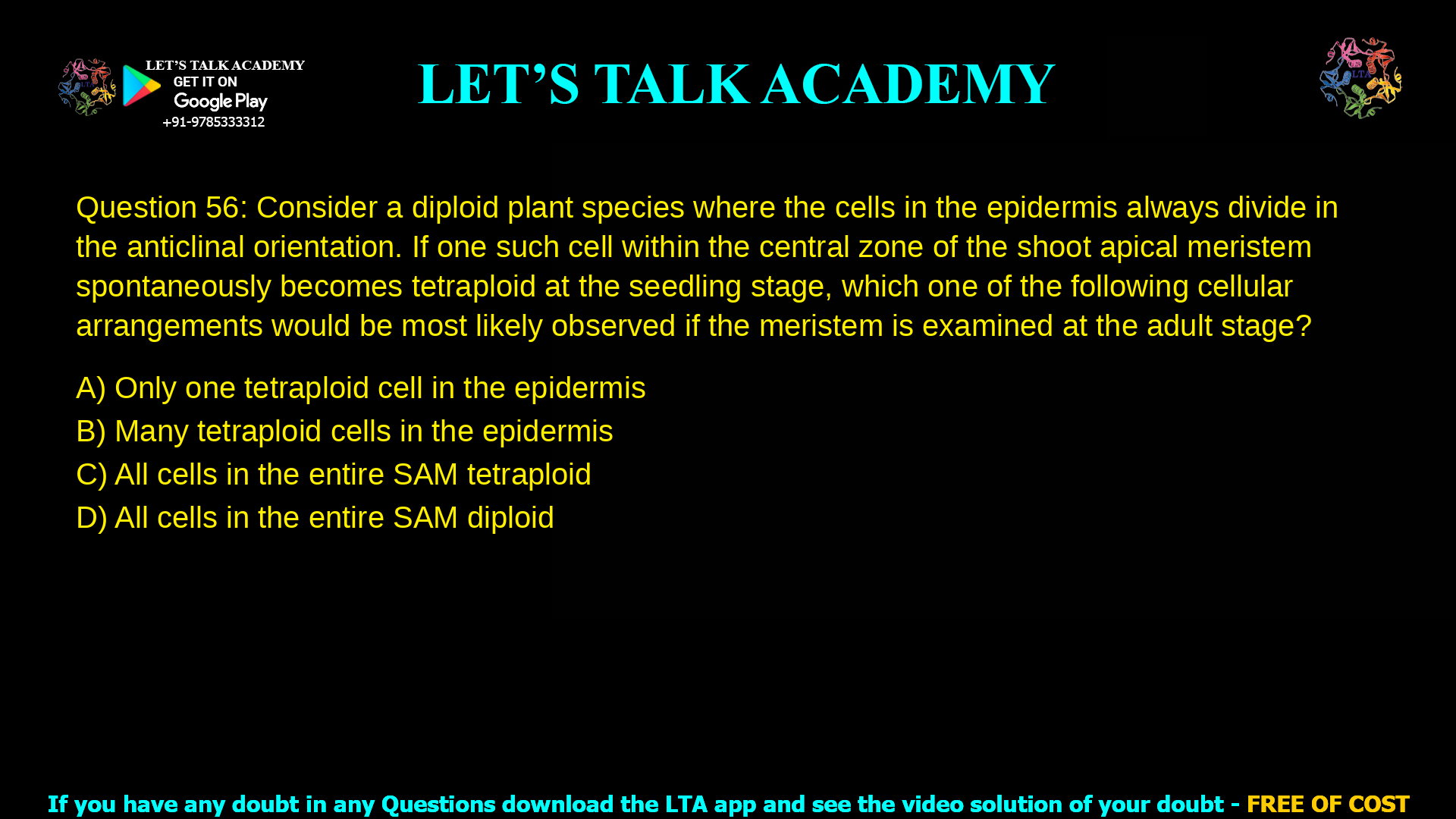
Q.56 Consider a diploid plant species where the cells in the epidermis (the outermostsingle cell layer) always divide in the anticlinal orientation. If one such cell withinthe central zone of […]
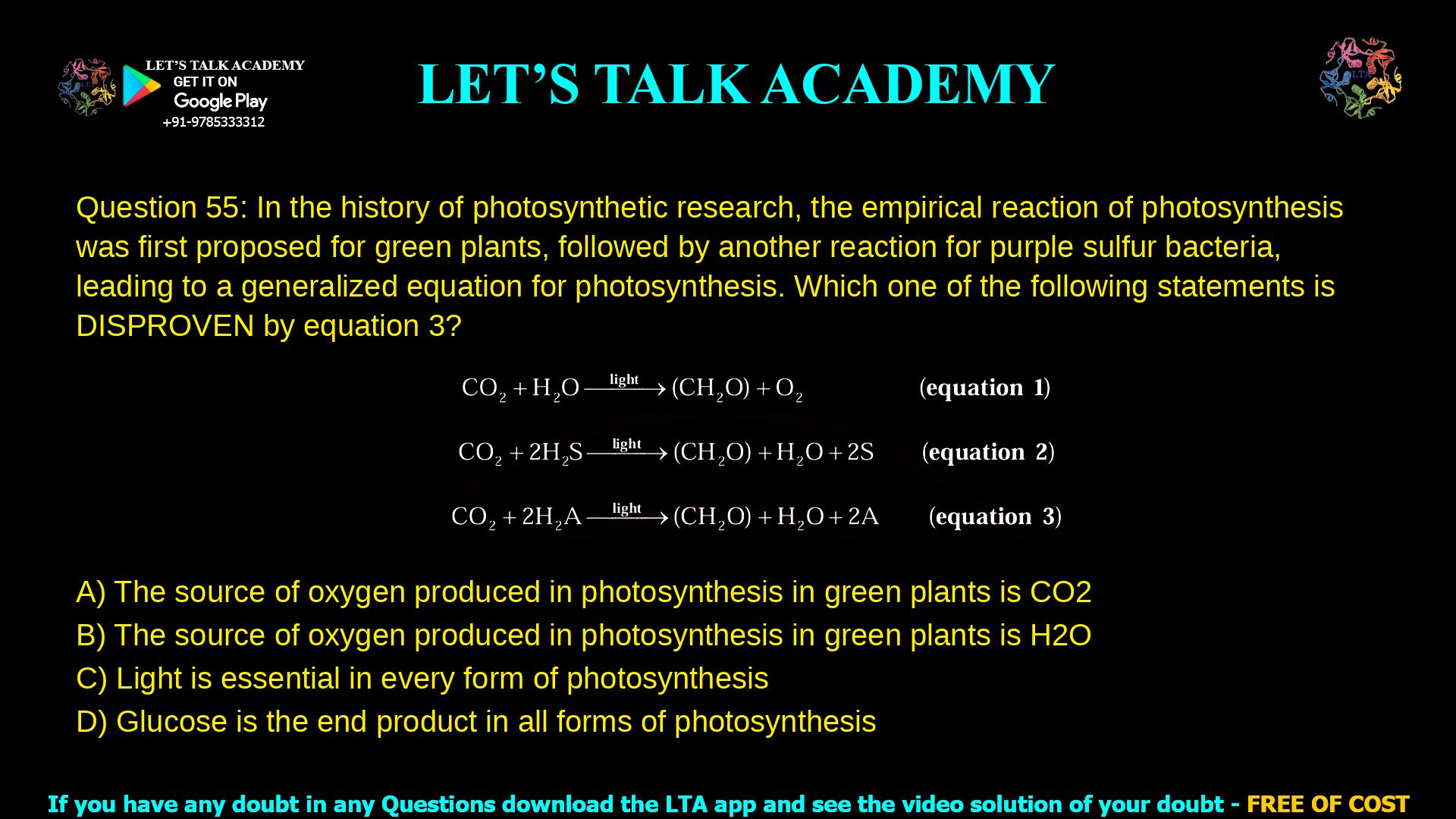
Q.55 In the history of photosynthetic research, the empirical reaction of photosynthesis was first proposed for green plants (equation 1), followed by another reaction for purple sulfur bacteria (equation 2), […]

Q.54 If an egg cell of a diploid plant species has 10 chromosomes, the expectednumber of chromosomes in a double trisomic somatic cell of this specieswould be _______________ (Answer in […]

Q.53 Which of the following molecular approaches can be used to generate completeknock–out of a target gene in plants?(A) Homologous recombination(B) CRISPR–Cas9(C) Antisense RNA technique(D) Activation tagging CRISPR-Cas9 is the […]
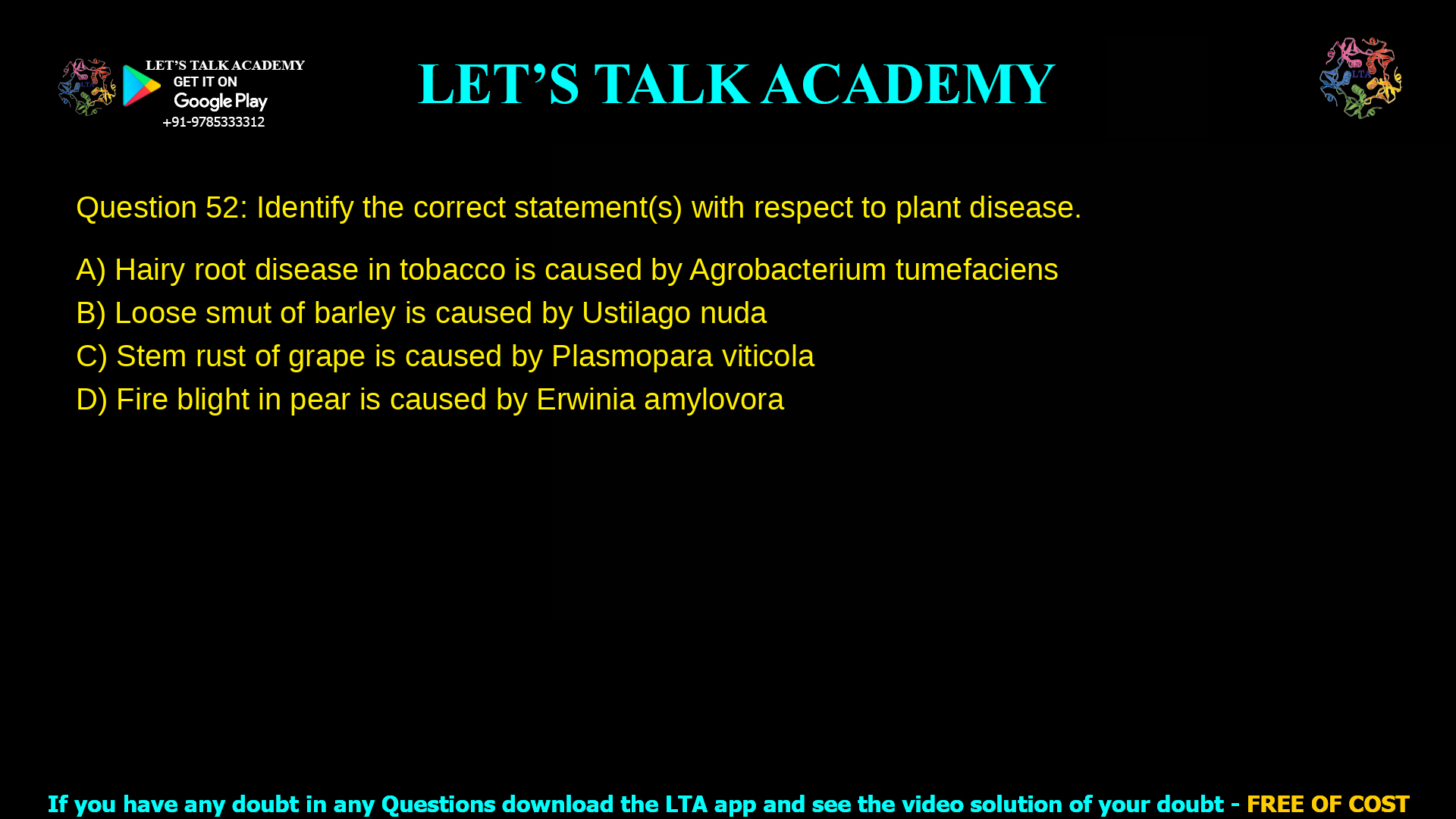
Q.52 Identify the correct statement(s) with respect to plant disease.(A) Hairy root disease in tobacco is caused by Agrobacterium tumefaciens(B) Loose smut of barley is caused by Ustilago nuda(C) Stem […]

Q.51 Which one of the following agents causes the necrotic ring spot disease in stonefruits?(A) Fungi(B) Bacteria(C) Virus(D) Nematodes The necrotic ring spot disease in stone fruits is caused by […]

Q.50 Which one of the following commercially important carbohydrates is naturallyproduced only by the members of the plant kingdom?(A) Cellulose(B) Pectin(C) Chitin(D) Starch Pectin is the correct answer. This commercially important […]
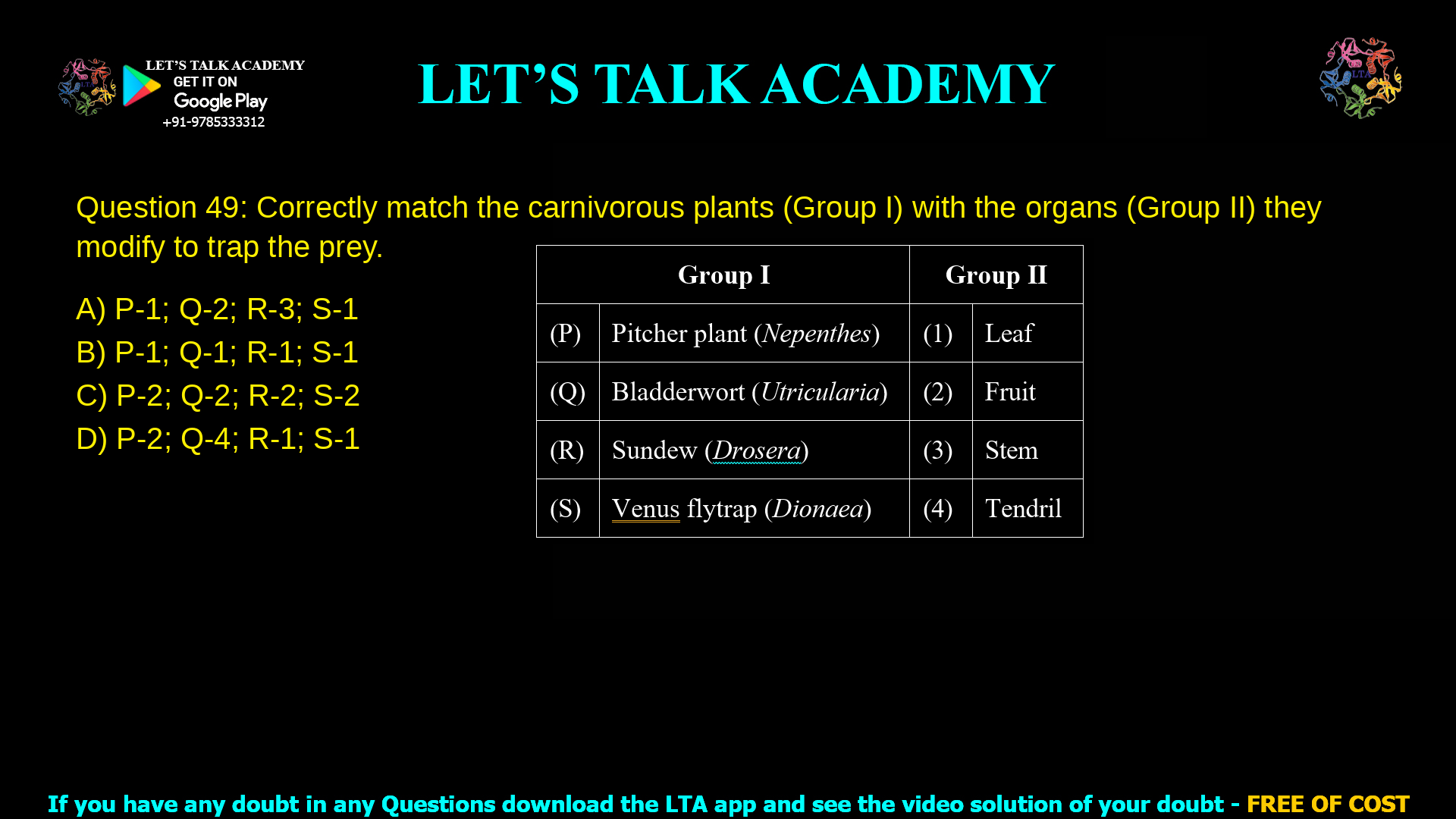
Q.49 Correctly match the carnivorous plants (Group I) with the organs (Group II) they modify to trap the prey. Group I Group II (P) Pitcher plant (Nepenthes) (1) Leaf (Q) […]


