













































































Q.59 Given below are two statements: Statement–I: 146 base pairs of DNA are wrapped around the histone octamer to form a nucleosome. Statement–II: Nucleosomes play important role in gene expression. […]

Q.59 Given below are two statements: Statement–I: 146 base pairs of DNA are wrapped around the histone octamer to form a nucleosome. Statement–II: Nucleosomes play important role in gene expression. […]

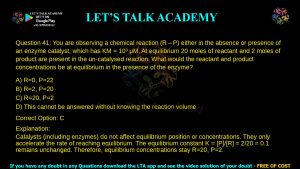
Q.58 Given below are two statements: Statement–I: Enzymes lower the activation energy of reactions. Statement–II: The presence of an enzyme has no effect on Keq. In the light of the […]

Q.57 Given below are two statements: Statement–I: Weak interactions like hydrogen bonds and salt bridges stabilize protein folding. Statement–II: Protein folding is assisted by chaperones. In the light of the […]

Q.56 Given below are two statements: Statement–I: Mutation in the middle of a gene that creates stop codon is called frameshift mutation. Statement–II: Frameshift mutation can be a point mutation. […]

Q.55 Given below are two statements: Statement–I: Histone acetylation is generally associated with decrease in gene transcription. Statement–II: Acetylation occurs on lysine residues in the N-terminal tails of histones. In […]

Q.54 Arrange the following steps of cell signalling in chronological order: A. Reception B. Generation of signal C. Response D. Transduction Choose the correct answer from the options given below. […]

Q.53 Proteins involved in DNA replication are written below. Arrange them chronologically in terms of function: A. DNA polymerase I B. DNA polymerase III C. Helicase D. Ligase E. Primase […]

Q.52 Gene expression is controlled at various stages written below. Arrange these stages in chronological order: A. Transcription B. Translation C. Post-transcription D. Epigenetic regulation E. Post-translation Choose the correct […]
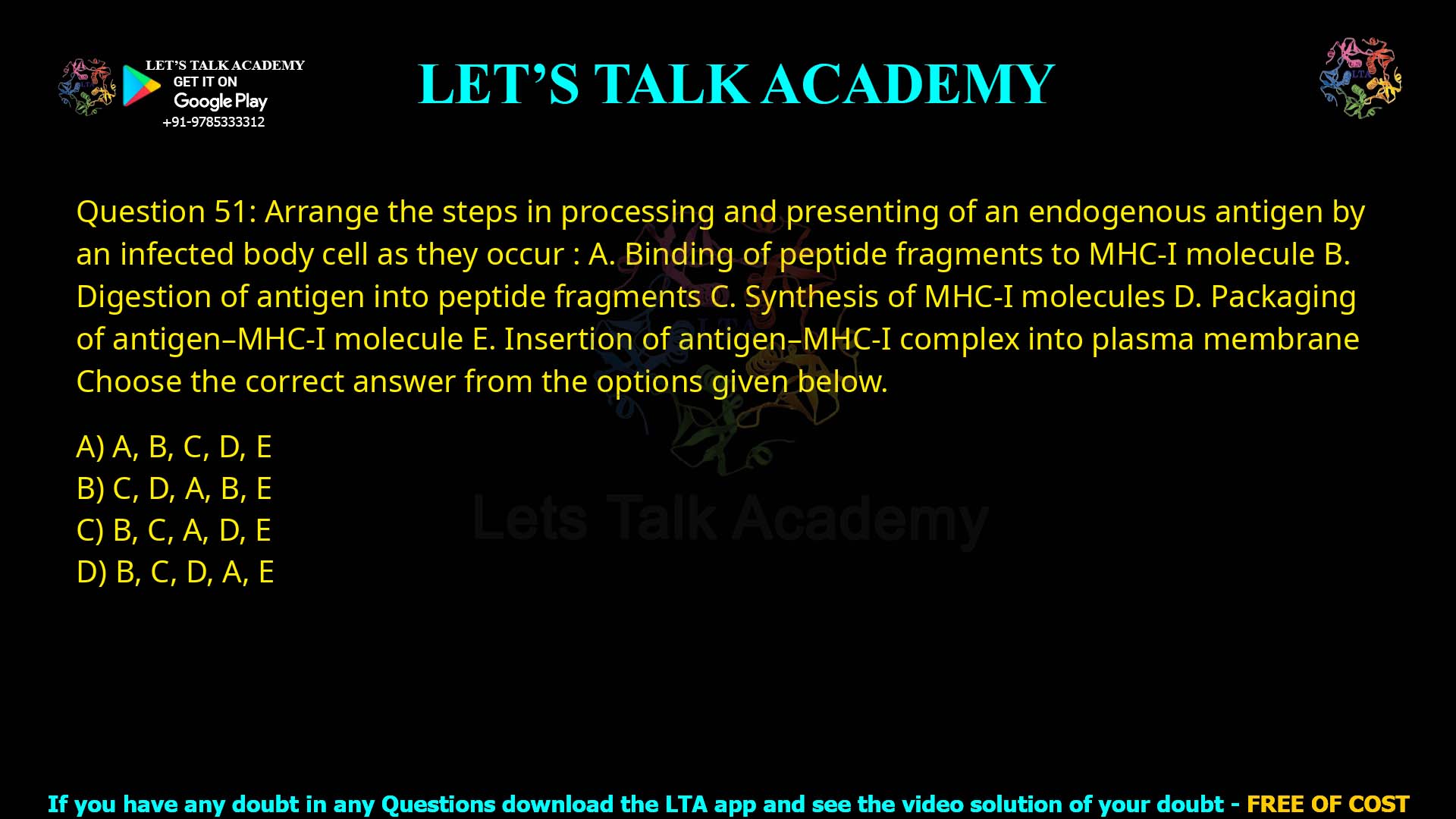
Q.51 Arrange the steps in processing and presenting of an endogenous antigen by an infected body cell as they occur: A. Binding of peptide fragments to MHC-I molecule B. Digestion […]

Q.50 Arrange the following stages of bacterial growth curve chronologically: A. Lag phase B. Stationary phase C. Log phase D. Death phase Choose the correct answer from the options given […]


