
1. Diffusion: Mechanism, Types, Factors and Biological Importance
1.1 Introduction to Diffusion
Living cells constantly exchange substances with their surroundings. Oxygen must enter cells, carbon dioxide must leave, nutrients must be distributed, and various molecules must move between different cellular regions. One of the simplest and most fundamental mechanisms responsible for such movement is diffusion.
Diffusion is a passive process in which particles move from a region of higher concentration to a region of lower concentration as a result of their random molecular motion. The movement continues until the concentration becomes more evenly distributed, or until another physical or biological factor prevents further net movement.
Diffusion does not require the direct expenditure of cellular metabolic energy in the form of ATP. Instead, it is driven by the inherent kinetic energy of molecules.
At first glance, diffusion may appear to be a simple process. However, at the molecular level, it is closely connected with thermal motion, concentration gradients, membrane permeability, molecular size, temperature, distance, and the physical properties of the medium.
Diffusion is particularly important in biology because it contributes to gas exchange, movement of small molecules across membranes, intracellular transport over short distances, and the distribution of signaling molecules.
1.2 Definition of Diffusion
Diffusion is the net movement of particles from a region of higher concentration to a region of lower concentration due to their random thermal motion.
The key word in this definition is net movement.
Individual molecules move randomly in all directions. Even when diffusion is occurring from a high-concentration region toward a low-concentration region, molecules continue to move in both directions.
The net movement is toward the region of lower concentration because there are more particles available to move from the high-concentration region toward the low-concentration region.
Therefore, diffusion should not be imagined as molecules deliberately moving toward a region of lower concentration. Molecules do not “know” where the concentration is lower. Their random motion produces a statistically predictable net movement.
1.3 Molecular Basis of Diffusion
All molecules possess kinetic energy and are in constant motion.
The nature of this movement depends on the physical state of the substance.
In gases, molecules move rapidly and relatively freely.
In liquids, molecules move continuously but are influenced by interactions with surrounding molecules.
In solids, particles mainly vibrate around relatively fixed positions.
Diffusion is particularly evident in gases and liquids because particles can move through the medium.
Consider a container containing a high concentration of oxygen molecules on one side and a low concentration on the other side. Oxygen molecules move randomly in every direction. Initially, more oxygen molecules move from the high-concentration region toward the low-concentration region simply because there are more molecules in the high-concentration region.
As time passes, the difference in concentration decreases.
Eventually, the concentrations may become equal throughout the available space.
At this stage, molecules are still moving, but there is no longer a net movement in one direction.
2. Concentration Gradient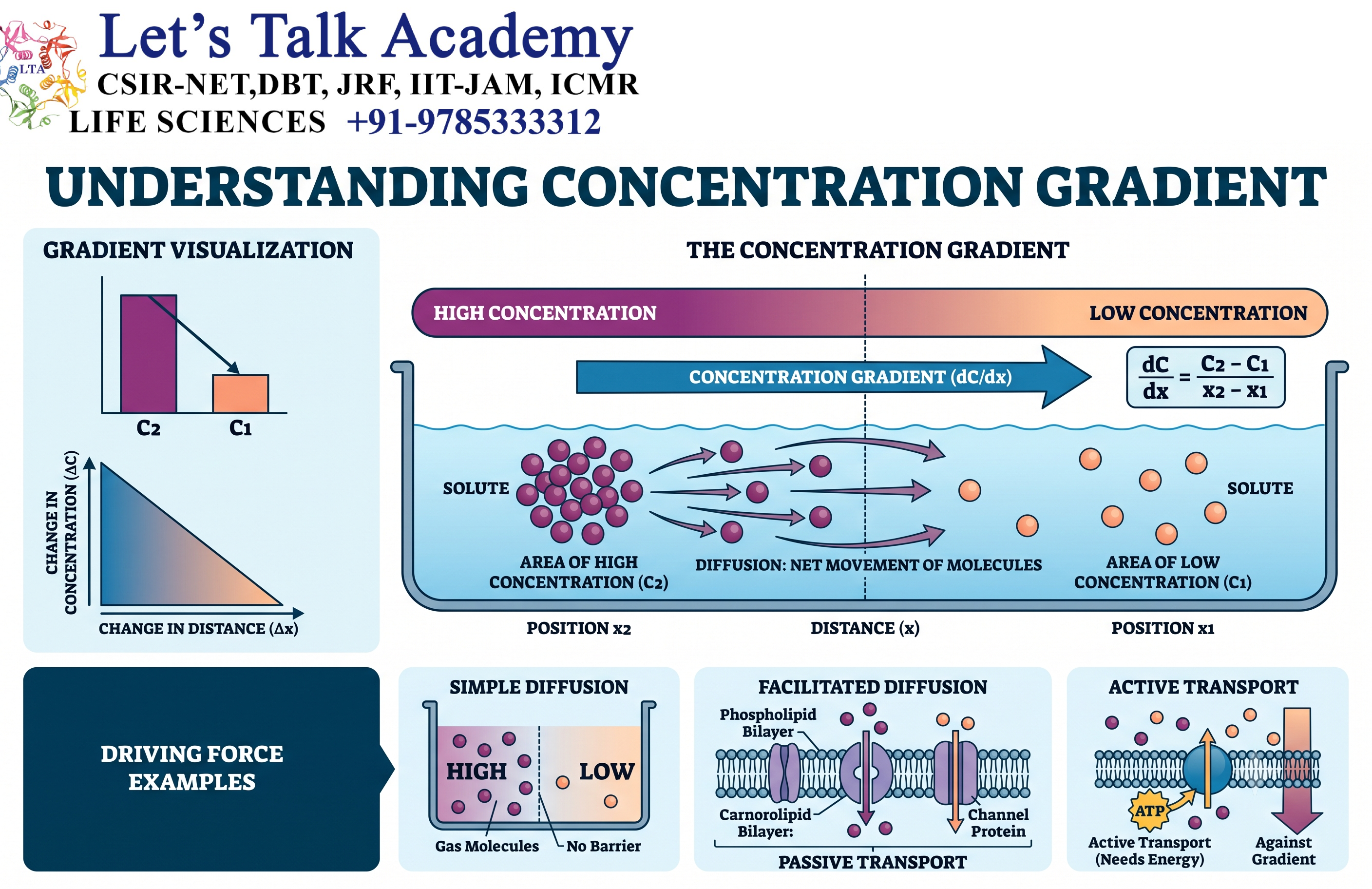
2.1 Meaning of a Concentration Gradient
A concentration gradient is a difference in the concentration of a substance between two regions.
For example, if a solution contains a high concentration of glucose on one side and a low concentration on the other side, a concentration gradient exists.
The greater the concentration difference, the stronger the driving force for diffusion.
A simple representation is:
High concentration → Low concentration
This concentration gradient provides the driving force for simple diffusion.
2.2 Diffusion Down a Concentration Gradient
Particles undergoing passive diffusion move down their concentration gradient.
This means that the net movement is from:
Higher concentration → Lower concentration
The movement continues as long as a concentration gradient exists and the substance is capable of moving through the relevant medium or membrane.
2.3 Concentration Equilibrium
Diffusion eventually produces a condition in which the concentration of the diffusing substance becomes approximately uniform.
This state is called dynamic equilibrium.
It is important to understand that equilibrium does not mean that molecules stop moving.
Molecules continue their random motion.
However, the movement in one direction is balanced by movement in the opposite direction, resulting in:
Net movement = zero
This distinction between molecular movement and net movement is fundamental to understanding diffusion.
3. Types of Diffusion
3.1 Simple Diffusion
Simple diffusion is the direct movement of molecules through a medium or, in the case of membranes, through the lipid bilayer without the assistance of membrane transport proteins.
Small nonpolar molecules such as oxygen and carbon dioxide can cross biological membranes relatively easily by simple diffusion.
Some small uncharged molecules can also cross lipid bilayers, although their permeability varies.
The rate depends on factors such as:
- Concentration gradient
- Temperature
- Molecular size
- Lipid solubility
- Membrane thickness
- Surface area
3.2 Facilitated Diffusion
Facilitated diffusion is a passive transport process in which molecules move down their electrochemical gradient through specific membrane proteins.
Unlike simple diffusion, facilitated diffusion requires a membrane protein.
These proteins can be:
- Channel proteins
- Carrier proteins
The process does not directly require ATP.
Examples include the transport of certain ions through ion channels and glucose through specific carrier proteins.
3.3 Channel-Mediated Diffusion
Channel proteins form hydrophilic pathways through the membrane.
These pathways allow specific ions or molecules to cross the hydrophobic membrane interior.
Ion channels can be highly selective.
Some channels are regulated by:
- Voltage
- Ligand binding
- Mechanical forces
Channel-mediated transport can be extremely rapid compared with transport through many carrier proteins.
3.4 Carrier-Mediated Diffusion
Carrier proteins bind specific molecules and undergo conformational changes that move the molecule across the membrane.
A carrier therefore does not simply provide an open pore.
Instead, the transported molecule binds to the protein, and the protein changes its shape to expose the binding site to the opposite side of the membrane.
Carrier-mediated transport is selective and can become saturated when all available transport proteins are occupied.
4. Diffusion Across Biological Membranes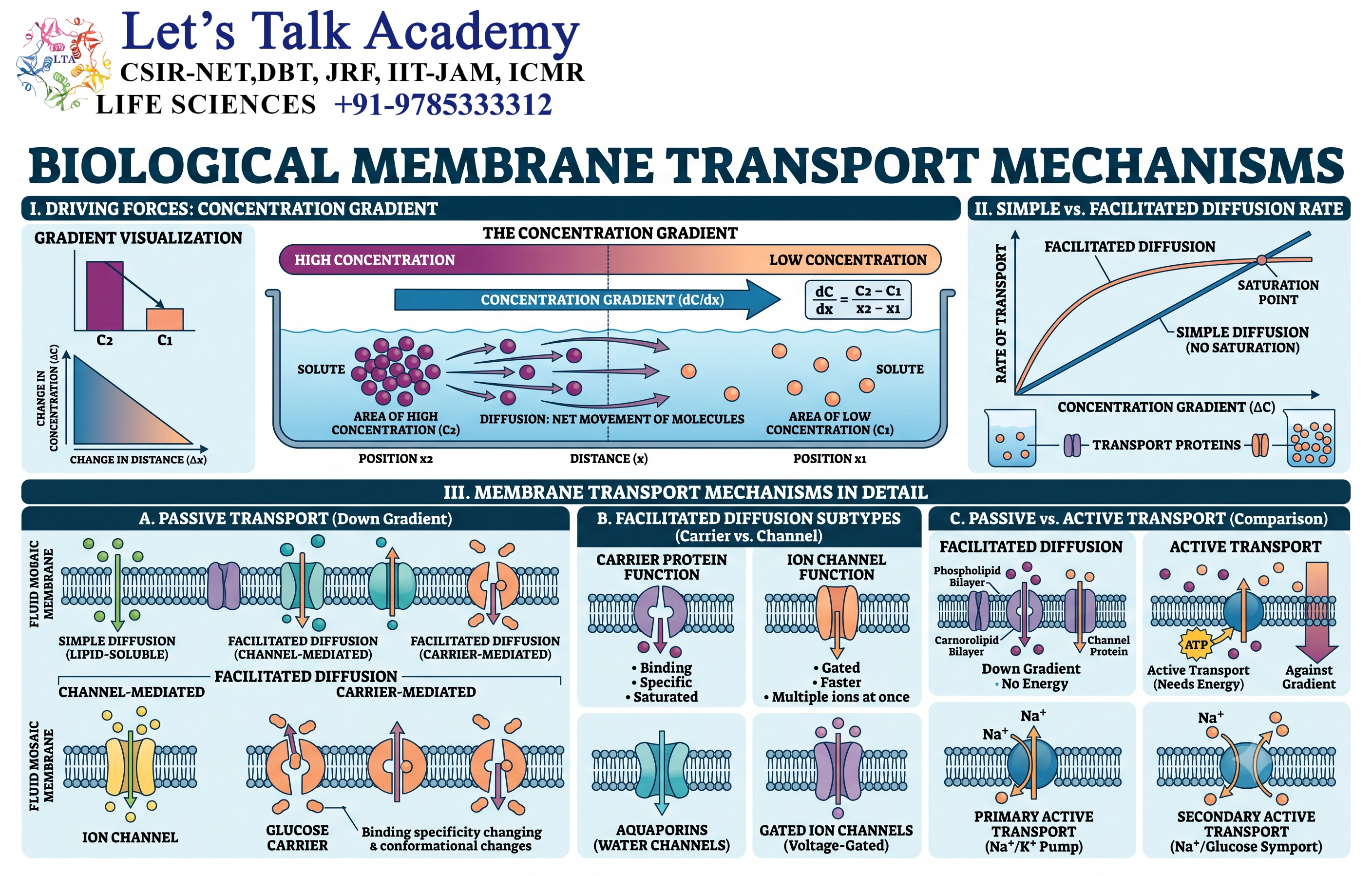
4.1 The Lipid Bilayer as a Diffusion Barrier
The plasma membrane consists primarily of a lipid bilayer.
The hydrophobic interior of the bilayer creates a barrier for ions and many polar molecules.
Small hydrophobic molecules generally cross more readily than large or highly charged molecules.
This selective permeability is essential for maintaining the internal chemical environment of cells.
4.2 Permeability of Different Molecules
The ability of a molecule to cross a lipid bilayer depends strongly on its chemical properties.
Generally:
Small nonpolar molecules → high permeability
Small uncharged polar molecules → moderate or variable permeability
Large polar molecules → low permeability
Ions → extremely low permeability without transport proteins
This explains why oxygen can cross a membrane relatively easily while sodium ions require specialized channels or transporters.
4.3 Diffusion of Oxygen and Carbon Dioxide
Gas exchange provides one of the clearest biological examples of diffusion.
In tissues, oxygen concentration is often lower inside metabolically active cells because oxygen is continuously consumed during aerobic respiration.
This creates a concentration gradient that favors oxygen movement into cells.
Carbon dioxide produced by cellular metabolism creates a gradient favoring its movement out of cells.
Diffusion therefore plays an important role in:
- Cellular respiration
- Gas exchange in lungs
- Gas exchange in tissues
- Photosynthetic systems
5. Factors Affecting the Rate of Diffusion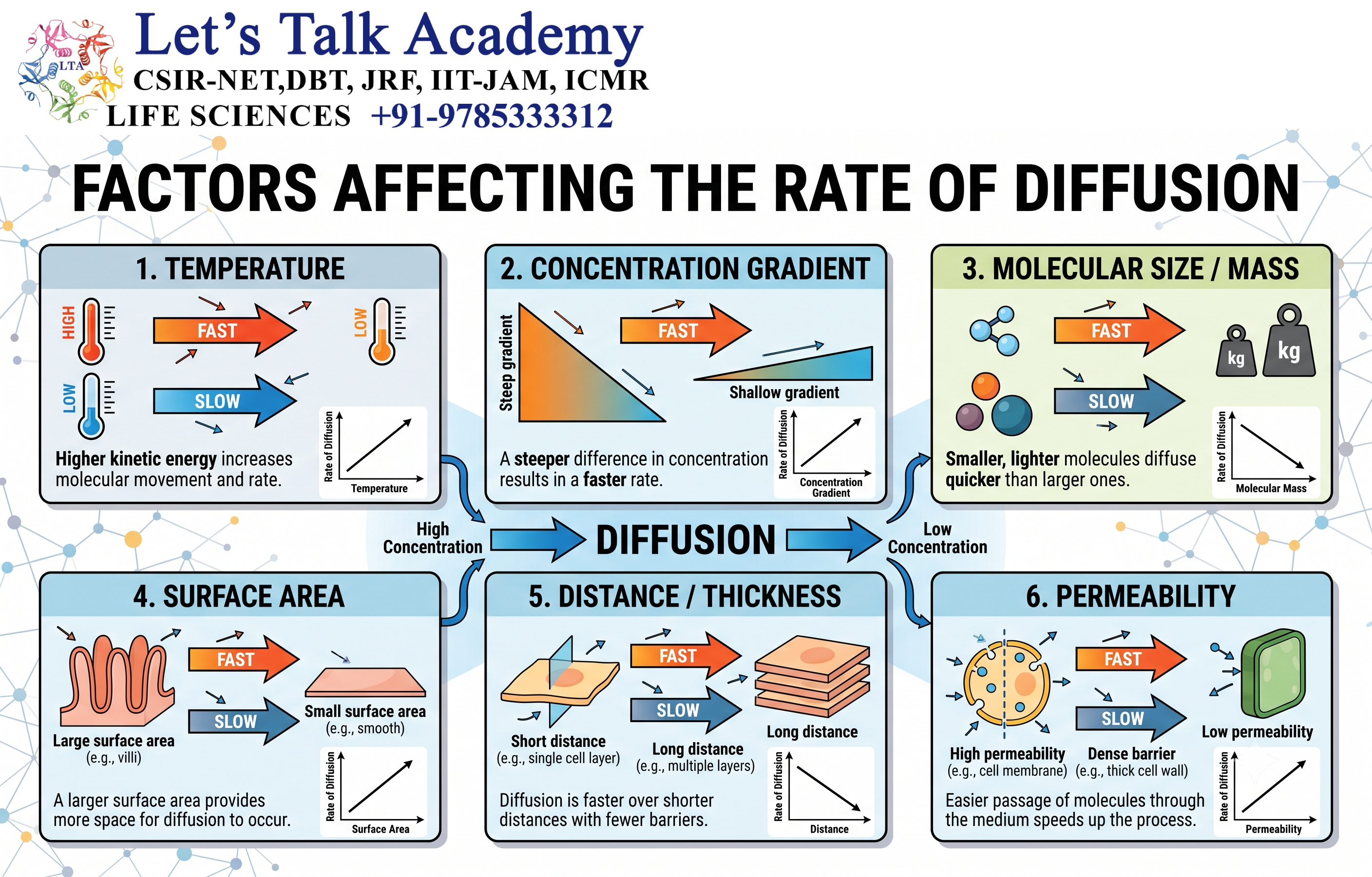
5.1 Concentration Gradient
The concentration gradient is one of the most important factors influencing diffusion.
A greater difference in concentration generally produces a greater net driving force for diffusion.
As the concentration difference decreases, the net rate of diffusion also decreases.
5.2 Temperature
Increasing temperature generally increases the kinetic energy of molecules.
As molecular movement becomes faster, diffusion generally occurs more rapidly.
Lower temperatures reduce molecular motion and generally slow diffusion.
Thus:
Higher temperature → faster molecular motion → generally faster diffusion
5.3 Molecular Size
Smaller molecules generally diffuse more rapidly than larger molecules through the same medium.
Large molecules experience greater resistance to movement and generally move more slowly.
For membrane diffusion, molecular size is only one factor; lipid solubility and charge are also extremely important.
5.4 Surface Area
A larger surface area provides more space through which molecules can diffuse.
Therefore, increasing membrane or exchange-surface area can increase the overall rate of diffusion.
This principle is particularly important in biological structures specialized for exchange.
For example, the lungs contain a very large respiratory surface that facilitates efficient gas exchange.
5.5 Diffusion Distance
The distance that molecules must travel affects diffusion time.
Shorter distances generally allow faster diffusion.
This is one reason why diffusion is highly effective over microscopic distances but becomes increasingly inefficient over large distances.
Cells are generally small partly because short diffusion distances allow substances to move efficiently within them.
5.6 Nature of the Medium
Diffusion occurs at different rates in different media.
Generally, molecules diffuse:
Fastest in gases → slower in liquids → slowest in solids
The degree of molecular interaction and resistance within the medium affects diffusion.
5.7 Membrane Permeability
For membrane diffusion, permeability is crucial.
A membrane may be highly permeable to one substance but nearly impermeable to another.
Permeability depends on:
- Lipid solubility
- Molecular size
- Charge
- Membrane composition
- Presence of transport proteins
6. Diffusion and Fick’s Law
6.1 Fick’s First Law
The quantitative description of diffusion is commonly expressed using Fick’s first law.
For a simple one-dimensional system:
J = −D(dC/dx)
Where:
- J = diffusion flux
- D = diffusion coefficient
- C = concentration
- x = distance
- The negative sign indicates movement down the concentration gradient
The equation shows that diffusion flux depends on the concentration gradient and the diffusion coefficient.
A steeper concentration gradient generally produces a greater flux.
6.2 Diffusion Coefficient
The diffusion coefficient (D) describes how rapidly a substance tends to diffuse through a particular medium.
It depends on factors such as:
- Temperature
- Molecular size
- Properties of the medium
- Viscosity
A larger diffusion coefficient generally means that the substance diffuses more rapidly.
6.3 Fick’s Second Law
Fick’s second law describes how concentration changes with time as diffusion proceeds.
It is particularly useful for understanding non-steady-state diffusion, where concentration changes continuously over time.
In a simple one-dimensional form:
∂C/∂t = D∂²C/∂x²
This equation describes how the concentration profile evolves as molecules redistribute themselves.
7. Diffusion Time and Biological Limitations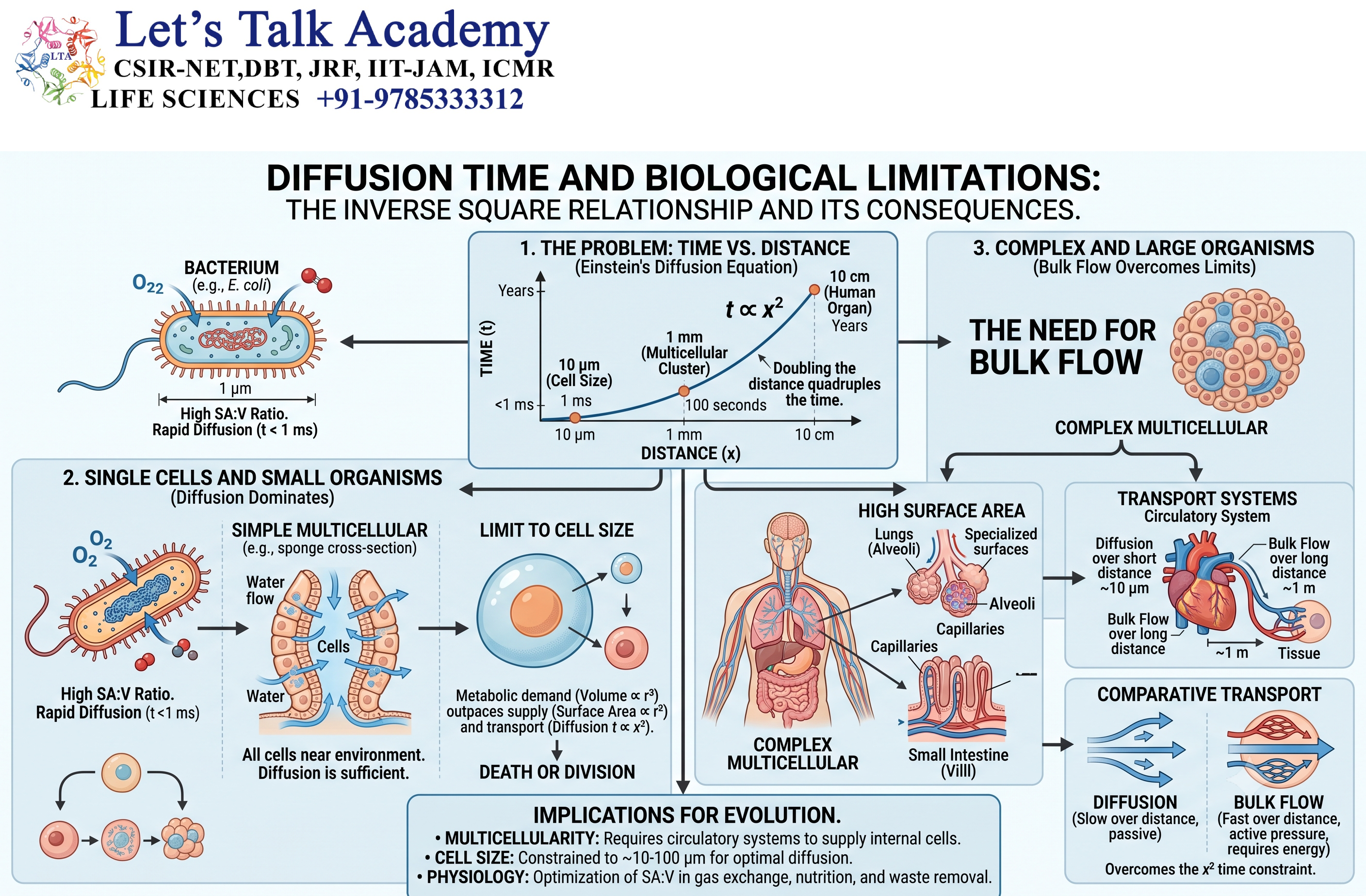
7.1 Diffusion Over Short Distances
Diffusion is extremely effective over short distances.
Within a small cell, molecules can often travel relatively short distances by diffusion.
This is particularly important for small molecules and signaling processes.
7.2 Diffusion Over Long Distances
Diffusion becomes progressively slower as the distance increases.
A useful relationship is:
Diffusion time ∝ distance²
This means that if the diffusion distance increases substantially, the time required for diffusion increases even more dramatically.
For example, doubling the distance can require approximately four times as long under comparable conditions.
This is one reason large multicellular organisms require specialized transport systems rather than relying exclusively on diffusion.
7.3 Importance of Cell Size
The limitations of diffusion help explain why cells are generally microscopic.
As a cell becomes larger, its volume increases more rapidly than its surface area.
This creates challenges for:
- Nutrient uptake
- Waste removal
- Gas exchange
- Intracellular distribution
Therefore, cell size is strongly influenced by the efficiency of transport and exchange.
8. Diffusion in Living Organisms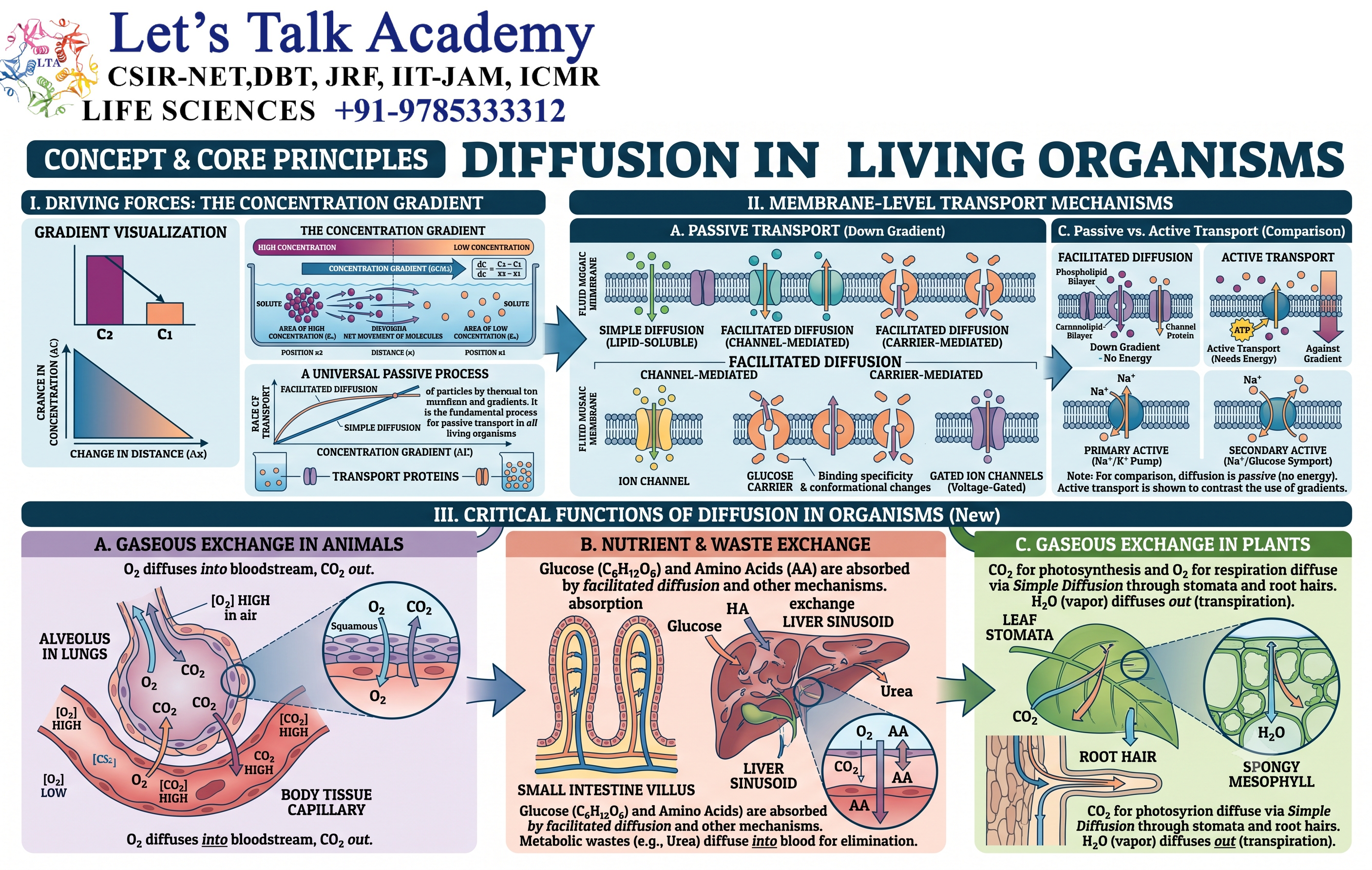
8.1 Gas Exchange in the Lungs
Oxygen and carbon dioxide move across respiratory surfaces largely through diffusion.
The thin respiratory surface and large surface area of the lungs support efficient gas exchange.
The maintenance of concentration and partial-pressure gradients helps drive this movement.
8.2 Gas Exchange in Tissues
Oxygen moves from blood into tissues when appropriate gradients exist.
Carbon dioxide moves from metabolically active tissues toward the blood.
This exchange allows cells to obtain oxygen and remove carbon dioxide.
8.3 Diffusion in Plants
Diffusion is important in plants as well.
Carbon dioxide enters leaves through stomata and can then diffuse through internal air spaces toward photosynthetic cells.
Oxygen produced during photosynthesis can diffuse outward.
Water vapor also moves through plant tissues and out through stomata as part of transpiration.
8.4 Diffusion in Microorganisms
Many microorganisms rely heavily on diffusion because of their small size.
Small dimensions allow nutrients, gases, and metabolic products to move efficiently over relatively short distances.
9. Diffusion in Cellular Processes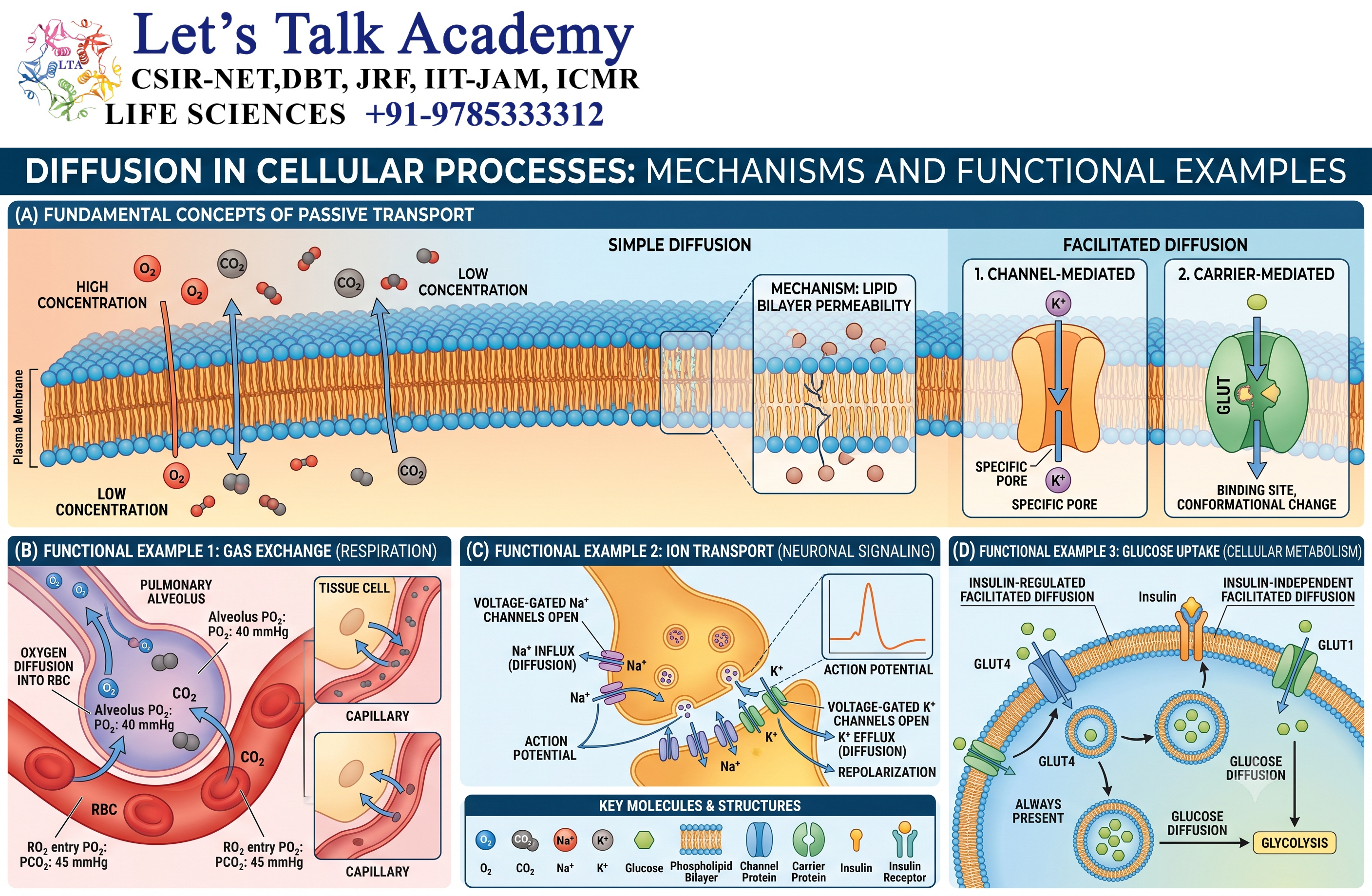
9.1 Intracellular Diffusion
Diffusion contributes to the movement of molecules within cells.
Small molecules can move through the cytoplasm and reach different cellular regions through random molecular motion.
However, the cytoplasm is not simply a dilute aqueous solution. It is crowded with proteins, nucleic acids, membranes, organelles, and other structures.
This molecular crowding can affect diffusion rates.
9.2 Signaling Molecules
Some signaling molecules can diffuse through extracellular or intracellular environments.
For example, certain small signaling molecules can move from their site of production to nearby target cells or cellular components.
The distance and properties of the surrounding medium strongly influence the effectiveness of diffusion-based signaling.
9.3 Synaptic Signaling
At chemical synapses, neurotransmitters are released into the synaptic cleft.
They diffuse across the narrow extracellular space and bind to receptors on the postsynaptic membrane.
The short distance allows diffusion to occur rapidly.
10. Diffusion Versus Osmosis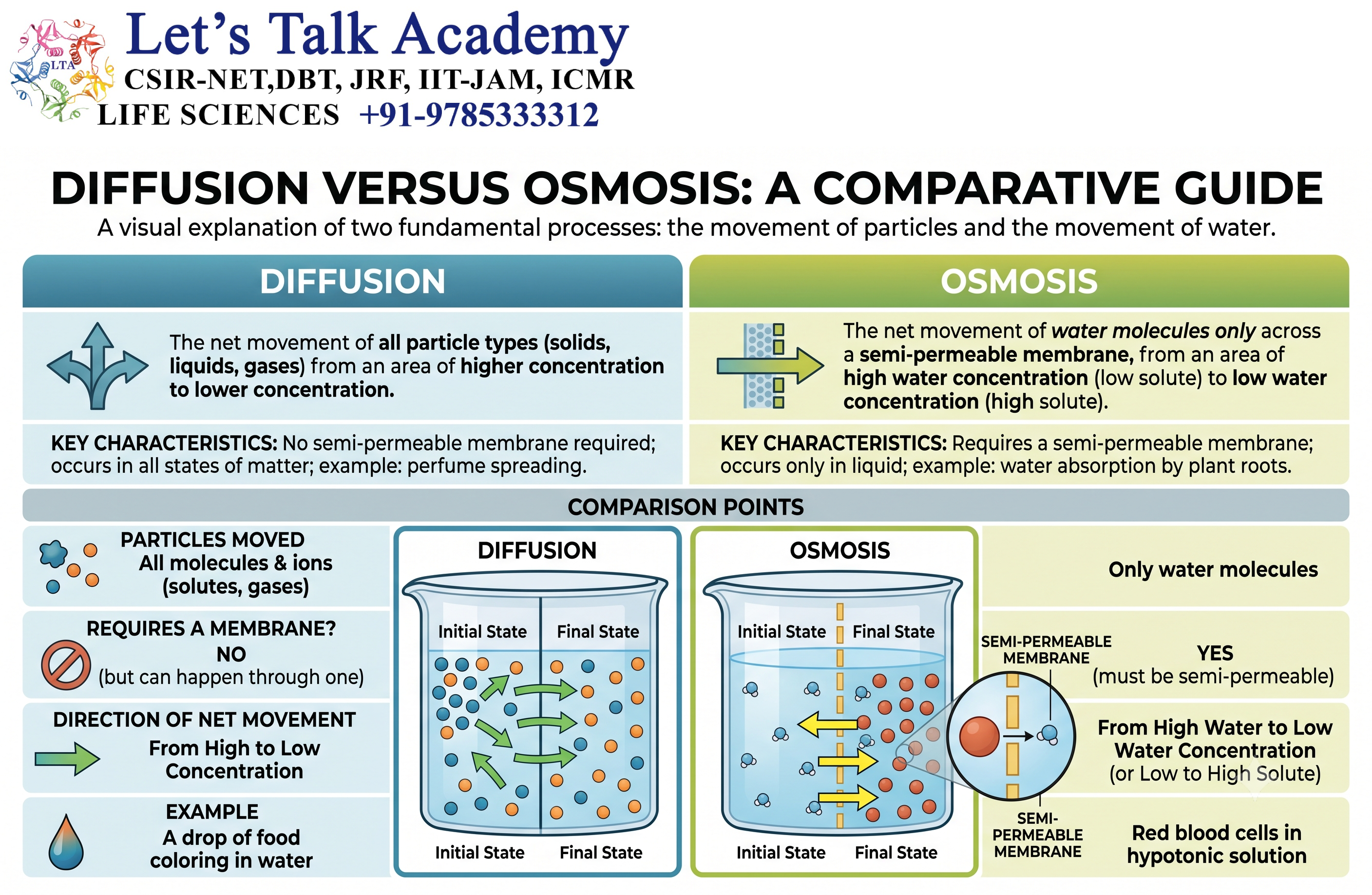
10.1 Diffusion
Diffusion refers broadly to the movement of particles down a concentration gradient as a consequence of random molecular motion.
The diffusing substance may be:
- Gas
- Solute
- Small molecule
- Ion, when an appropriate pathway exists
10.2 Osmosis
Osmosis specifically concerns the movement of water across a selectively permeable membrane in response to differences in water potential or effective solute concentration.
Therefore:
Diffusion → movement of particles
Osmosis → movement of water
Osmosis can be considered a specialized form of passive transport involving water.
11. Diffusion Versus Active Transport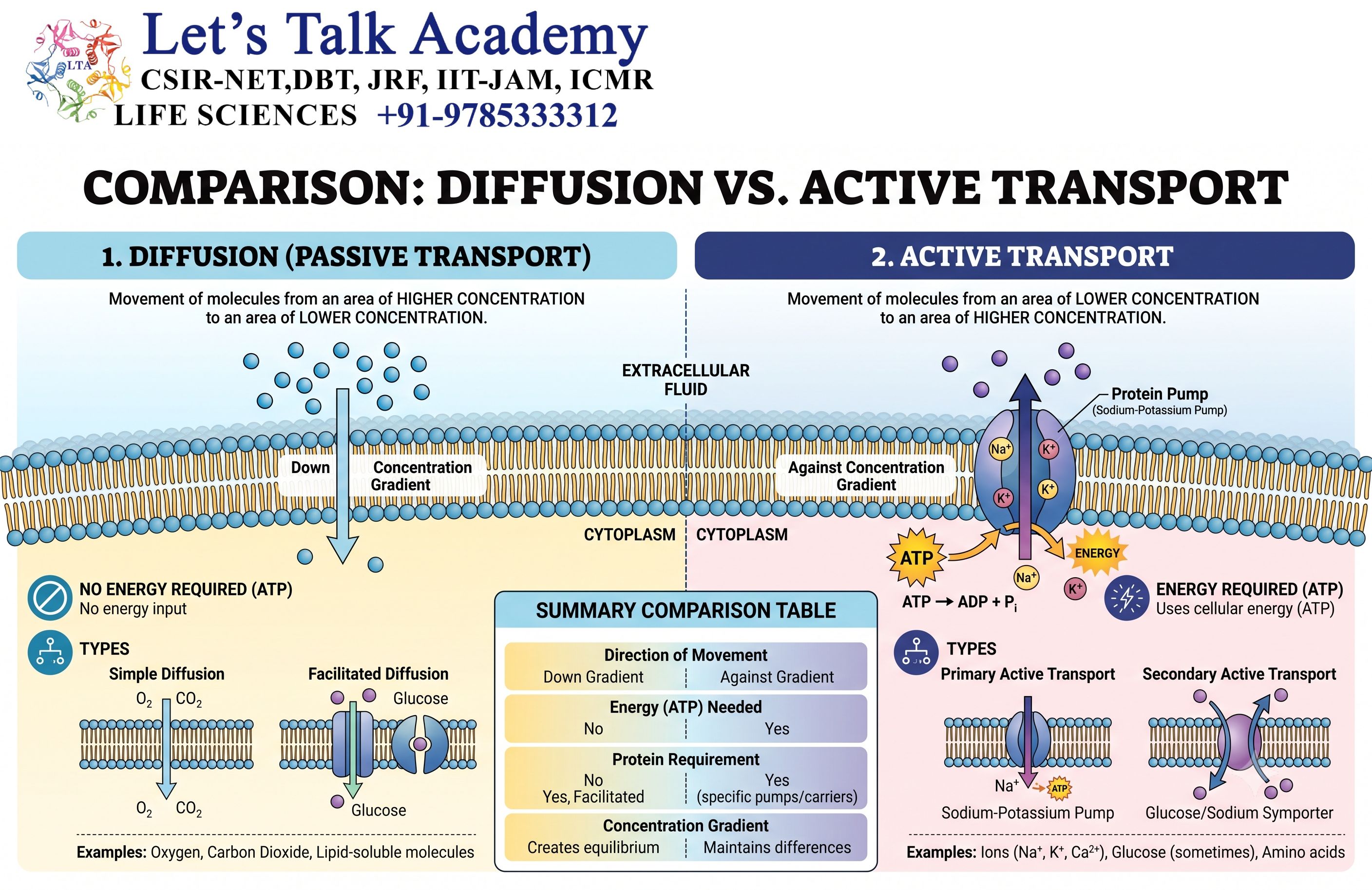
11.1 Passive Movement
Diffusion is a passive process.
It does not require direct energy expenditure by the cell.
Movement occurs down the relevant concentration or electrochemical gradient.
11.2 Active Transport
Active transport moves substances against their electrochemical gradients and requires an energy source.
Examples include:
- Sodium-potassium pump
- Calcium pumps
- Proton pumps
The major distinction is therefore the direction of movement relative to the gradient and the requirement for energy.
12. Diffusion and Electrochemical Gradients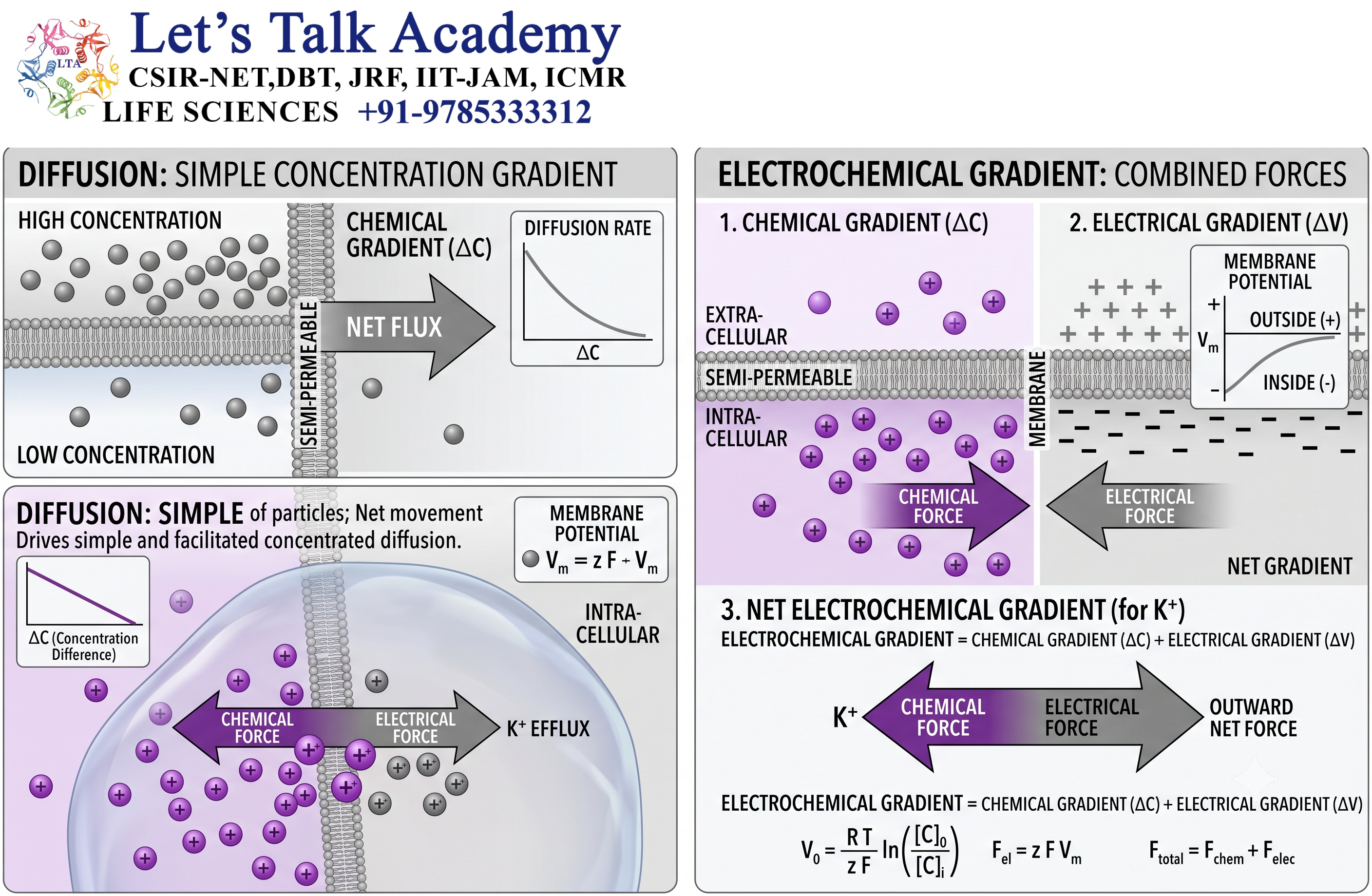
12.1 Concentration Gradient
For an uncharged molecule, the concentration gradient is usually the primary factor determining passive diffusion.
The molecule tends to move from higher concentration toward lower concentration.
12.2 Electrical Gradient
For charged particles, the electrical component of the membrane potential also affects movement.
A positively charged ion is influenced not only by its concentration difference but also by the electrical potential across the membrane.
12.3 Electrochemical Gradient
The combined effect of chemical and electrical forces is called the electrochemical gradient.
For ions, passive movement through channels or transport proteins depends on this combined gradient.
This concept is essential for understanding:
- Ion transport
- Membrane potential
- Nerve signaling
- Muscle physiology
- Mitochondrial energy conversion
13. Importance of Diffusion in Biology
Diffusion is involved in numerous biological processes, including:
- Oxygen movement
- Carbon dioxide removal
- Nutrient distribution
- Waste removal
- Gas exchange
- Cellular signaling
- Intracellular molecular movement
- Synaptic transmission
- Exchange across biological membranes
Although diffusion is a relatively simple physical process, it is fundamental to the organization and survival of living systems.
14. Common Misconceptions About Diffusion
14.1 Molecules Do Not Stop Moving at Equilibrium
At equilibrium, molecules continue moving randomly.
What becomes zero is the net movement, not the movement of individual molecules.
14.2 Diffusion Does Not Require ATP
Simple diffusion does not directly require ATP.
The energy comes from the existing random thermal motion of molecules.
14.3 Diffusion Is Not Always Through a Membrane
Diffusion can occur in gases, liquids, cytoplasm, extracellular fluids, and across biological membranes.
A membrane is not a requirement for diffusion.
14.4 Facilitated Diffusion Is Still Passive
Facilitated diffusion uses membrane proteins but does not directly consume ATP.
The transported substance still moves down its electrochemical gradient.
15. Biological Significance of Diffusion
Diffusion represents one of the simplest ways in which matter becomes distributed in biological systems.
Its importance comes from the fact that cellular environments are constantly changing. Metabolism consumes certain molecules and produces others, creating concentration gradients that can drive molecular movement.
Diffusion helps connect different regions of biological systems and allows cells to exchange materials with their environment.
However, diffusion has physical limitations. It is highly effective over microscopic distances but becomes inefficient over long distances.
This limitation has influenced biological organization throughout evolution. Small cells can depend heavily on diffusion, whereas larger organisms require specialized systems such as circulatory, respiratory, and intracellular transport mechanisms.
Thus, diffusion is both a fundamental transport mechanism and an important physical constraint on the organization of life.


