
1. Unit of Replication
The unit of replication is the specific segment of DNA that is replicated from a particular origin of replication. It represents the basic functional region of DNA replication and is commonly referred to as a replicon.
DNA replication is a highly organized process in which a DNA molecule produces an identical copy of itself. Because chromosomes can be extremely large, replication cannot simply begin randomly at every point. Instead, replication begins at specific DNA sequences called origins of replication, from which replication proceeds in an organized manner.
The concept of the unit of replication is important because it helps explain how cells efficiently duplicate their entire genome before cell division.
A simple representation is:
Origin of replication → Replication fork → DNA synthesis → Completion of the replicon
In many organisms, replication is bidirectional, meaning that two replication forks move away from the origin in opposite directions.
1.1 Definition of a Replicon
A replicon is a unit of DNA that is replicated from a single origin of replication.
In simple terms:
A replicon is the DNA region controlled by one origin of replication and replicated as a single unit.
The origin determines where replication begins, while the movement of replication forks determines how the DNA within the replicon is copied.
The term replicon is particularly useful for understanding the organization of DNA replication in bacteria, archaea, eukaryotes, plasmids, and viruses.
1.2 Basic Organization of a Replicon
A typical replicon contains several important functional components:
- Origin of replication
- Replication initiation site
- Replication fork(s)
- DNA synthesis regions
- Termination region or site
The origin is the starting point of replication. Once replication is initiated, the DNA strands are separated and replication machinery is assembled. New DNA strands are then synthesized using the parental DNA strands as templates.
A simplified model is:
Origin → Fork ← Origin → Fork
More accurately, in bidirectional replication:
Replication fork ← Origin → Replication fork
The two replication forks move away from the origin until the entire replicon has been duplicated.
1.3 Origin of Replication
The origin of replication is a specific DNA region where DNA replication begins.
It is not merely a random location on the chromosome. It contains sequence and structural features that allow replication proteins to recognize and initiate DNA synthesis.
At the origin:
- DNA replication proteins recognize the origin.
- The DNA double helix begins to unwind.
- Hydrogen bonds between complementary bases are disrupted.
- The parental strands separate.
- A replication bubble may form.
- Replication forks develop.
- DNA polymerases begin synthesizing new DNA.
The exact organization and sequence requirements of origins differ among organisms.
1.4 Replication Fork
A replication fork is the Y-shaped structure formed when the two strands of DNA separate during replication.
At the replication fork, several enzymes and proteins work together.
Important components include:
- Helicase
- Primase
- DNA polymerase
- Single-strand DNA-binding proteins
- Sliding clamp
- Clamp loader
- Topoisomerases
- DNA ligase
The replication fork is therefore not a single enzyme or structure but a highly coordinated molecular machine.
1.5 Replication Bubble
When replication begins at an origin and proceeds in both directions, the DNA forms a structure called a replication bubble.
The replication bubble contains two replication forks.
For example:
Fork ←──── Origin ────→ Fork
As the forks move outward, the replication bubble becomes progressively larger.
Eventually, replication bubbles may meet other replication forks or reach termination regions, depending on the organism and chromosome.
2. Types of Replicons
The organization of replicons differs significantly between prokaryotic and eukaryotic organisms.
2.1 Prokaryotic Replicons
Many bacterial chromosomes are organized as a single major replicon.
For example, the chromosome of Escherichia coli generally has a single principal origin of replication called oriC.
Replication begins at oriC and proceeds bidirectionally around the circular chromosome.
This produces two replication forks that move in opposite directions.
The major steps are:
oriC recognition → DNA unwinding → replication fork formation → bidirectional DNA synthesis → chromosome completion
2.2 Eukaryotic Replicons
Eukaryotic chromosomes are much larger and are generally replicated using multiple origins of replication.
Each origin initiates replication over a particular DNA region, producing multiple replicons along a chromosome.
A simplified arrangement is:
Origin 1 → Replicon 1 → Origin 2 → Replicon 2 → Origin 3 → Replicon 3
Multiple origins are necessary because a eukaryotic chromosome can contain enormous amounts of DNA.
If a chromosome had only one origin, complete replication would take an impractically long time.
2.3 Viral Replicons
Many DNA viruses contain their own replication origins and replication systems, although some viruses depend heavily on host-cell replication machinery.
The viral genome may function as a replicon if it contains the necessary information for initiating and controlling replication.
Some viral genomes use specialized mechanisms such as:
- Rolling-circle replication
- Strand-displacement replication
- Protein-primed replication
- Bidirectional replication
2.4 Plasmid Replicons
Plasmids are extrachromosomal DNA molecules commonly found in bacteria and some other organisms.
A plasmid generally contains a specific replication origin and associated regulatory sequences.
The plasmid’s replicon determines how the plasmid is replicated and often contributes to its copy number.
Therefore, plasmid replication can be regulated independently of chromosomal replication.
3. Mechanism of DNA Replication Within a Replicon
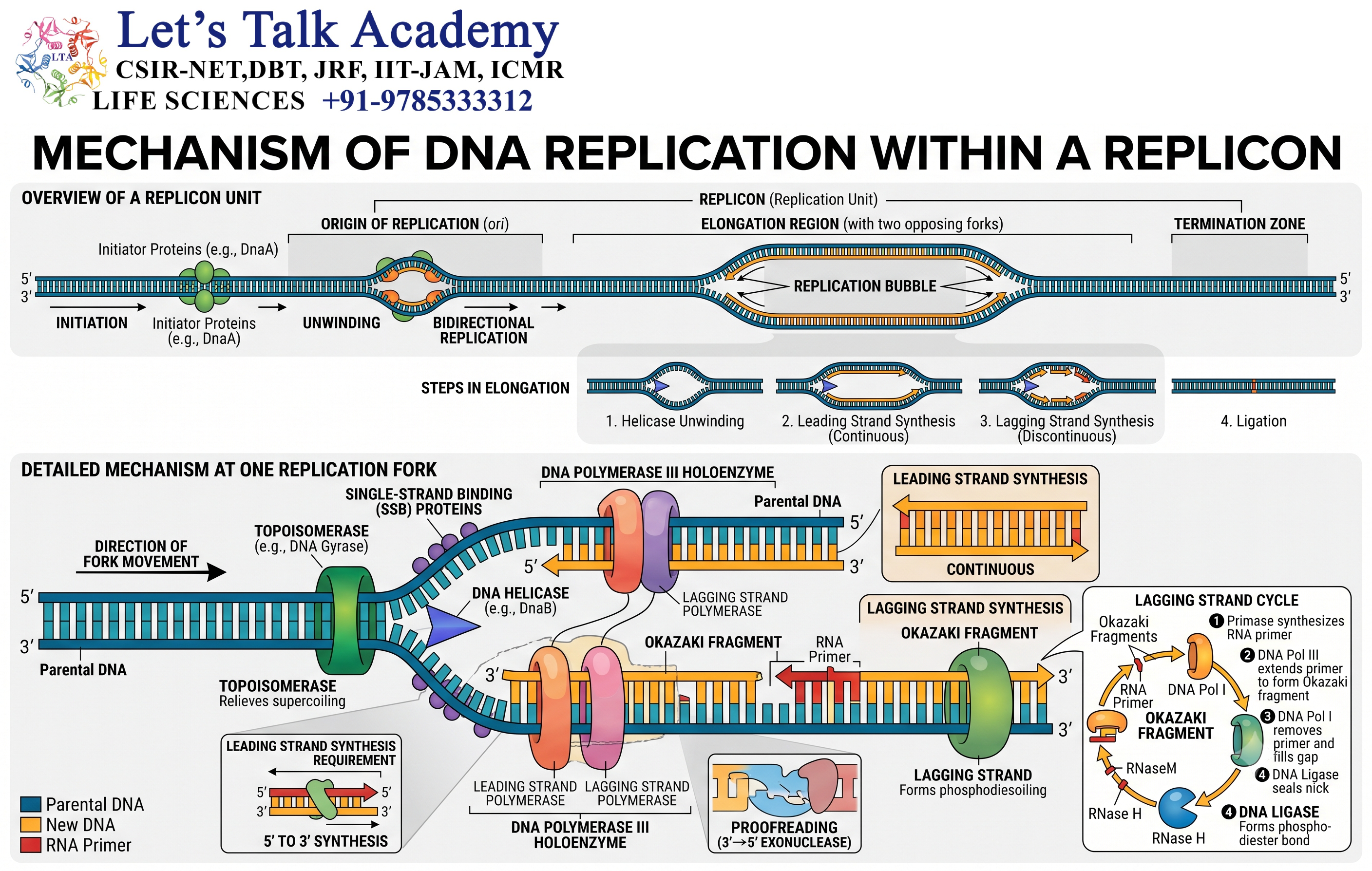
DNA replication involves several highly coordinated stages.
3.1 Initiation
Replication begins at the origin.
Initiator proteins recognize the origin and help produce a locally unwound region of DNA.
The double-stranded DNA begins to separate, allowing each parental strand to serve as a template.
Initiation is one of the most highly regulated stages of DNA replication because inappropriate initiation can lead to abnormal DNA copy numbers and genomic instability.
3.2 DNA Unwinding
DNA exists as a double helix, so the two strands must be separated before they can be copied.
The enzyme helicase separates the two DNA strands by disrupting the hydrogen bonds between complementary bases.
As the DNA is unwound, torsional stress develops in the DNA ahead of the replication fork.
This stress is relieved by enzymes called topoisomerases.
3.3 Stabilization of Single DNA Strands
Once DNA strands separate, they have a tendency to reanneal.
Single-strand DNA-binding proteins bind to the exposed DNA strands and stabilize them.
In bacteria, these proteins are commonly called SSB proteins.
In eukaryotes, the major single-stranded DNA-binding protein is RPA, or replication protein A.
These proteins help maintain the DNA in a suitable form for replication.
3.4 Primer Formation
DNA polymerase cannot normally begin DNA synthesis from an entirely naked template.
It requires a pre-existing 3′-OH group.
Therefore, a short RNA or RNA-DNA primer is produced by primase or a primase-containing complex.
The primer provides the starting point for DNA polymerization.
3.5 DNA Chain Elongation
DNA polymerase adds nucleotides to the growing DNA strand.
New DNA is synthesized in the:
5′ → 3′ direction
This directional property creates an important difference between the two newly synthesized DNA strands.
One strand is synthesized continuously, while the other is synthesized discontinuously.
3.6 Leading Strand
The leading strand is synthesized continuously in the direction of replication-fork movement.
Once an appropriate primer is available, DNA polymerase can continuously add nucleotides to the growing strand.
Therefore:
Leading strand → continuous synthesis
3.7 Lagging Strand
The lagging strand is synthesized discontinuously because DNA polymerase can synthesize DNA only in the 5′ → 3′ direction.
Short DNA segments called Okazaki fragments are produced.
Therefore:
Lagging strand → discontinuous synthesis → Okazaki fragments
Later, the RNA primers are removed or processed, gaps are filled with DNA, and the fragments are joined.
3.8 DNA Ligation
After Okazaki fragments are processed, adjacent DNA fragments must be joined.
The enzyme DNA ligase seals breaks in the sugar-phosphate backbone.
This produces a continuous DNA strand.
Thus, ligase is particularly important for completing the lagging strand.
4. Bidirectional Replication
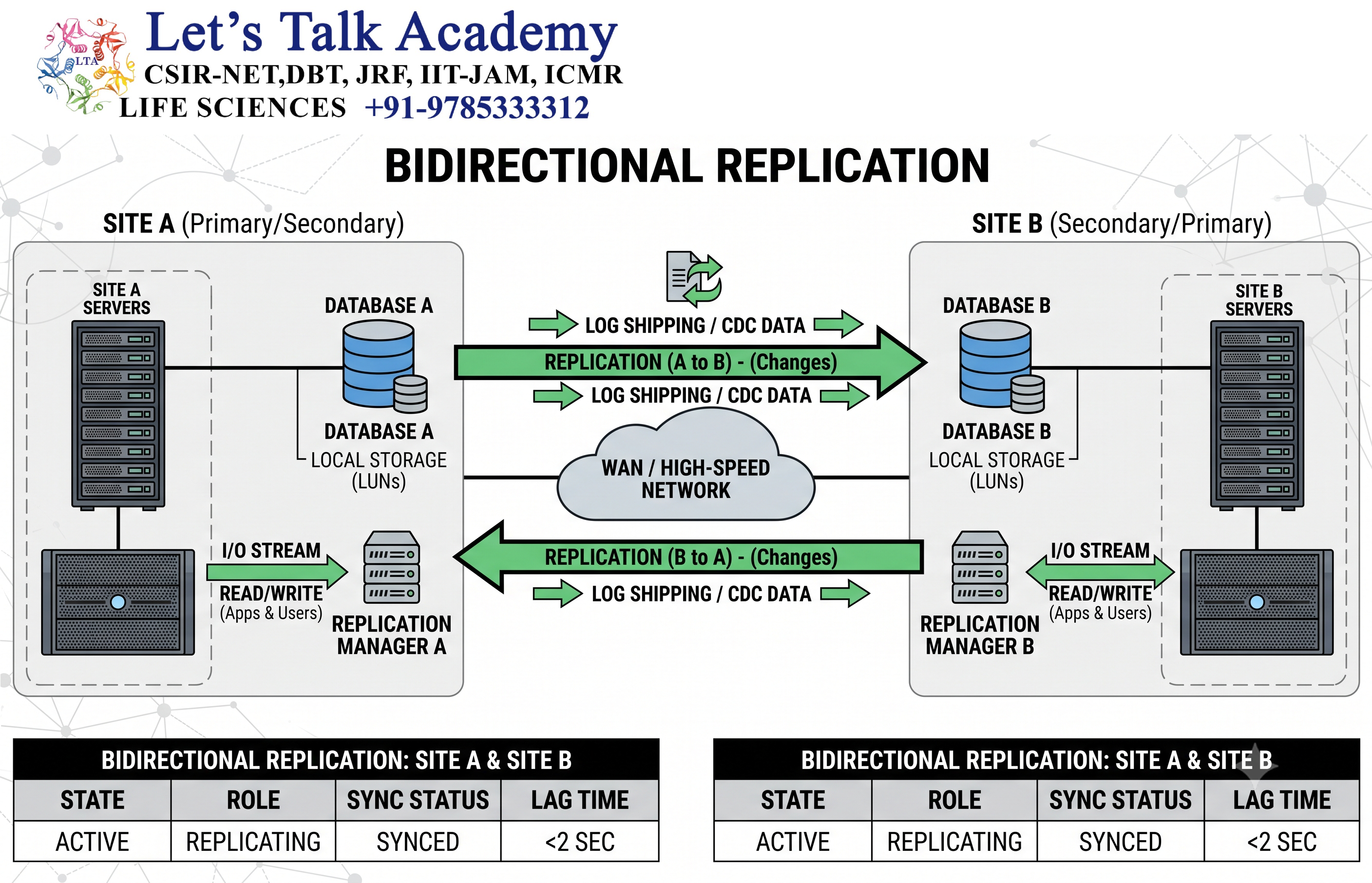
Many DNA molecules replicate bidirectionally.
In this mechanism, replication begins at an origin and two replication forks move in opposite directions.
For example:
← Replication fork | Origin | Replication fork →
Bidirectional replication greatly increases the efficiency of genome duplication.
In circular bacterial chromosomes, the two replication forks can travel around the chromosome until they eventually meet in the termination region.
In linear eukaryotic chromosomes, multiple origins are activated along the chromosome, producing many replication bubbles and replication forks.
5. Replicons in Bacteria
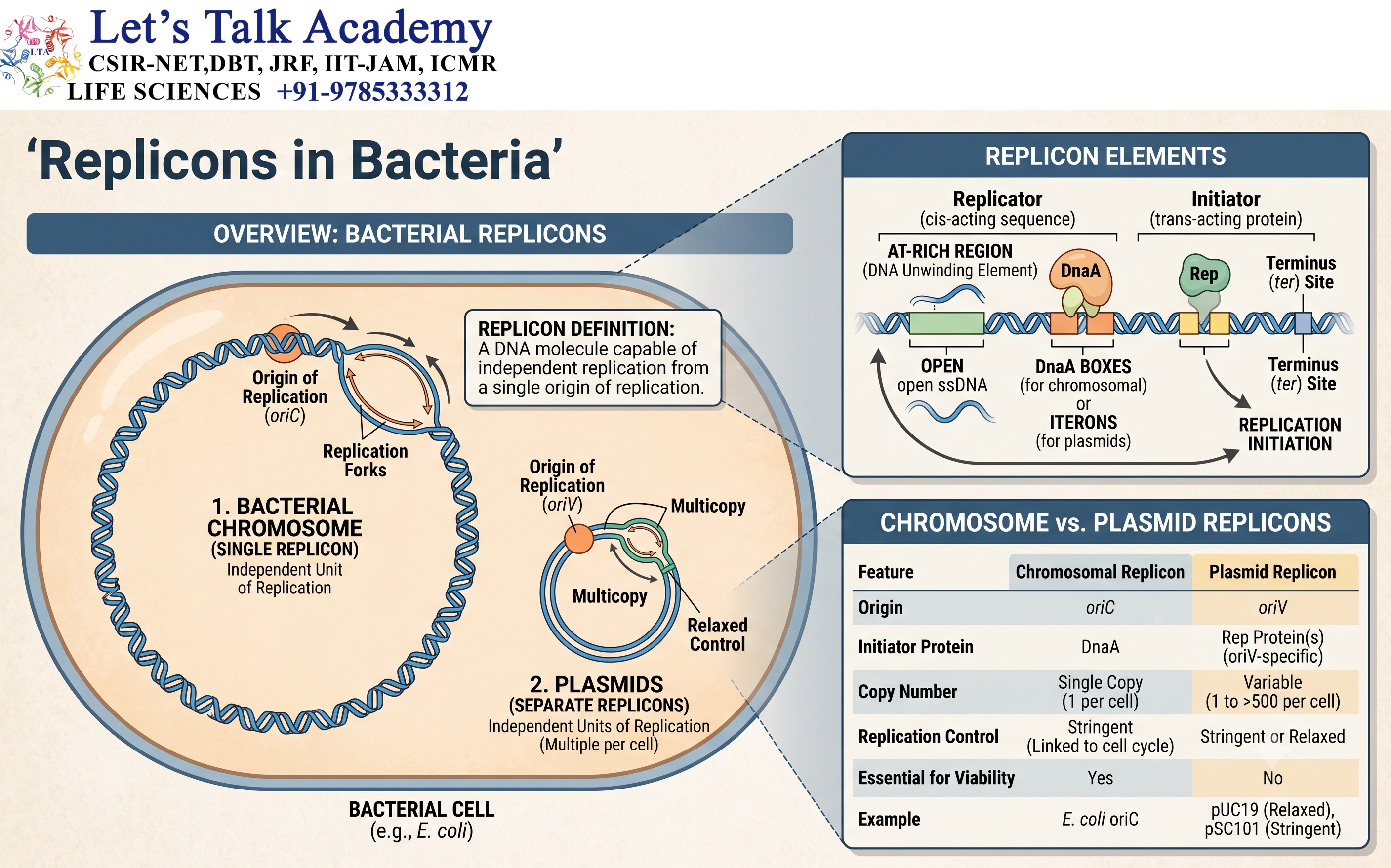
Bacterial replication provides a relatively simple model for understanding the concept of the unit of replication.
5.1 oriC
In E. coli, replication begins at a chromosomal origin called oriC.
The oriC region contains specific DNA sequences recognized by the bacterial initiator protein DnaA.
DnaA binding promotes local DNA opening and recruitment of additional replication proteins.
5.2 Initiation Complex
After origin recognition, additional proteins are recruited to form the replication machinery.
Important proteins include:
- DnaA — initiator protein
- DnaB — helicase
- DnaC — helicase-loading protein
- DnaG — primase
- DNA polymerase III — major replicative polymerase
- SSB — stabilizes single-stranded DNA
- DNA gyrase/topoisomerases — manage DNA supercoiling
- DNA polymerase I — participates in primer removal and gap filling
- DNA ligase — seals DNA breaks
The exact functions and protein names vary among organisms, but the general principle of coordinated replication machinery is conserved.
6. Replicons in Eukaryotes
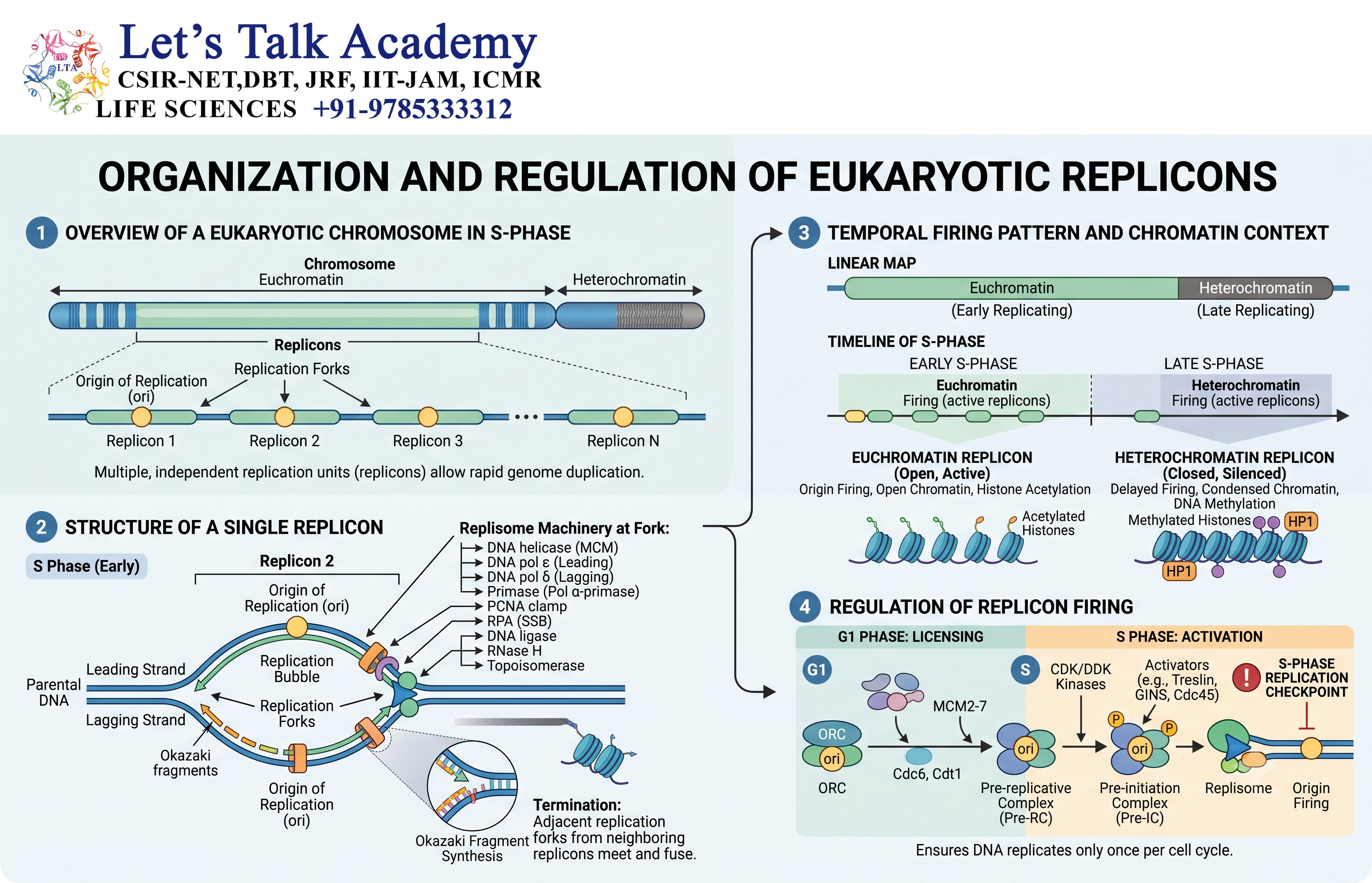
Eukaryotic DNA replication is more complex because chromosomes are large, linear, and associated with chromatin.
6.1 Multiple Origins
A single eukaryotic chromosome contains many replication origins.
Each origin can initiate replication of a DNA region.
Consequently, multiple replication forks operate simultaneously along a chromosome.
This strategy dramatically reduces the time required to duplicate the genome.
6.2 Replication Licensing
Eukaryotic cells must ensure that each region of DNA is replicated once and only once during a cell cycle.
This is achieved through a regulatory process known as replication licensing.
During the appropriate phase of the cell cycle, replication origins are prepared for activation.
Important proteins include:
- Origin Recognition Complex (ORC)
- Cdc6
- Cdt1
- MCM helicase complex
These proteins participate in the formation of the pre-replication complex.
6.3 Origin Activation
After the DNA has been properly licensed, origins are activated during S phase.
The helicase becomes active, DNA is unwound, and replication forks are established.
Importantly, mechanisms prevent an already replicated origin from being licensed and fired again during the same cell cycle.
This prevents re-replication.
7. Regulation of the Unit of Replication
Replication must be carefully regulated to maintain genome stability.
If replication occurs too frequently, DNA may be duplicated more than once.
If replication does not occur correctly, portions of the genome may remain unreplicated.
Therefore, cells regulate:
- Origin recognition
- Origin licensing
- Origin activation
- Replication fork progression
- DNA damage responses
- Replication termination
- Cell-cycle progression
The coordination of these processes ensures accurate duplication of genetic material.
8. Replication Fork Proteins
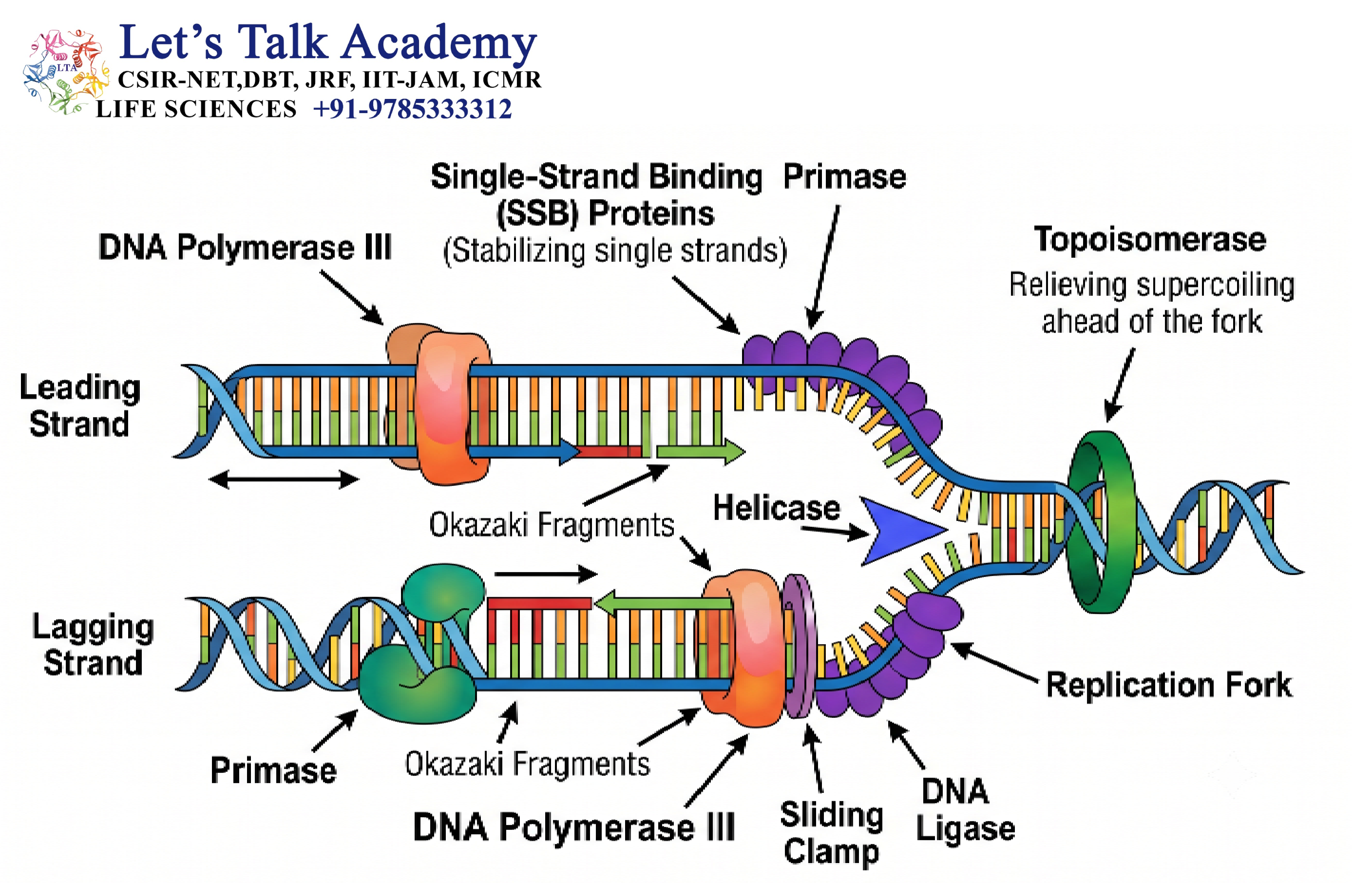
The replication fork contains a large collection of proteins.
8.1 Helicase
Helicase separates the two strands of DNA.
It is essential for creating the single-stranded templates required for DNA synthesis.
8.2 Primase
Primase synthesizes primers required for DNA polymerization.
8.3 DNA Polymerase
DNA polymerases synthesize the new DNA strand by adding nucleotides to the 3′ end of the growing chain.
Many DNA polymerases also possess proofreading functions.
8.4 Sliding Clamp
The sliding clamp keeps DNA polymerase associated with the DNA template.
This increases the processivity of DNA synthesis.
In bacteria, the major sliding clamp is the β clamp.
In eukaryotes, the corresponding protein is PCNA.
8.5 Topoisomerase
Topoisomerases control DNA topology and relieve torsional stress generated during DNA unwinding.
Without appropriate topological control, replication forks would encounter severe mechanical constraints.
9. Termination of Replication
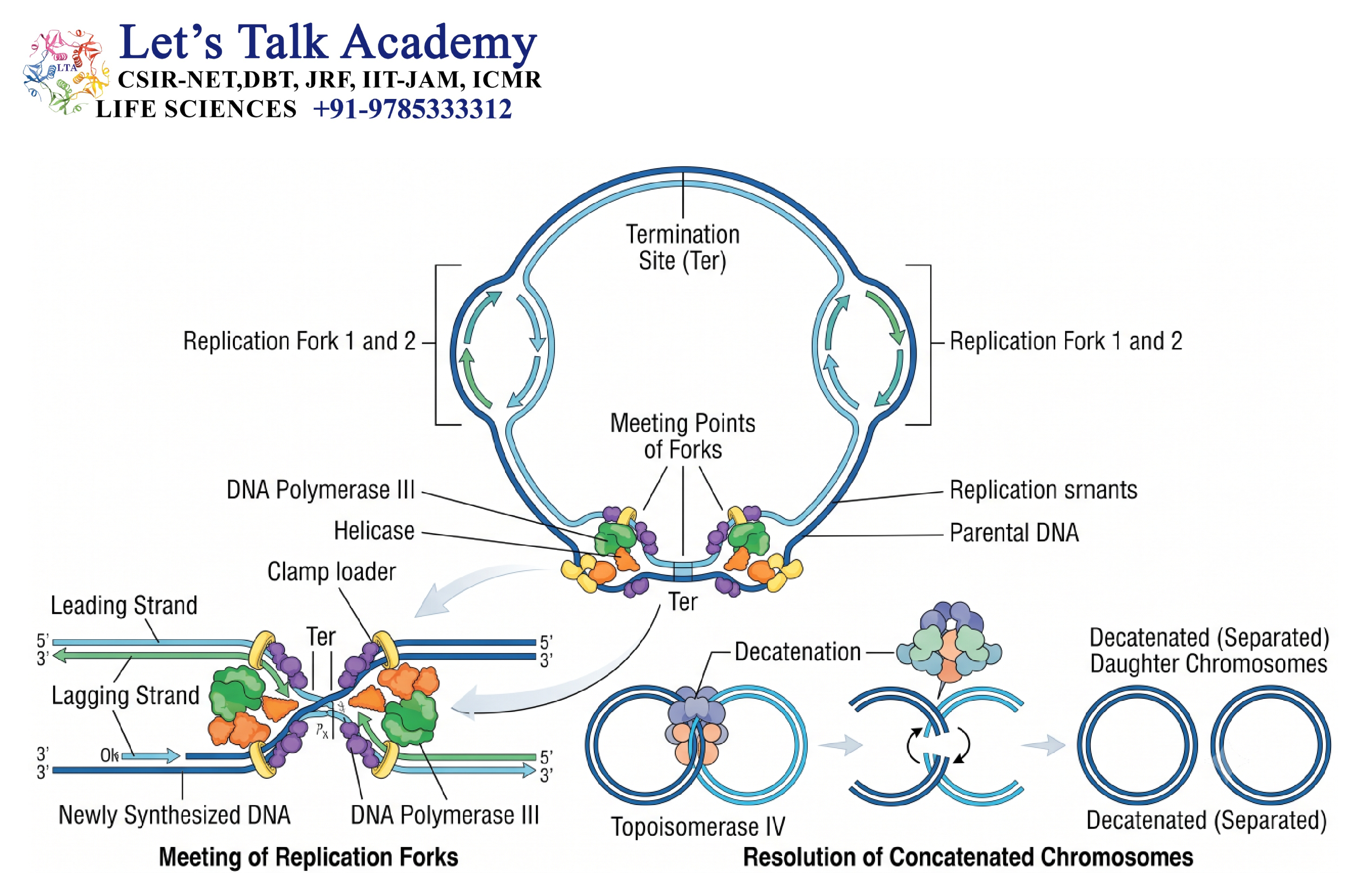
Replication must eventually stop after the DNA molecule has been completely copied.
The mechanism of termination varies among organisms.
9.1 Bacterial Termination
In many bacteria, the two replication forks eventually meet in a region opposite the origin.
Specific termination mechanisms can help control fork progression.
Once replication is complete, the newly formed DNA molecules may still require separation from one another.
This process is called decatenation and involves topoisomerases.
9.2 Eukaryotic Termination
In eukaryotes, replication usually terminates when replication forks originating from neighboring origins converge.
The remaining DNA is completed, primers are processed, and the DNA backbone is sealed.
Chromosome ends create an additional challenge because conventional DNA polymerases cannot completely replicate the ends of linear chromosomes.
This problem is known as the end-replication problem.
9.3 Telomeres and Telomerase
Eukaryotic chromosomes contain specialized structures called telomeres at their ends.
The enzyme telomerase can extend telomeric DNA in cells where telomerase is active.
Telomerase is particularly important in:
- Germline cells
- Many stem-cell populations
- Certain proliferative cell types
- Many cancer cells
10. Relationship Between Replicon and Replication Fork
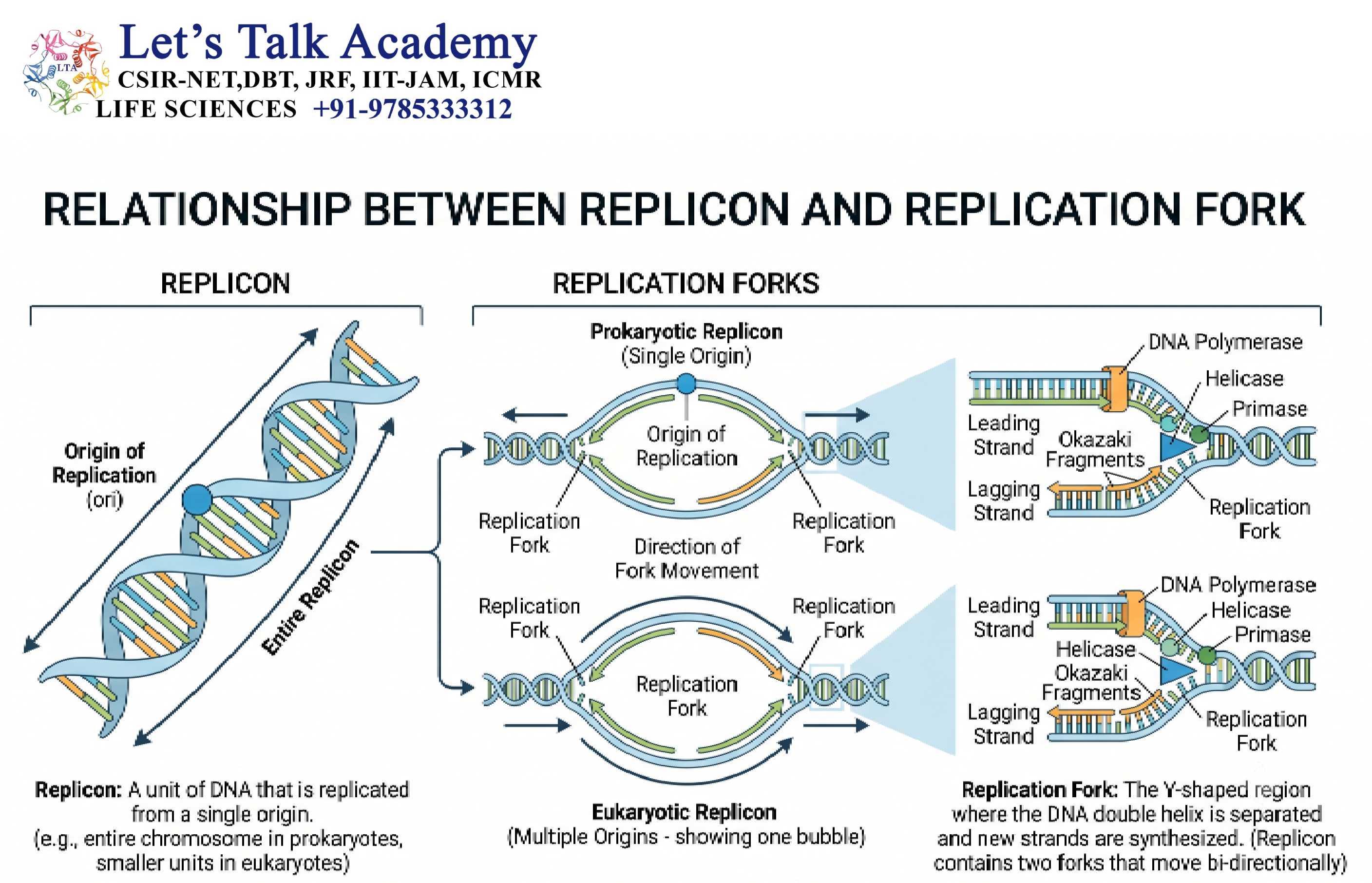
A replicon and a replication fork are related but are not the same thing.
A replicon is a DNA unit defined by its origin of replication.
A replication fork is the active DNA structure where parental DNA strands are separated and new DNA is synthesized.
One replicon can generate:
- One replication fork under some replication mechanisms, or
- Two replication forks during bidirectional replication.
Thus:
Replicon = DNA replication unit
Replication fork = site of active DNA synthesis
11. Replicon, Origin, and Replication Bubble: Comparison
| Feature | Replicon | Origin of Replication | Replication Bubble |
|---|---|---|---|
| Meaning | Unit of DNA replicated from an origin | Site where replication begins | Unwound DNA region formed during replication |
| Main role | Defines the replication unit | Initiates replication | Provides space for replication forks |
| Contains | Origin and replicated DNA region | Initiation sequences | Two forks in bidirectional replication |
| Associated with | Genome organization | Initiation | Active replication |
| Scale | Relatively large DNA region | Specific DNA region | Dynamic DNA structure |
12. Importance of the Unit of Replication
The concept of the unit of replication is important for understanding how genetic information is accurately duplicated.
It helps explain:
- How replication begins
- Why specific origins are required
- How large genomes are replicated efficiently
- How replication forks are established
- Why multiple origins are present in eukaryotic chromosomes
- How replication is regulated
- How DNA replication is coordinated with the cell cycle
- How errors in replication can affect genome stability
Understanding replicons also provides a foundation for studying chromosome organization, plasmid biology, DNA repair, genome engineering, and cell-cycle regulation.
13. Replication and Genome Stability
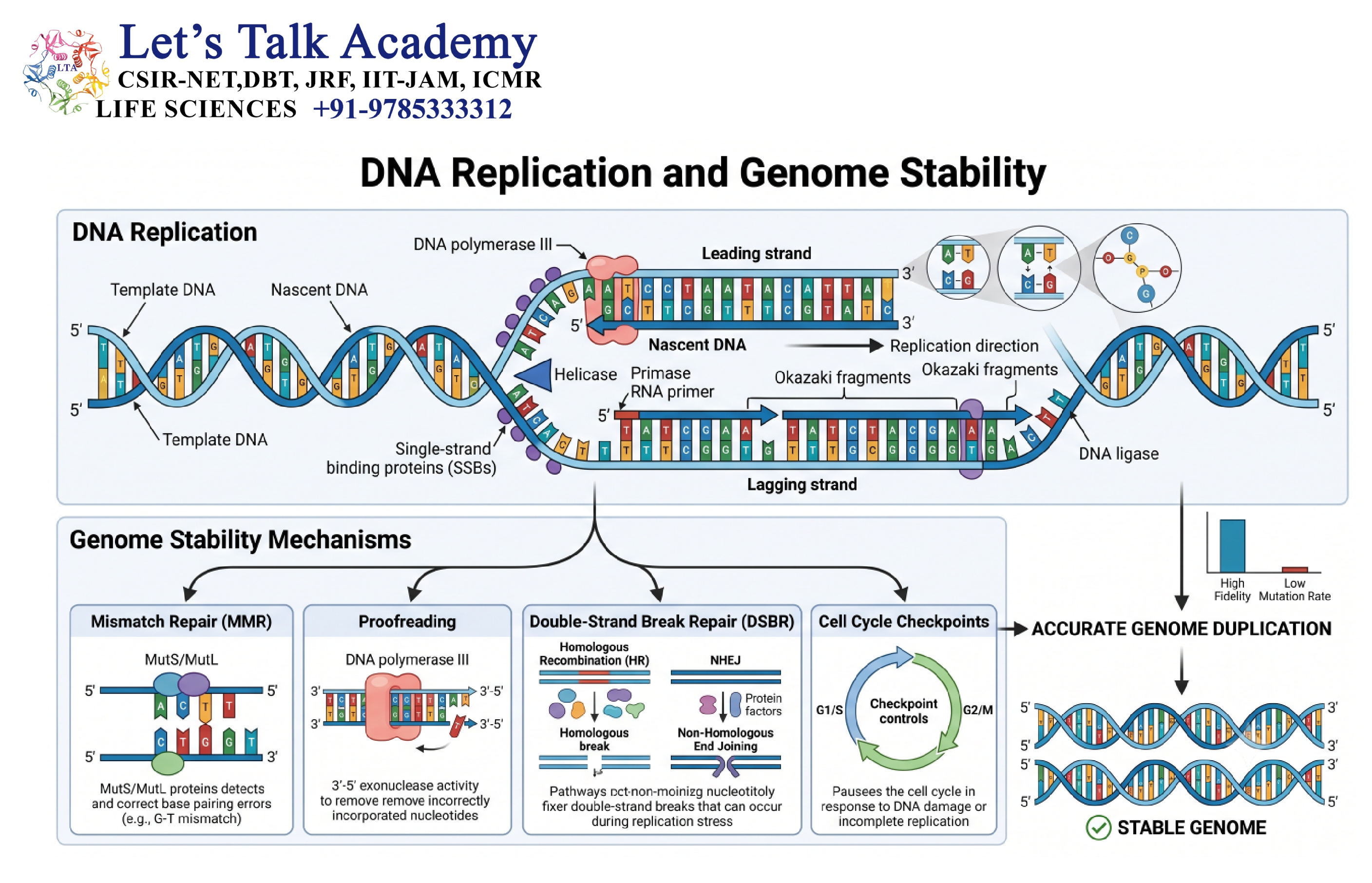
Accurate DNA replication is essential for maintaining genetic information.
Replication errors can arise from:
- Incorrect nucleotide incorporation
- DNA damage
- Replication fork stalling
- Difficult DNA sequences
- Problems with DNA repair
- Abnormal origin activation
- Re-replication
Cells possess proofreading and DNA-repair mechanisms that reduce the accumulation of replication errors.
Failure of these mechanisms can contribute to mutations, chromosome abnormalities, and genomic instability.


