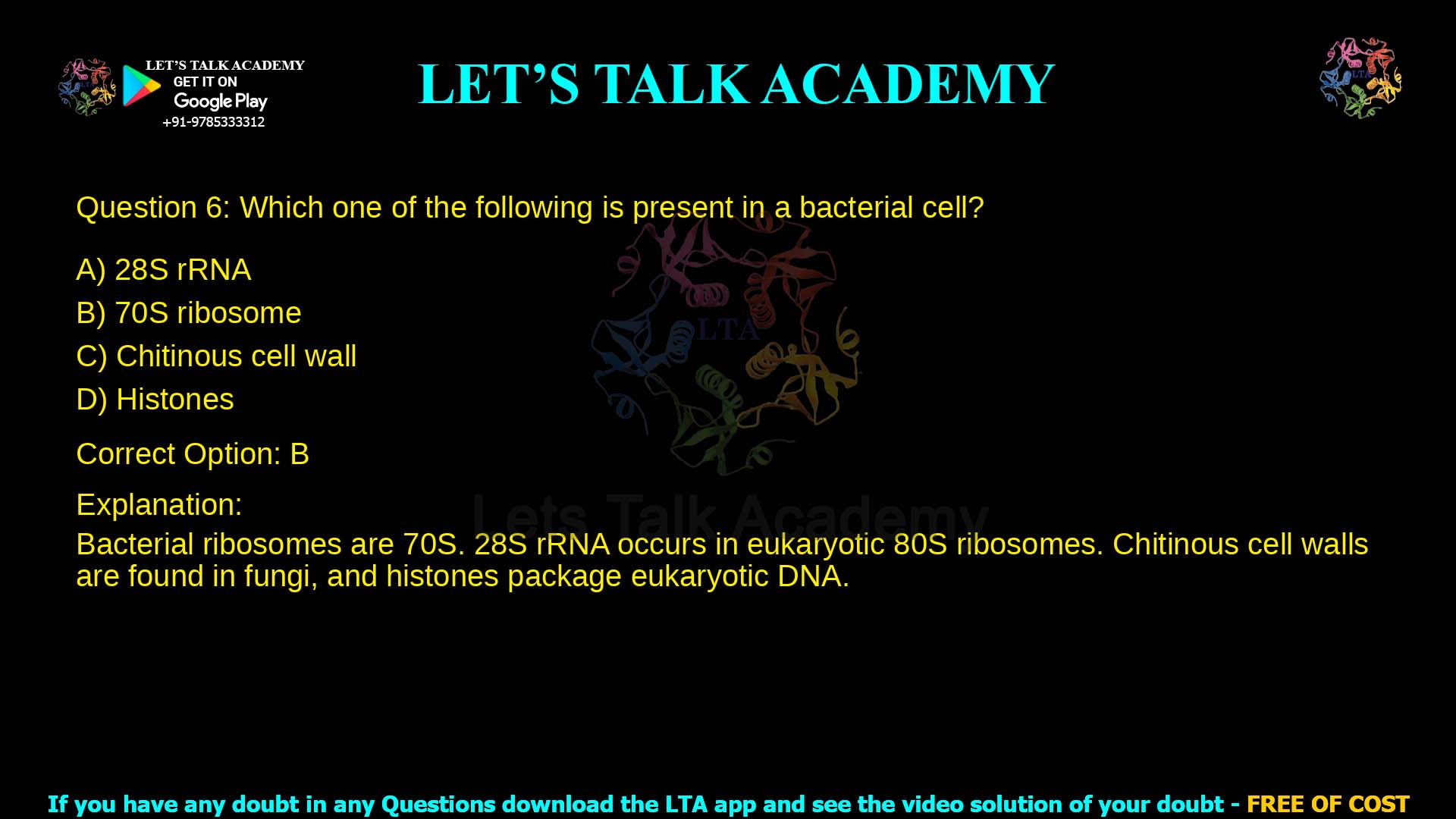
Q.6 Which one of the following is present in a bacterial cell?
(A) 28S rRNA
(B) 70S ribosome
(C) Chitinous cell wall
(D) Histones
Bacterial cells, as prokaryotes, feature distinct components like 70S ribosomes for protein synthesis, unlike eukaryotic cells. The correct answer to this CSIR NET Life Sciences MCQ is option (B) 70S ribosome, a universal hallmark of bacteria. This question tests knowledge of prokaryotic vs. eukaryotic cell structures.
Option Analysis
-
(A) 28S rRNA: Absent in bacterial cells, as this rRNA belongs to the large subunit of eukaryotic 80S ribosomes (60S subunit). Bacteria use 23S rRNA in their 50S subunit instead.
-
(B) 70S ribosome: Present in all bacterial cells, formed by 30S (small, with 16S rRNA) and 50S (large, with 23S and 5S rRNA) subunits for protein synthesis in the cytoplasm.
-
(C) Chitinous cell wall: Absent; bacterial cell walls consist of peptidoglycan (murein), not chitin, which occurs in fungi.
-
(D) Histones: Absent in most bacteria for DNA packaging; they use proteins like HU. Rare histone-like proteins exist in exceptions like Bdellovibrio, but not generally.
Bacterial Cell Structure Overview
Bacterial cells lack a nucleus and membrane-bound organelles, housing a single circular chromosome in the nucleoid. Key components include a plasma membrane, peptidoglycan cell wall (for rigidity), cytoplasm with 70S ribosomes (most abundant structure), and plasmids.
Exam Relevance for CSIR NET
This MCQ aligns with Unit 2 (Cell Communication and Signaling) and Unit 5 (Developmental Biology) in CSIR NET Life Sciences, emphasizing prokaryotic features. Antibiotics target 70S ribosomes (e.g., tetracycline), highlighting functional differences from 80S eukaryotic ribosomes.


1 Comment
Vanshika Sharma
December 30, 202570s ribosomes are present in bacterial cell.