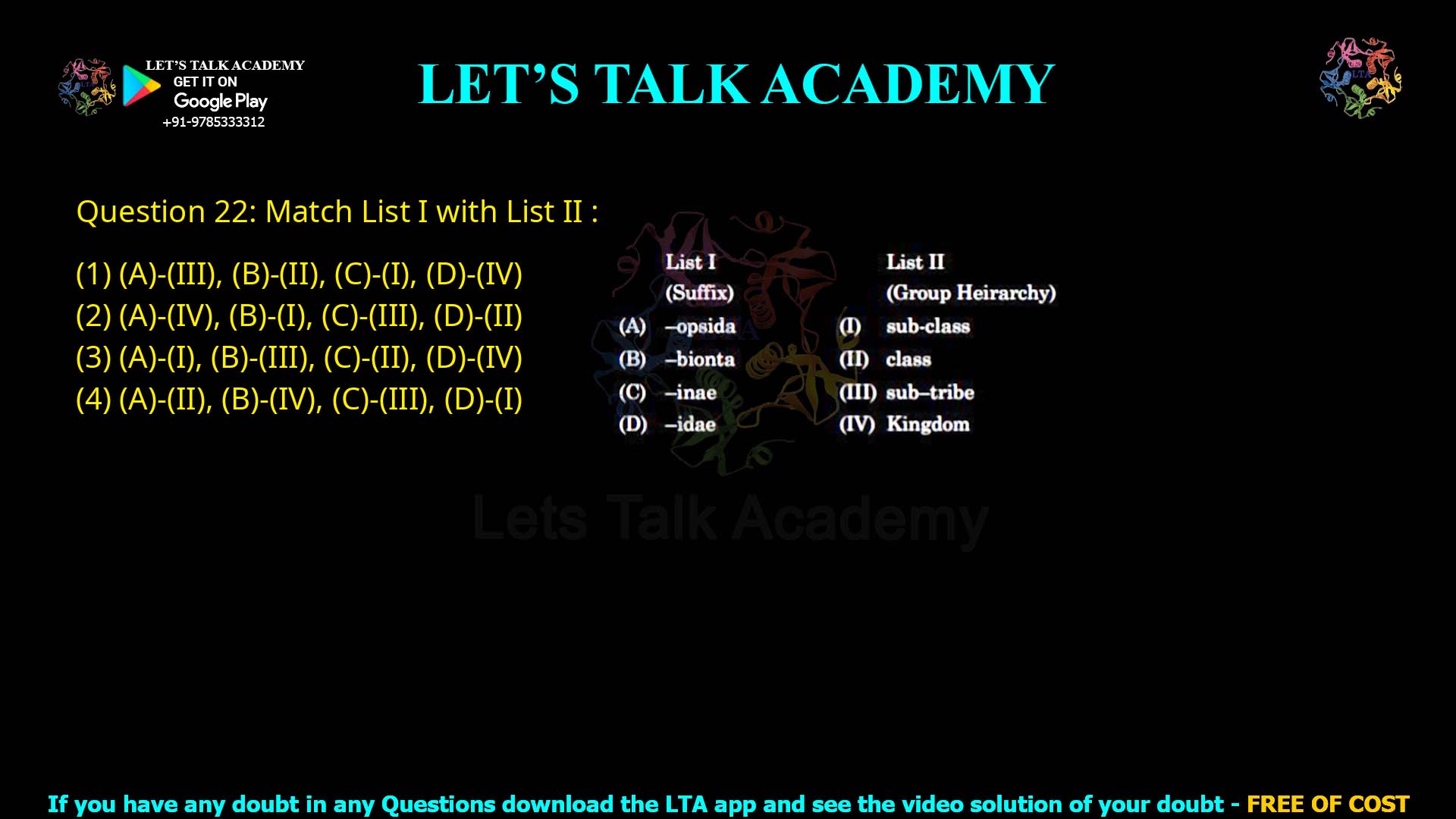
Q.22 Match List I with List II:
| List I (Suffix) | List II (Group Hierarchy) |
|---|---|
| (A) –opsida | (I) sub-class |
| (B) –bionta | (II) class |
| (C) –inae | (III) sub-tribe |
| (D) –idae | (IV) Kingdom |
The correct matching for botanical suffixes to taxonomic hierarchy levels is option (4): (A)-(II) class, (B)-(IV) Kingdom, (C)-(III) sub-tribe, (D)-(I) sub-class. This question assesses knowledge of ICBN (International Code of Botanical Nomenclature) suffix conventions for plant taxonomy ranks.
Option Analysis
Option (1): (A)-(III), (B)-(II), (C)-(I), (D)-(IV)
-
–opsida (III sub-tribe): Incorrect; –opsida denotes class (e.g., Lycopsida).
-
–bionta (II class): Incorrect; –bionta indicates Kingdom (e.g., Plantae → Embryobionta).
-
–inae (I sub-class): Incorrect; –inae is sub-tribe (e.g., Selagininae).
-
–idae (IV Kingdom): Incorrect; –idae is sub-class (e.g., Magnoliidae).
Option (2): (A)-(IV), (B)-(I), (C)-(III), (D)-(II)
-
–opsida (IV Kingdom): Incorrect; too low rank for Kingdom.
-
–bionta (I sub-class): Incorrect; –bionta is higher (Kingdom).
-
–inae (III sub-tribe): Correct.
-
–idae (II class): Incorrect; –idae is sub-class, not full class.
Option (3): (A)-(I), (B)-(III), (C)-(II), (D)-(IV)
-
–opsida (I sub-class): Incorrect; –opsida is class.
-
–bionta (III sub-tribe): Incorrect; –bionta is Kingdom.
-
–inae (II class): Incorrect.
-
–idae (IV Kingdom): Incorrect.
Option (4): (A)-(II), (B)-(IV), (C)-(III), (D)-(I)
-
–opsida (II class): Correct (e.g., Filicopsida).
-
–bionta (IV Kingdom): Correct (e.g., Chlorobionta).
-
–inae (III sub-tribe): Correct (e.g., Pteridinae).
-
–idae (I sub-class): Correct (e.g., Alismatidae).
Introduction to Match List I with List II Suffix Group Hierarchy
In botanical nomenclature, Match List I with List II suffix group hierarchy follows ICBN rules where specific endings denote taxonomic ranks. Suffixes like –opsida (class), –bionta (Kingdom), –inae (sub-tribe), and –idae (sub-class) standardize classification from Kingdom to lower levels, crucial for pteridophytes and angiosperms in exams.
Suffix Meanings Decoded
-
–opsida: Class level (e.g., Bryopsida in mosses).
-
–bionta: Kingdom/supergroup (e.g., Plantobionta).
-
–inae: Sub-tribe within tribes.
-
–idae: Sub-class under classes.
Hierarchy Matching Table
| Suffix (List I) | Rank (List II) | Example |
|---|---|---|
| (A) –opsida | (II) Class | Lycopsida |
| (B) –bionta | (IV) Kingdom | Embryobionta |
| (C) –inae | (III) Sub-tribe | Aspidieae sub-tribes |
| (D) –idae | (I) Sub-class | Rosidae |
Exam Tips for Suffix Questions
Memorize via mnemonics: “Opsida for Class, Bionta Kingdom massive.” Option (4) is standard in pteridophyte taxonomy like Selaginella (Selaginellaceae, Selagininae).


