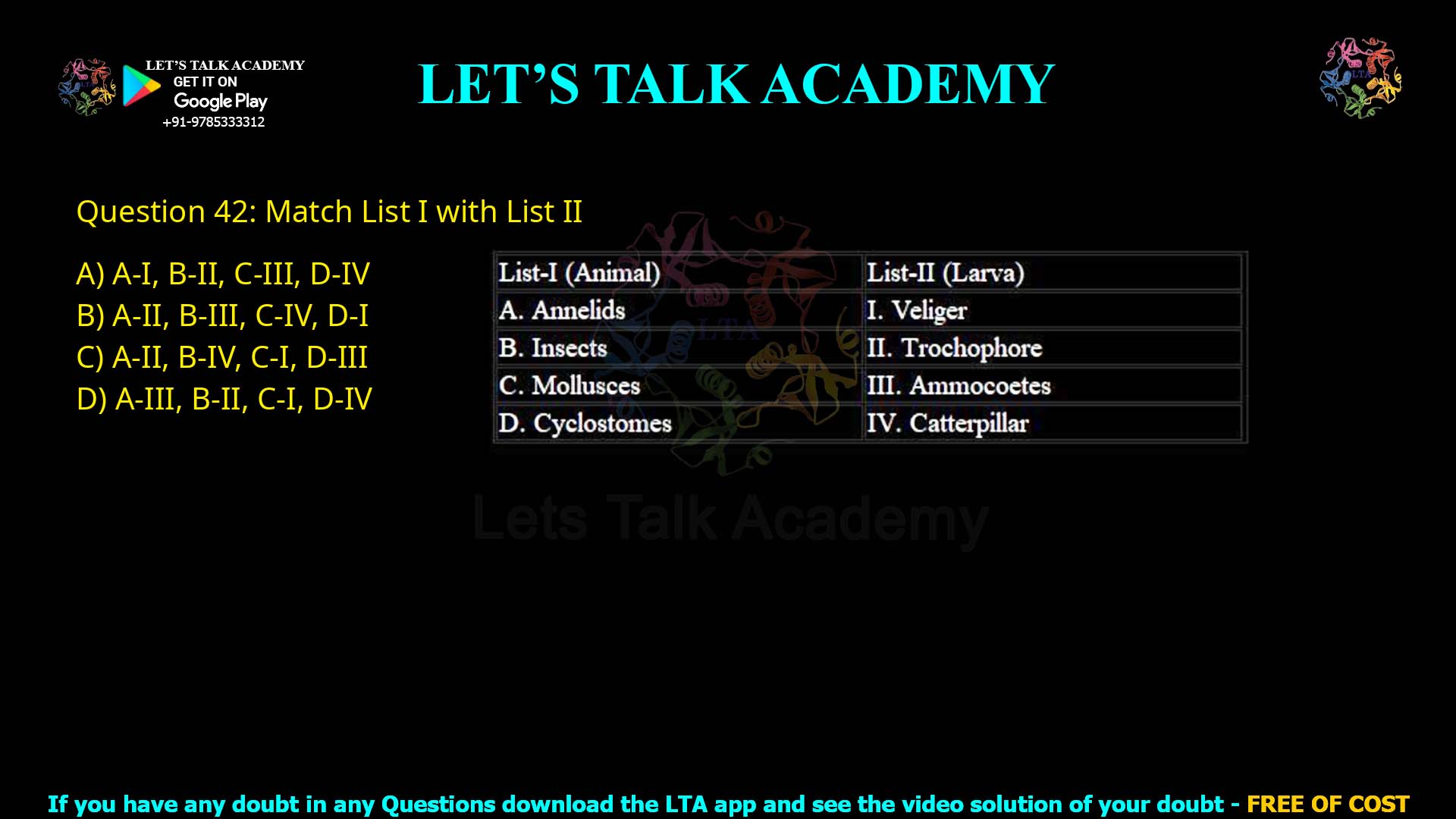
Q42.Match List I with List II
List-I (Animal)
A. Annelids
B. Insects
C. Mollusces
D. Cyclostomes
List-II (Larva)
I. Veliger
II. Trochophore
III. Ammocoetes
IV. Catterpillar
Choose the correct answer from the options given below:
(A) A-I, B-II, C-III, D-IV
(B) A-II, B-III, C-IV, D-I
(C) A-II, B-IV, C-I, D-III
(D) A-III, B-II, C-I, D-IV
The correct answer is option (C): A-II, B-IV, C-I, D-III. This matches each animal phylum from List-I with its characteristic larval stage from List-II, reflecting key zoological developmental patterns.
Animal-Larva Matches
-
A. Annelids → II. Trochophore: Annelids like polychaetes produce a trochophore larva, a free-swimming, ciliated form with a prototroch band for locomotion and feeding.
-
B. Insects → IV. Caterpillar: The larval stage of insects, especially Lepidoptera (butterflies/moths), is the caterpillar, a feeding machine before pupation.
-
C. Molluscs → I. Veliger: Many molluscs (e.g., gastropods, bivalves) have a veliger larva with a velum for swimming and a developing shell.
-
D. Cyclostomes → III. Ammocoetes: Lampreys (cyclostomes) hatch as ammocoetes, blind, burrowing filter-feeders resembling ancient chordates.
Option Analysis
-
(A) A-I, B-II, C-III, D-IV: Incorrect. Annelids have trochophore (II), not veliger (I); insects are caterpillar (IV), not trochophore.
-
(B) A-II, B-III, C-IV, D-I: Incorrect. Insects lack ammocoetes (III); molluscs have veliger (I), not caterpillar (IV).
-
(C) A-II, B-IV, C-I, D-III: Correct, as outlined above.
-
(D) A-III, B-II, C-I, D-IV: Incorrect. Annelids do not have ammocoetes (III); cyclostomes are ammocoetes, not veliger (I).
In match List I with List II animal larva questions for exams like NEET, linking Annelids to Trochophore, Insects to Caterpillar, Molluscs to Veliger, and Cyclostomes to Ammocoetes is crucial. This SEO-optimized guide details matches, errors, and biology insights.
Essential Larval Stages
Annelids feature the trochophore larva, a ciliated swimmer shared with some protostomes. Insects’ caterpillar (larva) devours leaves pre-metamorphosis. Molluscs’ veliger larva has a velum and proto-shell for planktonic life. Cyclostomes like lampreys use ammocoetes, a sediment-burrowing filter-feeder.
Correct Option Breakdown
Option (C) A-II, B-IV, C-I, D-III nails the match List I with List II animal larva pairings. Avoid pitfalls like confusing trochophore (annelids/molluscs early) with veliger (molluscs advanced).
Use this for exam prep—trochophore links lophotrochozoans, while ammocoetes shows chordate evolution.


