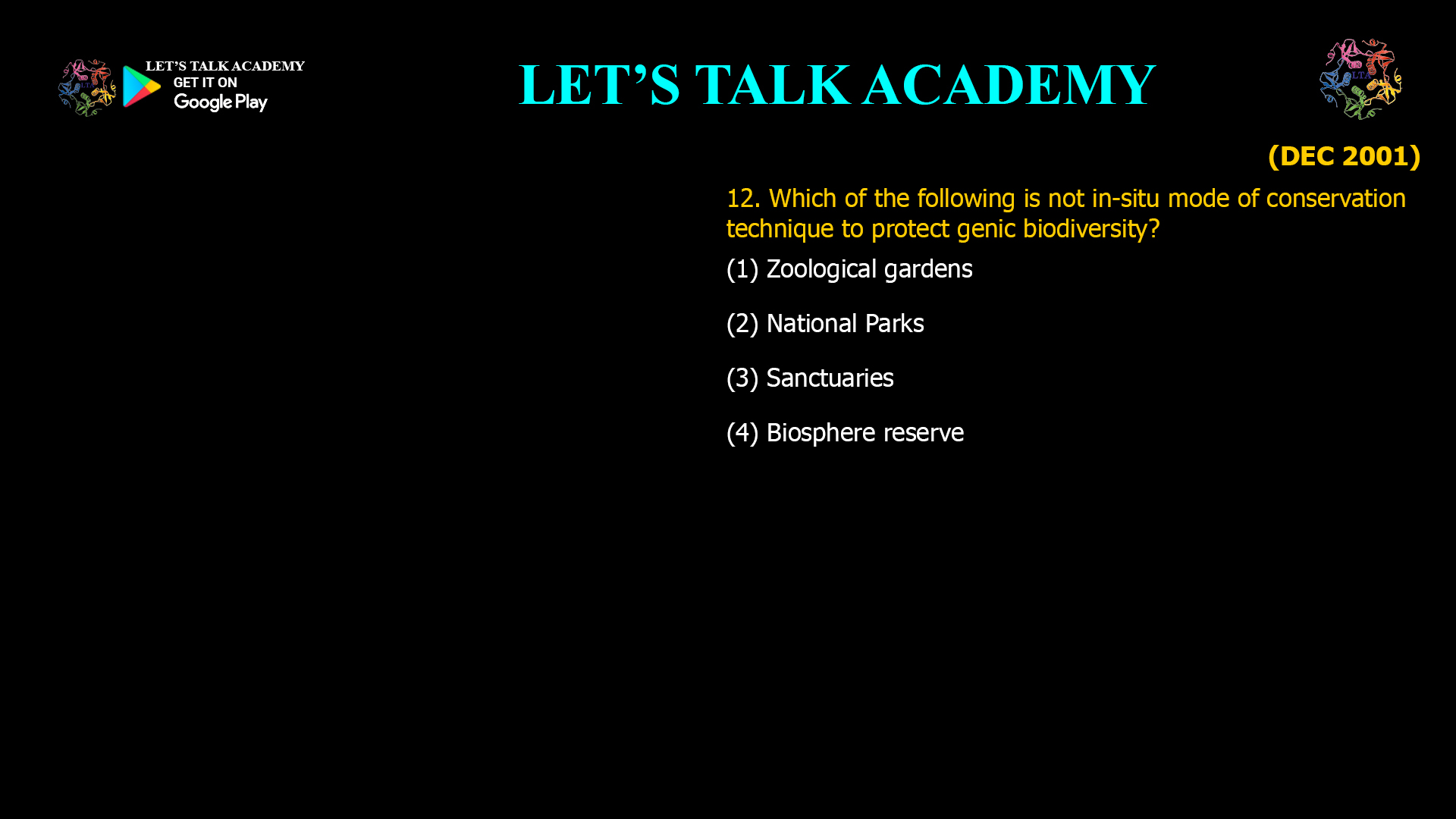
- Which of the following is not in-situ mode of conservation technique to protect genic
biodiversity?
(1) Zoological gardens (2) National Parks
(3) Sanctuaries (4) Biosphere reserveWhat Is In-Situ Conservation?
In-situ conservation refers to the protection of species within their natural habitats. This method allows plants and animals to continue their evolutionary processes in the wild, maintaining ecological integrity and natural interactions. In-situ conservation is widely regarded as the most holistic and sustainable approach to preserving biodiversity because it supports entire ecosystems and the relationships within them.
Examples of In-Situ Conservation
-
National Parks: Strictly protected areas where human activities are highly regulated to conserve ecosystems and species in their natural settings12378.
-
Wildlife Sanctuaries: Areas that protect animals and plants, sometimes allowing limited human activity under regulation2378.
-
Biosphere Reserves: Large regions with core protected zones, buffer zones, and transition areas to promote both conservation and sustainable development2378.
These protected areas are specifically designed to conserve genetic biodiversity by maintaining species in their native environments.
What Is Ex-Situ Conservation?
Ex-situ conservation involves safeguarding species outside their natural habitats. This approach is used when in-situ conservation is not feasible, such as when species are critically endangered or their habitats are severely threatened. Ex-situ methods provide controlled environments for breeding, research, and sometimes reintroduction into the wild.
Examples of Ex-Situ Conservation
-
Zoological Gardens (Zoos): Facilities where animals are kept in captivity for conservation, education, and breeding programs2456.
-
Botanical Gardens: Places where plant species are grown and preserved outside their natural habitats.
-
Seed Banks and Gene Banks: Storage facilities for seeds and genetic material to preserve the genetic diversity of crops and wild plants45.
Which Is Not an In-Situ Conservation Technique?
Among the options provided:
-
National Parks, Sanctuaries, and Biosphere Reserves are all forms of in-situ conservation, as they protect species within their natural habitats12378.
-
Zoological Gardens are not an in-situ technique. They represent ex-situ conservation because animals are maintained outside their natural environments in artificial settings2456.
Why the Distinction Matters
In-situ conservation is generally preferred because it preserves not only individual species but also the complex interactions and evolutionary processes of entire ecosystems. Ex-situ methods, while valuable as a backup, cannot fully replicate these natural dynamics.
Conclusion: The Correct Answer
Zoological gardens are not considered an in-situ mode of conservation technique to protect genetic biodiversity. They are an example of ex-situ conservation.
Correct answer:
(1) Zoological gardens -


2 Comments
Kajal
November 6, 2025Zoological gardens
Sakshi Kanwar
November 27, 2025Zoological Gardens are not an in-situ technique.