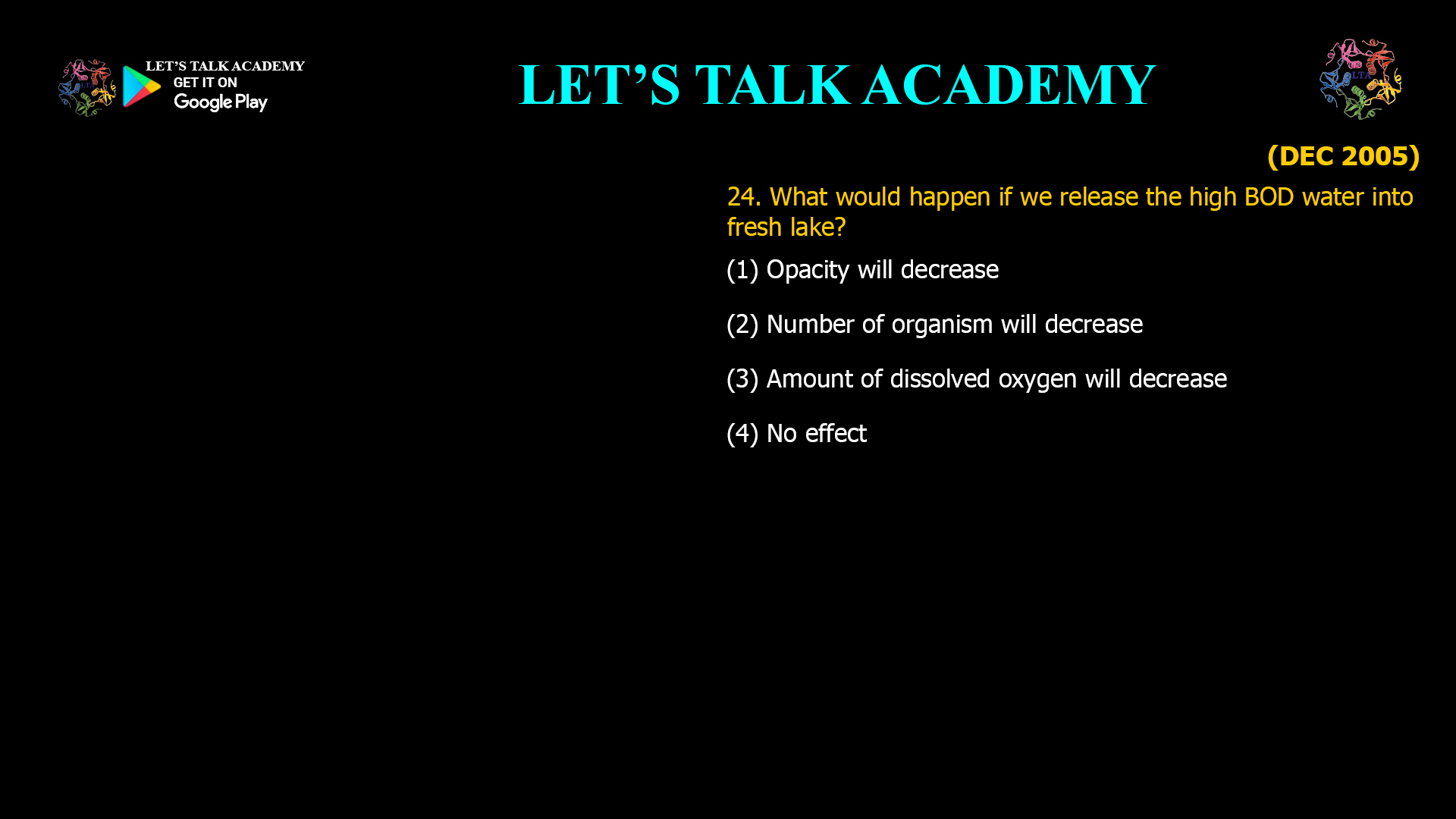
- What would happen if we release the high BOD water into fresh lake?
(1) Opacity will decrease
(2) Number of organism will decrease
(3) Amount of dissolved oxygen will decrease
(4) No effect
Releasing water with a high Biochemical Oxygen Demand (BOD) into a freshwater lake can have profound and often harmful effects on the aquatic ecosystem. BOD measures the amount of oxygen required by microorganisms to break down organic matter in water. When high BOD water is introduced, the consequences ripple through the lake’s environment, affecting everything from oxygen levels to the survival of aquatic organisms. This article explores what happens when high BOD water enters a freshwater lake, why dissolved oxygen decreases, and how this impacts both the number and diversity of organisms living within the lake.
Understanding BOD and Its Importance
Biochemical Oxygen Demand (BOD) is a critical indicator of water quality. It quantifies the amount of dissolved oxygen needed by aerobic biological organisms to break down organic material present in a given water sample at a certain temperature and time, usually over five days (BOD₅). High BOD values indicate the presence of large amounts of organic pollutants, such as sewage, agricultural runoff, or industrial effluents, which require significant oxygen to decompose.
What Happens When High BOD Water Enters a Freshwater Lake?
When water with a high BOD is released into a freshwater lake, several changes occur:
1. Oxygen Depletion
The most immediate and significant effect is a sharp decrease in the amount of dissolved oxygen (DO) in the lake. Microorganisms responsible for decomposing organic matter rapidly consume the available oxygen as they break down the pollutants. This process can deplete oxygen levels to the point where fish and other aquatic organisms struggle to survive.
-
Hypoxia and Anoxia: Prolonged or severe oxygen depletion can lead to hypoxic (low oxygen) or anoxic (no oxygen) conditions, creating “dead zones” where most aquatic life cannot survive.
-
Fish Kills: Sensitive species, such as trout and salmon, are especially vulnerable and may die off in large numbers. Even species tolerant of lower oxygen, like carp or catfish, may suffer reduced growth rates and increased susceptibility to disease.
2. Changes in Aquatic Organism Populations
As oxygen levels drop, the composition of the lake’s biological community changes:
-
Decline in Sensitive Species: Organisms that require high oxygen levels, including many fish and invertebrates, may die or migrate away.
-
Increase in Tolerant Species: Species that can survive in low-oxygen environments, such as certain worms and insect larvae, may become more abundant. However, these species are often indicators of polluted water and may not support a healthy, diverse ecosystem.
-
Reduced Biodiversity: Overall, the number and variety of organisms in the lake decrease, leading to a loss of biodiversity and ecosystem resilience.
3. Ecosystem Disruption
The reduction in dissolved oxygen and the shift in species composition disrupt the lake’s ecological balance:
-
Algal Blooms: While high BOD is directly related to organic pollution, the resulting changes can sometimes indirectly promote algal blooms if nutrient levels are also high. However, in most cases, high BOD itself leads to oxygen depletion rather than increased plant growth.
-
Release of Toxic Substances: Low oxygen conditions can cause the release of harmful substances from lake sediments, further degrading water quality and harming aquatic life.
-
Loss of Ecosystem Services: Healthy lakes provide important services such as water filtration, habitat for wildlife, and recreational opportunities. High BOD pollution undermines these functions.
Common Misconceptions
Let’s address some misconceptions by reviewing the options:
-
Opacity will decrease: Incorrect. High BOD water often contains suspended solids and organic matter, which can increase water turbidity (opacity), not decrease it.
-
Number of organisms will decrease: Partially correct. While many sensitive species will decline or die, some tolerant species may increase. However, overall biodiversity and the number of most aquatic organisms typically decrease.
-
Amount of dissolved oxygen will decrease: Correct. This is the most direct and significant effect of releasing high BOD water into a lake.
-
No effect: Incorrect. High BOD water has a clear and negative impact on lake ecosystems.
Why Dissolved Oxygen Decreases
The process is straightforward:
-
Organic Matter Entry: High BOD water introduces large amounts of organic matter into the lake.
-
Microbial Decomposition: Microorganisms in the water begin to break down the organic matter, consuming dissolved oxygen in the process.
-
Oxygen Depletion: As decomposition proceeds, the demand for oxygen outstrips the supply, leading to a rapid drop in dissolved oxygen levels.
-
Impact on Aquatic Life: Fish and other organisms that depend on dissolved oxygen for respiration suffer, leading to stress, reduced reproduction, and mass mortality in severe cases.
Long-Term Consequences
The effects of high BOD water can persist long after the initial pollution event:
-
Recovery Time: Lakes may take years to recover, especially if pollution inputs continue or if the lake’s natural processes are overwhelmed.
-
Habitat Loss: The loss of sensitive species can lead to a cascade of effects, including the decline of predators and changes in food webs.
-
Water Quality Degradation: Persistent low oxygen levels can make the water unsuitable for drinking, irrigation, or recreation.
Mitigation and Prevention
Preventing the release of high BOD water is essential for protecting freshwater lakes:
-
Wastewater Treatment: Proper treatment of sewage and industrial effluents can reduce BOD before water is discharged into lakes.
-
Regulation and Monitoring: Enforcing environmental regulations and monitoring water quality can help identify and address pollution sources.
-
Public Awareness: Educating communities about the importance of reducing organic pollution can encourage better waste management practices.
Key Takeaways
-
Releasing high BOD water into a freshwater lake causes a significant decrease in dissolved oxygen.
-
This oxygen depletion harms fish and other aquatic organisms, leading to reduced biodiversity and ecosystem health.
-
The most direct and harmful effect is the reduction in dissolved oxygen, making aquatic life difficult or impossible for many species.
-
Opacity (turbidity) may increase, not decrease, and the number of most organisms will decline.
-
There is always a negative effect; “no effect” is incorrect.
Summary Table
| Effect | Description |
|---|---|
| Dissolved oxygen decreases | Microorganisms consume oxygen to break down organic matter |
| Number of organisms decreases | Sensitive species die or leave; tolerant species may increase, but overall biodiversity drops |
| Opacity may increase | Suspended solids and organic matter can make water more turbid |
| No effect | Incorrect; high BOD always impacts the lake |
Conclusion
Releasing water with a high BOD into a freshwater lake leads to a dramatic decrease in dissolved oxygen, which is essential for the survival of most aquatic organisms. This oxygen depletion can cause fish kills, reduce biodiversity, and disrupt the entire lake ecosystem. While some tolerant species may survive or even thrive, the overall health and function of the lake are compromised.
In summary, the correct answer is:
(3) Amount of dissolved oxygen will decrease.
This is the most direct and significant consequence of releasing high BOD water into a freshwater lake, highlighting the importance of protecting our water bodies from organic pollution.


3 Comments
Kirti Agarwal
November 6, 2025Amount of dissolve oxygen is decrease
Kajal
November 15, 2025Option 3
Sakshi Kanwar
November 28, 2025Amount of dissolved oxygen will decrease.