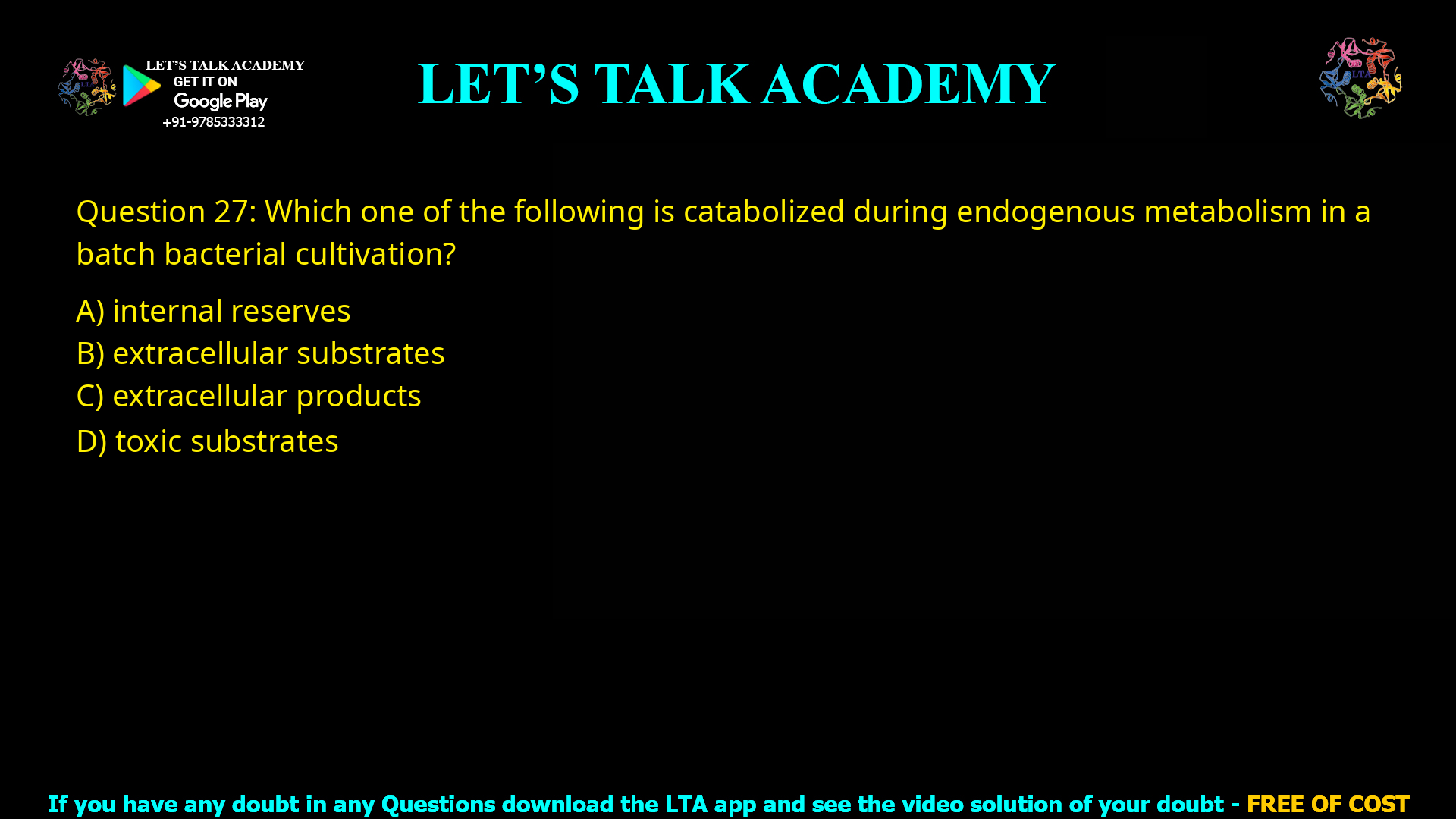
Q.27 Which one of the following is catabolized during endogenous metabolism in a batch
bacterial cultivation?
(A) internal reserves (B) extracellular substrates
(C) extracellular products (D) toxic substrates
Endogenous metabolism in batch bacterial cultivation occurs when external nutrients deplete, typically in the stationary or death phase, forcing bacteria to break down their own internal reserves for maintenance energy. The correct answer is (A) internal reserves, as confirmed by standard microbiology principles where polymers like glycogen, polyhydroxybutyrate (PHB), or proteins serve as substrates. This process sustains minimal respiration without growth, distinguishing it from exogenous metabolism reliant on external inputs.
Option Analysis
-
(A) Internal reserves: Correct. Bacteria catabolize stored polymers (e.g., glycogen in E. coli) during nutrient starvation in batch cultures, providing energy for survival via processes like the Embden-Meyerhof pathway or beta-oxidation.
-
(B) Extracellular substrates: Incorrect. These (e.g., glucose in media) fuel exogenous metabolism during exponential growth; depletion triggers endogenous phase.
-
(C) Extracellular products: Incorrect. Products like acetate accumulate outside cells and are not catabolized; they may inhibit growth but serve no endogenous role.
-
(D) Toxic substrates: Incorrect. Toxins harm cells and are avoided or effluxed, not used as energy sources in metabolism.
Batch Cultivation Phases
Batch bacterial cultivation follows distinct phases: lag (adaptation), exponential (rapid growth on extracellular substrates), stationary (nutrient limits balance birth/death), and death/endogenous (internal reserves catabolized). Endogenous metabolism dominates post-exponential, with oxygen uptake (Q_O2) dropping as reserves like glycogen deplete first, followed by proteins. This is critical for bioprocess design, as it affects viability without fresh media.
Exam Preparation Tips
For IIT JAM Biotechnology aspirants, recognize endogenous metabolism as a marker of starvation response, often tested with E. coli examples. Practice plotting growth curves: biomass peaks in stationary phase, while endogenous respiration correlates with reserve breakdown. Compare with chemostat (continuous) systems where steady-state avoids full endogenous shift.


