









































































































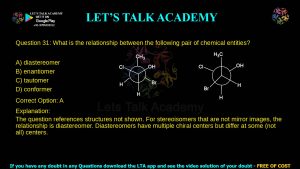

A general increase in the average body mass of animal population within a species with latitude is known as (1) Allen’s rule (3) Bergmann’s rule (2) Allee effect (4) Hamilton’s […]


A general increase in the average body mass of animal population within a species with latitude is known as (1) Allen’s rule (3) Bergmann’s rule (2) Allee effect (4) Hamilton’s […]
The birds in tropics are generally smaller in size because of- (1) To increase surface area to volume ratio (2) To decrease surface area to volume ratio (3) For easy […]
Stenohaline organisms can (1) can only adapt to a narrow range of salinities (2) can adapt to a wide range of salinities, (3) can excrete extra salt to keep salt […]
Benthic organism of lakes or sea are usually- (1) Producer (2) Herbivores (3) Carnivores (4) Decomposers Benthic Organisms in Lakes and Seas: Are They Producers, Herbivores, Carnivores, or Decomposers? […]

Limiting factor for primary production in open sea is (1) Constant tides (2) Low nutrients (3) High salinity (4) High temperature Limiting Factor for Primary Production in the Open Sea: […]

Soil in naturally growing vegetation is- (1) Acidic due to decomposition of organic matter (2) Basic due to Bicarbonate in soil (3) Neutral due to silicate buffer (4) Acidic due […]

Which of the following are abiotic factors? (1) temperature, rain fall, pH, Nutrients (2) temperature, rain fall, pH, Food (3) temperature, rain fall, Pathogens (4) temperature, rain fall, pH, viruses […]

Aspartate (Asp) is an amino acid with the structure NH2 – CH(CH2 — COOH) — COOH. Given below are biosynthetic processes occurring in cells: A. protein synthesis B. de novo […]

Catabolic end product of purines is (1) Xyloric acid (2) Allantoin (3) Urea (4) Uric acid Purines are vital nitrogen-containing compounds that form the building blocks of nucleic acids—DNA and […]
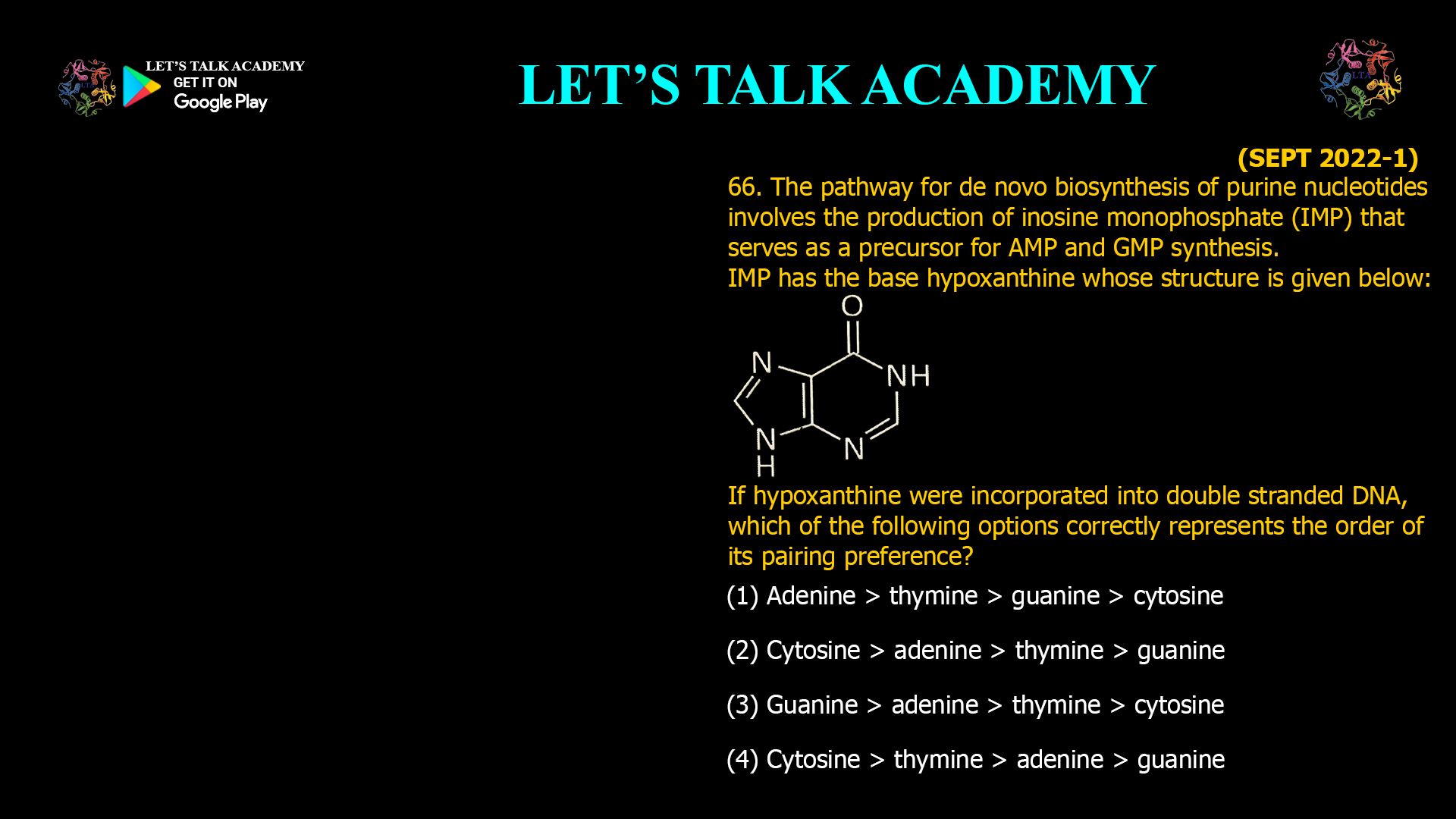
The pathway for de novo biosynthesis of purine nucleotides involves the production of inosine monophosphate (IMP) that serves as a precursor for AMP and GMP synthesis. IMP has the base […]


