





































































































Among the following which is not a result of acid rain (1) Low amount of phosphate availability (2) Low amount of aluminum availability (3) Low availability of nutrients to plant […]

Among the following which is not a result of acid rain (1) Low amount of phosphate availability (2) Low amount of aluminum availability (3) Low availability of nutrients to plant […]

Incorporating additional ecological factors into the Lotka-Voltera predator-prey model can change the predator isocline. Given below are three state-space graphsA-C) representing modification of predator isocline due to the ecological factors […]

Among the following which is not monitored as daily potential pollutant (1) CO (2) CO2 (3) SO2 (4) NOx Air quality monitoring is essential for protecting public health and the […]

Cattle are known to be responsible for green houseeffect due to (1) high respiration rate (2) More consumption of plant (3) Fermentation in rumen and release of methan (4) High […]
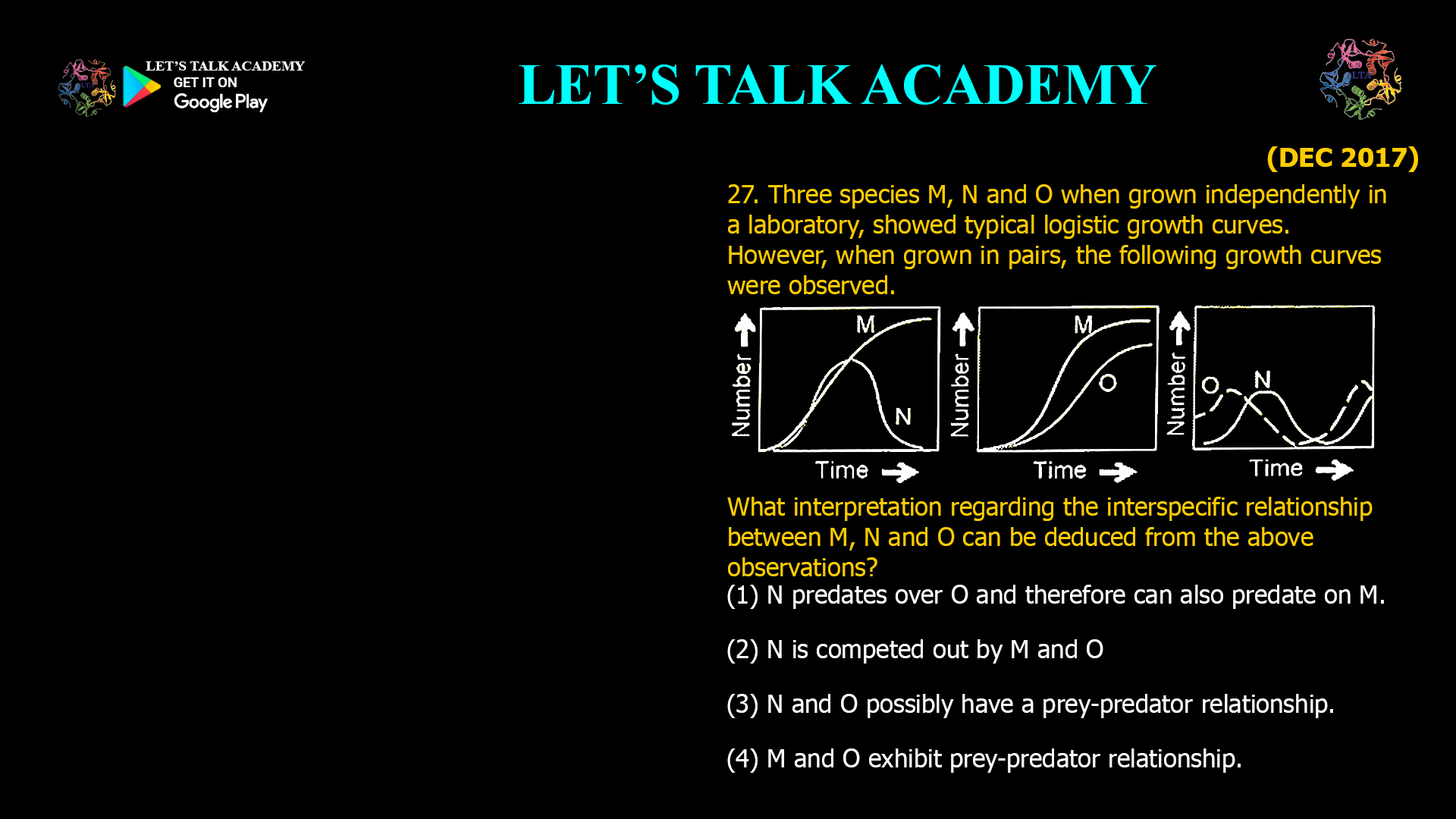
Three species M, N and O when grown independently in a laboratory, showed typical logistic growth curves. However, when grown in pairs, the following growth curves were observed. What interpretation […]
The maximum BOD and minimum DO for pure drinkingwater should be (1) 25, 5 (2) 2, 5 (3) 3, 9 (4) 0, 6 Ensuring the safety and quality of drinking […]
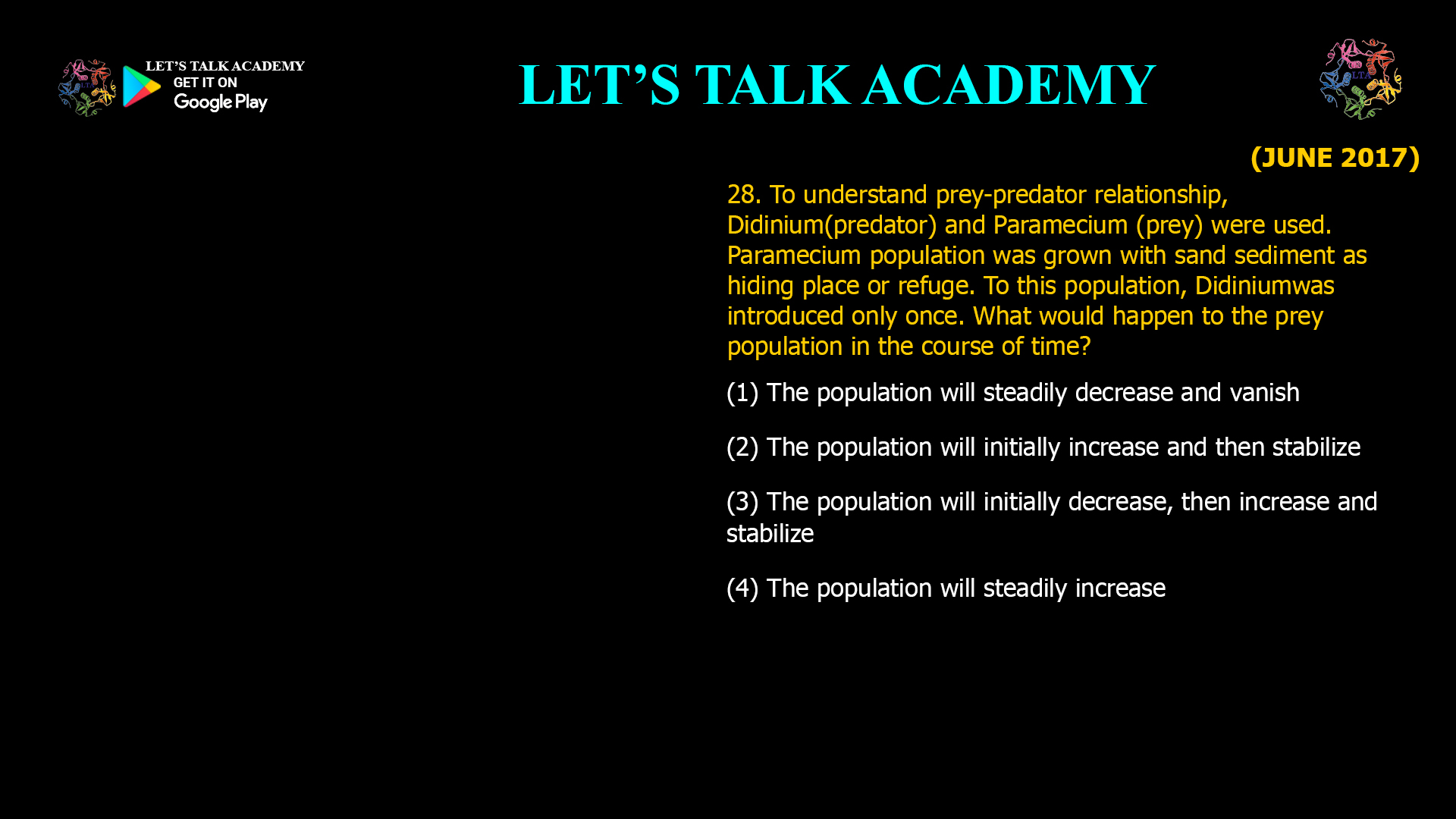
To understand prey-predator relationship, Didinium(predator) and Paramecium (prey) were used. Paramecium population was grown with sand sediment as hiding place or refuge. To this population, Didiniumwas introduced only once. What […]

Chlorinated hydrocarbons effects ecosystem by (1) Bio magnifications (2) Bio concentration (3) Bio accumulation (4) Bioremediation Chlorinated hydrocarbons, including well-known compounds like DDT and PCBs, are persistent environmental pollutants that […]
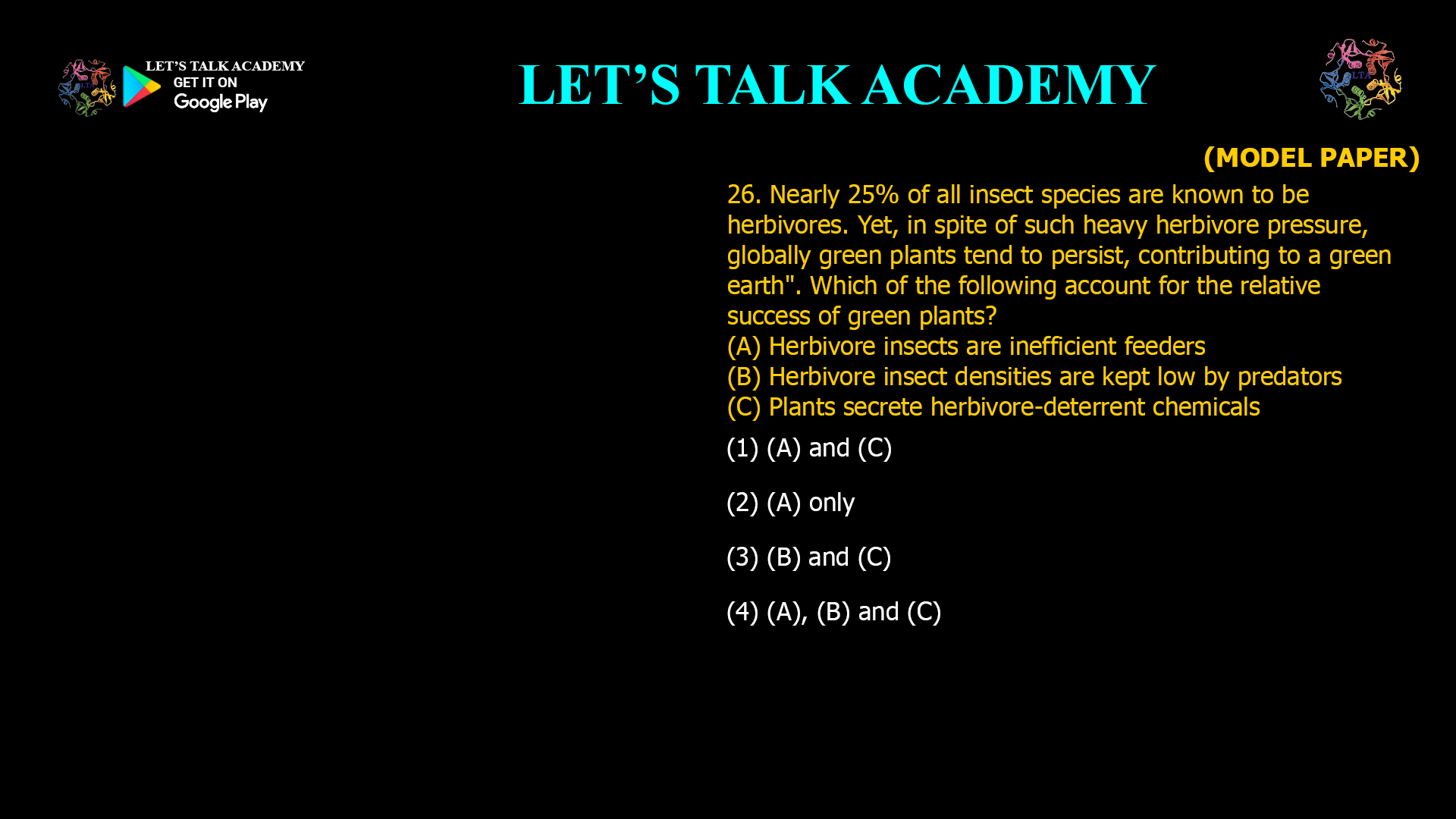
Nearly 25% of all insect species are known to be herbivores. Yet, in spite of such heavy herbivore pressure, globally green plants tend to persist, contributing to a green earth”. […]
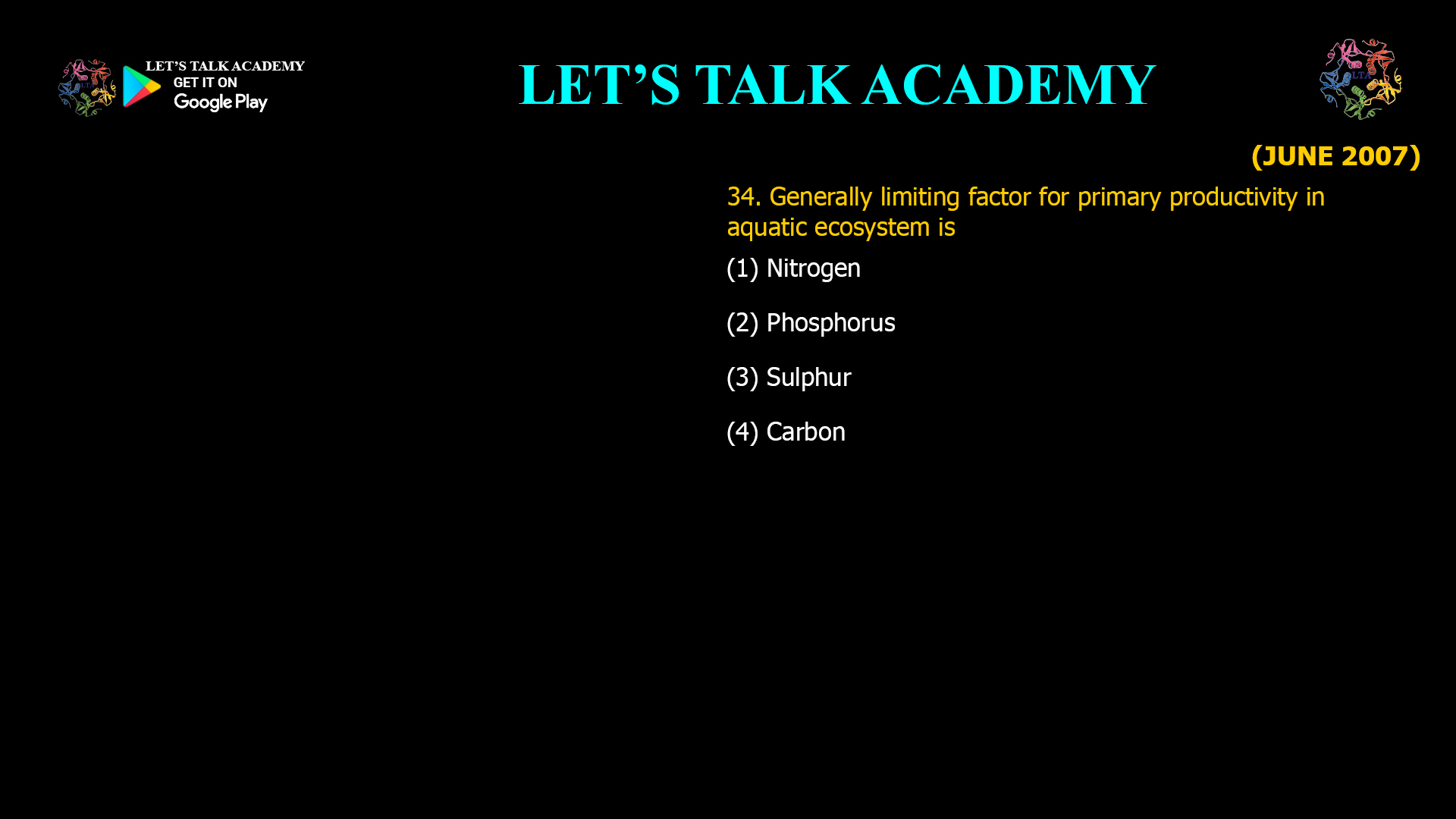
Generally limiting factor for primary productivity inaquatic ecosystem is (1) Nitrogen (2) Phosphorus (3) Sulphur (4) Carbon Primary productivity in aquatic ecosystems refers to the rate at which energy is […]


