























































































Which of the following geographical periods is characterized by the first appearance of mammals? (1) Tertiary (2) Cretaceous (3) Permian (4) Triassic Introduction The appearance of mammals is a pivotal […]
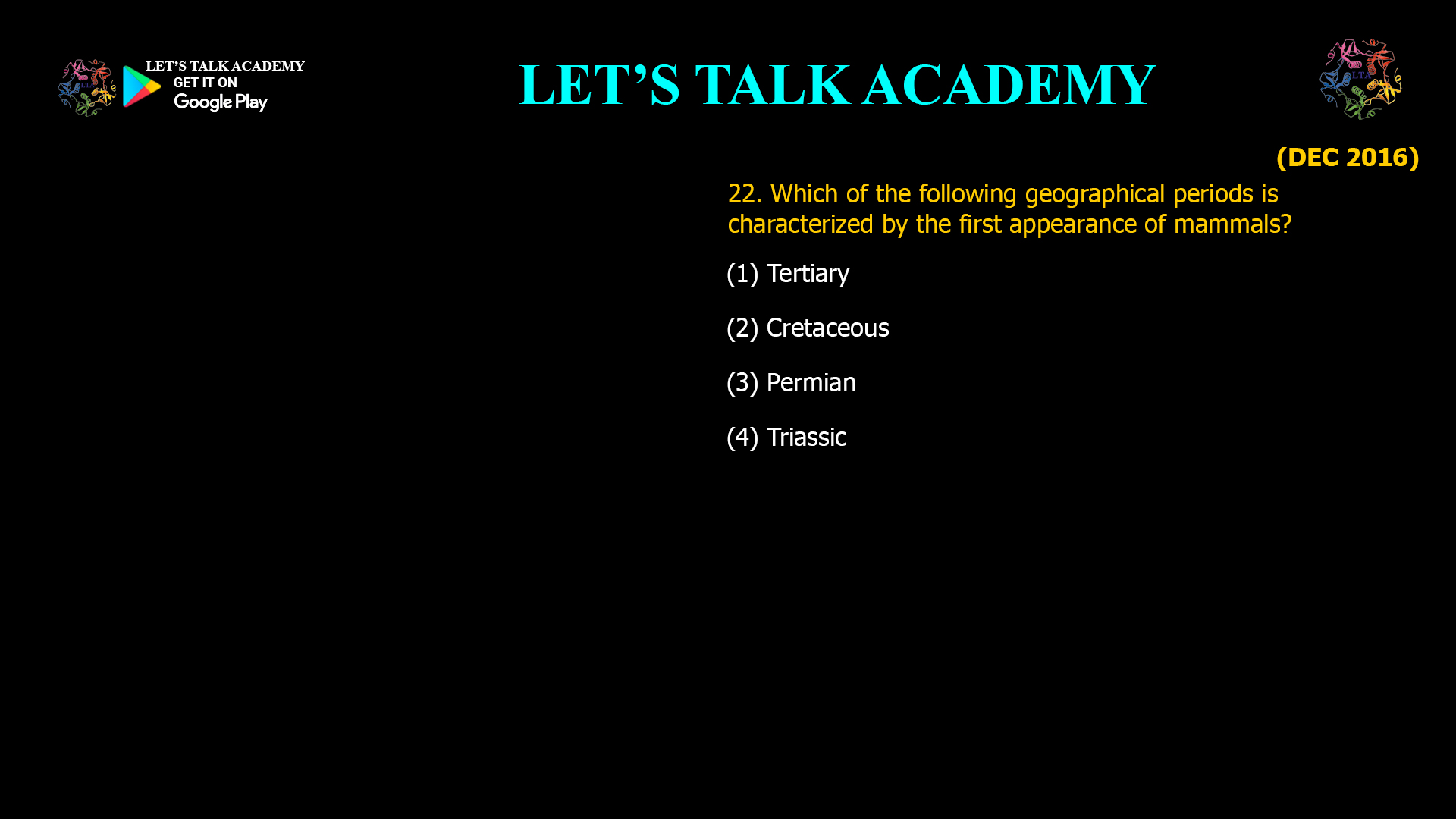

Which of the following geographical periods is characterized by the first appearance of mammals? (1) Tertiary (2) Cretaceous (3) Permian (4) Triassic Introduction The appearance of mammals is a pivotal […]
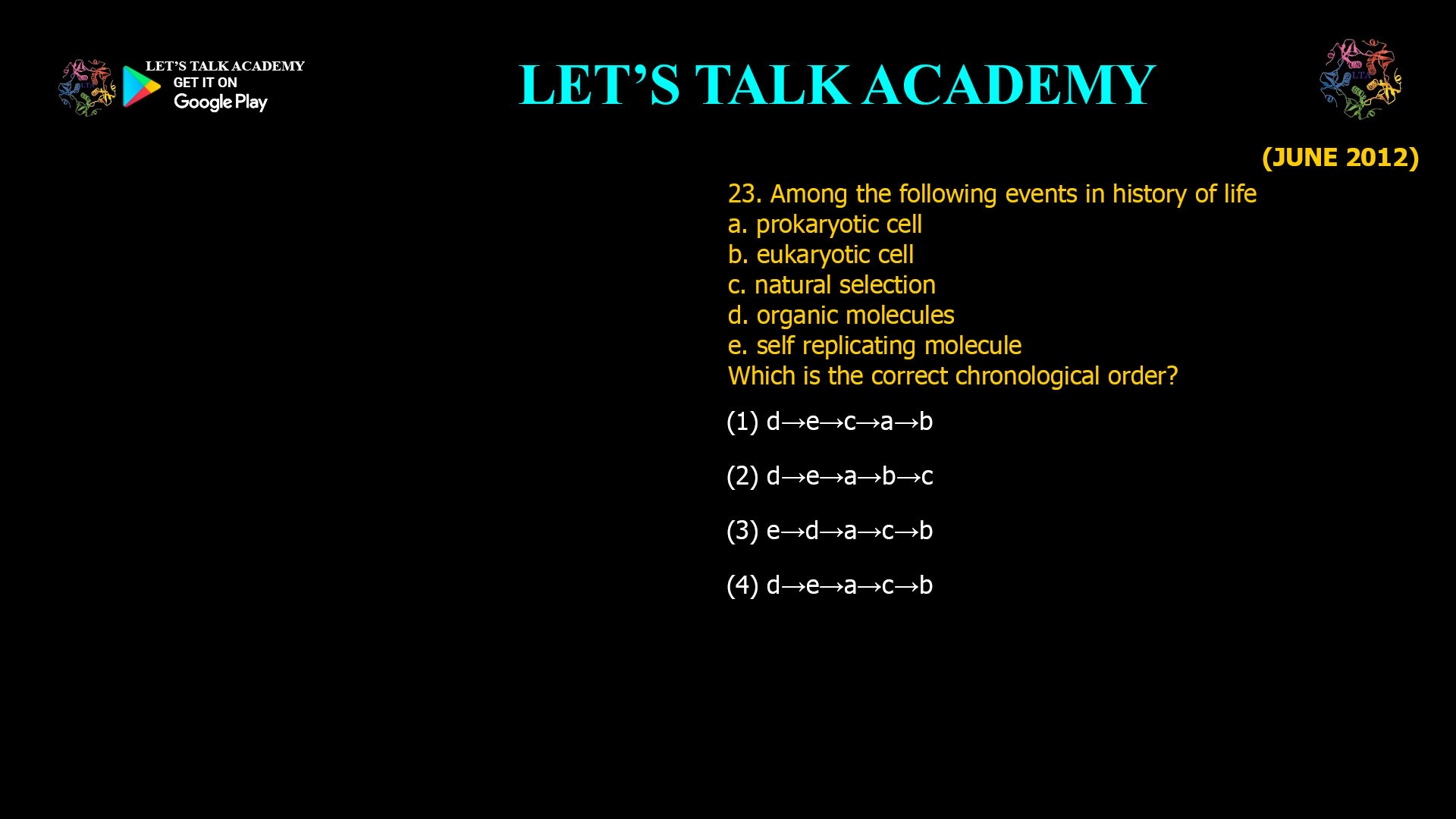
Among the following events in history of life a. prokaryotic cell b. eukaryotic cell c. natural selection d. organic molecules e. self replicating molecule Which is the correct chronological order? […]
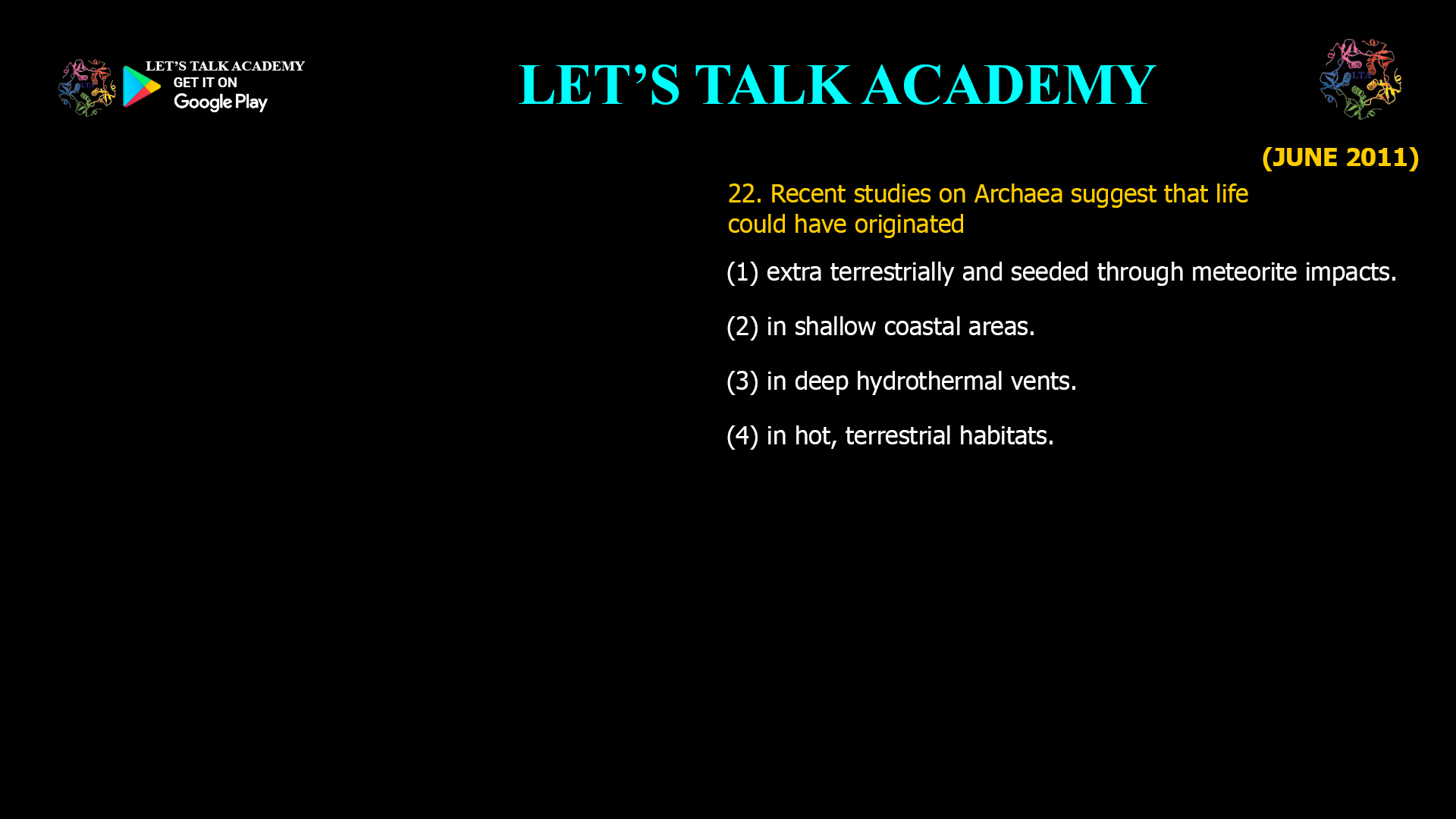
Recent studies on Archaea suggest that life could haveoriginated (1) extra terrestrially and seeded through meteoriteimpacts. (2) in shallow coastal areas. (3) in deep hydrothermal vents. (4) in hot, terrestrial […]
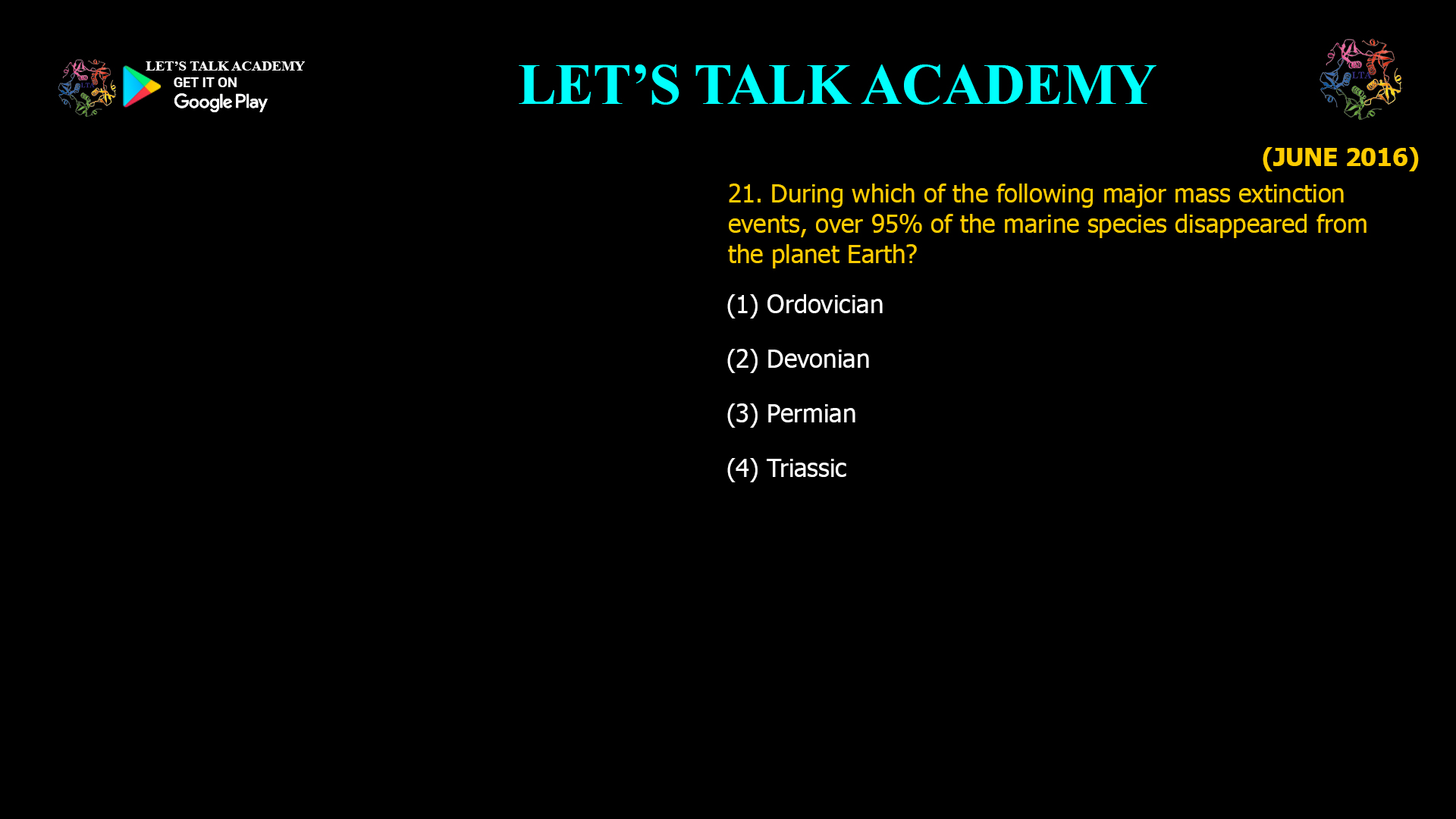
During which of the following major mass extinction events, over 95% of the marine species disappeared from the planet Earth? (1) Ordovician (2) Devonian (3) Permian (4) Triassic Introduction Earth’s […]
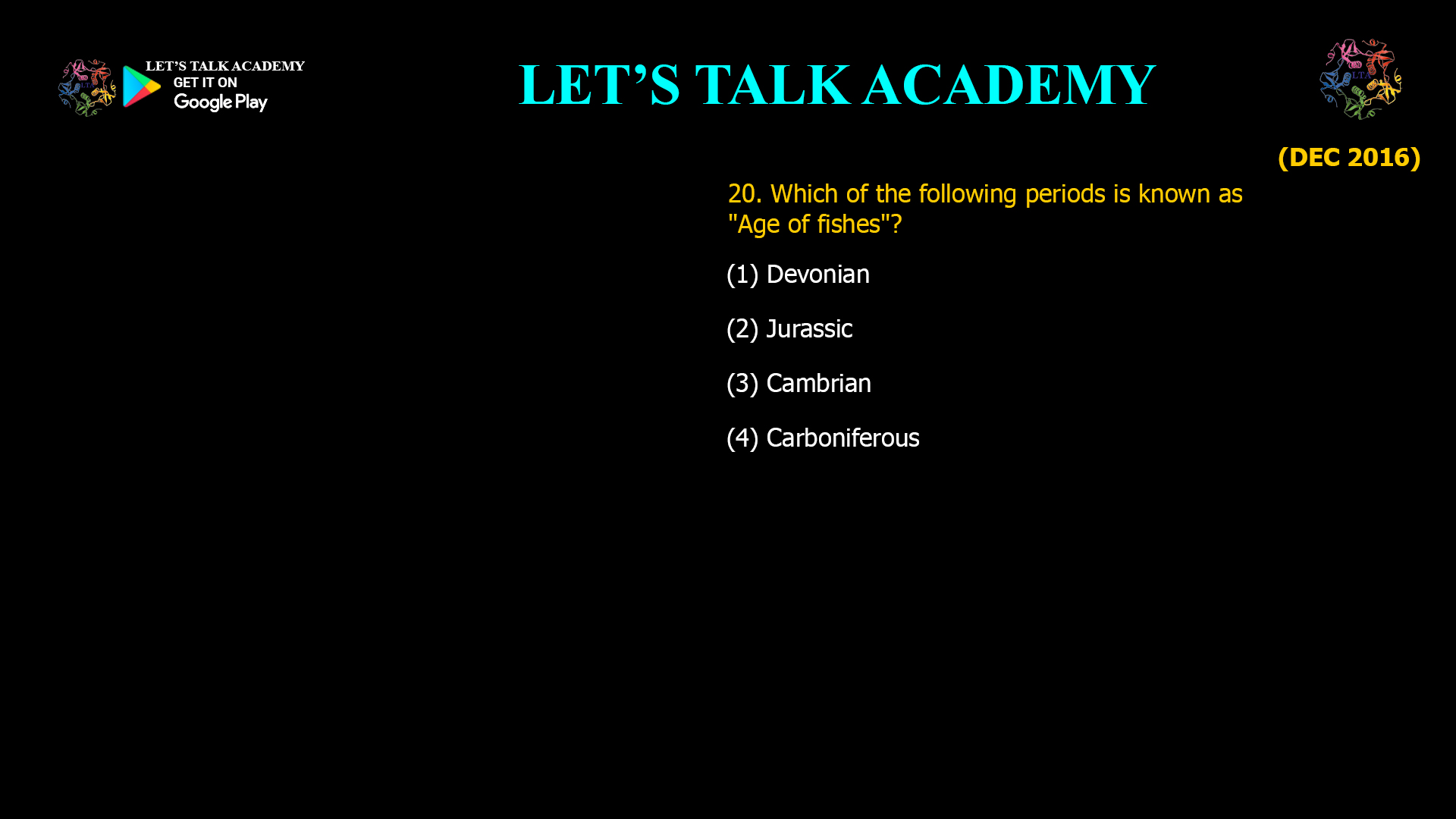
20. Which of the following periods is known as “Age of fishes”? (1) Devonian (2) Jurassic (3) Cambrian (4) Carboniferous Introduction The story of life on Earth is […]

You wanted to conduct Miller-Urey experiment and used a simplified apparatus with Tungsten electrodes. You heated the glassware at 5000C for 3 hours to remove any organic contaminants. Gases NH3, […]
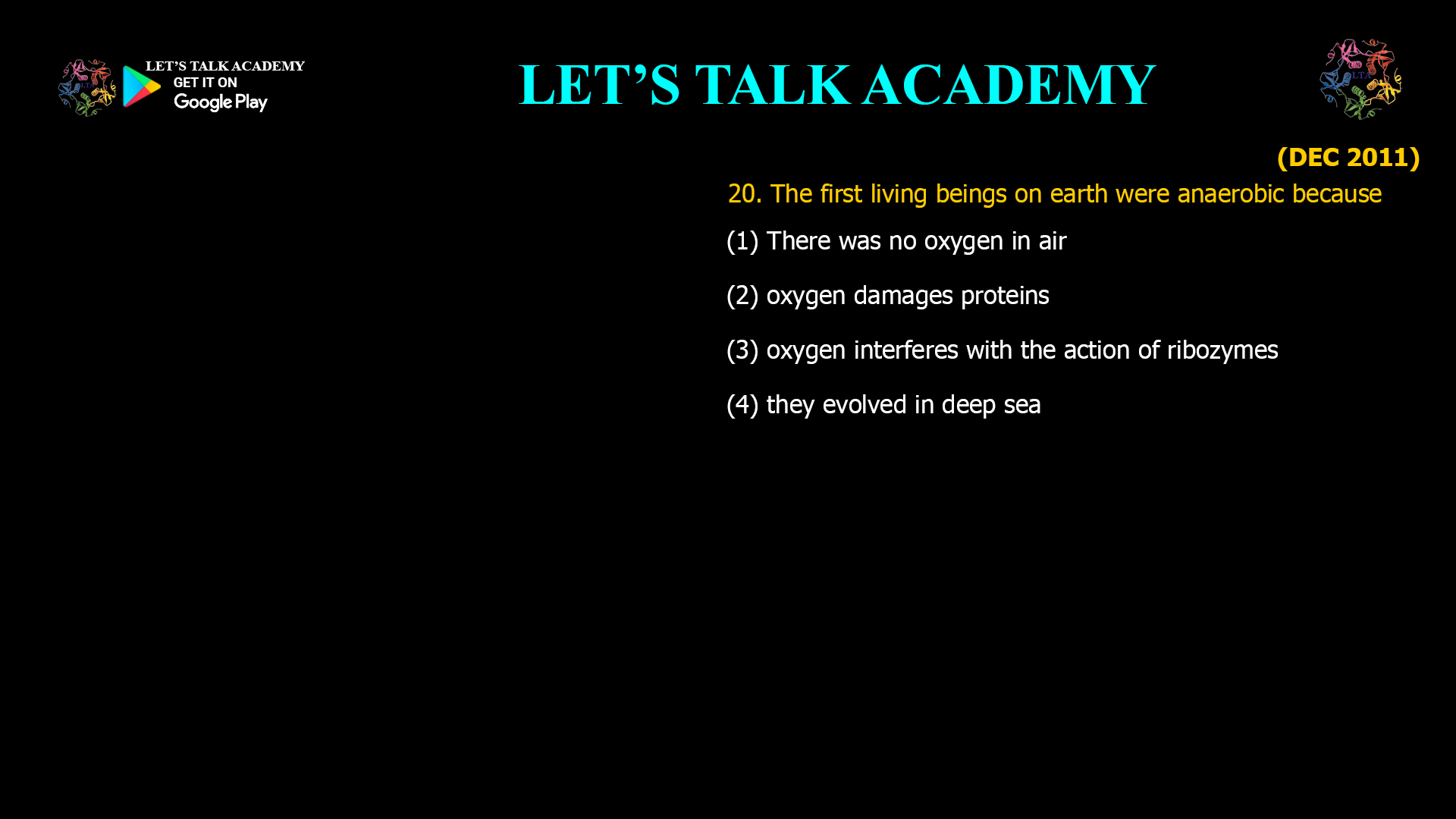
The first living beings on earth were anaerobic because (1) There was no oxygen in air (2) oxygen damages proteins (3) oxygen interferes with the action of ribozymes (4) they […]
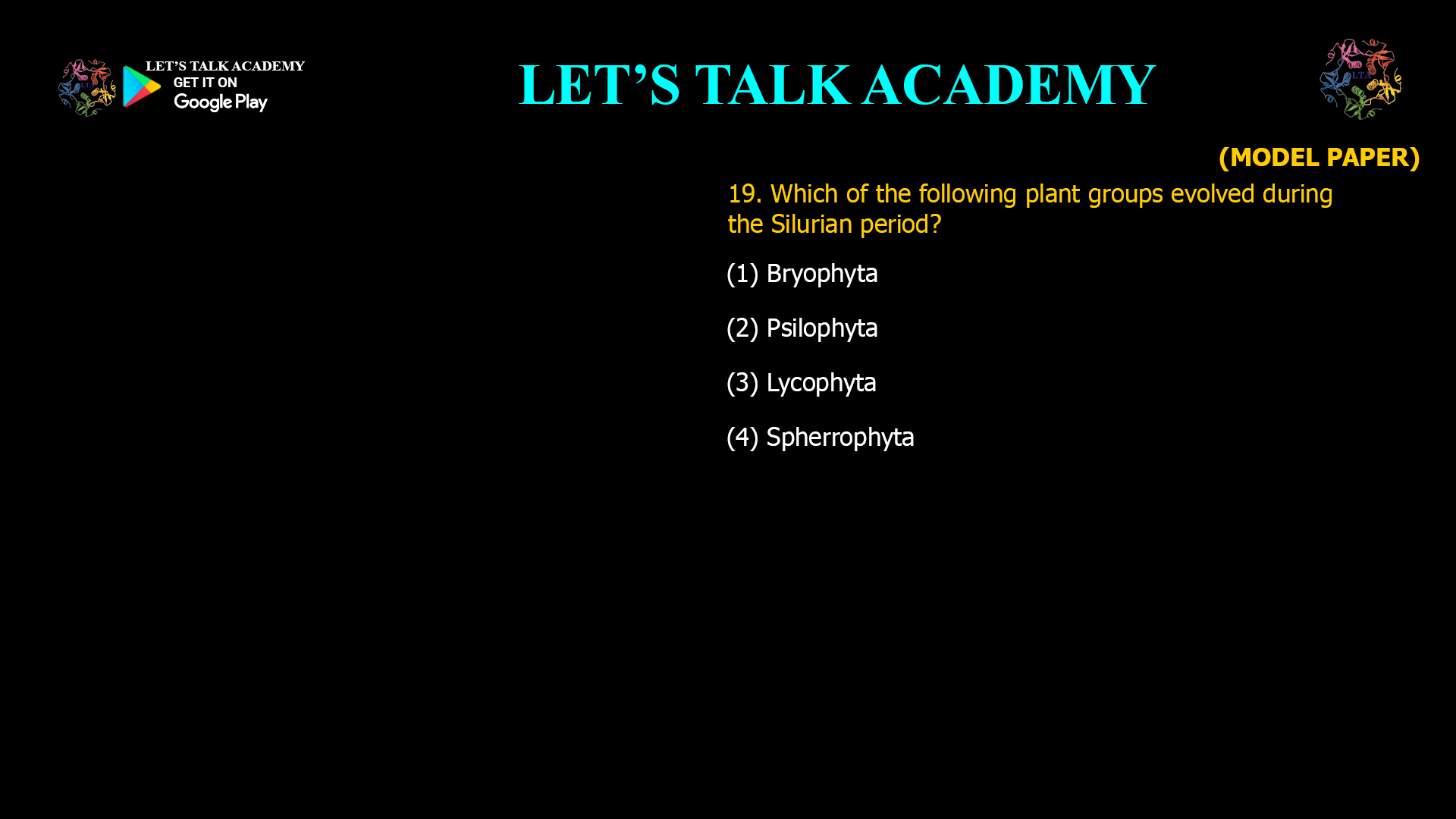
Which of the following plant groups evolved during the Silurian period? (1) Bryophyta (2) Psilophyta (3) Lycophyta (4) Spherrophyta Introduction The Silurian period, spanning approximately 443 to 419 million […]
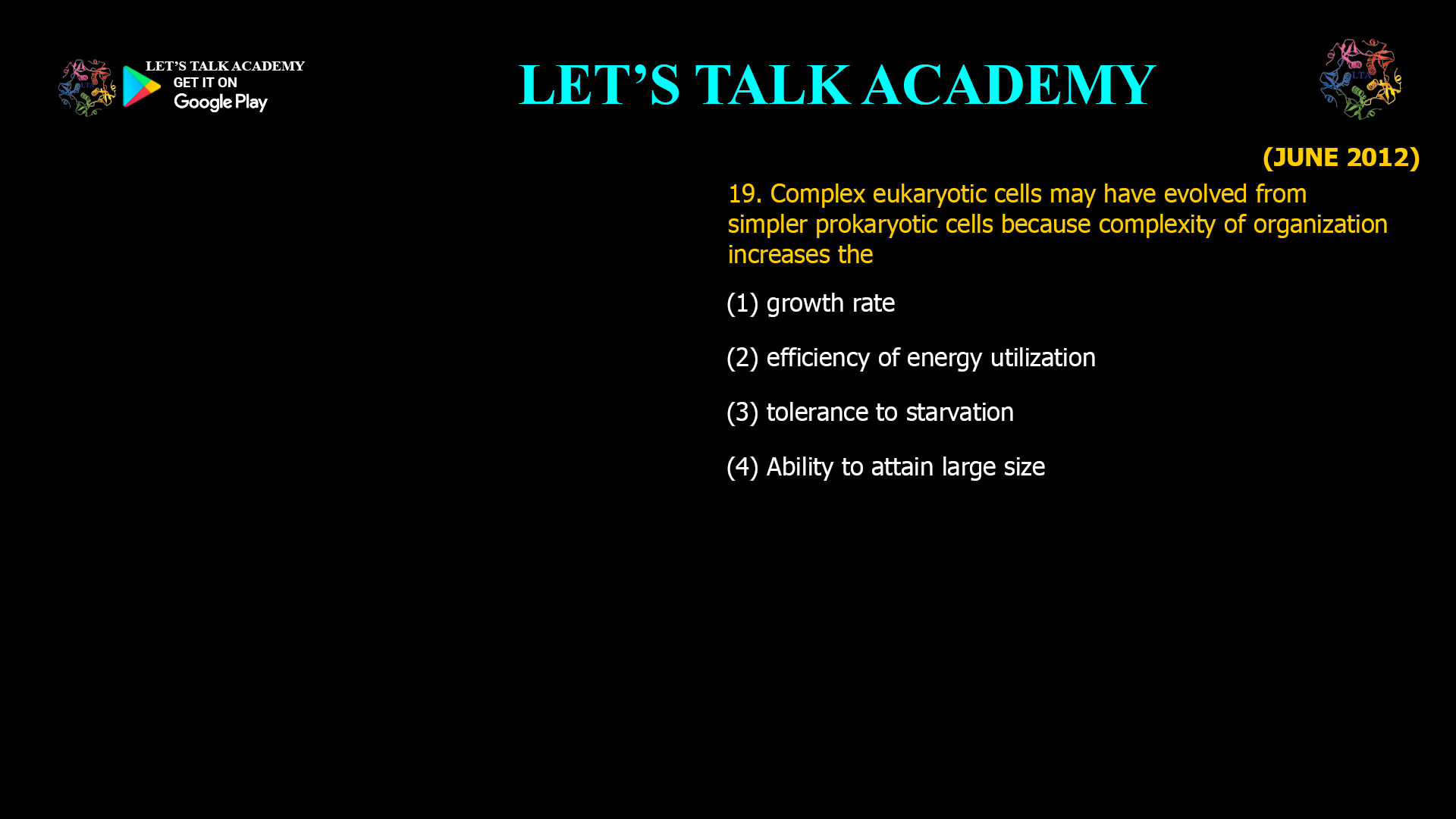
Complex eukaryotic cells may have evolved fromsimpler prokaryotic cells because complexity oforganization increases the (1) growth rate (2) efficiency of energy utilization (3) tolerance to starvation (4) Ability to attain […]
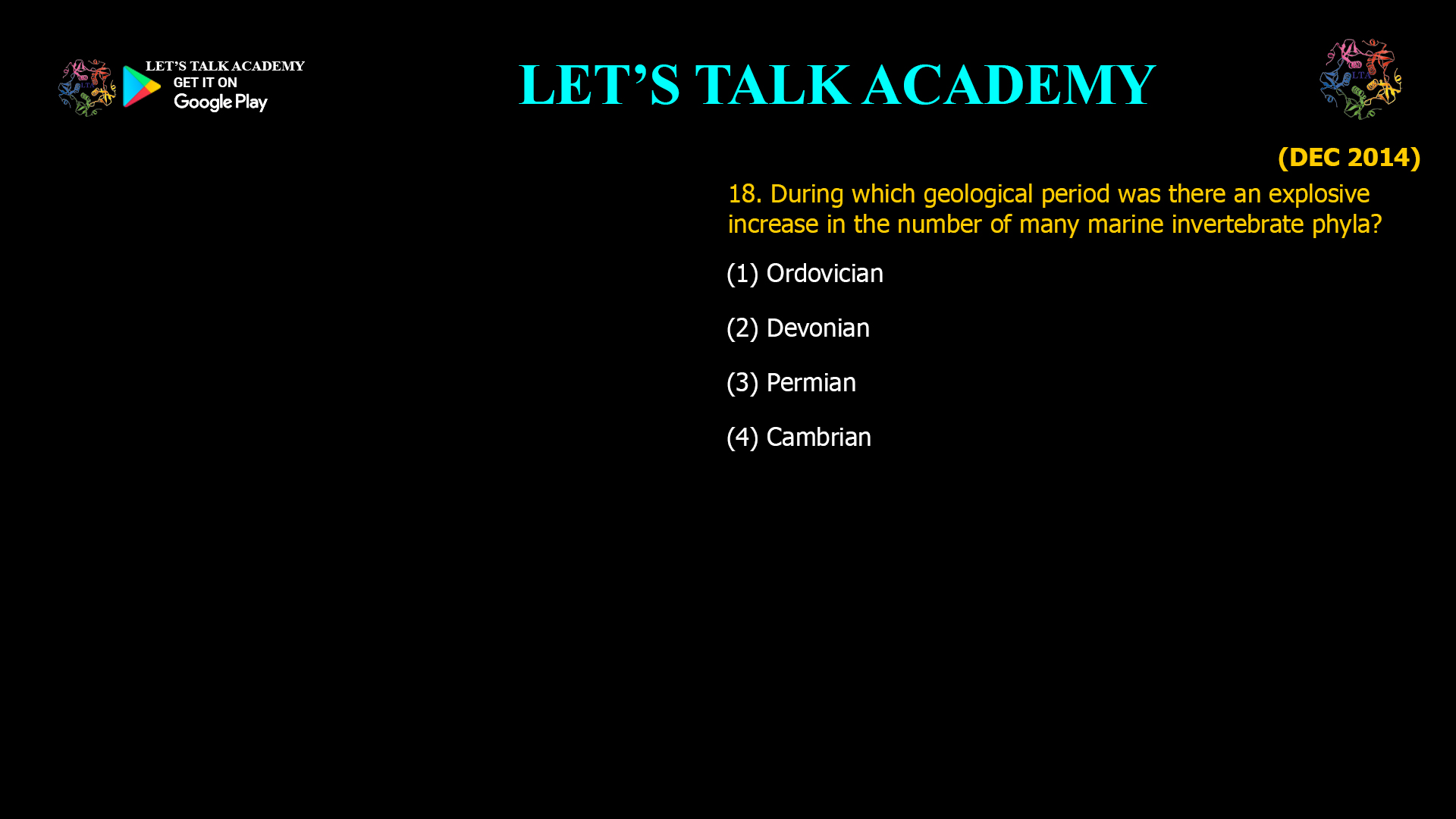
During which geological period was there an explosive increase in the number of many marine invertebrate phyla? (1) Ordovician (2) Devonian (3) Permian (4) Cambrian Introduction The history of life […]


