

















































































































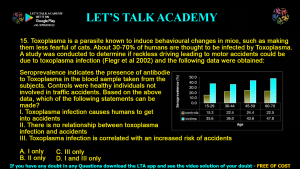




Scientists discovered two new plant species. “A” and “B” that look similar except that, species “A” bears flowers and leaves that are twice the size of those in species “B”. […]
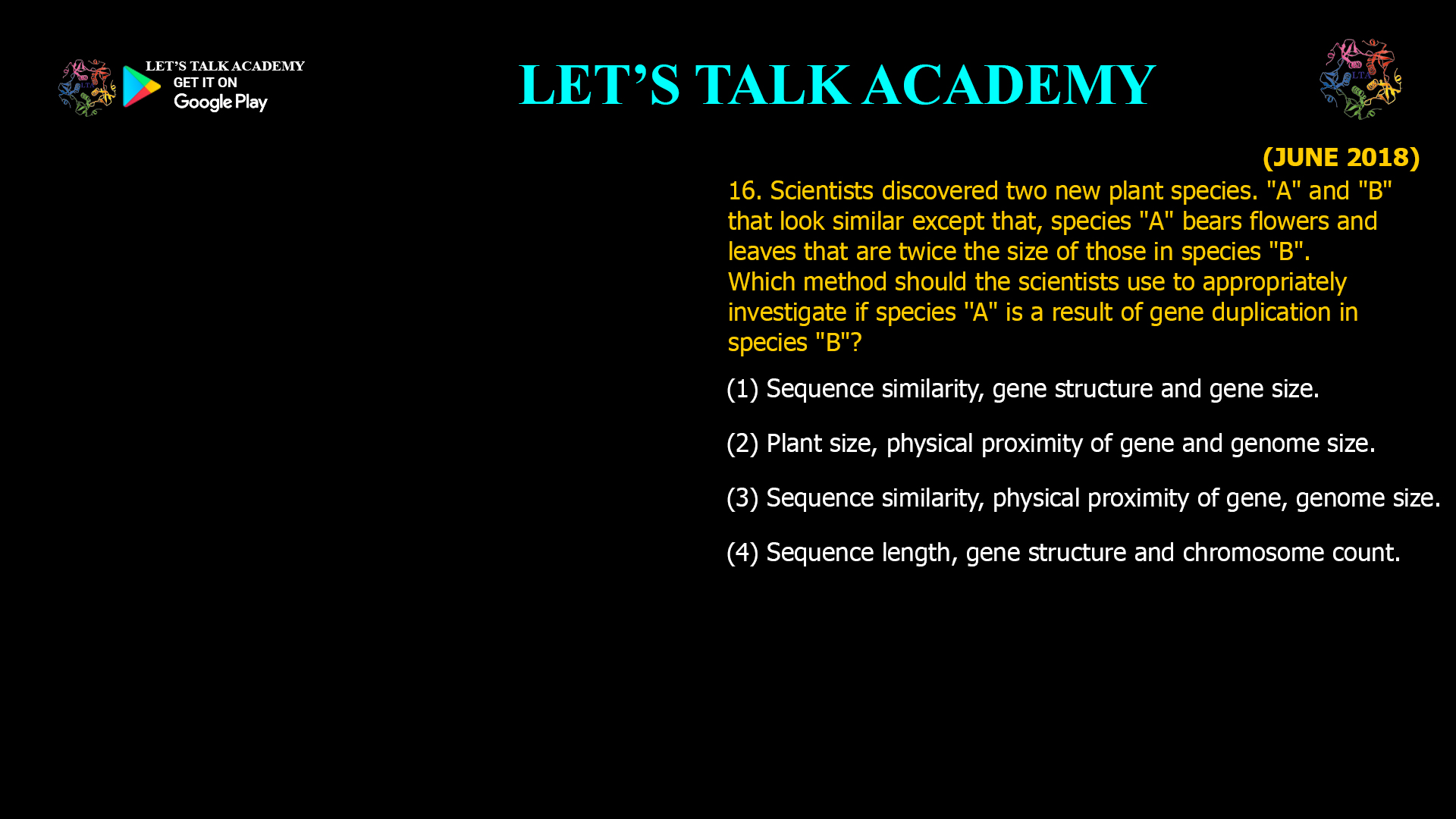

Scientists discovered two new plant species. “A” and “B” that look similar except that, species “A” bears flowers and leaves that are twice the size of those in species “B”. […]
Using molecular clock, it was estimated that two species A and B must have diverged from their common ancestor about 9 x 10⁶ years ago. If the rate of divergence […]
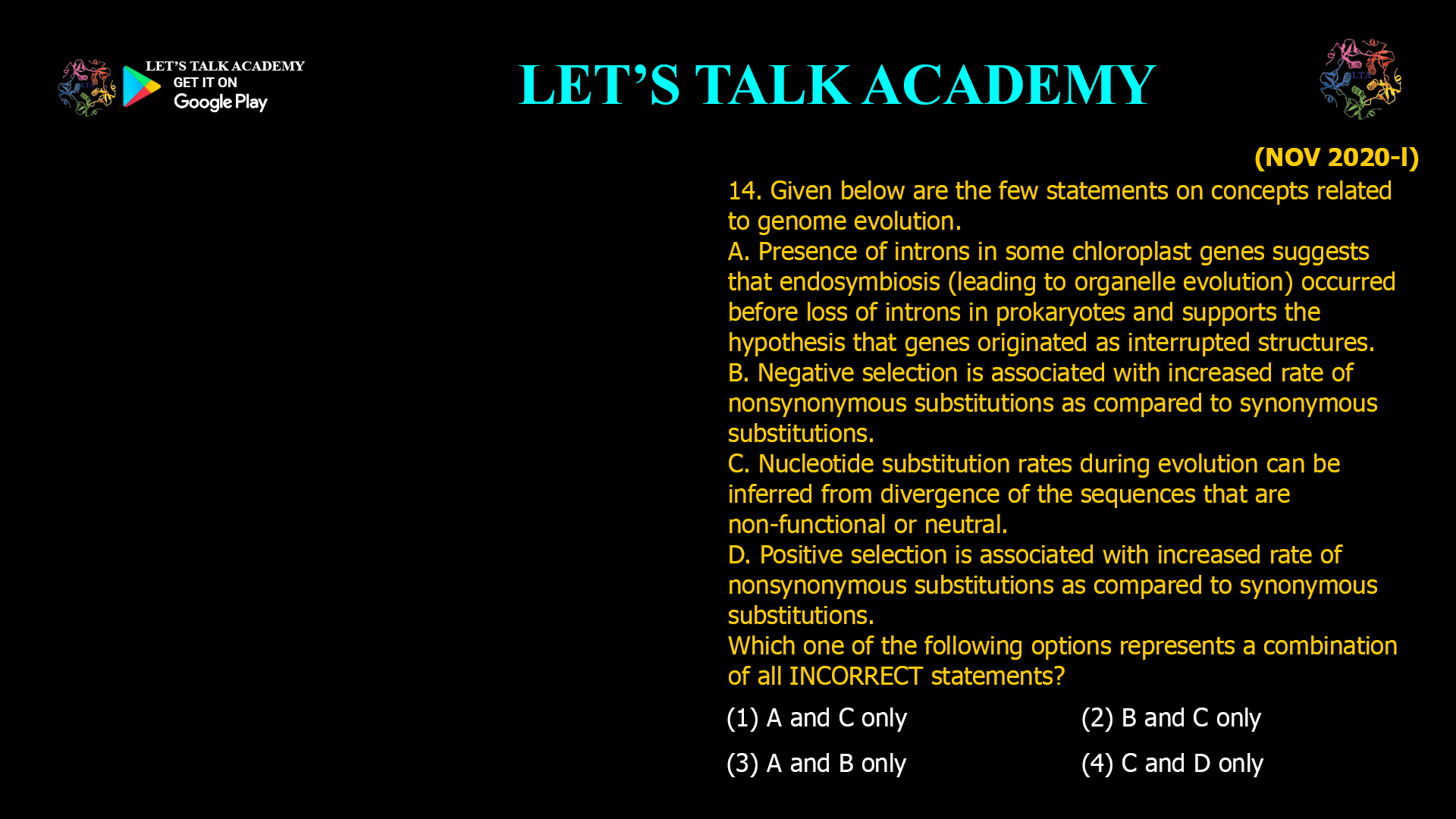
Given below are the few statements on concepts related to genome evolution. A. Presence of introns in some chloroplast genes suggests that endosymbiosis (leading to organelle evolution) occurred before loss […]
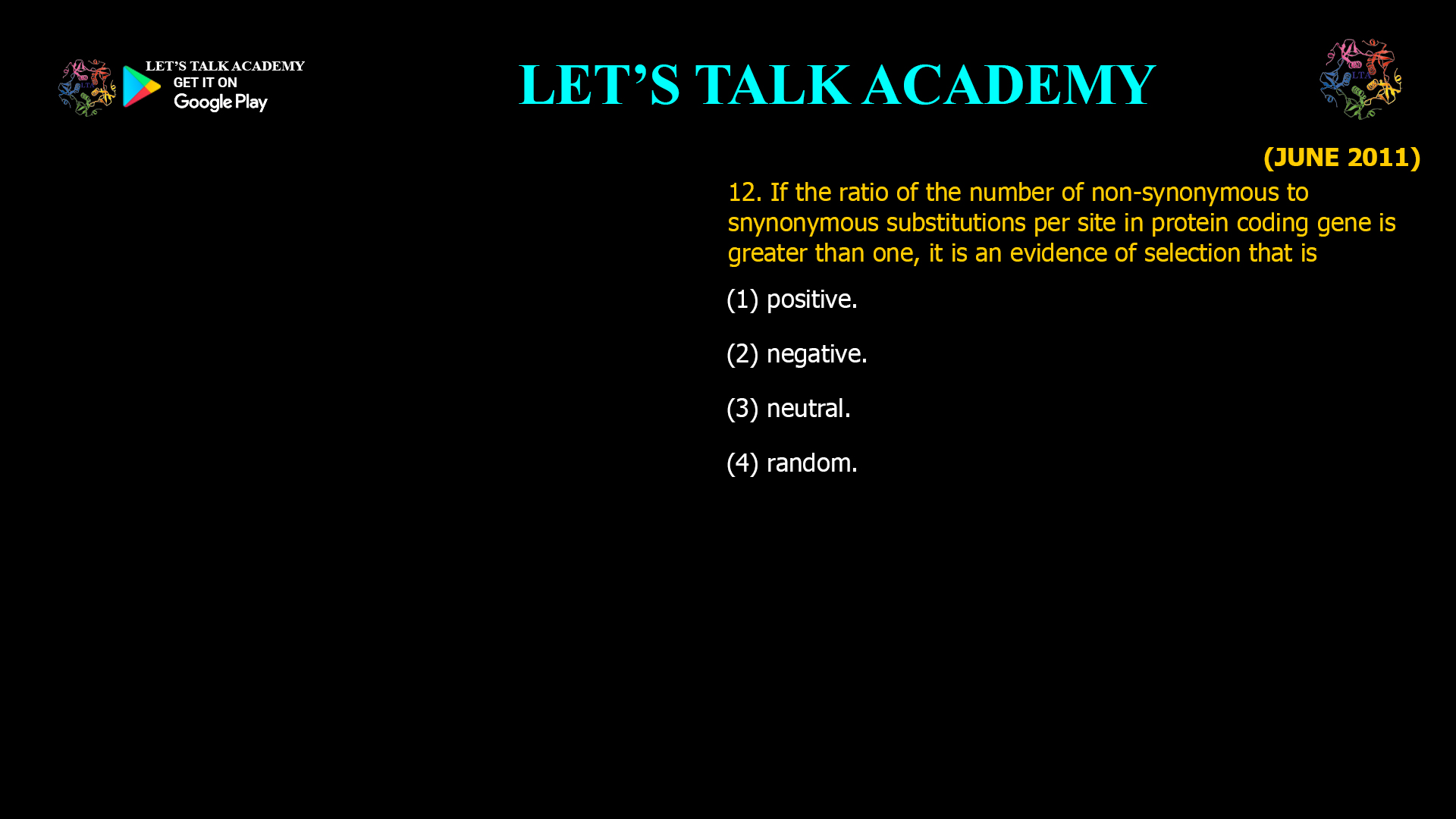
If the ratio of the number of non-synonymous to snynonymous substitutions per site in protein coding gene is greater than one, it is an evidence of selection that is (1) […]
Which of the following is a prediction of neutral theory of molecular evolution that is supported by data? (1) Human and chimps differ more in DNA sequences of psuedogenes than […]
Which one of the following statements is NOT TRUE about the Neutral Theory as proposed by Motoo Kimura? (1) Except for advantageous mutations, most alleles are under neutral selection (2) […]
Molecular evolution generally do not reflects (1) Species divergence (2) Convergent evolution (3) Natural selection (4) Neutral mutation What Does Molecular Evolution Reflect? Understanding Its Limits in Convergent Evolution […]
What is basic assumption for using molecular clocks for estimation of molecular evolution? (1) Rate of neutral mutation is constant over time (2) Rate of evolution is constant over time […]
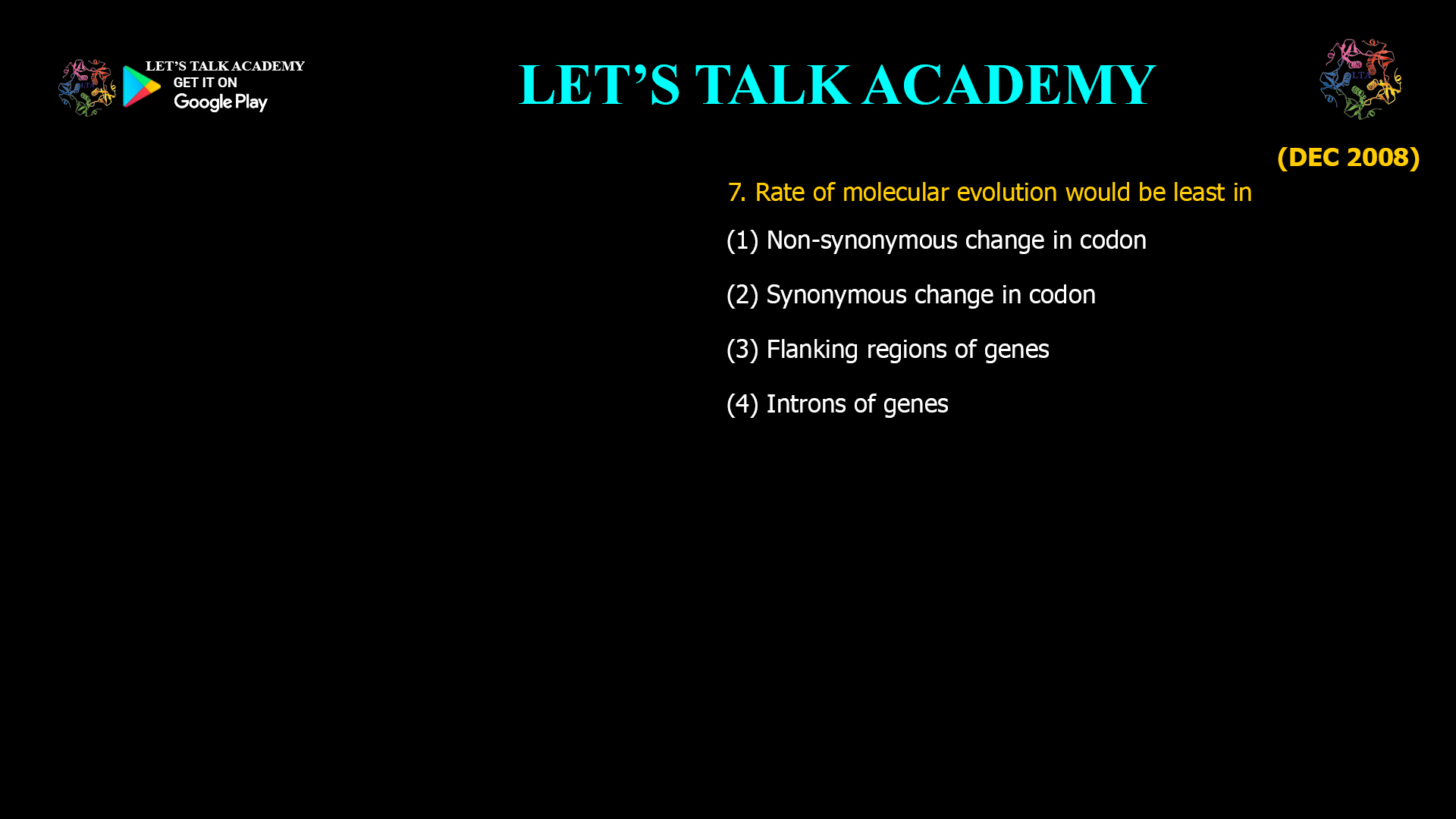
Rate of molecular evolution would be least in (1) Non-synonymous change in codon (2) Synonymous change in codon (3) Flanking regions of genes (4) Introns of genes Where Is […]
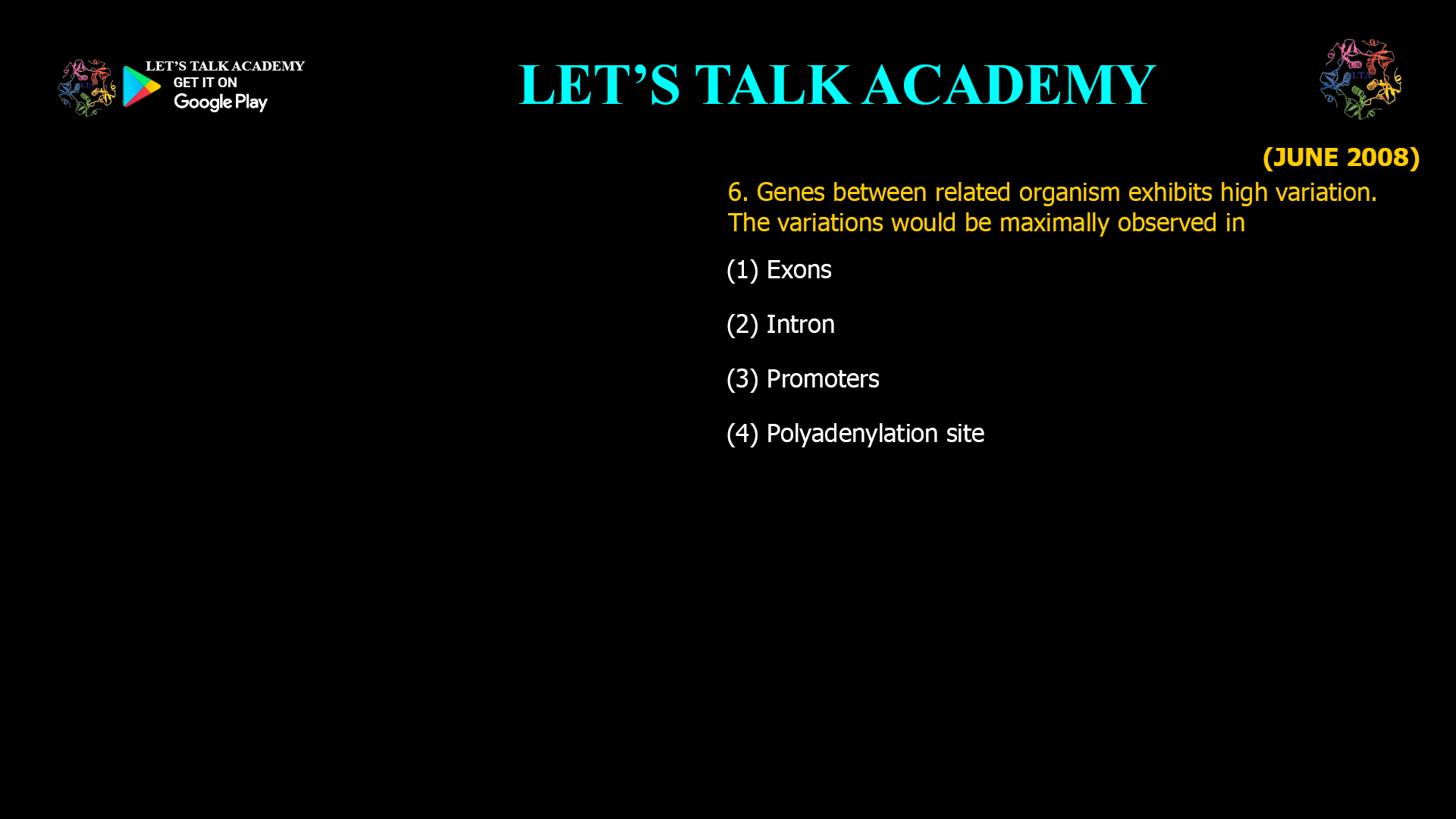
6. Genes between related organism exhibits high variation. The variations would be maximally observed in (1) Exons (2) Intron (3) Promoters (4) Polyadenylation site Where Is Genetic Variation Highest […]


