










































































A species of grass grows around a mine area having patches of heavy metal contaminated soil. Some of the populations of the species grew selectively on the soil that was […]

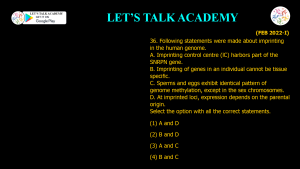
A species of grass grows around a mine area having patches of heavy metal contaminated soil. Some of the populations of the species grew selectively on the soil that was […]
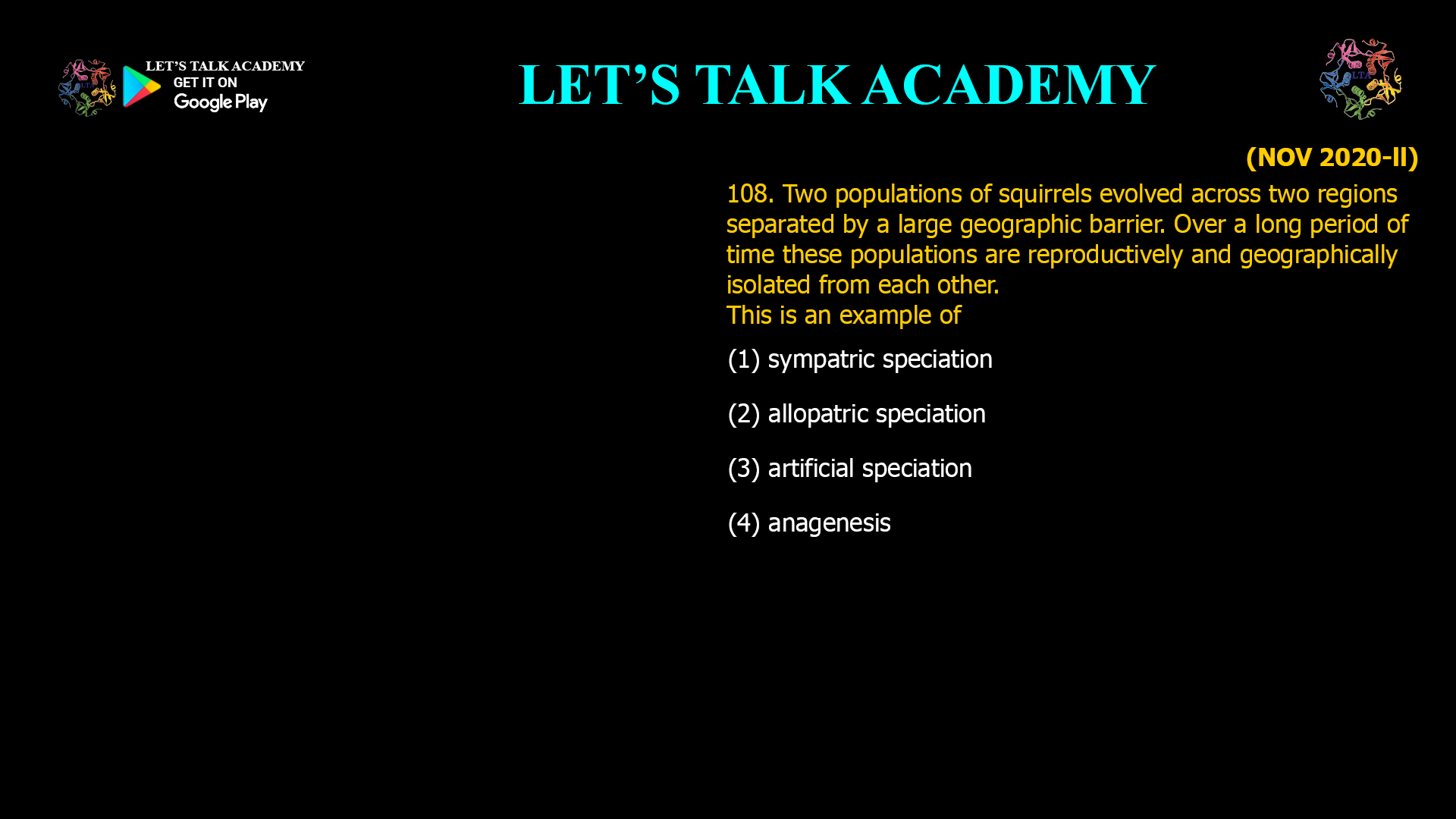
Two populations of squirrels evolved across two regions separated by a large geographic barrier. Over a long period of time these populations are reproductively and geographically isolated from each other. […]

The speciation in which a population splits into two geographically isolated populations experience dissimilar selective pressure and genetic drift is known as (1) sympatric speciation. (2) parapatric speciation. (3) peripatric […]

Which is correct explanation for sibling species? (1) Species which are morphologically different but can interbreed (2) Species which look morphologically similar but reproductively isolated (3) Species which are morphologically […]
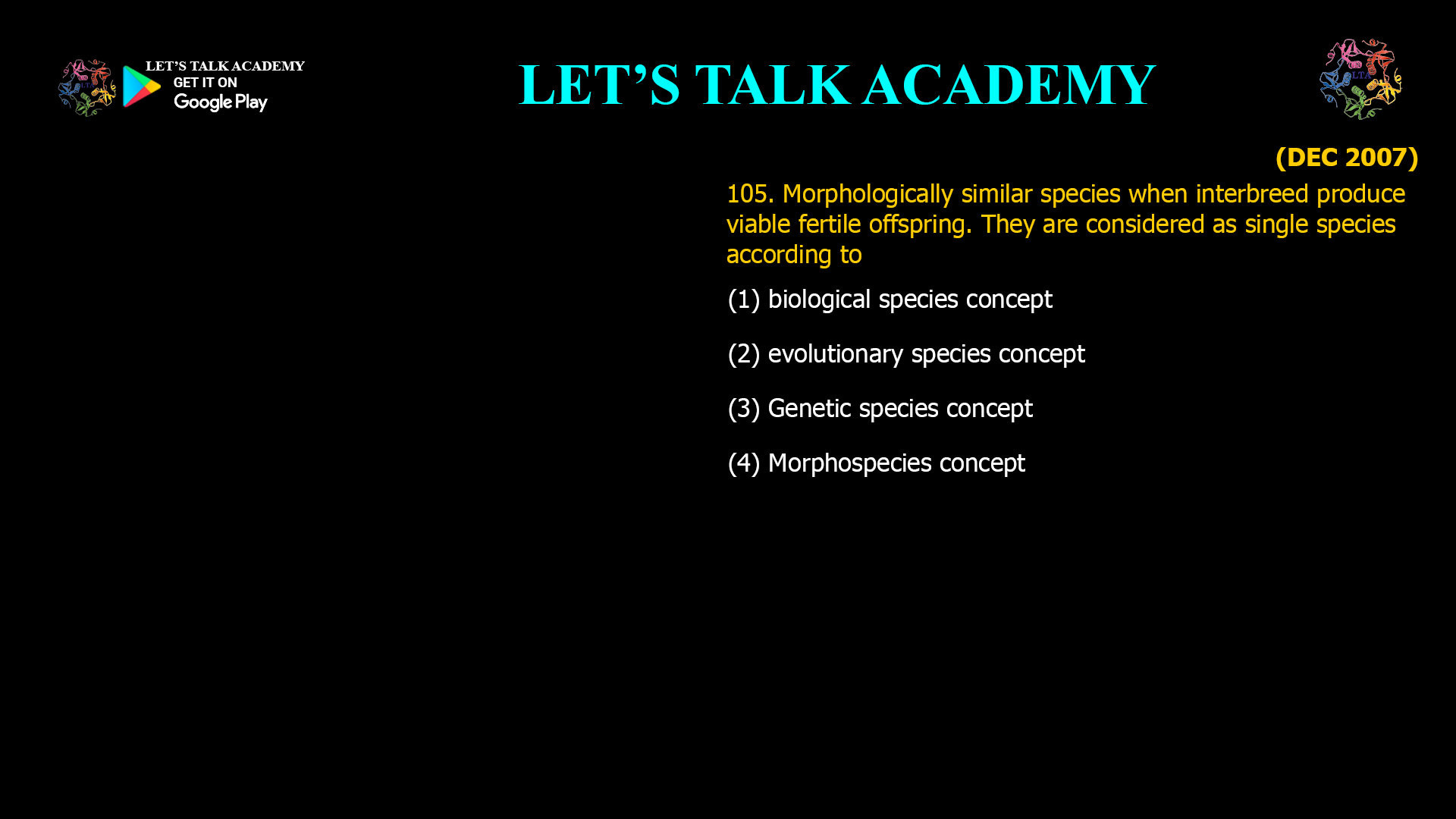
Morphologically similar species when interbreed produce viable fertile offspring. They are considered as single species according to (1) biological species concept (2) evolutionary species concept (3) Genetic species concept (4) […]
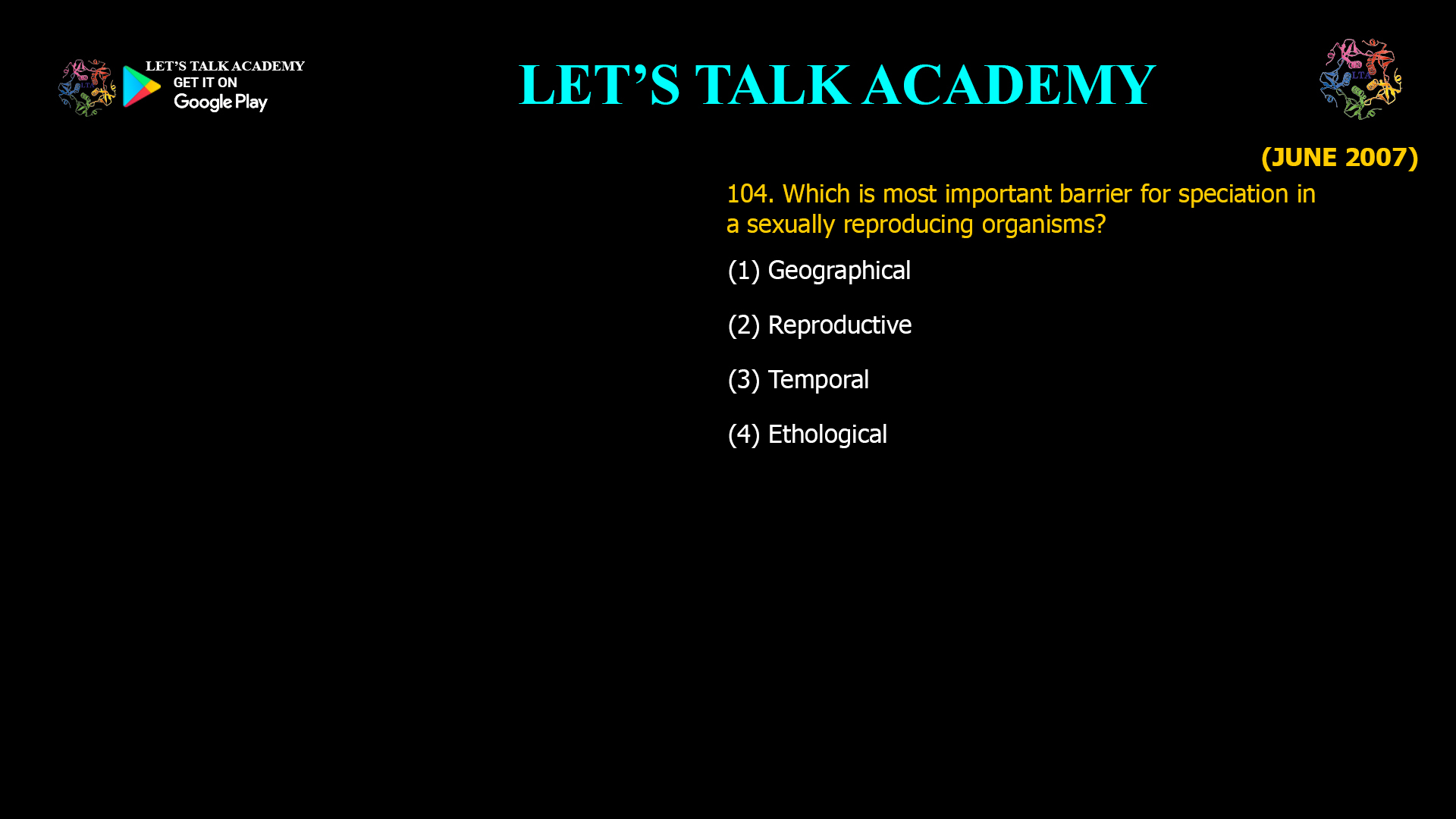
Which is most important barrier for speciation in a sexually reproducing organisms? (1) Geographical (2) Reproductive (3) Temporal (4) Ethological Speciation—the process by which new species arise—is a fundamental […]

Which species concept stress mainly on failure of interbreeding to keep them in distinct species (1) Biological species concept (2) Ecological species concept (3) Morphological species concept (4) Phylogenetic species […]

If a certain parasitic bacteria on insect prevents cross breeding among them. It will lead into (1) rapid speciation (2) Divergence of insects (3) Extinction of insects (4) No effect […]

The biological species concept defines species as a group of populations that are reproductively isolated from others. However, this definition is not applicable to groups where sexual reproduction has not […]

A group of organisms that can successfully interbreed and produce fertile offspring termed as (1) Biological species (2) Taxonomic species (3) Morphospecies (4) Sibling species What Is a Biological […]


