


































































Ants and bees social structure include queen, sterile female workers and soldier drones. This is best example of (1) Eusociality (2) Sub-social (3) Group selection (4) Altruism What Is […]
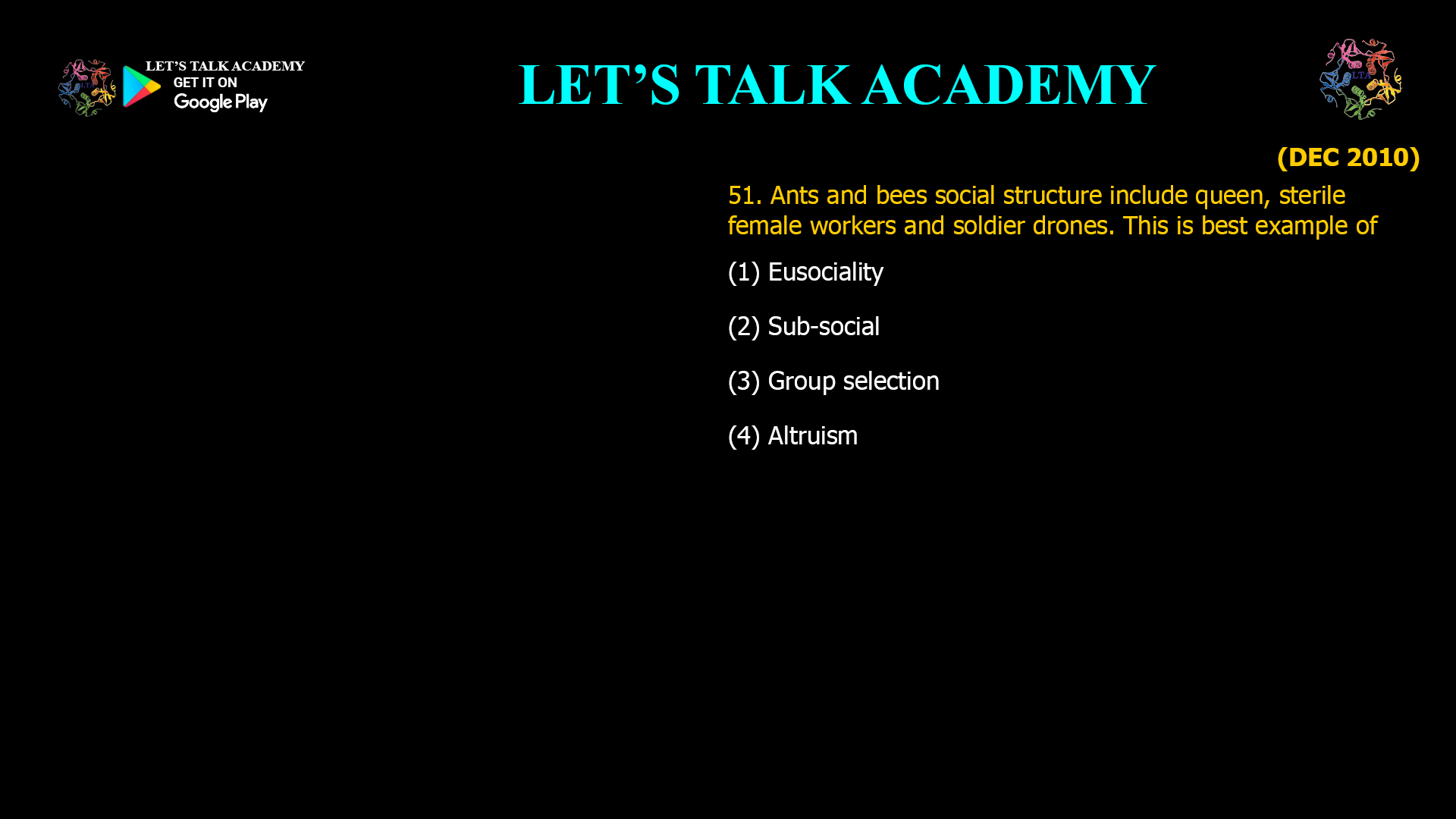

Ants and bees social structure include queen, sterile female workers and soldier drones. This is best example of (1) Eusociality (2) Sub-social (3) Group selection (4) Altruism What Is […]
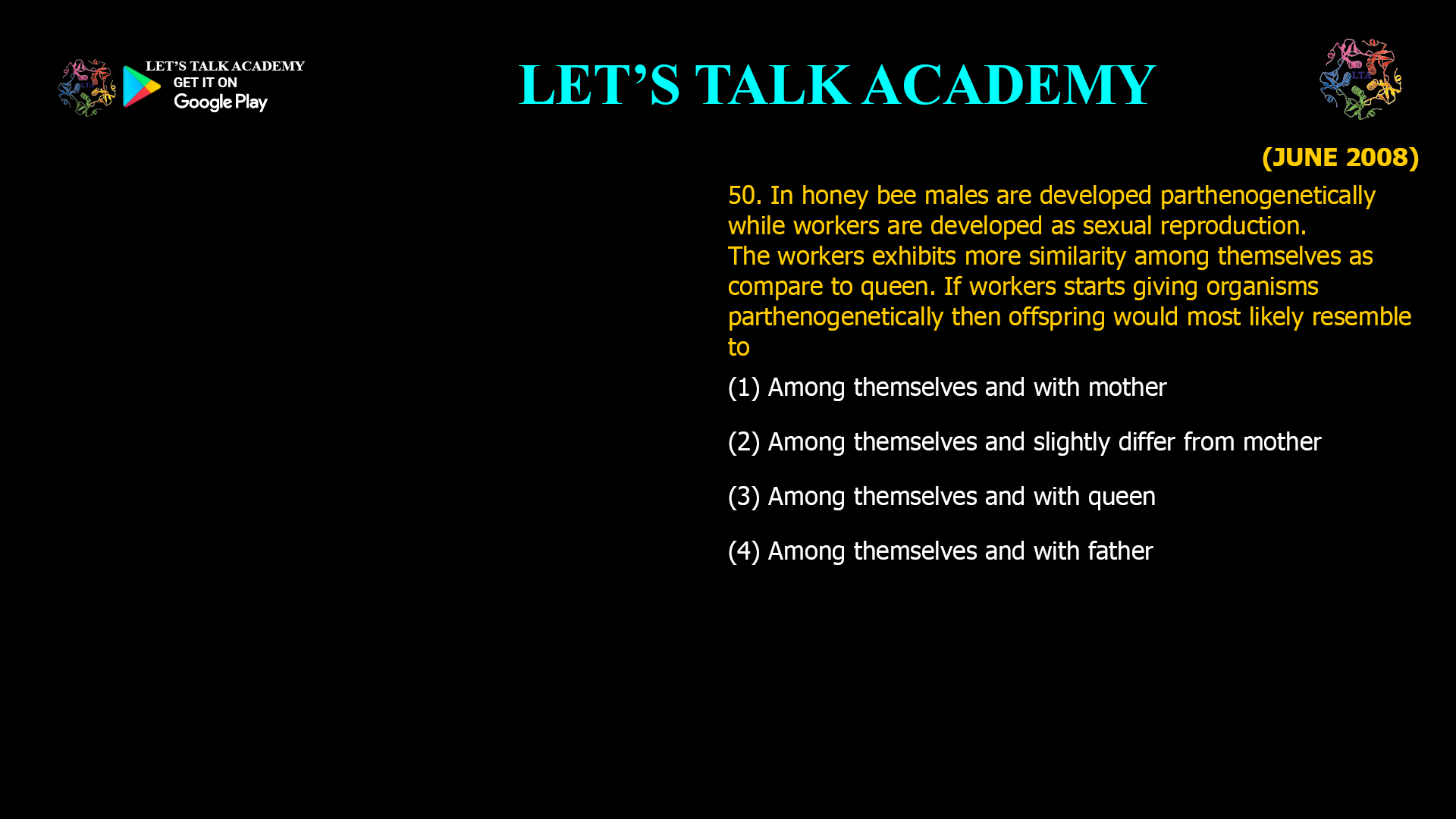
In honey bee males are developed parthenogenetically while workers are developed as sexual reproduction. The workers exhibits more similarity among themselves as compare to queen. If workers starts giving organisms […]
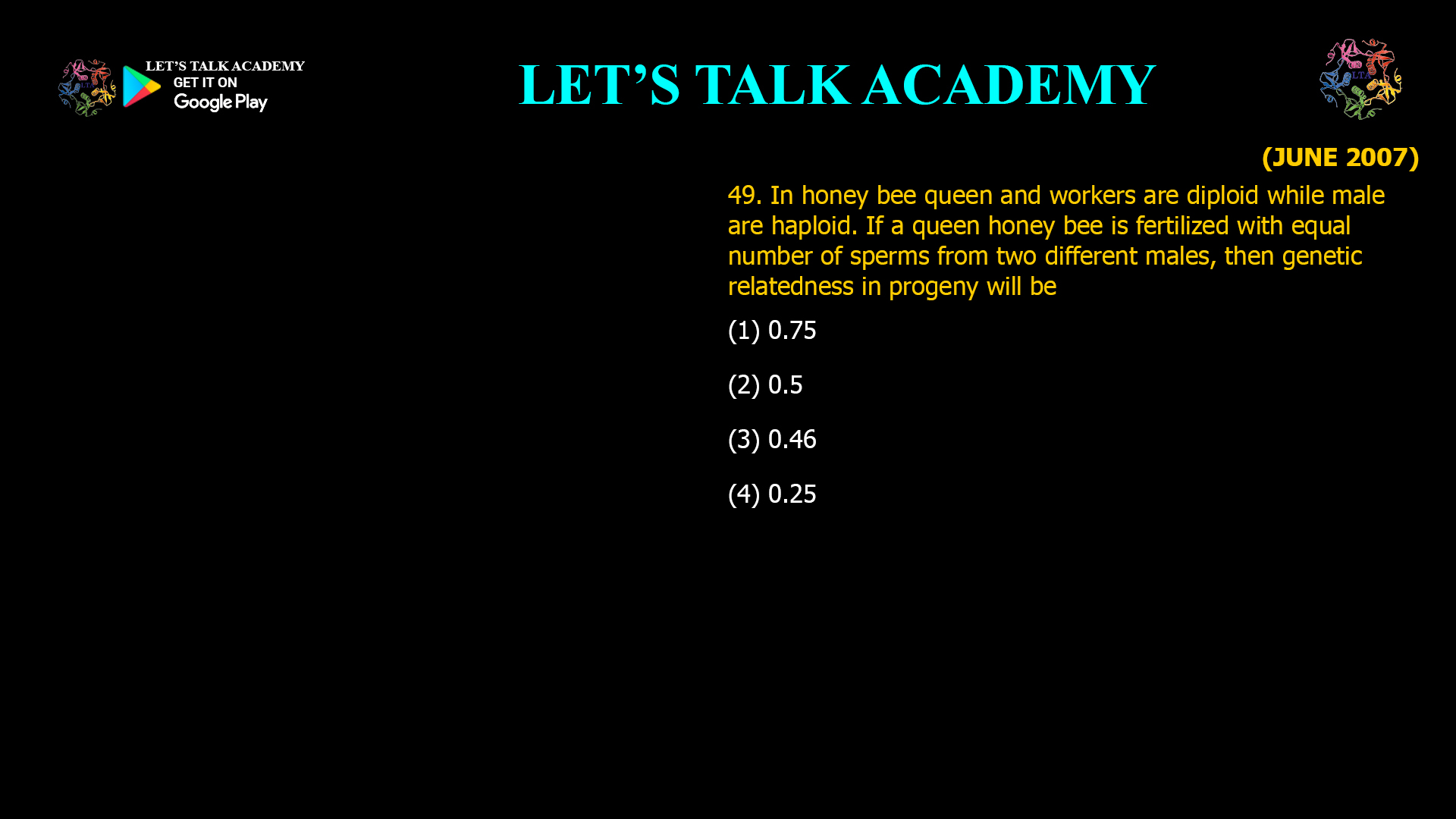
In honey bee queen and workers are diploid while male are haploid. If a queen honey bee is fertilized with equal number of sperms from two different males, then genetic […]
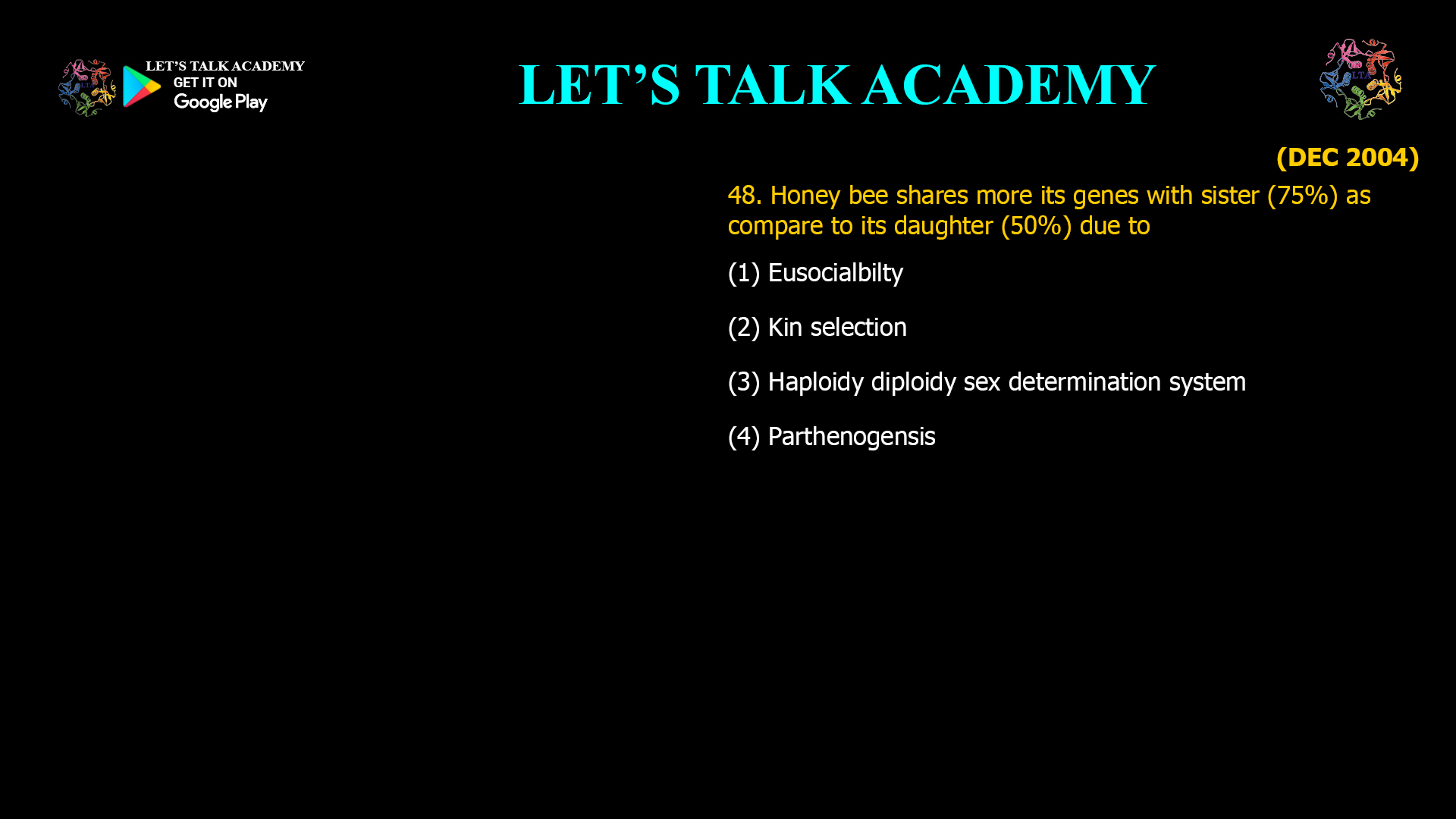
Honey bee shares more its genes with sister (75%) as compare to its daughter (50%) due to (1) Eusocialbilty (2) Kin selection (3) Haploidy diploidy sex determination system (4) Parthenogensis […]
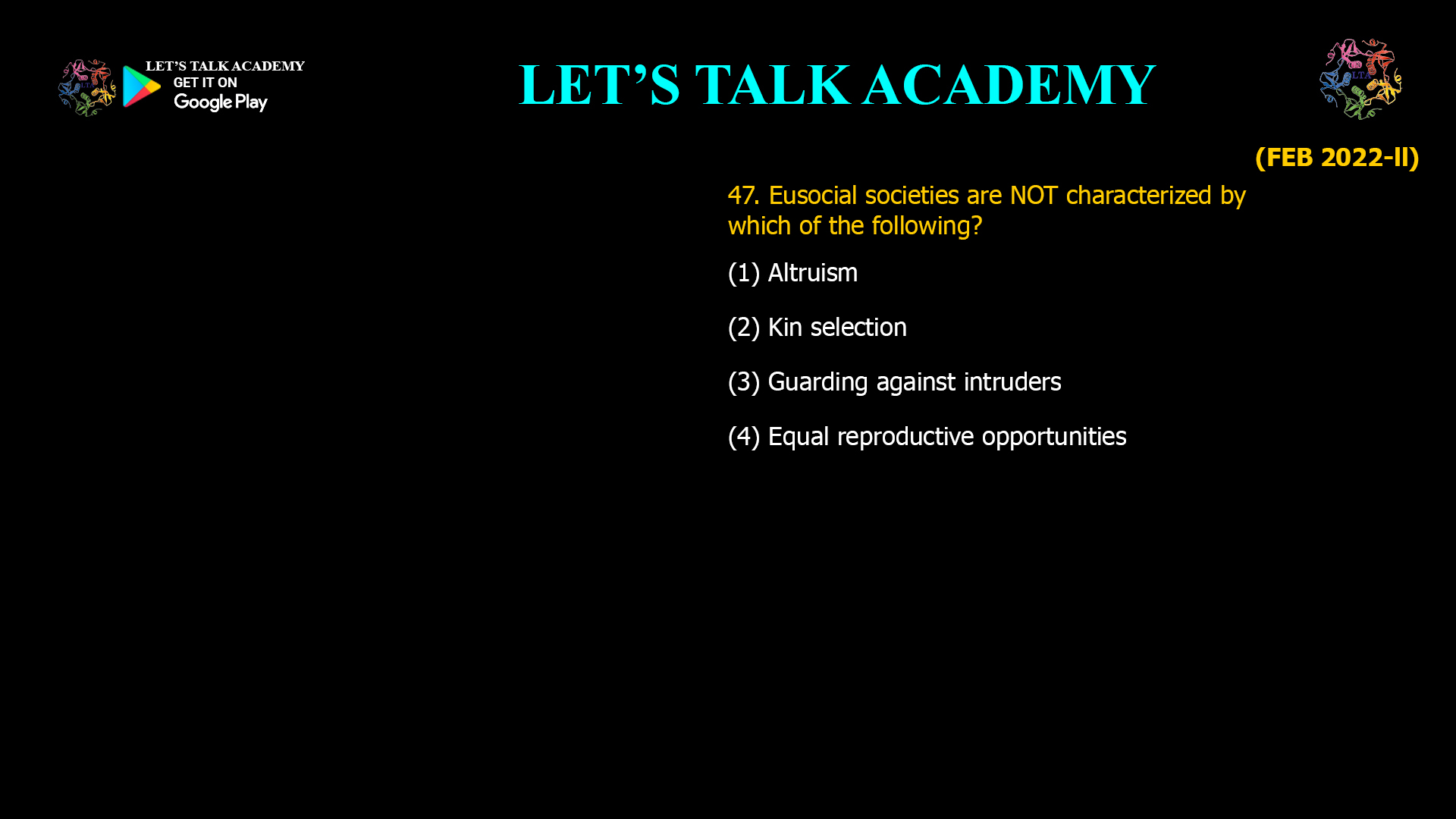
Eusocial societies are NOT characterized by which of the following? (1) Altruism (2) Kin selection (3) Guarding against intruders (4) Equal reproductive opportunities Core Characteristics of Eusocial Societies […]
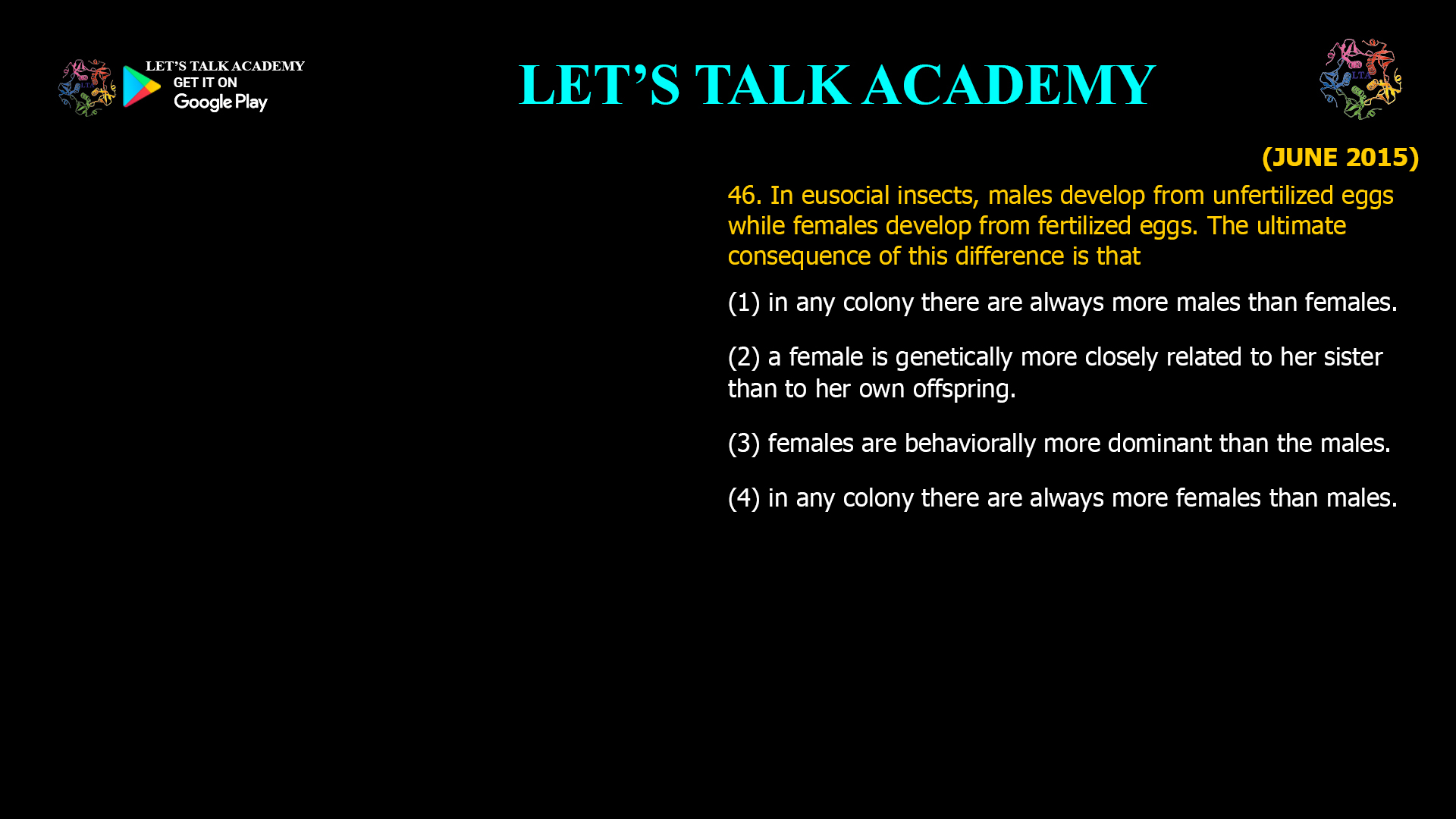
In eusocial insects, males develop from unfertilized eggs while females develop from fertilized eggs. The ultimate consequence of this difference is that (1) in any colony there are always more […]

In some species of new world monkeys, only one female reproduces in a group. One or more younger females have suppressed reproduction and assist the reproductive female. This is an […]

Worker bees, instead of themselves reproducing, help the queen reproduce. This behaviour is explained as an example of (1) kin selection (2) group selection (3) sexual selection (4) natural selection […]

The genetic relatedness (r) of an individual to his nephew is 0.25. The alleles that cause uncles to care for nephews will spread, according to Hamilton’s Rule, only if the […]

Honey bee keep variations among the workers by (1) Matting with males many times (2) Parthenogenesis (3) Utilizing different environment conditions (4) Extensive recombination during oogenesis The Genetic Basis […]


