


























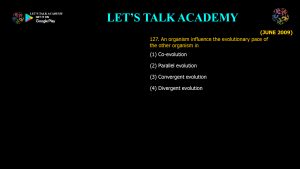
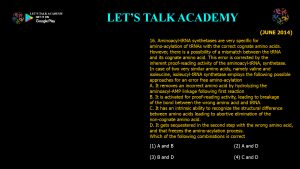


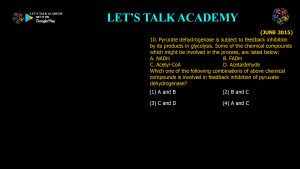
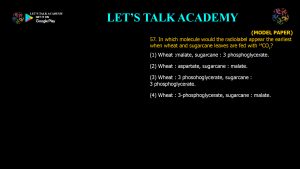










































Which one of the following descriptions does NOT apply to circadian rhythmicity? (1) A process that can be found in bacteria, plants, fungi, and animals (2) A process that is […]
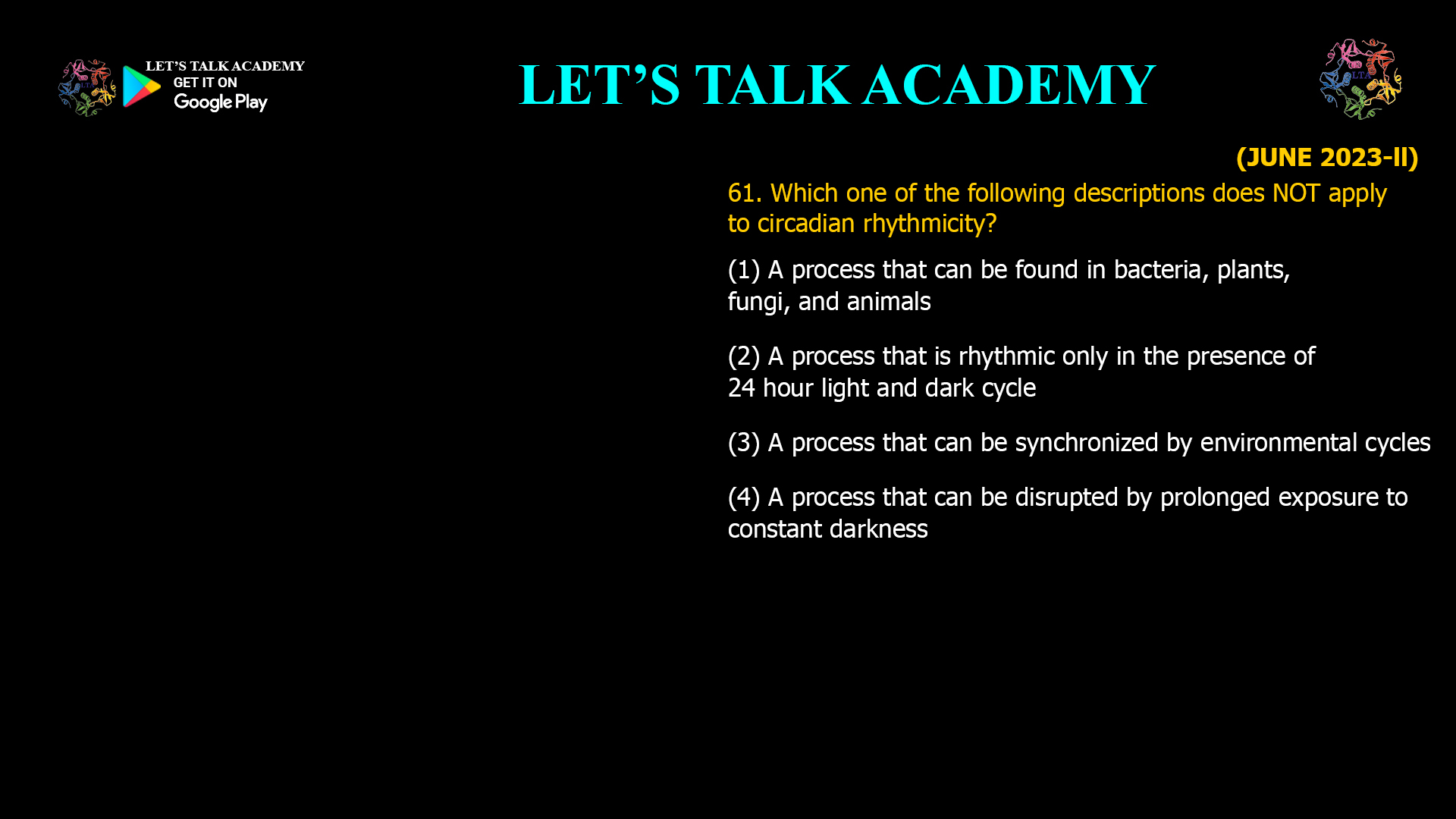
Which one of the following descriptions does NOT apply to circadian rhythmicity? (1) A process that can be found in bacteria, plants, fungi, and animals (2) A process that is […]
In mammals, the primary circadian clock is located in which of the following parts of the brain? (1) Occipital lobe of cerebrum (2) Amygdala (3) Suprachiasmatic nucleus (4) Frontal lobe […]
The photoreceptor commonly involved in light entrainment of the biological clock in flies, moulds and plants is (1) phytochrome. (2) rhodopsin (3) carotenoid. (4) Cryptochrome. What Is Cryptochrome? Cryptochrome is […]
If bird is kept is a closed cage such that all external clues are blocked then what would be effect on its biological clock (1) No effect (2) It will […]

Circadian rhythms in humans are controlled by (1) Medulla (2) Cortex (3) Pituitary gland (4) Suprachaismatic nucleus What Is the Suprachiasmatic Nucleus? The suprachiasmatic nucleus is a tiny cluster of about […]

An interaction where the actor and the recipient both suffer a cost is referred to as (1) Altruism (2) Cooperation (3) Mutualism (4) Spite Defining Spite in Animal Behavior […]

Altruism describes a behaviour performed by animals that may be disadvantageous to self while benefitting others. Which one of the following statements is INCORRECT about altruism? (1) It is the […]

Individual A performs to another individual a behavioral act which has a fitness consequence. Match the behavioral acts (a to e) with the correct fitness consequence (i) to (iv) (1) […]

In hymenoptera insects, males are haploid and females are diploid. All fertilized eggs give rise to female and unfertilized eggs give rise to males. As a result, if a female […]

The development of advanced social behavior is related to (1) Complex Brain size (2) Genetic relatedness (3) Size of population (4) Size of organism What Drives Advanced Social Behavior? […]


