






























































































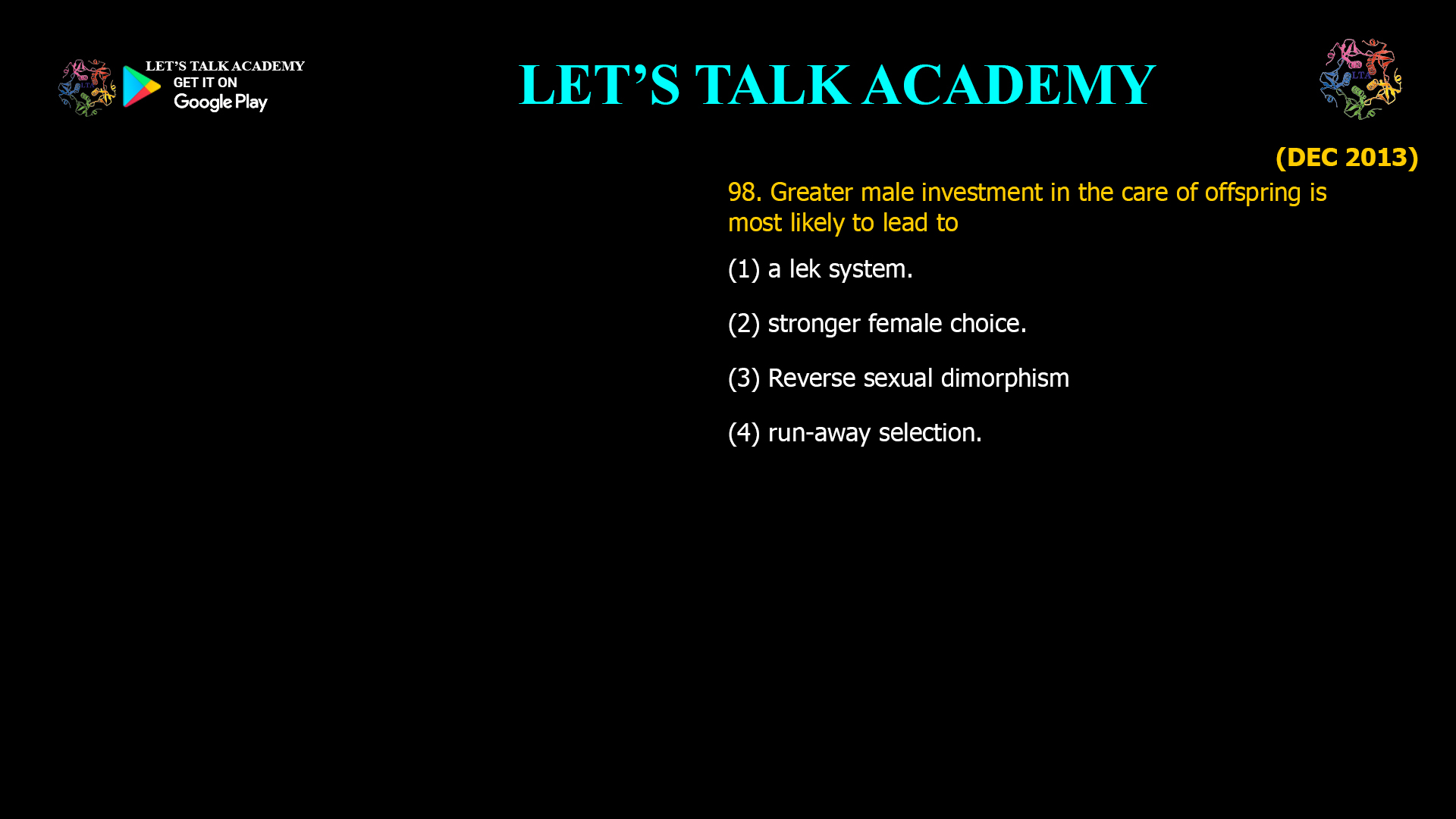
Greater male investment in the care of offspring is most likely to lead to (1) a lek system. (2) stronger female choice. (3) Reverse sexual dimorphism (4) run-away selection. […]
Greater male investment in the care of offspring is most likely to lead to (1) a lek system. (2) stronger female choice. (3) Reverse sexual dimorphism (4) run-away selection. […]
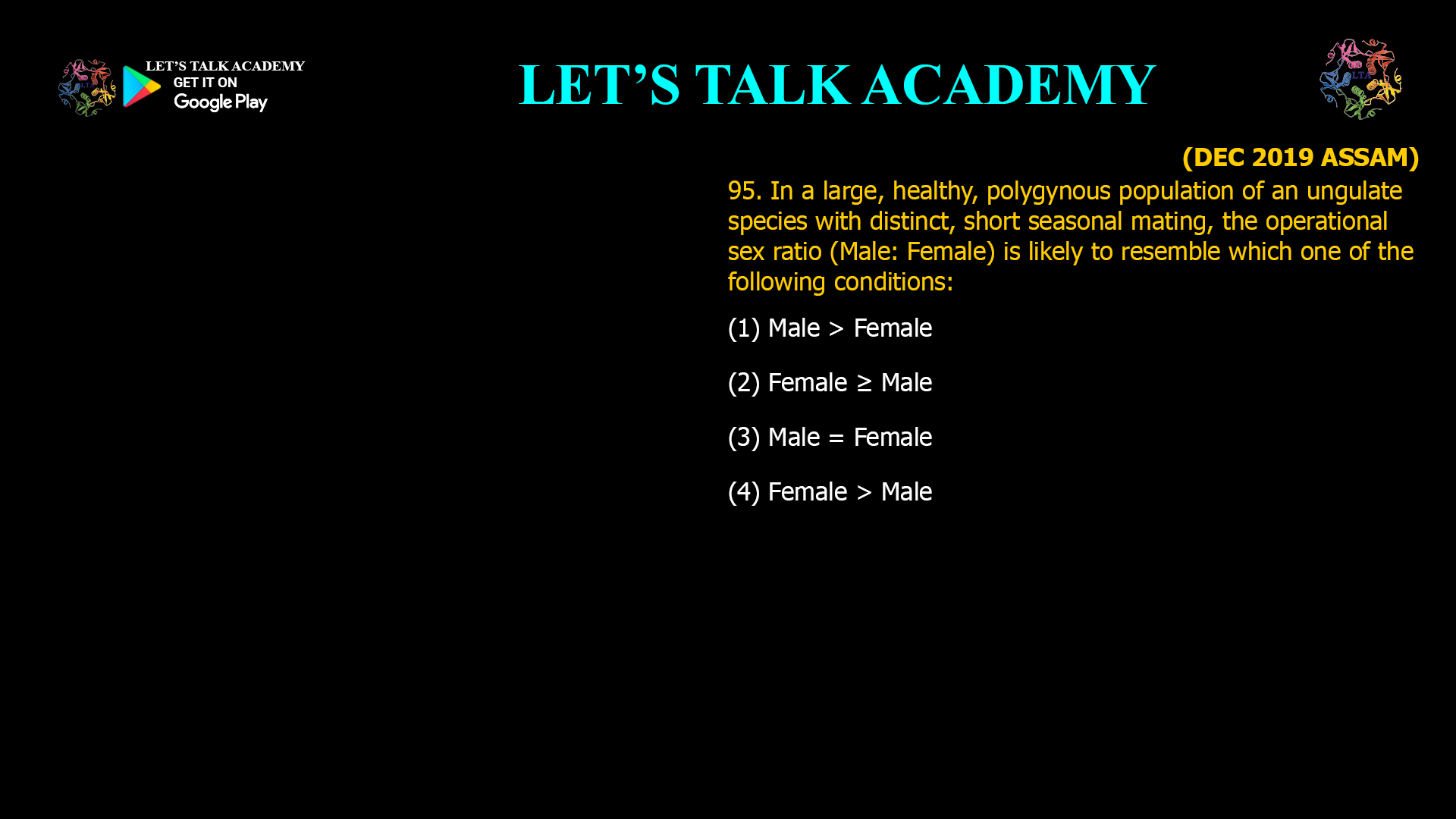
In a large, healthy, polygynous population of an ungulate species with distinct, short seasonal mating, the operational sex ratio (Male: Female) is likely to resemble which one of the following […]
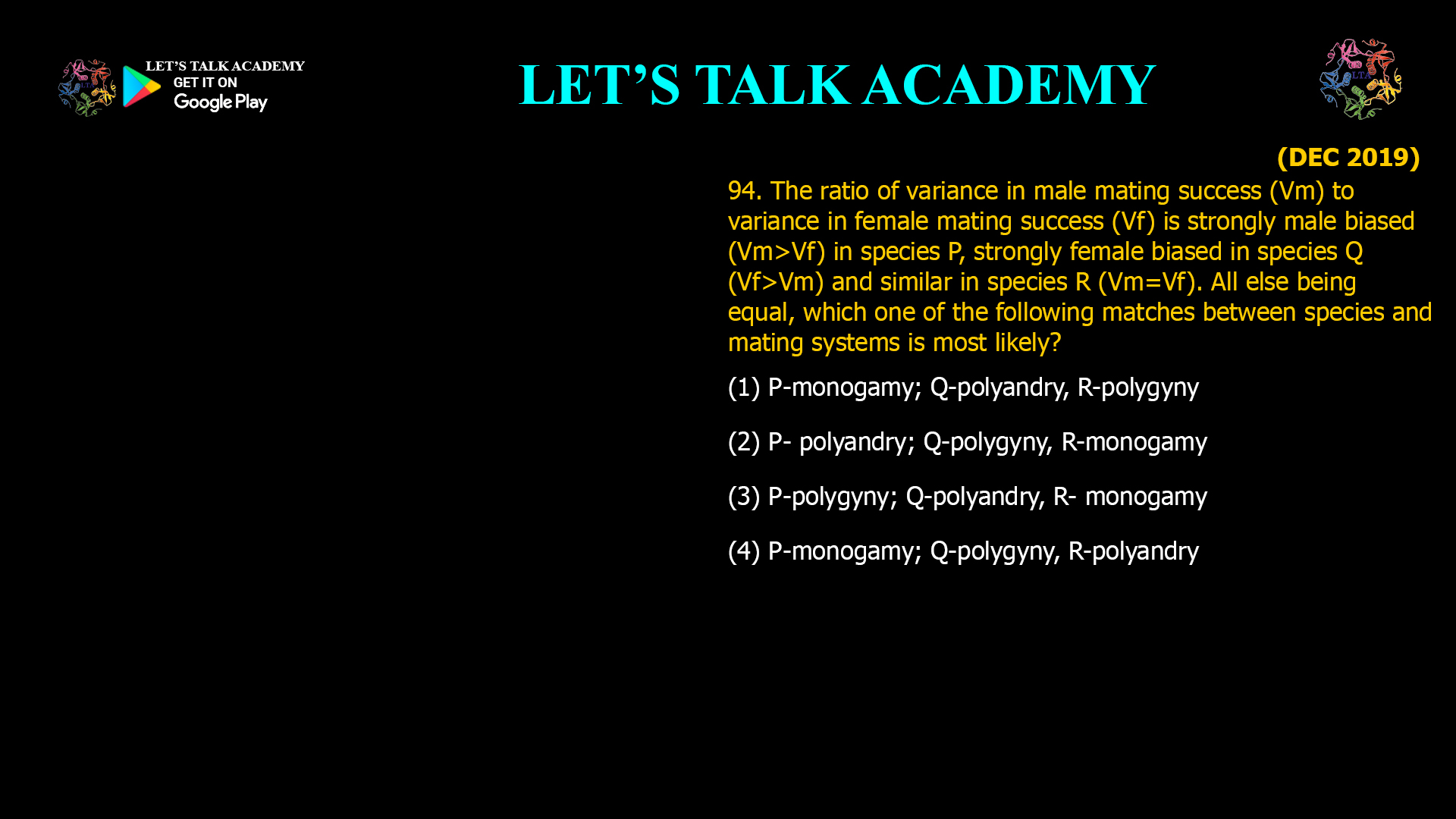
The ratio of variance in male mating success (Vm) to variance in female mating success (Vf) is strongly male biased (Vm>Vf) in species P, strongly female biased in species Q […]
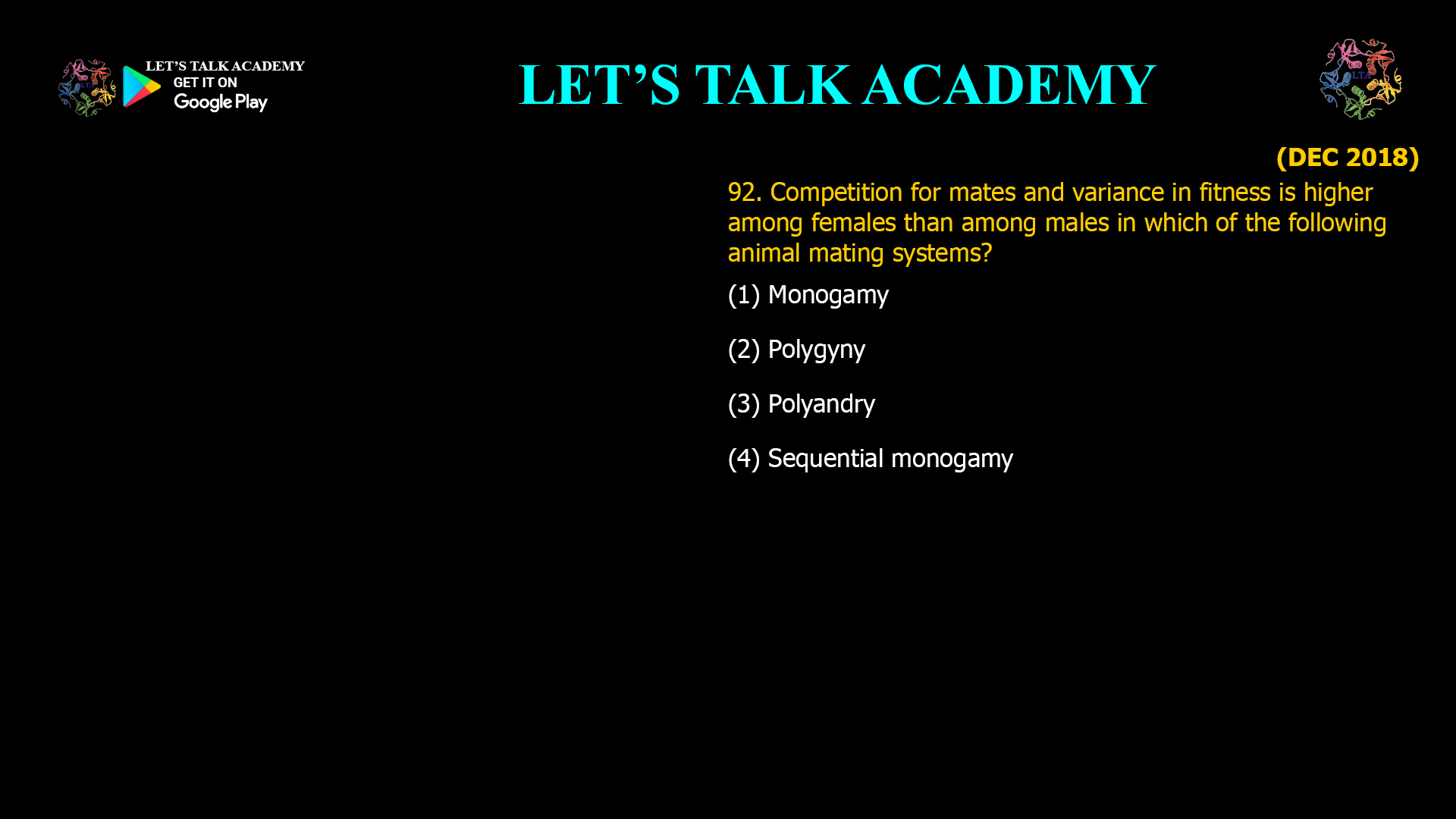
Competition for mates and variance in fitness is higher among females than among males in which of the following animal mating systems? (1) Monogamy (2) Polygyny (3) Polyandry (4) Sequential […]
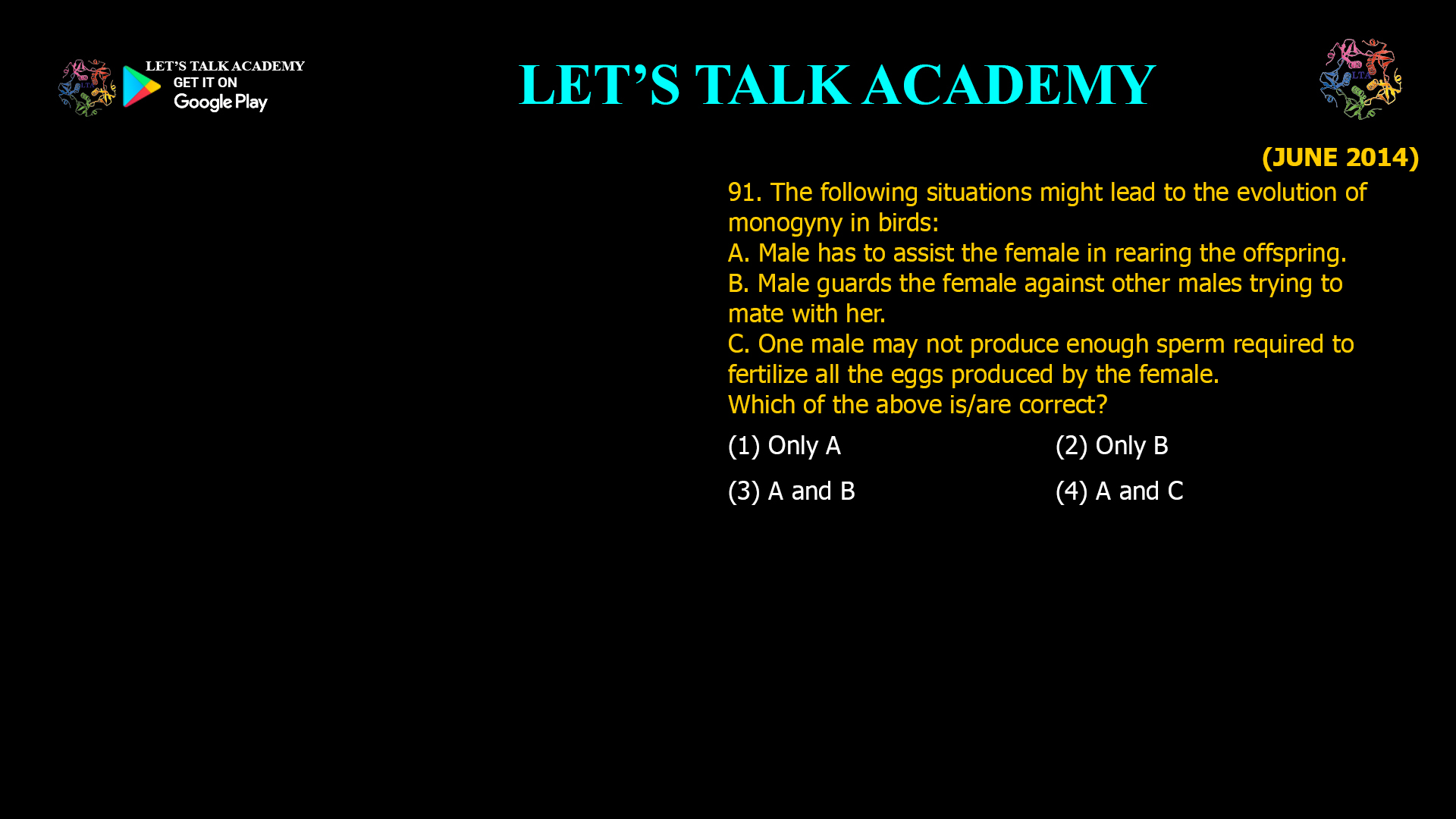
The following situations might lead to the evolution of monogyny in birds: A. Male has to assist the female in rearing the offspring. B. Male guards the female against other […]
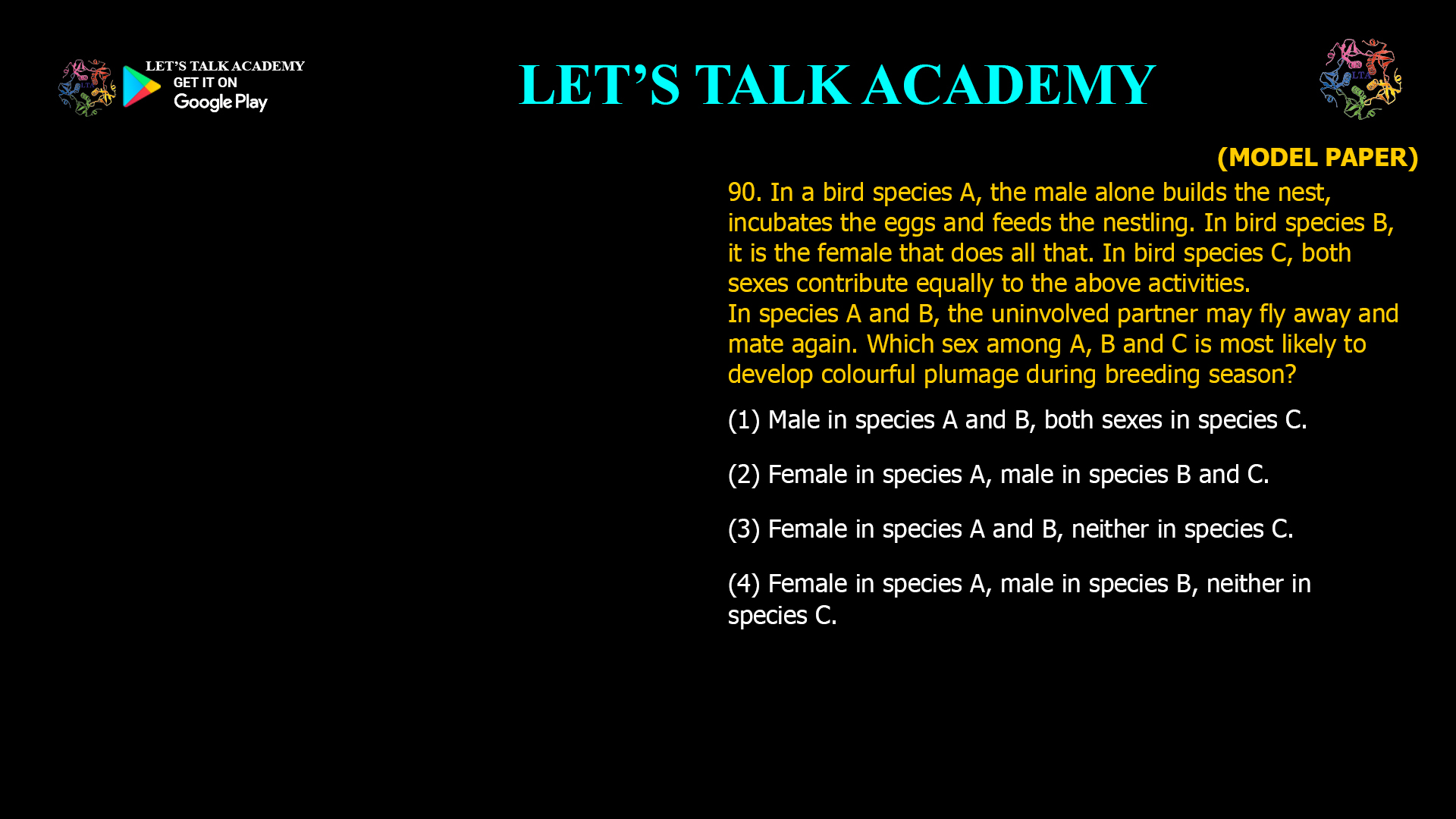
In a bird species A, the male alone builds the nest, incubates the eggs and feeds the nestling. In bird species B, it is the female that does all that. […]
Reproductive success of individuals in a population is likely to be skewed under all the following conditions, EXCEPT when (1) Females are choosy. (2) male-male competition is intense. (3) pair-bonding […]
In bird species where both parents contribute equally to parental care, generally (1) males are larger than females (2) females are more colorful than males (3) females are larger than […]
Which one of the following statements best describes Bateman’s principle? (1) Female gametes (eggs) are costlier than male gametes (sperms). (2) Reproductive variance is greater in males than in females. […]
Which of the following is NOT a benefit for the female adopting polyandry? (1) Greater probability of getting all her eggs fertilized. (2) Ability to receive more resources from the […]


