









































































cAMP signalling plays a very important role in the development and differentiation of Dictyostelium discoideum. This morphogen’ is synthesized by different adenyl cyclases expressed at different stages of its life […]


cAMP signalling plays a very important role in the development and differentiation of Dictyostelium discoideum. This morphogen’ is synthesized by different adenyl cyclases expressed at different stages of its life […]
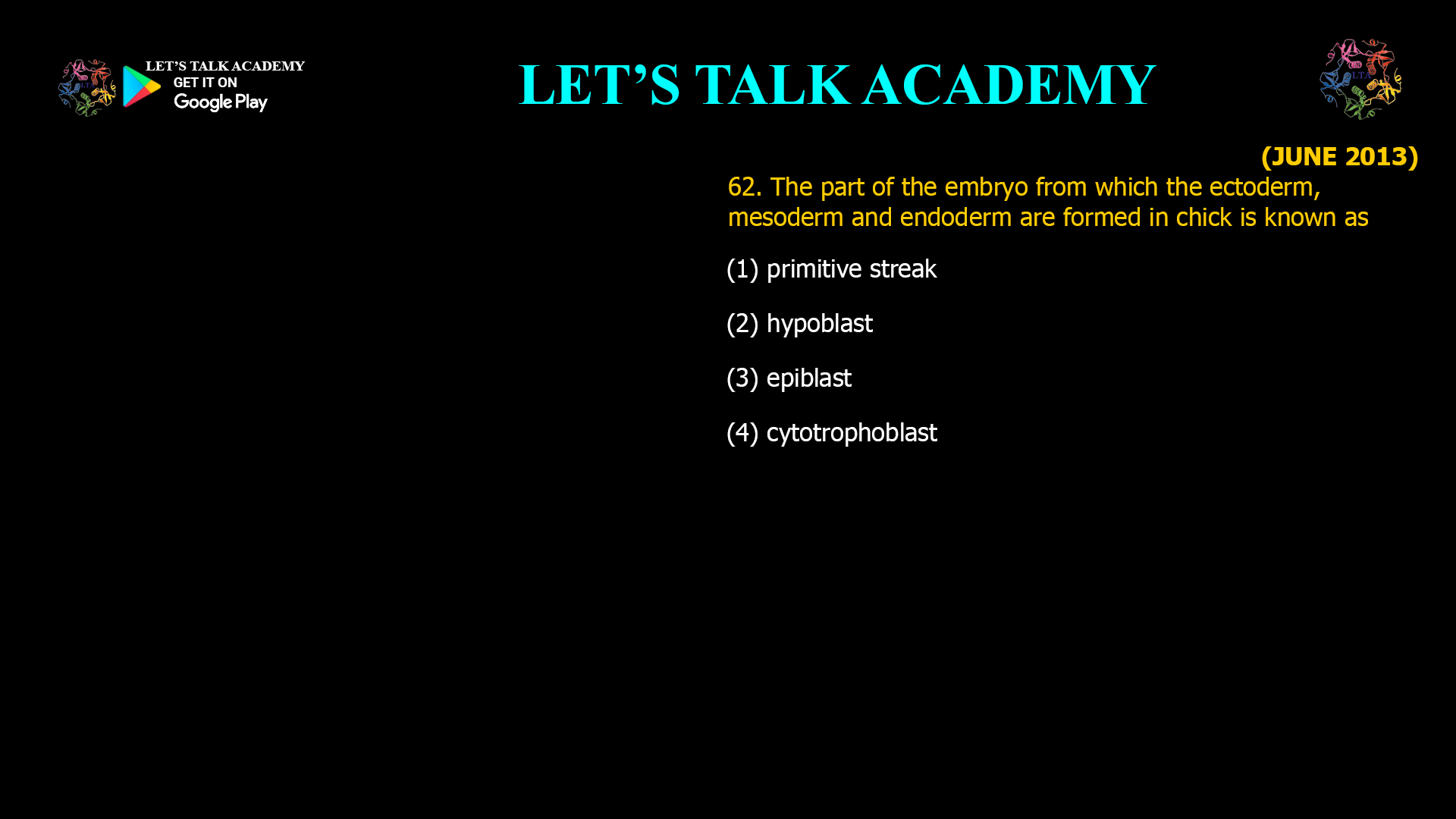
The part of the embryo from which the ectoderm, mesoderm and endoderm are formed in chick is known as (1) primitive streak (2) hypoblast (3) epiblast (4) cytotrophoblast Introduction In […]
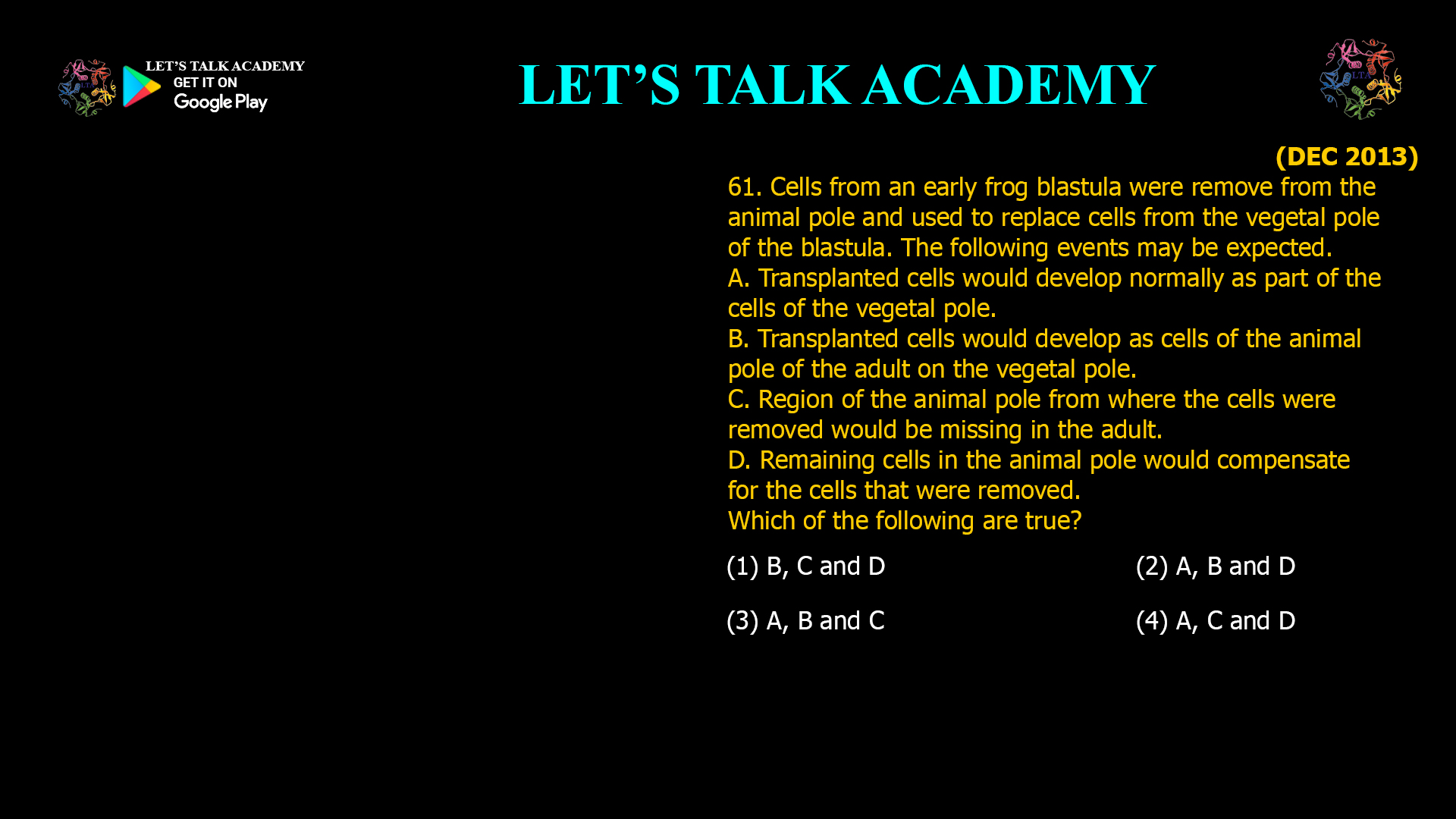
Cells from an early frog blastula were remove from the animal pole and used to replace cells from the vegetal pole of the blastula. The following events may be expected. […]
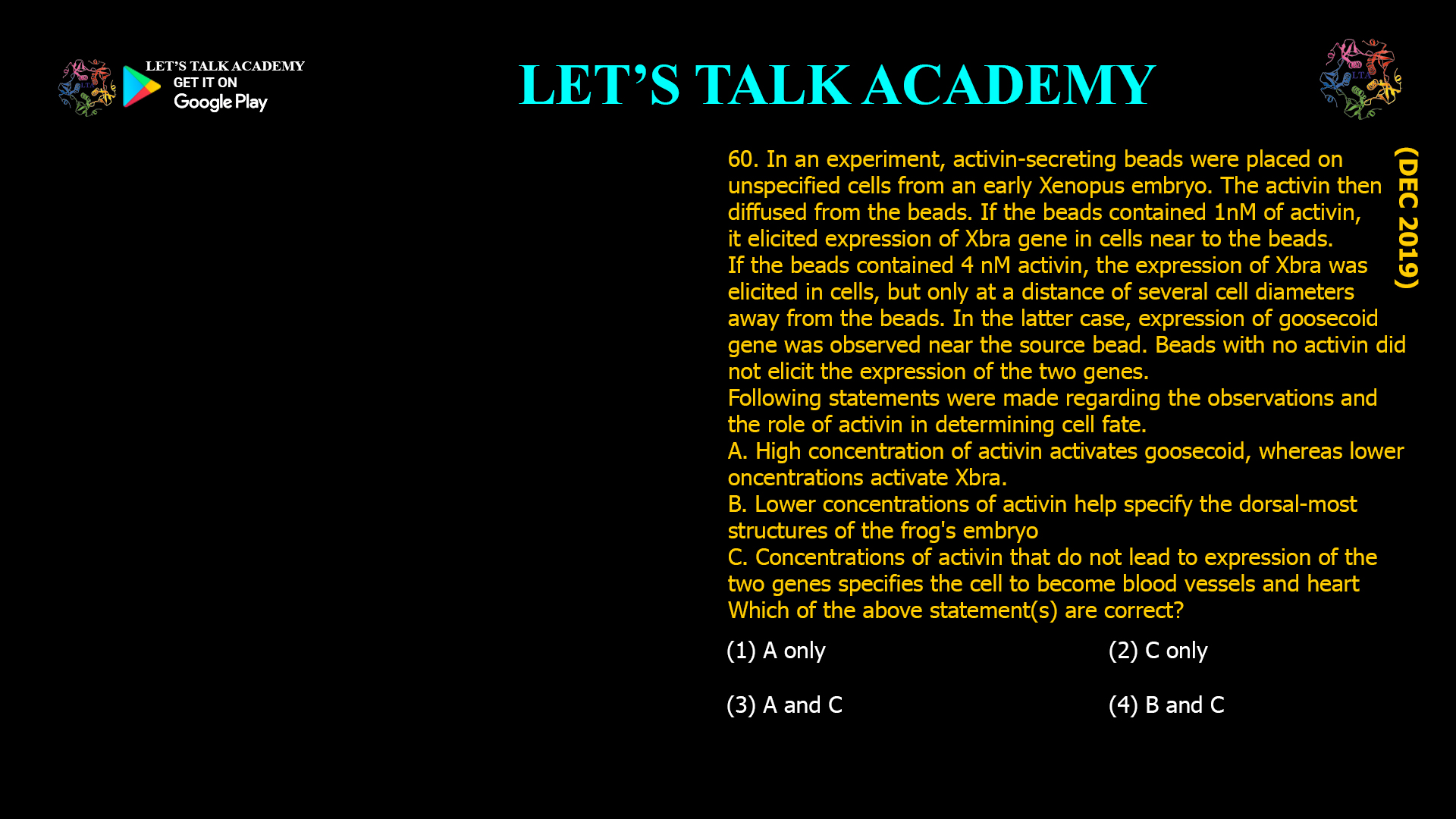
In an experiment, activin-secreting beads were placed on unspecified cells from an early Xenopus embryo. The activin then diffused from the beads. If the beads contained 1nM of activin, it […]
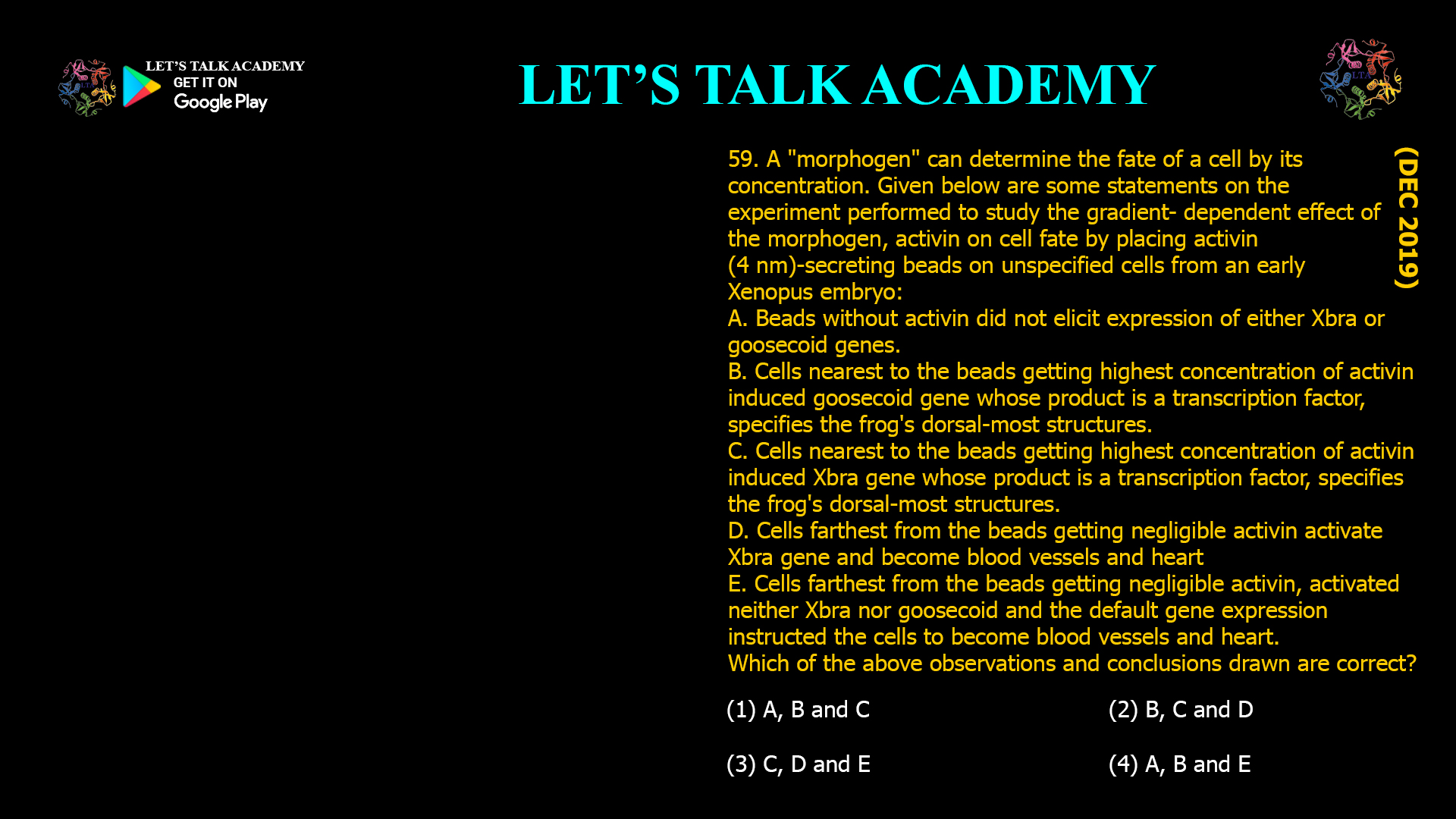
59. A “morphogen” can determine the fate of a cell by its concentration. Given below are some statements on the experiment performed to study the gradient- dependent effect of the […]
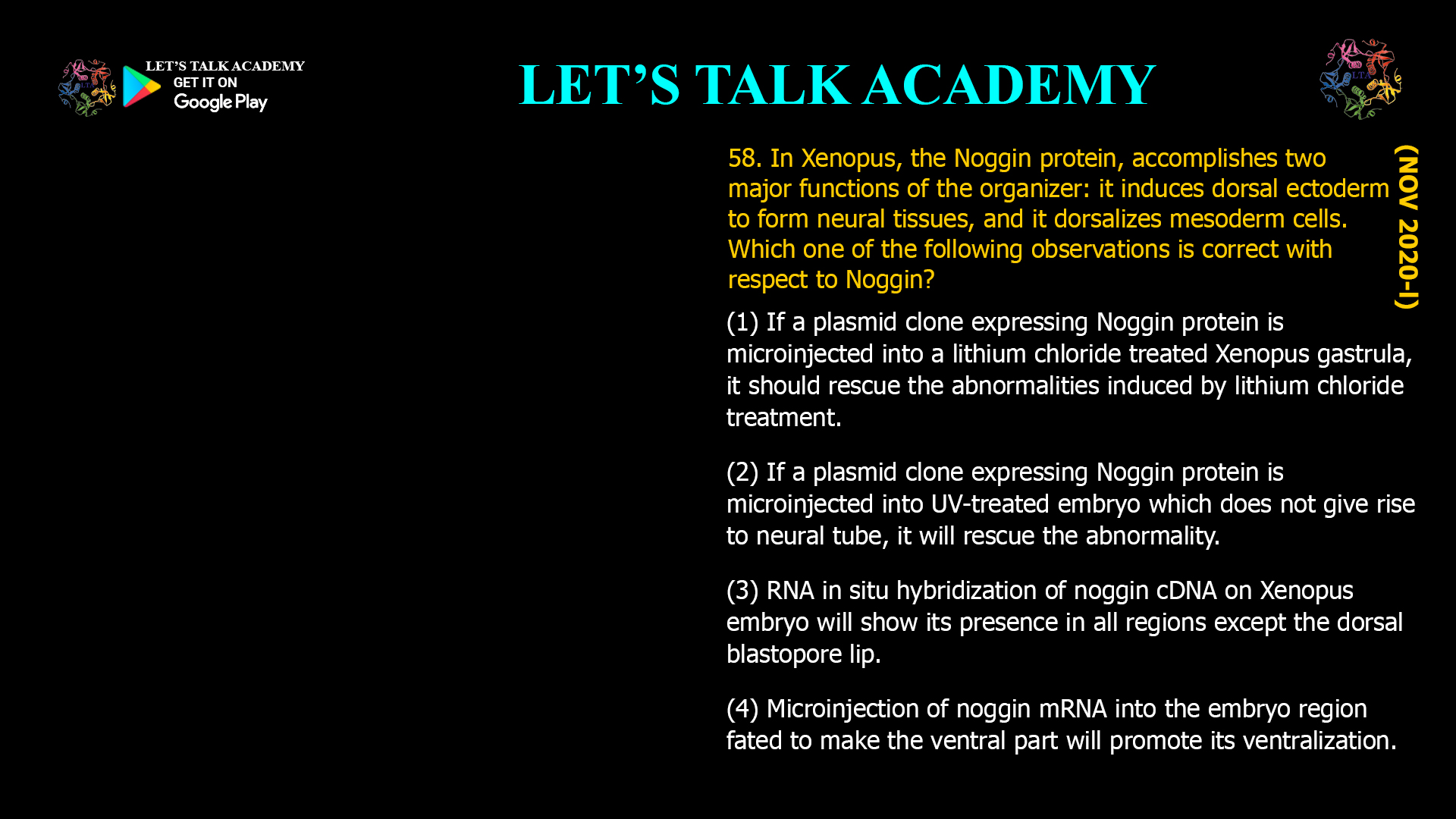
In Xenopus, the Noggin protein, accomplishes two major functions of the organizer: it induces dorsal ectoderm to form neural tissues, and it dorsalizes mesoderm cells. Which one of the following […]

Injection of Noggin mRNA in cells that will become the future ventral side of a frog embryo mimics the effect of an organizer graft to the ventral side. This experiment […]

56. The following statements are made regarding the amphibian early-embryonic development: A. The Nieuwkoop center cells are mesodermal in origin. B. Chordin, Noggin and Goosecoid are secreted by the Organizer. […]

The myxamoebae are in the vegetative stage where they feed on bacteria but enter the aggregation stage during nutrient starvation finally forming fruiting body with two types of differentiated cells. […]

Following statements are made regarding amphibian development: A. Fibronectin plays an important role in enabling the mesodermal cells to migrate into the embryo. B. Organizer secrete proteins that block the […]


