































































A group of six cells called ‘equivalence group cells’ divide to form the vulval structure in Caenorhabditis elegans. They are called so because (1) they have similar fates during development […]


A group of six cells called ‘equivalence group cells’ divide to form the vulval structure in Caenorhabditis elegans. They are called so because (1) they have similar fates during development […]
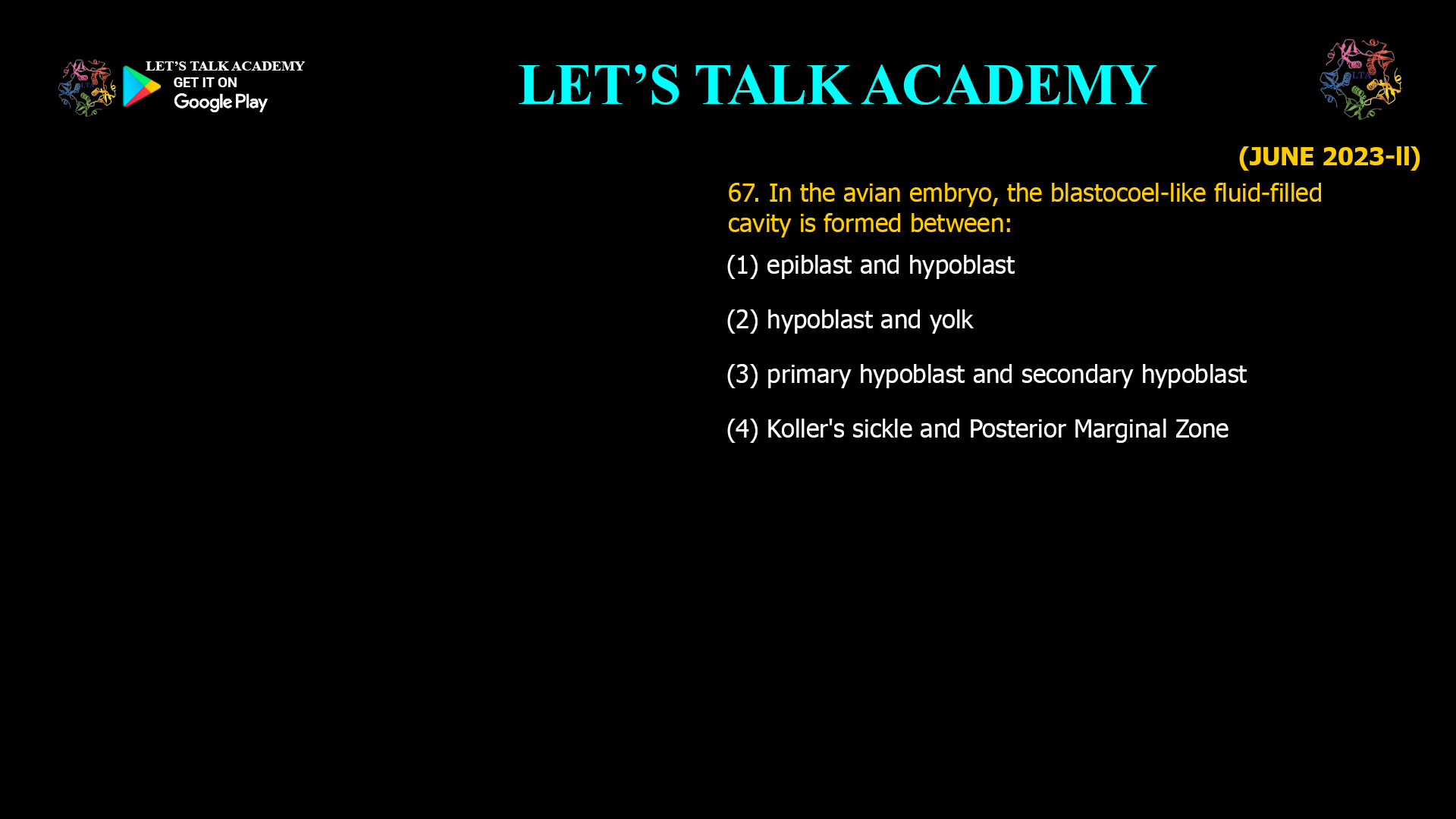
67. In the avian embryo, the blastocoel-like fluid-filled cavity is formed between: (1) epiblast and hypoblast (2) hypoblast and yolk (3) primary hypoblast and secondary hypoblast (4) Koller’s sickle and […]

The model organism to study cell lineage is (1) Xenopus (2) Yeast (3) Caenorhabditis elegans (4) Drosophila Understanding how cells divide, differentiate, and form complex tissues is a central question […]
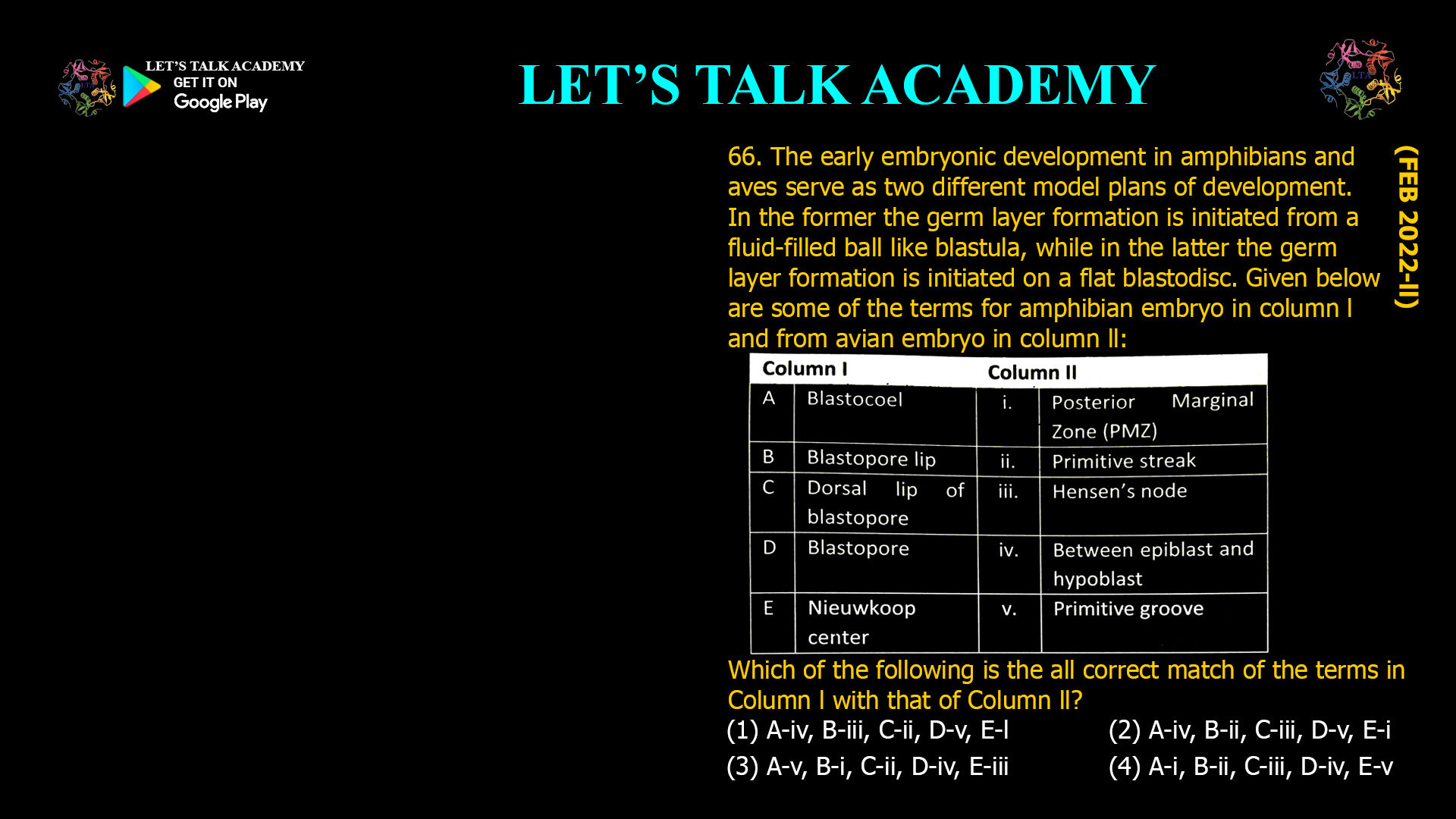
The early embryonic development in amphibians and aves serve as two different model plans of development. In the former the germ layer formation is initiated from a fluid-filled ball like […]

5 The first organ system to develop during organogenesis is the (1) Integumentary system (2) Respiratory system (3) Excretory system (4) Cardiovascular system Organogenesis—the process by which organ systems are […]
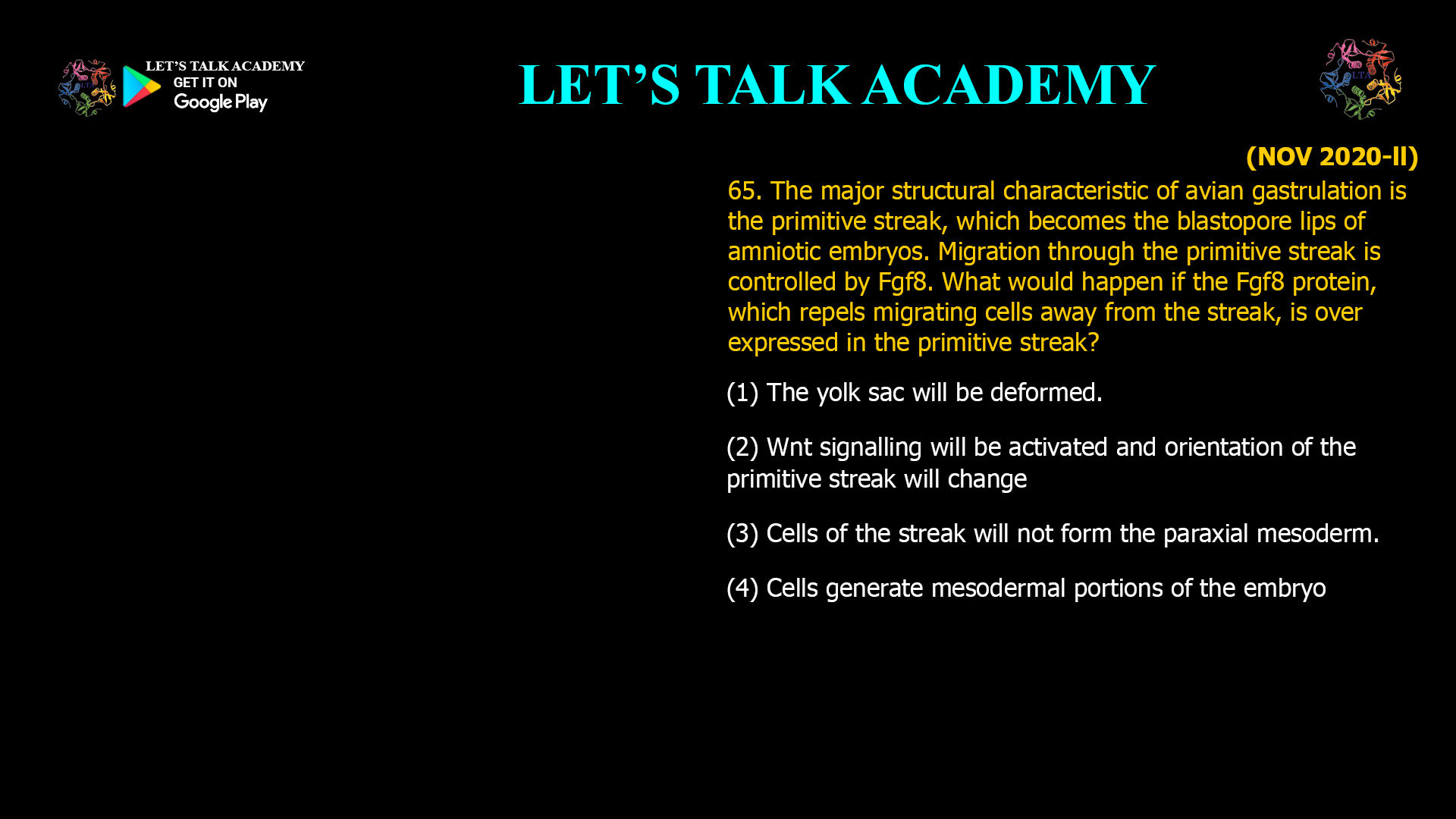
65. The major structural characteristic of avian gastrulation is the primitive streak, which becomes the blastopore lips of amniotic embryos. Migration through the primitive streak is controlled by Fgf8. What […]

Fusion of precursor cells is an essential phenomenon in development of (1) Nerve (2) Skeletal muscle (3) Spleen (4) Liver Fusion of precursor cells, specifically myoblasts, is a vital and […]
Following statements were made about the events occurring during chick development. A. The fertilized chick egg undergoes discoidal meroblastic cleavage; however the cleavage does not extend into the yolk cytoplasm. […]

cAMP signalling plays a very important role in the development of Dictyosteliumdiscoideum. Below are few statements related to it. A. Every amoeba at the time of aggregation has the potential […]
Hensenis node is established as the avian equivalent of the amphibian dorsal blastopore lip. The following observations are presumed to be support of the same. A. It is the region […]


