



































































































The precursor for most of phenolic secondary metabolites is (1) Phenyl alanine (2) Isopentyl pyrophosphate (3) Mevalonate (4) Geranyl phosphate Correct answer: (1) Phenyl alanine Explanation: Phenylalanine is the primary precursor […]


The precursor for most of phenolic secondary metabolites is (1) Phenyl alanine (2) Isopentyl pyrophosphate (3) Mevalonate (4) Geranyl phosphate Correct answer: (1) Phenyl alanine Explanation: Phenylalanine is the primary precursor […]

Certain plant species produce cyanogenic glycosides to protect them from pathogens. A researcher has identified a variant of such a plant that has higher level of cyanogenic glycoside yet it […]

13. statements are made regarding natural product, terpenes. A. monoterpenes are five-carbon compounds. B. The anti-malarlal drug, artemisinin is a sesquiterpene. C. Azadirachtin is a triterpene derivative from the seed […]

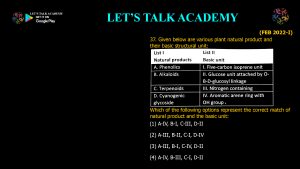
12. Following are some statements for synthesis of secondary metabolites in plants. (A) Terpenes are synthesized by shikimic acid pathway and mevalonic acid pathway. (B) Alkaloids are nitrogen containing compounds […]

11. Plants are known to synthesize more than 30,000 terpenoids, involving four stages of biosynthesis. Column X Column Y A. Biosynthesis i. Terpene of two basic five synthases carbon unit […]

10. Secondary metabolites are diverse array organic compounds in plants. The following are certain statements about secondary metabolites: A. They protect plants against being eaten by herbivores and against being […]

9. The gene encoding for mevalonate-3-kinase is disrupted in a certain plant. Which one of the following staternents concerning the above plant is correct? (1) Mevalonic acid 3,5-biphosPhate will be […]

8. In terpene biosynthesis pathways, three acetyl-CoA are joined together stepwise to form mevalonic acid. mevalonic acid to form isopentenyl diphosphate or Which one of the following three- steps is […]

Following are certain statements regarding secondary metabolites found in plant: A. All terpenes are derived from a six carbon element. B. Alkaloids are nitrogen containing compounds. C. Pyrethroids, a monoterpene […]
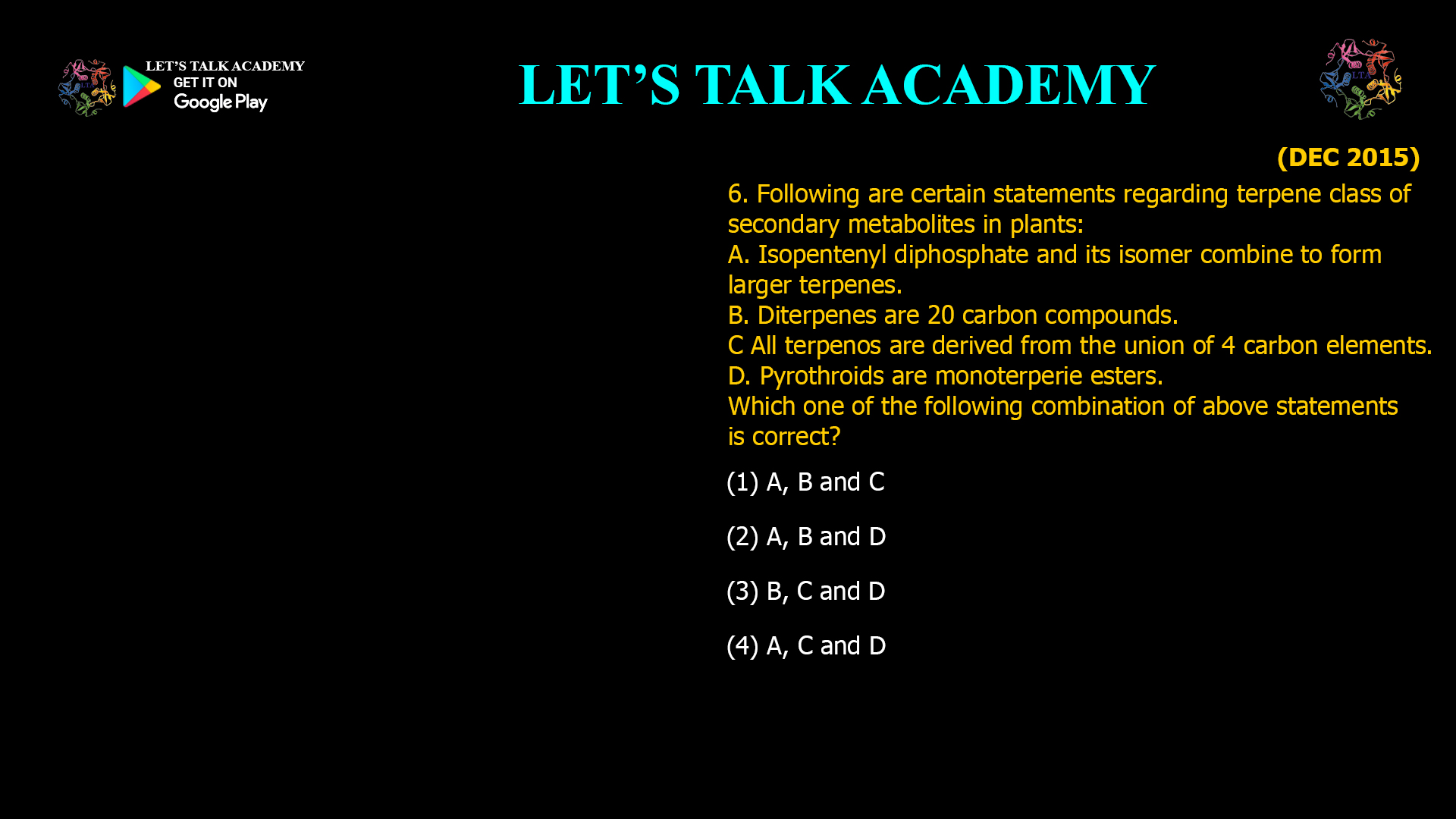
Following are certain statements regarding terpene class of secondary metabolites in plants: A. Isopentenyl diphosphate and its isomer combine to form larger terpenes. B. Diterpenes are 20 carbon compounds. C […]


