





















































































Given below are some terms and concepts related to phytoremediation in Column A and B Which one of the following options represents the most appropriate match of all terms/concepts in […]
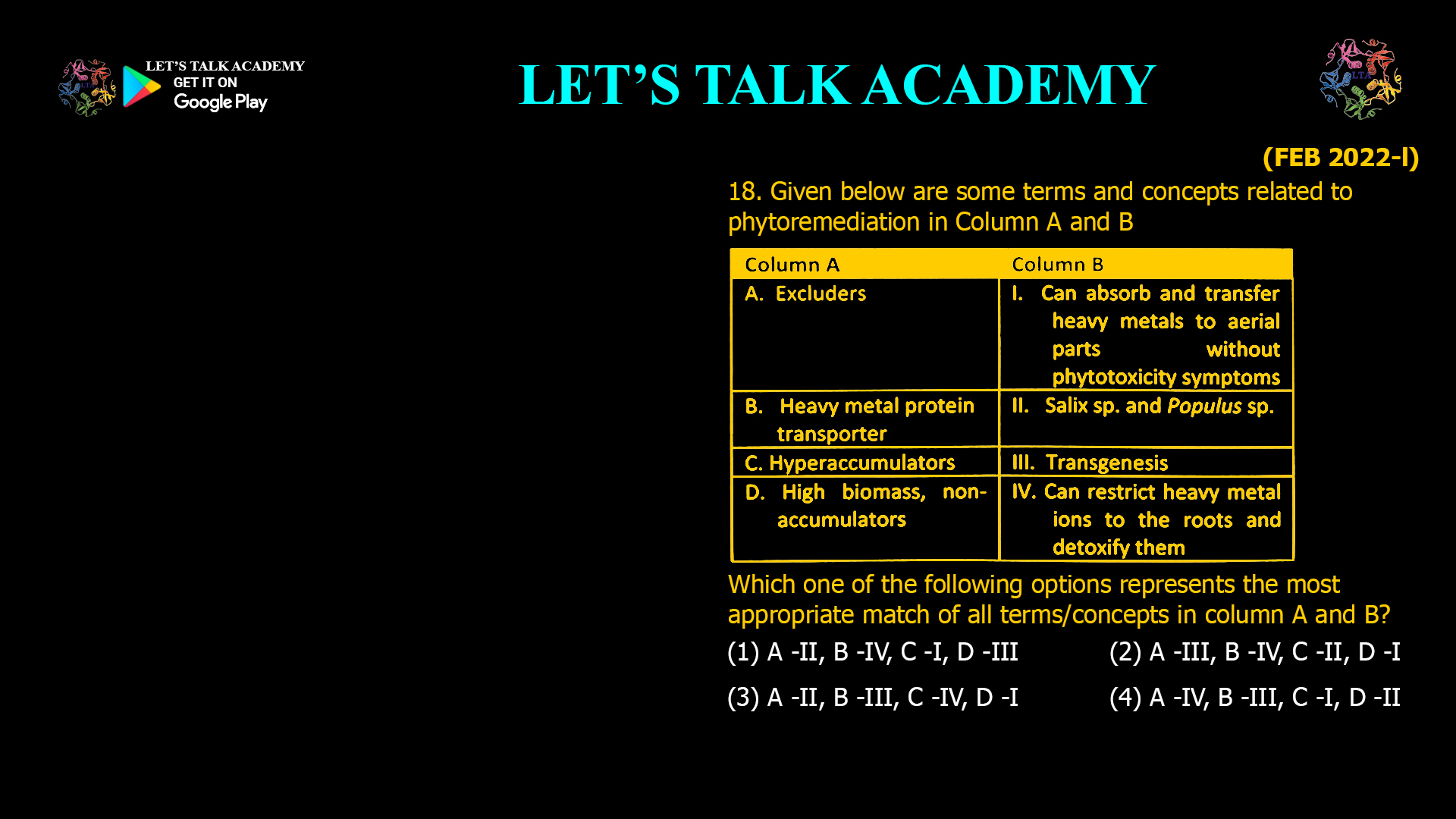

Given below are some terms and concepts related to phytoremediation in Column A and B Which one of the following options represents the most appropriate match of all terms/concepts in […]
17. Secondary sewage treatment involves (1) Physical removal of solids from polluted water by filtration and sedimentation (2) removal of chemical remains by precipitation (3) removal of dissolved organic compounds […]
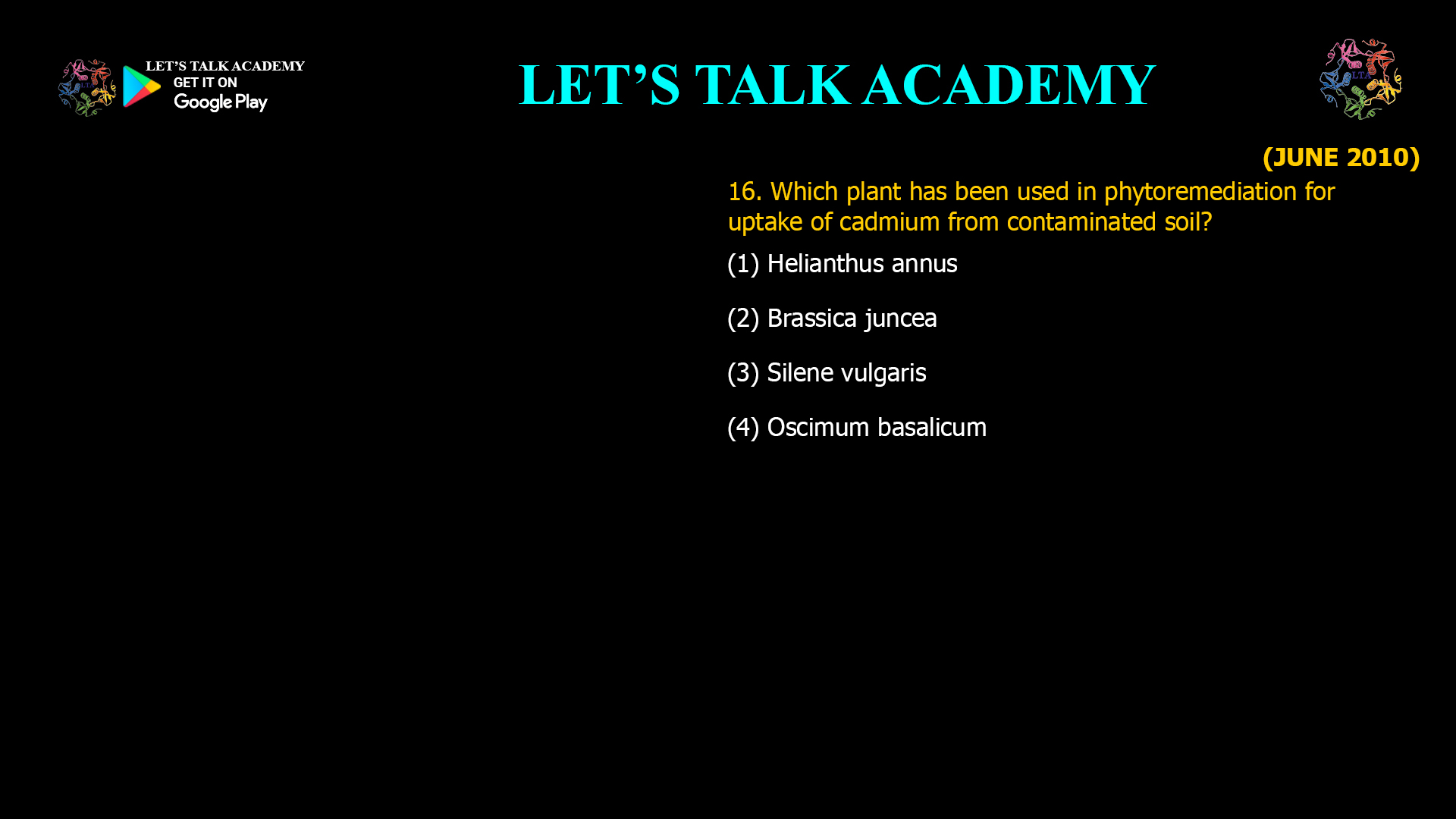
16. Which plant has been used in phytoremediation for uptake of cadmium from contaminated soil? (1) Helianthus annus (2) Brassica juncea (3) Silene vulgaris (4) Oscimum basalicum Option-wise explanation Helianthus […]
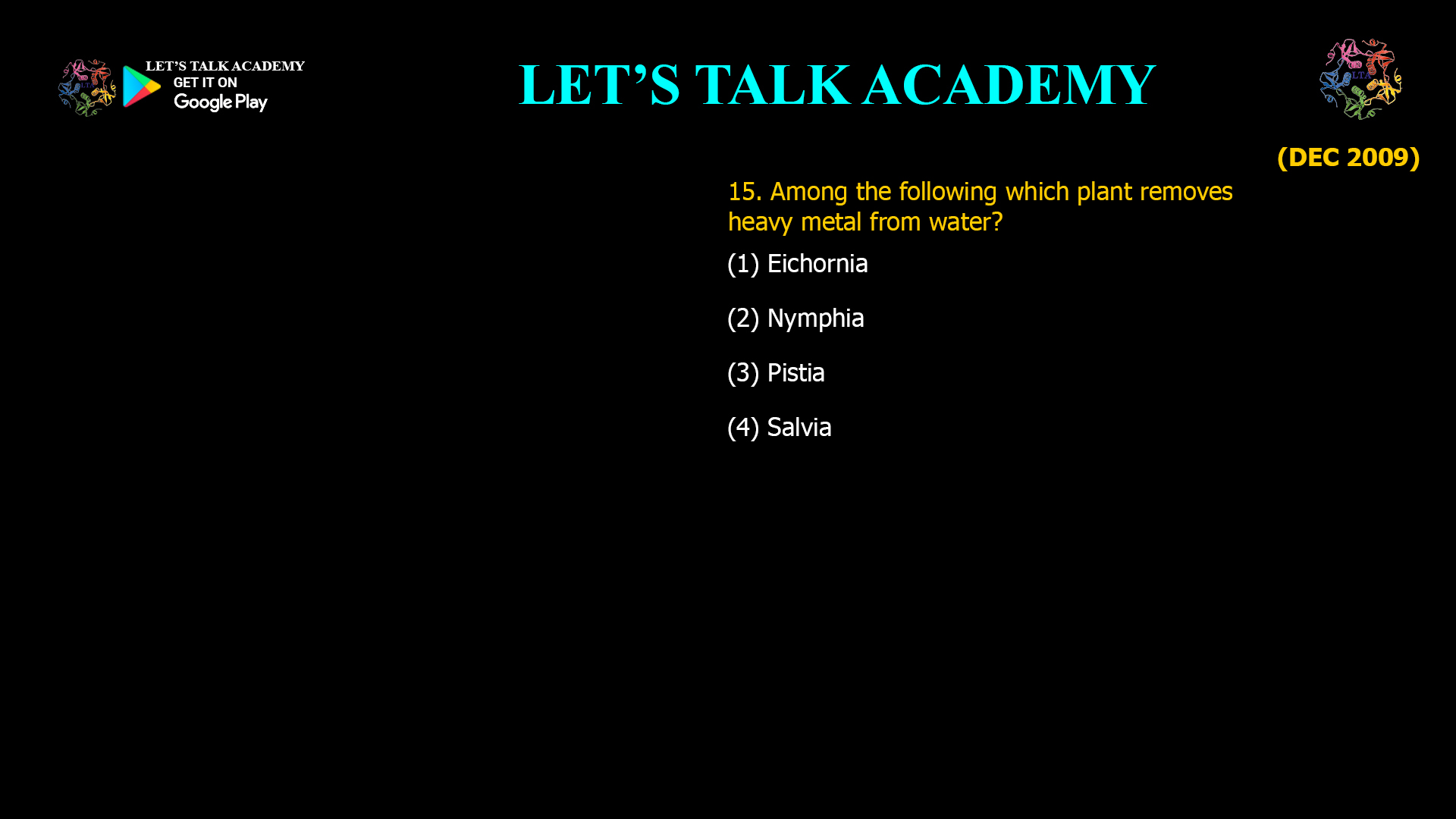
Among the following which plant removes heavy metal from water? (1) Eichornia (2) Nymphia (3) Pistia (4) Salvia Option-wise explanation Eichornia (water hyacinth) – correct Eichhornia crassipes is […]
Chinese Brake fern (Pteris vittata) is hyperaccumulator of: (1) Cadmium. (2) Arsenic. (3) Lead. (4) Chromium Option-wise explanation Cadmium Some plants (for example Thlaspi/Noccaea caerulescens) are classic […]

13. Heavy metal (cadmium & zinc) resistance in Thalspie curulesiensis is due to (1) Presence of cation efflux pumps (metal ATPase) (2) Presence of Na-K pumps (3) Metal adsorbtion (4) […]

Among the following which plant family has been extensively used for phyto-remediation (1) Poaceae (2) Brassicaceae (3) Malvaceae (4) Anonaceae Option-wise explanation Poaceae Grasses such as Phragmites, Vetiveria, and Miscanthus are important […]

Which of the following does not represents strategy for phytoremediation? (1) Phyto-degradation (2) Phyto-mining (3) Continuous removal through hyper accumulators (4) Chelate mediated extraction of pollutants Concept and option-wise explanation […]

The process of phytoremediation where complexation and immobilization of toxin takes place within the soil is called (1) phytoextraction. (2) phytodegradation (3) phytovolatilization (4) phytostabilization. Explanation of each […]

A plot of soil contaminated with diesel oil was inoculated with oyster mushrooms. After 4 weeks, more than 95% of the polycyclic aromatic hydrocarbons had been reduced to non-toxic compounds. […]


