



































































15. An individual is having an inversion in heterozygous condition. The regions on normal chromosome are marked as A, B, C, D, E, F, G while the chromosome having inversion […]
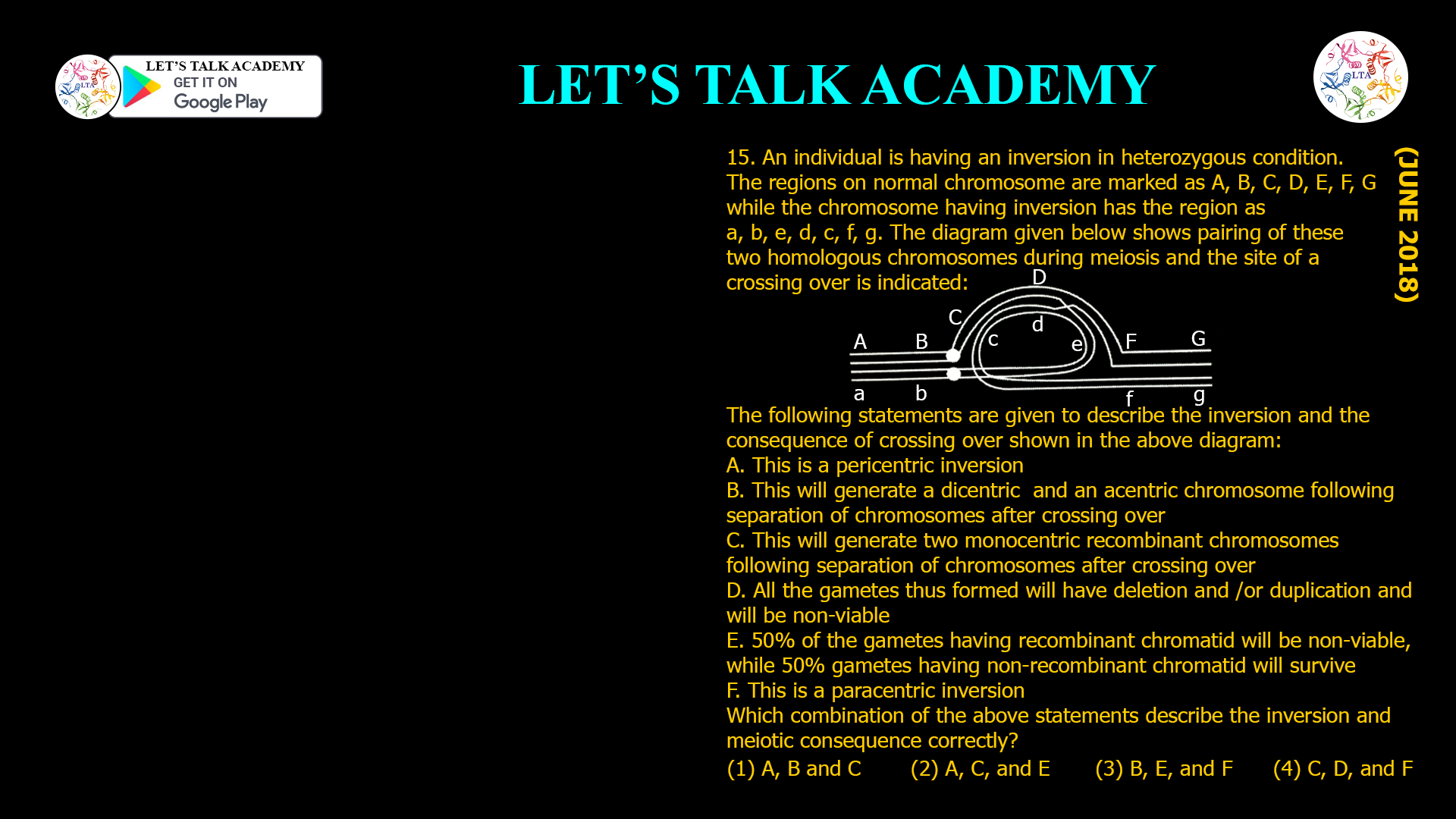

15. An individual is having an inversion in heterozygous condition. The regions on normal chromosome are marked as A, B, C, D, E, F, G while the chromosome having inversion […]

14. A mechanism that can cause a gene to move from one linkage group to another is (1) crossing over (2) inversion (3) translocation (4) duplication Concept: linkage groups and […]
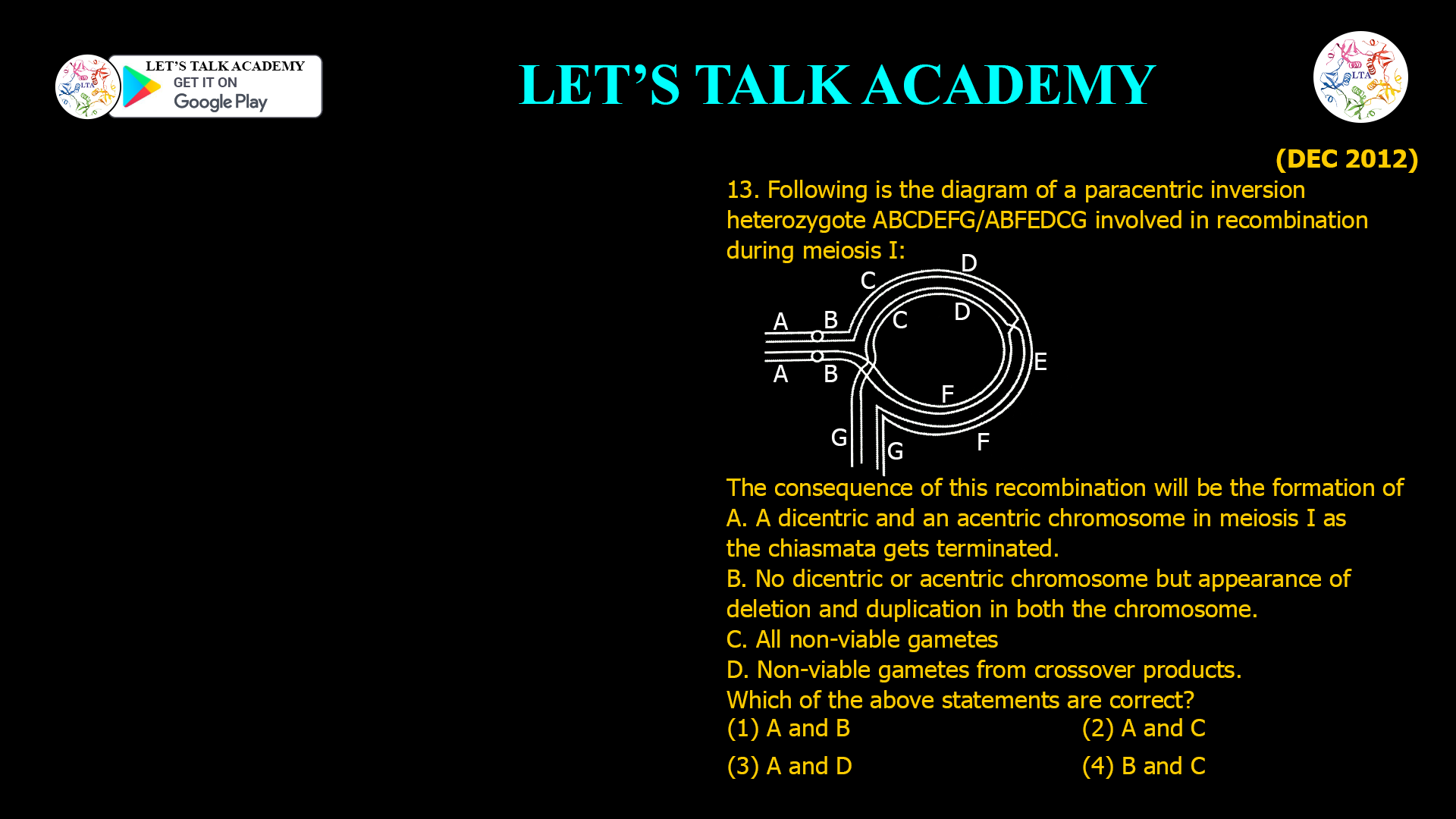
13. Following is the diagram of a paracentric inversion heterozygote ABCDEFG/ABFEDCG involved in recombination during meiosis I: The consequence of this recombination will be the formation of A. A dicentric […]
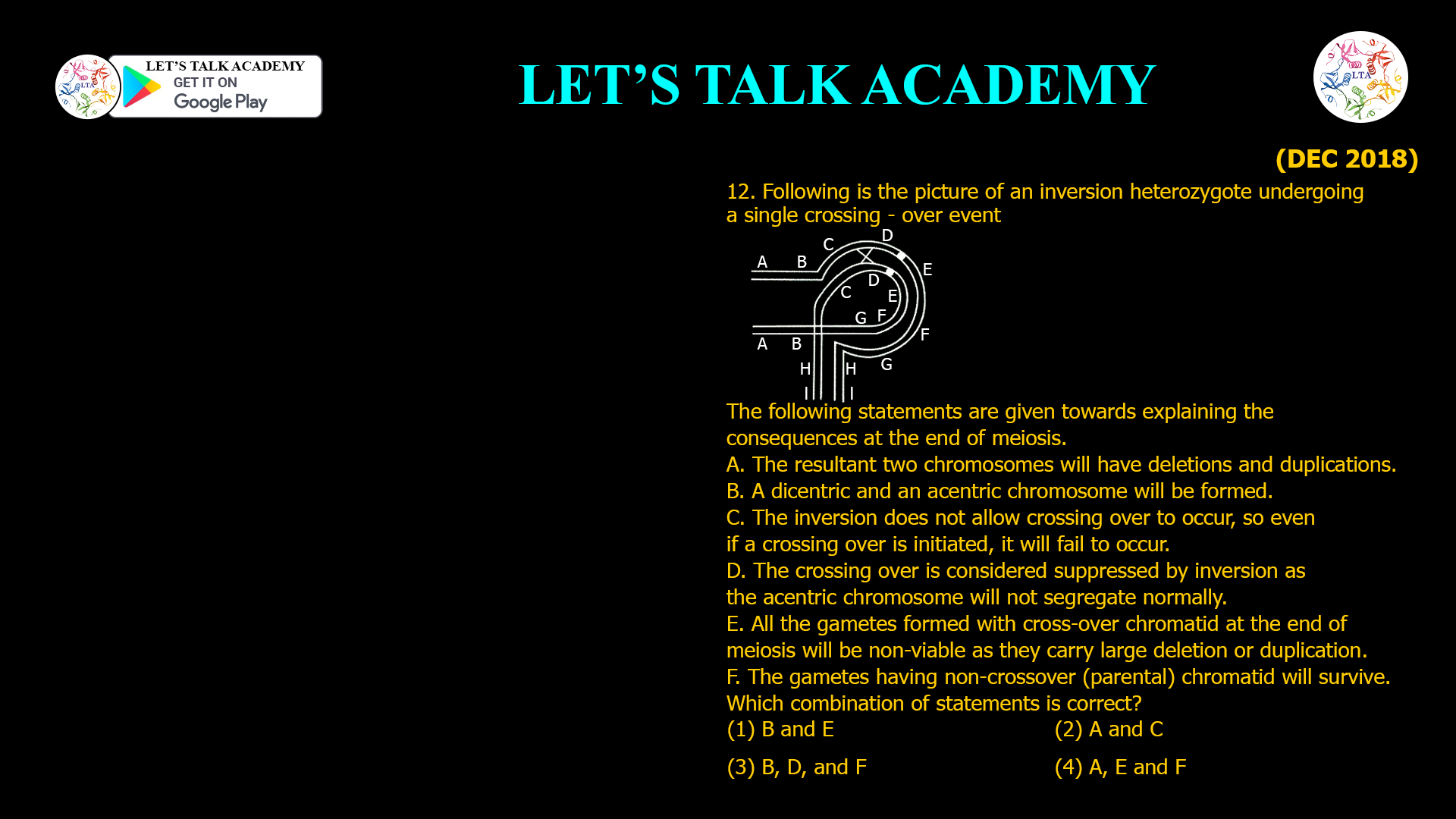
12. Following is the picture of an inversion heterozygote undergoing a single crossing – over event The following statements are given towards explaining the consequences at the end of meiosis. […]
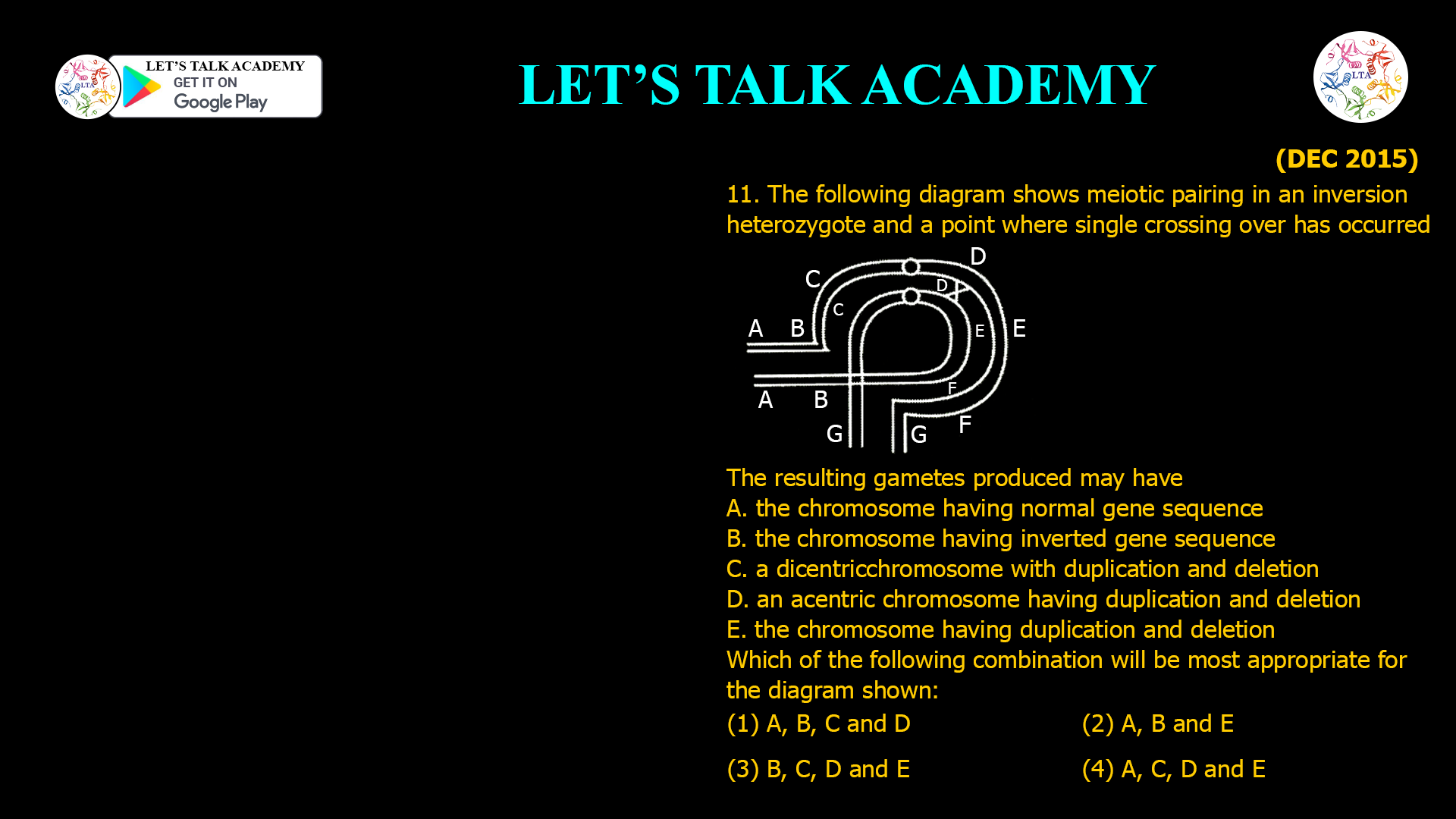
The following diagram shows meiotic pairing in an inversion heterozygote and a point where single crossing over has occurred The resulting gametes produced may have A. the chromosome having normal […]
10. Inversions are considered as cross-over suppressors because: (1) Homozygous inversions are lethal and thus they do not appear in next generation. (2) Inversion heterozygotes, i.e., one copy having normal […]
9. Inversion is termed as crossover suppressor because (1) Single crossing over within an inversion loop, leads to defective (deleted and duplicated) crossoverchromosomes and mortality of zygotes carrying them. (2) […]
8. The structural change which leads into crossover suppression and position effect is (1) Deletion (2) Duplication (3) Inversion (4) Translocation Concept: why inversions fit both features A chromosomal inversion occurs when […]
7. What is outcome after single crossover between chromosomes having pericentric inversion and normal? (1) Segmental Deletion and Duplication (2) Bridge formation (3) Ring formation (4) Acentric and dicentric chromosomes […]
6. Chromosomal inversions are balanced rearrangements and thus do not change the overall amount of genetic material. While inversions can exist in homozygous condition, some only exist as heterozygotes. In […]


