

































































35. If non-disjunction occurs in meiosis I, Which of the following scenario is most likely to occur? (1) Two gametes will be n+1 and two will be n-1 (2) one […]
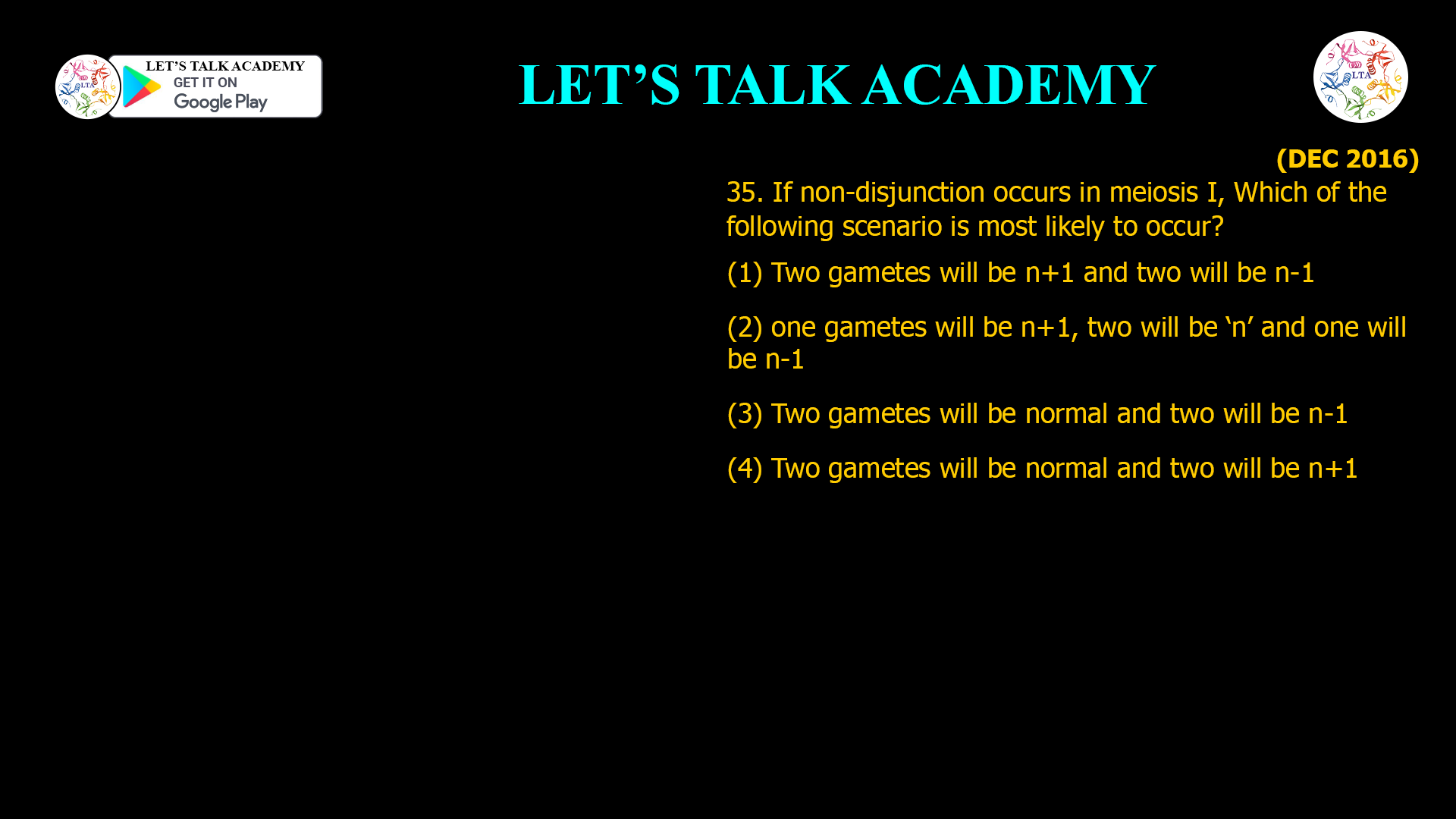
35. If non-disjunction occurs in meiosis I, Which of the following scenario is most likely to occur? (1) Two gametes will be n+1 and two will be n-1 (2) one […]

34. Meiosis produces n, n+l and n-1 gametes. The probable reason is? (1) Non-disjunction during metaphase I (2) Non-disjunction during metaphase-II (3) Non-disjunction during metaphase I and II (4) Non-disjunction […]
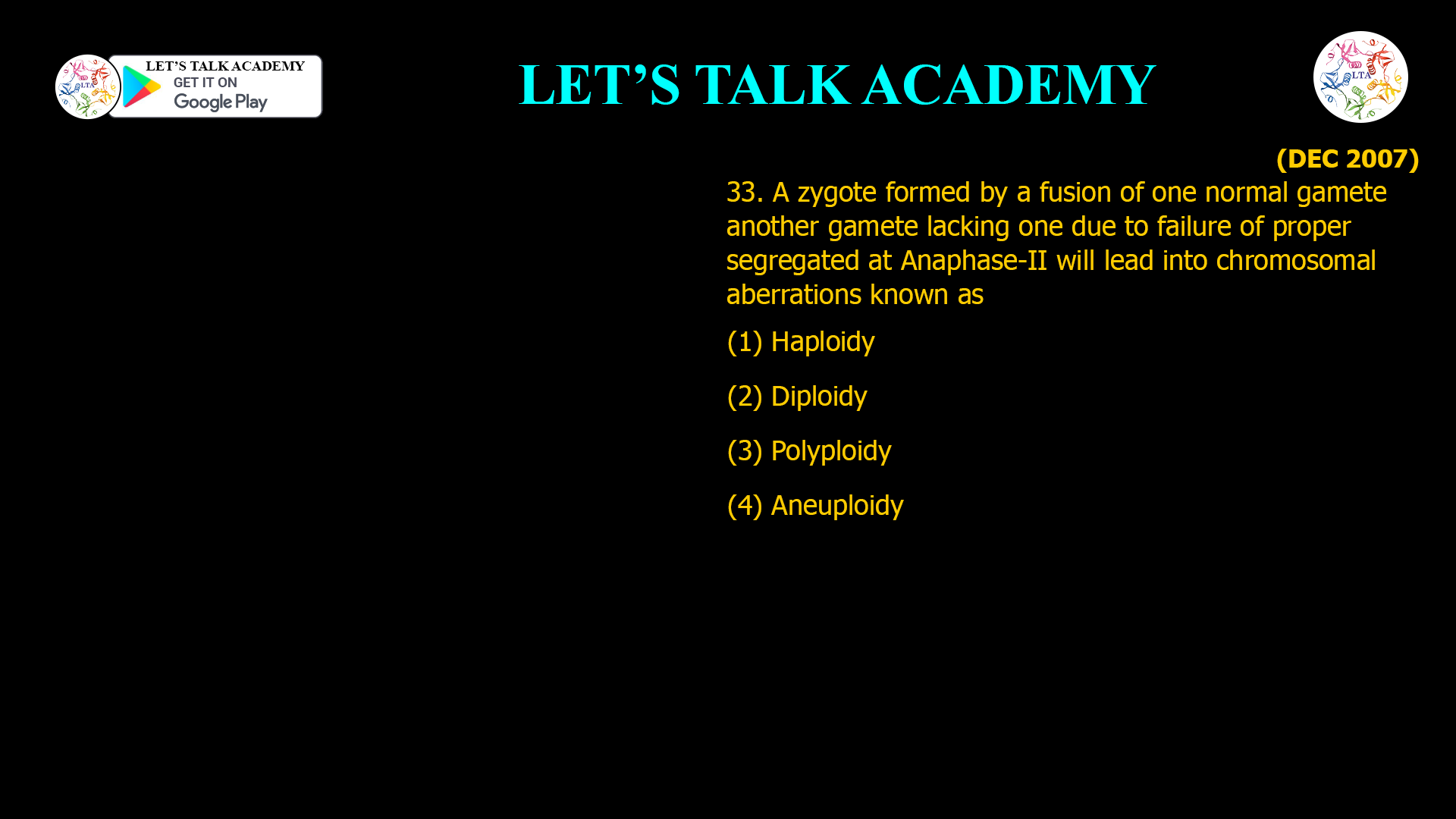
33. A zygote formed by a fusion of one normal gamete another gamete lacking one due to failure of proper segregated at Anaphase-II will lead into chromosomal aberrations known as […]

32. In human males, autosomal and sex trisomy mains occurs due to- (1) Error in meiosis (2) Non-disjunction of chromosome (3) Dominant Y chromosome (4) Faulty Repair mechanism Option-wise explanation […]
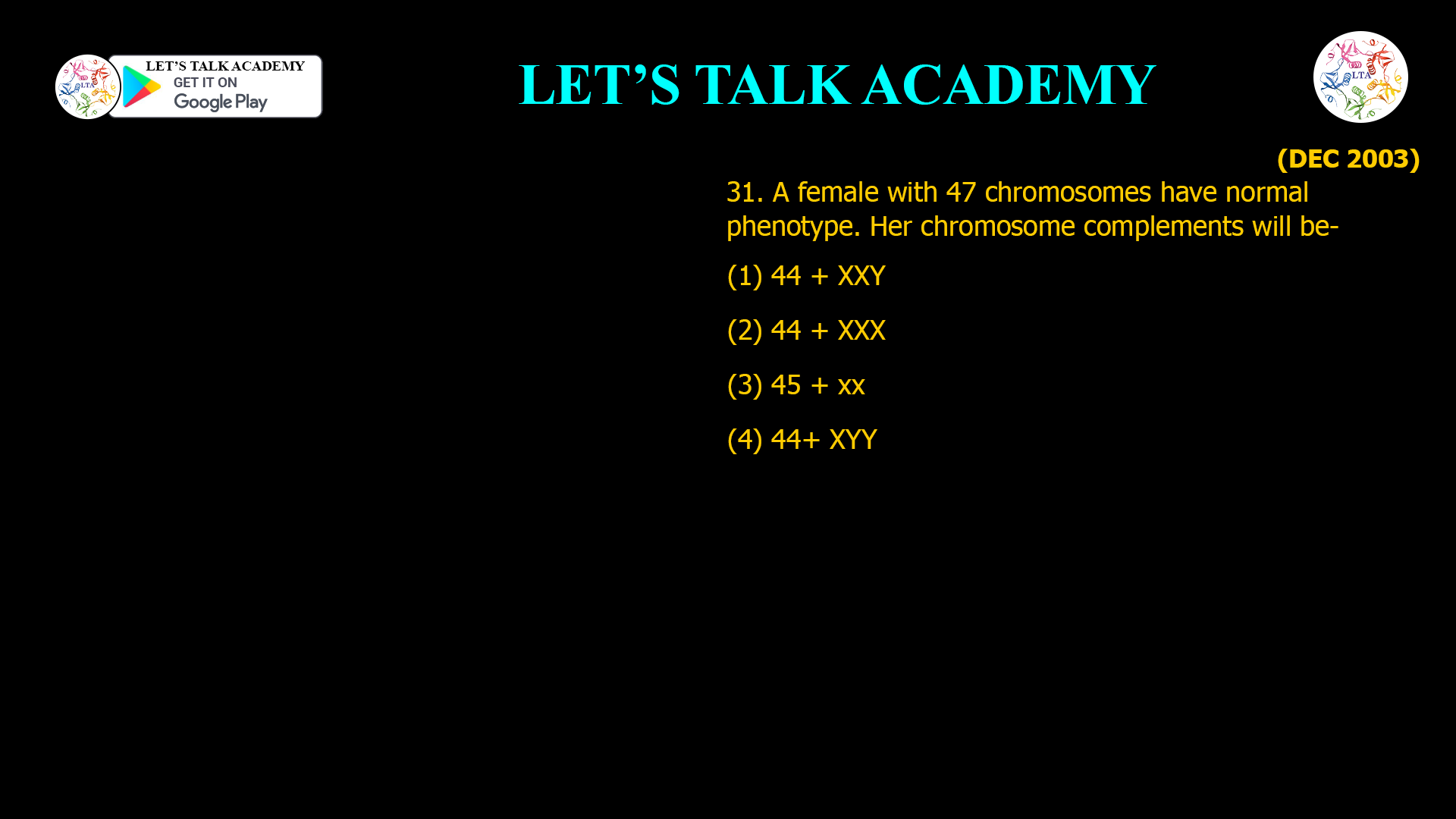
31. A female with 47 chromosomes have normal phenotype. Her chromosome complements will be- (1) 44 + XXY (2) 44 + XXX (3) 45 + xx (4) 44+ XYY Concept […]

30 Whith of the following statements are true Robertsonian translocations? A. The size of the non-homologous chromosome involved in translocation will differ. B. Genes on the chromosome involved in translocation […]

29. During meiosis if one of the chromosome lack its homologous partner while all other chromosome are paired, such aberration is termed as (1) Haploidy (2) Monosomic (3) Trisomy (4) […]
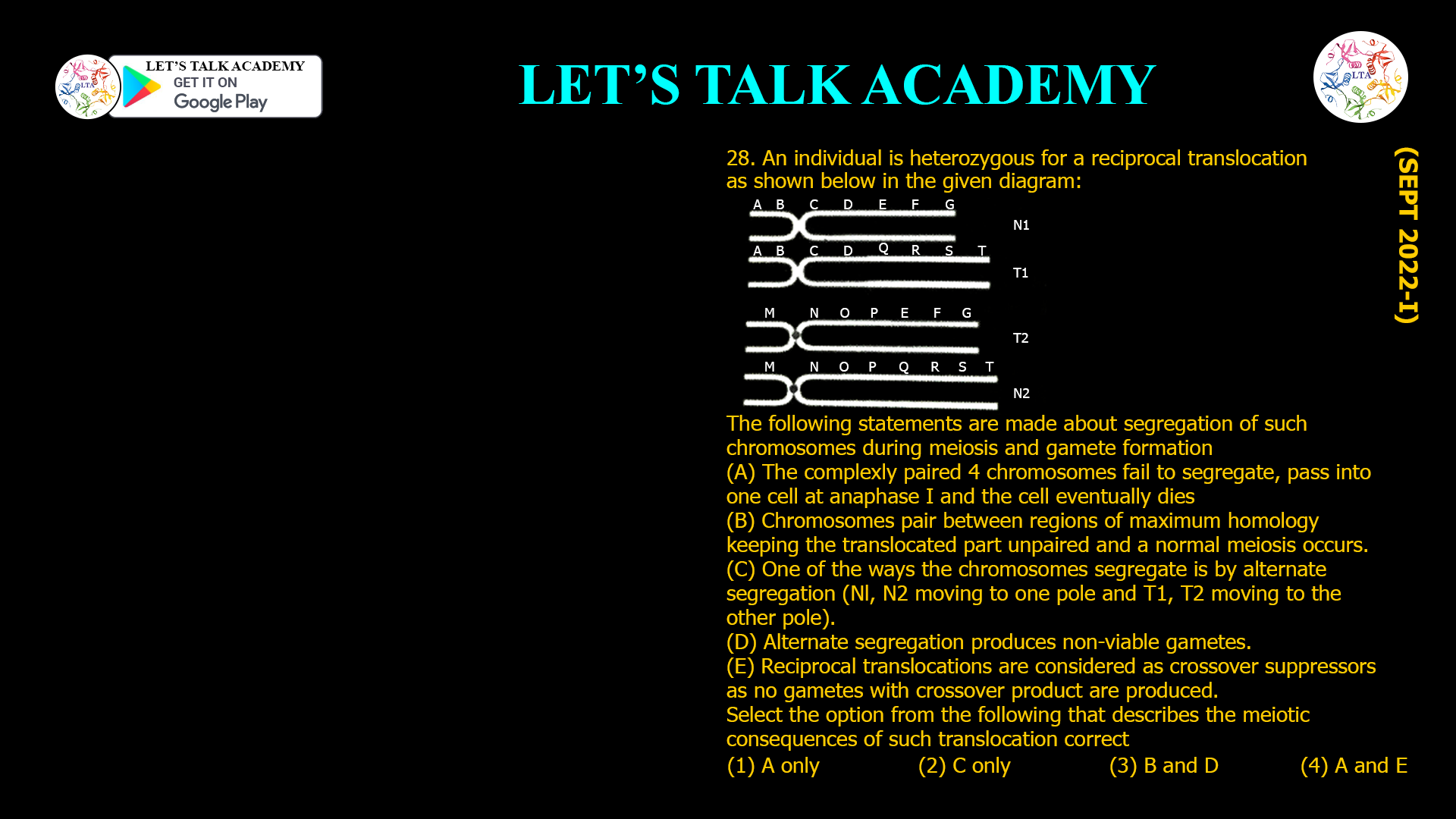
28. An individual is heterozygous for a reciprocal translocation as shown below in the given diagram: The following statements are made about segregation of such chromosomes during meiosis and gamete […]
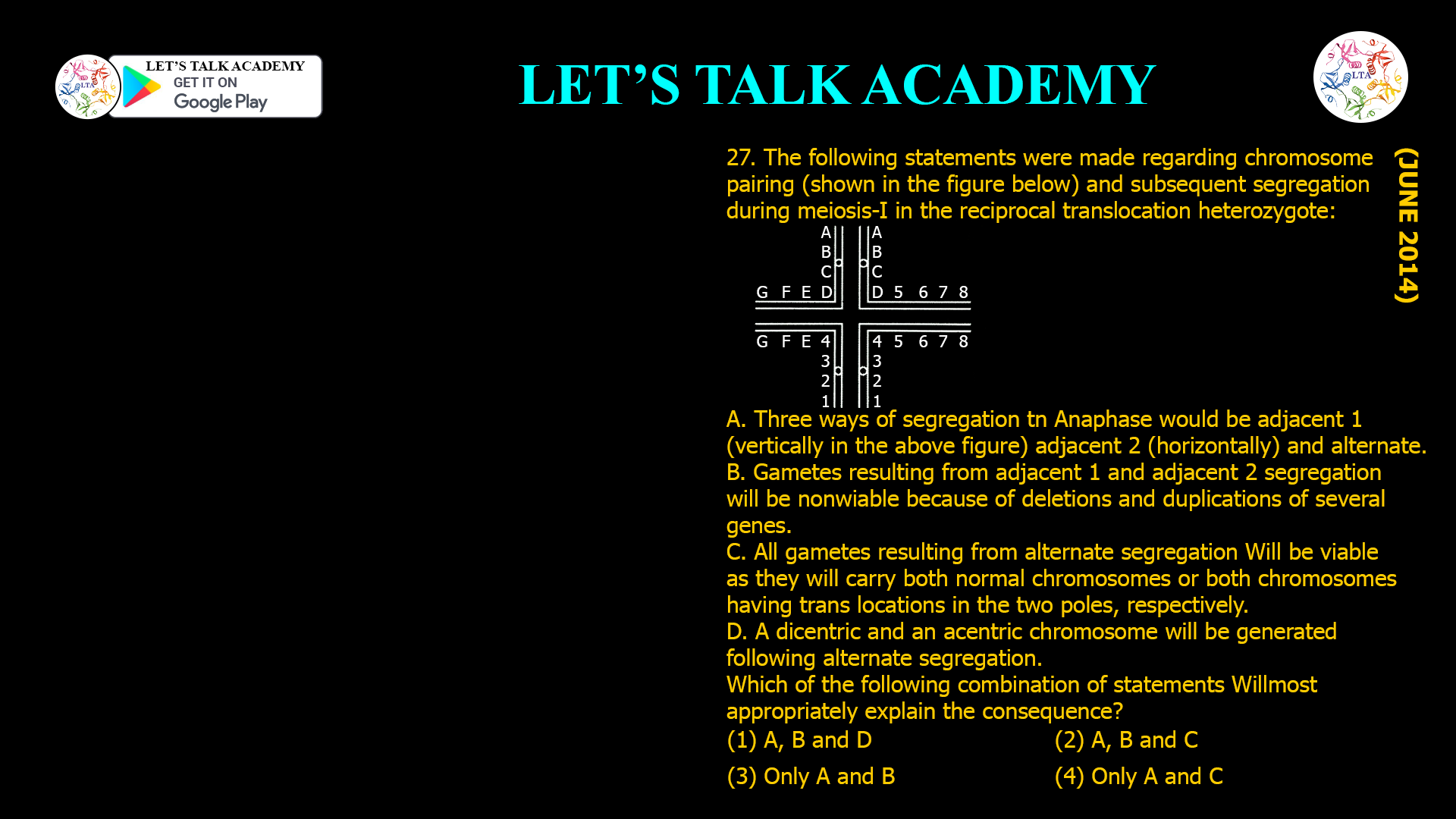
The following statements were made regarding chromosome pairing (shown in the figure below) and subsequent segregation during meiosis-I in the reciprocal translocation heterozygote: A. Three ways of segregation tn Anaphase […]
26. A reciprocal translocation heterozygote at the end of meiosis I generate (1) An acentric and a dicentric chromosome (2) Viable gametes with deletions and duplications (3) Viable gametes with […]


