



















































































13. We are studying a protein-coding gene in an organism whose genome is not sequenced. The nucleotide sequence of 20 bases at the 5’ end of its 900 base exon […]


13. We are studying a protein-coding gene in an organism whose genome is not sequenced. The nucleotide sequence of 20 bases at the 5’ end of its 900 base exon […]

12. In a sucrose density gradient, what is the order of organelle sedimentation from lower to higher concentrations of sucrose? a. Golgi, smooth endoplasmic reticulum, rough endoplasmic reticulum b. smooth […]

11. In resting skeletal muscle, contraction does not occur because a. there is very little ATP in the cytoplasm b. there is very little myosin in the cell c. there […]

10. Bacteria isolated from hospital surfaces (e.g. furniture or floors) are often very resistant to antibiotics. What features of bacterial biology promote this phenomenon? a. Bacterial cells are very small […]

9. A mutation in an X-chromosome gene “green” results in a green beard. If a green bearded man marries a non-carrier woman, a. all sons will have a green beard […]

8. Which of the following point mutations would be most likely to affect protein function? a. TAA to TGA b. CAA to TAA c. AGG to AGA d. CTT to […]

7. What is the correct order of action of these enzymes during DNA replication? a. helicase, primase, polymerase b. helicase, polymerase, primase c. primase, helicase, polymerase d. polymerase, primase, helicase […]
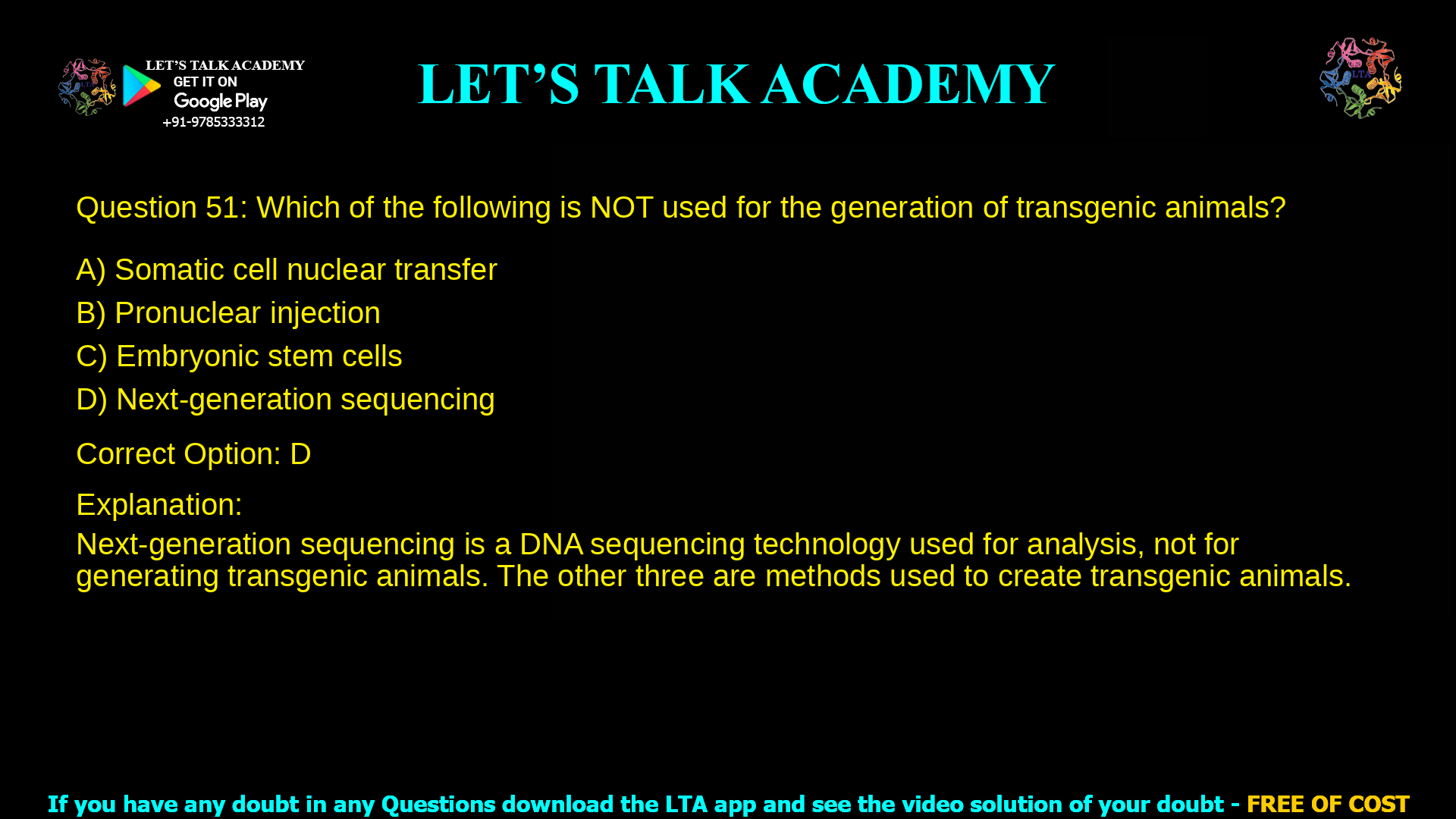
6. Which of the following is NOT used for the generation of transgenic animals? a. Somatic cell nuclear transfer b. Pronuclear injection c. Embryonic stem cells d. Next-generation sequencing Answer: […]
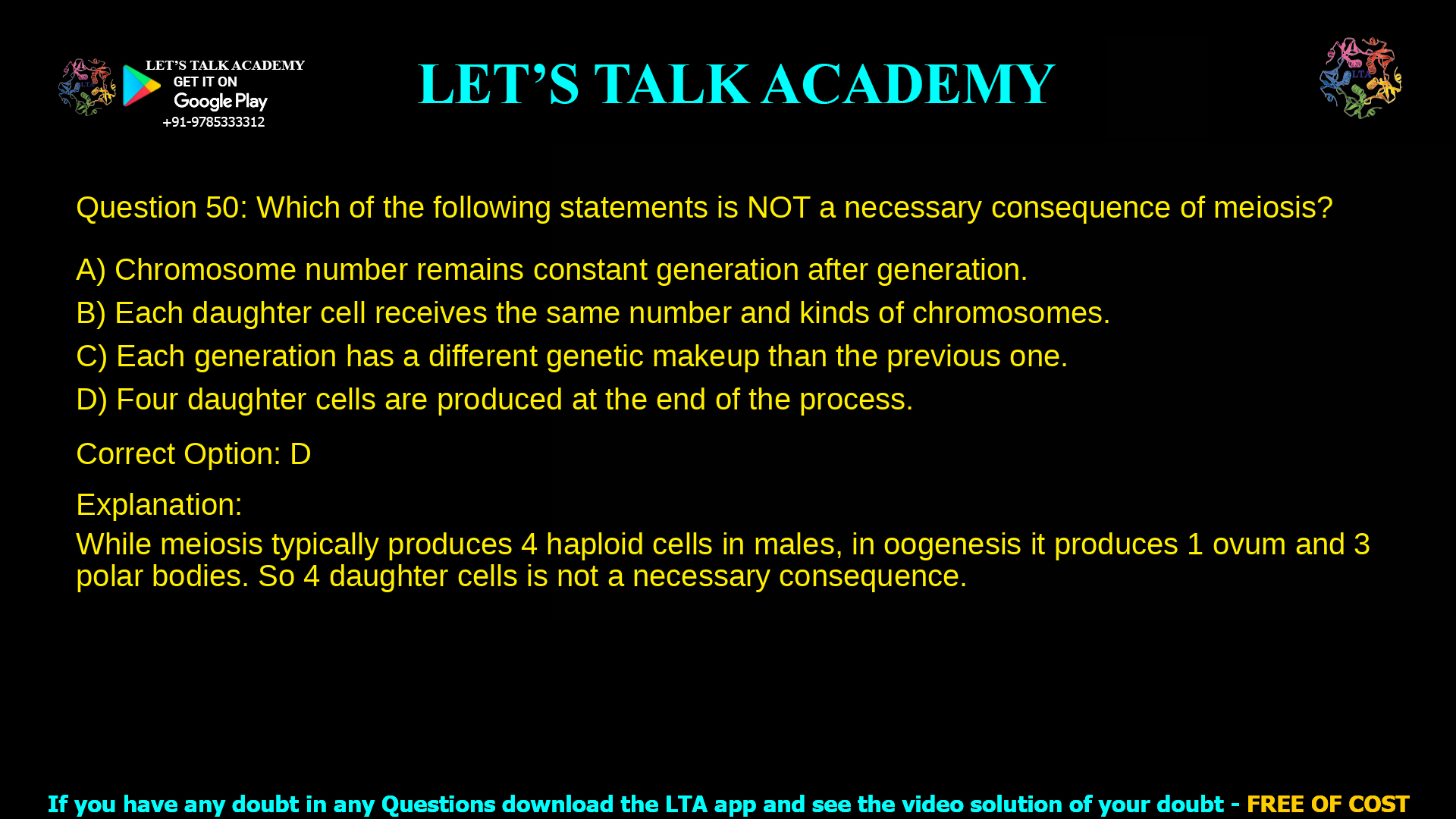
5. Which of the following statements is NOT a necessary consequence of meiosis? a. Chromosome number remains constant generation after generation. b. Each daughter cell receives the same number and […]
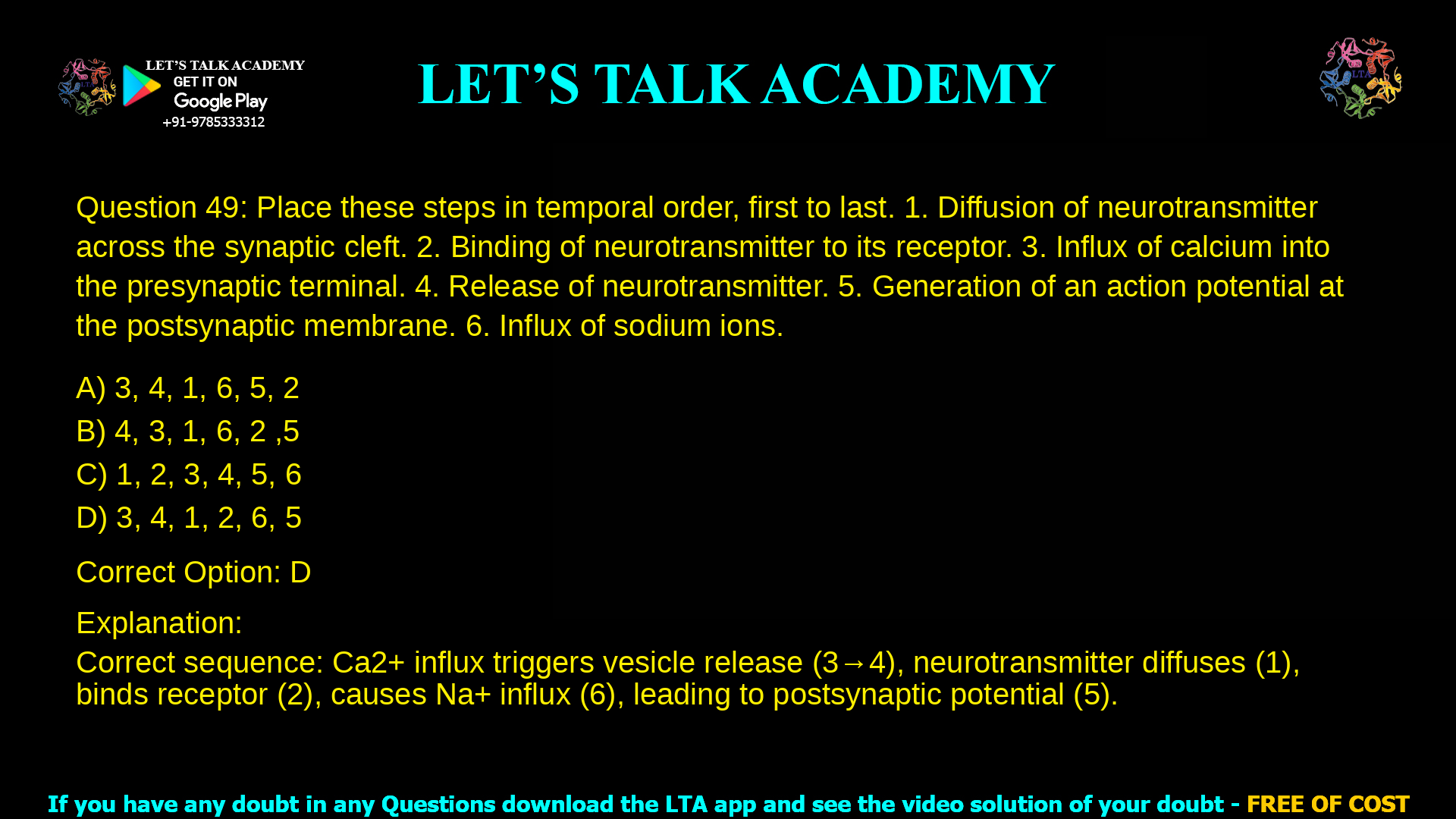
4. Place these steps in temporal order, first to last. 1. Diffusion of neurotransmitter across the synaptic cleft. 2. Binding of neurotransmitter to its receptor. 3. Influx of calcium into […]


