






























































































13. The transcription of gene X is controlled by transcription factor A. Gene X is only transcribed when factor A is phosphorylated. Data on the tissue distribution of factor A […]


13. The transcription of gene X is controlled by transcription factor A. Gene X is only transcribed when factor A is phosphorylated. Data on the tissue distribution of factor A […]

12. Cell signalling pathways I and II were studied independently, and researchers arrived at the following schematics: 𝐼: 𝐴 → 𝐵 → 𝐶 → 𝐷 𝐼𝐼: 𝐸 → 𝐹 → […]

11. The figure below shows a pedigree of a family over three generations with respect to a genetic disorder. What sort of inheritance is depicted in this pedigree? a. Autosomal […]

10. Protein X has two tryptophans and one tyrosine, and its molecular weight is 20,000 Da. One molar tryptophan and one molar tyrosine solutions give you Abs280 of 5500 and […]

9. You are studying an unusual protein which has a pKa of 5. You wish to purify this protein. For this you can: a. Use anion-exchange chromatography, and a low […]

8. When a B-cell undergoes immunoglobulin class switching a. the variable region of the light chain changes, its constant region stays the same b. the variable region of the light […]

7. You are doing a conjugation experiment with two strains of bacteria. The F+ strain is bio+ leu+ pro+ lac+. The F- strain is bio- leu- pro- lac- Str+ (resistant […]

6. A mutation in the 3’ un-translated region of an mRNA has a strong phenotype. The phenotype could be because: a. The mRNA fails to be transcribed b. The mRNA […]
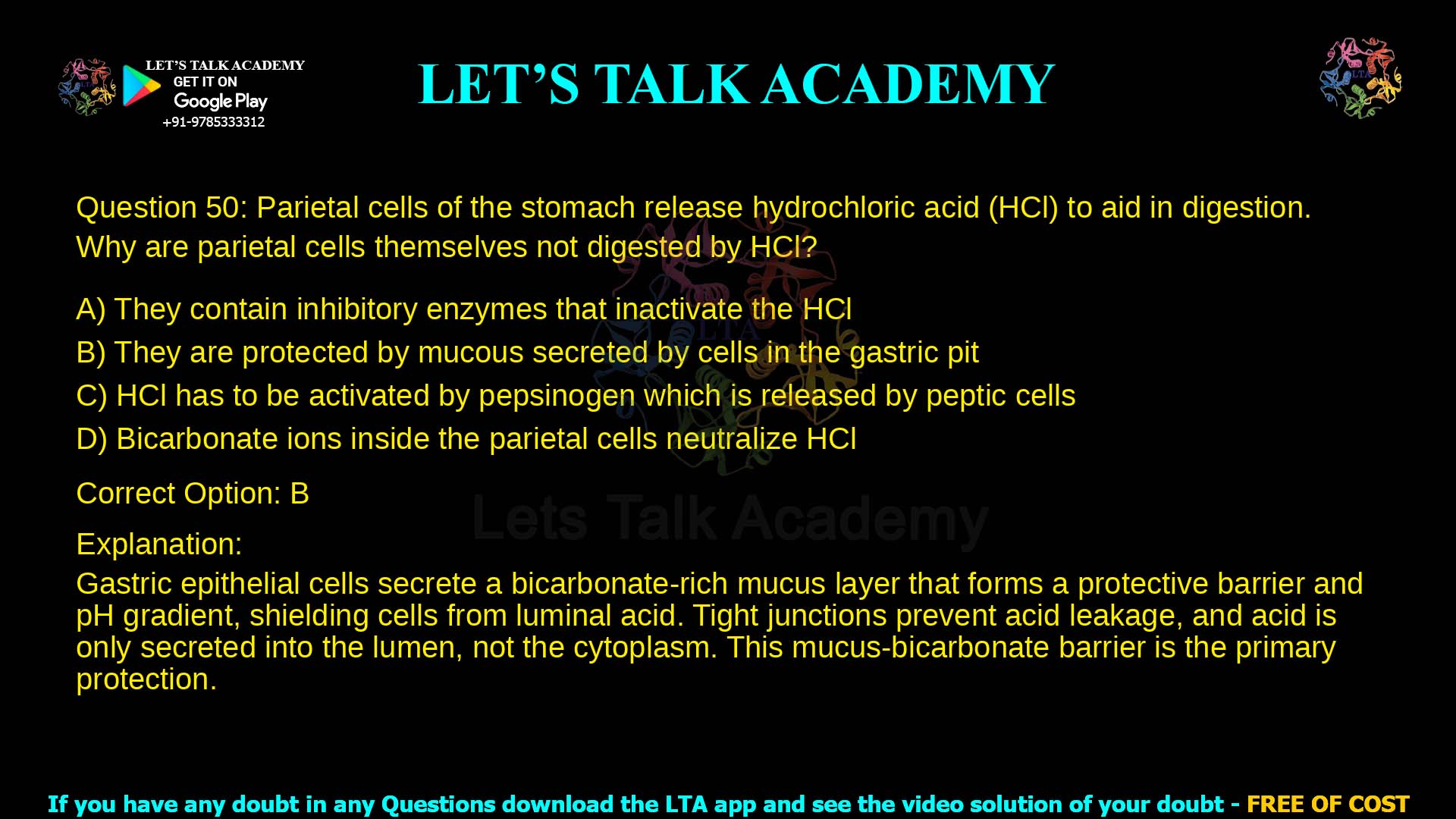
5. Parietal cells of the stomach release hydrochloric acid (HCl) to aid in digestion. Why are parietal cells themselves not digested by HCl? a. They contain inhibitory enzymes that inactivate […]

4. When performing X-ray crystallography to determine protein structure, the scattering of x-rays from the protein crystal is primarily due to: a. amino acids b. Carbon atoms c. electrons d. […]


