





































































































29. Chromatography with solid stationary phase is called (A) Circle chromatography (B) Square chromatography (C) Solid chromatography Chromatography with solid stationary phase is called adsorption chromatography. The correct answer is […]
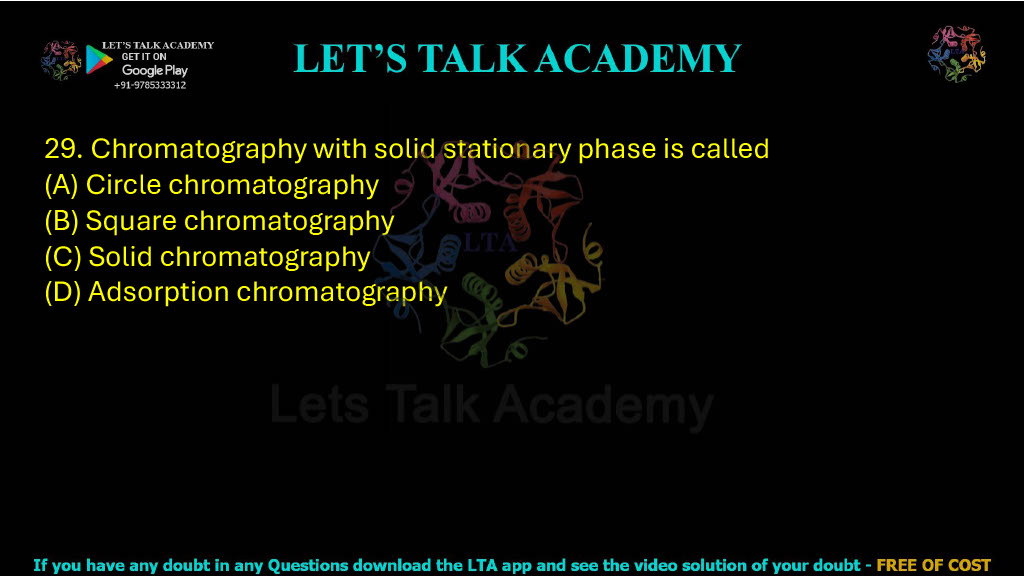

29. Chromatography with solid stationary phase is called (A) Circle chromatography (B) Square chromatography (C) Solid chromatography Chromatography with solid stationary phase is called adsorption chromatography. The correct answer is […]
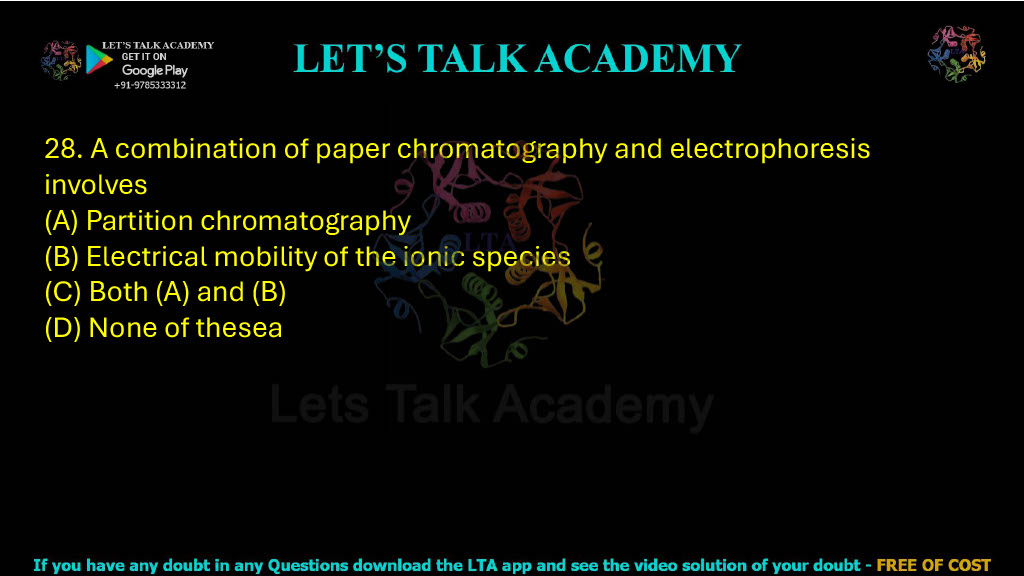
28. A combination of paper chromatography and electrophoresis involves: A. Partition chromatography B. Electrical mobility of the ionic species C. Both (a) and (b) D. None of these A combination […]
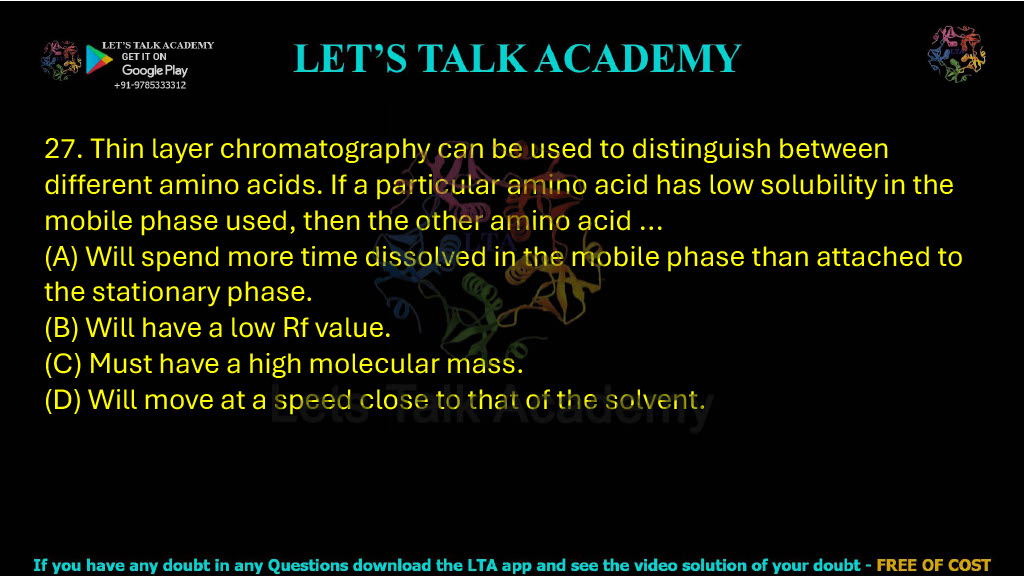
27. Thin layer chromatography can be used to distinguish between different amino acids. If a particular amino acid has low solubility in the mobile phase used, then the other amino […]
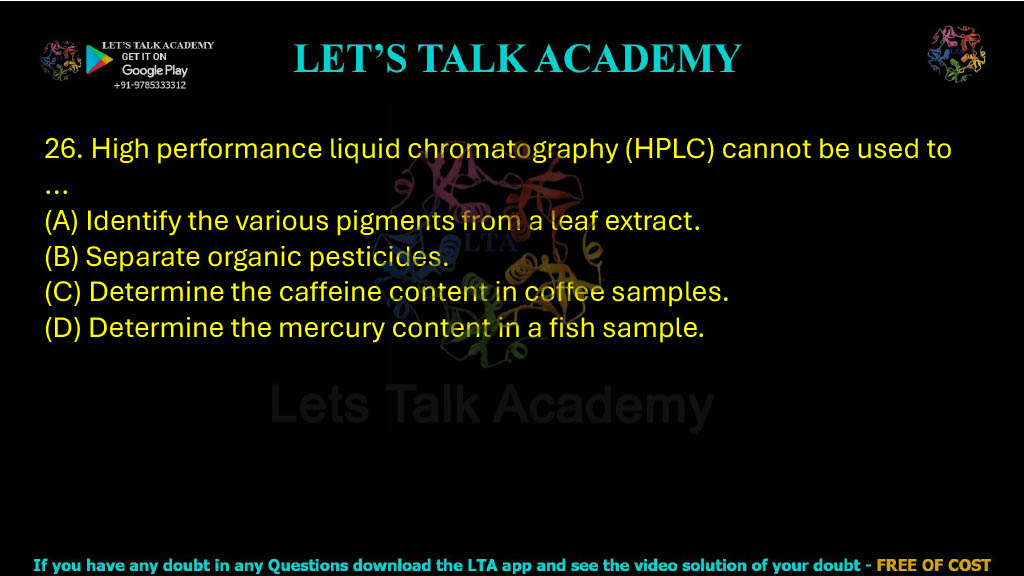
26. High performance liquid chromatography (HPLC) cannot be used to: A. Identify the various pigments from a leaf extract B. Separate organic pesticides C. Determine the caffeine content in coffee […]
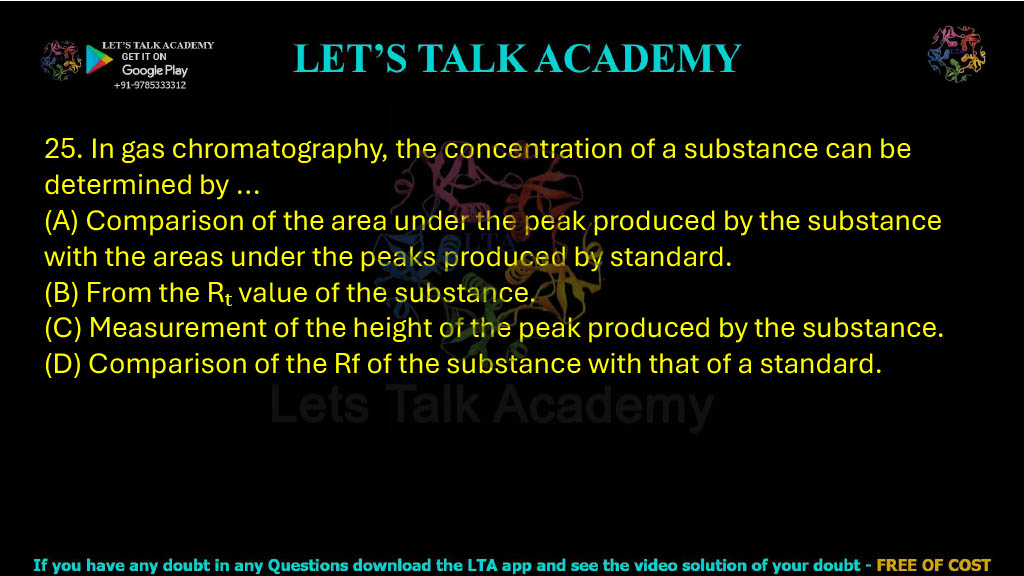
25. In gas chromatography, the concentration of a substance can be determined by: A. Comparison of the area under the peak produced by the substance with the areas under the […]

24. Which of the following statements about chromatography is correct? A. Paper chromatography and gas chromatography are both routinely used for qualitative analysis only. B. Paper chromatography is usually considered […]
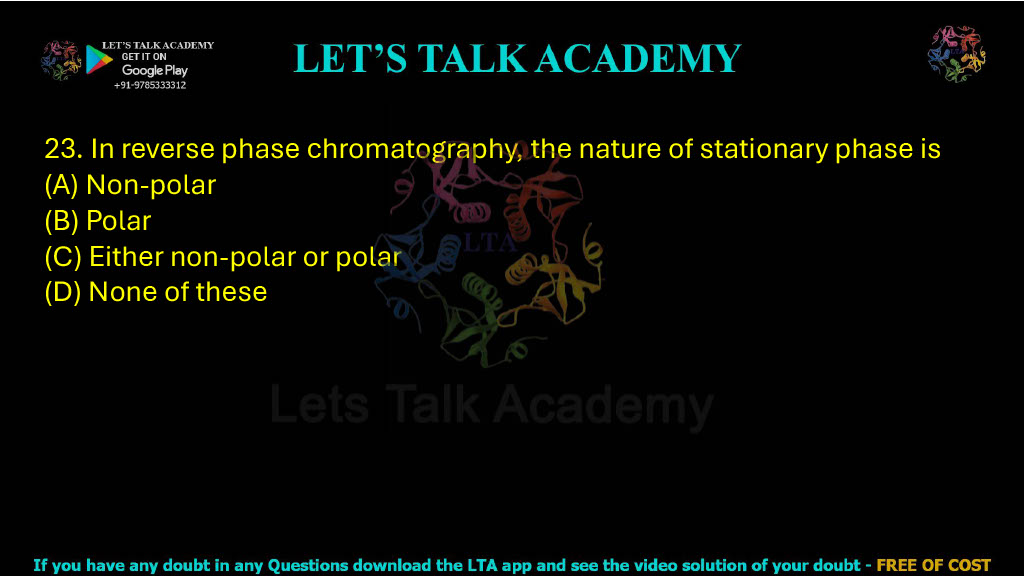
23. In reverse phase chromatography, the nature of the stationary phase is: A. Non-polar B. Polar C. Either non-polar or polar D. None of these Reverse phase chromatography uses a […]
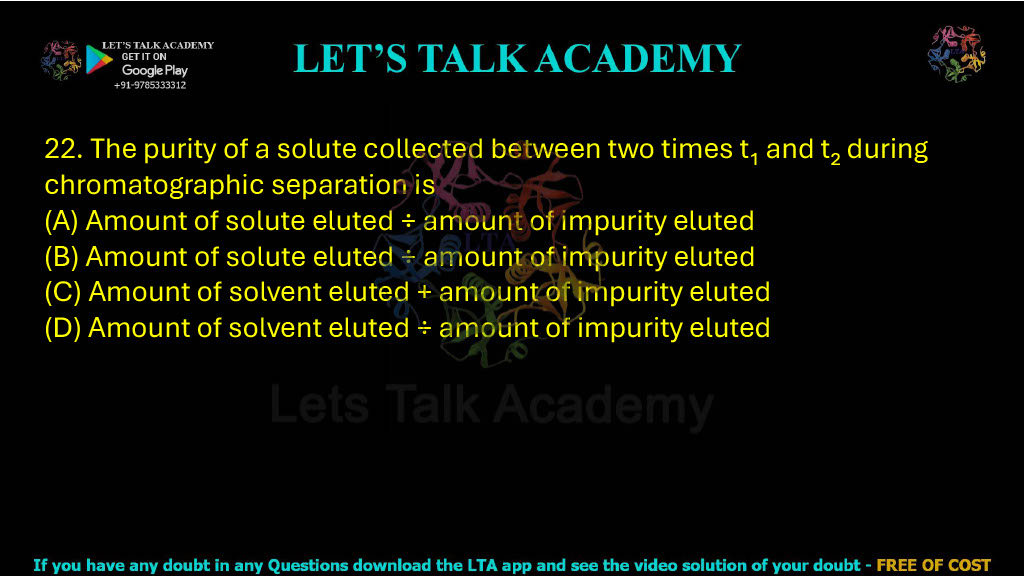
22. The purity of a solute collected between two times t1 and t2 during chromatographic separation is: A. Amount of solute eluted − amount of impurity eluted B. Amount of […]

21. Chromatography is based on the: A. Different rate of movement of the solute in a column B. Separation of one solute from other constituents by being captured on the […]

20. In a gel filtration column: A. Smaller proteins enter the beads more readily B. Larger proteins elute first C. Both A and B D. Large proteins enter the beads […]


