


















































































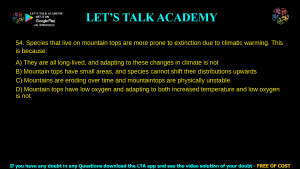

Q.21 Which amino acid(s) contain/s the amino group (-NH2) attached as a side chain. 1. Lys 2. Arg 3. Asn 4. Lys and Arg Lysine and arginine are the amino […]

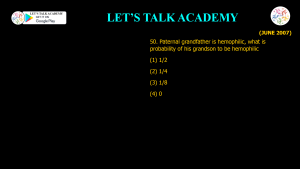
Q.21 Which amino acid(s) contain/s the amino group (-NH2) attached as a side chain. 1. Lys 2. Arg 3. Asn 4. Lys and Arg Lysine and arginine are the amino […]

Q.20 Malacophyllous leaves are found in 1. submerged hydrophytes 2. xerophytes 3. amphibious plants 4. free floating hydrophytes Malacophyllous Leaves: Xerophyte Adaptation Malacophyllous leaves feature soft, fleshy, succulent tissues specialized […]

Q.19 The anamalous distribution of vascular tissues in older stem of Bougainvillea is due to (A). formation of accessory cambial rings (B). formation of interxylary phloem (C). abnormal behaviour of […]

Q.18 Match List I with List II List I (Stomata type) List II (Family) A. Anomocytic B. Anisocytic C. Paracytic D. Diacytic I. Acanthaceae II. Magnoliaceae III. Apiaceae IV. Papaveraceae […]

Q.17 Given below are two statements, one is labelled as Assertion (A) and other one labelled as Reason (R). Assertion (A) : Root apical cell theory of Nageli does not […]

Q.16 Hanstein proposed – 1. Apical cell theory 2. Histogen theory 3. Tunica corpus theory 4. Histogen layer theory Hanstein’s work revolutionized understanding of plant tissue origins in apical meristems. […]

Q.15 The important character of the family Asteraceae is (A). Inflorescence is a racemose head or capitulum (B). Presence of cypsela fruit (C). Presence of gynostegium (D). Placentation is free […]

Q.14 Given below are two statements, one is labelled as Assertion (A) and other one labelled as Reason (R). Assertion (A) : APG classification system is not useful for adoption […]

Q.13 Match List I with List II List I (Taxonomic characters) List II (Families) A. Jaculators B. Caryopsis fruits C. Cyathium D. Cremocarp fruit I. Apiaceae II. Euphorbiaceae III. Poaceae […]

Q.12 Free central placentation is present in the family of 1. Brassicaceae 2. Cucurbitaceae 3. Caryophyllaceae 4. Capparaceae Here’s a well-structured, SEO-friendly article tailored for your biology exam prep needs, […]


