





















































































Q.6 What are anti-isotype antibodies? directed against antigenic determinants of particular antigen combining site of a particular antibody directed against antigenic determinants that are allele specific directed against determinant present […]


Q.6 What are anti-isotype antibodies? directed against antigenic determinants of particular antigen combining site of a particular antibody directed against antigenic determinants that are allele specific directed against determinant present […]
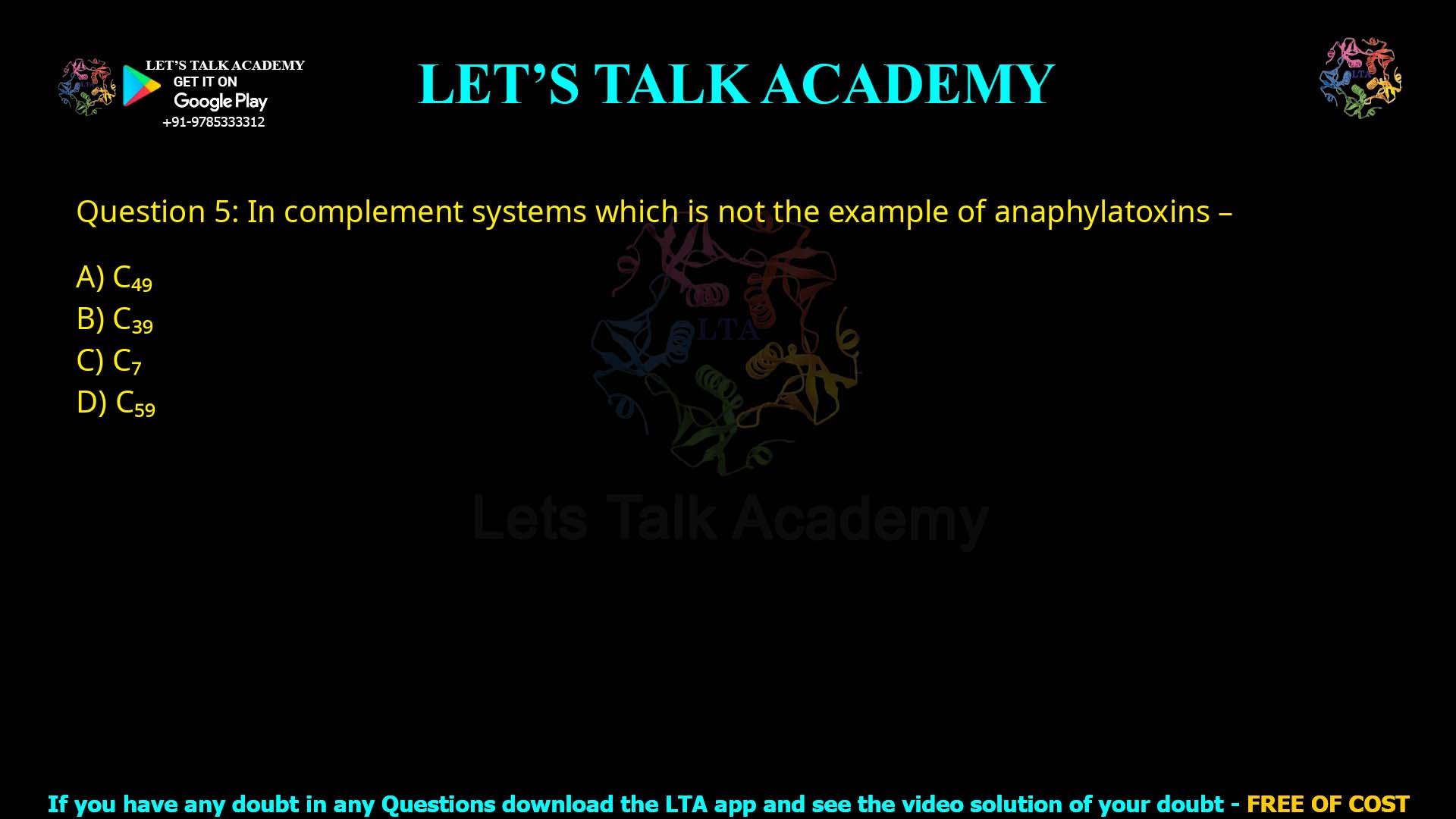
Q.5 In complement systems which is not the example of anaphylatoxins – C4a C3a C7 C5a C7 is not an example of an anaphylatoxin in the complement system. The primary […]
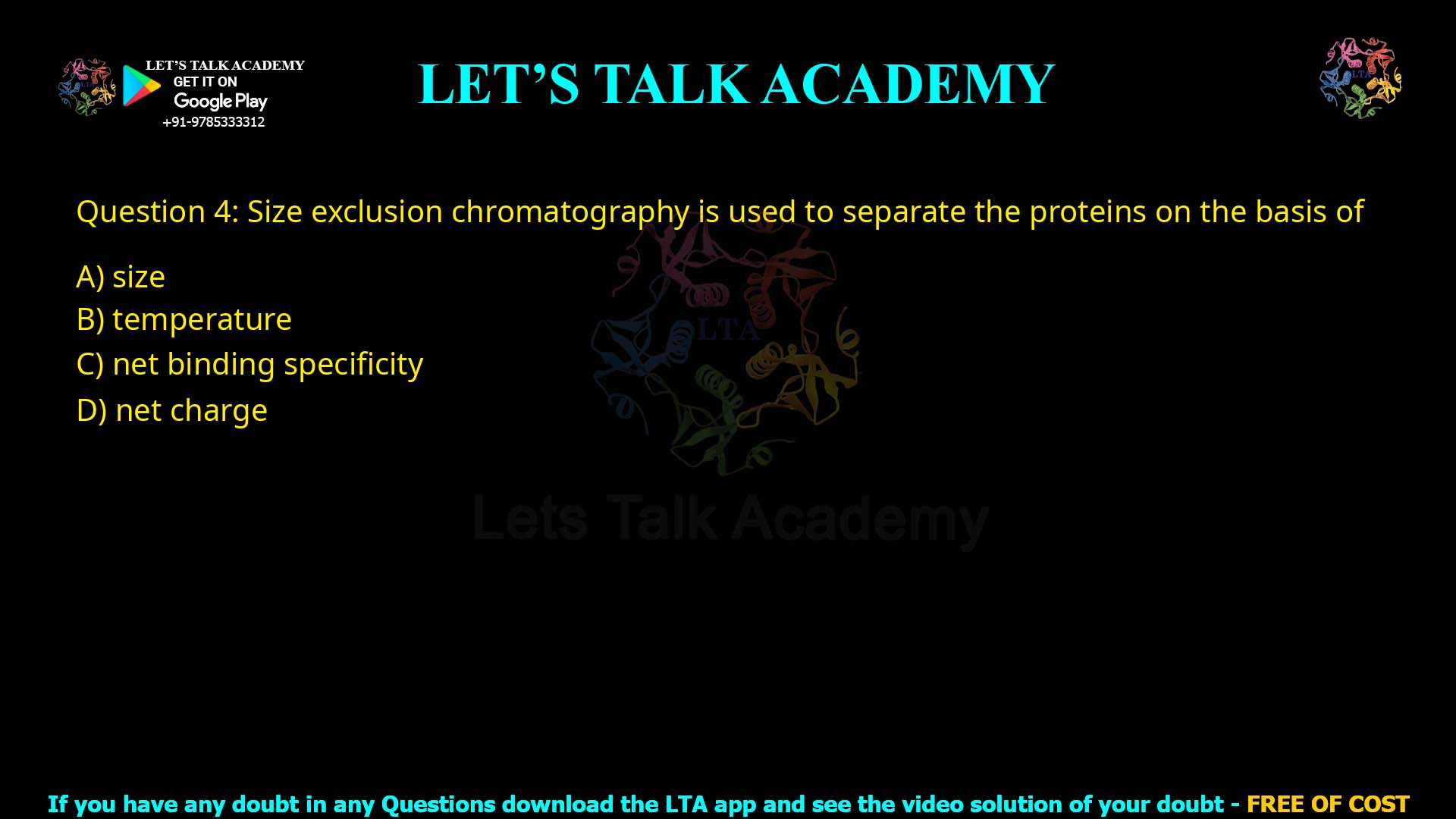
Q.4 Size exclusion chromatography is used to separate the proteins on the basis of – Size Temperature Net binding specificity Net charge Size exclusion chromatography separates proteins based on their […]

Q.3 The annealing temperature during the PCR reaction should be – 45 – 98°C 45 – 65°C 45 – 90°C 30 – 90°C The annealing temperature in PCR is typically […]

Q.2 The dye used for visualization of DNA or RNA in agarose gel is – Ethidium borate Ethidium oxide Ethidium bromide Ethidium chloride Ethidium bromide serves as the primary dye […]
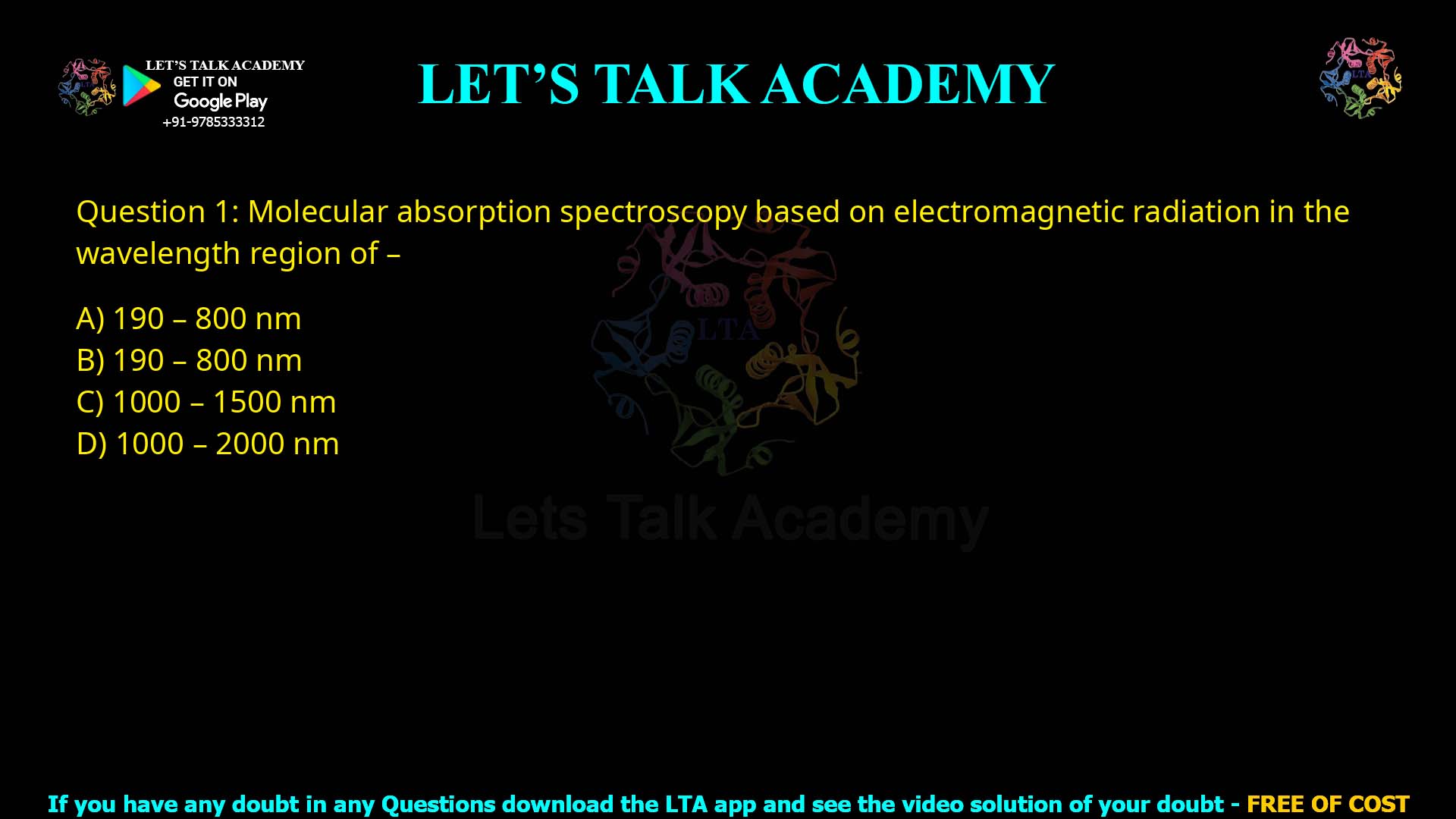
Q.1 Molecular absorption spectroscopy based on electromagnetic radiation in the wavelength region of – 190 – 800 nm 190 – 800 nm 1000 – 1500 nm 1000 – 2000 nm […]

Question 75: The substrate concentration at which an enzyme-catalyzed reaction proceeds at one-half of its velocity is called: (A) Kcat (B) Km (C) V0 (D) Vmax The substrate concentration at […]

Question 74: A substance that receives electrons in an oxidation-reduction reaction is called: (A) Electron acceptor (B) Electron donor (C) Electron carrier (D) Eluate In oxidation-reduction reactions, the substance that […]

Question 73: In 1953, Frederick Sanger determined the amino acid sequence of which protein? (A) Caspase (B) Hemoglobin (C) Insulin (D) DNA polymerase Catalase has the highest turnover number among […]

Question 72: One Angstrom (Å) is equal to: (A) 0.1 nanometer (B) 0.01 nanometer (C) 0.001 nanometer (D) 0.01 micrometer One Angstrom equals 0.1 nanometer. The correct answer is (A) 0.1 […]


