







































































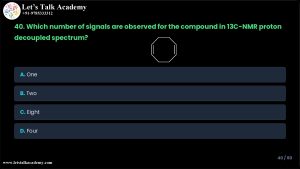


Q.11 Glyphosate resembles phosphoenol pyruvate and inhibits the enzyme EPSP synthetase which synthesises _________. (1) aliphatic amino acids (2) aromatic amino acids (3) basic amino acids (4) acidic amino acids […]


Q.11 Glyphosate resembles phosphoenol pyruvate and inhibits the enzyme EPSP synthetase which synthesises _________. (1) aliphatic amino acids (2) aromatic amino acids (3) basic amino acids (4) acidic amino acids […]

Q.10 The time interval between the formation of successive leaf primordia is termed as: (1) Apical dominance (2) Plastochron (3) Phyllotaxy (4) Parastichy The correct answer is (2) Plastochron. This term […]

Q.9 Which of the following is most acidic from the mentioned material? (1) Tomato juice (2) Blood plasma (3) Egg white (4) Fresh milk Tomato juice is the most acidic […]
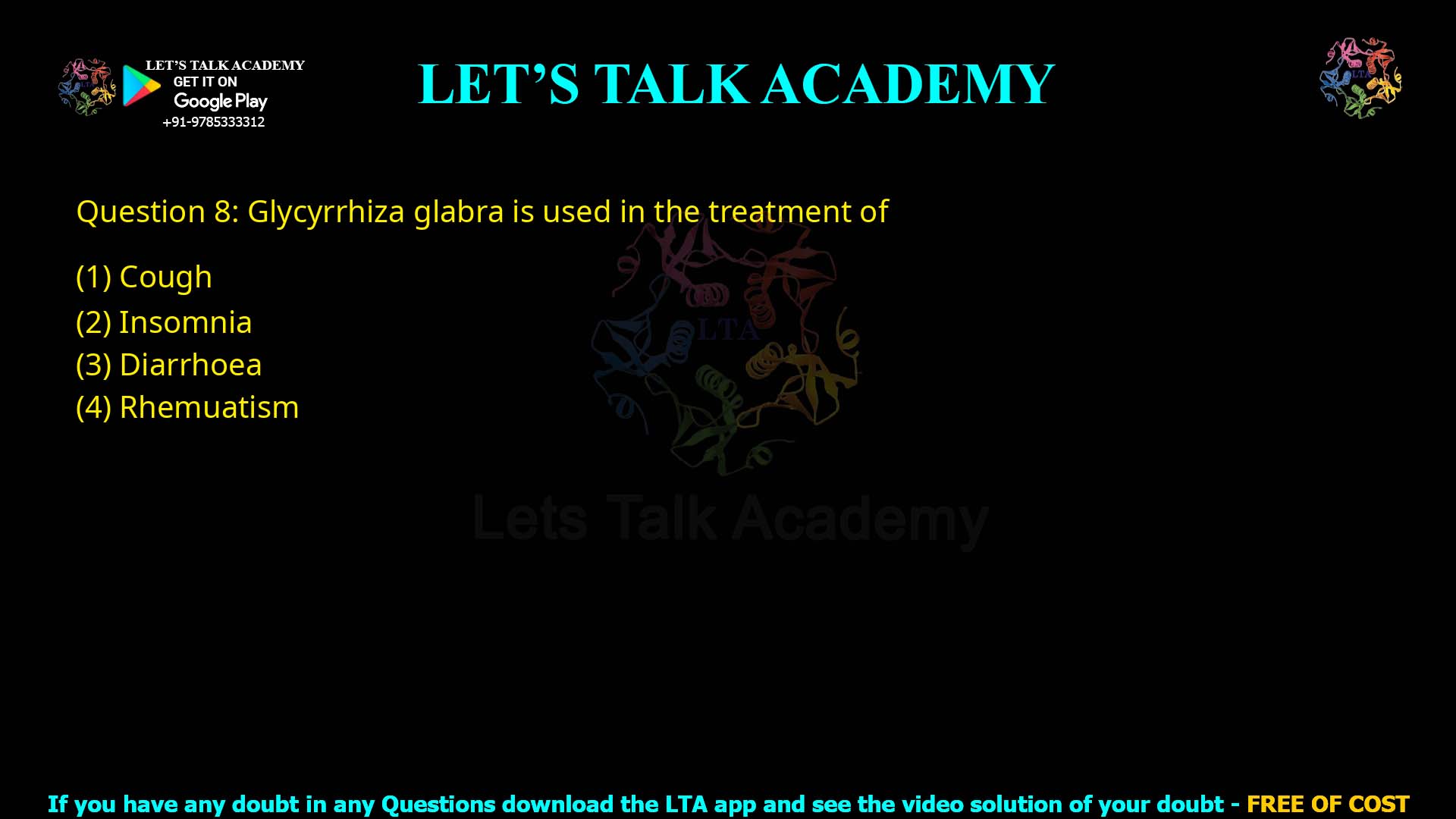
Q.8 Glycyrrhiza glabra is used in the treatment of (1) Cough (2) Insomnia (3) Diarrhoea (4) Rheumatism Glycyrrhiza glabra (licorice) is primarily used in the treatment of cough. This perennial herb […]

Q.7 DNA is synthesized in the cell by (1) Taq polymerase (2) DNA polymerase (3) Topoisomerase (4) RNAase DNA is synthesized in cells by DNA polymerase. This is a fundamental concept […]
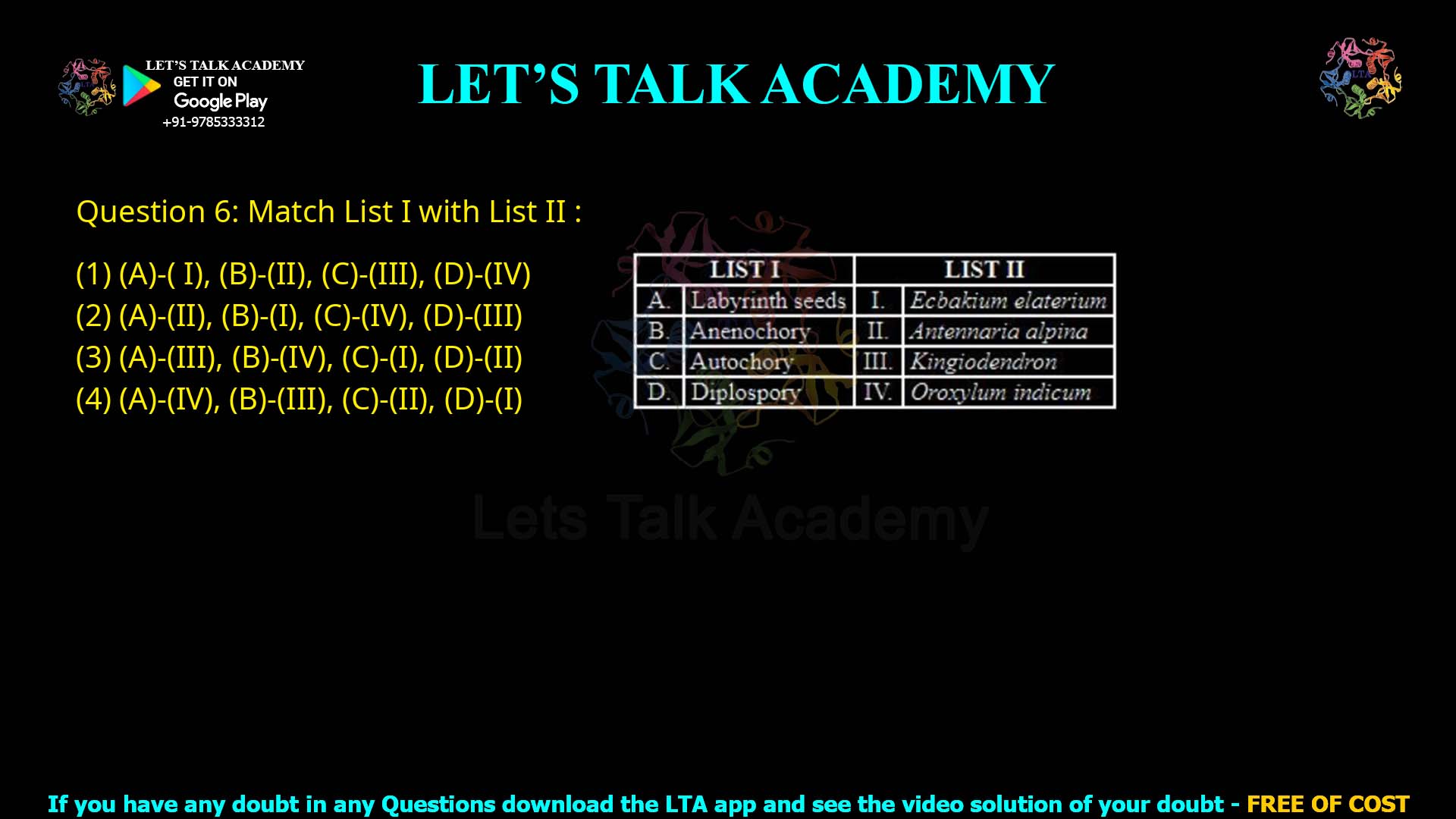
Q.6 Match List I with List II : List I Fruiting body List II Sub-division/order (A) Cleistothecium (I) Hemiascomycetes (B) Asci (naked) (II) Erysiphales (C) Apothecium (III) Pyrenomycetes (D) Perithecium […]
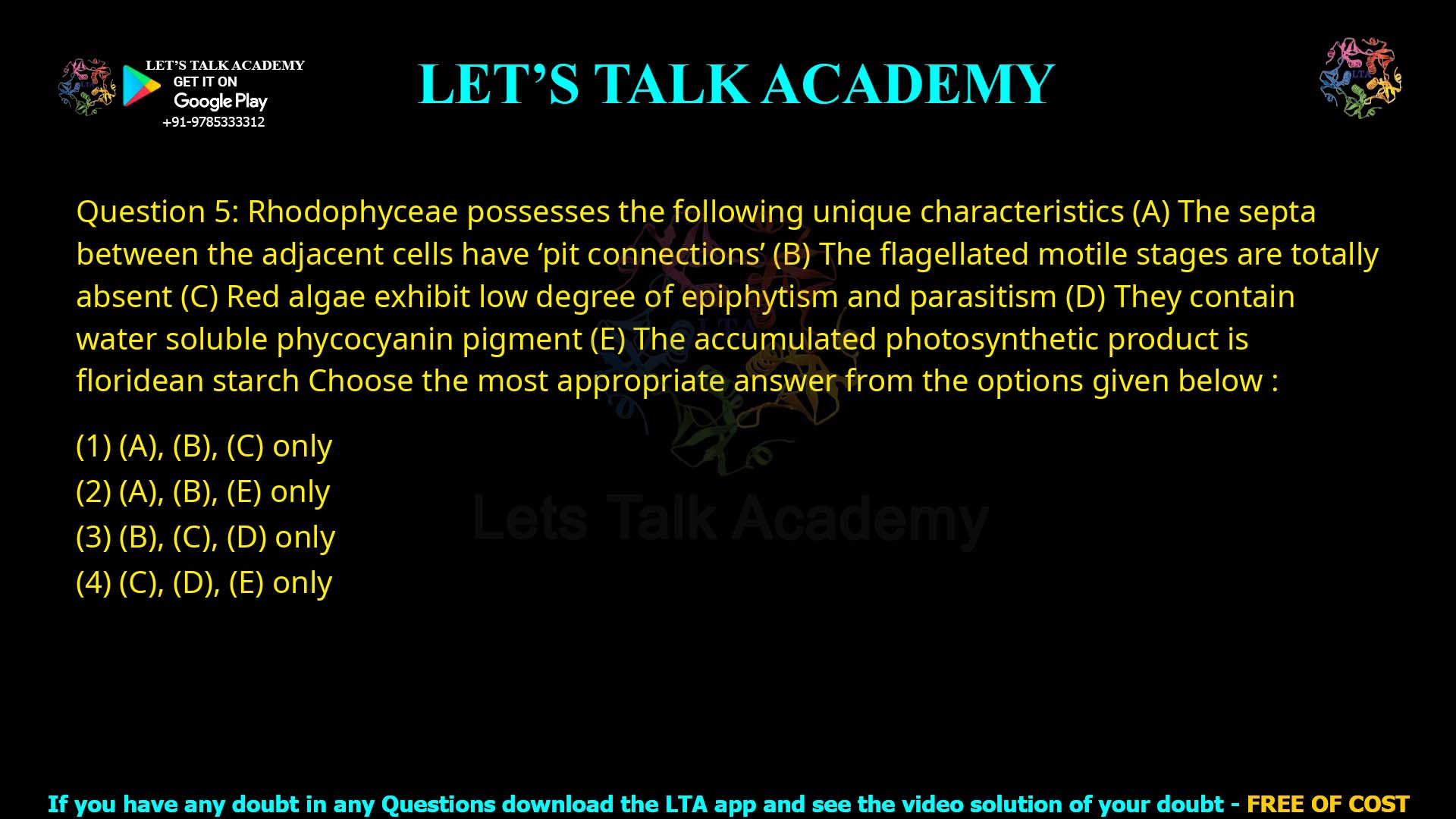
Q.5 Rhodophyceae possesses the following unique characteristics: (A) The septa between the adjacent cells have ‘pit connections’ (B) The flagellated motile stages are totally absent (C) Red algae exhibit low […]

Q.4 Transformation, a phenomenon responsible for recombination in microbes was discovered by (1) F. Griffith (2) J. Lederberg (3) E. Tatum (4) W. Hayes The correct answer is (1) F. Griffith. […]

Q.3 The influenza virus carries functional surface projections called spikes which contain a unique enzyme known as (1) RNA polymerase (2) DNA polymerase (3) Neuraminidase (4) Hexokinase The correct answer […]

Q.2 Heterocyst, a thick-walled, pale-yellow, barrel-shaped structure found in blue-green algae, helps in (1) Defence (2) N2 fixation (3) CO2 fixation (4) Sulfur metabolism The correct answer is (2) N2 […]


