
1. Introduction
For a long time, proteins were considered the major biological molecules responsible for catalyzing biochemical reactions. Enzymes were generally understood to be proteins, while RNA was primarily regarded as an information-carrying molecule.
This concept changed dramatically with the discovery that certain RNA molecules can themselves catalyze biochemical reactions.
Catalytic RNA molecules are called ribozymes.
The word ribozyme is derived from:
Ribo + enzyme
A ribozyme is therefore an RNA molecule that possesses catalytic activity.
Ribozymes are important because they demonstrate that RNA can perform two major functions:
- Store or transmit genetic information.
- Catalyze biochemical reactions.
This dual capability is particularly important for understanding the evolution of early biological systems and the possible origin of life.
2. Definition of Ribozyme
2.1 Basic Definition
A ribozyme is an RNA molecule that acts as a biological catalyst and accelerates a specific chemical reaction without being consumed in the overall reaction.
Like protein enzymes, ribozymes can:
- recognize substrates,
- form specific structures,
- bind molecules,
- facilitate chemical reactions,
- increase reaction rates,
- participate in regulated biological processes.
2.2 Important Characteristics
Ribozymes are characterized by:
- RNA-based catalytic activity,
- specific three-dimensional structures,
- substrate recognition,
- catalytic active sites,
- dependence on appropriate ionic and chemical conditions,
- repeated catalytic activity in many cases.
3. Discovery of Ribozymes
3.1 Background
The discovery of ribozymes challenged the traditional idea that only proteins could function as biological catalysts.
Two major discoveries were particularly important.
Thomas Cech studied RNA processing in the ciliated protozoan Tetrahymena thermophila.
He found that a precursor RNA could undergo self-splicing without requiring a conventional protein enzyme for the catalytic reaction.
Around the same period, Sidney Altman and colleagues studied RNase P, an RNA-containing complex involved in tRNA processing.
These studies demonstrated that RNA itself could possess catalytic activity.
3.2 Nobel Prize Recognition
The discovery of catalytic RNA was recognized by the 1989 Nobel Prize in Chemistry, awarded jointly to Thomas Cech and Sidney Altman.
Their work established RNA as an important class of biological catalysts.
4. Why the Discovery of Ribozymes Was Important
The discovery of ribozymes changed several fundamental concepts in molecular biology.
Previously:
Protein → enzyme
RNA → information carrier
After ribozyme discovery:
RNA → information carrier + catalyst
This provided strong support for the possibility that early life may have relied heavily on RNA molecules before the evolution of modern protein-based enzymes.
5. Structure of Ribozymes
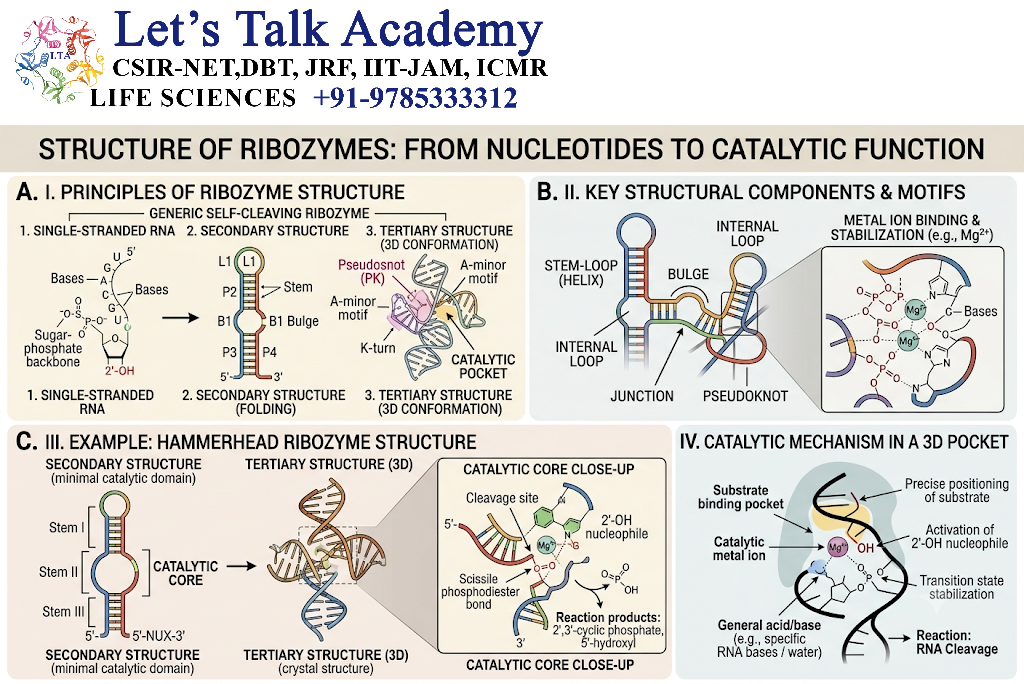
5.1 Primary Structure
The primary structure is the linear nucleotide sequence of RNA.
It consists of:
- adenine,
- guanine,
- cytosine,
- uracil.
The nucleotide sequence contributes to the formation of the ribozyme’s functional structure.
5.2 Secondary Structure
RNA can form intramolecular base-pairing interactions.
This produces structures such as:
- stems,
- loops,
- hairpins,
- bulges,
- internal loops.
These structures are essential for catalytic activity.
5.3 Tertiary Structure
The RNA folds further into a three-dimensional structure.
This tertiary structure brings important nucleotides into the correct spatial arrangement to form the catalytic center.
Thus:
Primary sequence
↓
Secondary structure
↓
Tertiary structure
↓
Catalytic activity
6. Catalytic Center of a Ribozyme
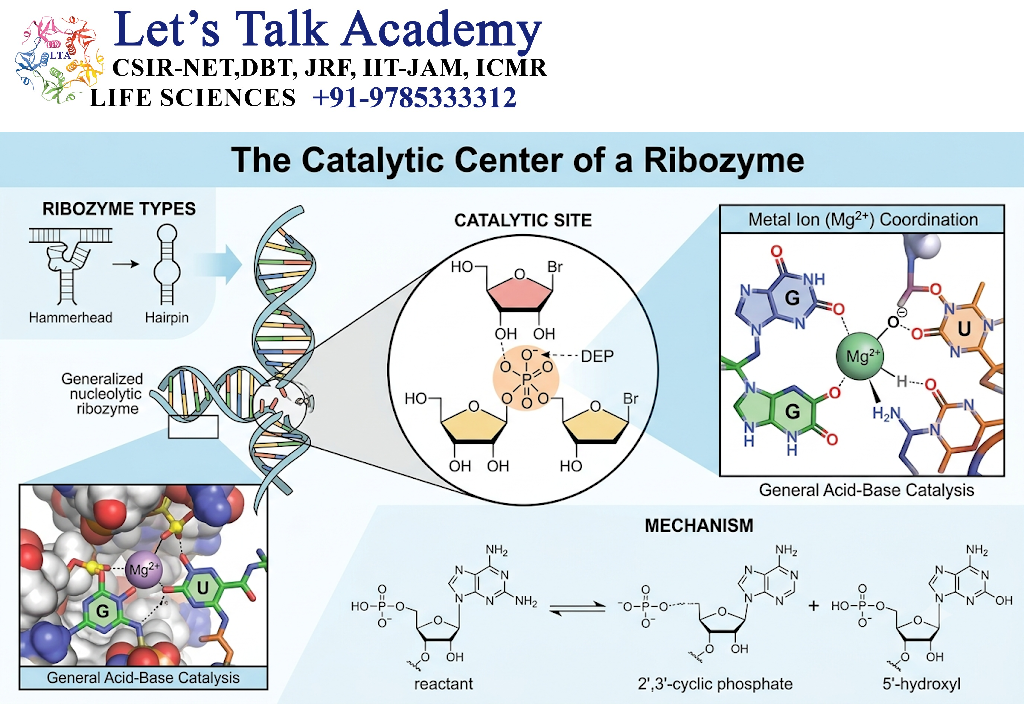
The catalytic center is the region of the RNA molecule where the chemical reaction occurs.
It can contain:
- specific nucleotides,
- metal ions,
- substrate-binding regions,
- functional groups.
The three-dimensional arrangement of these components allows the ribozyme to stabilize the reaction’s transition state and facilitate catalysis.
7. Role of Metal Ions
Many ribozymes require metal ions for efficient catalysis.
Common ions include:
- Mg²⁺,
- Mn²⁺,
- other divalent cations.
Metal ions can perform several functions.
They may:
- stabilize RNA structure,
- neutralize negative charges,
- position substrates,
- activate nucleophiles,
- stabilize reaction intermediates.
Because the RNA backbone contains negatively charged phosphate groups, positively charged metal ions are particularly important for RNA folding and catalysis.
8. General Mechanism of Ribozyme Catalysis
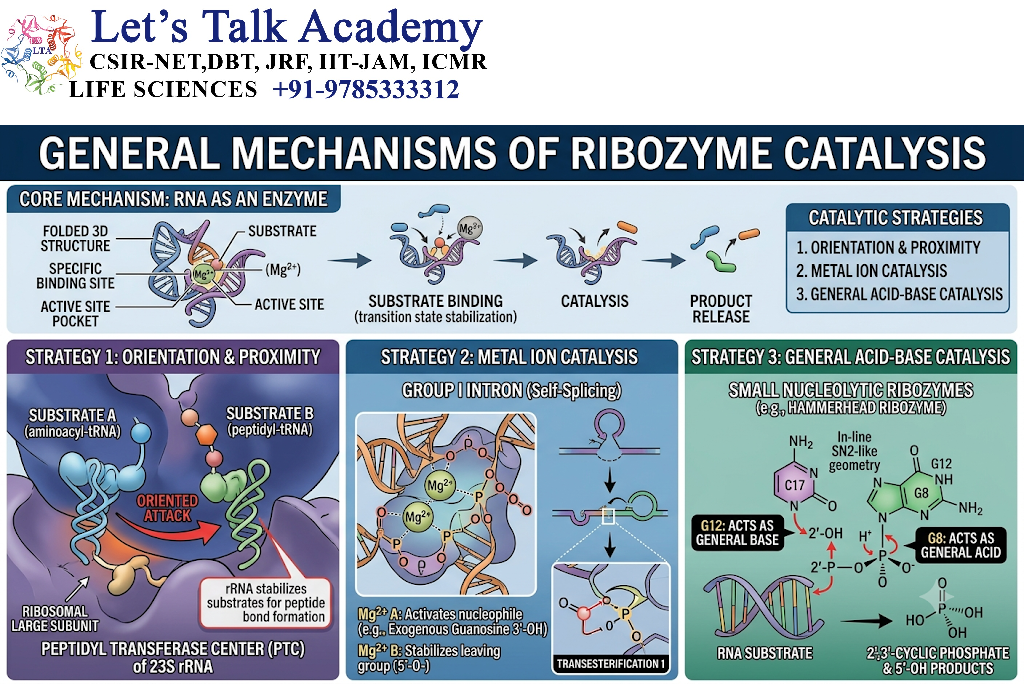
A simplified catalytic process is:
Ribozyme folding
↓
Substrate recognition
↓
Substrate binding
↓
Catalytic-site formation
↓
Chemical reaction
↓
Product formation
↓
Product release
↓
Ribozyme regeneration
The ribozyme can then participate in another catalytic cycle in systems where the catalyst is not consumed.
9. Substrate Recognition
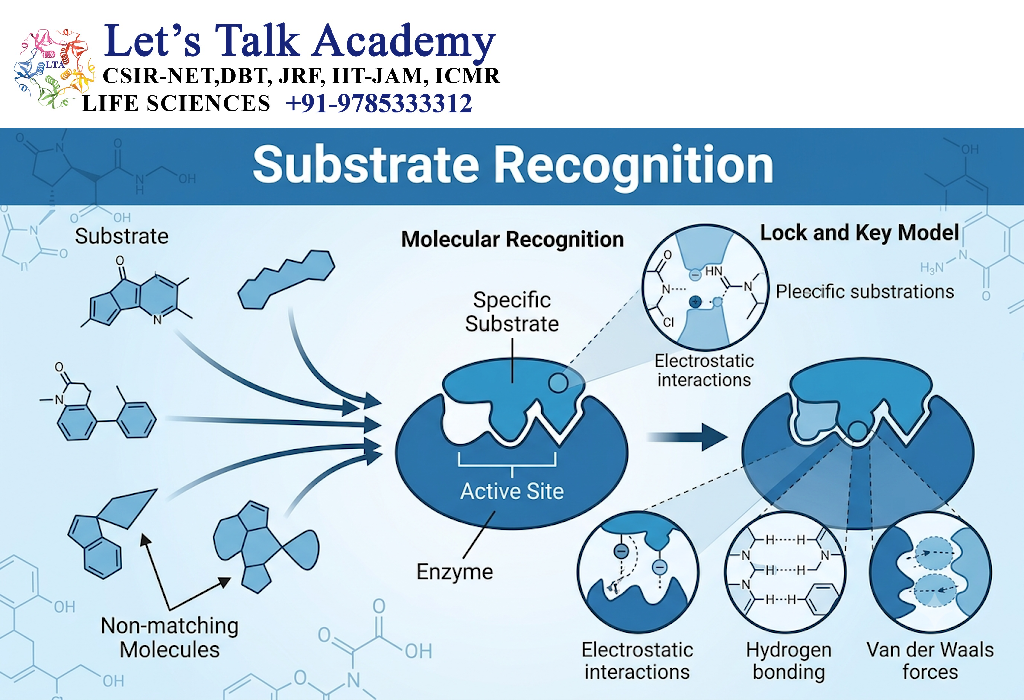
Ribozymes must recognize their appropriate substrates.
Recognition can occur through:
- complementary base pairing,
- hydrogen bonding,
- three-dimensional interactions,
- electrostatic interactions.
In many ribozymes, RNA-RNA base pairing provides highly specific substrate recognition.
10. Catalytic Strategies Used by Ribozymes
Ribozymes can use several strategies to accelerate chemical reactions.
10.1 Substrate Positioning
The ribozyme can bring reactive groups into the correct orientation.
10.2 Charge Stabilization
Metal ions and positively charged groups can stabilize negative charges that develop during catalysis.
10.3 Acid-Base Catalysis
Specific nucleotide functional groups can participate in proton transfer reactions.
10.4 Transition-State Stabilization
The ribozyme can stabilize the high-energy transition state of a reaction.
These mechanisms are conceptually similar to catalytic strategies used by protein enzymes.
11. Major Classes of Ribozymes
Ribozymes can be classified according to their structure, reaction type, and biological function.
Important examples include:
- Self-splicing introns
- RNase P
- Hammerhead ribozyme
- Hairpin ribozyme
- HDV ribozyme
- Twister ribozyme
- VS ribozyme
- glmS ribozyme
- Ribonuclease P-associated catalytic RNA
- Ribosomal catalytic RNA activity
12. Self-Splicing Ribozymes
12.1 Definition
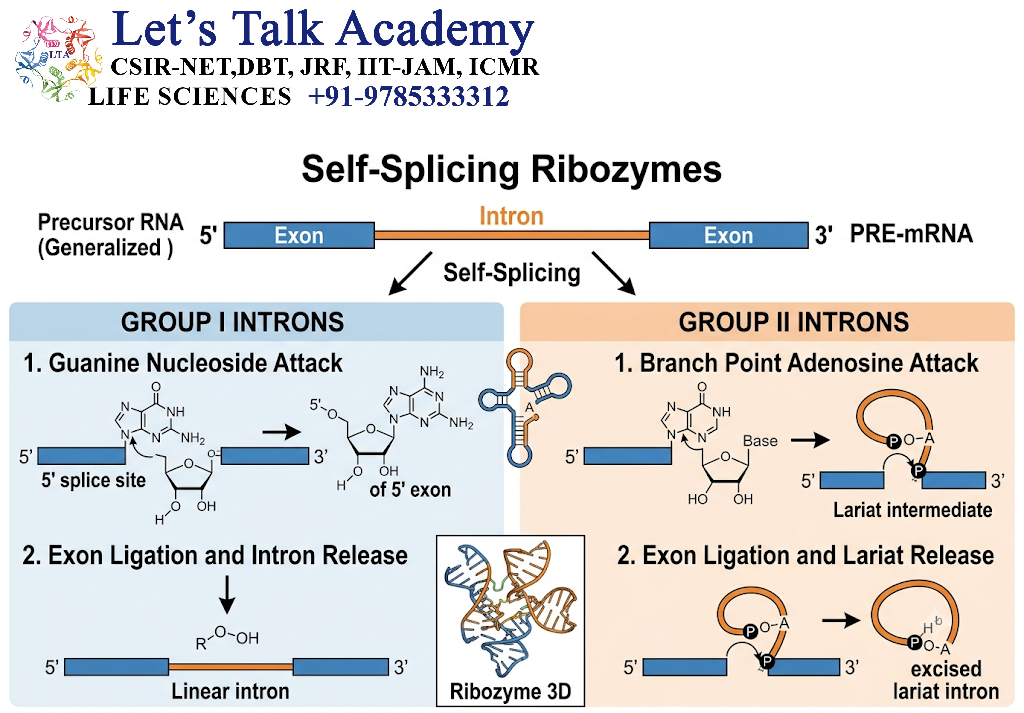
Self-splicing RNAs are RNA molecules capable of catalyzing their own splicing reactions.
They can remove intron sequences and join the surrounding RNA regions without requiring a conventional protein enzyme for the core catalytic chemistry.
Two major classes are:
- Group I introns
- Group II introns
13. Group I Introns
13.1 Structure
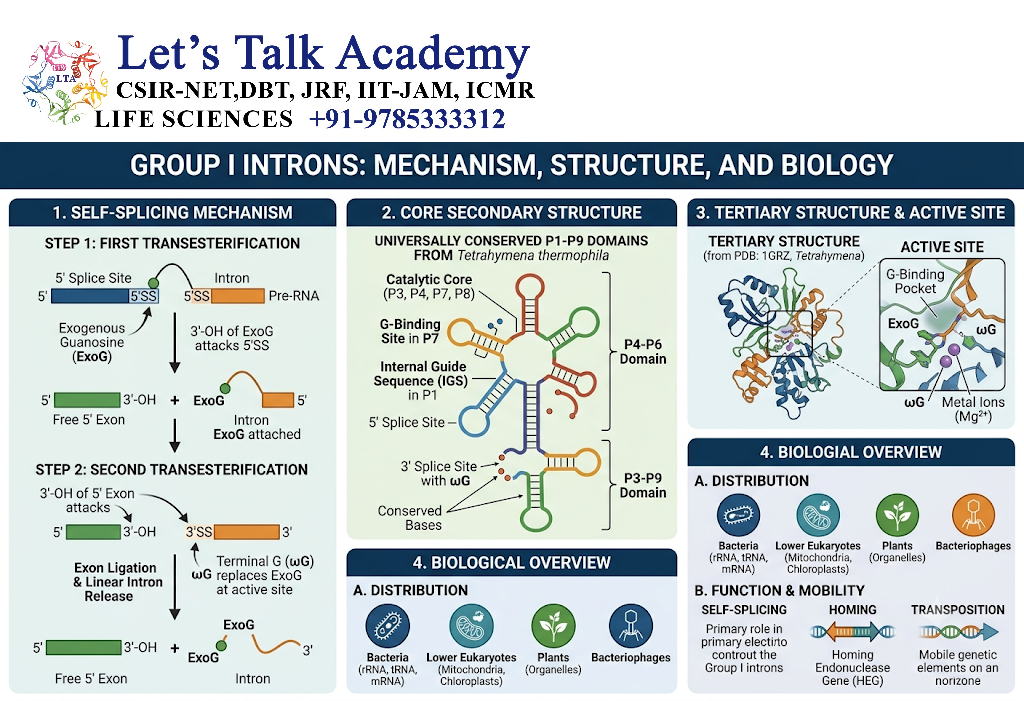
Group I introns are catalytic RNA sequences that can undergo self-splicing.
The RNA folds into a complex three-dimensional structure that creates a catalytic center.
13.2 Mechanism
Group I intron splicing involves two major transesterification reactions.
A simplified mechanism is:
Exon 1 — Intron — Exon 2
↓
First transesterification
↓
Intron-exon intermediate
↓
Second transesterification
↓
Exon 1 — Exon 2
↓
Intron released
13.3 Role of Guanosine
A free guanosine nucleotide or guanosine-containing molecule participates in the first transesterification reaction.
Its 3′-OH group attacks the phosphate at the exon-intron junction.
This initiates the splicing reaction.
14. Group II Introns
14.1 Definition
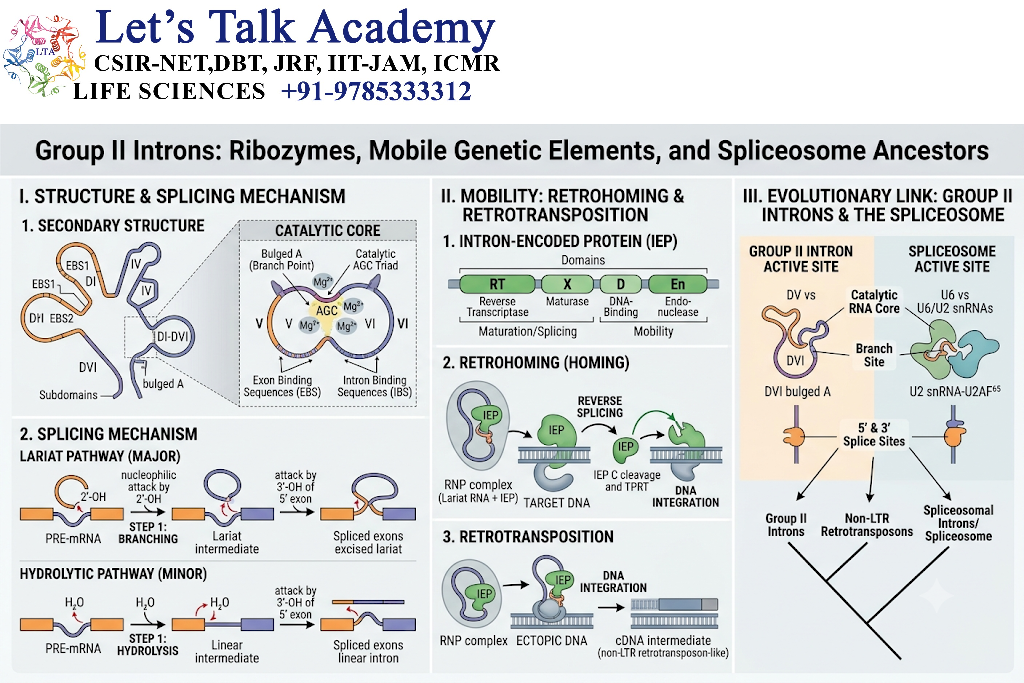
Group II introns are large catalytic RNAs capable of self-splicing.
Their structure and mechanism have important similarities to the spliceosomal splicing pathway.
14.2 Lariat Formation
Group II introns commonly form a lariat structure during splicing.
An internal adenosine provides a 2′-OH group that participates in the first transesterification reaction.
The result is:
Lariat intron + joined exons
15. Ribonuclease P
15.1 Definition
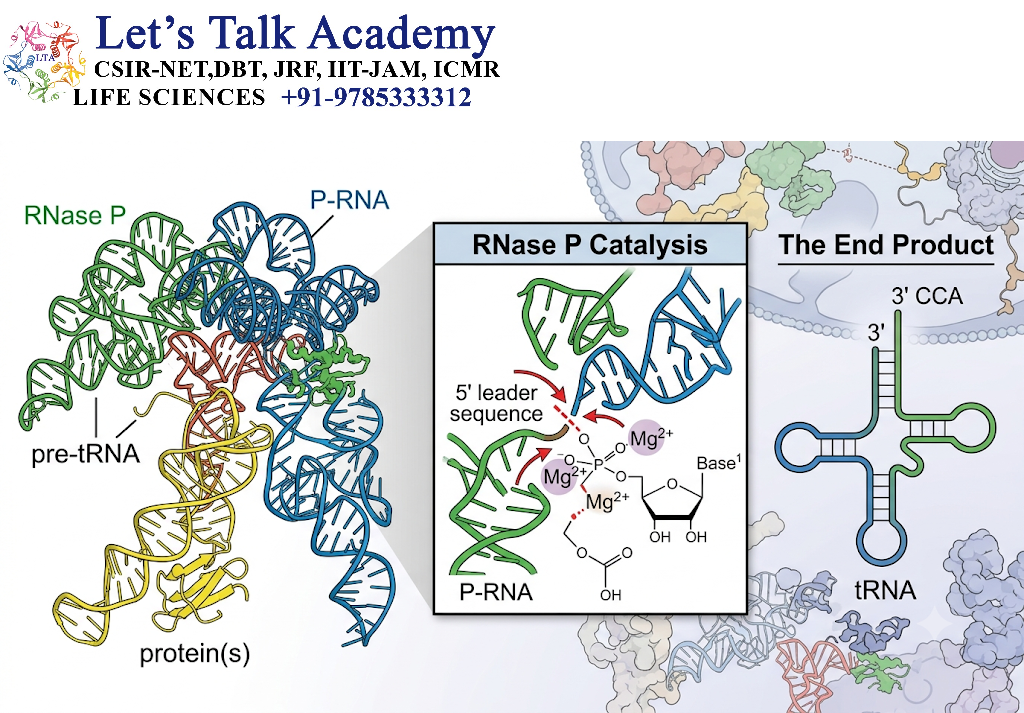
Ribonuclease P (RNase P) is an RNA-containing enzyme complex involved in the processing of precursor tRNA.
The RNA component of RNase P is catalytic in many organisms.
15.2 Function
RNase P removes the 5′ leader sequence from precursor tRNA.
The reaction can be represented as:
Pre-tRNA
↓
RNase P
↓
5′ leader removal
↓
Mature tRNA
15.3 Importance
RNase P is one of the most important examples demonstrating that RNA can perform enzymatic catalysis.
16. Hammerhead Ribozyme
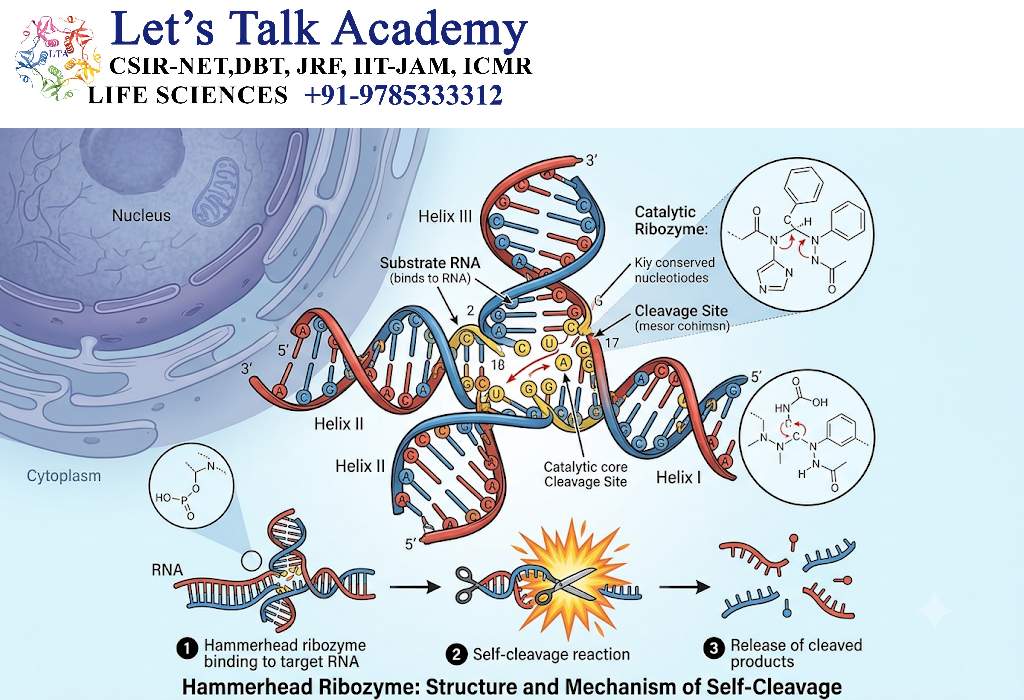
16.1 Definition
The hammerhead ribozyme is a small catalytic RNA that can catalyze site-specific cleavage of RNA.
It was originally identified in association with certain plant pathogens and satellite RNAs.
16.2 Structure
The hammerhead ribozyme forms a characteristic three-dimensional structure involving several RNA stems and loops.
Its name comes from the appearance of its secondary structure.
16.3 Function
Its primary catalytic reaction is:
RNA cleavage
The reaction involves cleavage of the phosphodiester backbone.
17. Mechanism of Hammerhead Ribozyme
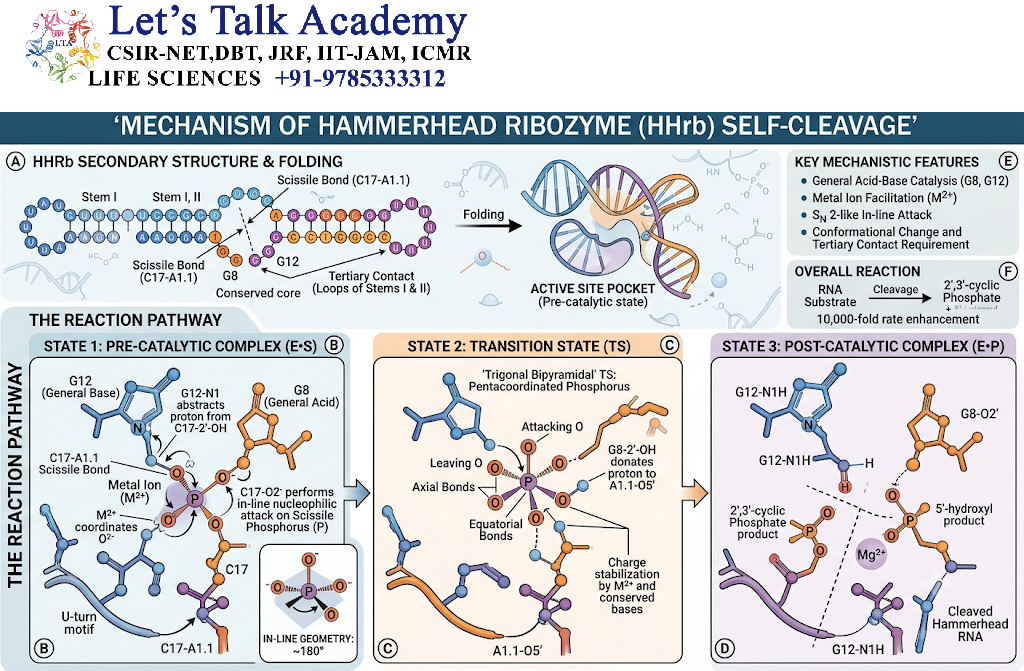
The catalytic process involves:
- substrate recognition,
- RNA folding,
- active-site formation,
- positioning of the cleavage site,
- phosphodiester bond cleavage,
- product release.
Metal ions can contribute to catalytic activity and structural stabilization.
18. Hairpin Ribozyme
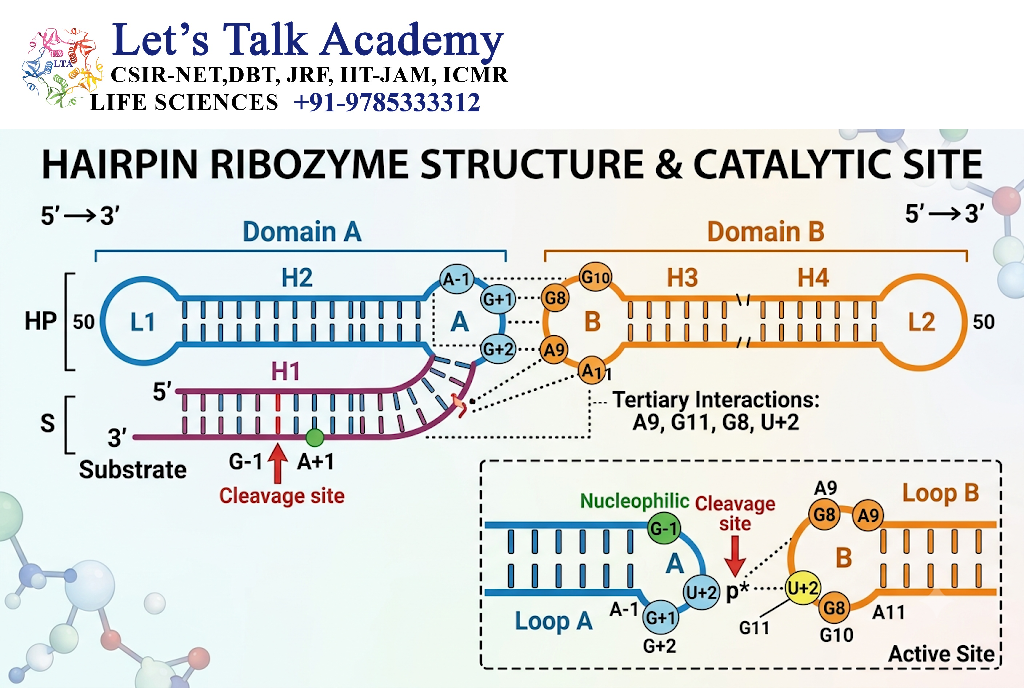
18.1 Definition
The hairpin ribozyme is another RNA catalyst capable of site-specific RNA cleavage and ligation.
It was originally identified in plant satellite RNA systems.
18.2 Structure
It contains characteristic:
- hairpin structures,
- internal loops,
- conserved nucleotides.
These regions form the catalytic center.
18.3 Function
The hairpin ribozyme can catalyze:
- RNA cleavage,
- RNA ligation.
19. HDV Ribozyme
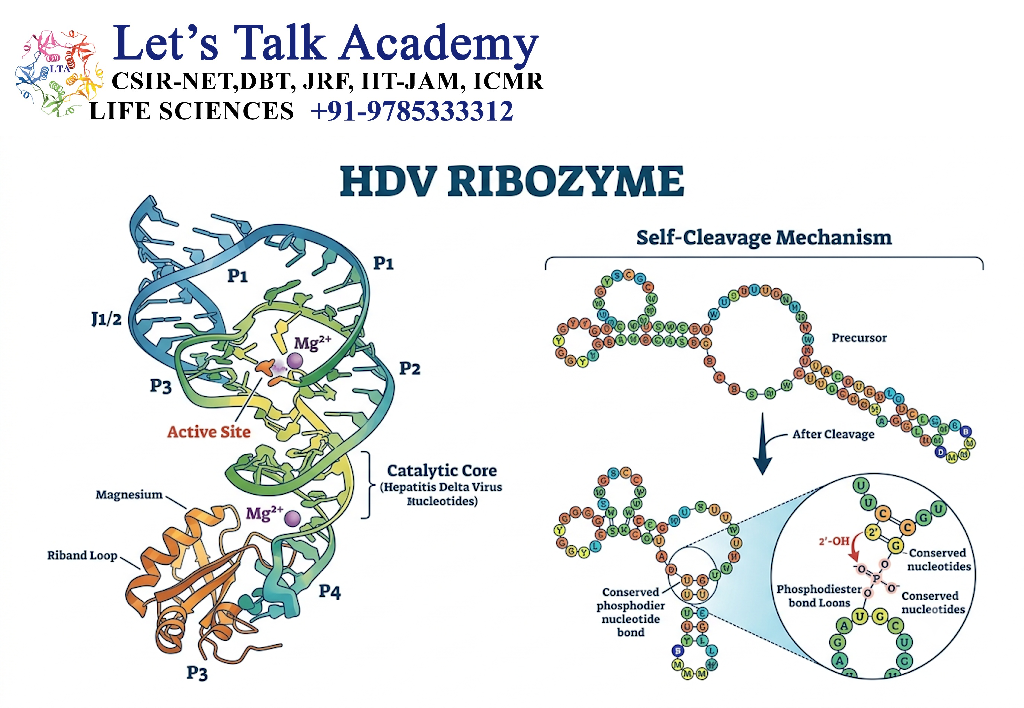
19.1 Definition
The hepatitis delta virus (HDV) ribozyme is a catalytic RNA associated with hepatitis delta virus RNA processing.
It catalyzes site-specific self-cleavage of RNA.
19.2 Biological Importance
The HDV ribozyme is particularly important as an example of a compact RNA catalyst with a highly organized catalytic structure.
It can function under a range of cellular conditions and has been extensively studied as a model RNA catalyst.
20. Twister Ribozyme
The twister ribozyme is a naturally occurring small RNA catalyst.
It catalyzes site-specific RNA cleavage.
Its structure demonstrates how relatively small RNA molecules can form sophisticated catalytic centers.
21. VS Ribozyme
The VS (Varkud satellite) ribozyme is a catalytic RNA found in the satellite RNA of Neurospora.
It can catalyze:
- RNA cleavage,
- RNA ligation.
It is an important model for studying RNA structure and catalytic mechanisms.
22. glmS Ribozyme
22.1 Definition
The glmS ribozyme is a riboswitch-associated catalytic RNA found in certain bacteria.
It performs RNA cleavage in response to a small-molecule metabolite.
22.2 Ligand
The ligand is:
Glucosamine-6-phosphate (GlcN6P)
When GlcN6P binds the RNA, it activates the ribozyme.
22.3 Biological Significance
The glmS system connects:
metabolite concentration
with
RNA cleavage
and therefore provides a mechanism for gene regulation.
23. Ribosome as a Ribozyme
23.1 Peptidyl Transferase Activity
The ribosome is a major example of RNA-based catalysis.
The peptidyl transferase center of the ribosome is primarily formed by ribosomal RNA.
Its catalytic activity forms peptide bonds during protein synthesis.
The reaction can be represented as:
Aminoacyl-tRNA + Peptidyl-tRNA
↓
Peptide bond formation
↓
Growing polypeptide
23.2 Importance
The catalytic role of rRNA demonstrates that RNA is not merely a structural component of the ribosome.
It directly participates in the chemistry of peptide-bond formation.
Therefore, the ribosome is often described as a ribonucleoprotein molecular machine with a catalytic RNA core.
24. Ribozyme and the RNA World Hypothesis
24.1 Basic Concept
The RNA world hypothesis proposes that early life may have passed through a stage in which RNA played both informational and catalytic roles.
RNA is uniquely suited to this hypothesis because it can:
- store sequence information,
- base-pair with complementary sequences,
- fold into complex structures,
- catalyze chemical reactions.
24.2 Importance of Ribozymes
The existence of ribozymes provides experimental support for the idea that RNA can perform catalytic functions.
A possible evolutionary sequence is:
Self-replicating or informational RNA
↓
Catalytic RNA
↓
RNA-based biological systems
↓
Evolution of protein enzymes
↓
Modern DNA-RNA-protein system
This is a conceptual model rather than a proven complete history of life’s origin.
25. Ribozymes and Protein Enzymes
Ribozymes and protein enzymes share several principles of catalysis.
Both can:
- bind substrates,
- form active sites,
- stabilize transition states,
- accelerate reactions,
- show specificity.
However, their chemical composition differs.
25.1 Protein Enzymes
Protein enzymes are composed of amino acids.
They can use functional groups from:
- lysine,
- histidine,
- cysteine,
- aspartate,
- glutamate,
- serine,
- tyrosine,
- other residues.
25.2 Ribozymes
Ribozymes are composed of RNA nucleotides.
Their catalytic activity depends on:
- nucleotide functional groups,
- RNA folding,
- base pairing,
- metal ions,
- tertiary interactions.
26. Comparison Between Ribozymes and Protein Enzymes
| Feature | Ribozymes | Protein Enzymes |
|---|---|---|
| Chemical nature | RNA | Protein |
| Building blocks | Nucleotides | Amino acids |
| Catalytic activity | Yes | Yes |
| Folding required | Yes | Yes |
| Substrate recognition | Sequence/structure/interactions | Structure/chemical interactions |
| Metal ions | Frequently important | Sometimes important |
| Major examples | RNase P, hammerhead, self-splicing introns | Proteases, kinases, polymerases |
| Biological abundance | Less common | Very common |
| Genetic information | RNA sequence itself | Encoded by genes |
27. Ribozyme Specificity
Ribozymes can exhibit high substrate specificity.
Specificity can be determined by:
- nucleotide sequence,
- base pairing,
- RNA structure,
- substrate shape,
- chemical interactions.
This allows ribozymes to act at particular sites within RNA molecules.
28. Self-Cleaving Ribozymes
Some ribozymes catalyze cleavage of the RNA molecule containing the ribozyme itself.
These are known as self-cleaving ribozymes.
Examples include:
- hammerhead,
- hairpin,
- HDV,
- twister.
Self-cleavage can be important in:
- RNA processing,
- viral replication,
- satellite RNA biology.
29. Self-Splicing Versus Self-Cleaving
These terms describe different reactions.
Self-splicing
An intron is removed and the surrounding exons are joined.
Exon 1 — Intron — Exon 2
↓
Exon 1 — Exon 2 + Intron
Self-cleaving
The RNA molecule is cleaved into separate RNA products.
RNA
↓
RNA fragment 1 + RNA fragment 2
30. Ribozyme Catalysis and Phosphodiester Bonds
Many ribozymes catalyze reactions involving the RNA phosphodiester backbone.
Important reactions include:
- phosphodiester bond cleavage,
- phosphodiester bond formation,
- transesterification.
The 2′-OH group of ribose is particularly important because RNA contains a reactive hydroxyl group that DNA lacks.
31. Why RNA Can Act as a Catalyst
RNA possesses several properties that allow catalysis.
31.1 Base Pairing
RNA can form predictable base-pairing interactions.
31.2 Structural Flexibility
RNA can fold into complex three-dimensional structures.
31.3 Chemical Functional Groups
RNA bases contain functional groups capable of participating in catalysis.
31.4 Metal Ion Binding
RNA can bind divalent metal ions.
31.5 Specific Molecular Recognition
RNA can recognize other RNA molecules and small molecules.
32. Role of the 2′-OH Group
RNA contains a hydroxyl group at the 2′ carbon of ribose.
DNA lacks this group.
The presence of the 2′-OH:
- increases RNA chemical reactivity,
- facilitates phosphodiester cleavage,
- participates in catalytic mechanisms,
- contributes to RNA structure.
This is one reason RNA can perform certain catalytic reactions particularly well.
33. Ribozyme Catalysis Through Transesterification
Many RNA reactions involve transesterification.
In a simplified reaction:
RNA-OH + RNA-phosphate
↓
RNA-phosphate + RNA-OH
The phosphodiester bond is rearranged rather than requiring the same type of hydrolytic mechanism used in many protein-catalyzed reactions.
Self-splicing reactions are important examples.
34. Ribozyme Regulation
Ribozyme activity can be regulated by:
- substrate concentration,
- RNA structure,
- metal-ion concentration,
- small-molecule ligands,
- temperature,
- pH,
- interacting proteins.
Some ribozymes are activated only when a specific molecule binds to them.
35. Riboswitch-Associated Ribozymes
Certain RNA regulatory systems combine:
small-molecule sensing
with
RNA catalysis
The glmS ribozyme is a major example.
The metabolite binds the RNA and activates self-cleavage.
Thus:
Metabolite
↓
RNA binding
↓
Ribozyme activation
↓
RNA cleavage
↓
Gene-expression change
36. Ribozymes in Gene Regulation
Ribozymes can regulate gene expression by altering RNA molecules.
Possible mechanisms include:
- RNA cleavage,
- RNA stability changes,
- translation regulation,
- transcript processing.
Therefore, ribozymes can act as regulatory components rather than simply passive catalytic molecules.
37. Ribozymes in Viruses
Some viral and satellite RNAs contain ribozymes.
These catalytic RNAs can participate in:
- RNA processing,
- replication-associated processes,
- transcript maturation.
Self-cleaving ribozymes are especially important in certain RNA virus and satellite RNA systems.
38. Ribozymes in Biotechnology
Ribozymes have been studied extensively for biotechnology because they can be engineered to recognize and cleave specific RNA sequences.
Potential applications include:
- targeted RNA cleavage,
- gene-expression regulation,
- molecular biology research,
- biosensing,
- synthetic biology.
39. Therapeutic Potential
Engineered ribozymes have been investigated as potential therapeutic molecules.
The basic concept is:
Disease-associated RNA
↓
Ribozyme recognition
↓
Specific RNA cleavage
↓
Reduced target RNA
↓
Reduced protein production
However, practical therapeutic use requires overcoming challenges such as:
- delivery,
- stability,
- specificity,
- cellular uptake,
- immune responses,
- degradation.
40. Ribozymes in Synthetic Biology
Ribozymes can be incorporated into synthetic biological systems.
They can be designed to:
- process RNA,
- regulate gene expression,
- respond to metabolites,
- generate defined RNA ends,
- control RNA stability.
This makes them useful components of engineered genetic circuits.
41. Catalytic Efficiency
Ribozymes can accelerate reactions considerably compared with uncatalyzed reactions.
However, catalytic efficiency varies widely among ribozymes.
Factors influencing activity include:
- RNA sequence,
- structure,
- substrate concentration,
- metal-ion concentration,
- temperature,
- pH,
- cellular environment.
42. Ribozyme Folding
Proper folding is essential for catalytic activity.
The folding pathway can be represented as:
RNA sequence
↓
Base pairing
↓
Secondary structures
↓
Tertiary interactions
↓
Catalytic conformation
Incorrect folding may result in:
Reduced or absent catalytic activity
43. RNA Chaperones and Ribozyme Function
Some RNA molecules require assistance from proteins to reach or maintain functional structures.
RNA-binding proteins can:
- stabilize RNA,
- prevent misfolding,
- remodel RNA structures,
- facilitate assembly.
Thus, although the catalytic component may be RNA, proteins can still assist ribozyme function in biological systems.
44. Ribozyme Evolution
Ribozymes demonstrate that catalytic RNA can evolve.
Mutations in ribozyme sequences can affect:
- structure,
- substrate recognition,
- catalytic activity.
Natural selection can favor RNA variants with improved functional properties.
This makes ribozymes important models for studying molecular evolution.
45. Ribozyme and Origin of Life
Ribozymes are particularly relevant to questions concerning the origin of life.
A central problem is the need for both:
information storage
and
catalysis
If RNA can perform both roles, a primitive RNA-based system becomes chemically plausible.
However, the RNA world hypothesis does not mean that modern ribozymes necessarily represent the exact molecules present in early life.
They provide evidence that RNA has the intrinsic capacity for catalysis.
46. Limitations of Ribozymes
Despite their catalytic abilities, ribozymes have limitations.
These include:
- lower structural stability than many proteins,
- dependence on specific ionic conditions,
- susceptibility to degradation by nucleases,
- limited chemical diversity compared with proteins,
- dependence on proper folding.
These limitations may help explain why modern cells rely heavily on protein enzymes.
47. Biological Significance
Ribozymes have several important biological roles.
They participate in:
- RNA processing,
- RNA cleavage,
- RNA splicing,
- tRNA maturation,
- ribosome catalysis,
- gene regulation,
- viral RNA processing.
They also provide important insights into:
- molecular evolution,
- RNA biology,
- origin of life,
- synthetic biology.
48. Major Examples of Ribozymes
| Ribozyme | Major activity | Important context |
|---|---|---|
| Group I intron | Self-splicing | RNA processing |
| Group II intron | Self-splicing | RNA processing |
| RNase P RNA | tRNA processing | RNA maturation |
| Hammerhead | RNA cleavage | Plant/viral-associated RNAs |
| Hairpin | Cleavage and ligation | Satellite RNA |
| HDV ribozyme | Self-cleavage | Hepatitis delta virus |
| VS ribozyme | Cleavage and ligation | Neurospora satellite RNA |
| Twister | RNA cleavage | Diverse organisms |
| glmS ribozyme | Ligand-activated cleavage | Bacterial gene regulation |
| Ribosomal rRNA | Peptide-bond formation | Translation |
49. Important Differences Between Major Ribozymes
49.1 Self-Splicing Ribozymes
Main function:
RNA splicing
Examples:
- Group I introns
- Group II introns
49.2 Self-Cleaving Ribozymes
Main function:
RNA cleavage
Examples:
- Hammerhead
- Hairpin
- HDV
- Twister
49.3 Processing Ribozymes
Main function:
RNA maturation
Example:
- RNase P RNA
49.4 Regulatory Ribozymes
Main function:
Gene regulation
Example:
- glmS ribozyme
50. Ribozyme Versus Riboswitch
These terms should not be confused.
| Feature | Ribozyme | Riboswitch |
|---|---|---|
| Main function | Catalysis | Regulation |
| Chemical reaction | Usually yes | Usually no |
| Ligand binding | Sometimes | Central feature |
| Example | Hammerhead | SAM riboswitch |
| Special example | glmS combines both properties | Mainly controls gene expression |
The glmS system is unusual because it combines metabolite sensing with catalytic RNA cleavage.
51. Ribozyme Versus Ribosomal RNA
Not all rRNA is necessarily described as a ribozyme.
However, the ribosomal peptidyl transferase center is RNA-based and catalyzes peptide-bond formation.
Therefore, the ribosome provides one of the strongest examples of RNA-dependent catalysis in modern cells.


