
1. Introduction
Gene expression must be carefully regulated so that a cell produces the right amount of a particular protein at the right time. Cells continuously respond to changes in nutrients, metabolites, ions, temperature, and other environmental conditions.
One important mechanism of gene regulation is based directly on RNA.
Some RNA molecules contain specific regions that can recognize small molecules and change their own structure in response to ligand binding. These regulatory RNA elements are called riboswitches.
Riboswitches are particularly common in bacteria, where they can rapidly regulate genes involved in:
- metabolism,
- transport,
- biosynthesis,
- cellular stress responses,
- nutrient utilization,
- cofactor production.
A riboswitch can therefore act as a molecular sensor that connects the concentration of a small molecule with gene expression.
A simplified concept is:
Small molecule concentration
↓
Ligand binding to RNA
↓
RNA structural change
↓
Change in gene expression
2. Definition of Riboswitch
2.1 Basic Definition
A riboswitch is a regulatory RNA element that directly binds a specific small molecule and changes its structure to control gene expression.
Unlike many regulatory systems that require a protein receptor, a riboswitch itself contains the molecular recognition and regulatory information required to sense its ligand.
3. General Structure of a Riboswitch
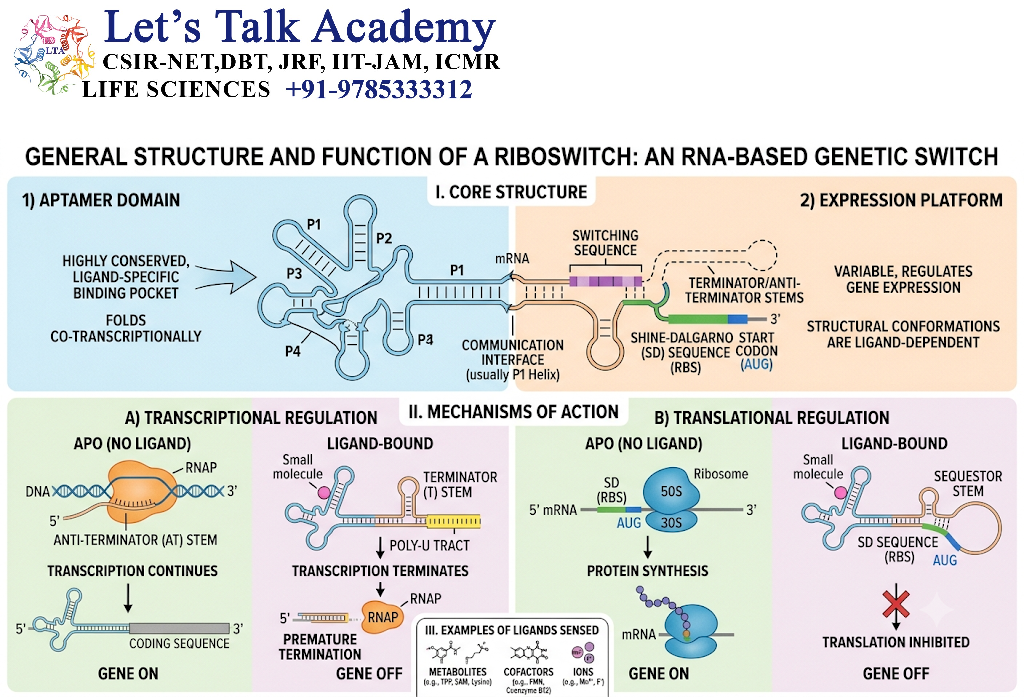
A typical riboswitch contains two major functional regions:
- Aptamer domain
- Expression platform
These two regions work together to detect a molecule and convert that detection into a change in gene expression.
The general arrangement is:
Riboswitch
├── Aptamer domain
└── Expression platform
4. Aptamer Domain
4.1 Definition
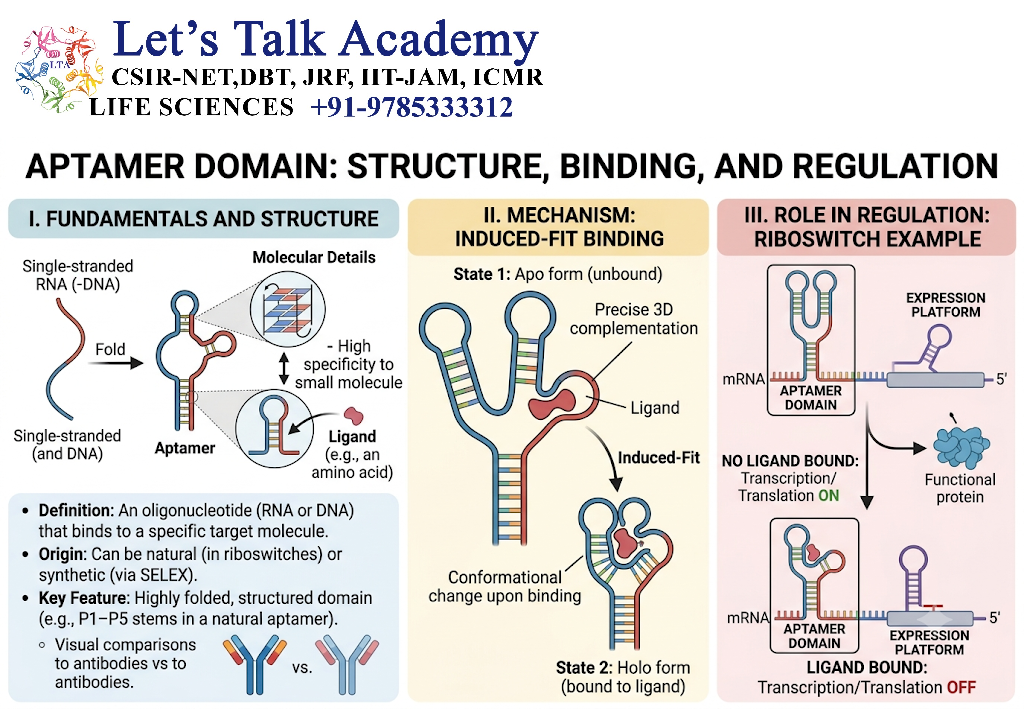
The aptamer domain is the region of a riboswitch that specifically recognizes and binds its ligand.
The ligand may be:
- a metabolite,
- cofactor,
- ion,
- nucleotide derivative,
- signaling molecule,
- other small molecule.
4.2 Ligand Recognition
The aptamer domain folds into a specific three-dimensional structure.
The ligand fits into a binding pocket formed by the RNA.
Interactions can involve:
- hydrogen bonding,
- base stacking,
- electrostatic interactions,
- van der Waals interactions,
- coordination with metal ions.
Therefore:
RNA sequence → RNA folding → ligand-binding pocket → ligand recognition
5. Expression Platform
5.1 Definition
The expression platform is the regulatory region that converts ligand binding into a change in gene expression.
Ligand binding to the aptamer domain changes the RNA structure.
This structural change can affect:
- transcription,
- translation,
- RNA stability,
- RNA processing.
Thus, the expression platform acts as the output component of the riboswitch.
6. Basic Mechanism of Riboswitches
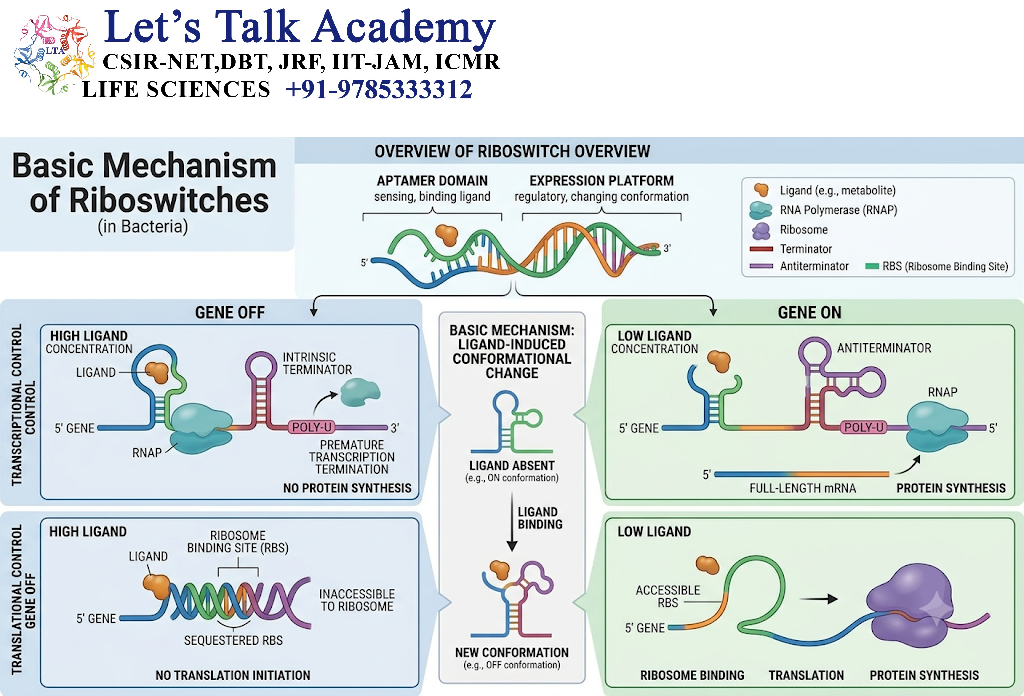
The general mechanism can be represented as:
1. Riboswitch RNA is transcribed
↓
2. Aptamer domain forms
↓
3. Ligand concentration is sensed
↓
4. Ligand binds the aptamer
↓
5. RNA changes conformation
↓
6. Expression platform changes
↓
7. Gene expression is altered
The final effect may be:
Gene ON
or
Gene OFF
depending on the riboswitch.
7. Riboswitches as Molecular Sensors
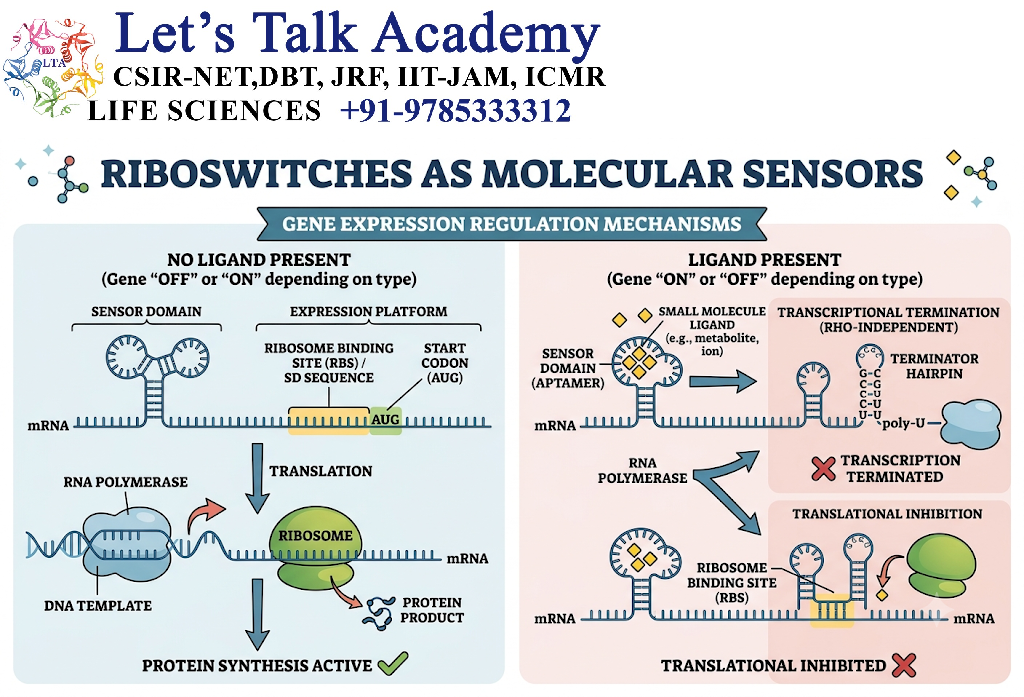
Riboswitches function as RNA-based molecular sensors.
They can detect the concentration of specific intracellular molecules.
For example:
Low metabolite concentration
→ biosynthetic gene activated
High metabolite concentration
→ biosynthetic gene repressed
This creates a feedback mechanism that helps maintain metabolic balance.
8. Negative and Positive Regulation
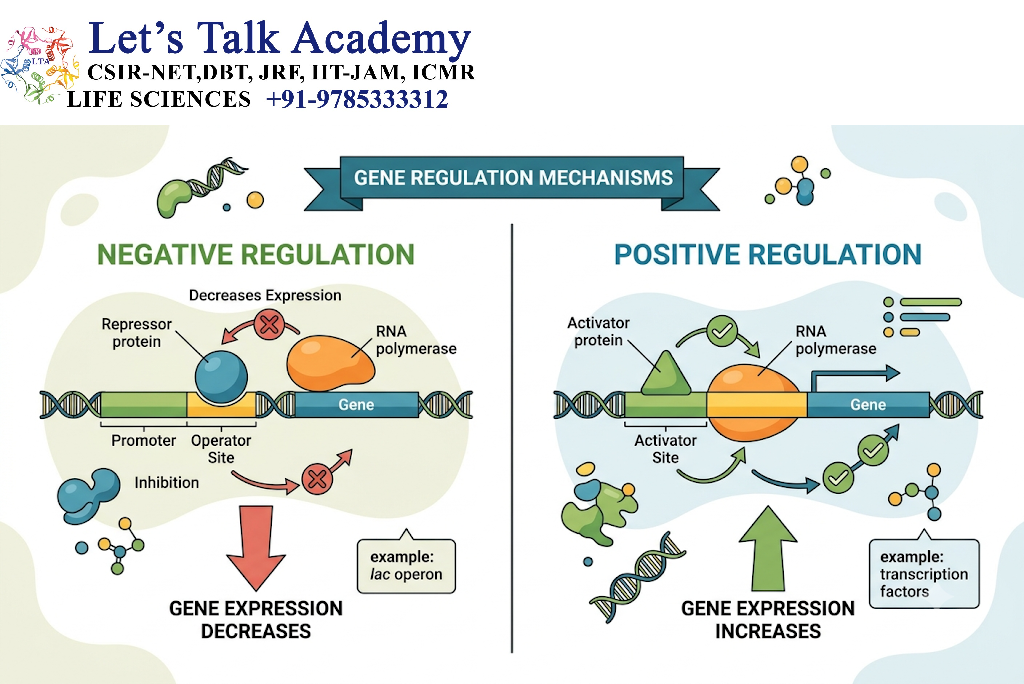
Riboswitches can regulate gene expression in either direction.
8.1 Negative Regulation
Ligand binding can decrease gene expression.
Ligand present
↓
Riboswitch activated
↓
Gene expression reduced
8.2 Positive Regulation
In some riboswitches, ligand binding increases gene expression.
Ligand present
↓
RNA structure changes
↓
Gene expression increases
Therefore, riboswitches can function as either:
- genetic repressors,
- genetic activators.
9. Riboswitches and Transcriptional Regulation
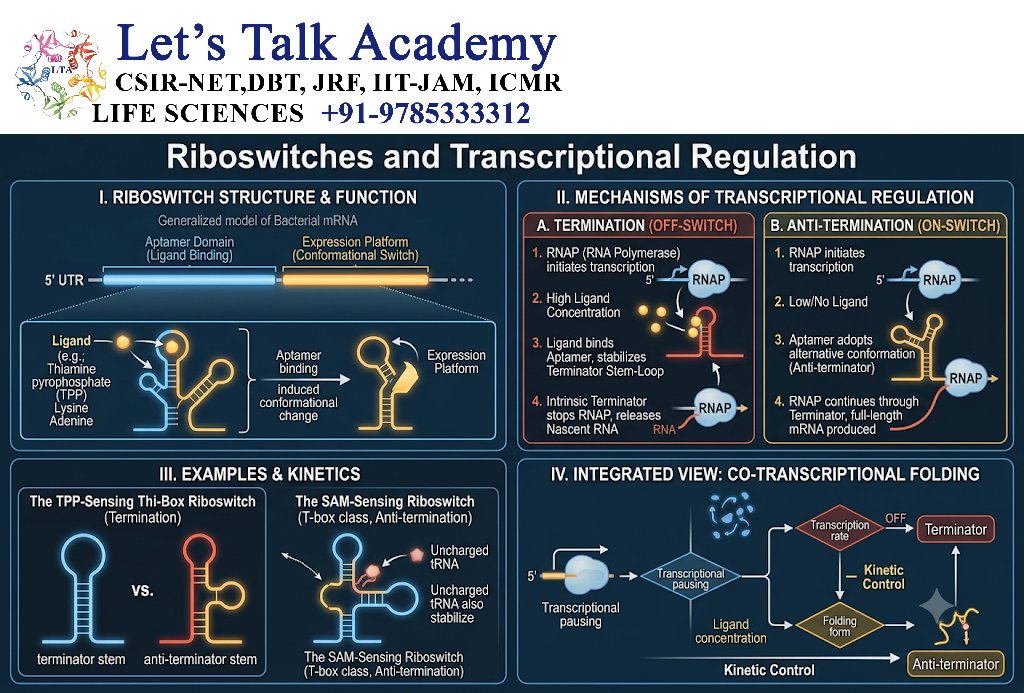
Some riboswitches regulate gene expression at the level of transcription.
The ligand-induced RNA structure can determine whether transcription continues or terminates.
Two major possibilities are:
Terminator formation → transcription stops
or
Antiterminator formation → transcription continues
10. Transcription Attenuation
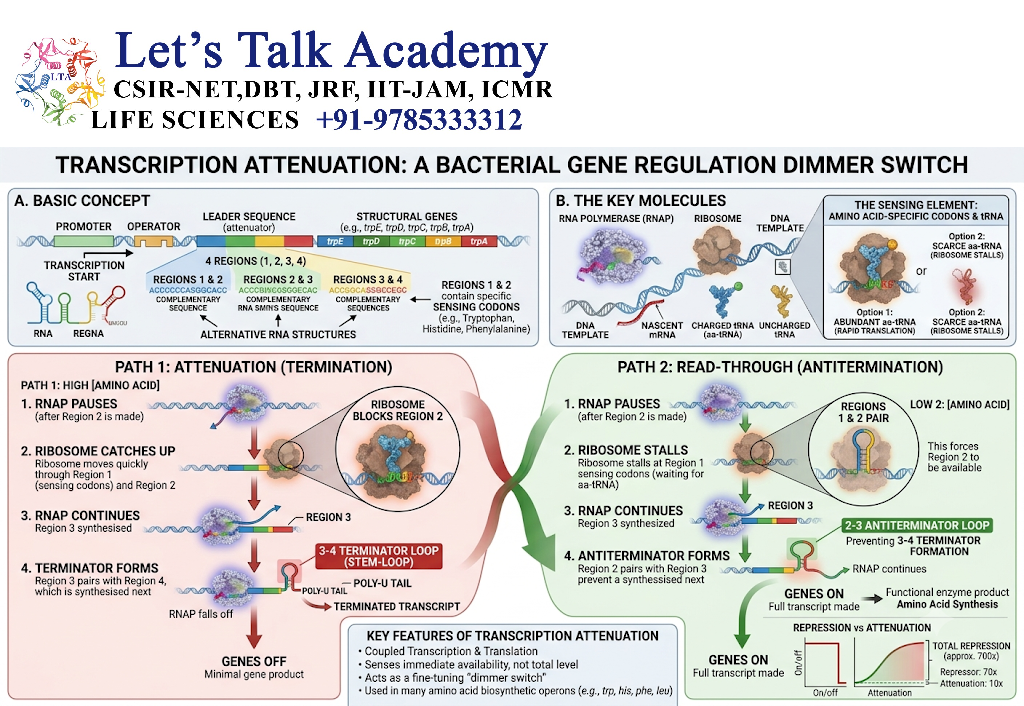
10.1 Definition
Transcription attenuation is a regulatory mechanism in which formation of alternative RNA structures determines whether transcription continues or terminates.
Riboswitches can use this mechanism to regulate gene expression.
10.2 Basic Mechanism
Without ligand:
Antiterminator structure
↓
RNA polymerase continues
↓
Gene ON
With ligand:
Terminator structure
↓
RNA polymerase stops
↓
Gene OFF
The exact response depends on the particular riboswitch.
11. Transcription Terminator Structure

A riboswitch can contain sequences capable of forming alternative RNA secondary structures.
One structure may form:
Antiterminator
while another may form:
Terminator hairpin
If the terminator forms, transcription may terminate prematurely.
12. Riboswitches and Translational Regulation
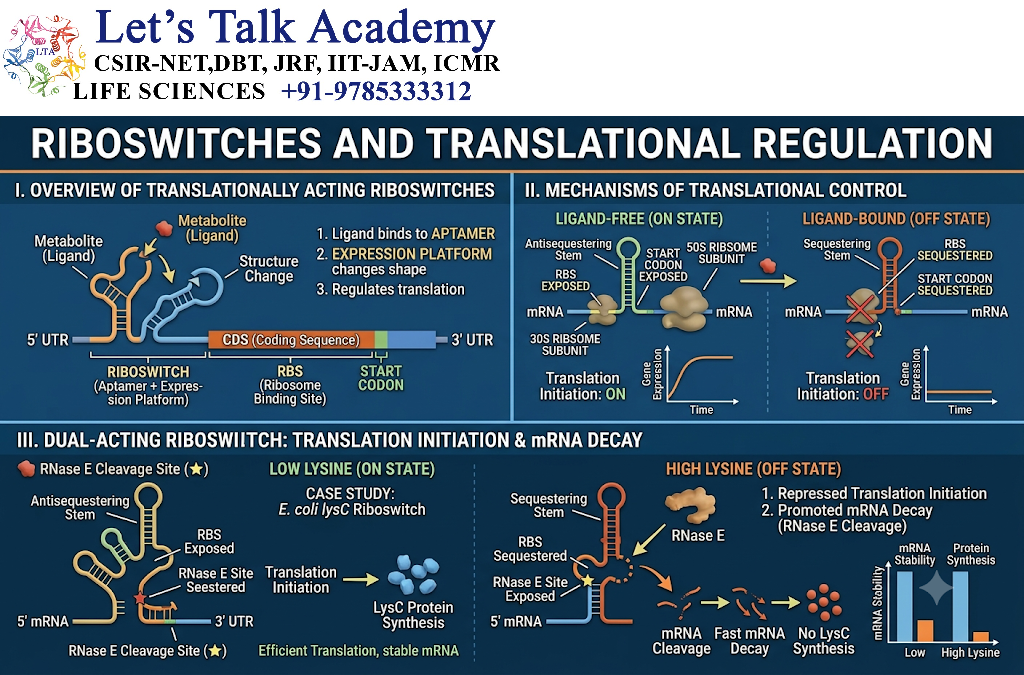
Some riboswitches regulate translation rather than transcription.
The riboswitch may control whether the ribosome can access the translation initiation region.
In bacteria, this often involves the Shine-Dalgarno sequence.
13. Shine-Dalgarno Accessibility
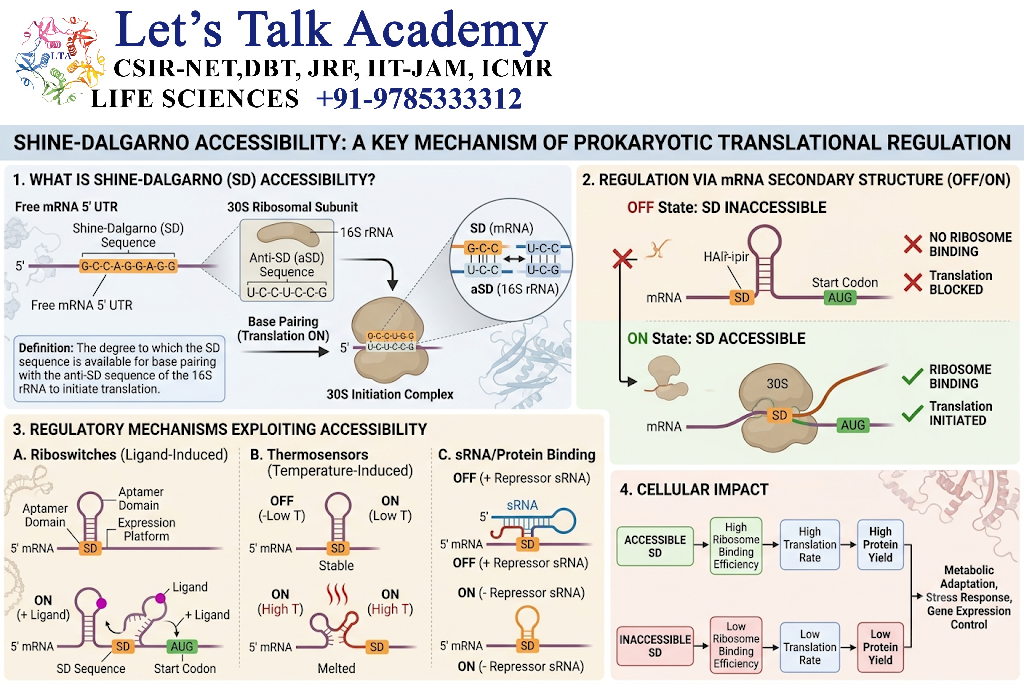
The Shine-Dalgarno sequence is an important bacterial translation-initiation element.
If a riboswitch causes this sequence to become inaccessible:
Ribosome binding ↓
↓
Translation ↓
If the sequence remains accessible:
Ribosome binding ↑
↓
Translation ↑
Thus, RNA structure can directly control protein synthesis.
14. Riboswitches and mRNA Structure
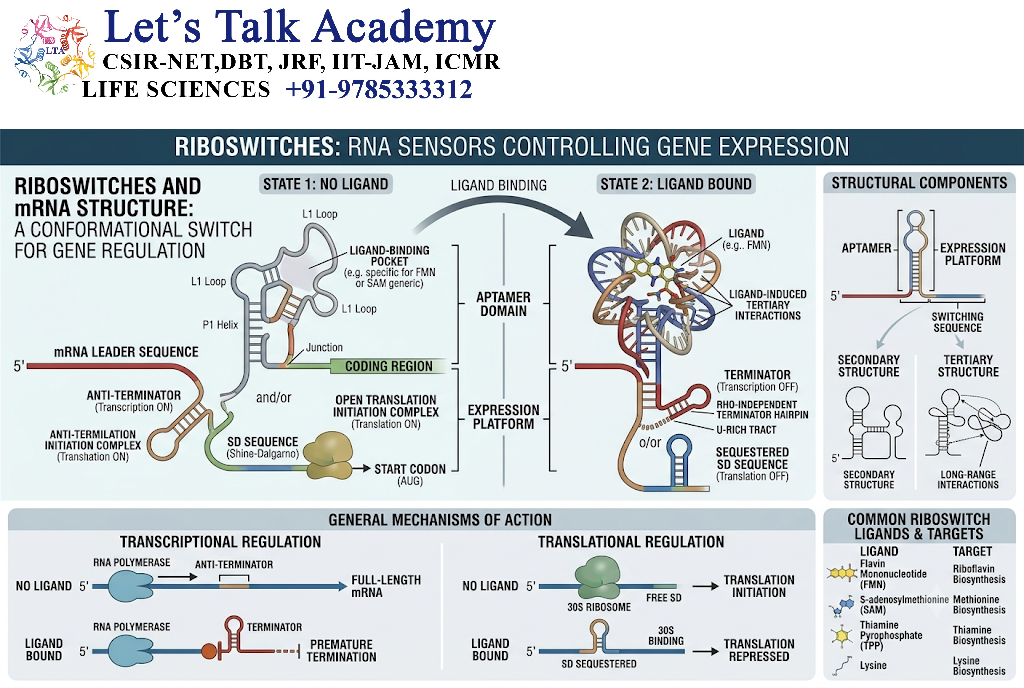
Riboswitch function depends heavily on RNA secondary and tertiary structure.
The same RNA sequence can potentially adopt different structures.
For example:
Structure A → translation ON
Structure B → translation OFF
Ligand binding shifts the structural equilibrium toward one of these conformations.
15. Aptamer-Ligand Interaction
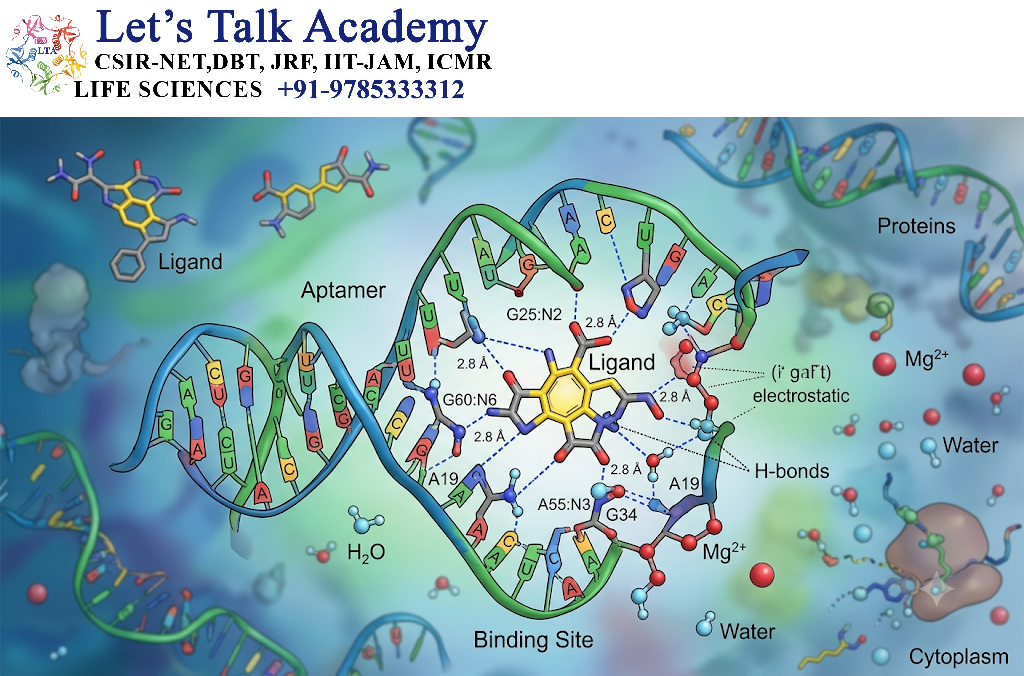
The interaction between an aptamer and ligand is highly specific.
A riboswitch may distinguish between chemically related molecules.
This specificity depends on:
- RNA sequence,
- three-dimensional folding,
- hydrogen-bonding patterns,
- ligand shape,
- chemical groups on the ligand.
16. Major Classes of Riboswitches
Many different riboswitch classes have been identified.
Important examples include riboswitches responding to:
- S-adenosylmethionine,
- S-adenosylhomocysteine,
- thiamine pyrophosphate,
- flavin mononucleotide,
- glycine,
- lysine,
- purines,
- cyclic-di-GMP,
- fluoride,
- magnesium ions,
- potassium ions,
- preQ1,
- glucosamine-6-phosphate.
17. SAM Riboswitch
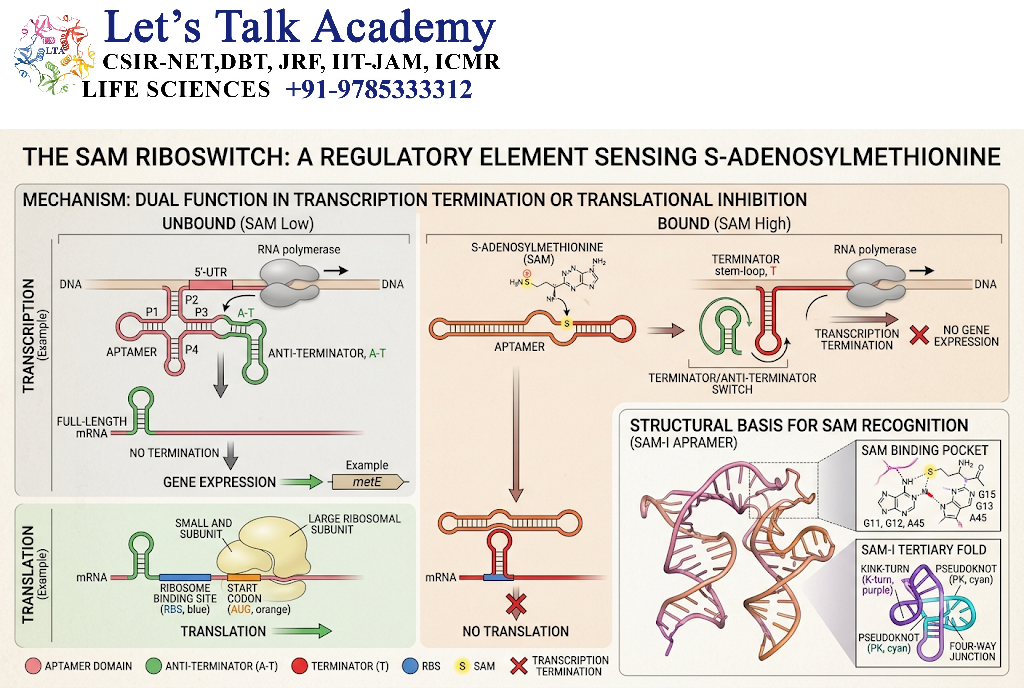
17.1 Definition
SAM riboswitches recognize:
S-adenosylmethionine (SAM)
SAM is an important cellular metabolite involved in:
- methyl-group transfer,
- metabolic regulation,
- biosynthetic pathways.
17.2 Function
When SAM binds the riboswitch, the RNA structure changes and can regulate genes involved in SAM biosynthesis or utilization.
This provides feedback control.
18. TPP Riboswitch
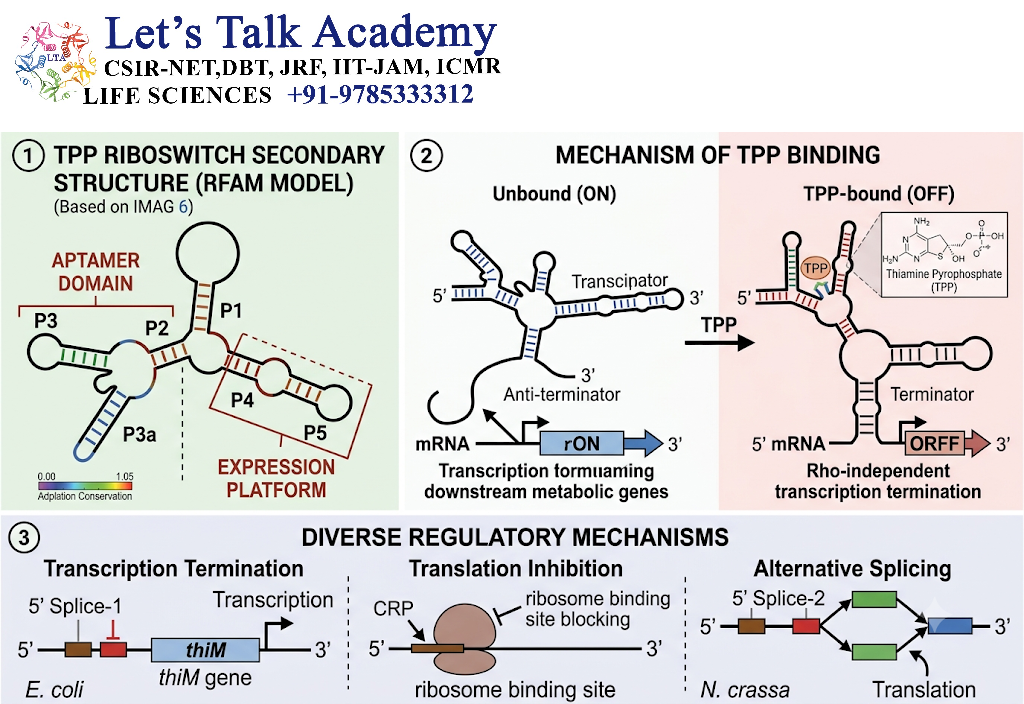
18.1 Definition
The TPP riboswitch recognizes:
Thiamine pyrophosphate (TPP)
TPP is the active coenzyme form of vitamin B1.
18.2 Function
TPP riboswitches regulate genes involved in:
- thiamine biosynthesis,
- thiamine transport,
- thiamine metabolism.
When sufficient TPP is available, the riboswitch can reduce expression of genes involved in producing or acquiring more of the compound.
19. FMN Riboswitch
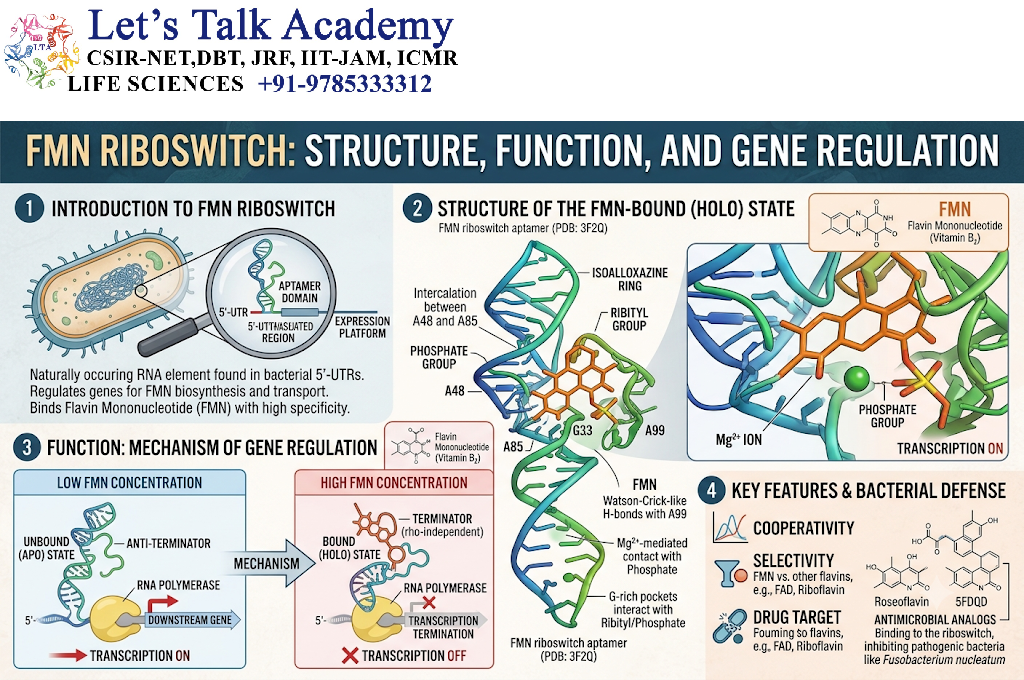
The FMN riboswitch responds to:
Flavin mononucleotide (FMN)
FMN is an important flavin cofactor.
FMN-responsive regulatory systems can control genes involved in flavin metabolism and transport.
20. Lysine Riboswitch
The lysine riboswitch responds to the amino acid:
L-lysine
It can regulate genes involved in:
- lysine biosynthesis,
- lysine transport.
When intracellular lysine concentration becomes sufficiently high, ligand binding can alter RNA structure and reduce production of lysine-related proteins.
21. Glycine Riboswitch
21.1 Definition
The glycine riboswitch responds to:
glycine
21.2 Special Feature
Some glycine riboswitches contain multiple aptamer domains.
These multiple domains can cooperate in ligand binding.
This can increase sensitivity to glycine concentration.
22. Purine Riboswitches
Purine-related riboswitches recognize metabolites such as:
- adenine,
- guanine,
- hypoxanthine.
They regulate genes involved in:
- purine metabolism,
- transport,
- nucleotide biosynthesis.
23. Adenine Riboswitch
An adenine riboswitch recognizes adenine.
Depending on its regulatory architecture, ligand binding can alter:
- transcription,
- translation,
- RNA stability.
This enables cells to respond to changes in adenine availability.
24. Guanine Riboswitch
The guanine riboswitch recognizes guanine and related purine metabolites.
It can regulate genes involved in purine metabolism.
Because adenine and guanine are chemically related, high specificity in the RNA binding pocket is required to distinguish between them.
25. PreQ1 Riboswitch
25.1 Definition
The preQ1 riboswitch recognizes the metabolite:
preQ1
which is involved in the biosynthesis of the modified nucleoside queuosine.
25.2 Structural Feature
Some preQ1 riboswitches are unusually compact.
They demonstrate that relatively small RNA structures can form highly specific ligand-binding pockets.
26. Cyclic-di-GMP Riboswitch
26.1 Definition
Cyclic-di-GMP (c-di-GMP) is an important bacterial signaling molecule.
Riboswitches that recognize c-di-GMP regulate genes involved in bacterial behavior.
These processes can include:
- biofilm formation,
- motility,
- surface attachment,
- cellular differentiation.
26.2 Biological Significance
The c-di-GMP riboswitch demonstrates that riboswitches can respond not only to metabolic intermediates but also to intracellular signaling molecules.
27. Fluoride Riboswitch
Fluoride ions can be toxic at elevated concentrations.
Certain RNA regulatory systems can directly sense fluoride ions.
The fluoride-binding RNA structure can regulate expression of genes involved in:
- fluoride resistance,
- ion transport,
- cellular protection.
28. Magnesium Riboswitch
Some RNA regulatory systems respond to:
Mg²⁺
Magnesium is essential for:
- ribosome function,
- nucleic acid structure,
- enzyme activity,
- cellular metabolism.
RNA-based sensing of magnesium can therefore contribute to maintaining cellular ion balance.
29. Potassium Riboswitch
Certain RNA elements can sense:
K⁺
Potassium is one of the major intracellular ions and is important for:
- osmotic balance,
- enzyme activity,
- membrane potential,
- cellular physiology.
30. glmS Ribozyme-Riboswitch System
The glmS system is especially interesting because it combines features of a riboswitch and a ribozyme.
It responds to:
Glucosamine-6-phosphate (GlcN6P)
When the metabolite binds, it activates RNA cleavage.
The pathway is:
GlcN6P
↓
Binding to RNA
↓
Ribozyme activation
↓
RNA cleavage
↓
Reduced gene expression
This system provides direct coupling between metabolite sensing and catalytic RNA activity.
31. Riboswitches and Feedback Regulation
Riboswitches often participate in negative feedback regulation.
For example:
Metabolite concentration low
↓
Biosynthetic genes ON
↓
Metabolite production increases
↓
Metabolite concentration high
↓
Riboswitch binds metabolite
↓
Biosynthetic genes OFF
This prevents unnecessary production and conserves cellular resources.
32. Riboswitches in Metabolic Regulation
Riboswitches are especially useful for regulating metabolic pathways because the regulatory molecule is often the metabolite produced by the pathway itself.
They can therefore act as direct feedback sensors.
This is more efficient than requiring a separate protein sensor in some systems.
33. Riboswitches in Bacteria
Riboswitches are particularly widespread in bacteria.
This is partly because bacterial gene expression often occurs close to the site and time of transcription.
A newly synthesized RNA can begin responding to ligand binding while it is still being transcribed.
This allows rapid regulation.
34. Riboswitches in Eukaryotes
Riboswitches are less widespread in eukaryotes than in bacteria, although examples and riboswitch-like mechanisms are known in some eukaryotic systems.
In plants, fungi, and other organisms, RNA-based metabolite sensing can contribute to regulation of gene expression.
The distribution and mechanism of riboswitches therefore vary significantly across organisms.
35. Riboswitches in Plants
Plants contain RNA regulatory systems responsive to certain metabolites.
For example, thiamine-related riboswitch mechanisms are important in plant metabolic regulation.
RNA-based sensing can influence:
- gene expression,
- alternative splicing,
- metabolite homeostasis.
36. Riboswitches and Alternative Splicing
In some organisms, ligand binding can influence RNA processing.
A ligand-induced structural change may alter access to:
- splice sites,
- regulatory sequences,
- RNA-processing factors.
As a result:
Ligand binding
↓
RNA structure changes
↓
Alternative RNA processing
↓
Different RNA product
↓
Different gene-expression outcome
37. Riboswitches and RNA Structure
RNA is capable of adopting multiple conformations.
A riboswitch takes advantage of this property.
For example:
Conformation 1
→ translation permitted
Conformation 2
→ translation inhibited
Ligand binding shifts the RNA toward one conformation.
Therefore, riboswitches convert:
chemical information
into
structural RNA information
and finally into
gene-expression changes.
38. Thermodynamic Basis of Riboswitch Function
Riboswitch behavior depends on the relative stability of alternative RNA structures.
Ligand binding can stabilize one conformation over another.
This can be represented as:
Unbound RNA
⇌
Alternative RNA structures
Ligand binding:
RNA + ligand
↓
Ligand-bound RNA structure
↓
Regulatory outcome
Thus, ligand binding changes the energetic landscape of RNA folding.
39. Kinetic Control
Riboswitch regulation can also depend on the speed of RNA transcription and folding.
In bacteria, RNA is synthesized progressively.
As the RNA emerges from RNA polymerase, parts of the riboswitch may fold before the entire regulatory region has been transcribed.
Therefore, riboswitch behavior can depend on:
- transcription speed,
- RNA folding rate,
- ligand-binding rate,
- structural rearrangement.
40. Thermodynamic Versus Kinetic Regulation
Two broad principles can influence riboswitch behavior.
Thermodynamic control
The final equilibrium between RNA structures is important.
Kinetic control
The timing of transcription, ligand binding, and RNA folding determines which structure forms first.
Both mechanisms can operate depending on the riboswitch.
41. Riboswitches and Transcription Termination
A common regulatory mechanism involves formation of an intrinsic terminator.
A terminator generally contains:
- GC-rich stem,
- loop,
- downstream U-rich region in many bacterial systems.
Formation of the terminator can cause RNA polymerase to stop transcription.
The riboswitch controls whether this structure forms.
42. Riboswitches and Translation Initiation
At the translation level, riboswitches can regulate access to the ribosome-binding site.
The basic mechanism is:
Ligand absent
↓
Ribosome-binding sequence exposed
↓
Translation ON
or:
Ligand present
↓
Ribosome-binding sequence hidden
↓
Translation OFF
Again, the exact response depends on the specific riboswitch architecture.
43. Riboswitches and RNA Stability
Some riboswitches influence RNA degradation.
Ligand binding may expose or hide RNA sequences recognized by RNA-degrading enzymes.
Thus:
Riboswitch structure
↓
RNA stability changes
↓
mRNA abundance changes
↓
Protein production changes
44. Riboswitches as Genetic Control Elements
A riboswitch can be considered a compact genetic control system because a single RNA region can perform:
- molecular sensing,
- structural switching,
- signal processing,
- gene-expression regulation.
This is one of the most remarkable features of riboswitch biology.
45. Riboswitches and RNA-Based Regulation
Riboswitches belong to a broader group of RNA-mediated regulatory mechanisms.
Other RNA-based regulators include:
- small regulatory RNAs,
- ribozymes,
- RNA thermometers,
- attenuators,
- antisense RNAs.
However, riboswitches are distinctive because their aptamer domains directly recognize small molecules.
46. Riboswitches Versus Ribozymes
These two terms are closely related but have different primary functions.
| Feature | Riboswitch | Ribozyme |
|---|---|---|
| Main function | Gene regulation | Catalysis |
| Ligand sensing | Usually central | May or may not occur |
| Catalytic activity | Usually absent | Present |
| Structural change | Central to regulation | Important for catalysis |
| Example | TPP riboswitch | Hammerhead ribozyme |
| Special case | glmS | glmS has catalytic activity |
The glmS system is unusual because it has both ligand-sensing and catalytic properties.
47. Riboswitches Versus Transcription Factors
| Feature | Riboswitch | Transcription Factor |
|---|---|---|
| Nature | RNA | Protein |
| Ligand recognition | RNA aptamer | Protein binding pocket |
| DNA binding | No | Often yes |
| RNA binding | Yes | Sometimes |
| Main regulation | RNA-level | Often transcriptional |
| Structural change | RNA conformational change | Protein conformational change |
48. Advantages of Riboswitch Regulation
Riboswitches provide several advantages.
48.1 Direct Sensing
The regulatory RNA can directly detect its ligand.
48.2 Rapid Response
RNA-based regulation can respond quickly to changes in metabolite concentration.
48.3 Compact Regulatory System
A riboswitch can combine sensing and regulation within the same RNA transcript.
48.4 Metabolic Feedback
Riboswitches can directly respond to metabolites produced by the cell.
48.5 Energy Efficiency
They can regulate genes without necessarily requiring synthesis of a separate regulatory protein.
49. Limitations of Riboswitches
Riboswitch function can be influenced by:
- RNA folding,
- ligand concentration,
- cellular conditions,
- transcription rate,
- RNA stability,
- competing RNA structures.
Some riboswitches also require very specific structural conditions to function efficiently.
50. Biological Significance
Riboswitches are important because they provide direct connections between metabolism and gene expression.
They regulate:
- biosynthetic pathways,
- transport systems,
- cofactor metabolism,
- nucleotide metabolism,
- amino acid metabolism,
- signaling pathways,
- stress responses.
They also demonstrate the functional versatility of RNA.
51. Evolutionary Significance
Riboswitches are important in understanding RNA evolution.
They demonstrate that RNA can:
- recognize small molecules,
- form highly specific binding pockets,
- undergo conformational changes,
- regulate gene expression.
Their existence also supports the idea that RNA could have played important regulatory and sensing roles during early molecular evolution.
52. Riboswitches and the RNA World
The RNA world hypothesis proposes that early life may have relied heavily on RNA for both information storage and catalysis.
Riboswitches add another important property:
RNA-based molecular sensing
Therefore, RNA can potentially:
- store information,
- catalyze reactions,
- recognize molecules,
- regulate gene expression.
This illustrates the remarkable functional versatility of RNA.
53. Riboswitches in Biotechnology
Riboswitches can be engineered for synthetic biology.
Engineered riboswitches can be designed to respond to:
- metabolites,
- drugs,
- ions,
- synthetic ligands.
They can be used to construct genetic circuits that control gene expression in response to specific molecular signals.
54. Synthetic Riboswitches
Synthetic riboswitches can be created by combining:
Engineered aptamer
Regulatory RNA platform
The resulting system can respond to a selected molecule.
Potential applications include:
- metabolic engineering,
- biosensors,
- controlled protein production,
- synthetic gene circuits,
- research tools.
55. Riboswitches as Biosensors
Because riboswitches can recognize specific molecules, they can serve as molecular sensing elements.
A biosensor based on a riboswitch may convert:
Ligand concentration
into
RNA structural change
and ultimately:
detectable biological output
This principle is useful in synthetic biology and biotechnology.
56. Drug Targeting of Riboswitches
Many bacterial riboswitches control genes essential for metabolism.
This has led to interest in developing compounds that interfere with riboswitch function.
A compound could potentially:
- mimic the natural ligand,
- stabilize an inactive RNA conformation,
- prevent normal ligand binding,
- disrupt gene regulation.
Such strategies are being investigated as possible approaches to antimicrobial development.
57. Riboswitches and Antimicrobial Strategies
Bacterial riboswitches can control genes required for:
- vitamin synthesis,
- amino acid metabolism,
- nucleotide metabolism,
- ion homeostasis.
Because these regulatory systems can be essential for bacterial survival, they represent potential molecular targets.
The basic concept is:
Riboswitch-targeting compound
↓
Altered RNA regulation
↓
Essential gene expression disrupted
↓
Reduced bacterial growth
58. Regulation of Riboswitch Activity
Riboswitch activity depends on several factors.
Important factors include:
- ligand concentration,
- ligand affinity,
- RNA folding,
- temperature,
- pH,
- ionic environment,
- transcription rate,
- RNA degradation,
- cellular location.
59. Ligand Affinity
Different riboswitches have different affinities for their ligands.
The strength of ligand binding can influence the concentration at which the riboswitch switches between regulatory states.
A highly specific aptamer can respond to relatively small changes in ligand concentration.
60. Cooperativity
Some riboswitches can show cooperative ligand binding.
This means that binding of one ligand can influence the binding of another ligand.
The glycine riboswitch provides an important example of cooperative behavior because some forms contain multiple ligand-binding domains.
61. Riboswitch Switching Threshold
A riboswitch generally responds when the ligand concentration reaches a functionally relevant range.
The response can be viewed as:
Low ligand concentration
→ one RNA conformation
Increasing ligand concentration
→ transition between conformations
High ligand concentration
→ ligand-bound regulatory conformation
This allows the cell to respond to metabolic changes.
62. Riboswitches and Cellular Homeostasis
Homeostasis requires cells to maintain appropriate concentrations of metabolites and ions.
Riboswitches contribute by regulating the production or transport of molecules.
For example:
Metabolite increases
↓
Riboswitch activation
↓
Biosynthesis reduced
↓
Metabolite production decreases
This feedback helps prevent excessive accumulation.
63. Riboswitches and Metabolic Economy
Producing enzymes and transport proteins requires:
- amino acids,
- ATP,
- transcriptional resources,
- ribosomes,
- cellular energy.
Riboswitches help prevent unnecessary protein production.
When enough of a metabolite is present, the corresponding biosynthetic genes can be downregulated.
Thus, riboswitches contribute to efficient resource utilization.
64. Complete Riboswitch Regulatory Pathway
A generalized pathway is:
Metabolite production
↓
Intracellular metabolite concentration changes
↓
Ligand binds riboswitch aptamer
↓
RNA conformational change
↓
Expression platform changes
↓
Transcription / translation / RNA stability changes
↓
Protein production changes
↓
Metabolic pathway adjusted
65. Major Riboswitch Ligands
| Riboswitch | Ligand | Major biological connection |
|---|---|---|
| SAM | S-adenosylmethionine | Methylation and metabolism |
| TPP | Thiamine pyrophosphate | Vitamin B1 metabolism |
| FMN | Flavin mononucleotide | Flavin metabolism |
| Lysine | L-lysine | Amino acid metabolism |
| Glycine | Glycine | Amino acid metabolism |
| Adenine | Adenine | Purine metabolism |
| Guanine | Guanine | Purine metabolism |
| PreQ1 | PreQ1 | Queuosine biosynthesis |
| c-di-GMP | Cyclic-di-GMP | Bacterial signaling |
| Fluoride | F⁻ | Ion homeostasis |
| Mg²⁺-responsive systems | Mg²⁺ | Metal-ion homeostasis |
| K⁺-responsive systems | K⁺ | Potassium homeostasis |
| glmS | GlcN6P | Amino sugar metabolism |
66. Comparison of Riboswitch Regulatory Mechanisms
| Mechanism | Main effect |
|---|---|
| Transcription termination | Stops RNA synthesis |
| Transcription antitermination | Allows transcription to continue |
| Translation initiation control | Controls ribosome access |
| RNA stability regulation | Changes mRNA lifetime |
| RNA processing | Alters RNA maturation |
| Catalytic cleavage | Destroys or processes RNA |
| Alternative splicing | Produces different RNA forms |


