
1. Introduction
Genetic material in a cell is not always restricted to the main chromosome. Many organisms contain additional DNA molecules that exist and replicate separately from the primary chromosome.
These independently replicating DNA molecules are associated with the concept of extrachromosomal replicons.
The term extrachromosomal means that the DNA exists outside the main chromosome, while a replicon refers to a DNA unit that can undergo replication from a specific replication origin.
Therefore, an extrachromosomal replicon is a DNA molecule or DNA element located outside the main chromosome that contains the necessary information or functional elements required for its replication.
Examples include:
- Bacterial plasmids
- Certain viral DNA genomes
- Some episomal DNA molecules
- Mitochondrial DNA
- Chloroplast DNA
The exact replication mechanisms differ greatly among these molecules.
2. Definition of Extrachromosomal Replicon
An extrachromosomal replicon is an independently replicating DNA molecule or DNA element that exists outside the primary nuclear or cellular chromosome.
A simplified concept is:
Extrachromosomal DNA + Replication origin + Replication machinery → Independent replication
The ability to replicate independently distinguishes many extrachromosomal replicons from DNA sequences that merely exist outside chromosomes but cannot replicate autonomously.
3. Meaning of Replicon
A replicon is a functional unit of DNA replication associated with a specific origin of replication.
A typical replicon contains:
- Replication origin
- Regulatory sequences
- Initiation factors or binding sites
- DNA that is copied during replication
Thus:
Origin → Initiation → DNA replication → Completion
When this functional unit occurs on a DNA molecule outside the main chromosome, it can be described as an extrachromosomal replicon.
4. Major Types of Extrachromosomal Replicons
Extrachromosomal replicons can occur in different biological contexts.
| Type | Example | General Location |
|---|---|---|
| Plasmids | Bacterial plasmids | Cytoplasm |
| Viral DNA | Certain DNA viruses | Host cell |
| Episomes | Some episomal DNA elements | Outside chromosome or associated with chromosome |
| Mitochondrial DNA | mtDNA | Mitochondria |
| Chloroplast DNA | cpDNA | Chloroplasts |
| Artificial episomal vectors | Research vectors | Eukaryotic cells |
Their structures and replication mechanisms are not identical.
5. Plasmids as Extrachromosomal Replicons
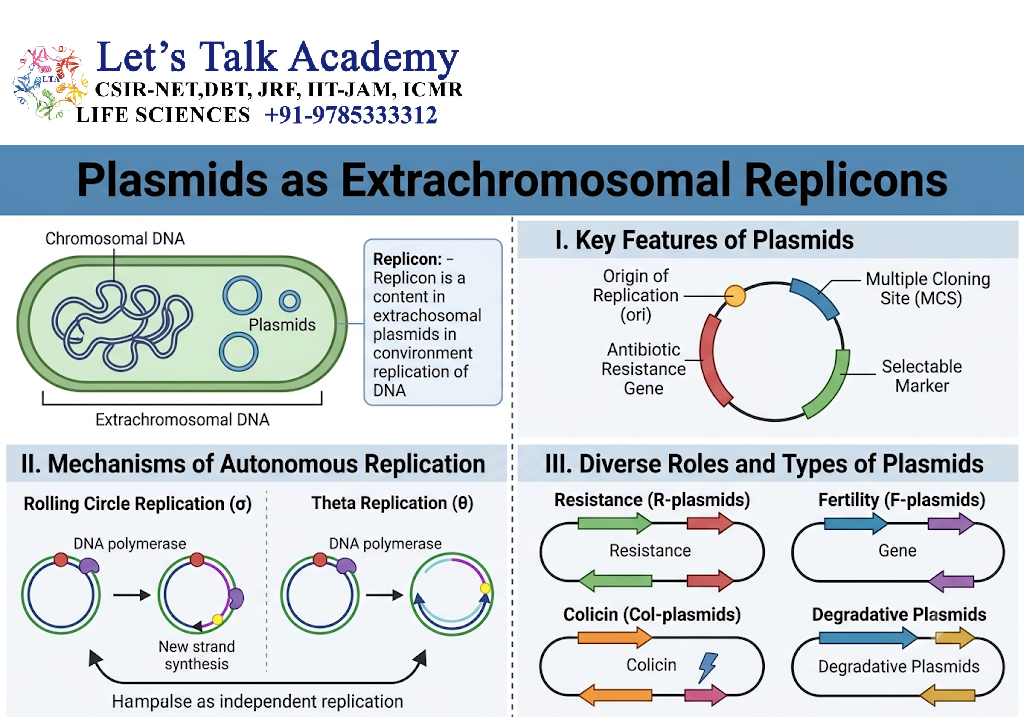
Plasmids are among the best-known examples of extrachromosomal replicons.
They are usually relatively small, circular, double-stranded DNA molecules found mainly in bacteria.
A plasmid generally contains:
- Replication origin
- Genes or regulatory sequences
- Copy-number control elements
- Other maintenance functions
Some plasmids carry genes that provide advantageous characteristics to their host.
Examples include genes associated with:
- Antimicrobial resistance
- Specialized metabolic functions
- Virulence-associated traits
- Other adaptive characteristics
6. Plasmid Replication Origin
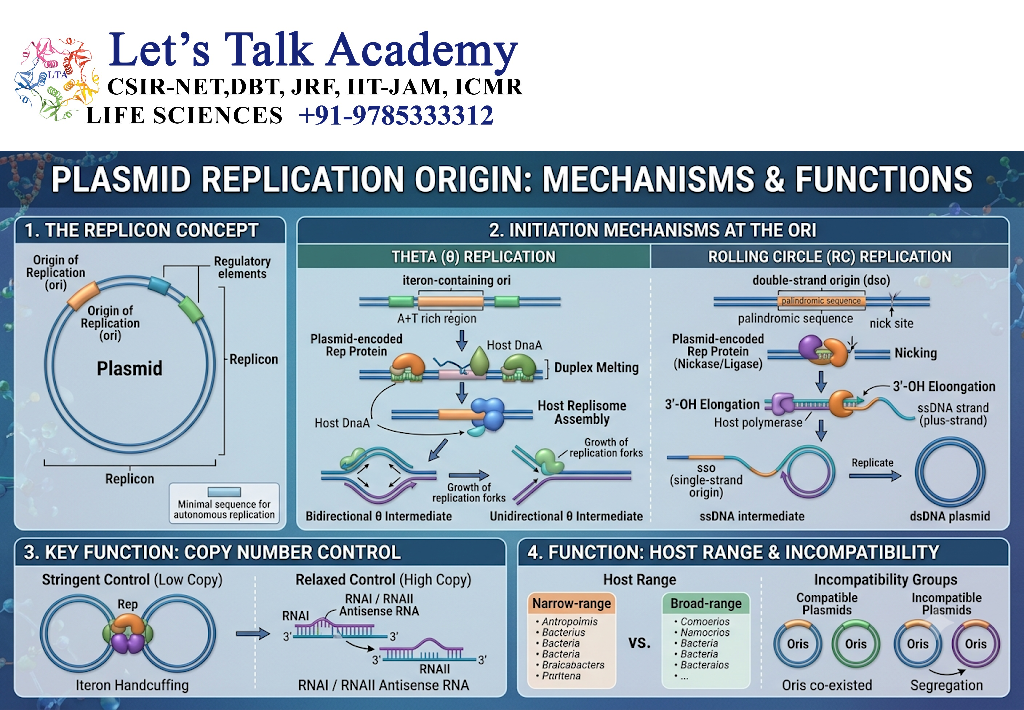
A plasmid must contain a replication origin to replicate.
The plasmid origin is recognized by the host replication machinery and/or plasmid-encoded replication proteins.
The general process is:
Plasmid origin
↓
Initiation
↓
DNA unwinding
↓
Primer formation
↓
DNA synthesis
↓
Plasmid replication
7. Autonomous Replication
A major characteristic of many extrachromosomal replicons is their ability to replicate independently of the main chromosome.
However, “independent” does not necessarily mean that they encode every replication enzyme themselves.
Many plasmids depend heavily on the host cell’s:
- DNA polymerases
- Nucleotide pools
- DNA repair proteins
- Energy systems
- Replication-associated proteins
Thus, plasmid replication is often autonomous with respect to initiation, while relying on the host for much of the replication machinery.
8. Plasmid Copy Number
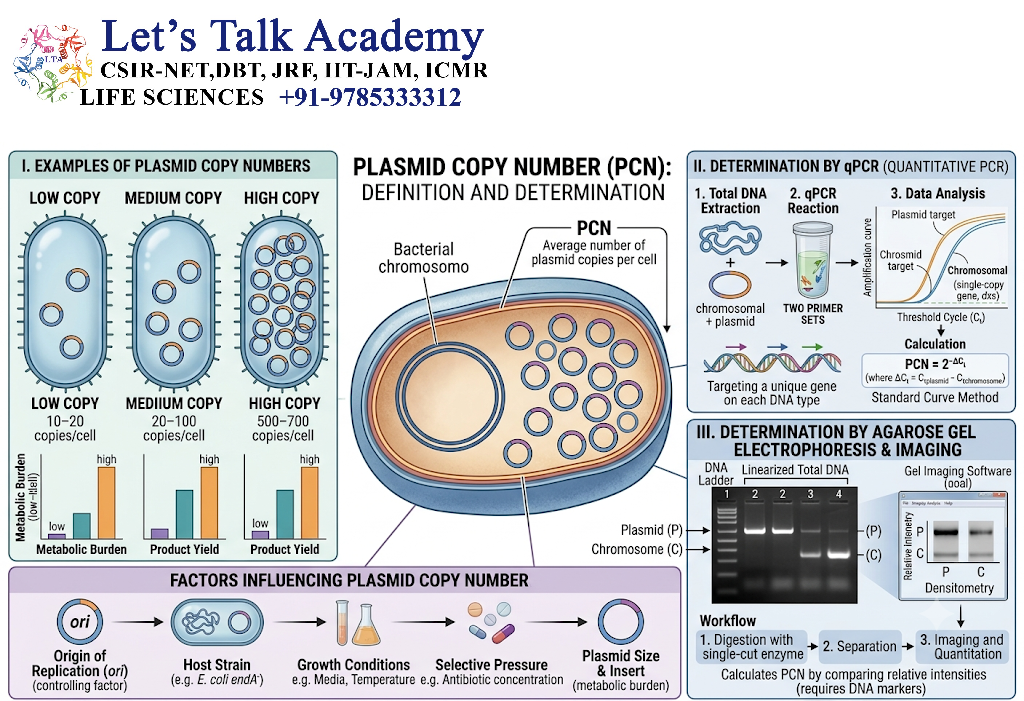
Copy number refers to the number of copies of a plasmid present in a cell.
Different plasmids have different copy-number characteristics.
They may be broadly classified as:
- Low-copy plasmids
- Medium-copy plasmids
- High-copy plasmids
Copy number is controlled by mechanisms associated with the plasmid’s replication system.
8.1 Importance of Copy Number
Copy number influences:
- Gene dosage
- Expression of plasmid genes
- Metabolic burden
- Plasmid stability
- Cellular phenotype
A high-copy plasmid can produce many copies of a gene, whereas a low-copy plasmid may more closely resemble the inheritance pattern of a chromosome.
9. Plasmid Copy-Number Control
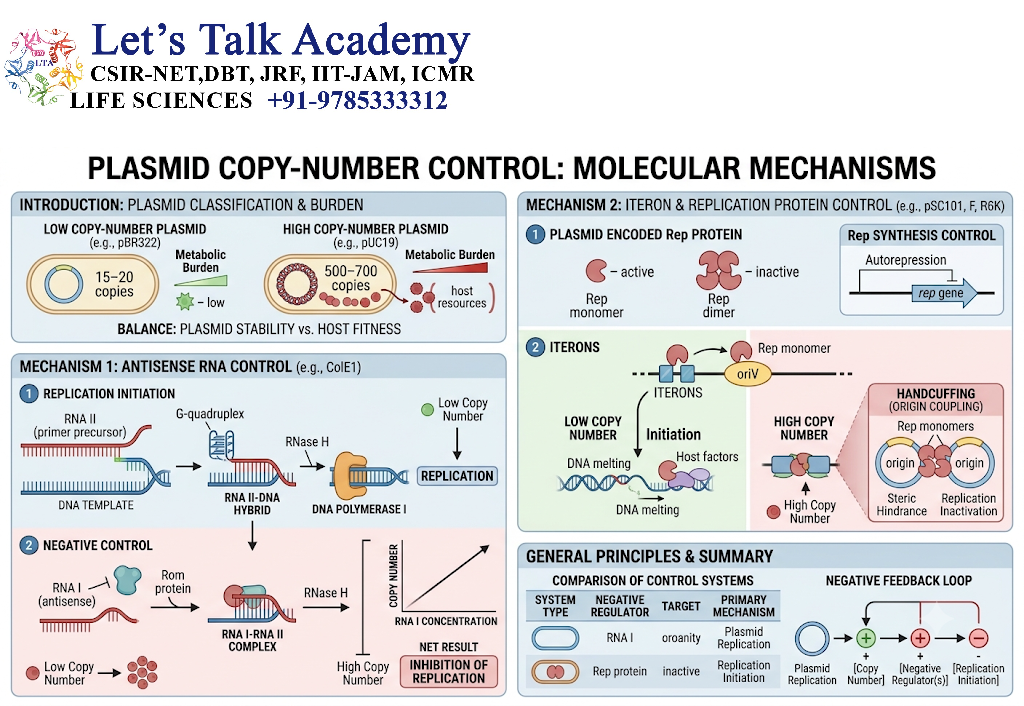
Plasmids must regulate their replication to maintain an appropriate number of copies.
Several mechanisms can participate:
- Regulatory proteins
- Antisense RNAs
- RNA primers
- Replication initiator proteins
- Negative feedback mechanisms
A simplified model is:
Plasmid copy number increases
↓
Regulatory mechanism activated
↓
Replication initiation reduced
↓
Copy number maintained
This prevents uncontrolled plasmid replication.
10. Plasmid Incompatibility
Some plasmids cannot be stably maintained together in the same cell.
This phenomenon is called plasmid incompatibility.
Plasmids with similar replication or partition-control systems may interfere with one another.
Therefore:
Similar replication-control systems → competition → unstable coexistence
Plasmids are grouped into incompatibility groups based on these properties.
11. Plasmid Partitioning
After replication, plasmid copies must be distributed to daughter cells.
Some low-copy plasmids possess specialized partition systems.
These systems can involve:
- Partition proteins
- DNA-binding sites
- Cytoskeletal-like host structures in some systems
The basic principle is:
Plasmid replication
↓
Multiple plasmid copies
↓
Partitioning
↓
Distribution to daughter cells
↓
Plasmid maintenance
12. Plasmid Stability
For an extrachromosomal replicon to persist in a population, it must be successfully maintained during cell division.
Stability can depend on:
- Copy number
- Partitioning systems
- Multimer resolution
- Post-segregational mechanisms
- Selection pressure
Without effective maintenance, plasmids may gradually be lost from a population.
13. Episomes
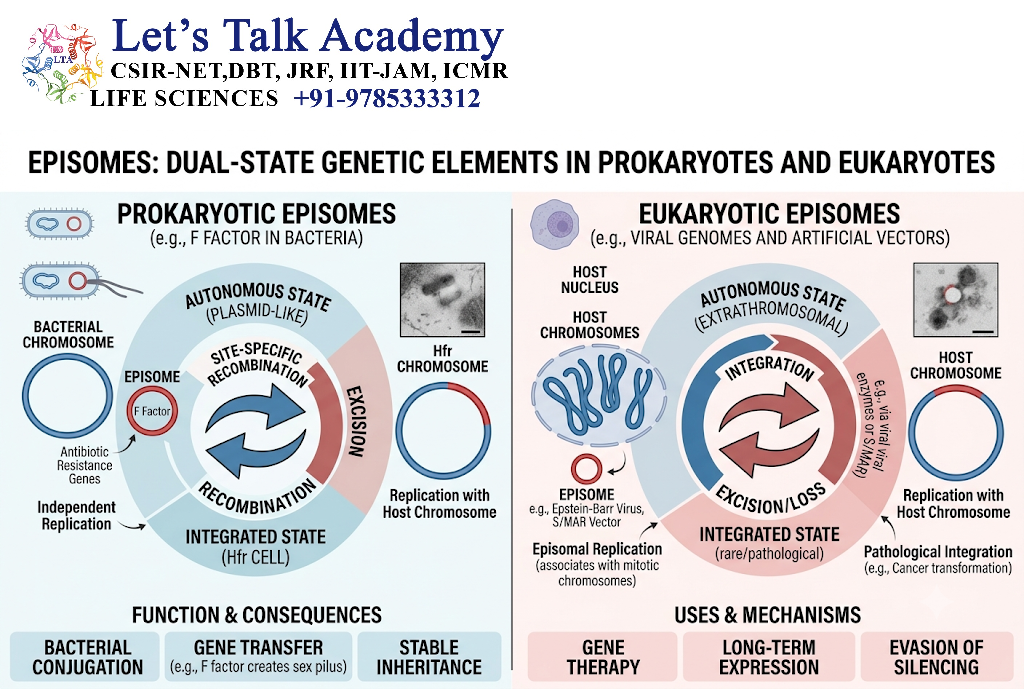
An episome is a genetic element capable of existing as an extrachromosomal DNA molecule and, in some systems, integrating into a chromosome.
The term is used differently across biological contexts, so it is important to distinguish episomes from strictly autonomous plasmids.
An episomal element may therefore have two possible states:
Extrachromosomal state
or
Integrated chromosomal state
This flexibility can influence persistence and inheritance.
14. Viral DNA as Extrachromosomal Replicons
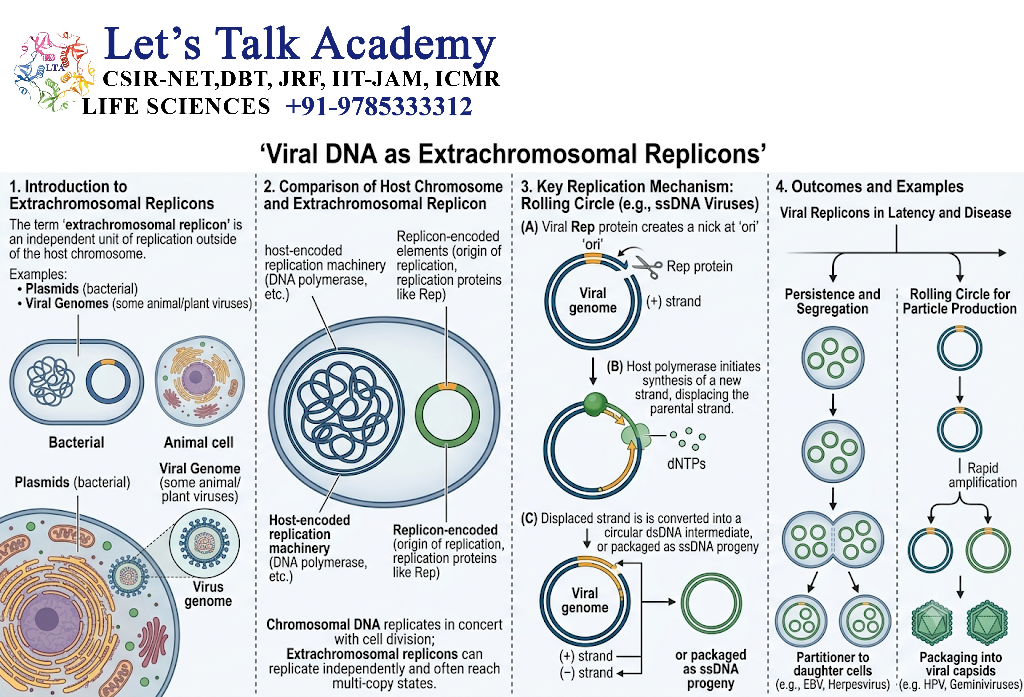
Some viruses possess DNA genomes that replicate within host cells.
During infection, viral DNA can function as an extrachromosomal replicating molecule depending on the viral life cycle.
Viral replication systems may use:
- Viral replication proteins
- Host DNA polymerases
- Host replication factors
- Viral replication origins
- Specialized viral DNA synthesis machinery
Thus, viral DNA can represent another form of extrachromosomal replicon.
15. Mitochondrial DNA
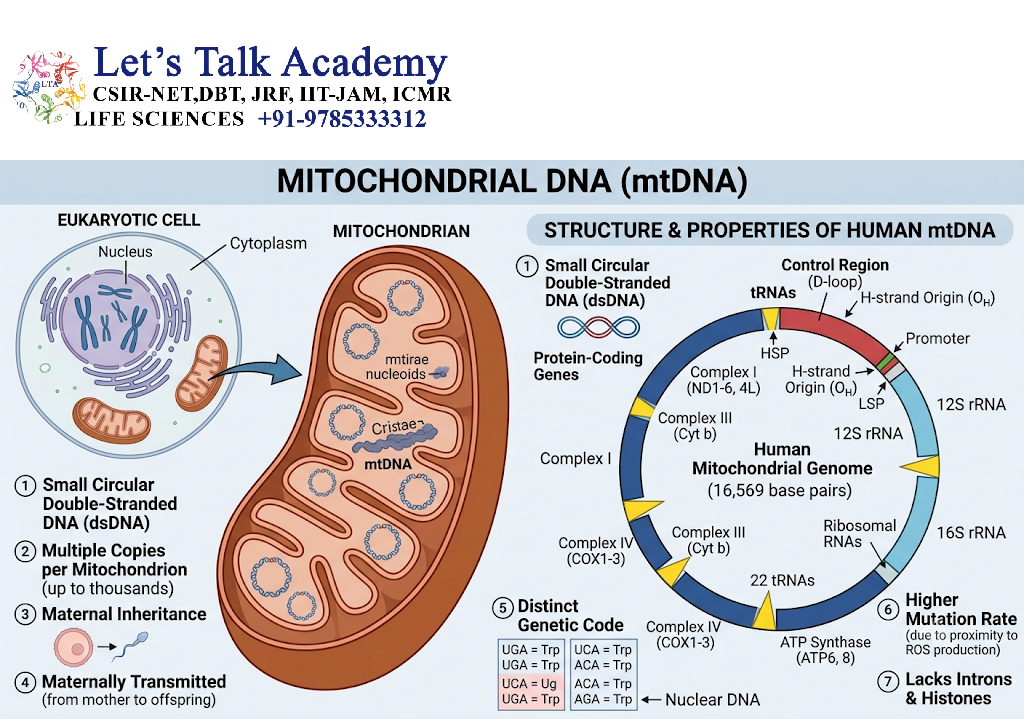
Mitochondria contain their own DNA, known as mitochondrial DNA (mtDNA).
Mitochondrial DNA is physically separate from nuclear chromosomes and replicates within mitochondria.
It contains genes involved in mitochondrial functions, particularly components associated with:
- Oxidative phosphorylation
- Mitochondrial protein synthesis
- Mitochondrial gene expression
Mitochondrial DNA replication uses specialized mitochondrial replication proteins and differs in important ways from nuclear DNA replication.
16. Chloroplast DNA
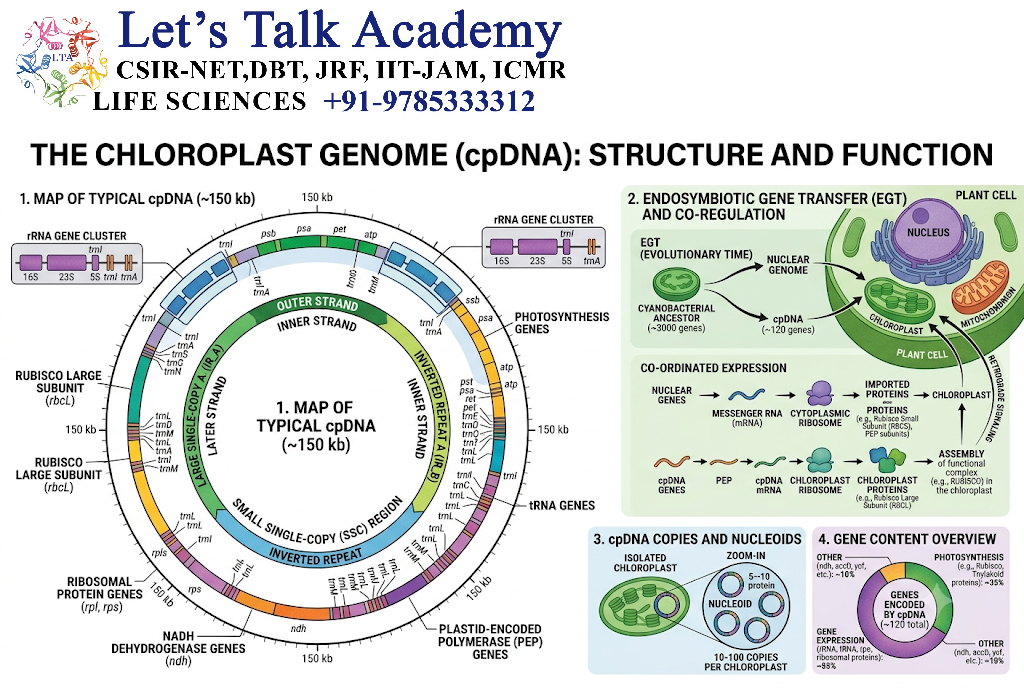
Plant chloroplasts also contain their own DNA, known as chloroplast DNA (cpDNA) or plastid DNA.
Like mitochondrial DNA, chloroplast DNA is physically separate from the nuclear chromosomes.
It contains genes involved in functions including:
- Photosynthesis
- Chloroplast gene expression
- Ribosomal components
- Chloroplast protein synthesis
Its replication is coordinated with chloroplast development and cellular requirements.
17. Extrachromosomal DNA in Eukaryotic Cells
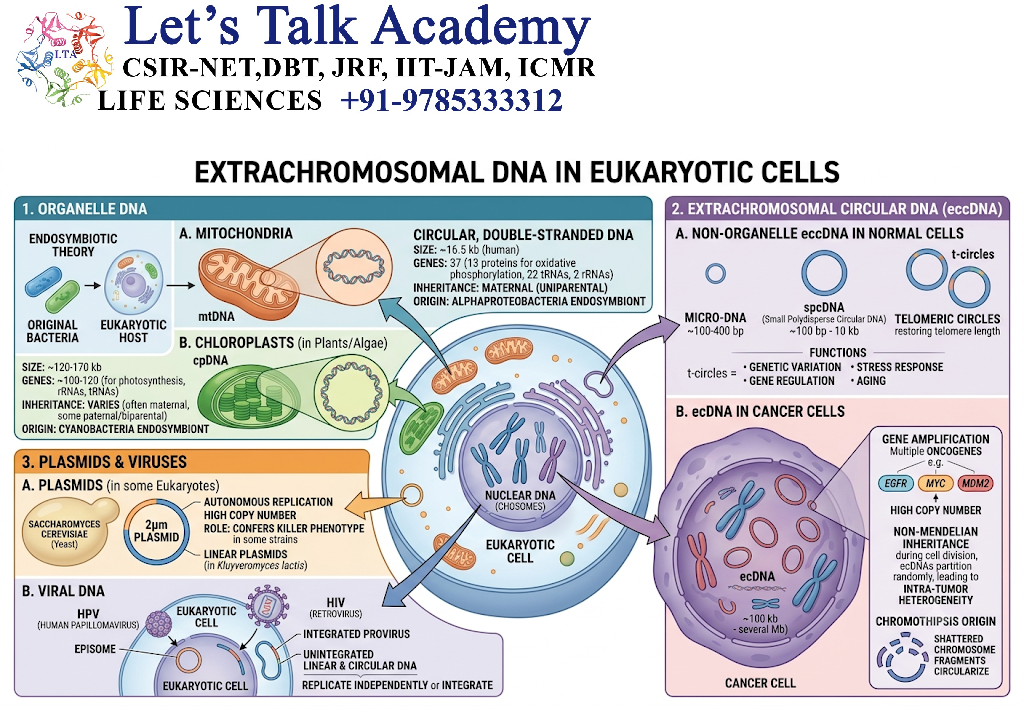
Eukaryotic cells can contain several types of DNA outside the nuclear chromosomes.
These may include:
- Mitochondrial DNA
- Chloroplast DNA in plants and algae
- Episomal DNA
- Viral DNA
- Artificial episomal vectors
Their biological behavior depends on their origin and replication mechanism.
18. Extrachromosomal Replicons and Gene Expression
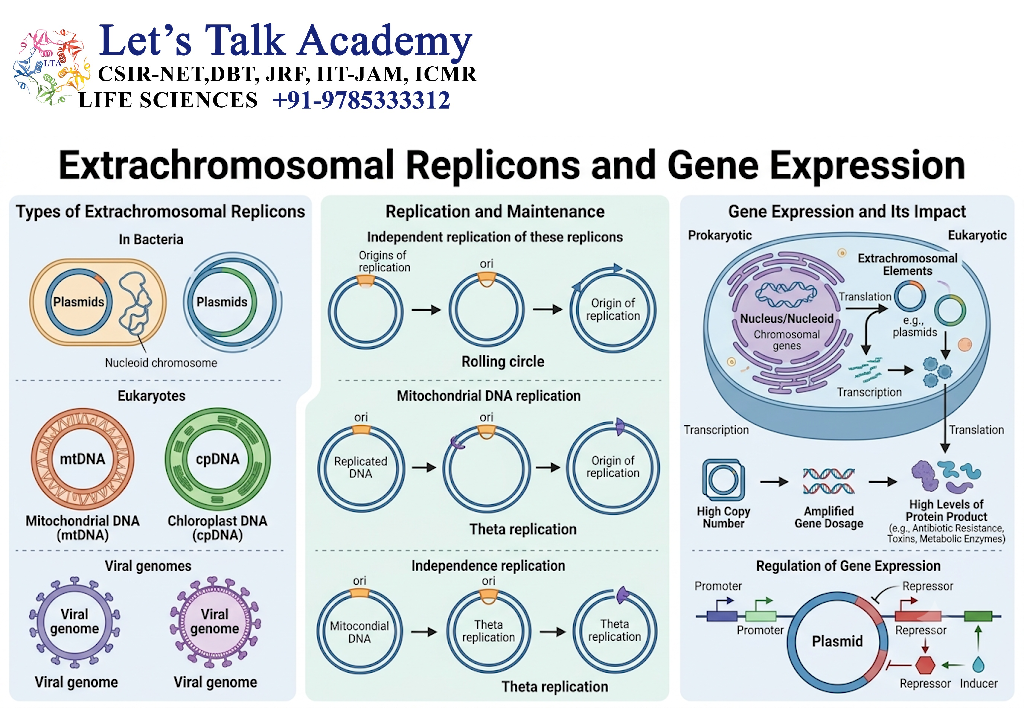
Extrachromosomal replicons can carry genes that influence the phenotype of their host.
For example, plasmids can carry genes involved in:
- Drug resistance
- Metabolism
- Virulence
- Environmental adaptation
Because the DNA is replicated, these genes can be inherited by daughter cells.
Therefore:
Extrachromosomal DNA
↓
Gene replication
↓
Gene expression
↓
Altered cellular phenotype
19. Extrachromosomal Replicons and Antimicrobial Resistance
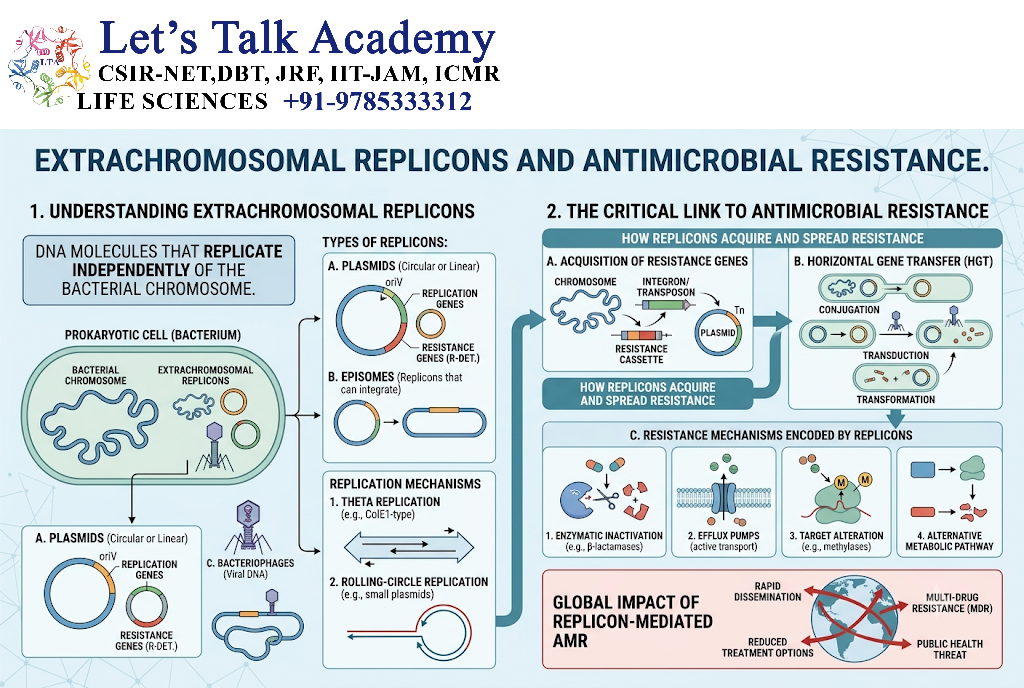
Plasmids are particularly important in the spread of antimicrobial resistance.
A plasmid may carry one or more resistance genes.
If the plasmid is transferred between bacteria, resistance determinants can spread through a bacterial population.
The process can involve:
Resistance gene
↓
Plasmid
↓
Horizontal gene transfer
↓
New bacterial host
↓
Resistance phenotype
This makes plasmids important contributors to the evolution and dissemination of antimicrobial resistance.
20. Horizontal Gene Transfer
Extrachromosomal replicons can participate in horizontal gene transfer (HGT).
Important mechanisms include:
- Conjugation
- Transformation
- Transduction
Conjugative plasmids are especially important because they can transfer DNA between bacterial cells.
General Concept
Donor cell
↓
Plasmid transfer
↓
Recipient cell
↓
Plasmid replication
↓
New genetic trait
21. Conjugative Plasmids
A conjugative plasmid contains the genetic information required to promote its transfer between suitable bacterial cells.
Some conjugative plasmids encode components of a transfer system, including proteins involved in DNA processing and transport.
After transfer, the plasmid can replicate in the recipient if its replication system is compatible with that host.
22. Mobilizable Plasmids
A mobilizable plasmid may not encode a complete transfer system but can sometimes be transferred when another mobile element provides the necessary machinery.
Thus:
Mobilizable plasmid + Transfer machinery
↓
DNA transfer
↓
New host
This contributes to the movement of genetic information between microorganisms.
23. Rolling-Circle Replication
Some plasmids replicate using a mechanism called rolling-circle replication.
The general process is:
Origin recognition
↓
Specific nick introduced into one DNA strand
↓
3′ end extended by DNA polymerase
↓
Displacement of the old strand
↓
New complementary strand synthesis
↓
Circular DNA molecule restored
Rolling-circle replication is used by several plasmids and some other DNA elements.
24. Theta Replication
Some circular plasmids replicate using a theta-type mechanism.
It is called theta replication because the replication intermediate can resemble the Greek letter θ.
The process generally involves:
Origin activation
↓
DNA unwinding
↓
Replication fork formation
↓
DNA synthesis
↓
Completion of daughter circular DNA molecules
Theta replication shares several general features with chromosomal replication.
25. Rolling-Circle vs Theta Replication
| Feature | Rolling-Circle Replication | Theta Replication |
|---|---|---|
| Typical substrate | Some plasmids and DNA elements | Many circular DNA molecules |
| Intermediate | Displaced single strand | Theta-like replication intermediate |
| Strand displacement | Prominent | Not the defining feature |
| Replication forks | May be asymmetric/specialized | Commonly associated with fork movement |
| Final product | Circular DNA molecules | Circular daughter DNA molecules |
26. Multimer Resolution
During plasmid replication, DNA molecules can sometimes form multimers such as dimers.
If multimers accumulate, plasmid inheritance can become inefficient.
Some plasmids therefore use multimer-resolution systems to convert multimers into monomeric plasmid molecules.
This promotes stable inheritance.
27. Post-Segregational Stability
Some plasmids possess systems that reduce plasmid loss after cell division.
One example is a toxin-antitoxin system.
The basic principle is:
Plasmid-containing cell
↓
Toxin + antitoxin produced
↓
Both maintained while plasmid is present
If a daughter cell loses the plasmid:
↓
Antitoxin decreases
↓
Toxin persists longer
↓
Growth is inhibited or cell is eliminated
Such systems can promote plasmid maintenance, although their exact mechanisms vary.
28. Biological Significance
Extrachromosomal replicons are biologically important because they can:
- Increase genetic diversity
- Carry adaptive genes
- Facilitate horizontal gene transfer
- Contribute to antimicrobial resistance
- Support specialized metabolism
- Influence virulence
- Enable rapid adaptation
- Serve as useful tools in molecular biology
29. Extrachromosomal Replicons in Biotechnology
Plasmids are widely used as vectors in molecular biology.
A recombinant plasmid may contain:
- Replication origin
- Selectable marker
- Multiple cloning region or other DNA-engineering elements
- Promoter
- Gene of interest
A simplified recombinant-DNA workflow is:
Vector plasmid
↓
Insert gene
↓
Recombinant DNA
↓
Introduce into host
↓
Plasmid replication
↓
Gene expression
This makes plasmids fundamental tools in gene cloning and biotechnology.
30. Extrachromosomal Vectors
Artificial extrachromosomal vectors can be designed for specific purposes.
They may be used for:
- Gene cloning
- Protein production
- Gene expression studies
- Functional genomics
- Genetic engineering
- Molecular biology research
The choice of vector depends on:
- Host organism
- Desired copy number
- Stability
- Expression requirements
- Selection system
31. Extrachromosomal Replicons and Evolution
Extrachromosomal DNA can accelerate adaptation because genetic information can sometimes move between cells without requiring conventional vertical inheritance alone.
For example:
New gene acquired
↓
Extrachromosomal DNA
↓
Replication
↓
Expression
↓
Adaptive phenotype
↓
Selection
This can allow advantageous traits to spread relatively rapidly through populations.
32. Chromosomal vs Extrachromosomal Replicons
| Feature | Chromosomal Replicon | Extrachromosomal Replicon |
|---|---|---|
| Location | Main chromosome | Outside main chromosome |
| Typical example | Bacterial chromosome | Plasmid |
| Replication | Integrated with chromosome replication | Often separately controlled |
| Copy number | Usually tightly defined | Can vary |
| Inheritance | Usually essential for cell survival | May be optional |
| Gene content | Core cellular functions commonly represented | Often accessory/adaptive genes |
| Horizontal transfer | Less directly mobile in many cases | Frequently associated with mobile DNA |
33. Extrachromosomal Replicon vs Plasmid
These terms are related but not completely synonymous.
Extrachromosomal replicon is a broader functional concept referring to an independently replicating DNA unit outside the main chromosome.
A plasmid is a specific type of extrachromosomal DNA molecule, commonly found in bacteria.
Therefore:
Plasmid ⊂ Extrachromosomal replicating DNA
However, not every extrachromosomal DNA molecule should automatically be called a plasmid.


