
1. Introduction
The Golgi body, also called the Golgi apparatus or Golgi complex, is an important membrane-bound organelle found in most eukaryotic cells. It plays a central role in the modification, processing, sorting, packaging, and distribution of proteins and lipids within the cell.
The Golgi apparatus can be thought of as a cellular processing and distribution center. Molecules synthesized in the endoplasmic reticulum (ER) are transported to the Golgi apparatus, where they undergo further processing. After processing, these molecules are sorted and directed to different destinations, such as the plasma membrane, lysosomes, secretory vesicles, or other intracellular compartments.
The Golgi apparatus is particularly well developed in cells that are actively involved in secretion. For example, secretory cells of the pancreas contain extensive Golgi structures because they produce and release large quantities of digestive enzymes.
The Golgi apparatus is therefore essential for maintaining cellular organization, communication, secretion, and membrane trafficking.
2. Discovery of the Golgi Apparatus
The Golgi apparatus was discovered by the Italian physician and scientist Camillo Golgi in 1898. While studying nerve cells using a staining technique known as the black reaction, Golgi observed a reticular structure within the cytoplasm.
Initially, scientists debated whether this structure was a genuine cellular organelle or an artifact produced by the staining procedure. With the development of improved microscopy techniques, especially electron microscopy, the existence and detailed organization of the Golgi apparatus were confirmed.
The organelle was subsequently named the Golgi apparatus in recognition of Camillo Golgi’s contribution.
3. Definition of Golgi Bodies
The Golgi apparatus is a membrane-bound organelle composed of flattened, membrane-enclosed sacs called cisternae, together with associated tubules and vesicles.
Its major functions include:
- Modification of proteins and lipids
- Sorting of cellular molecules
- Packaging of molecules into vesicles
- Formation of secretory vesicles
- Formation and maintenance of lysosomes
- Synthesis of certain complex carbohydrates
- Processing of proteins destined for different cellular locations
- Participation in membrane trafficking
- Production and processing of extracellular matrix components
The Golgi apparatus works closely with the endoplasmic reticulum, transport vesicles, lysosomes, endosomes, and plasma membrane.
4. Structure of the Golgi Apparatus
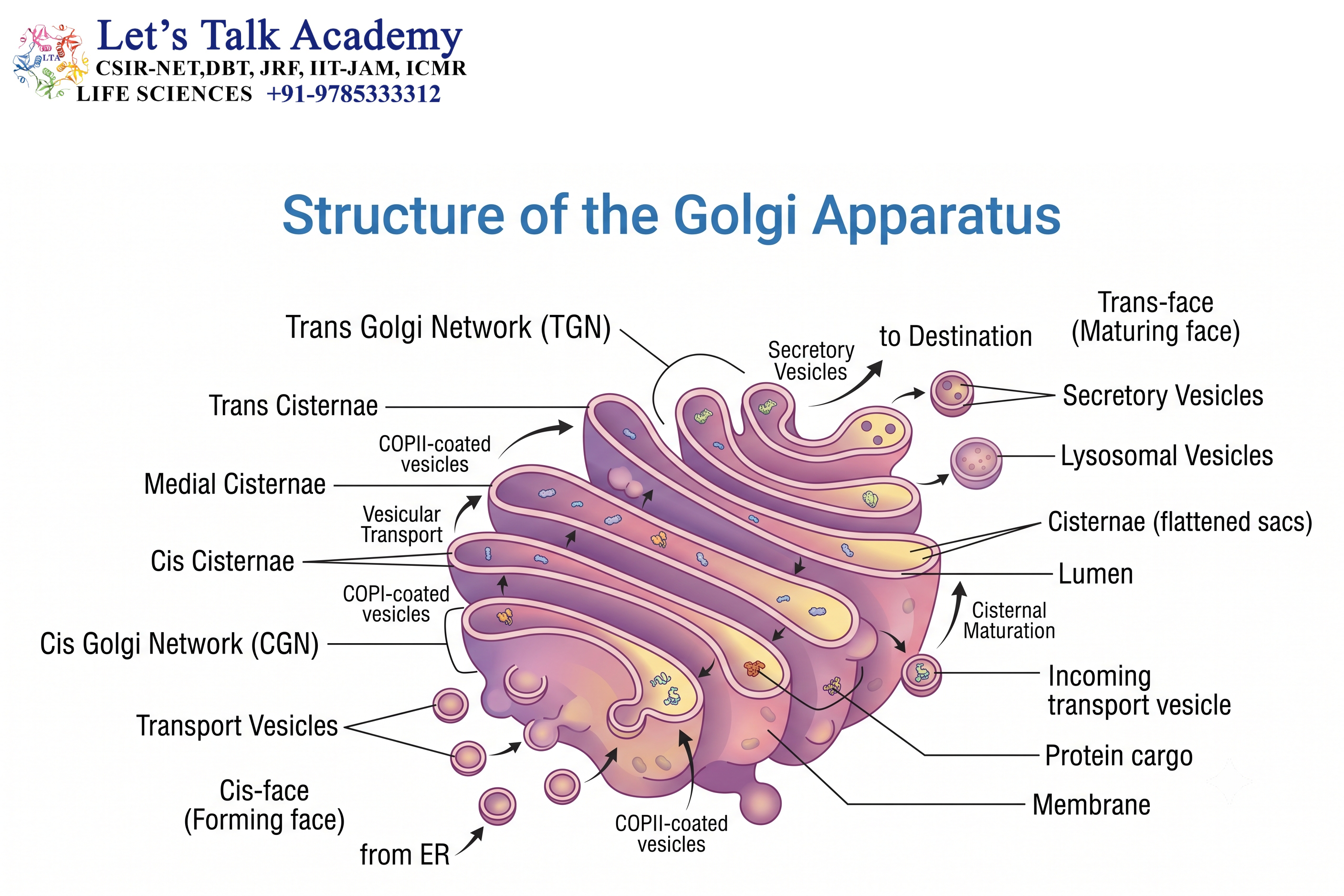
The structure of the Golgi apparatus is highly organized. Its basic structural units are flattened membrane-bound sacs called cisternae.
4.1 Golgi Cisternae
Cisternae are flattened, curved, membrane-bound compartments arranged in stacks.
A typical Golgi stack contains several cisternae positioned closely together. The number and organization of cisternae can vary among different cell types and organisms.
The cisternae are not simply identical sacs. Different regions contain different enzymes and perform different biochemical functions.
The Golgi stack has a distinct polarity, meaning that its two sides have different structures and functions.
4.2 Cis Face
The cis face is the receiving side of the Golgi apparatus.
It is generally located close to the endoplasmic reticulum. Transport vesicles carrying newly synthesized proteins and lipids from the ER fuse with membranes associated with the cis-Golgi region.
The cis face therefore functions primarily as an entry or receiving region.
It is also associated with the cis-Golgi network, which helps receive and organize incoming cargo.
4.3 Medial Golgi Region
Between the cis and trans regions are the medial cisternae.
The medial Golgi contains enzymes responsible for several important modifications of proteins and lipids.
For example, carbohydrate groups attached to proteins can undergo sequential modification as the proteins move through different Golgi compartments.
4.4 Trans Face
The trans face represents the exit side of the Golgi apparatus.
After proteins and lipids have undergone appropriate modifications, they reach the trans-Golgi region.
The trans side is associated with the trans-Golgi network (TGN), which functions as an important sorting and distribution center.
At this stage, molecules are sorted according to their final destinations.
4.5 Cis-Golgi Network
The cis-Golgi network is a network of membrane structures associated with the cis side of the Golgi apparatus.
It receives transport vesicles arriving from the endoplasmic reticulum.
The cis-Golgi network contributes to the initial sorting and processing of incoming cargo and also participates in returning certain proteins to the ER.
4.6 Trans-Golgi Network
The trans-Golgi network is located at the trans side of the Golgi apparatus.
It is an important sorting station where processed proteins and lipids are directed toward different destinations.
Cargo leaving the trans-Golgi network may be transported to:
- Plasma membrane
- Secretory vesicles
- Endosomes
- Lysosomes
- Other cellular compartments
Thus, the trans-Golgi network plays a major role in determining the final destination of cellular molecules.
5. Golgi Polarity
One of the most important characteristics of the Golgi apparatus is its polarity.
The Golgi apparatus has two functionally different sides:
Cis side → receiving side
Medial region → processing side
Trans side → sorting and shipping side
This polarity allows molecules to undergo an organized sequence of modifications.
A simplified pathway can be represented as:
Endoplasmic reticulum → Cis-Golgi → Medial Golgi → Trans-Golgi → Trans-Golgi network → Final destination
The different Golgi compartments contain different sets of enzymes. Therefore, a protein can undergo several modifications in a specific order as it travels through the Golgi stack.
6. Golgi Vesicles
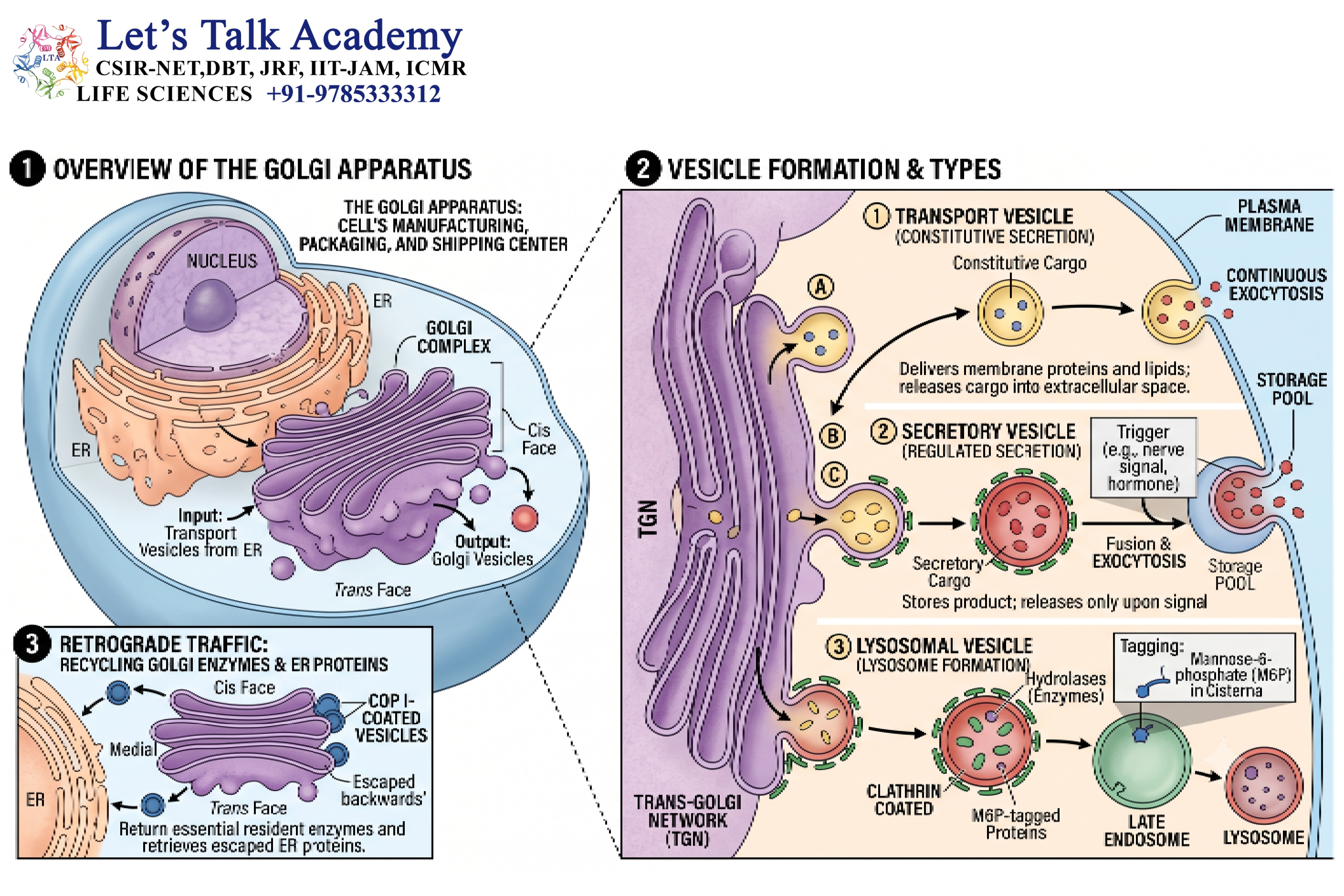
Small membrane-bound vesicles are continuously associated with the Golgi apparatus.
These vesicles transport molecules between cellular compartments.
There are several important types of vesicular transport pathways.
6.1 Transport Vesicles from the ER
Proteins synthesized in the rough ER are transported toward the Golgi apparatus in vesicles.
These vesicles eventually fuse with the cis-Golgi region.
6.2 Vesicles Leaving the Golgi
After processing, cargo can leave the Golgi apparatus in vesicles that transport it to its final destination.
Some vesicles carry proteins toward the plasma membrane, while others deliver cargo to endosomes or lysosomes.
6.3 Retrograde Transport Vesicles
Not all transport occurs in the forward direction.
Some vesicles move proteins and membrane components backward from the Golgi toward the ER or between Golgi compartments.
This retrograde transport is important for maintaining the correct composition of each organelle.
7. Major Functions of the Golgi Apparatus
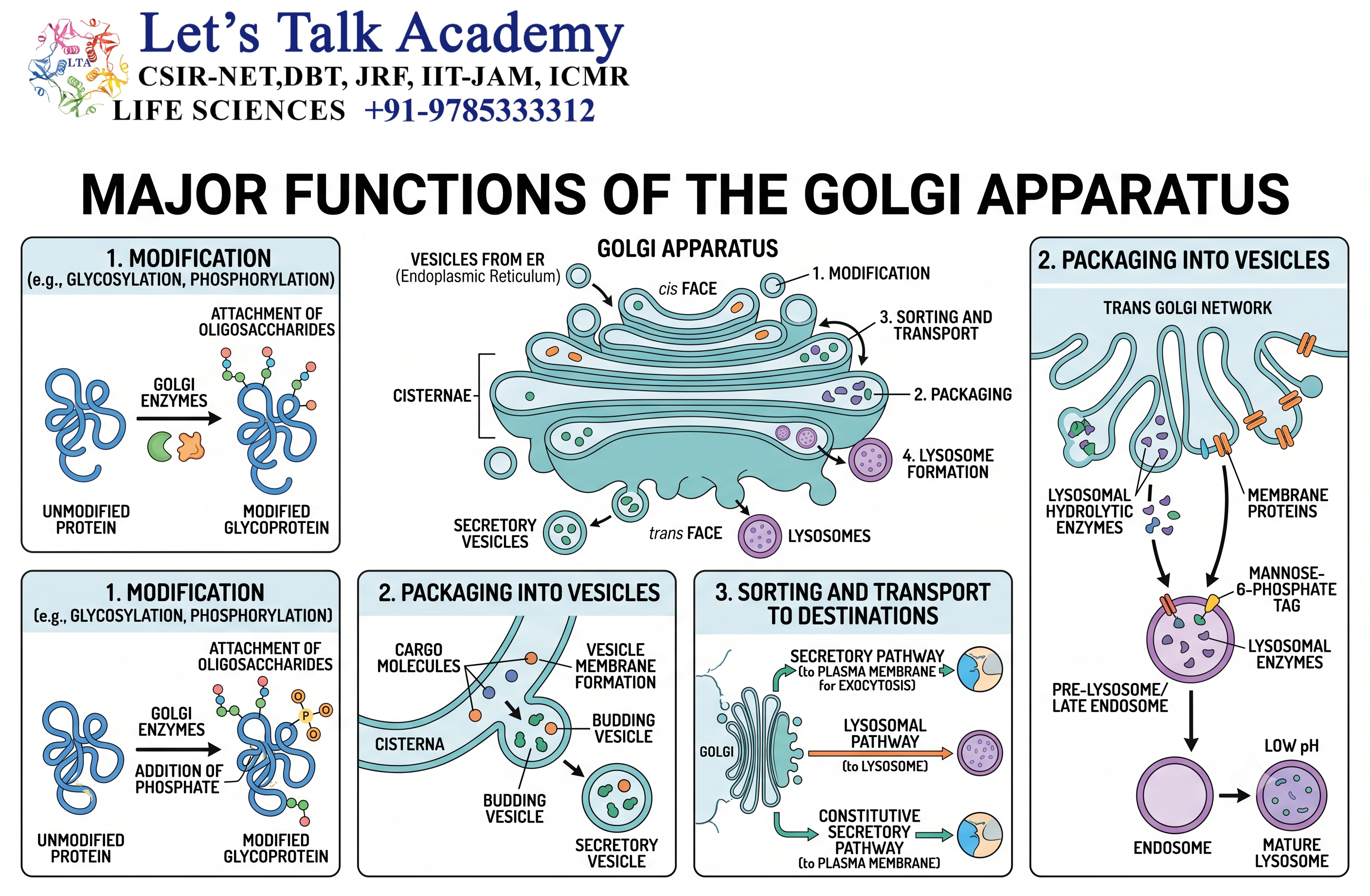
The Golgi apparatus performs numerous functions that are essential for cell survival.
7.1 Modification of Proteins
One of the most important functions of the Golgi apparatus is the modification of proteins received from the ER.
Proteins may undergo:
- Glycosylation
- Phosphorylation
- Sulfation
- Proteolytic processing
- Addition or modification of carbohydrate chains
These modifications can influence protein activity, stability, localization, and recognition.
7.2 Protein Glycosylation
Glycosylation is the addition or modification of carbohydrate groups on proteins.
Many proteins entering the secretory pathway are glycosylated in the ER and Golgi apparatus.
The Golgi contains enzymes that modify carbohydrate chains in a specific sequence.
Glycosylation is important for:
- Protein stability
- Protein folding
- Cell recognition
- Cell-cell interactions
- Protein trafficking
- Receptor function
7.3 Lipid Modification
The Golgi apparatus also participates in the modification and processing of lipids.
Certain complex lipids are synthesized or modified in the Golgi.
These lipids contribute to:
- Plasma membrane structure
- Organelle membranes
- Cell signaling
- Membrane trafficking
7.4 Sorting of Proteins
The Golgi apparatus acts as a major cellular sorting center.
Once proteins have been processed, they must be delivered to their correct destinations.
The Golgi identifies and sorts cargo according to molecular signals and specific transport mechanisms.
Proteins may be directed toward:
- Plasma membrane
- Lysosomes
- Secretory vesicles
- Endosomes
- Extracellular space
7.5 Packaging of Proteins
The Golgi apparatus packages proteins into membrane-bound vesicles.
This packaging allows proteins to be transported safely through the cytoplasm without mixing randomly with other cellular components.
7.6 Formation of Secretory Vesicles
Proteins destined for secretion are packaged into secretory vesicles at or near the trans-Golgi network.
These vesicles travel toward the plasma membrane and can release their contents outside the cell.
This process is known as exocytosis.
7.7 Lysosome Formation
The Golgi apparatus plays an important role in the production and delivery of enzymes destined for lysosomes.
Many lysosomal enzymes receive a specific carbohydrate-based targeting signal known as mannose-6-phosphate (M6P).
This signal helps direct the enzymes toward lysosomes through the endosomal system.
Therefore, the Golgi apparatus is closely involved in maintaining lysosomal function.
7.8 Carbohydrate Synthesis
The Golgi apparatus contributes to the synthesis of several complex carbohydrates.
In plant cells, the Golgi apparatus has an especially important role in producing and modifying components of the cell wall.
It contributes to the production of polysaccharides such as:
- Pectins
- Hemicelluloses
These materials are transported to the cell surface and incorporated into the plant cell wall.
7.9 Cell Surface Maintenance
The Golgi apparatus contributes to the maintenance of the plasma membrane by supplying newly synthesized membrane proteins and lipids.
Through continuous vesicular trafficking, the cell can replace damaged or aged membrane components.
8. Protein Processing in the Golgi Apparatus
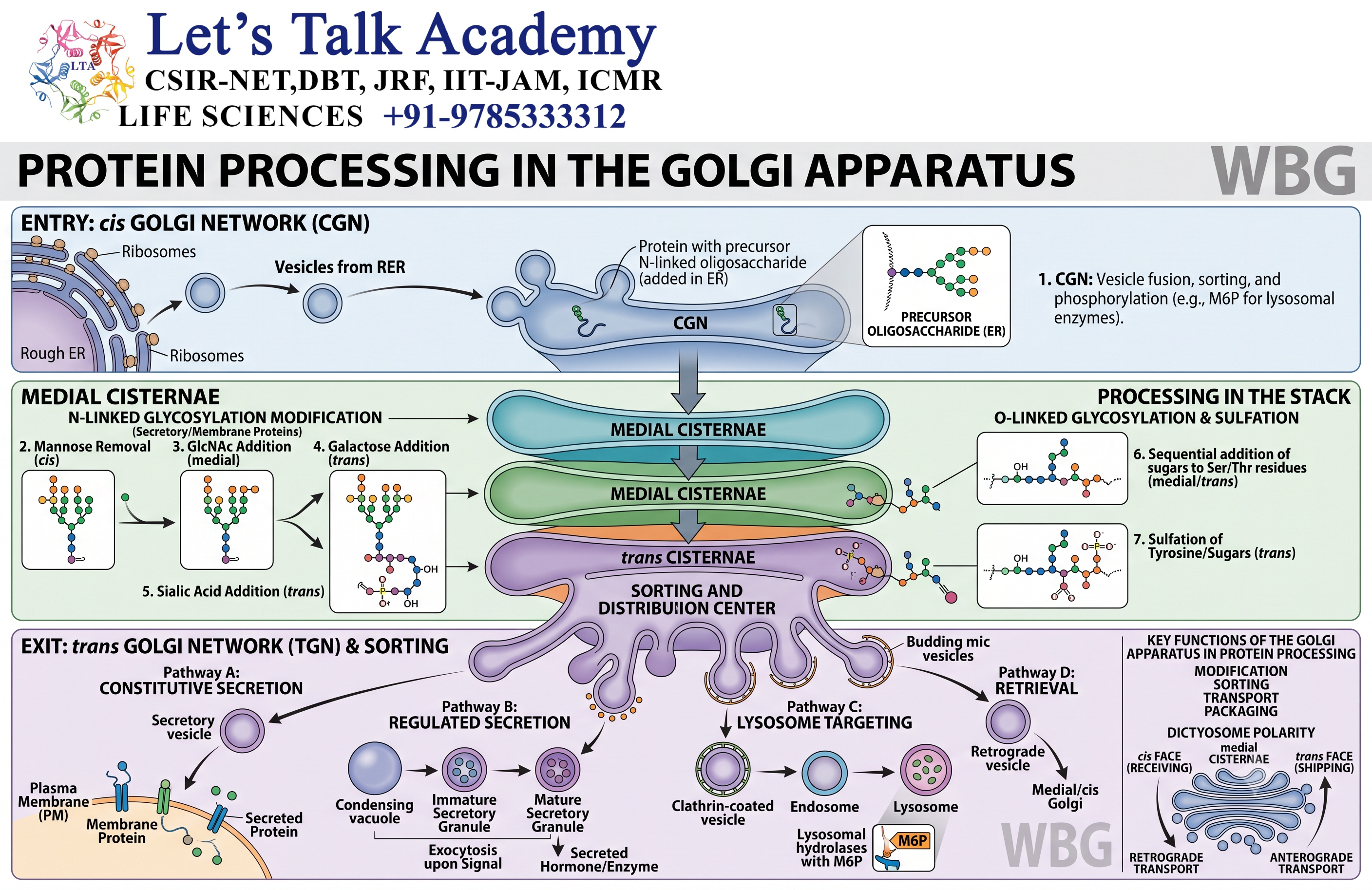
Proteins entering the secretory pathway usually begin their synthesis on ribosomes associated with the rough ER.
The general pathway is:
DNA → mRNA → Ribosome → Rough ER → Transport Vesicle → Golgi Apparatus → Final Destination
Once proteins reach the Golgi apparatus, they undergo additional processing.
Different Golgi compartments contain different enzymes, allowing modifications to occur sequentially.
For example, a glycoprotein may undergo several carbohydrate modifications as it progresses from the cis region toward the trans region.
9. Protein Sorting and Targeting
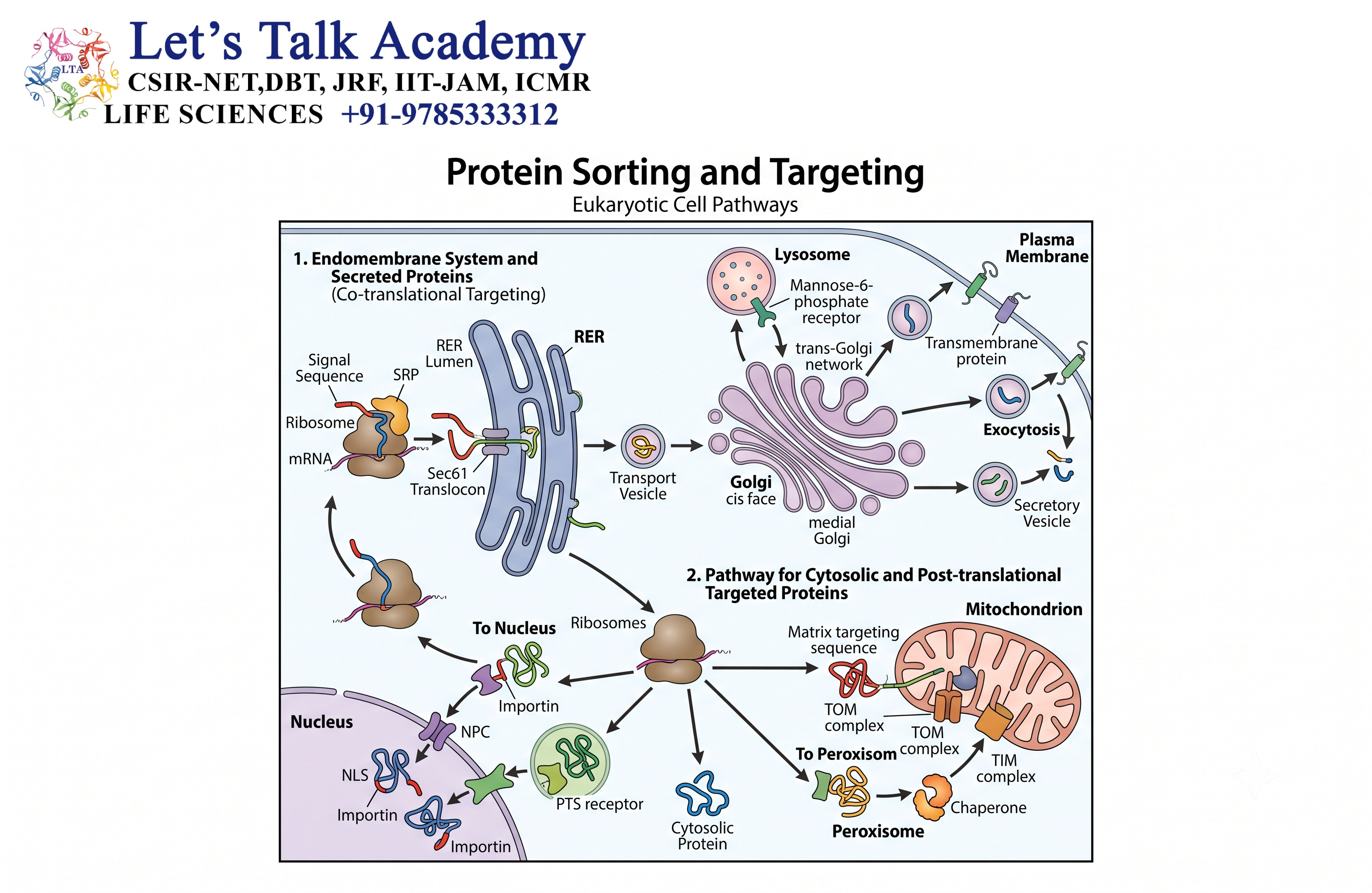
The cell contains thousands of proteins that must reach specific locations.
A protein destined for secretion should not remain inside the cytoplasm. Similarly, a lysosomal enzyme must be directed toward the lysosome rather than the plasma membrane.
The Golgi apparatus helps solve this problem by functioning as a molecular sorting center.
9.1 Sorting Signals
Proteins can contain molecular information that helps determine their destination.
Such signals can be recognized by sorting machinery, allowing cargo to be incorporated into appropriate transport vesicles.
9.2 Lysosomal Targeting
Lysosomal enzymes are an important example of specific protein targeting.
Many lysosomal enzymes receive the mannose-6-phosphate marker during processing.
M6P receptors recognize these enzymes and help direct them into vesicles destined for the endosomal-lysosomal system.
10. Golgi Apparatus and Lysosomes
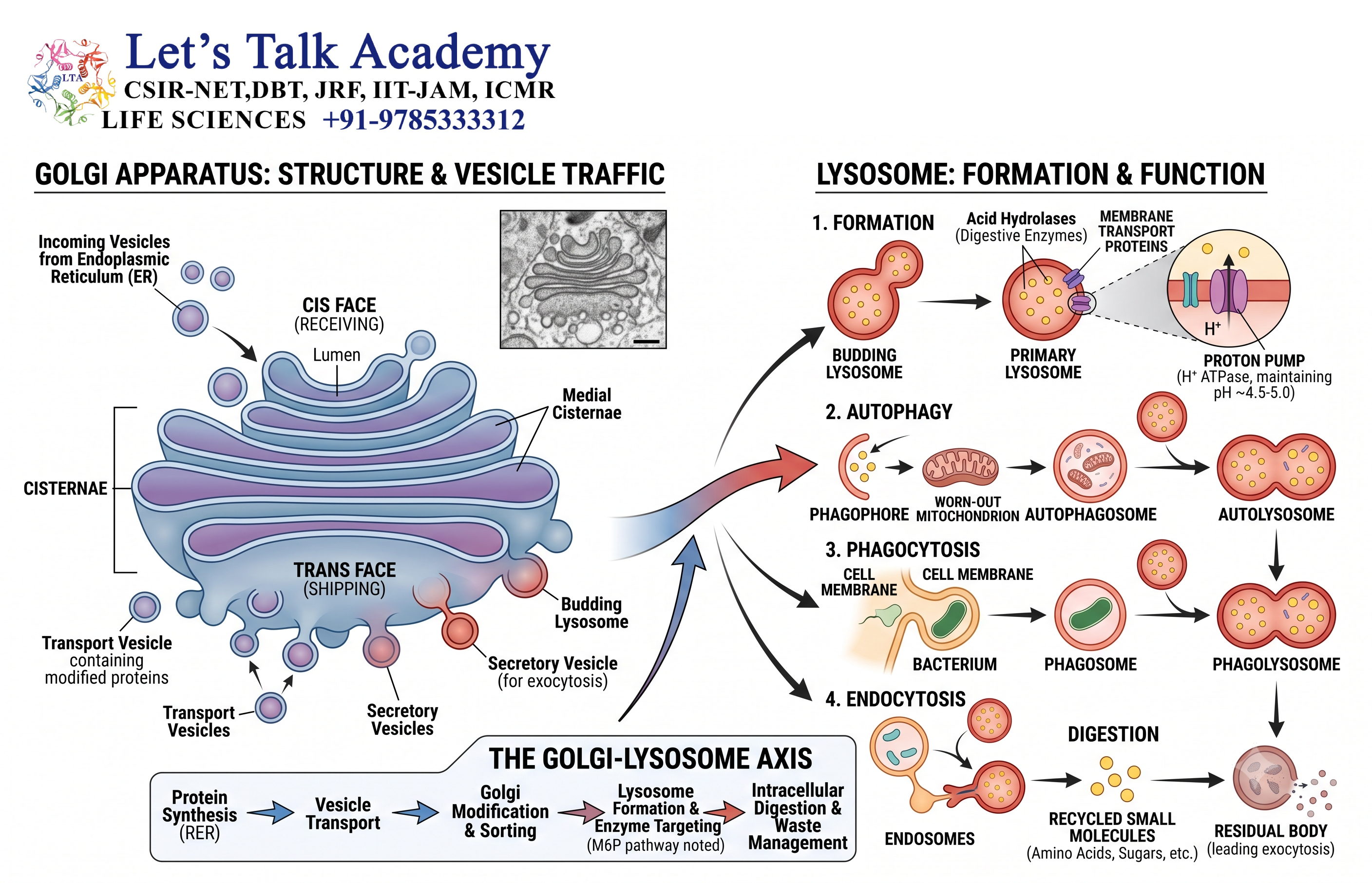
The Golgi apparatus and lysosomes are closely connected functionally.
Lysosomes contain hydrolytic enzymes responsible for breaking down:
- Proteins
- Lipids
- Nucleic acids
- Carbohydrates
- Damaged cellular components
Many of these enzymes are processed through the ER-Golgi pathway.
The Golgi modifies and sorts them so that they can reach the lysosomal compartment.
Therefore:
Rough ER → Golgi apparatus → Endosomal system → Lysosome
This pathway ensures that lysosomes receive the enzymes required for intracellular digestion.
11. Golgi Apparatus and Secretion
The Golgi apparatus is essential for regulated and constitutive secretion.
11.1 Constitutive Secretion
In constitutive secretion, vesicles continuously deliver proteins and lipids to the plasma membrane.
This pathway is important for:
- Membrane renewal
- Extracellular matrix production
- Continuous release of certain proteins
11.2 Regulated Secretion
In regulated secretion, secretory products are stored in vesicles until a specific signal triggers their release.
This is common in specialized secretory cells.
Examples include cells that release:
- Hormones
- Digestive enzymes
- Neurotransmitter-related substances
- Other signaling molecules
12. Golgi Apparatus in Plant Cells
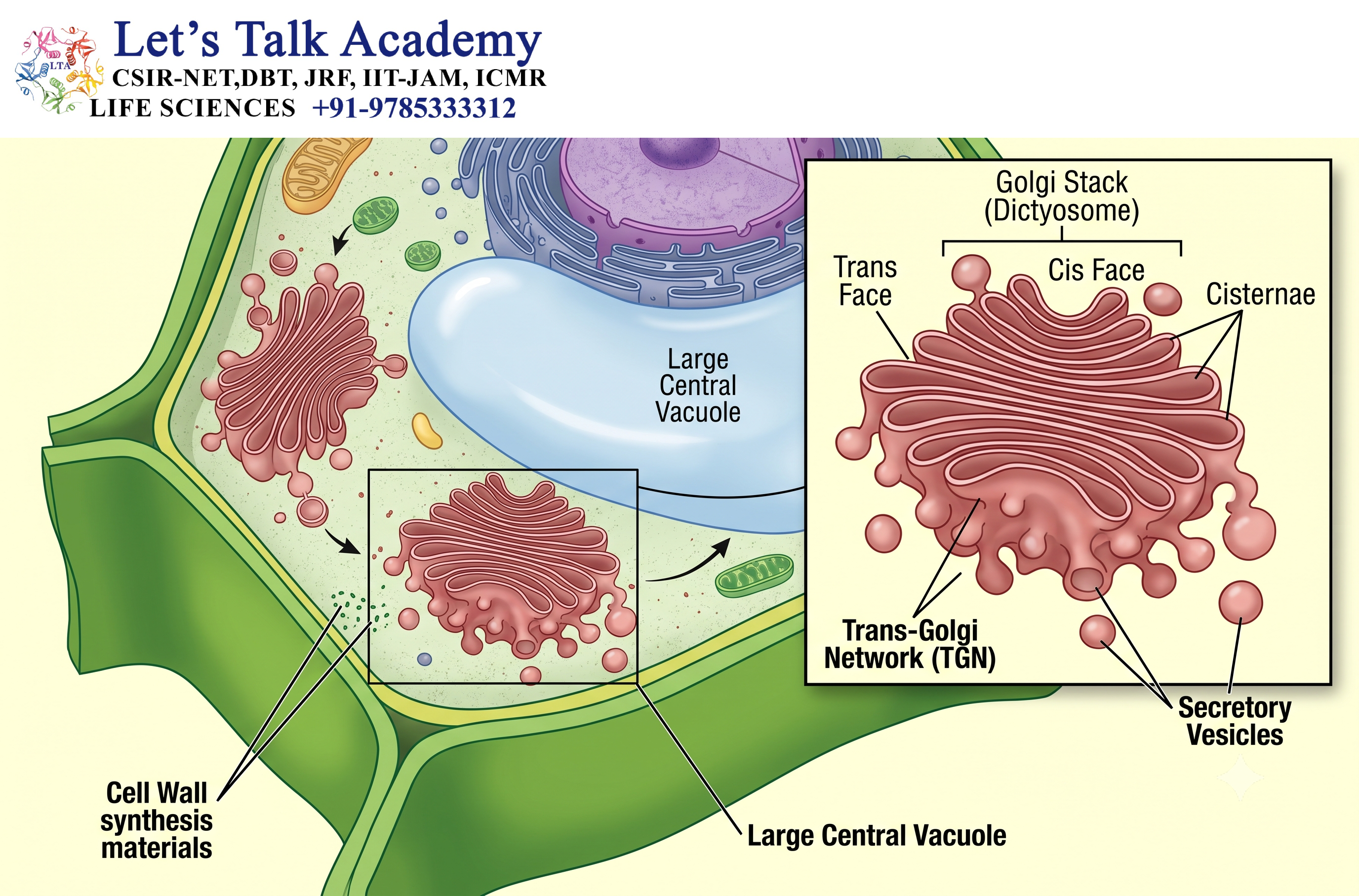
The Golgi apparatus is particularly important in plant cells.
Plant Golgi stacks participate in the synthesis, modification, and transport of cell-wall components.
The Golgi contributes to the production of:
- Pectins
- Hemicelluloses
- Other complex polysaccharides
These materials are transported in vesicles toward the cell surface.
The Golgi apparatus also participates in membrane trafficking and secretion in plant cells.
13. Golgi Apparatus in Animal Cells
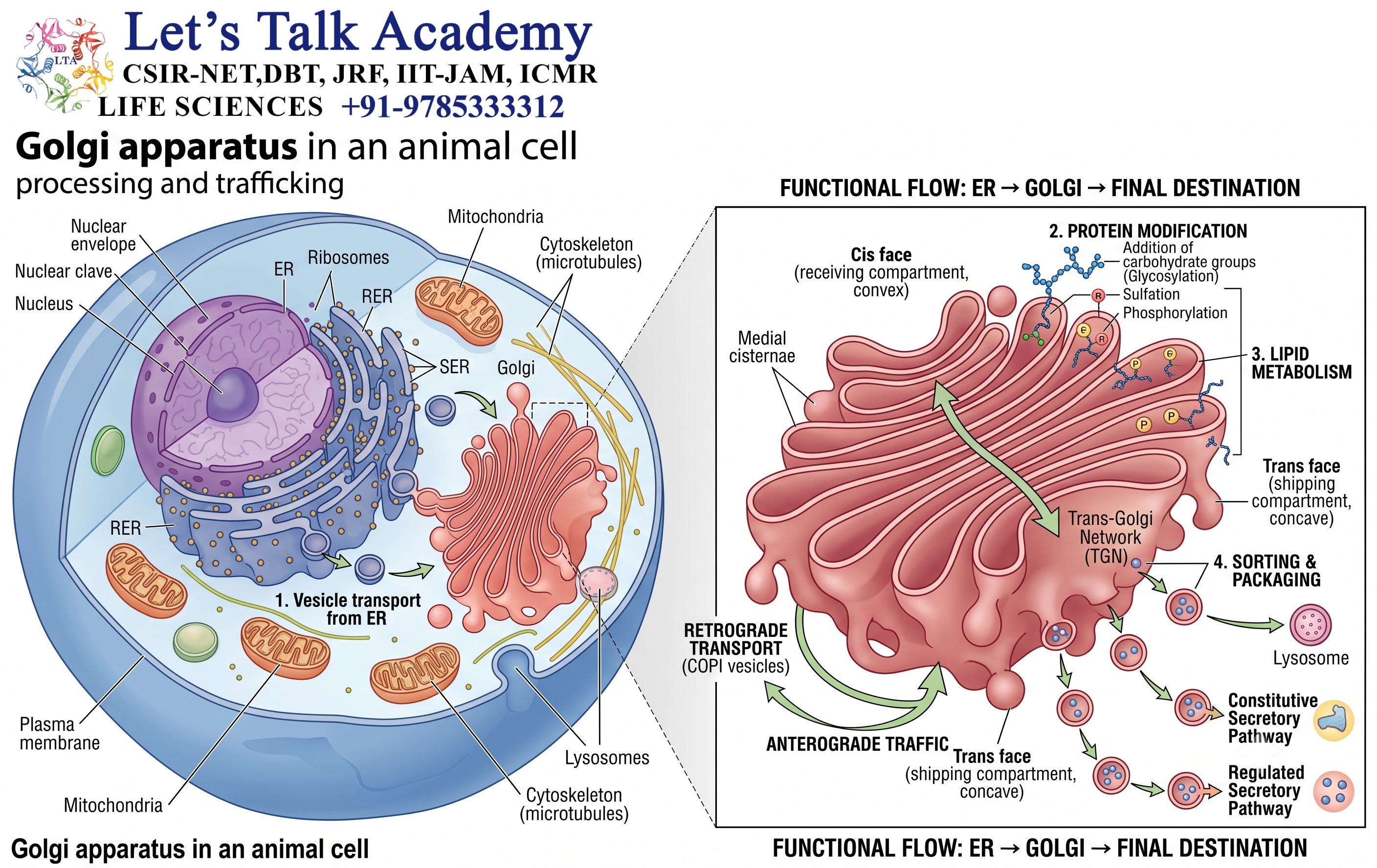
In animal cells, the Golgi apparatus is involved in:
- Protein modification
- Protein sorting
- Lipid processing
- Lysosome formation
- Secretion
- Plasma membrane maintenance
- Extracellular matrix production
Its size and organization vary depending on the metabolic and secretory activity of the cell.
Cells that secrete large quantities of proteins generally possess a well-developed Golgi apparatus.
14. Golgi Apparatus in Different Organisms
The Golgi apparatus is a characteristic organelle of eukaryotic cells.
In many animal and plant cells, it appears as stacks of cisternae.
Fungi and protists also possess Golgi-related membrane systems, although their organization may differ.
Prokaryotic cells such as bacteria generally do not contain a classical Golgi apparatus.
15. Golgi Apparatus and Membrane Trafficking
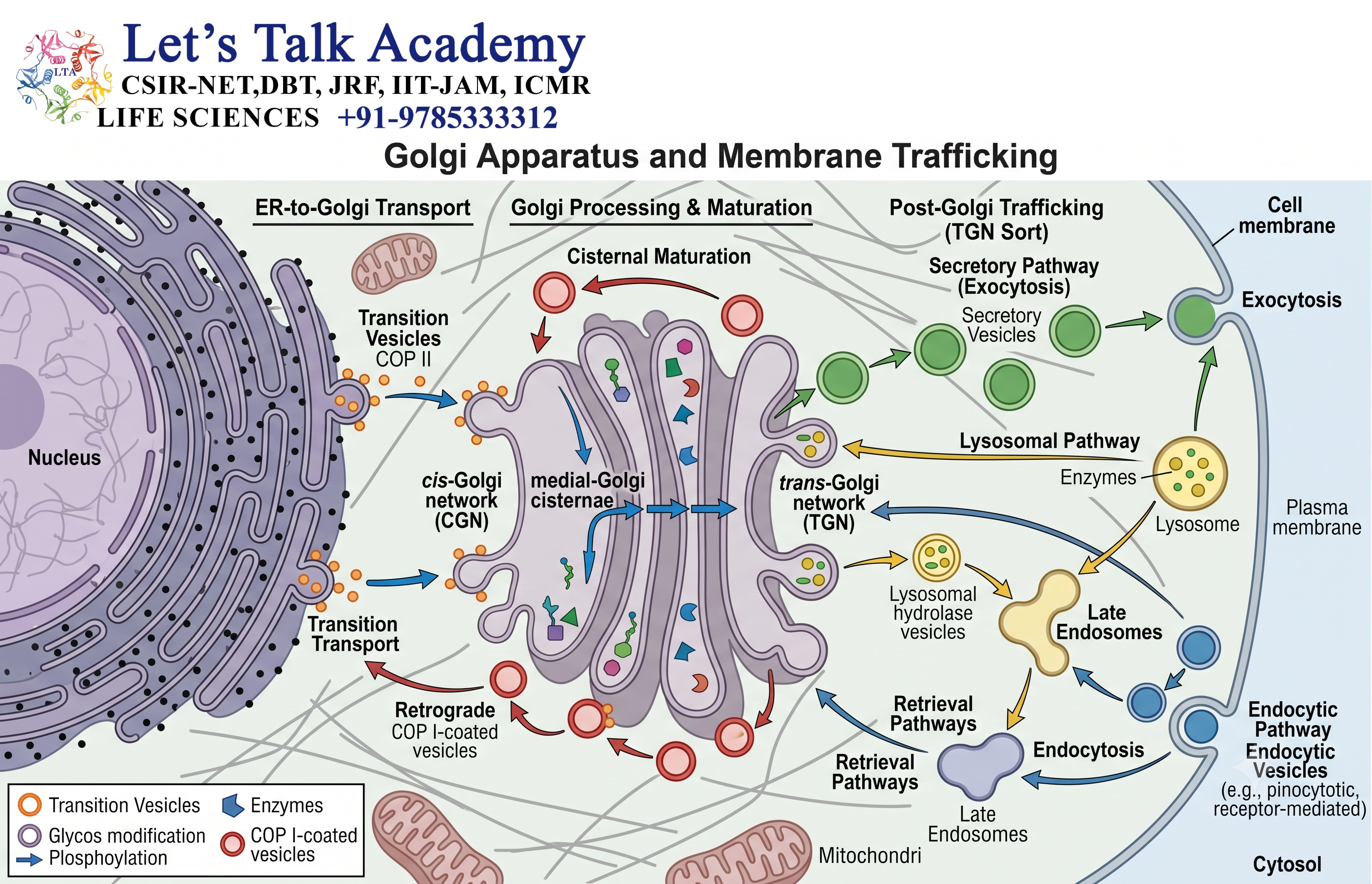
The Golgi apparatus is a major component of the cell’s membrane trafficking system.
Membrane trafficking involves the movement of proteins and lipids between different membrane-bound compartments.
Important components include:
ER → Golgi → Endosomes/Lysosomes/Plasma membrane
Transport requires:
- Formation of vesicles
- Selection of cargo
- Vesicle movement
- Target recognition
- Membrane docking
- Membrane fusion
- Cargo delivery
Highly specific molecular mechanisms ensure that vesicles reach the correct destination.
16. Molecular Machinery Associated with Golgi Transport
Several molecular systems contribute to accurate vesicle trafficking.
16.1 Coat Proteins
Coat proteins help in the formation of transport vesicles.
Important coat systems include:
- COPII
- COPI
- Clathrin
COPII primarily participates in transport from the ER toward the Golgi.
COPI is important for retrograde transport and movement between Golgi compartments.
Clathrin participates in several trafficking pathways, including transport from the trans-Golgi network toward endosomes.
16.2 Rab Proteins
Rab GTPases help regulate vesicle identity, targeting, and docking.
Different Rab proteins are associated with different membrane compartments.
16.3 SNARE Proteins
SNARE proteins play an important role in membrane fusion.
They help ensure that transport vesicles fuse with the appropriate target membrane.
Thus, coat proteins, Rab proteins, SNAREs, and other regulatory proteins work together to maintain accurate intracellular transport.
17. Golgi Models of Protein Transport
Scientists have proposed different models to explain how proteins move through the Golgi apparatus.
17.1 Vesicular Transport Model
According to the vesicular transport model, Golgi cisternae remain relatively stable while cargo moves between them through transport vesicles.
17.2 Cisternal Maturation Model
According to the cisternal maturation model, Golgi cisternae themselves mature and change from cis to medial to trans identity.
Cargo remains within the maturing cisterna for a period, while Golgi-resident enzymes are redistributed between compartments.
This model provides an important explanation for how large cargo molecules can pass through the Golgi even when they are too large to fit easily into conventional transport vesicles.
17.3 Combined View
Modern understanding supports a more dynamic picture of Golgi trafficking in which both cisternal maturation and vesicle-mediated transport contribute to cargo and enzyme movement.
Therefore, the Golgi should not be viewed as a completely static stack of compartments.
18. Golgi Apparatus and Cellular Communication
The Golgi apparatus indirectly contributes to cellular communication by processing molecules involved in signaling.
Many cell-surface receptors, adhesion molecules, and secreted signaling proteins pass through the ER-Golgi pathway.
Their correct modification and delivery are necessary for proper communication between cells and their environment.
Errors in Golgi processing can therefore influence:
- Receptor activity
- Cell adhesion
- Signal transduction
- Immune responses
- Tissue organization
19. Golgi Apparatus and Extracellular Matrix
Cells produce several proteins that become part of the extracellular matrix.
Examples include proteins such as collagen and other matrix-associated molecules.
These proteins pass through the secretory pathway and may undergo processing before being transported outside the cell.
The Golgi apparatus therefore contributes to extracellular matrix organization by processing and distributing extracellular proteins and carbohydrates.
20. Golgi Stress and Golgi-Related Disorders
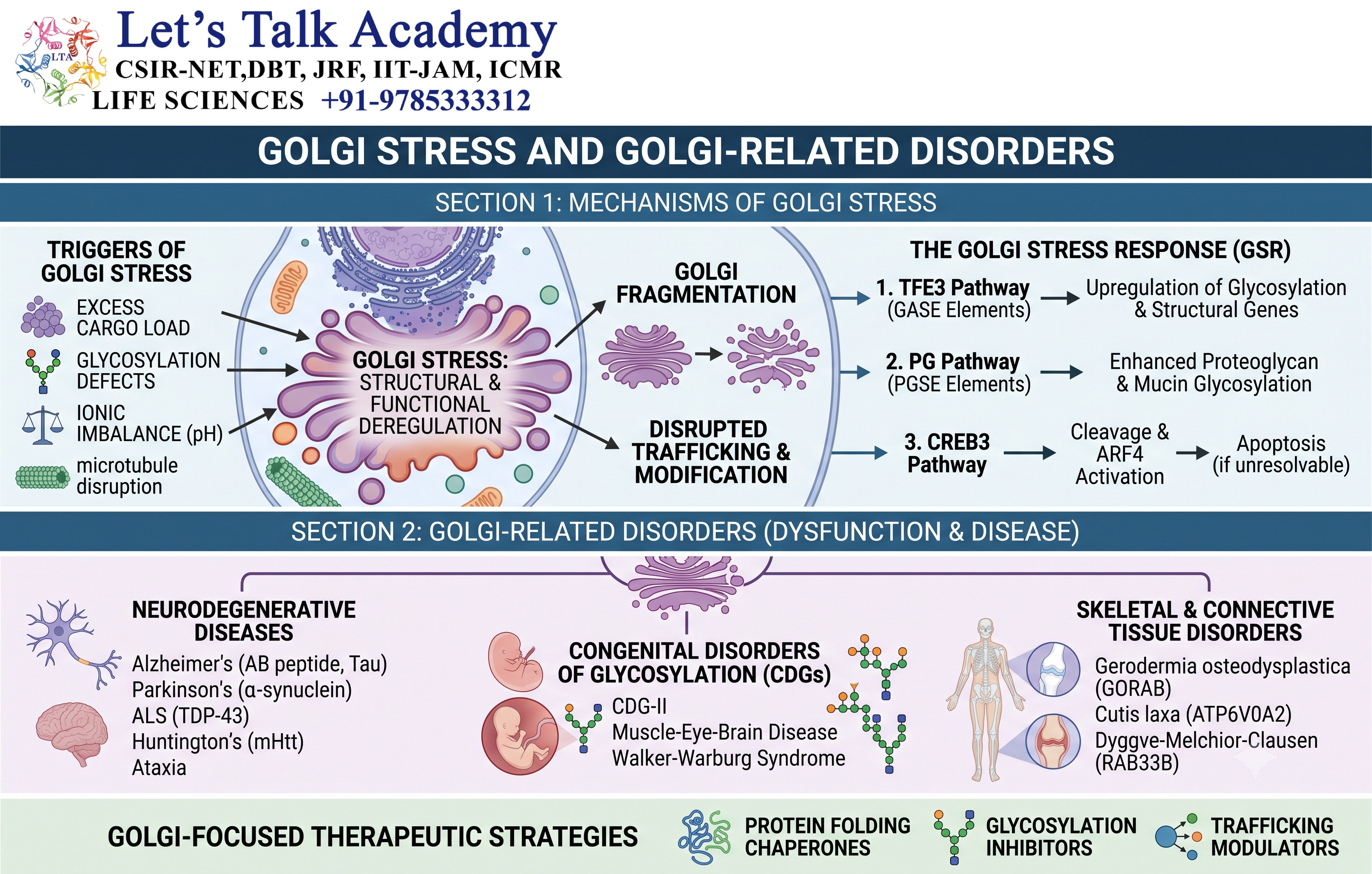
Because the Golgi apparatus is involved in protein processing and trafficking, disturbances in Golgi function can affect many cellular processes.
Defects in Golgi-associated proteins or trafficking pathways have been associated with various cellular and human disorders.
Golgi dysfunction can influence:
- Protein secretion
- Lysosomal function
- Cell signaling
- Membrane organization
- Protein localization
- Cellular degradation pathways
Changes in Golgi structure can also occur under conditions of cellular stress.
21. Golgi Apparatus and Apoptosis
The Golgi apparatus can participate in cellular responses associated with programmed cell death.
During apoptosis, cellular organelles undergo structural and biochemical changes.
Golgi fragmentation is commonly observed during apoptotic processes.
However, Golgi changes are not merely a passive consequence of cell death; Golgi-associated signaling pathways can also interact with cellular mechanisms regulating survival and apoptosis.
22. Golgi Apparatus and Cell Polarity
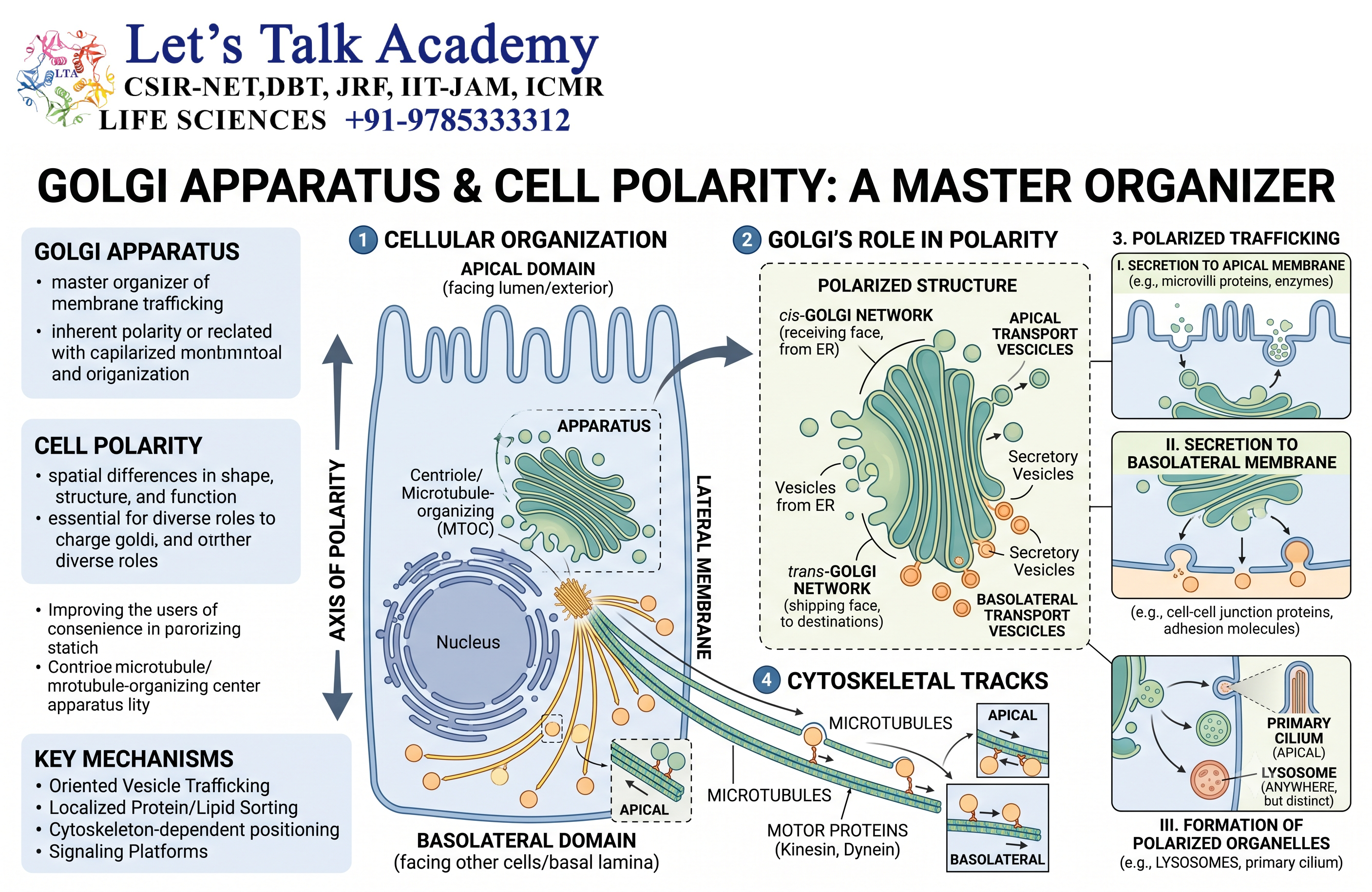
The Golgi apparatus contributes to the organization of polarized cells.
In many differentiated cells, proteins and membrane components must be delivered to specific regions of the plasma membrane.
For example, epithelial cells have distinct apical and basolateral surfaces.
The Golgi apparatus helps sort cargo so that different molecules reach the appropriate cellular domain.
This is essential for maintaining cell polarity and specialized cellular functions.
23. Importance of the Golgi Apparatus
The Golgi apparatus is essential because it coordinates several important cellular processes.
Its major importance can be summarized as follows:
- It modifies proteins.
- It processes lipids.
- It sorts cellular cargo.
- It packages molecules into vesicles.
- It contributes to lysosome formation.
- It participates in secretion.
- It helps maintain the plasma membrane.
- It contributes to carbohydrate synthesis.
- It supports extracellular matrix production.
- It participates in intracellular membrane trafficking.
Without properly functioning Golgi machinery, proteins and lipids would often fail to reach their correct destinations.
24. Golgi Apparatus: ER–Golgi Relationship
The ER and Golgi apparatus function as an integrated system.
The rough ER is primarily responsible for the synthesis and initial processing of proteins entering the secretory pathway.
The Golgi apparatus performs additional modifications, sorting, and packaging.
The relationship can be summarized as:
Rough ER → ER exit sites → Transport vesicles → Cis-Golgi → Medial Golgi → Trans-Golgi → Trans-Golgi network → Target compartment
This pathway is one of the most important intracellular transport routes in eukaryotic cells.
25. Golgi Apparatus: A Simple Functional Summary
The Golgi apparatus can be understood through five major activities:
Receive → Modify → Sort → Package → Deliver
Receive
The Golgi receives proteins and lipids from the ER.
Modify
Enzymes within different Golgi compartments modify these molecules.
Sort
The trans-Golgi network determines their destinations.
Package
Cargo is incorporated into appropriate transport vesicles.
Deliver
Vesicles deliver cargo to lysosomes, endosomes, the plasma membrane, or outside the cell.
26. Key Features of Golgi Bodies
| Feature | Description |
|---|---|
| Name | Golgi apparatus/Golgi complex |
| Basic structure | Flattened membrane-bound cisternae |
| Receiving side | Cis face |
| Processing region | Medial Golgi |
| Exporting side | Trans face |
| Major role | Modification, sorting, packaging, and transport |
| Major incoming source | Endoplasmic reticulum |
| Important carbohydrate modification | Glycosylation |
| Lysosomal targeting signal | Mannose-6-phosphate |
| Major outgoing region | Trans-Golgi network |
| Vesicular transport | Essential for Golgi function |
| Presence | Primarily in eukaryotic cells |
27. Golgi Apparatus: Conceptual Flowchart
Protein synthesis
↓
Ribosomes on rough ER
↓
Protein enters ER
↓
Initial protein folding and modification
↓
Transport vesicle formation
↓
Cis-Golgi
↓
Medial Golgi
↓
Further modification
↓
Trans-Golgi
↓
Trans-Golgi network
↓
Sorting and packaging
↓
Final destination
→ Plasma membrane
→ Lysosome/endosomal system
→ Secretory vesicle
→ Extracellular space


