
Principles of Enzyme Regulation
1. Introduction to Enzyme Regulation
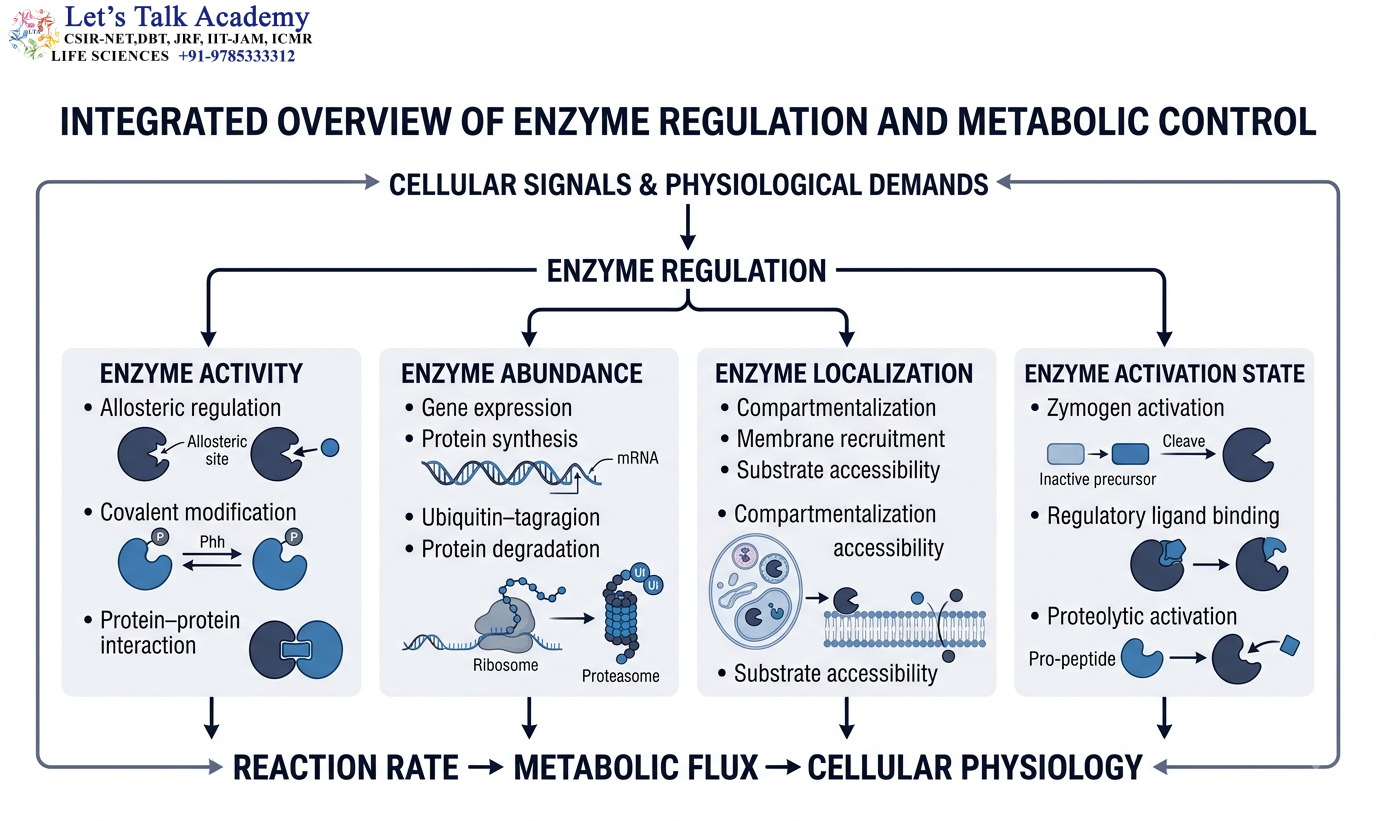
Enzymes are biological catalysts that accelerate the chemical reactions required for the survival, growth, maintenance, reproduction, and adaptation of living organisms. They allow biochemical reactions to occur at biologically useful rates by lowering the activation energy required to reach the transition state. However, simply accelerating reactions is not sufficient for the proper functioning of a cell. A living cell must carefully control when a reaction occurs, how rapidly it occurs, how much enzyme is available, and where the enzyme is active.
Enzyme regulation refers to the mechanisms through which a cell controls the activity, abundance, localization, and functional state of its enzymes. Regulation enables metabolic pathways to respond continuously to changes in nutrient availability, cellular energy status, hormonal signals, environmental conditions, and concentrations of metabolic intermediates and final products.
Consider a simple metabolic pathway:
A —E₁→ B —E₂→ C —E₃→ D
Here, E₁, E₂, and E₃ represent different enzymes catalyzing successive reactions. If all three enzymes remained permanently active at their maximum rates, the pathway could continue producing D even when the cell already contained sufficient D. Such uncontrolled activity would waste substrates and cellular energy.
Regulation prevents this problem by adjusting enzyme activity according to cellular requirements.
Enzyme regulation is therefore closely associated with metabolic homeostasis. Homeostasis does not mean that metabolite concentrations remain absolutely constant. Instead, cells continuously adjust metabolic reactions so that concentrations, energy production, and biosynthetic activity remain within physiologically appropriate ranges.
Different regulatory mechanisms operate over different time scales. Allosteric regulation can alter enzyme activity almost immediately. Reversible phosphorylation can also produce rapid responses. In contrast, regulation of gene expression and protein degradation usually produces slower but more sustained changes.
2. Organization of Enzyme Regulation
Enzyme regulation can occur at several levels. The most direct mechanism involves changing the activity of an enzyme molecule that is already present in the cell. A regulatory metabolite may bind to the enzyme, a phosphate group may be added or removed, or another protein may interact with the enzyme and alter its conformation.
A second level involves controlling the amount of enzyme present in the cell. The rate of enzyme synthesis can be altered through transcriptional and translational regulation. Similarly, selective protein degradation can decrease the amount of an enzyme when it is no longer required.
A third level involves controlling enzyme localization. An enzyme may be transported into a specific organelle, recruited to a membrane, released from a protein complex, or physically separated from its substrate.
A fourth mechanism involves conversion between inactive and active enzyme forms. Some enzymes are synthesized as inactive precursors called zymogens and become active only after specific proteolytic cleavage.
Thus, enzyme regulation can be broadly organized into four major aspects:
Enzyme activity → Enzyme abundance → Enzyme localization → Enzyme activation state
These mechanisms can operate independently or simultaneously.
3. Why Enzyme Regulation Is Necessary
A living cell is an interconnected biochemical system rather than a collection of independent reactions. The product of one pathway may become the substrate for another pathway, while the final product of a pathway may regulate an earlier reaction.
Enzyme regulation prevents excessive consumption of substrates and unnecessary expenditure of cellular energy. Biosynthetic pathways require ATP and reducing equivalents to synthesize amino acids, nucleotides, lipids, carbohydrates, and many other molecules. Once sufficient quantities of a product have accumulated, continued synthesis becomes unnecessary.
Regulation also allows cells to respond to changing energy requirements. When ATP demand increases, energy-producing pathways can be stimulated. When ATP is abundant, some catabolic pathways can be reduced while biosynthetic and storage processes become more active.
Another important role of enzyme regulation is the coordination of opposing pathways. For example, glycogen synthesis and glycogen degradation should not normally operate at high rates simultaneously. If both processes were strongly active, ATP could be consumed without producing useful net metabolic work. Reciprocal regulation minimizes this type of futile cycling.
Enzyme regulation also connects extracellular signals with intracellular metabolism. Hormones, neurotransmitters, growth factors, and other signaling molecules can activate intracellular signaling pathways that ultimately alter enzyme activity.
4. Allosteric Regulation
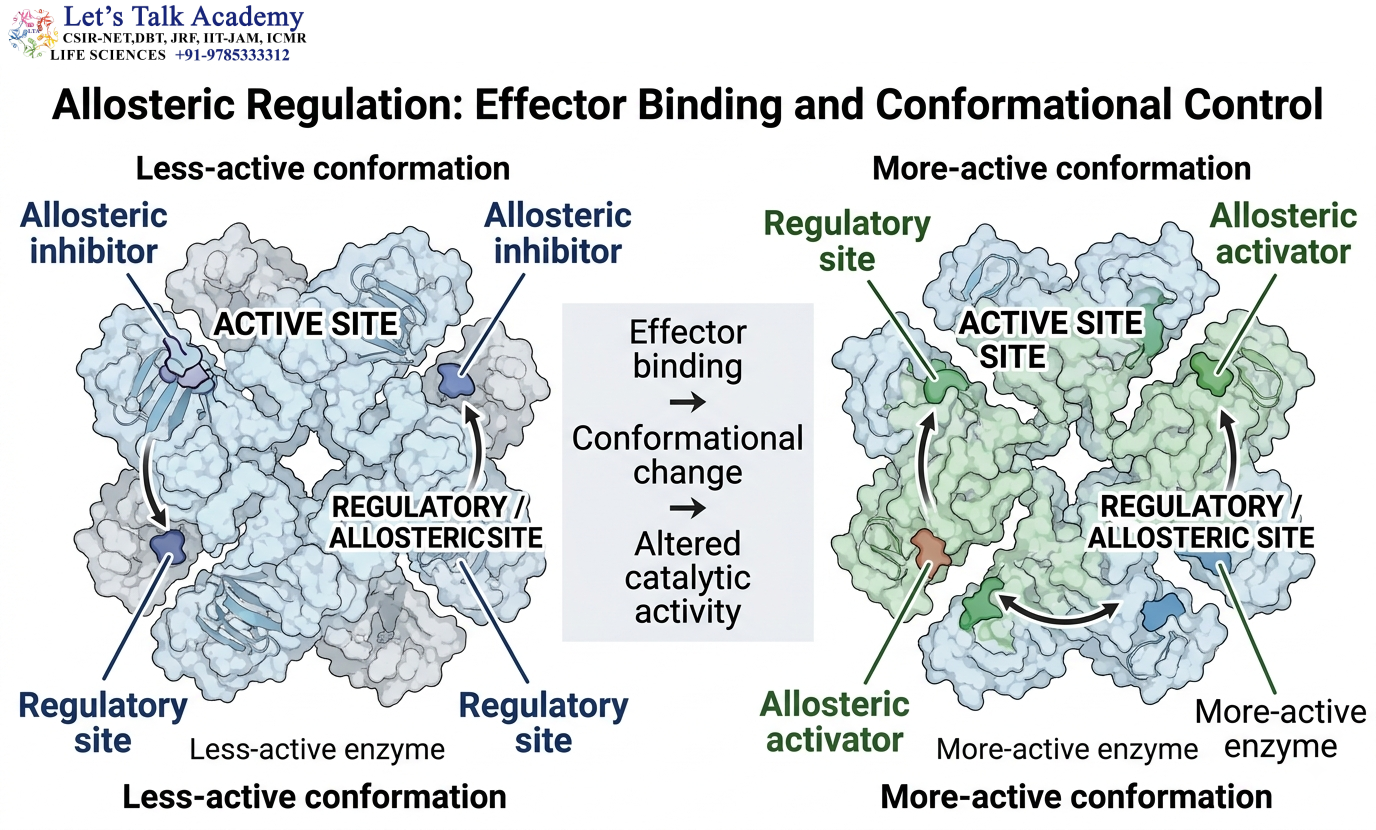
Allosteric regulation is one of the major mechanisms through which enzyme activity is controlled. The word allosteric refers to regulation occurring through a site that is different from the catalytic site.
An allosteric enzyme generally contains a catalytic region responsible for substrate conversion and one or more regulatory sites that bind specific effectors. When an effector binds to its regulatory site, it produces a conformational change in the protein. This structural change can be transmitted to the catalytic region and alter substrate binding or catalytic activity.
The basic interaction can be represented as:
E + X ⇌ EX
Here, E represents the enzyme and X represents an allosteric effector.
The effector may shift the enzyme between different functional states:
Less-active enzyme ⇌ More-active enzyme
If the effector increases enzyme activity, it is called an allosteric activator.
If the effector decreases enzyme activity, it is called an allosteric inhibitor.
Allosteric regulation is particularly effective because relatively small changes in the concentration of an effector can produce substantial changes in enzyme activity. This makes allosteric enzymes important control points in metabolic pathways.
5. Structural Basis of Allosteric Regulation
The activity of an enzyme depends strongly on its three-dimensional structure. The active site must have the appropriate geometry for substrate binding and catalysis. Binding of a regulatory molecule at another location can alter the structure of the protein and consequently modify catalytic activity.
The conformational change may alter the orientation of catalytic amino acid residues, the shape of the substrate-binding pocket, accessibility of the active site, or interactions between different subunits.
Many allosteric enzymes are oligomeric proteins composed of two or more interacting subunits. A conformational change in one subunit can influence neighboring subunits through interactions at the subunit interfaces.
This communication between subunits provides an important structural basis for cooperativity.
6. T and R States of Allosteric Enzymes
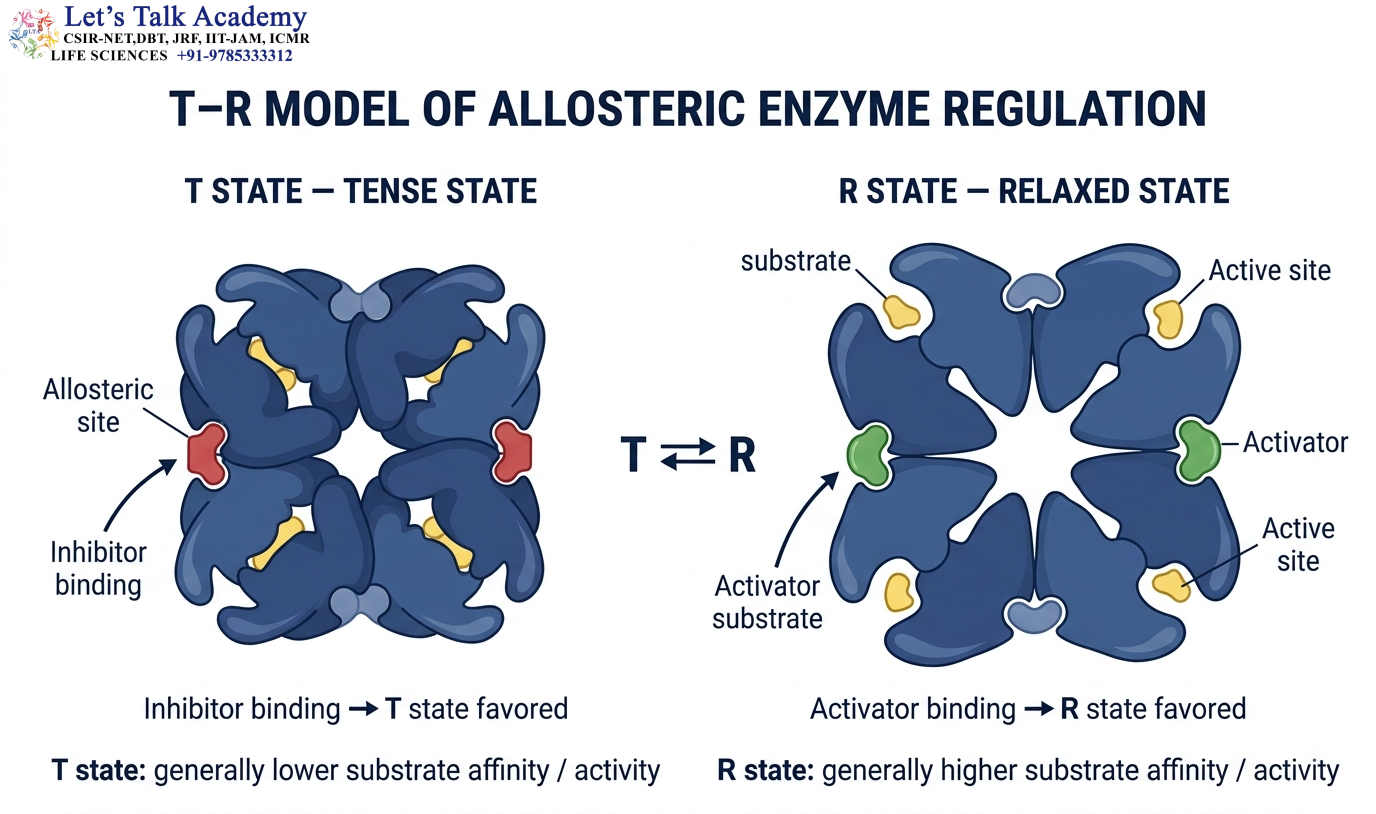
The classical model of allosteric regulation describes two major conformational states: the T state and the R state.
The T state is called the tense state and generally has lower substrate affinity or lower catalytic activity.
The R state is called the relaxed state and generally has higher substrate affinity or higher catalytic activity.
The equilibrium between the two states can be represented as:
T ⇌ R
An activator can stabilize the R state:
Activator binding → R state favored
An inhibitor can stabilize the T state:
Inhibitor binding → T state favored
The T–R model provides a useful framework for understanding how regulatory ligand binding can change the functional state of an oligomeric enzyme.
Real allosteric proteins can behave more complexly than a simple two-state model, but the T–R concept remains an important structural framework for understanding allosteric regulation.
7. Cooperativity
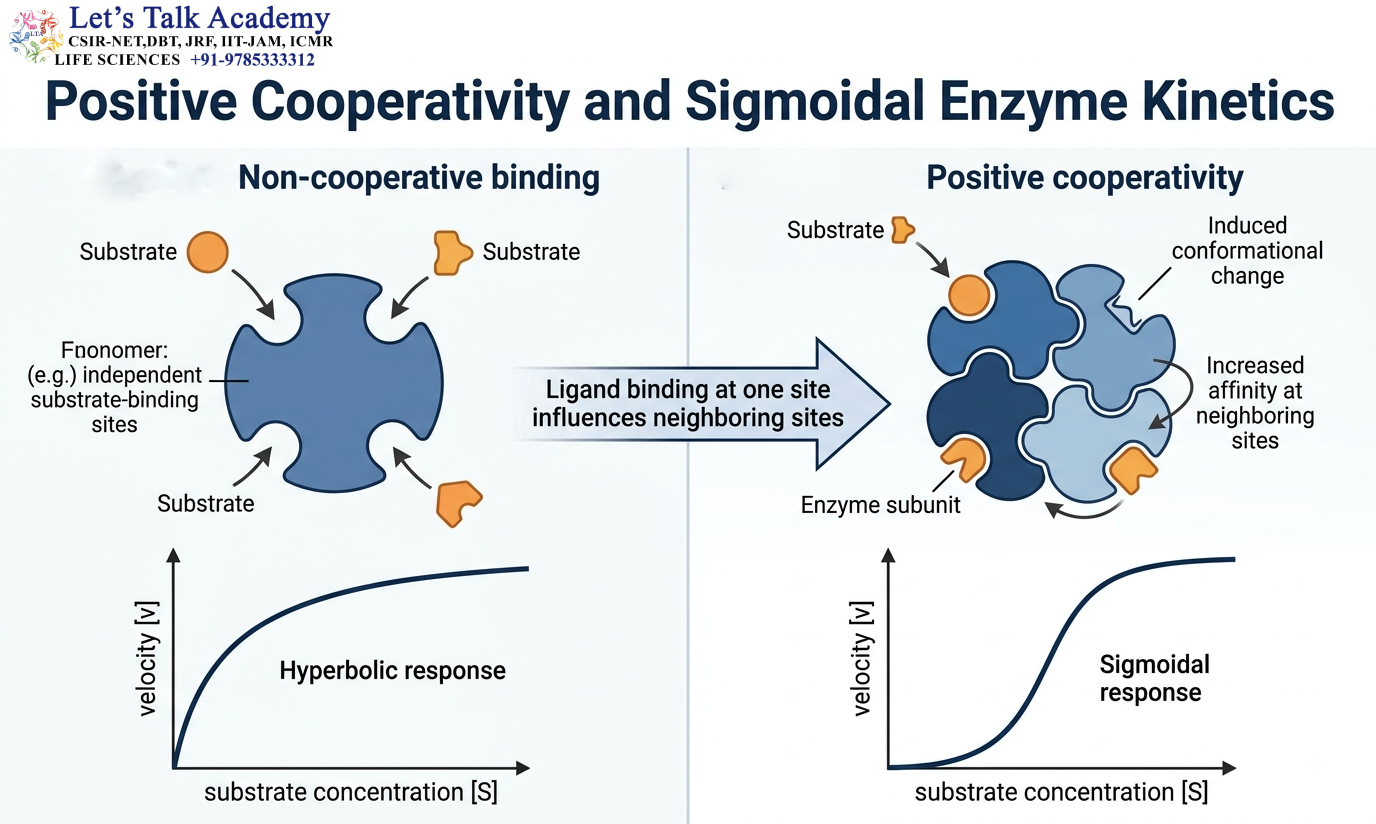
Cooperativity occurs when binding of a ligand at one site influences the binding properties of another site on the same protein or protein complex.
In positive cooperativity, binding of one substrate molecule increases the affinity of additional sites for the same substrate. Consequently, subsequent substrate molecules bind more readily.
In negative cooperativity, binding of one ligand decreases the affinity of other sites.
A simple Michaelis–Menten enzyme generally produces a hyperbolic relationship between substrate concentration and reaction velocity:
v = Vₘₐₓ[S] ÷ (Kₘ + [S])
In contrast, enzymes displaying positive cooperativity often show a sigmoidal relationship between substrate concentration and reaction velocity.
Cooperativity allows some enzymes to respond very sensitively to changes in substrate concentration. This can be particularly useful in metabolic pathways because a relatively small change in metabolite concentration can generate a large change in pathway activity.
8. Hill Equation
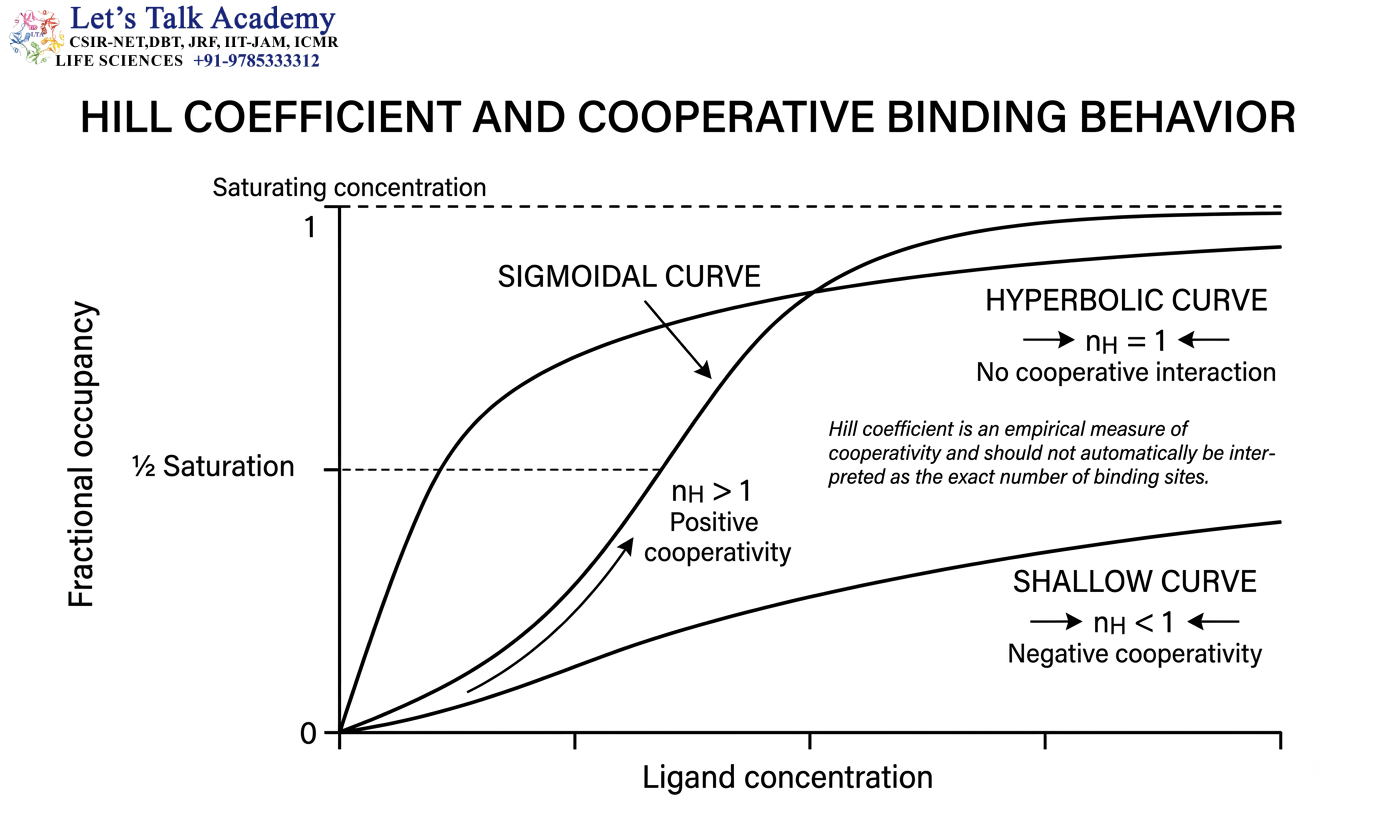
The Hill equation is commonly used to describe cooperative ligand binding.
The equation can be written as:
θ = [L]ⁿᴴ ÷ (K₀.₅ⁿᴴ + [L]ⁿᴴ)
where:
θ = fraction of ligand-binding sites occupied
[L] = ligand concentration
K₀.₅ = ligand concentration associated with half-maximal response under the Hill model
nᴴ = Hill coefficient
The Hill coefficient provides information about the degree and direction of cooperativity.
When:
nᴴ > 1
the system exhibits positive cooperativity.
When:
nᴴ = 1
the system behaves without cooperative interaction according to the Hill description.
When:
nᴴ < 1
the system exhibits negative cooperativity.
The Hill coefficient should not automatically be interpreted as the exact number of ligand-binding sites. It is an empirical parameter that describes the cooperative behavior of the system.
9. Homotropic and Heterotropic Regulation
Allosteric interactions can also be classified according to whether the regulatory molecule is the same as the substrate.
A homotropic interaction occurs when the substrate itself influences the binding of additional substrate molecules. Homotropic interactions are commonly associated with cooperative binding.
A heterotropic interaction occurs when a molecule different from the substrate influences enzyme activity.
For example, a metabolic end product can bind to an allosteric regulatory site and reduce the activity of an enzyme involved earlier in the pathway. Because the substrate and regulatory molecule are chemically different, this is a heterotropic interaction.
10. Feedback Inhibition
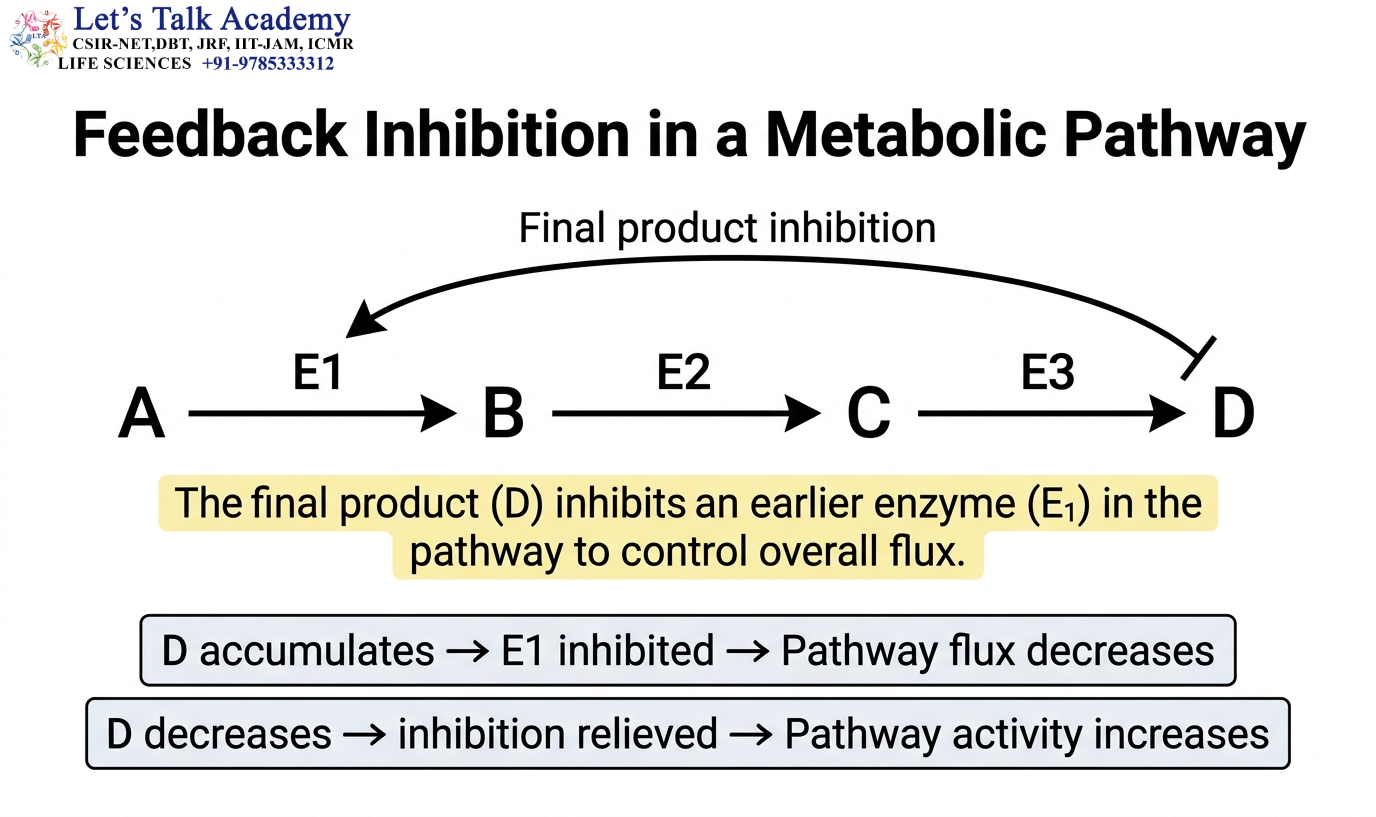
Feedback inhibition is a major mechanism for regulating metabolic pathways. In this mechanism, a product formed near the end of a pathway decreases the activity of an enzyme acting earlier in the pathway.
Consider:
A —E₁→ B —E₂→ C —E₃→ D
If D accumulates, it may inhibit E₁:
D ⊣ E₁
The pathway can therefore respond to the concentration of its own final product.
When D is abundant, further synthesis is unnecessary and the pathway is inhibited. As D is consumed and its concentration decreases, inhibition is relieved and pathway activity can increase again.
Feedback inhibition therefore provides a form of negative feedback that prevents unnecessary accumulation of metabolic products.
11. Feedback Inhibition and Pathway Control
Feedback inhibition is particularly common in biosynthetic pathways.
Consider:
A → B → C → D → E
If E is the final product, it can inhibit an enzyme responsible for an early committed reaction.
Regulation at an early step is advantageous because inhibition at this point prevents unnecessary conversion of precursor molecules into multiple downstream intermediates.
Feedback inhibition therefore reduces substrate consumption and energy expenditure.
In many metabolic pathways, the enzyme controlled by feedback inhibition is located at a branch point or at a reaction that commits a metabolite to a particular metabolic route.
Regulation at such points can have a substantial influence on overall metabolic flux.
12. Aspartate Transcarbamoylase as an Allosteric Regulatory System
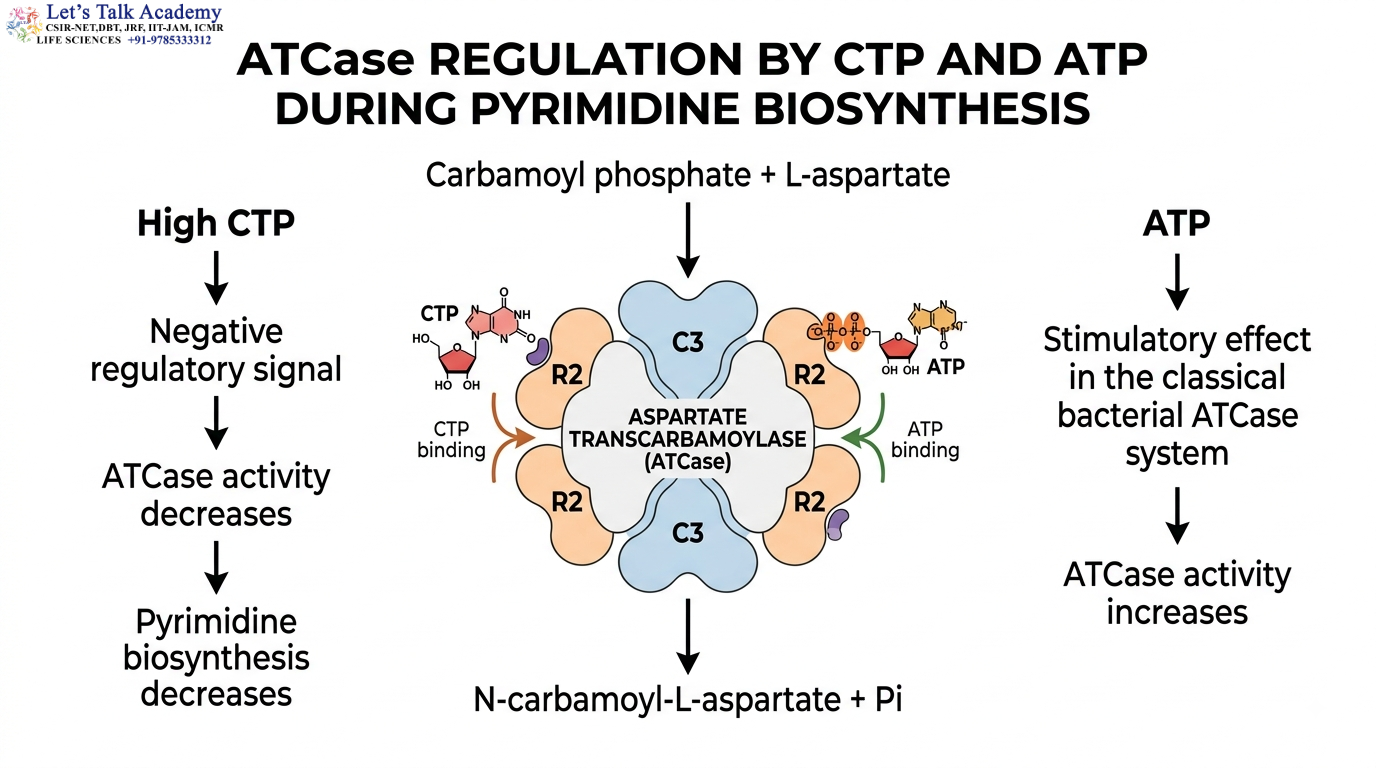
Aspartate transcarbamoylase, commonly abbreviated as ATCase, is a classical model for studying allosteric regulation and metabolic control.
ATCase catalyzes the following reaction during pyrimidine biosynthesis:
Carbamoyl phosphate + L-aspartate → N-carbamoyl-L-aspartate + Pᵢ
CTP, a downstream pyrimidine nucleotide, acts as a negative regulatory signal. When CTP concentration becomes high, binding of CTP decreases ATCase activity and consequently reduces the rate of pyrimidine biosynthesis.
ATP can exert a stimulatory effect on ATCase in the classical bacterial system. This reflects coordination between pyrimidine production and the broader nucleotide and energy status of the cell.
ATCase demonstrates how an enzyme can integrate signals from several metabolites rather than responding only to its immediate substrates.
13. Reversible Covalent Modification
Another major mechanism of enzyme regulation involves reversible covalent modification.
In this mechanism, a chemical group is temporarily attached to a specific amino acid residue of a protein. Phosphorylation is one of the most widely used examples.
A simplified phosphorylation reaction is:
Protein–OH + ATP → Protein–O–PO₃²⁻ + ADP + H⁺
The phosphate group is transferred from ATP to a hydroxyl-containing amino acid residue.
In eukaryotic signaling systems, the most important phosphorylation sites commonly occur on:
Serine, threonine, and tyrosine residues
Addition of a negatively charged phosphate group can alter electrostatic interactions within the protein. This can change its conformation, catalytic activity, substrate affinity, interactions with other proteins, or cellular localization.
Removal of the phosphate group occurs through hydrolysis:
Protein–O–PO₃²⁻ + H₂O → Protein–OH + Pᵢ + H⁺
Because phosphorylation and dephosphorylation are reversible processes, cells can use them for rapid and dynamic regulation.
14. Protein Kinases and Protein Phosphatases
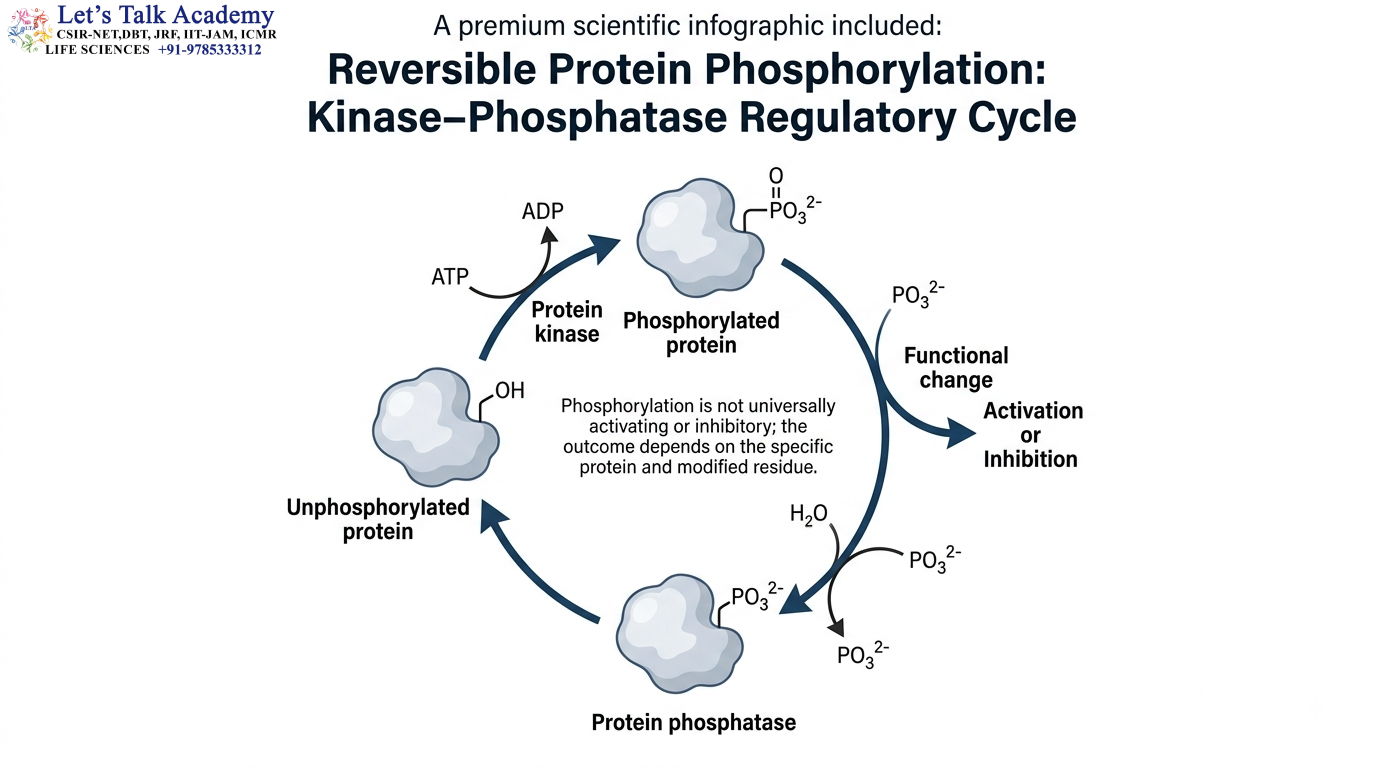
Protein kinases catalyze the transfer of phosphate groups to proteins, whereas protein phosphatases remove phosphate groups.
The regulatory cycle can be represented as:
Unphosphorylated protein —Protein kinase→ Phosphorylated protein —Protein phosphatase→ Unphosphorylated protein
The biological effect of phosphorylation depends on the specific protein and residue being modified.
Phosphorylation can activate one enzyme while inhibiting another. Therefore, phosphorylation itself should not be considered universally activating or universally inhibitory.
The functional consequence depends on how the modification changes the three-dimensional structure and molecular interactions of the particular protein.
Protein phosphorylation is also central to signal-transduction pathways. An extracellular signal can activate a kinase cascade, allowing information to be transmitted and amplified through the cell.
15. Glycogen Metabolism and Reciprocal Regulation
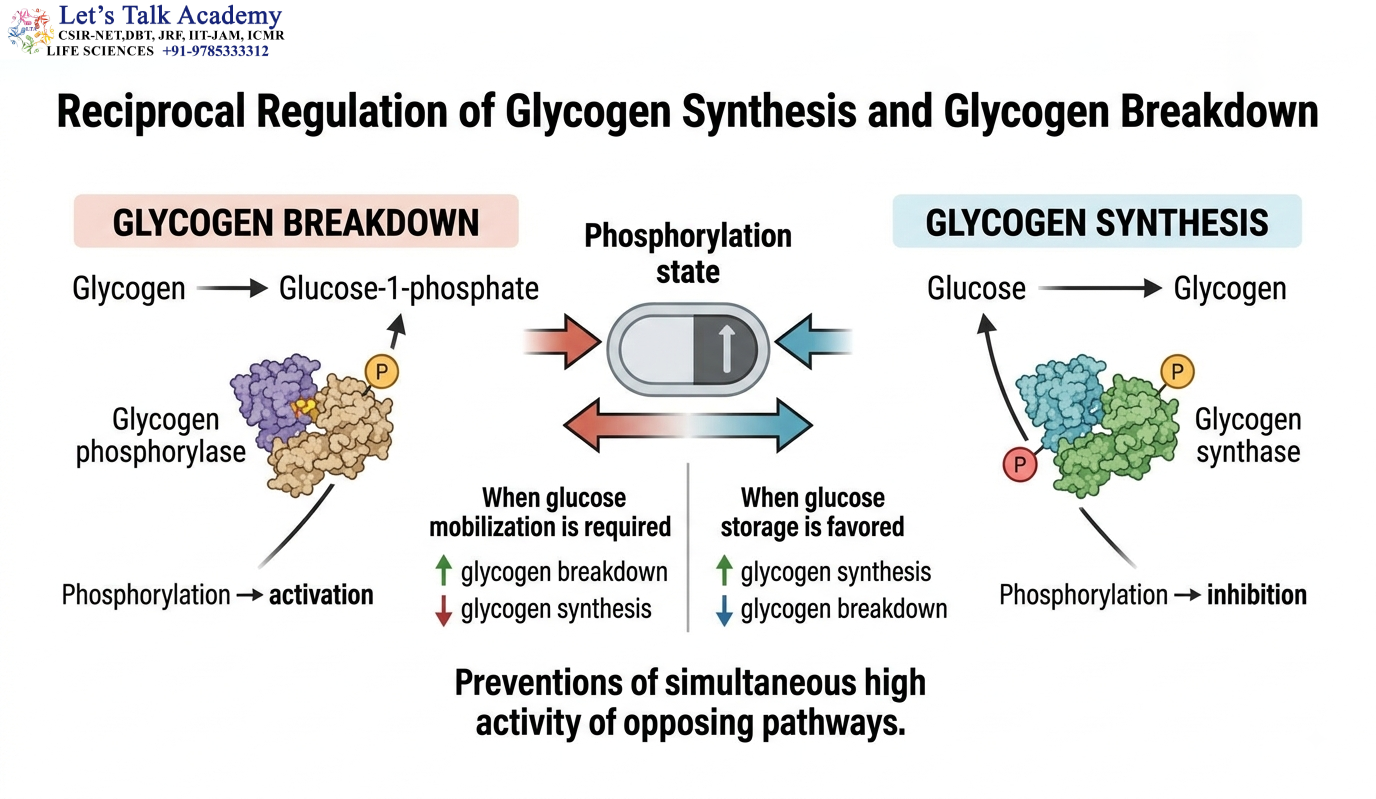
Glycogen metabolism provides an important example of coordinated enzyme regulation.
Glycogen phosphorylase participates in glycogen breakdown, whereas glycogen synthase participates in glycogen synthesis.
Their activities are regulated in opposite directions to prevent simultaneous high rates of glycogen synthesis and degradation.
In general:
Phosphorylation → Glycogen phosphorylase activation
whereas:
Phosphorylation → Glycogen synthase inhibition
This reciprocal regulation helps direct glucose toward either storage or mobilization according to physiological requirements.
When glucose must be mobilized, signaling pathways promote glycogen breakdown and suppress glycogen synthesis. When glucose storage is favored, the regulatory pattern is reversed.
This principle of reciprocal control is widespread throughout metabolism.
16. Proteolytic Activation of Zymogens
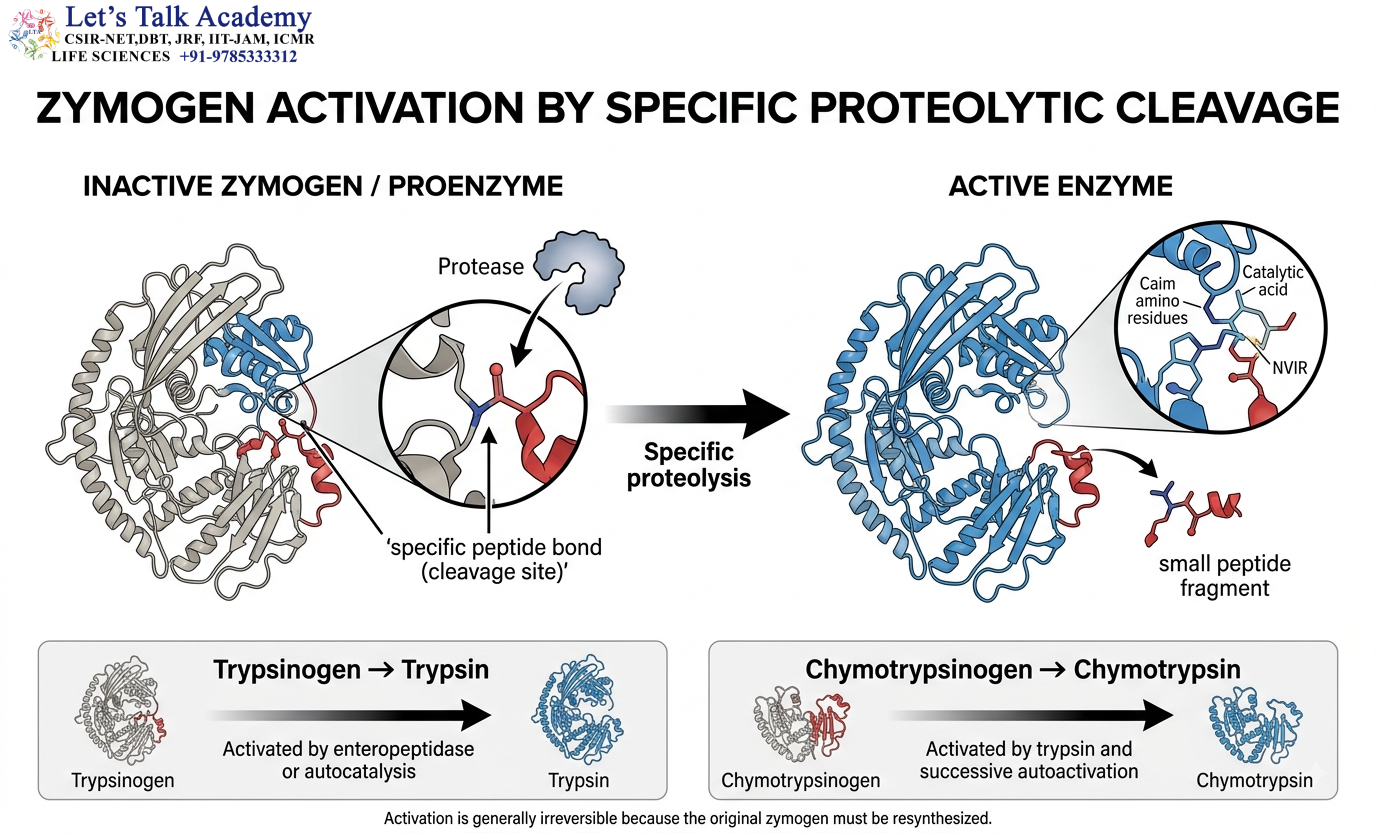
Some enzymes are synthesized as inactive precursors called zymogens or proenzymes. Their catalytic activity is generated only after specific peptide bonds are cleaved.
The general process is:
Inactive zymogen —Specific proteolysis→ Active enzyme
Proteolytic activation is particularly useful when premature enzyme activity could damage the cell or tissue in which the enzyme is synthesized.
Digestive proteases provide classic examples.
Trypsinogen → Trypsin
Chymotrypsinogen → Chymotrypsin
The inactive precursors can be transported safely before activation occurs in the appropriate physiological environment.
Proteolytic activation is generally considered irreversible because restoring the original zymogen requires synthesis of a new protein rather than simple reversal of the cleavage reaction.
17. Proteolytic Cascades
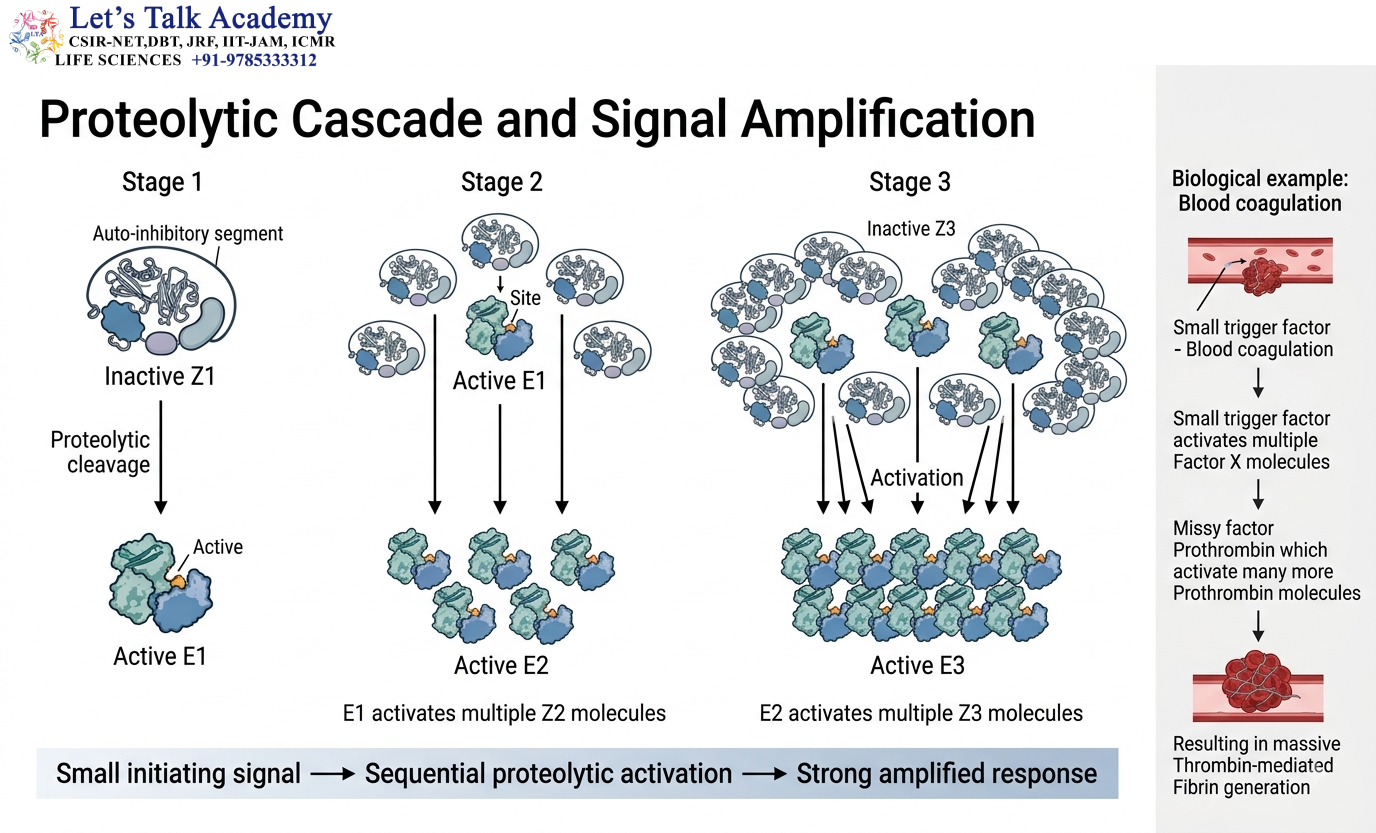
Proteolytic activation can generate strong amplification because one activated enzyme can activate many molecules of another inactive precursor.
A simplified cascade is:
Z₁ → E₁
E₁ + Z₂ → E₂
E₂ + Z₃ → E₃
Here, Z represents an inactive precursor and E represents the corresponding active enzyme.
Blood coagulation provides an important biological example of a proteolytic cascade. Sequential activation of clotting factors produces a strong response from a relatively small initiating stimulus.
Such cascades provide rapid amplification, but they must be tightly regulated because uncontrolled proteolysis can cause extensive tissue damage or inappropriate clot formation.
18. Regulation Through Protein–Protein Interactions
Enzymes can be regulated through physical interactions with other proteins.
A regulatory protein can change enzyme conformation, catalytic activity, localization, or substrate accessibility.
Some enzymes are functional only when associated with specific regulatory subunits. Others can be inhibited when a regulatory protein occupies a region required for substrate binding or catalytic activity.
A reversible interaction can be represented as:
E + R ⇌ ER
where R represents a regulatory protein.
Formation of the ER complex can either activate or inhibit the enzyme depending on the structural consequences of the interaction.
Protein–protein interactions are especially important in signaling pathways in which enzymes function as components of larger molecular complexes.
19. Regulation by Second Messengers
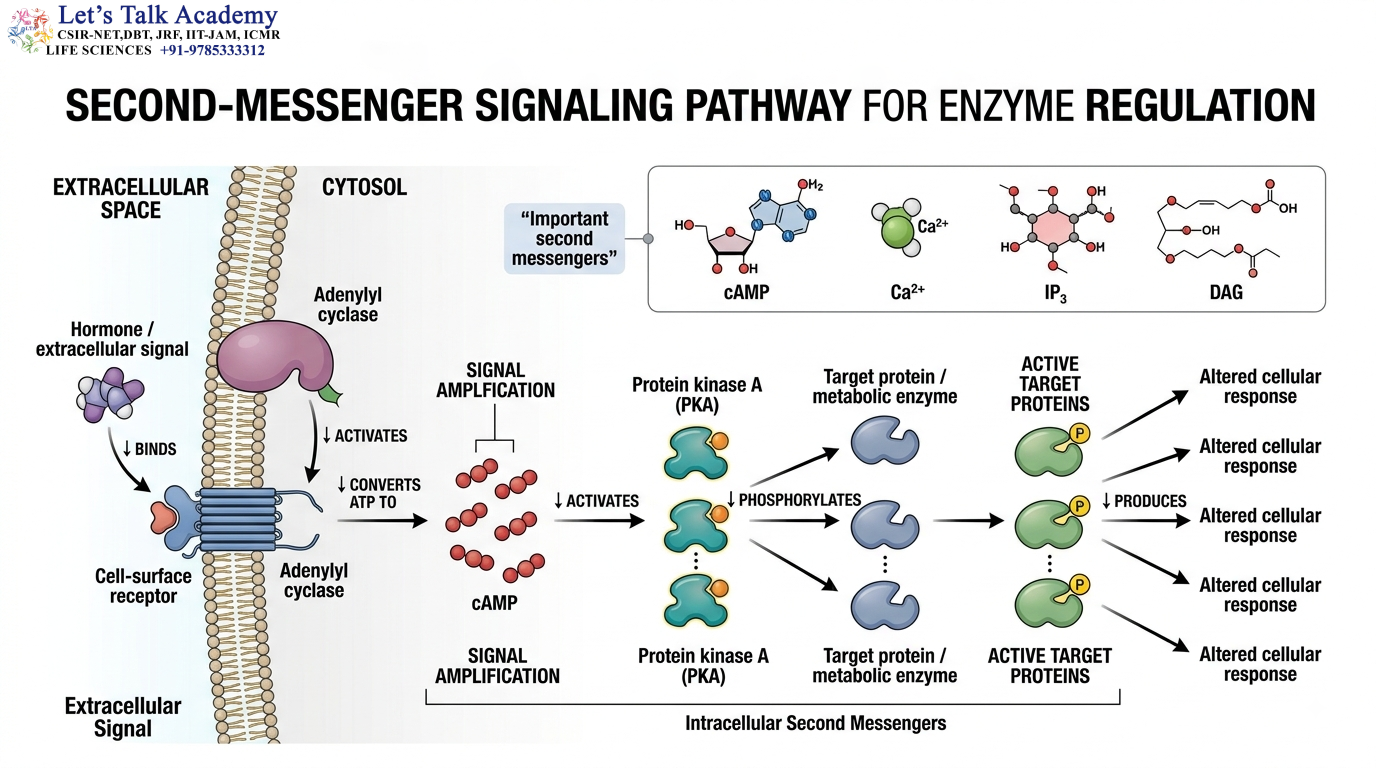
Second messengers are intracellular molecules that transmit information generated by extracellular signals.
Important examples include:
cAMP, Ca²⁺, IP₃, and DAG
A typical signaling pathway can be represented as:
Hormone → Receptor → Adenylyl cyclase → cAMP → Protein kinase A → Target protein
Activation of adenylyl cyclase can increase intracellular cAMP concentration. cAMP then regulates proteins such as protein kinase A.
Second-messenger systems can amplify extracellular signals because activation of one signaling component can influence many downstream molecules.
20. Protein Kinase A and cAMP
Protein kinase A, or PKA, is a classical example of enzyme regulation by a second messenger.
In its inactive state, PKA exists as a complex containing regulatory and catalytic subunits. Binding of cAMP to the regulatory subunits produces conformational changes that reduce their inhibitory interaction with the catalytic subunits.
The catalytic subunits can then phosphorylate specific target proteins.
The overall pathway can be represented as:
Increased cAMP → PKA activation → Target-protein phosphorylation → Altered cellular response
The precise physiological response depends on the cell type and the proteins targeted by PKA.
21. Regulation by Substrate Concentration
Substrate concentration itself influences enzyme activity.
For a simple Michaelis–Menten enzyme:
v = Vₘₐₓ[S] ÷ (Kₘ + [S])
where:
v = initial reaction velocity
Vₘₐₓ = maximum reaction velocity
[S] = substrate concentration
Kₘ = substrate concentration at which the reaction velocity is half of Vₘₐₓ
When substrate concentration is much lower than Kₘ:
[S] ≪ Kₘ
the equation becomes approximately:
v ≈ (Vₘₐₓ ÷ Kₘ)[S]
Therefore, under low-substrate conditions, the reaction rate is approximately proportional to substrate concentration.
At very high substrate concentration:
[S] ≫ Kₘ
the reaction approaches:
v ≈ Vₘₐₓ
The enzyme becomes saturated because most available active sites are occupied by substrate.
22. Vₘₐₓ and Enzyme Concentration
For a simple enzyme system:
Vₘₐₓ = kcat[E]ₜ
where:
kcat = catalytic constant or turnover number
[E]ₜ = total enzyme concentration
This relationship demonstrates why changes in enzyme abundance can alter metabolic capacity.
If enzyme concentration is doubled while substrate and other conditions remain suitable, Vₘₐₓ can approximately double.
This principle forms the basis of long-term regulation through gene expression and protein degradation.
23. Kₘ and Enzyme Regulation
For a simple Michaelis–Menten enzyme:
Kₘ = [S] when v = Vₘₐₓ ÷ 2
Thus, Kₘ corresponds to the substrate concentration at which the reaction reaches half of its maximum velocity under the assumptions of the Michaelis–Menten model.
Kₘ is a kinetic parameter and should not automatically be interpreted as a direct measurement of binding affinity in every enzyme mechanism.
For simple Michaelis–Menten behavior, a lower Kₘ means that half-maximal velocity is reached at a lower substrate concentration.
However, interpretation becomes more complicated for enzymes with multiple substrates, multiple catalytic steps, allosteric behavior, or cooperative interactions.
Allosteric enzymes frequently do not follow classical Michaelis–Menten kinetics. Their substrate-response curves may be sigmoidal, and K₀.₅ is often used to describe the substrate concentration corresponding to half-maximal activity.
24. Catalytic Efficiency
Catalytic efficiency is commonly represented by:
Catalytic efficiency = kcat ÷ Kₘ
or simply:
kcat/Kₘ
This parameter is particularly useful for comparing enzymes when substrate concentration is low relative to Kₘ.
A high kcat/Kₘ value indicates that an enzyme can efficiently convert substrate under non-saturating conditions.
Catalytic efficiency can be influenced by changes in substrate interaction, conformational state, catalytic turnover, and accessibility of the active site.
25. Product Inhibition
Product inhibition occurs when the product of an enzymatic reaction inhibits the enzyme responsible for producing it.
For a reversible reaction:
S ⇌ P
the product P can bind to the enzyme and reduce further conversion of S into P.
Product inhibition differs from classical feedback inhibition.
In product inhibition, the product generally refers to the immediate product of the reaction under consideration.
In feedback inhibition, a downstream product of a larger metabolic pathway regulates an enzyme acting earlier in the pathway.
Both mechanisms can reduce unnecessary production, but they operate at different levels of pathway organization.
26. Feedforward Regulation
Feedback regulation responds primarily to downstream products, whereas feedforward regulation allows an upstream metabolite to influence a later step.
Consider:
A → B → C
If accumulation of A activates the enzyme responsible for converting B into C, the pathway demonstrates feedforward control.
Feedforward regulation can prepare downstream reactions to handle an increased supply of metabolic intermediates.
It can therefore prevent excessive accumulation of intermediates and coordinate sequential enzymatic reactions.
Feedback and feedforward regulation together provide directional control over metabolic flux.
27. Regulation at Committed Steps
Many metabolic pathways contain a reaction at which a metabolite becomes committed to a particular metabolic route.
For example:
A ⇌ B
may be reversible, whereas:
B → C
may commit B to a specific biosynthetic pathway.
Regulating the enzyme responsible for the committed step can have a strong influence on overall pathway activity.
Committed steps are therefore frequently subject to allosteric regulation, feedback inhibition, hormonal control, or covalent modification.
The effectiveness of regulation depends not simply on where an enzyme occurs in a pathway but on how strongly its reaction contributes to overall metabolic flux.
28. Regulation at Branch Points
Metabolic pathways often contain branch points at which one intermediate can enter several different pathways.
For example:
A → B
followed by:
B → C
or:
B → D
The cell must determine how much B should flow toward C and how much should flow toward D.
If C is already abundant, the pathway leading to C can be inhibited while the alternative pathway remains active.
Branch-point regulation is particularly important in amino acid and nucleotide metabolism, where common precursor molecules are distributed among several biosynthetic pathways.
29. Regulation Through Cellular Compartmentalization
Eukaryotic cells contain membrane-bound organelles that separate biochemical processes spatially.
Enzymes of oxidative phosphorylation are located in mitochondria, many glycolytic reactions occur in the cytosol, and numerous hydrolytic enzymes are confined to lysosomes.
This organization means that an enzyme may be effectively regulated simply by controlling whether it encounters its substrate.
Compartmentalization also prevents potentially incompatible biochemical reactions from interfering with one another.
The separation of metabolic processes creates local concentrations of substrates, products, cofactors, and regulatory proteins. Therefore, enzyme activity inside a cell depends not only on the intrinsic properties of the enzyme but also on its cellular location.
30. Regulation Through Enzyme Localization
Enzymes can be transported between cellular compartments or recruited to particular membranes and protein complexes.
A signaling event can cause an enzyme to move toward its substrate or away from it. Similarly, an enzyme may remain within an organelle until a particular signal changes its localization.
Localization therefore provides a spatial dimension to enzyme regulation.
The concept can be represented as:
Signal → Change in enzyme localization → Change in substrate accessibility → Change in reaction rate
This mechanism is especially important for signaling enzymes and enzymes associated with cellular membranes.
31. Regulation Through Gene Expression
Cells can regulate enzyme activity by changing the amount of enzyme synthesized.
At the transcriptional level, regulatory proteins can influence whether a particular gene is transcribed. Changes in mRNA production subsequently influence protein synthesis.
The overall process can be represented as:
Signal → Gene regulation → mRNA synthesis → Protein synthesis → Change in enzyme abundance
This type of regulation is slower than allosteric control because several biological steps must occur before the amount of functional enzyme changes.
Its major advantage is that it can produce sustained adaptation.
If a metabolic pathway is required continuously for an extended period, increasing enzyme production provides greater long-term catalytic capacity.
32. Regulation Through Protein Degradation
The amount of an enzyme in a cell depends on both its synthesis and its degradation.
If enzyme synthesis exceeds degradation:
Enzyme abundance increases
If enzyme degradation exceeds synthesis:
Enzyme abundance decreases
Protein degradation is therefore an important component of enzyme homeostasis.
In eukaryotic cells, selective protein degradation can occur through systems such as the ubiquitin–proteasome pathway.
Proteins can be marked for degradation through attachment of ubiquitin molecules and subsequently recognized and processed by the proteasome.
This mechanism allows cells to remove enzymes that are no longer required or that have become damaged.
33. Isoenzymes and Tissue-Specific Regulation
Isoenzymes are different molecular forms of enzymes that catalyze the same or closely related reactions but possess distinct structural or regulatory properties.
Different tissues may express different forms of an enzyme because their metabolic requirements are not identical.
Isoenzymes can differ in substrate affinity, catalytic rate, regulatory behavior, subunit composition, and response to metabolites.
This arrangement allows the same biochemical transformation to be adapted to different physiological environments.
For example, an enzyme functioning in muscle may be regulated differently from a corresponding enzyme in liver because muscle and liver have different requirements for energy production, storage, and metabolic processing.
Isoenzymes therefore provide an additional layer of tissue-specific metabolic control.
34. Regulation by Cellular Energy Status
The cell continuously monitors its energy state through the relative abundance of ATP, ADP, and AMP.
ATP is the major immediate energy currency of the cell. High ATP concentration generally indicates adequate energy availability, whereas increased ADP and AMP can indicate increased energy demand.
Consequently, enzymes involved in energy-producing pathways often respond to these metabolites.
A simplified relationship is:
High ATP → Reduced activity of selected catabolic pathways
whereas:
High ADP/AMP → Enhanced activity of selected energy-generating pathways
The precise response depends on the enzyme and metabolic pathway.
This mechanism allows cells to match energy production with energy consumption rather than producing ATP at maximum capacity regardless of cellular demand.
35. Regulation by Redox State
Metabolic reactions also depend strongly on cellular redox state.
Important redox couples include:
NAD⁺ ⇌ NADH
and:
NADP⁺ ⇌ NADPH
NAD⁺ is frequently involved in oxidative reactions, whereas NADPH is widely used in reductive biosynthesis and antioxidant defense.
The relative concentrations of oxidized and reduced cofactors therefore provide information about the metabolic condition of the cell.
Changes in the NAD⁺/NADH ratio can influence the activity and direction of metabolic reactions, while NADPH availability is particularly important for biosynthetic processes and maintenance of cellular reducing capacity.
36. Regulation by Hormones
Hormones provide an important connection between enzyme regulation and whole-organism physiology.
A hormone released from one tissue can travel through the circulation and alter metabolic activity in another tissue.
Insulin, glucagon, and epinephrine are classic examples of hormones that influence carbohydrate and lipid metabolism.
A hormonal signal can regulate enzymes through several mechanisms. It may alter second-messenger concentrations, activate protein kinases, modify protein phosphatases, change enzyme localization, or influence gene expression.
A simplified signaling sequence is:
Hormone → Receptor → Signal transduction → Regulatory protein → Target enzyme → Metabolic response
The final response depends on the tissue, receptor type, intracellular signaling machinery, and target enzymes present.
37. Short-Term and Long-Term Regulation
Enzyme regulation can be classified according to the time required to produce the response.
Short-term regulation primarily modifies proteins that are already present. Allosteric regulation can occur almost immediately after an effector binds to an enzyme. Phosphorylation and dephosphorylation can also alter enzyme activity rapidly.
Long-term regulation generally involves changes in protein abundance. Alterations in transcription, translation, and protein degradation can change the amount of enzyme available over minutes, hours, or longer periods.
These mechanisms are not independent.
For example, a hormone may initially produce a rapid response through phosphorylation and later produce a sustained response by altering gene expression.
The cell can therefore combine rapid and long-term mechanisms to produce both immediate and persistent physiological responses.
38. Reciprocal Regulation of Opposing Pathways
Opposing metabolic pathways require coordinated control.
For example:
A → B → C
may represent a biosynthetic pathway, whereas:
C → B → A
may represent a degradative pathway.
If both pathways were active simultaneously at high rates, the cell could enter a futile cycle in which energy is consumed without useful net conversion.
Reciprocal regulation prevents this problem.
Activation of one pathway is accompanied by inhibition of the opposing pathway.
This principle is particularly important in:
Glycogen metabolism
Glycolysis and gluconeogenesis
Fatty acid synthesis and fatty acid oxidation
39. Regulation of Metabolic Flux
The rate at which metabolites pass through a metabolic pathway is called metabolic flux.
Flux is determined by the combined properties of multiple enzymes, substrate concentrations, product concentrations, cofactors, cellular compartmentalization, and regulatory interactions.
A change in one enzyme does not necessarily produce a proportional change in total pathway flux because other reactions may become limiting.
Therefore, metabolic regulation must be considered at the level of the entire pathway rather than assuming that every enzyme contributes equally to pathway control.
Enzymes operating at strongly regulated steps can have a greater influence on pathway flux than enzymes catalyzing reactions that rapidly approach equilibrium.
40. Enzyme Regulation and Thermodynamics
Enzymes alter reaction rates but do not change the fundamental equilibrium constant of a reaction.
For a simple reaction:
A ⇌ B
the equilibrium constant is:
Kₑq = [B]ₑq ÷ [A]ₑq
where [A]ₑq and [B]ₑq represent the equilibrium concentrations of A and B.
For a more general reaction:
aA + bB ⇌ cC + dD
the equilibrium constant is:
Kₑq = [C]ₑqᶜ[D]ₑqᵈ ÷ ([A]ₑqᵃ[B]ₑqᵇ)
An enzyme accelerates both the forward and reverse reactions by providing an alternative pathway with a lower activation energy.
Therefore, the enzyme allows equilibrium to be reached more rapidly but does not change the equilibrium position simply by being present.
Regulatory mechanisms alter enzyme activity and consequently influence how rapidly a reaction proceeds or how metabolic flux is distributed through a pathway.
This distinction between kinetics and thermodynamics is fundamental to understanding enzyme regulation.
41. Allosteric Regulation Compared with Classical Enzyme Inhibition
Allosteric regulation and enzyme inhibition are related concepts but are not completely interchangeable.
In classical inhibition, an inhibitor may interact with the active site or another region of the enzyme and alter its kinetic behavior.
In allosteric regulation, the regulatory molecule binds to a specific regulatory site and changes the conformational state of the enzyme.
An allosteric inhibitor may reduce catalytic activity by stabilizing a less-active conformation, whereas an allosteric activator can stabilize a more-active conformation.
The distinction is therefore primarily mechanistic and structural rather than simply based on whether enzyme activity increases or decreases.
42. Enzyme Regulation Through Protein Modification
Phosphorylation is only one example of covalent protein modification.
Cells can also regulate proteins through:
Acetylation
Methylation
Adenylylation
Uridylylation
ADP-ribosylation
Ubiquitination
and several other modifications.
Each modification can influence different properties of a protein.
A modification may change protein charge, alter interaction with another protein, expose a degradation signal, influence cellular localization, or affect catalytic activity.
The functional effect depends on the exact amino acid residue modified and the structural context of that residue.
Consequently, protein modification provides a versatile regulatory mechanism through which cells can control enzyme function.
43. Regulation Through Multienzyme Complexes
Some metabolic pathways contain enzymes that are physically associated with one another.
Such organization can improve the transfer of intermediates between active sites and reduce diffusion of intermediates into the surrounding cellular environment.
A multienzyme complex can also coordinate regulation because modification of one component may influence the activity or accessibility of other components.
This organization can facilitate substrate channeling, in which an intermediate produced by one active site is transferred efficiently to another active site.
Multienzyme complexes therefore provide both catalytic and regulatory advantages.
44. Regulation at the Level of Enzyme Activation
Some enzymes are synthesized in an inactive state and require an activating event.
Activation can occur through:
Proteolytic cleavage
Binding of a regulatory ligand
Association with another protein
Covalent modification
The difference between enzyme activation and enzyme synthesis is important.
When an inactive enzyme is activated, the amount of protein does not necessarily change. Instead, an existing protein molecule is converted into a functional state.
By contrast, regulation of enzyme synthesis changes the number of enzyme molecules available in the cell.
The cell can therefore regulate the same pathway through both mechanisms simultaneously.
45. Integration of Multiple Regulatory Signals
An enzyme may receive regulatory information from several sources simultaneously.
Its activity may be influenced by:
Substrate concentration
Product concentration
ATP and AMP
Phosphorylation state
Allosteric effectors
Regulatory proteins
Cellular localization
These signals do not necessarily operate independently. One signaling pathway may modify the sensitivity of an enzyme to another regulatory molecule.
This integration allows cells to make complex metabolic decisions.
A cell does not simply respond to whether one metabolite is high or low. Instead, it integrates the combined biochemical information available at a particular moment.
This is why metabolic regulation is better understood as a network of interconnected control mechanisms rather than as a simple sequence of independent switches.
46. General Model of an Integrated Regulatory System
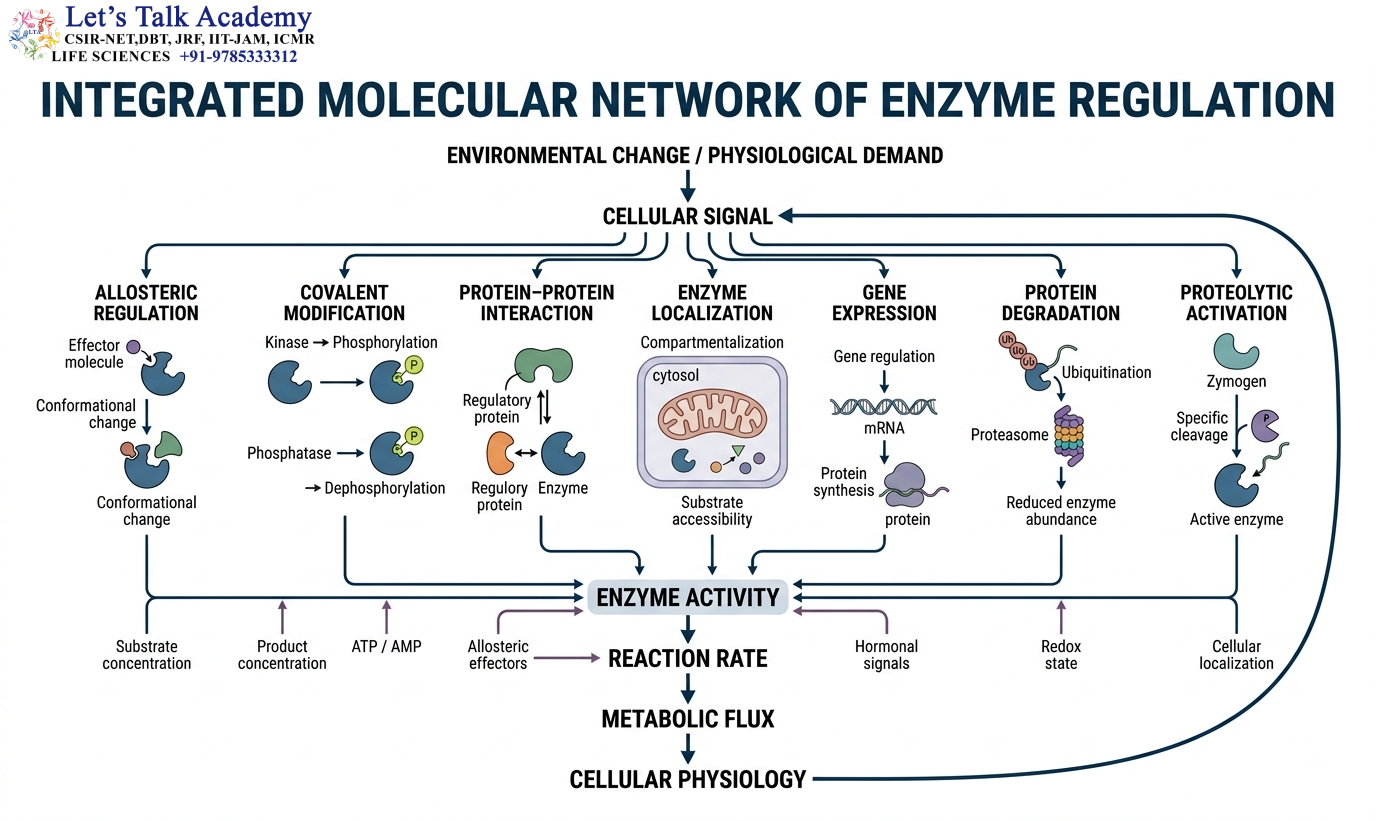
The integrated operation of enzyme regulation can be represented as:
Environmental change → Cellular signal → Metabolic or signaling response
The response may involve:
Allosteric regulation
Covalent modification
Protein–protein interaction
Change in localization
Change in enzyme synthesis
Change in enzyme degradation
These mechanisms ultimately influence:
Enzyme activity → Reaction rate → Metabolic flux → Cellular physiology
Changes in metabolites can then provide additional feedback to the regulatory system.
This creates a dynamic regulatory network in which the output of one process can become an input for another.
47. Comparison of Major Mechanisms of Enzyme Regulation
Mechanism |
Basic principle |
Typical reversibility |
General response |
|---|---|---|---|
| Allosteric regulation | Regulatory ligand changes enzyme conformation | Usually reversible | Very rapid |
| Feedback inhibition | Downstream product inhibits an earlier enzyme | Usually reversible | Rapid |
| Covalent modification | Chemical group is added or removed | Often reversible | Rapid |
| Proteolytic activation | Inactive precursor is cleaved | Generally irreversible | Rapid after activation |
| Protein–protein interaction | Regulatory protein alters enzyme function | Usually reversible | Rapid |
| Substrate availability | Changes in substrate concentration alter reaction rate | Dynamic | Rapid |
| Compartmentalization | Controls enzyme and substrate accessibility | Dynamic | Variable |
| Gene expression | Changes enzyme synthesis | Reversible over time | Slow |
| Protein degradation | Changes enzyme abundance | Dynamic | Slow |
| Isoenzyme expression | Different enzyme forms are expressed in different contexts | Long-term | Tissue-specific |
48. Major Regulatory Equations
Michaelis–Menten Equation
v = Vₘₐₓ[S] ÷ (Kₘ + [S])
This equation describes the relationship between substrate concentration and reaction velocity for an enzyme following simple Michaelis–Menten kinetics.
Maximum Catalytic Capacity
Vₘₐₓ = kcat[E]ₜ
This relationship shows that maximum reaction velocity depends on catalytic turnover and the total concentration of active enzyme.
Catalytic Efficiency
Catalytic efficiency = kcat ÷ Kₘ
or:
Catalytic efficiency = kcat/Kₘ
Hill Equation
θ = [L]ⁿᴴ ÷ (K₀.₅ⁿᴴ + [L]ⁿᴴ)
Protein Phosphorylation
Protein–OH + ATP → Protein–O–PO₃²⁻ + ADP + H⁺
Protein Dephosphorylation
Protein–O–PO₃²⁻ + H₂O → Protein–OH + Pᵢ + H⁺
Zymogen Activation
Inactive zymogen —Specific proteolysis→ Active enzyme
Feedback Regulation
Final product ⊣ Earlier regulatory enzyme
49. Conceptual Relationship Between Enzyme Regulation and Cellular Metabolism
Enzyme regulation is best understood as a system of interconnected controls rather than as a collection of unrelated mechanisms.
Allosteric regulation allows metabolites to alter enzyme activity directly. Covalent modification allows signaling pathways to change enzyme function rapidly. Proteolytic activation provides a mechanism for generating irreversible activation when appropriate. Regulation of gene expression and protein degradation controls the amount of enzyme available over longer periods. Compartmentalization controls access to substrates and regulatory molecules.
These mechanisms operate together.
For example, a hormone may first activate a protein kinase within seconds. The kinase can phosphorylate a metabolic enzyme and immediately change its activity. The same signaling pathway may subsequently influence transcription factors, causing increased or decreased synthesis of metabolic enzymes over a longer period.
Thus, short-term and long-term mechanisms can cooperate to generate both immediate and sustained metabolic responses.
50. Physiological Significance of Enzyme Regulation
The regulation of enzymes is essential for virtually every major physiological process.
During nutrient-rich conditions, enzymes involved in storage and biosynthesis can become more active. During fasting, enzymes responsible for mobilizing stored nutrients become more prominent.
During muscle contraction, ATP consumption increases the demand for energy production. Energy-generating pathways respond through changes in metabolite concentrations, enzyme phosphorylation, hormonal signaling, and other regulatory mechanisms.
During prolonged exercise, changes in ATP, ADP, AMP, NADH, NAD⁺, hormones, phosphorylation states, and gene expression collectively influence metabolic activity.
During growth and development, cells modify enzyme abundance and metabolic pathways according to their changing requirements.
During environmental stress, enzymes involved in antioxidant defense, repair, and stress adaptation can be regulated through signaling pathways and changes in gene expression.
Therefore, enzyme regulation connects molecular biochemistry with the physiology of the entire organism.
51. Common Regulatory Patterns in Metabolic Pathways
A biosynthetic pathway can often be represented as:
Precursor → Intermediate 1 → Intermediate 2 → Final product
As the final product accumulates:
Final product ⊣ Regulatory enzyme
As the final product is consumed:
Final product concentration decreases → Inhibition decreases → Pathway activity increases
A signaling pathway may operate through:
Extracellular signal → Receptor → Second messenger → Protein kinase → Enzyme phosphorylation → Metabolic response
A long-term regulatory system may operate through:
Physiological requirement → Gene expression → Enzyme synthesis → Altered metabolic capacity
Together, these patterns demonstrate the multiple time scales over which enzyme regulation operates.
52. Enzyme Regulation as a Molecular Switching System
Many regulatory enzymes behave functionally like molecular switches.
An allosteric effector can shift an enzyme between different conformational states. A kinase can change its activity through phosphorylation. A regulatory protein can associate with or dissociate from an enzyme. A zymogen can be converted into an active enzyme through proteolysis.
However, biological regulation is generally not simply an on–off process.
Enzyme activity can vary continuously over a wide range.
For example, increasing concentrations of an allosteric activator may progressively shift the population of enzyme molecules toward a more active conformation.
Therefore, enzyme regulation can generate both graded responses and sharp transitions.
53. Relationship Between Structure and Regulation
The ability of an enzyme to respond to regulatory molecules is ultimately determined by its molecular structure.
Changes in amino acid sequence can alter an allosteric site, catalytic site, subunit interface, phosphorylation site, or protein-interaction surface.
Consequently, mutations affecting regulatory regions can alter metabolic control even when catalytic residues remain intact.
An enzyme may retain the ability to catalyze a reaction but lose appropriate regulation if a regulatory site or conformational communication pathway is disrupted.
This demonstrates that enzyme structure determines not only catalytic activity but also the ability to integrate regulatory signals.
54. Final Integrated Perspective
Enzyme regulation provides the molecular basis for the organization and coordination of cellular metabolism.
A cell must constantly balance substrate availability, energy demand, biosynthetic requirements, waste removal, signaling information, and environmental conditions. Enzymes are the central molecular components through which these requirements are translated into controlled chemical reactions.
Allosteric regulation provides rapid control through changes in protein conformation. Feedback inhibition coordinates pathway output with cellular demand. Reversible covalent modification connects enzyme activity with signaling pathways. Proteolytic activation provides controlled and often irreversible generation of enzyme activity. Protein–protein interactions allow enzymes to function as components of larger regulatory complexes. Compartmentalization controls the spatial relationship between enzymes and substrates. Gene expression and protein degradation regulate enzyme abundance over longer time scales. Isoenzymes provide tissue-specific and condition-specific control over similar biochemical reactions.
These mechanisms operate together rather than independently.
For example:
Cellular signal → Regulatory mechanism → Enzyme activity → Reaction rate → Metabolic flux → Physiological response
The physiological response subsequently changes the cellular environment, producing new regulatory signals.
Enzyme regulation is therefore a dynamic feedback system in which protein structure, enzyme kinetics, metabolism, signaling, and cellular physiology are continuously integrated.


