
1. Introduction
The genome of an organism contains DNA sequences that differ greatly in their organization, copy number, distribution, and biological function. Although DNA is often described simply as the molecule that carries genetic information, genomic DNA is actually a complex mixture of sequences with different levels of repetition.
Some DNA sequences occur only once or a very small number of times in a haploid genome. These are broadly described as unique DNA or single-copy DNA. Other sequences occur many times and are therefore called repetitive DNA.
The distinction between unique and repetitive DNA is important for understanding:
- Genome organization
- Gene structure
- Chromosome architecture
- Centromeres
- Telomeres
- Genome evolution
- Genetic variation
- DNA replication
- Recombination
- Gene regulation
A simplified representation is:
Genomic DNA
↓
Unique DNA + Repetitive DNA
↓
Different sequence classes
↓
Different structural and functional roles
It is important to recognize that repetitive DNA is not simply “useless DNA.” Many repetitive sequences contribute to chromosome structure, genome regulation, genome evolution, and genetic diversity.
2. Concept of Unique DNA
Unique DNA refers broadly to DNA sequences that occur in only one or a very small number of copies within a haploid genome.
Such sequences are often associated with genes and other genome-specific regions.
For example, a protein-coding gene may be present as a single-copy sequence in a particular genome.
However, the term “unique” does not necessarily mean that the sequence exists only once in every organism. Gene families, duplicated genes, and species-specific differences make genome organization more complex.
3. Characteristics of Unique DNA
Unique DNA generally has the following characteristics:
- It occurs in low copy number.
- Many protein-coding genes contain unique or low-copy regions.
- It can contain regulatory sequences.
- It can encode functional RNAs.
- It contributes to organism-specific genetic information.
- It can undergo mutation and recombination.
- It may contain introns and exons in eukaryotic genes.
- Its organization varies among species.
Unique DNA therefore represents an important part of the information content of a genome.
4. Protein-Coding Sequences

A major component of unique or low-copy DNA consists of sequences associated with protein-coding genes.
A typical eukaryotic gene may contain:
Regulatory regions
↓
Promoter
↓
Exons + Introns
↓
Transcription termination region
These sequences work together to regulate gene expression and produce functional RNA or protein products.
However, not every unique sequence necessarily encodes a protein.
5. Non-Coding Unique DNA
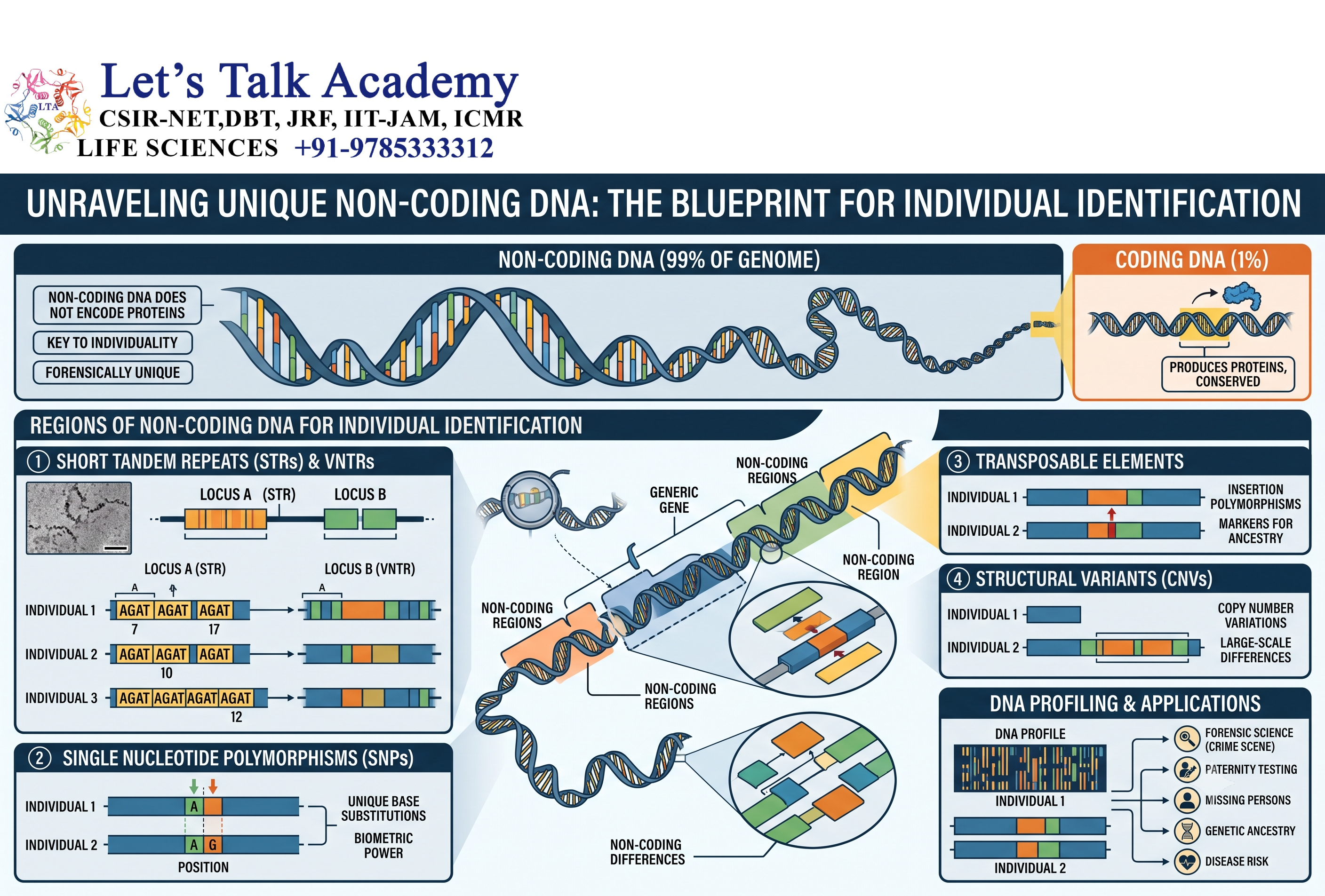
Unique DNA can also contain non-coding sequences.
Examples include:
- Regulatory elements
- Enhancers
- Silencers
- Insulator elements
- Non-coding RNA genes
- Intergenic regions
- Gene-associated regulatory regions
Thus:
Unique DNA ≠ Protein-coding DNA only
Both coding and non-coding sequences can occur as unique or low-copy DNA.
6. Concept of Repetitive DNA
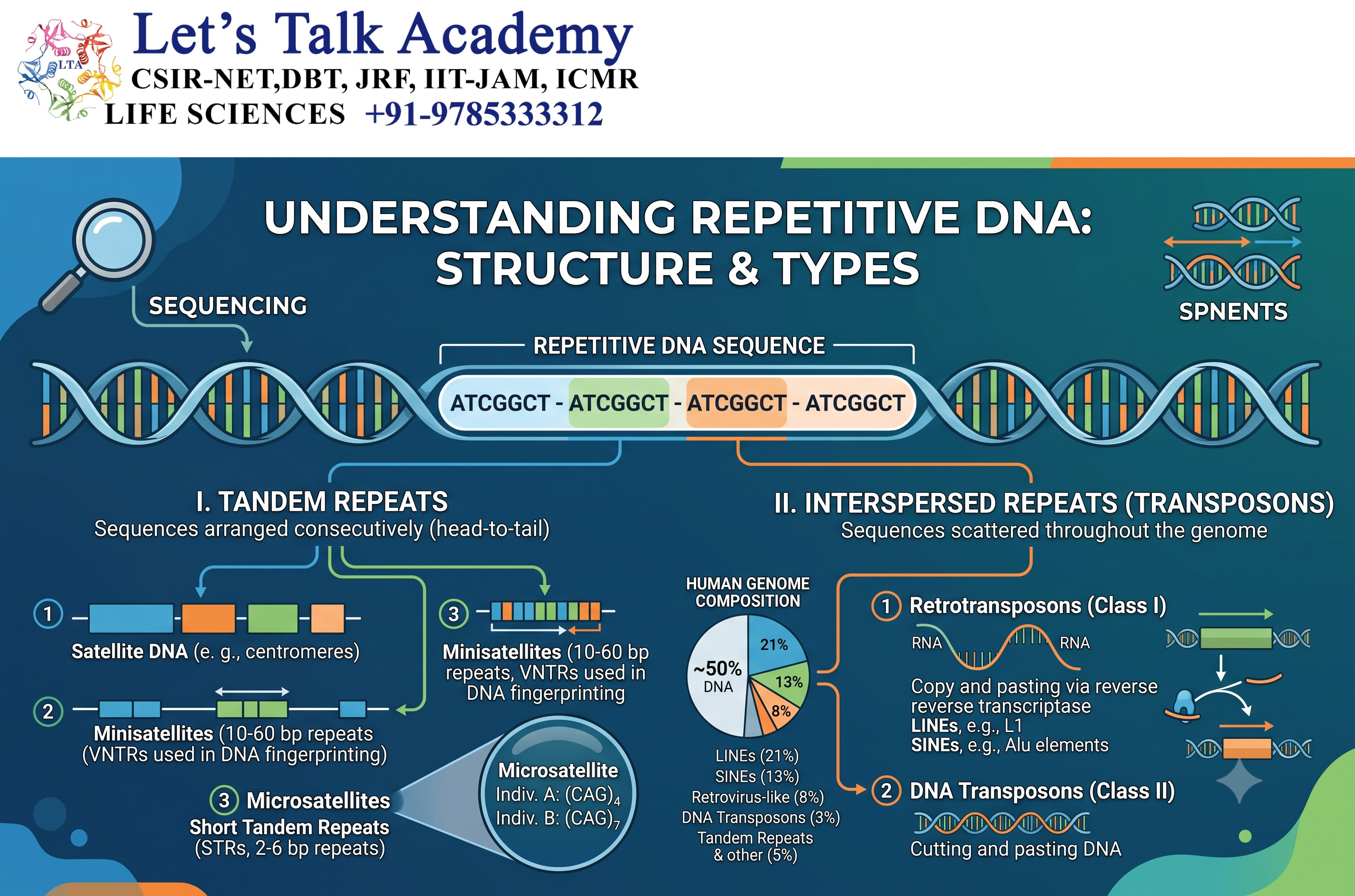
Repetitive DNA consists of DNA sequences that occur multiple times within a genome.
The repeated sequences may be arranged:
- Directly next to one another
- In clusters
- At different locations throughout the genome
- In long blocks
- As dispersed copies
Repetitive DNA can therefore be divided into several major categories based on the arrangement and origin of the repeats.
7. Major Classes of Repetitive DNA
Repetitive DNA is commonly classified into:
- Tandem repetitive DNA
- Interspersed repetitive DNA
Tandem repeats can be further classified into:
- Satellite DNA
- Minisatellites
- Microsatellites
Interspersed repetitive DNA includes:
- Transposable elements
- Retrotransposons
- DNA transposons
- Other dispersed repetitive sequences
A simplified classification is:
Repetitive DNA
↓
Tandem repeats
→ Satellite DNA
→ Minisatellites
→ Microsatellites
Interspersed repeats
→ Retrotransposons
→ DNA transposons
8. Tandem Repetitive DNA

In tandem repeats, repeated DNA sequences occur adjacent to one another.
For example:
ABC ABC ABC ABC ABC
Here, the repeated sequence is arranged in a continuous block.
The length of the repeated unit and the total number of copies can vary.
Tandem repeats are important components of chromosome structure and genetic variation.
9. Satellite DNA
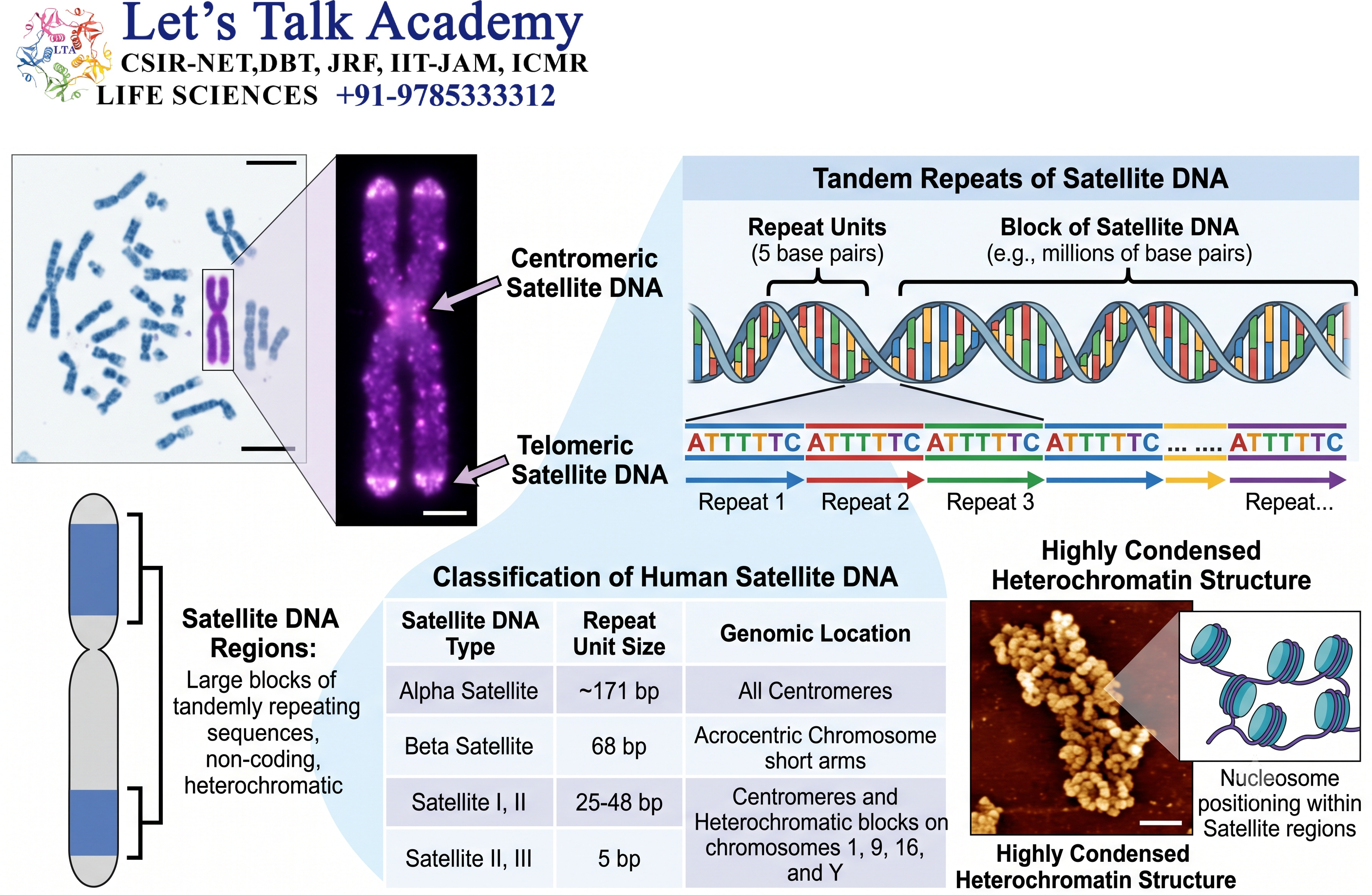
Satellite DNA consists of highly repetitive DNA sequences that are often organized into large tandem arrays.
The term originated from observations of DNA buoyant-density patterns in which repetitive DNA could form distinct satellite bands.
Satellite DNA is particularly abundant in certain heterochromatic chromosome regions.
It is commonly associated with:
- Centromeric regions
- Pericentromeric heterochromatin
- Chromosome organization
Satellite DNA is usually highly repetitive and often evolves rapidly.
10. Characteristics of Satellite DNA
Important features include:
- High copy number
- Tandem organization
- Repetitive sequence structure
- Association with heterochromatin
- Presence in centromeric or pericentromeric regions in many genomes
- Important structural roles
Satellite DNA is not generally characterized by extensive protein-coding capacity.
Its major importance is often structural and genomic rather than directly protein-coding.
11. Minisatellites
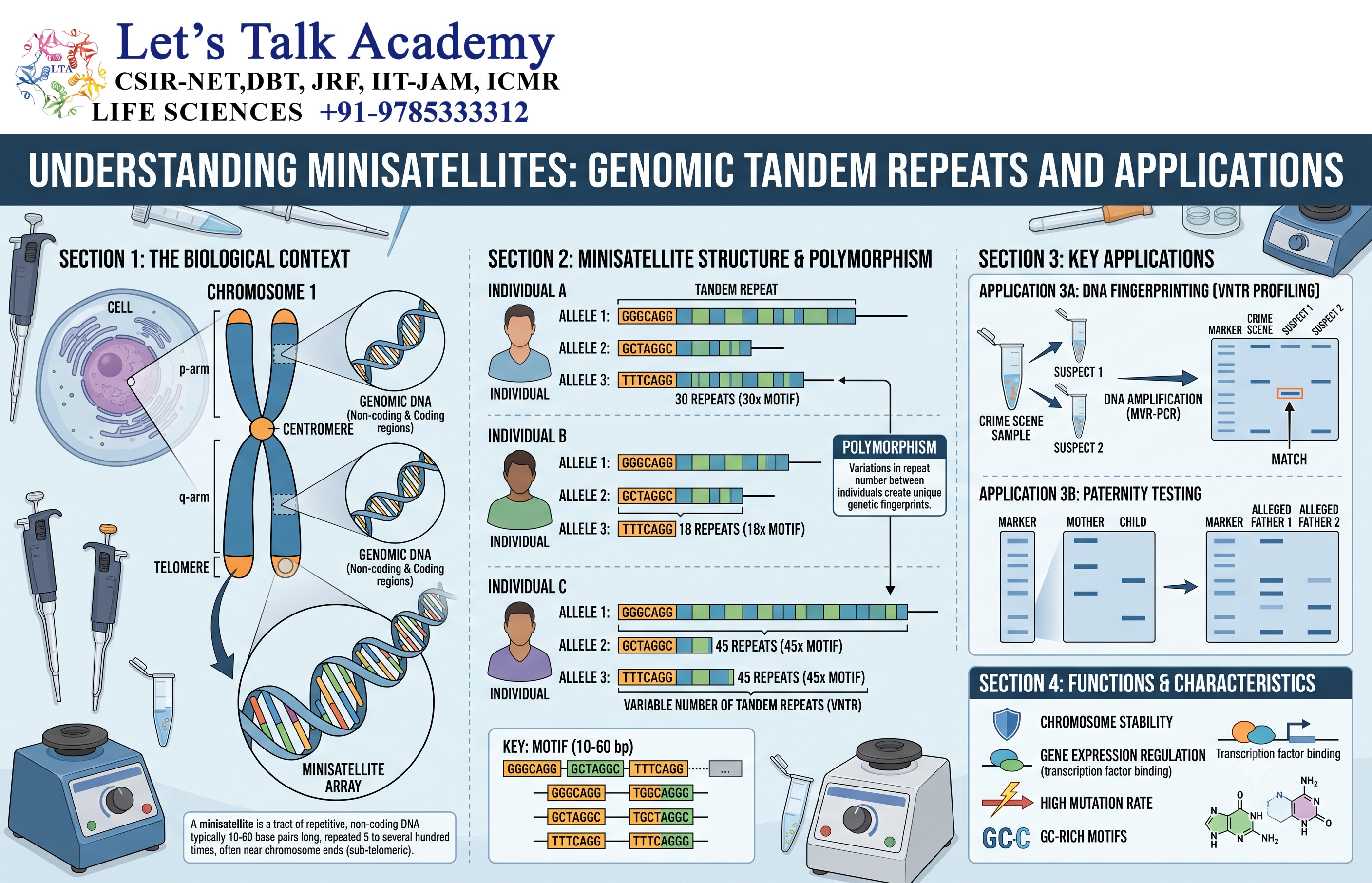
Minisatellites are tandemly repeated DNA sequences in which the repeat units are generally longer than those of microsatellites.
The number of repeat units can vary among individuals.
This variation is called variable number tandem repeat (VNTR) variation.
A simplified arrangement is:
Repeat 1 – Repeat 1 – Repeat 1 – Repeat 1
One individual may have:
Repeat × 5
while another may have:
Repeat × 9
Such differences create useful genetic markers.
12. Microsatellites
Microsatellites, also known as short tandem repeats (STRs), consist of very short DNA repeat units arranged in tandem.
Examples include repeats such as:
ACACACACAC
or
GATGATGATGAT
The number of repeats can vary between individuals.
This variation makes microsatellites highly useful as genetic markers.
13. Microsatellite Variation
Microsatellite length can change through mechanisms such as replication slippage.
During DNA replication:
Repeated sequence
↓
Polymerase slippage
↓
Loop formation
↓
Addition or deletion of repeat units
↓
Change in microsatellite length
This can generate genetic variation between cells or individuals.
14. Variable Number Tandem Repeats
A VNTR is a genomic region in which the number of tandem repeat units varies among individuals.
For example:
Individual A → 6 repeats
Individual B → 10 repeats
Individual C → 14 repeats
VNTRs have been widely used as genetic markers because of their polymorphism.
15. Short Tandem Repeats
STRs are short repeated DNA sequences whose repeat number varies among individuals.
They are widely used in:
- Genetic analysis
- Population studies
- Linkage analysis
- Identity testing
- Forensic genetics
Their usefulness comes largely from their high variability between individuals.
16. Interspersed Repetitive DNA

In interspersed repetitive DNA, repeated sequences are distributed throughout the genome rather than arranged as a single continuous tandem block.
These sequences often originate from transposable elements or their remnants.
A simplified arrangement is:
Unique – Repeat – Unique – Repeat – Unique – Repeat
This distribution differs fundamentally from tandem repeats.
17. Transposable Elements

Transposable elements (TEs) are DNA sequences capable of moving or having moved from one genomic location to another.
They are sometimes called mobile genetic elements.
They can be divided broadly into:
- DNA transposons
- Retrotransposons
Their movement or copying can influence genome structure and genetic variation.
18. DNA Transposons
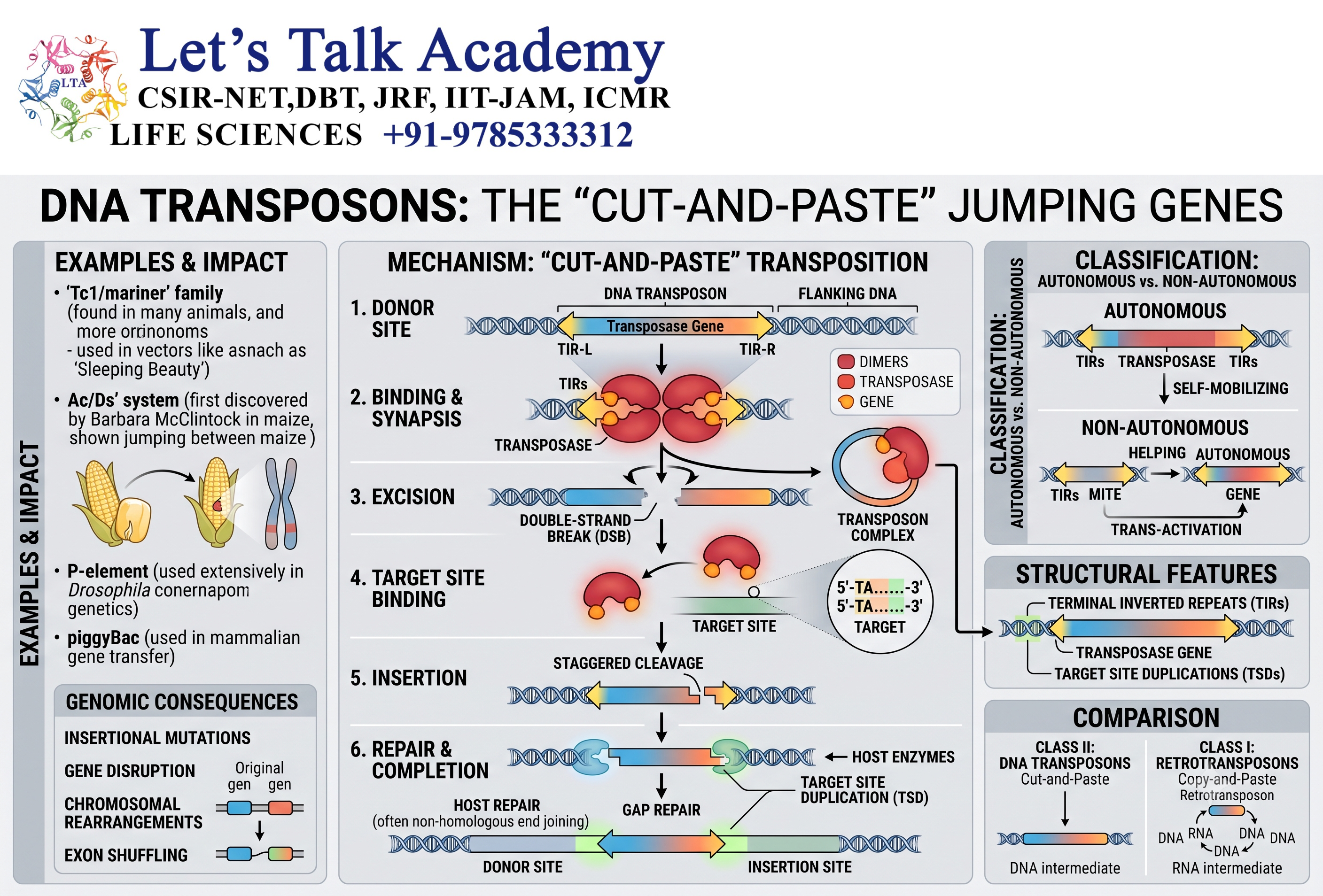
DNA transposons generally move through a DNA-based mechanism.
A common mechanism is:
DNA transposon
↓
Excision
↓
Movement
↓
Insertion into another genomic location
This is often described as a cut-and-paste mechanism, although the molecular details vary among transposon families.
Many DNA transposons are inactive in modern genomes and exist as molecular remnants.
19. Retrotransposons
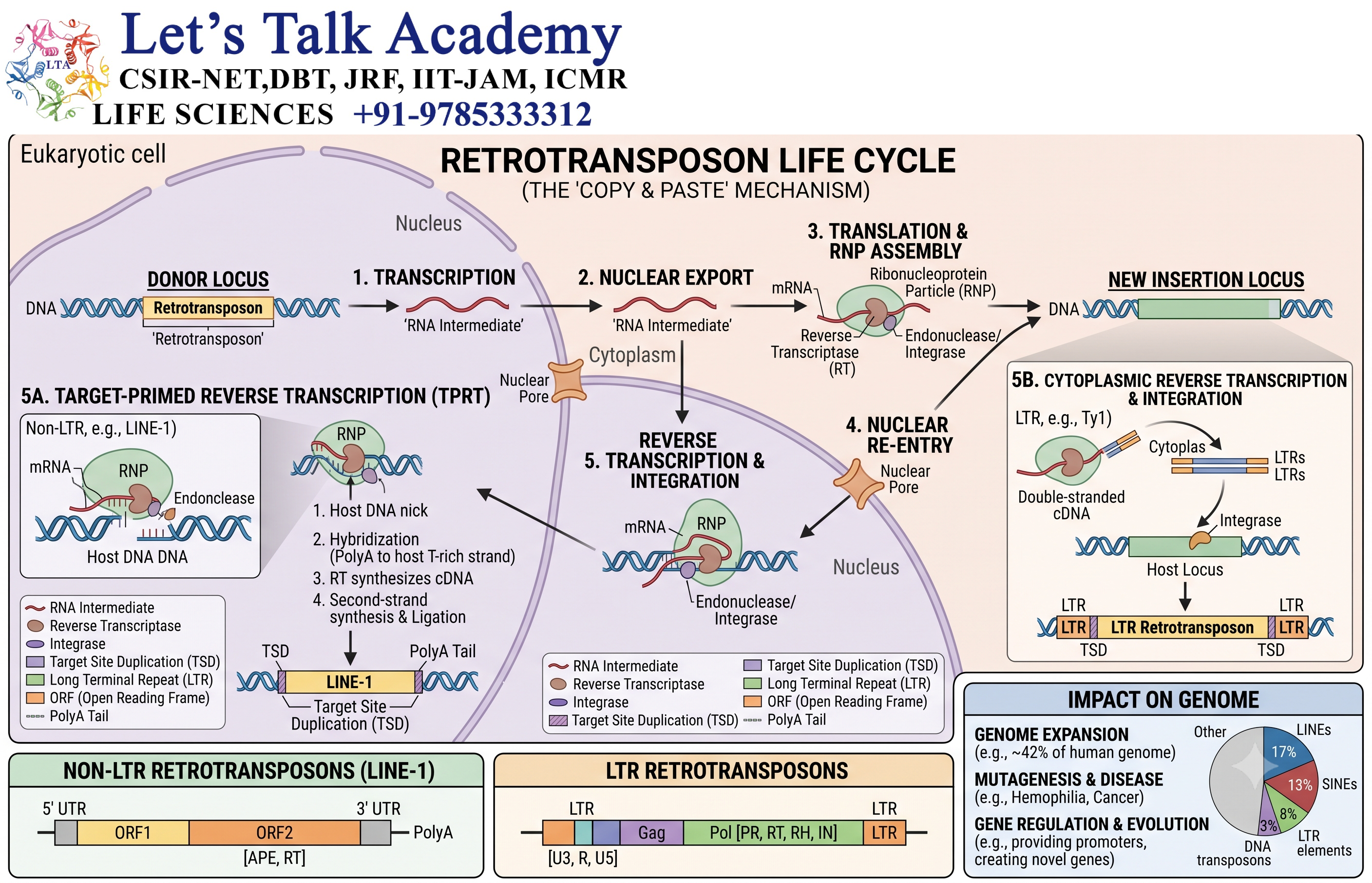
Retrotransposons move through an RNA intermediate.
The basic process is:
DNA
↓
RNA
↓
Reverse transcription
↓
DNA copy
↓
Insertion into genome
Because the original copy can remain at its original location, retrotransposons can increase their copy number.
This is sometimes described as a copy-and-paste mechanism.
20. Major Types of Retrotransposons
Retrotransposons can broadly include:
- Long interspersed nuclear elements (LINEs)
- Short interspersed nuclear elements (SINEs)
- LTR retrotransposons
These elements have contributed substantially to the repetitive fraction of many eukaryotic genomes.
21. LINEs

Long interspersed nuclear elements (LINEs) are relatively long repetitive sequences dispersed throughout the genome.
Some LINE families retain the ability to produce proteins required for their own mobilization.
In humans, the LINE-1 (L1) family is a major example of an autonomous retrotransposable element.
LINE-derived sequences have contributed significantly to genome evolution.
22. SINEs

Short interspersed nuclear elements (SINEs) are shorter repetitive sequences that generally do not encode all the proteins required for their own movement.
They can depend on the molecular machinery provided by autonomous elements.
An important example in humans is the Alu family.
Alu elements are abundant throughout the human genome.
23. LTR Retrotransposons
LTR retrotransposons contain long terminal repeats (LTRs) at their ends.
They share important features with retroviral genetic elements.
Their structure can include:
LTR → Internal region → LTR
LTR retrotransposons have played important roles in the evolution and expansion of many eukaryotic genomes.
24. Repetitive DNA in Human Genomes

The human genome contains a substantial fraction of repetitive sequences.
These include:
- Transposable-element-derived sequences
- Microsatellites
- Minisatellites
- Satellite DNA
- Other repeated regions
A large proportion of the human genome is derived from ancient transposable elements and their descendants.
Importantly, many of these sequences are no longer capable of movement but remain as recognizable genomic remnants.
25. Functional Importance of Repetitive DNA

Repetitive DNA has several important functions.
These include:
- Chromosome organization
- Centromere function
- Telomere formation
- Genome regulation
- Heterochromatin formation
- Genetic variation
- Genome evolution
- Recombination
- Regulation of gene expression
Therefore, repetitive DNA should not be automatically classified as non-functional DNA.
26. Repetitive DNA and Chromosome Structure

Some repetitive sequences contribute directly to chromosome architecture.
For example, repetitive DNA is abundant in many centromeric and pericentromeric regions.
These regions are associated with specialized chromatin structures that are essential for chromosome segregation.
Simplified relationship:
Repetitive DNA
↓
Specialized chromatin
↓
Centromere organization
↓
Proper chromosome segregation
27. Repetitive DNA and Telomeres
Telomeres are specialized chromosome-end structures containing repetitive DNA sequences.
In vertebrates, telomeric DNA contains repeated sequence motifs.
Telomeres protect chromosome ends from being recognized as DNA breaks.
Their organization involves:
- Repetitive DNA
- Telomere-binding proteins
- Specialized chromatin
Thus, repetitive DNA contributes directly to chromosome-end stability.
28. Repetitive DNA and Heterochromatin
Highly repetitive DNA is often associated with heterochromatin, a relatively compact form of chromatin.
Heterochromatic regions are generally characterized by:
- Reduced accessibility
- Specialized histone modifications
- DNA methylation in many contexts
- Abundance of repetitive sequences
This organization can influence genome stability and gene regulation.
29. Repetitive DNA and Gene Regulation
Repetitive sequences can influence gene expression.
They may affect:
- Chromatin structure
- Transcription
- Enhancer activity
- DNA methylation
- Nuclear organization
Some repetitive elements can provide regulatory sequences that are recruited during evolution.
Therefore, repetitive DNA can contribute indirectly or directly to gene regulation.
30. Repetitive DNA and Genome Evolution
Repetitive sequences are important sources of genome evolution.
They can:
- Increase genome size
- Promote recombination
- Generate mutations
- Create new regulatory elements
- Produce gene duplications
- Facilitate genomic rearrangements
Transposable elements can introduce new sequences into genomic regions and thereby contribute to evolutionary innovation.
31. Repetitive DNA and Genetic Variation
The number of repeated units can vary between individuals.
This produces repeat-length polymorphisms.
For example:
Person A → 8 repeats
Person B → 12 repeats
Such variation can be detected experimentally and used as a genetic marker.
32. Repetitive DNA and Recombination
Repeated sequences located at different genomic positions can undergo non-allelic homologous recombination.
If similar sequences misalign during meiosis:
Repeat A
↓
Misalignment
↓
Unequal recombination
↓
Deletion / duplication
This can produce structural variation in genomes.
33. Unequal Crossing Over
Unequal crossing over occurs when homologous chromosomes or chromatids align incorrectly because of similar repetitive sequences.
A simplified model is:
Repeat 1 ↔ Repeat 2
↓
Misalignment
↓
Crossing over
↓
One chromosome gains DNA
↓
Another chromosome loses DNA
This mechanism can contribute to gene duplication and deletion.
34. Repetitive DNA and Genome Instability
Certain repetitive sequences can increase susceptibility to genomic instability.
Potential mechanisms include:
- Replication slippage
- Recombination between repeats
- Transposition
- Repeat expansion
- DNA repair errors
However, cells have several mechanisms for controlling repetitive DNA.
35. Epigenetic Regulation of Repetitive DNA
Cells often suppress potentially harmful repetitive sequences through epigenetic mechanisms.
Important mechanisms include:
- DNA methylation
- Histone modifications
- Chromatin compaction
- Small-RNA-mediated pathways in some organisms
These mechanisms help maintain genome stability and prevent inappropriate expression or movement of repetitive elements.
36. Repeat Expansion
Some repetitive sequences can increase in copy number over generations.
This phenomenon is known as repeat expansion.
A simplified mechanism is:
Existing repeat
↓
Replication or repair-associated instability
↓
Additional repeat units
↓
Longer repeat tract
↓
Potential biological consequences
Repeat expansion is associated with several genetic disorders when it occurs in specific genomic regions.
37. Unique DNA and Repetitive DNA: Comparison
| Feature | Unique DNA | Repetitive DNA |
|---|---|---|
| Copy number | Usually low | Multiple copies |
| Organization | Often dispersed | Tandem or interspersed |
| Examples | Many gene-associated sequences | Satellites, STRs, transposable elements |
| Major roles | Coding and regulatory information | Structural, regulatory, evolutionary and genomic roles |
| Variation | Can occur through mutations | Repeat number can vary substantially |
| Chromosome structure | Contributes indirectly or directly | Important in several specialized regions |
38. Tandem Repeats Versus Interspersed Repeats
| Feature | Tandem repeats | Interspersed repeats |
|---|---|---|
| Arrangement | Adjacent copies | Distributed throughout genome |
| Examples | Satellites, minisatellites, microsatellites | LINEs, SINEs, transposable elements |
| Typical mechanism | Repeated copying/expansion | Transposition or sequence duplication |
| Major significance | Chromosome structure and genetic variation | Genome evolution and structural variation |
39. Satellite DNA Versus Minisatellite Versus Microsatellite
| Feature | Satellite DNA | Minisatellite | Microsatellite |
|---|---|---|---|
| Repeat organization | Tandem | Tandem | Tandem |
| Repeat-unit size | Generally large arrays with variable repeat-unit sizes | Intermediate | Very short |
| Common significance | Chromosome structure | Genetic polymorphism | Highly polymorphic genetic markers |
| Common association | Centromeric/heterochromatic regions | VNTR loci | STR loci |
The boundaries between these categories can vary depending on the classification system used.
40. Unique DNA and Gene Families
Not all genes are strictly single-copy.
Some genes belong to gene families, in which related sequences occur at multiple genomic locations.
Gene families can arise through:
Gene duplication
↓
Sequence divergence
↓
Related genes
↓
Gene family
Examples include families encoding:
- Globins
- Histones
- Ribosomal RNA components
- Olfactory receptors
Therefore, genome organization exists on a continuum rather than as a simple unique-versus-repetitive division.
41. Moderately Repetitive DNA
Some genomic sequences occur at an intermediate copy number.
These are sometimes described as moderately repetitive DNA.
They may include:
- Multigene families
- Repeated genes
- Certain transposable elements
- Repeated structural sequences
A classical conceptual classification is:
Highly repetitive DNA
→ Very high copy number
Moderately repetitive DNA
→ Intermediate copy number
Unique DNA
→ Low copy number
This classification is useful for understanding genome complexity, although modern genome analysis uses more precise sequence-based classifications.
42. Highly Repetitive DNA
Highly repetitive DNA occurs in very large numbers of copies.
Examples include some:
- Satellite DNA
- Centromeric repeats
- Telomeric repeats
These sequences are often associated with chromosome structure and heterochromatin.
43. Repetitive DNA and Genome Size
Genome size varies greatly among organisms.
One reason for this variation is the different amounts of repetitive DNA present in different genomes.
Expansion of:
- Transposable elements
- Tandem repeats
- Segmental duplications
can contribute substantially to genome size.
Thus:
Genome size ≠ Number of genes alone
Genome size is also strongly influenced by non-coding and repetitive sequences.
44. C-Value Paradox and Repetitive DNA

The observation that genome size does not necessarily correlate directly with organismal complexity is associated with the C-value paradox, later discussed in terms of the C-value enigma.
For example, organisms with relatively complex developmental biology do not always have the largest genomes.
Variation in repetitive DNA and other non-coding genomic components contributes significantly to these differences.
45. Repetitive DNA as Molecular Markers

Repeat polymorphisms are widely used as molecular markers.
Examples include:
- STRs
- VNTRs
- Microsatellites
These markers can be useful for studying:
- Genetic diversity
- Population structure
- Linkage
- Parentage
- Identity
- Evolutionary relationships
Their usefulness comes from differences in repeat number between individuals.
46. Repetitive DNA in Forensic Genetics
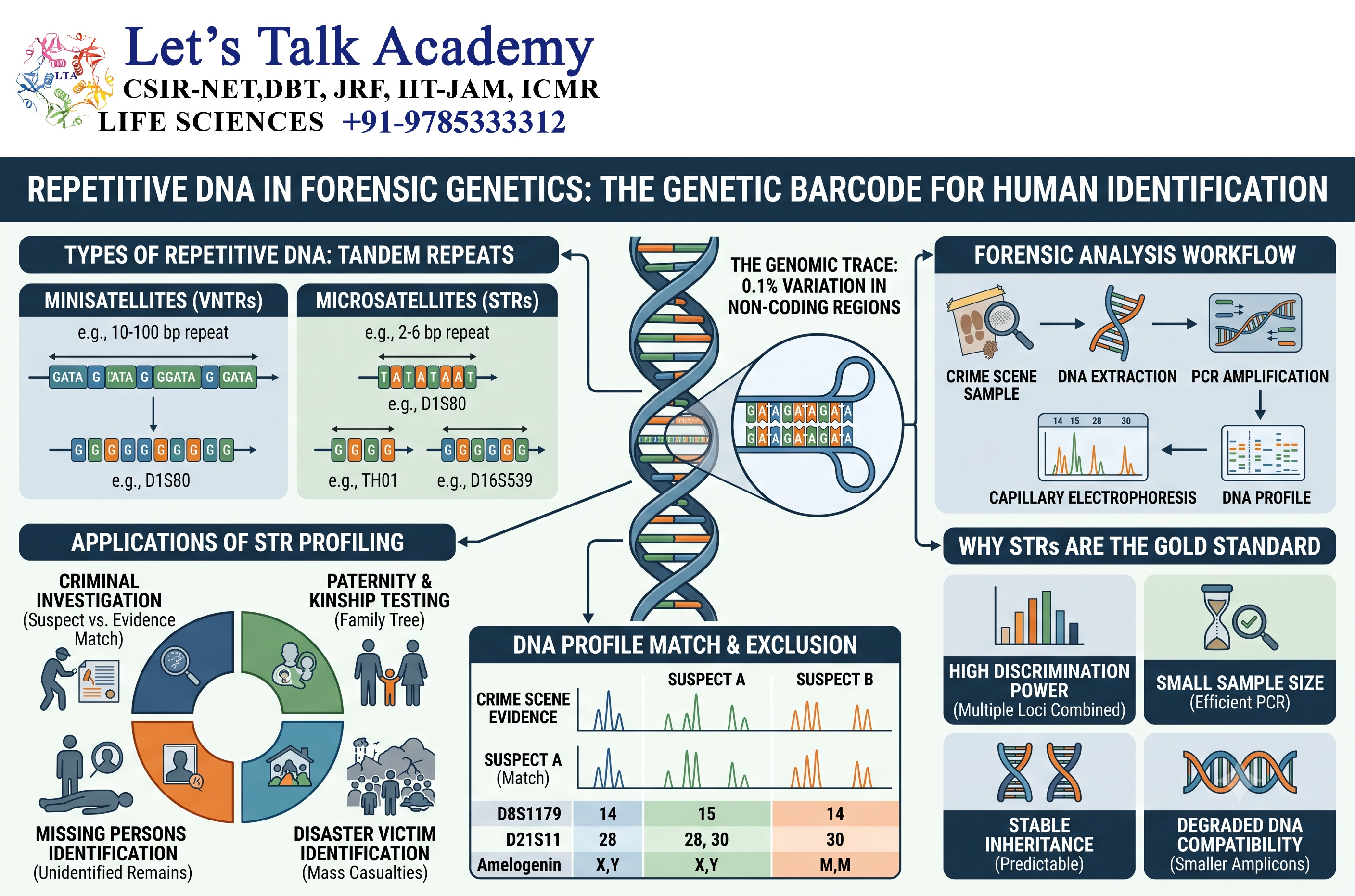
STR markers are particularly useful in forensic genetics because different individuals often have different combinations of STR alleles.
A simplified concept is:
DNA sample
↓
STR analysis
↓
Allele profile
↓
Comparison with reference profile
The strength of identification depends on the number and statistical properties of the markers analyzed.
47. Repetitive DNA in Population Genetics
Microsatellites and other repeat markers can be used to study population variation.
Researchers can compare allele frequencies between populations to investigate:
- Genetic diversity
- Population structure
- Migration
- Gene flow
- Relatedness
- Evolutionary history
48. Repetitive DNA and Disease
Changes in repetitive DNA can contribute to disease through several mechanisms.
These include:
- Repeat expansion
- Chromosomal rearrangements
- Transposable-element insertion
- Altered gene regulation
- Genomic instability
The biological consequences depend on the location and type of repetitive sequence involved.
49. Transposable Elements and Genome Innovation
Transposable elements have historically been viewed primarily as genomic parasites or “selfish DNA,” but modern research shows that they can also contribute to genome innovation.
Over evolutionary time, transposable-element sequences can become incorporated into:
- Regulatory regions
- Enhancers
- Promoters
- Non-coding RNAs
- Protein-coding sequences
Thus, sequences that originated as mobile elements can sometimes acquire new cellular functions.
50. Repetitive DNA and Epigenetic Silencing
Because uncontrolled transposable-element activity can damage genome integrity, cells often suppress repetitive elements.
Mechanisms include:
DNA methylation
↓
Chromatin compaction
↓
Reduced transcription
↓
Reduced transposon activity
Small RNA pathways can also contribute to repetitive-element silencing in several organisms.
51. DNA Renaturation and Repetitive DNA
Historically, DNA reassociation experiments were used to study genome sequence complexity.
When denatured DNA strands are allowed to reassociate:
- Highly repetitive sequences reassociate rapidly.
- Moderately repetitive sequences reassociate at intermediate rates.
- Unique sequences reassociate more slowly.
This difference occurs because repetitive sequences have many complementary copies available for pairing.
The concept can be represented as:
Highly repetitive DNA → Fast reassociation
Moderately repetitive DNA → Intermediate reassociation
Unique DNA → Slow reassociation
These studies provided important early insights into genome organization.
52. Cot Curves
The kinetics of DNA reassociation were historically analyzed using Cot analysis.
The term Cot refers to the product of:
DNA concentration × time
A Cot curve can reveal different kinetic components of a genome.
Typical interpretation:
Rapid reassociation fraction → Highly repetitive DNA
Intermediate fraction → Moderately repetitive DNA
Slow fraction → Unique DNA
Cot analysis was particularly important before modern high-throughput DNA sequencing became widely available.
53. Repetitive DNA and Chromosomal Banding
Certain repetitive sequences contribute to characteristic chromosome staining patterns.
For example, regions rich in repetitive DNA can form highly condensed heterochromatin and produce distinctive banding patterns.
This makes repetitive DNA relevant to classical cytogenetics and chromosome identification.
54. Genomic Distribution of Repetitive DNA
Repetitive sequences are not distributed uniformly across chromosomes.
They can be concentrated in:
- Centromeres
- Pericentromeric regions
- Telomeres
- Heterochromatic regions
Other repetitive elements, especially transposable-element-derived sequences, can be distributed more broadly throughout chromosome arms.
55. Unique and Repetitive DNA: Integrated View
A genome can be visualized as:
Genome
↓
Unique/low-copy regions
→ Genes
→ Regulatory sequences
→ Other genomic regions
and
Repetitive regions
→ Tandem repeats
→ Satellite DNA
→ Minisatellites
→ Microsatellites
→ Transposable elements
→ Other repeated sequences
Both categories interact continuously.
The genome is therefore an integrated system rather than a collection of independent sequence classes.


