68. In a gel filtration chromatography: A. The large protein will be eluted first B. The small protein will be eluted first C. Both large and small will elute at […]
No posts found.
68. In a gel filtration chromatography: A. The large protein will be eluted first B. The small protein will be eluted first C. Both large and small will elute at […]
67. Which type of matrix is involved by Carboxymethyl cellulose among the following options: A. Anion-exchange matrix B. Plant cell wall constituent C. Cation-exchange matrix D. Gel filtration matrix Carboxymethyl […]
66. A mixture of proteins namely P, Q, R and S having molecular mass 50, 80, 120 and 150 kDa is applied on the Sephadex G-200 column. The order of […]
65. Separation of DNA molecules labelled with 15N and 14N can be accomplished by: A. Capillary electrophoresis B. Differential centrifugation C. Pulse field gel electrophoresis D. Density gradient ultracentrifugation The […]
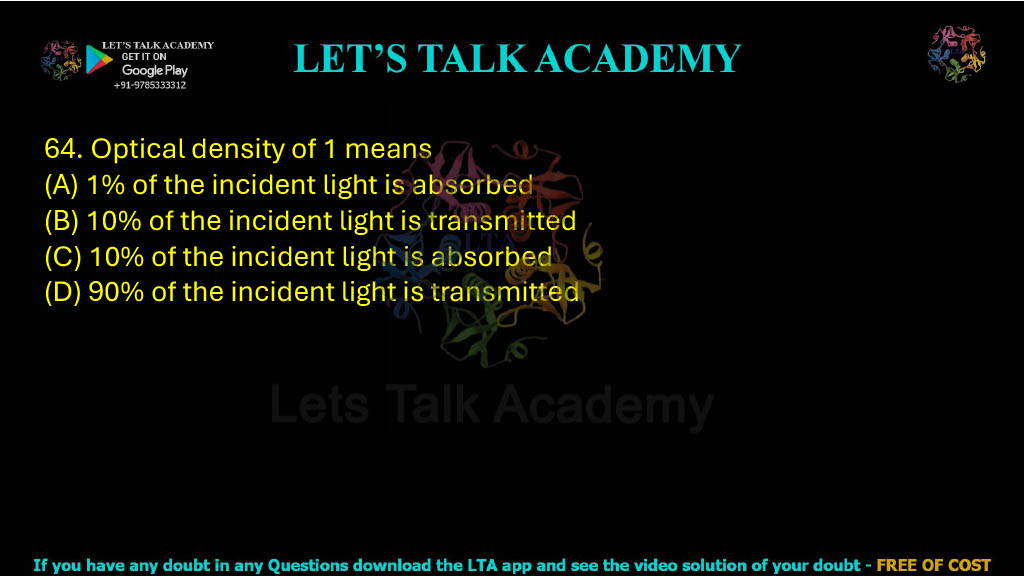
64. Optical density of 1 means: A. 1% of the incident light is absorbed B. 10% of the incident light is transmitted C. 10% of the incident light is absorbed […]
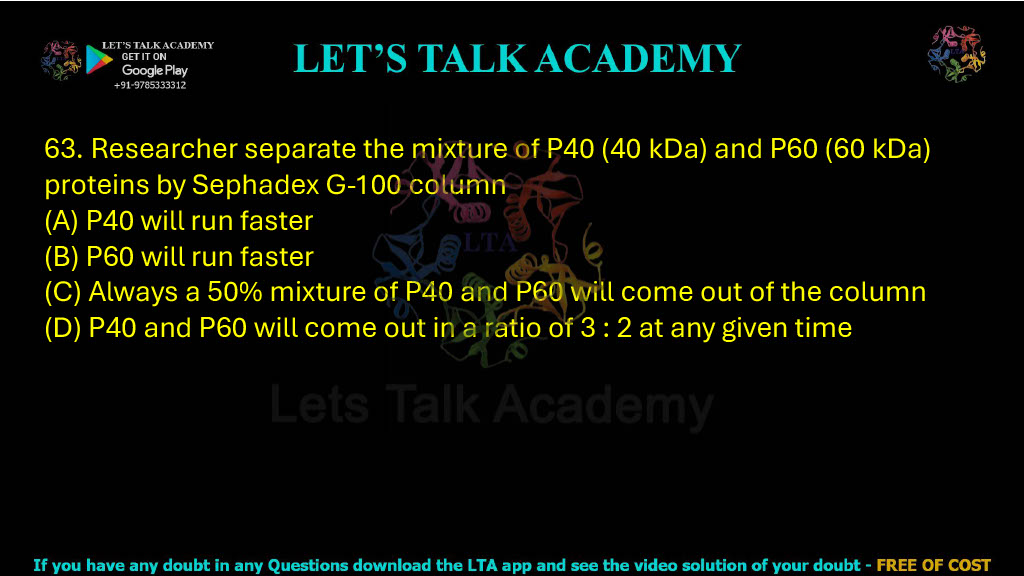
63. A researcher separates the tm of P40 (40 kDa) from a mixture of proteins P-60 (60 kDa) using a Sephadex G-100 column. A. P40 will run faster B. P60 […]
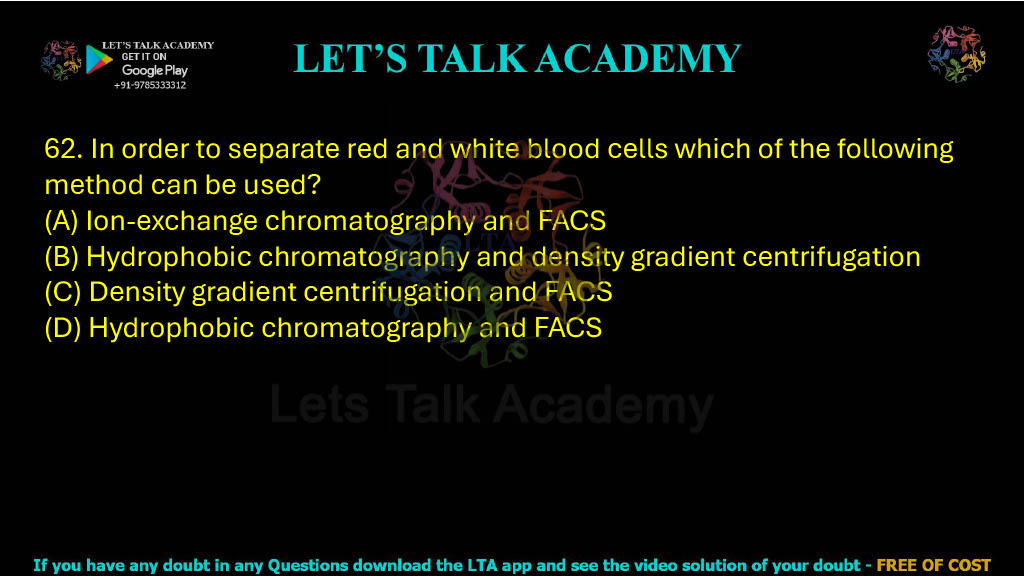
62. In order to separate red and white blood cells, which of the following methods can be used? A. Ion-exchange chromatography and FACS B. Hydrophobic chromatography and density gradient centrifugation […]
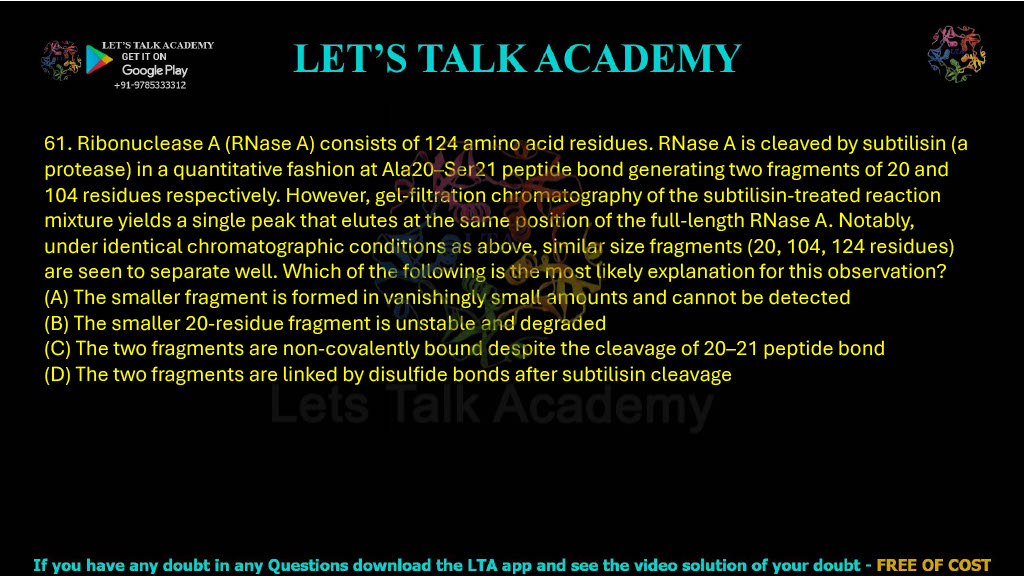
61. Ribonuclease A (RNase A) consists of 124 amino acid residues. RNase A is cleaved by subtilisin (a protease) in a quantitative fashion at the Ala 20 – Ser 21 […]
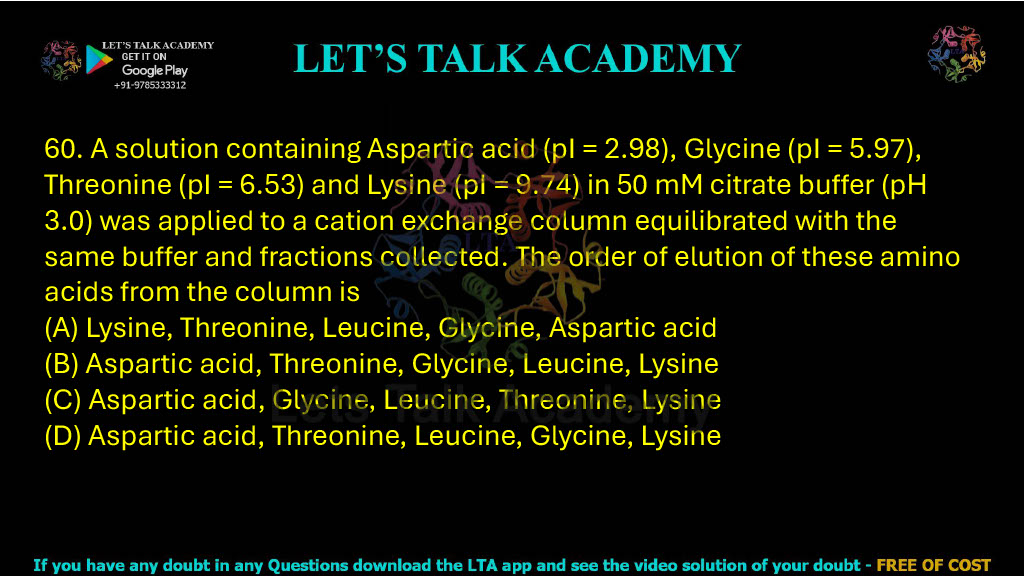
60. A solution containing Aspartic acid (pI = 2.98), Glycine (pI = 5.97), Threonine (pI = 6.53) and Lysine (pI = 9.74) in 50 mM citrate buffer (pH 3.0) was […]
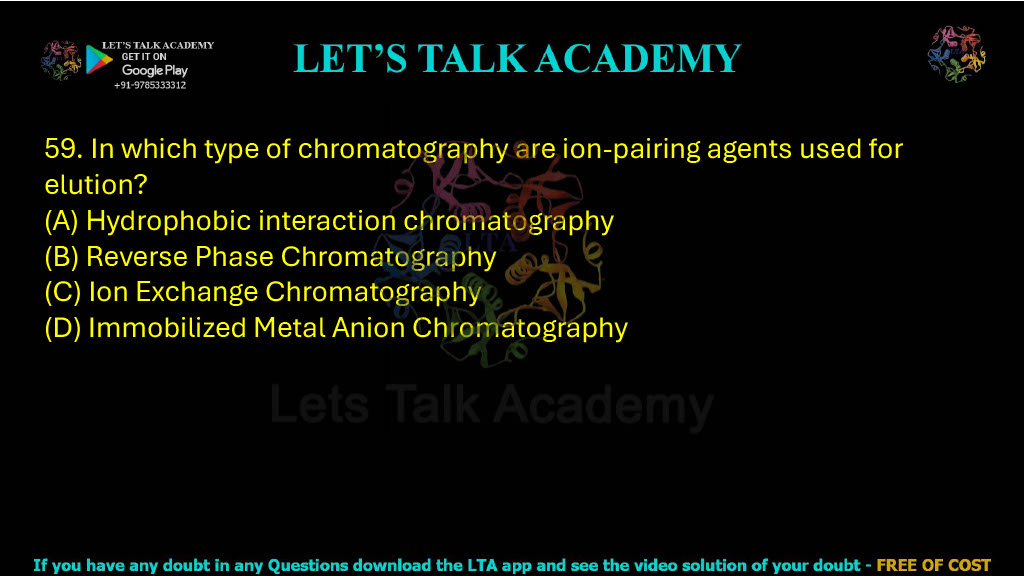
59. In which type of chromatography are ion-pairing agents used for elution? A. Hydrophobic interaction chromatography B. Reverse phase chromatography C. Ion exchange chromatography D. Immobilized metal anion chromatography Answer: […]


