
1. Introduction to Oncogenes
Cancer is fundamentally a disease of altered cellular regulation. Normal cells divide, grow, differentiate, and die according to highly coordinated molecular signals. These processes are controlled by networks of genes that respond to extracellular growth factors, intracellular signals, DNA damage, metabolic conditions, and signals from neighboring cells. When these regulatory systems become persistently abnormal, cells may acquire uncontrolled proliferative and survival advantages.
One of the most important groups of genes involved in this process is the oncogenes.
An oncogene is a gene whose abnormal activation or increased activity contributes to cellular transformation and cancer development. In many cases, an oncogene originates from a normal cellular gene called a proto-oncogene. Proto-oncogenes normally perform essential functions in cell growth, cell division, differentiation, and survival. When their activity becomes excessive or inappropriate because of mutation, gene amplification, chromosomal rearrangement, or abnormal gene regulation, they can become oncogenic.
The concept of oncogenes emerged partly from studies of tumor-producing viruses. Researchers discovered that certain retroviruses carried genes capable of transforming normal cells. Subsequent investigations showed that many viral oncogenes had evolved from normal cellular genes. This discovery established an important connection between normal cellular growth-control genes and cancer.
A useful way to understand oncogenes is to imagine the cell as a vehicle whose speed is controlled by an accelerator and a braking system. Proto-oncogenes are components of the accelerator system required for normal growth. Oncogenes represent situations in which this growth-promoting machinery becomes excessively active. Tumor suppressor genes, in contrast, normally provide inhibitory or “braking” functions. Cancer can develop when growth-promoting signals become excessively active while growth-inhibitory mechanisms are lost.
1.1 Definition of an Oncogene
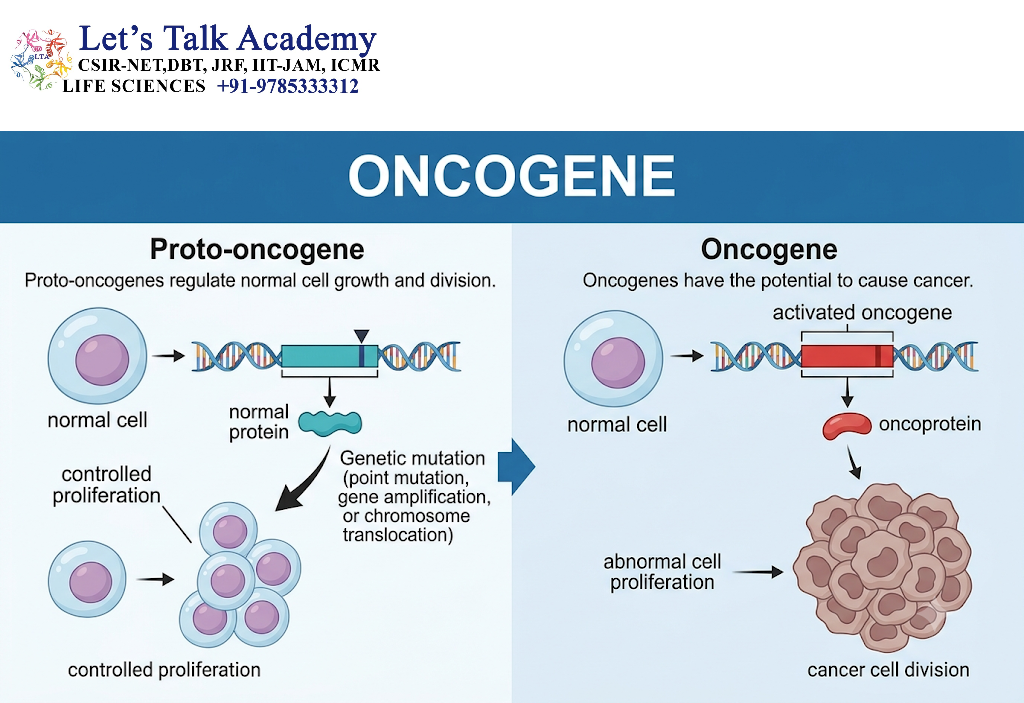
An oncogene is an activated or abnormally regulated form of a gene that promotes cellular proliferation, survival, or other cancer-associated properties when its activity becomes inappropriate.
Most oncogenes are derived from proto-oncogenes, which are normal genes involved in regulating cellular behavior. A proto-oncogene itself is not inherently harmful. It becomes oncogenic when a genetic or regulatory alteration causes excessive, constitutive, or inappropriate activity.
In molecular terms:
Proto-oncogene → activating genetic/regulatory alteration → oncogene → abnormal signaling → cellular transformation
Oncogene activation can result in excessive cell division, resistance to apoptosis, altered differentiation, increased cellular survival, metabolic changes, and other characteristics that support tumor development.
1.2 Proto-Oncogenes
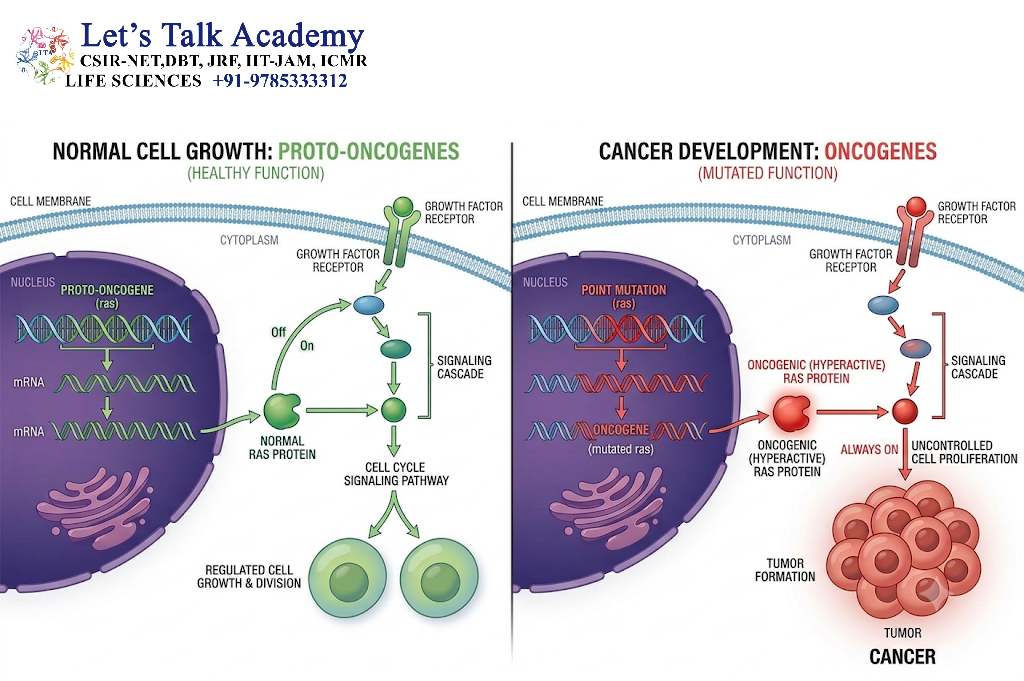
Proto-oncogenes are normal cellular genes that encode proteins involved in processes such as:
- Growth-factor signaling
- Cell-surface receptor activity
- Intracellular signal transduction
- Protein phosphorylation
- Gene transcription
- Cell-cycle progression
- Cellular survival
- Regulation of differentiation
Examples include RAS, RAF, MYC, ABL, EGFR, ERBB2, and several cyclin-associated genes.
Under normal conditions, proto-oncogenes are carefully regulated. Their activation occurs only when appropriate growth or survival signals are present.
For example, a growth factor may bind to a receptor on the plasma membrane. The receptor activates intracellular signaling proteins, which eventually influence transcription factors in the nucleus. These transcription factors alter gene expression and promote entry into the cell cycle.
The pathway can be represented conceptually as:
Growth factor → receptor → intracellular signaling protein → kinase cascade → transcription factor → gene expression → cell proliferation
If a component of this pathway becomes permanently active, the cell may continue receiving a growth-promoting signal even when the original extracellular stimulus is absent.
1.3 Difference Between Proto-Oncogenes and Oncogenes
The distinction between proto-oncogenes and oncogenes is essential.
| Feature | Proto-oncogene | Oncogene |
|---|---|---|
| Nature | Normal cellular gene | Abnormally activated form or altered gene |
| Activity | Regulated | Excessive, constitutive, or inappropriate |
| Function | Supports normal growth and survival | Promotes abnormal growth or survival |
| Cellular effect | Physiological | Potentially tumor-promoting |
| Typical genetic effect | Normal gene function | Gain of function |
| Examples | Normal RAS, MYC, ABL | Activated RAS, MYC amplification, BCR-ABL |
A major conceptual point is that oncogenic activation commonly behaves as a gain-of-function event. Therefore, alteration of only one allele can sometimes be sufficient to produce a dominant growth-promoting effect at the cellular level.
2. Historical Discovery of Oncogenes
2.1 Discovery Through Tumor Viruses
The history of oncogenes is closely associated with research on tumor-causing viruses.
One of the earliest important discoveries involved Rous sarcoma virus, a retrovirus capable of inducing tumors in chickens. Researchers eventually identified the viral src gene as an oncogene.
This raised an important question: Why would a virus contain a gene that promotes uncontrolled cell growth when such a gene is not essential for ordinary viral replication?
Subsequent research demonstrated that viral oncogenes were derived from cellular genes. These normal cellular counterparts became known as proto-oncogenes.
2.2 Viral Oncogenes and Cellular Proto-Oncogenes
During evolution, certain retroviruses acquired genetic sequences from host cells. If a captured cellular gene became altered or placed under abnormal viral regulatory control, it could acquire transforming activity.
This provided an important experimental model for understanding cancer:
Normal cellular gene → viral capture/alteration → abnormal gene activity → cellular transformation
The study of viral oncogenes therefore provided a route toward discovering oncogenes involved in human cancers.
2.3 Discovery of Cellular Oncogenes
Later experiments demonstrated that human tumors themselves contain activated genes capable of transforming cells.
DNA isolated from certain human tumor cells was found to transform recipient cells in experimental systems. One important early example involved a RAS-family oncogene identified in human cancer cells. These experiments provided direct evidence that cancer could result from alterations in normal cellular genes rather than requiring a cancer-causing virus.
This changed the understanding of cancer from a primarily disease-specific concept to a molecular genetic process involving altered cellular regulatory pathways.
3. Mechanisms of Oncogene Activation
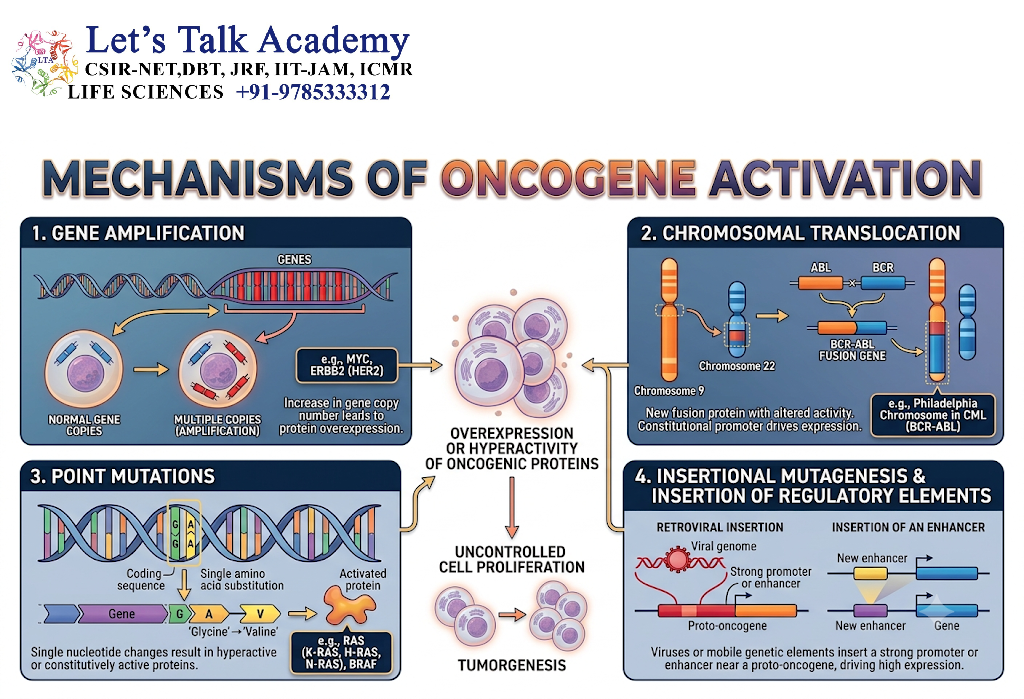
Oncogenes can arise through several types of genetic and regulatory alterations. The most important mechanisms include point mutation, gene amplification, chromosomal translocation, gene fusion, abnormal enhancer or promoter activity, and inappropriate expression.
3.1 Point Mutations
A point mutation involves a change in a single nucleotide or a small number of nucleotides.
In some proto-oncogenes, a point mutation changes the encoded protein so that it becomes constitutively active.
The RAS family provides a classic example.
Normally, RAS proteins act as molecular switches. They alternate between:
RAS-GDP → inactive state
and
RAS-GTP → active state
Growth-factor signaling promotes the active state, while intrinsic GTPase activity, assisted by regulatory proteins, helps return RAS to its inactive form.
Certain activating mutations impair this regulatory cycle, causing RAS to remain excessively active. As a result, downstream pathways that promote proliferation and survival can remain stimulated even in the absence of appropriate external signals.
3.2 Gene Amplification
Gene amplification occurs when a particular gene is present in many more copies than normal.
Multiple copies of a proto-oncogene can result in excessive production of its protein product. Even if the protein itself is structurally normal, its increased abundance can generate excessive signaling.
A well-known example is ERBB2/HER2, in which increased gene copy number can produce elevated receptor expression and enhanced growth signaling in appropriate cancer contexts.
The basic mechanism is:
Gene amplification → increased gene dosage → increased protein production → excessive signaling → increased proliferation
3.3 Chromosomal Translocation
A chromosomal translocation occurs when a segment of one chromosome becomes attached to another chromosome.
Translocations can activate proto-oncogenes in two major ways:
- A proto-oncogene may come under the control of a highly active promoter or enhancer.
- Two genes may become fused, producing a novel fusion protein with abnormal activity.
A classical example is the BCR-ABL fusion gene, produced by a chromosomal rearrangement involving chromosomes 9 and 22. The resulting fusion protein possesses constitutive tyrosine kinase activity and activates signaling pathways that promote proliferation and survival.
This example demonstrates how chromosomal architecture can directly alter protein function and cellular signaling.
3.4 Abnormal Promoter or Enhancer Activity
A proto-oncogene can become oncogenic if its transcription is placed under the control of an abnormally strong promoter or enhancer.
In this situation, the protein may retain its normal structure but become overproduced.
Thus:
Normal protein + abnormal expression level = oncogenic effect
This mechanism is particularly important because oncogenesis does not always require a mutation in the coding sequence.
3.5 Gene Fusion
Gene fusion occurs when portions of two separate genes become joined following chromosomal rearrangement.
The resulting fusion protein may have:
- Constitutive enzymatic activity
- Altered cellular localization
- Loss of regulatory domains
- Abnormal protein-protein interactions
- Novel signaling properties
The BCR-ABL fusion is one of the most important examples of an oncogenic fusion protein.
4. Classification of Oncogenes According to Their Protein Products
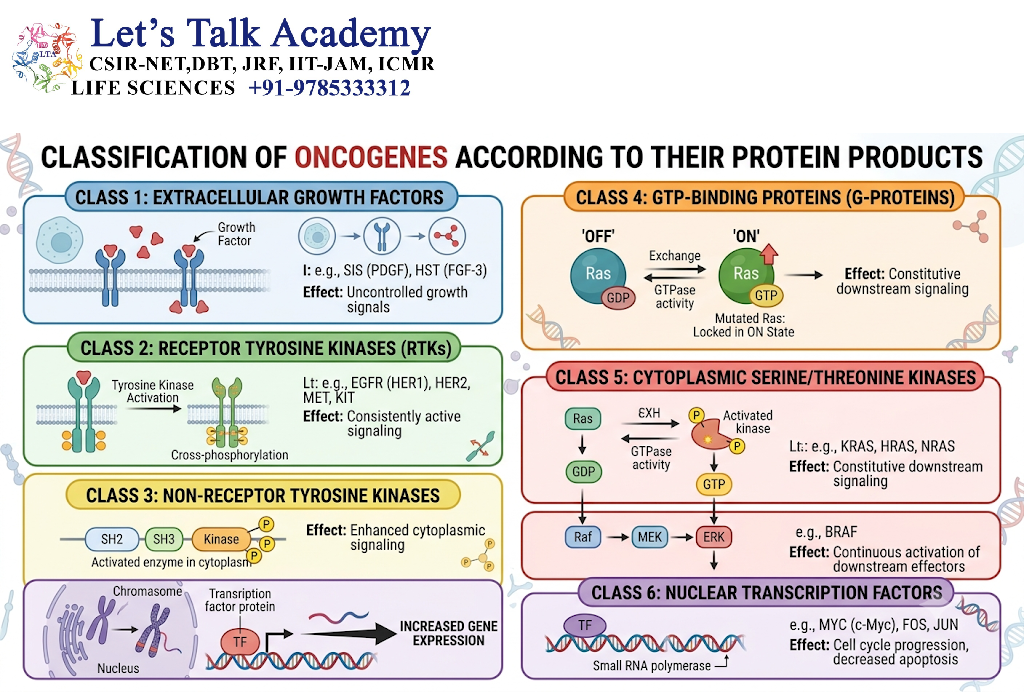
Oncogenes can be classified according to the type of protein they encode. This classification is particularly useful for understanding how abnormal signaling develops.
4.1 Growth Factors
Some oncogenes encode growth factors or proteins that participate in growth-factor signaling.
Under normal conditions, growth factors are produced in response to physiological requirements. Abnormal production can result in persistent stimulation of cell proliferation.
This may contribute to an autocrine signaling loop in which a tumor cell produces growth-promoting signals that act on itself.
4.2 Growth-Factor Receptors
Growth-factor receptors are generally transmembrane proteins that detect extracellular signals.
Examples include receptor tyrosine kinases.
Under normal circumstances:
Ligand binding → receptor activation → intracellular signaling
An oncogenic receptor may instead:
Remain active without ligand → continuous intracellular signaling → persistent proliferation
Important examples include altered EGFR and ERBB2/HER2 signaling in cancer.
4.3 Cytoplasmic Signal-Transduction Proteins
Several oncogenes encode proteins that transmit signals from receptors to the nucleus.
Important examples include:
- RAS
- RAF
- PI3K-related signaling components
- ABL-family kinases
These proteins act within signaling networks such as:
RAS–RAF–MEK–ERK
and
PI3K–AKT–mTOR
Persistent activation of these pathways can promote proliferation, survival, metabolic adaptation, and other cancer-associated behaviors.
4.4 Protein Kinases
Protein kinases transfer phosphate groups to target proteins, thereby altering their activity.
A kinase can become oncogenic when:
- It is continuously active.
- It is overexpressed.
- Its regulatory region is lost.
- It becomes part of a fusion protein.
The BCR-ABL fusion protein is a major example of an oncogenic tyrosine kinase.
4.5 Transcription Factors
Some oncogenes encode transcription factors that regulate expression of numerous genes.
MYC is a major example.
MYC participates in the regulation of genes involved in:
- Cell growth
- Ribosome biogenesis
- Metabolism
- Protein synthesis
- Cell-cycle progression
When MYC expression or activity becomes abnormal, large gene-expression programs supporting proliferation can become dysregulated.
4.6 Cell-Cycle Regulators
Cell-cycle regulators control the transition between different stages of the cell cycle.
Abnormal activation of proteins such as cyclins or cyclin-dependent kinase-associated components can promote inappropriate cell-cycle progression.
For example:
Cyclin D → CDK activation → RB phosphorylation → E2F release → S-phase gene expression
If this regulatory pathway becomes excessively active, cells may enter the cell cycle when they should remain quiescent.
5. Major Oncogenes and Their Functions
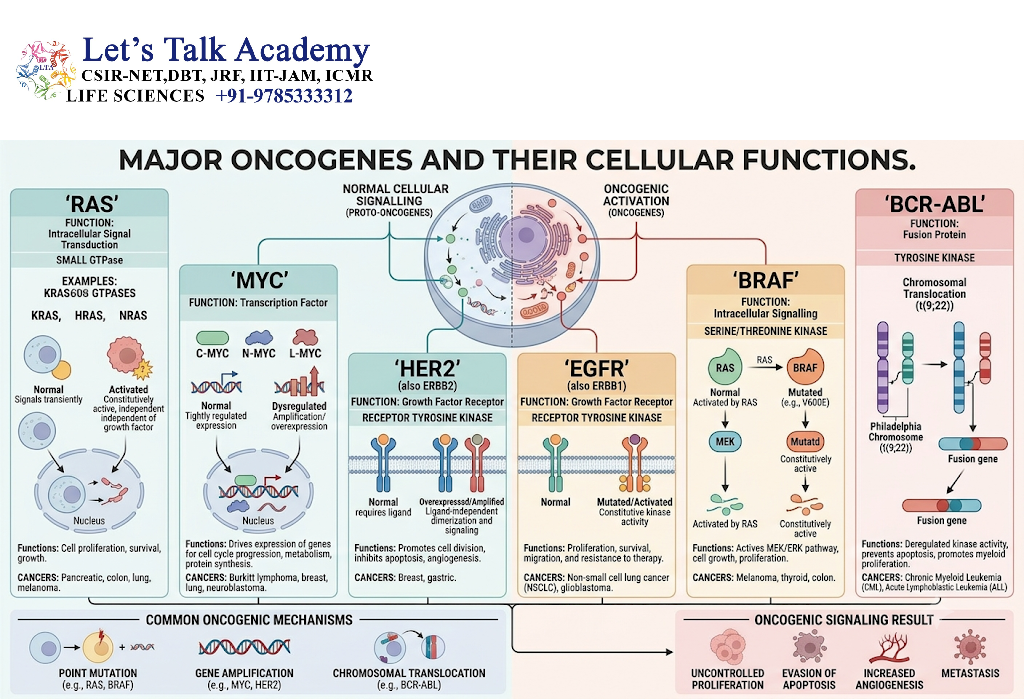
5.1 RAS
RAS is one of the best-known oncogenic signaling proteins.
RAS proteins are small GTPases that function as molecular switches downstream of many cell-surface receptors.
The normal cycle is:
Growth signal → RAS-GTP → downstream signaling → proliferation
followed by:
GTP hydrolysis → RAS-GDP → signal termination
Activating mutations can impair the normal switching mechanism and maintain RAS signaling in an active state.
RAS activation can influence multiple pathways involved in:
- Cell proliferation
- Cell survival
- Metabolism
- Cytoskeletal organization
- Gene expression
RAS therefore illustrates how a single molecular switch can influence several aspects of tumor-cell behavior.
5.2 MYC
MYC is a transcription factor and an important regulator of cellular growth.
MYC influences expression of numerous genes associated with:
- Cell-cycle progression
- Metabolism
- Protein synthesis
- Ribosome production
- Cellular growth
Abnormal MYC expression can shift cells toward a highly proliferative state.
Because MYC regulates many downstream genes, its abnormal activation can have broad effects rather than affecting only one biochemical pathway.
5.3 ABL and BCR-ABL
ABL encodes a tyrosine kinase involved in intracellular signaling.
When ABL becomes part of the BCR-ABL fusion protein, its regulatory properties are altered and kinase activity becomes constitutively active.
The resulting signaling can activate pathways involving RAS, PI3K, and other downstream effectors that contribute to proliferation and survival.
5.4 ERBB2/HER2
ERBB2, commonly called HER2, encodes a receptor tyrosine kinase.
In certain cancers, increased ERBB2 gene dosage results in elevated receptor expression and enhanced signaling.
The biological principle is important:
More receptor → stronger signaling capacity → increased growth and survival signaling
5.5 RAF
RAF proteins are serine/threonine kinases functioning downstream of RAS.
The simplified signaling pathway is:
Growth factor → receptor → RAS → RAF → MEK → ERK → transcriptional response
Abnormal activation of this pathway can result in persistent signals promoting cell proliferation.
5.6 BCL-2
BCL-2 provides an important example of an oncogene whose major effect is related to cell survival rather than directly stimulating cell division.
BCL-2 inhibits apoptosis by regulating mitochondrial pathways of programmed cell death.
A chromosomal translocation can cause inappropriate elevation of BCL-2 expression. The result is prolonged survival of cells that would normally undergo apoptosis.
This example is important because it demonstrates that cancer is not simply a disease of excessive proliferation. Failure of programmed cell death can also contribute substantially to tumor development.
6. Oncogenes and Cell-Signaling Pathways
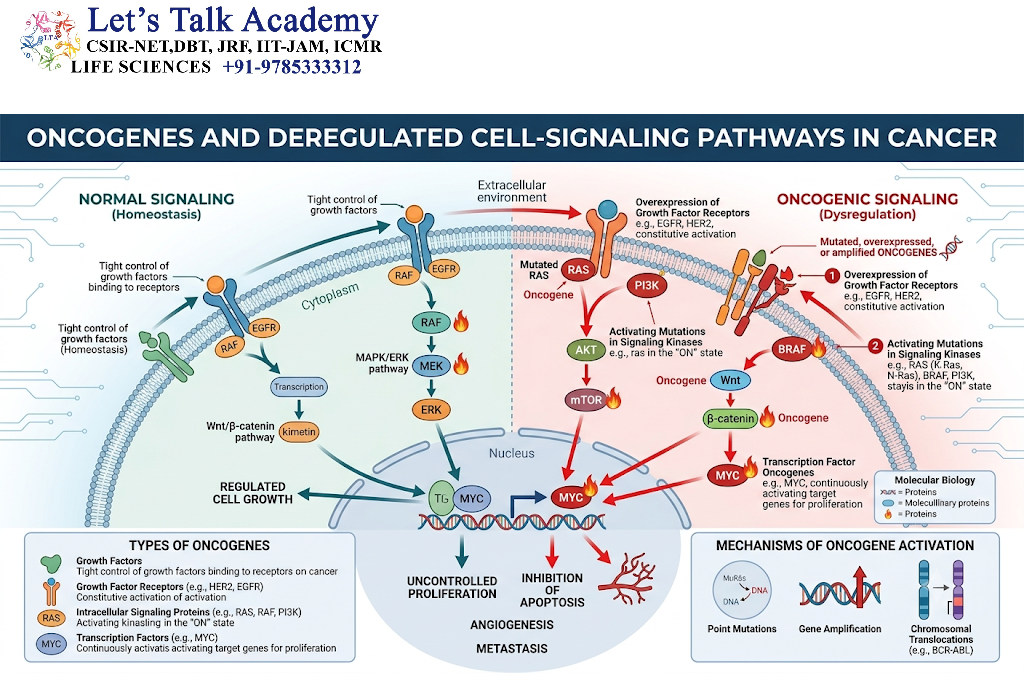
Oncogenes frequently affect signaling networks that connect extracellular information to changes in gene expression.
6.1 RAS–RAF–MEK–ERK Pathway
The MAP kinase pathway is one of the major proliferative signaling pathways.
A simplified sequence is:
Growth factor → receptor tyrosine kinase → RAS → RAF → MEK → ERK → transcription factors → proliferation
Activation of ERK leads to phosphorylation of downstream targets and changes in gene expression.
If an oncogenic mutation causes persistent signaling at one point in this pathway, the cell may continue receiving proliferation-promoting signals.
6.2 PI3K–AKT–mTOR Pathway
The PI3K–AKT–mTOR pathway is strongly associated with:
- Cell growth
- Protein synthesis
- Metabolism
- Survival
- Resistance to apoptosis
Oncogenic activation of this pathway can provide cancer cells with both proliferative and survival advantages.
The pathway also illustrates why oncogenes should not be studied as isolated genes. Cancer-associated signaling often involves interconnected networks with extensive cross-talk.
6.3 JAK–STAT Signaling
JAK–STAT signaling transmits extracellular signals to the nucleus through a relatively direct pathway.
Abnormal activation of components of this pathway can result in persistent transcription of genes involved in proliferation and survival.
This pathway demonstrates another principle of oncogenesis: signaling proteins can become oncogenic when normal stimulus-dependent activation becomes constitutive.
7. Oncogenes and Tumor Suppressor Genes
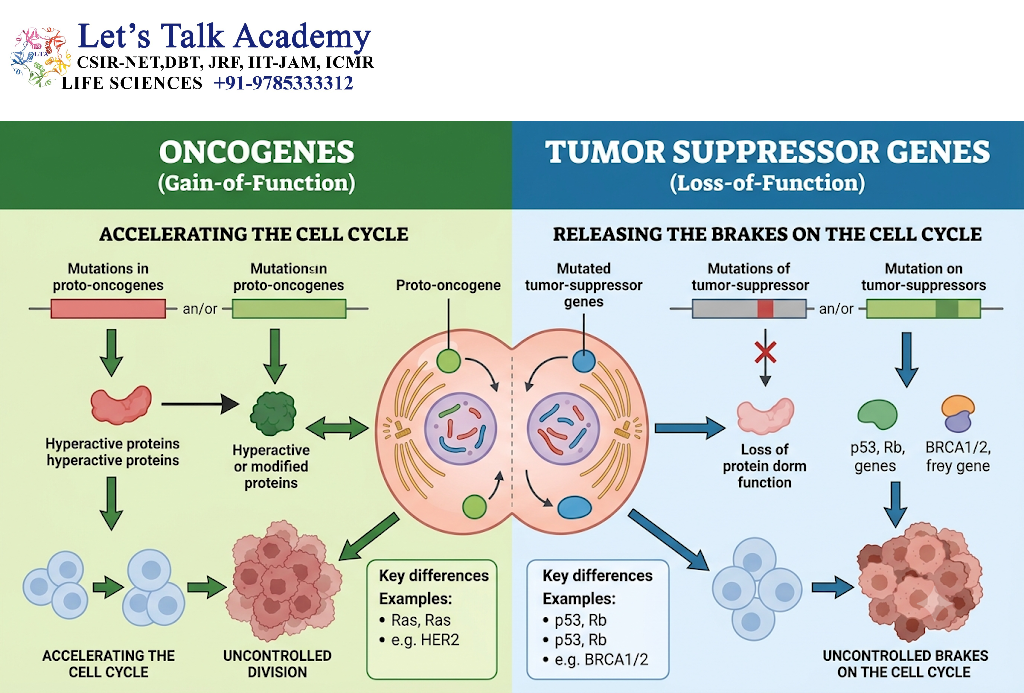
Cancer development usually involves changes in multiple regulatory systems.
Oncogenes and tumor suppressor genes represent two major functional categories.
7.1 Oncogenes as Growth-Promoting Drivers
Oncogenes generally promote cancer through increased or inappropriate activity.
They may:
- Stimulate proliferation
- Enhance survival
- Increase growth signaling
- Promote metabolic adaptation
- Alter differentiation
- Support tumor progression
Their cellular effect commonly represents a gain of function.
7.2 Tumor Suppressor Genes as Growth Inhibitors
Tumor suppressor genes normally restrain cell proliferation, promote DNA-damage responses, induce cell-cycle arrest, or facilitate apoptosis.
Important examples include:
- TP53
- RB1
- APC
- PTEN
Loss or inactivation of these genes removes important barriers to tumor development.
7.3 Functional Comparison
| Feature | Oncogenes | Tumor Suppressor Genes |
|---|---|---|
| Normal counterpart | Proto-oncogene | Normal tumor suppressor gene |
| Typical cancer alteration | Activation | Inactivation |
| Functional effect | Gain of function | Loss of function |
| Main consequence | Increased growth/survival signaling | Loss of growth restraint |
| Cellular behavior | Growth-promoting | Growth-inhibitory |
| Typical allele requirement | One activated allele may be sufficient | Often both functional copies must be lost |
This distinction is useful, but actual cancer biology is more complex because oncogenes and tumor suppressor pathways interact extensively.
8. Oncogenes and the Cell Cycle
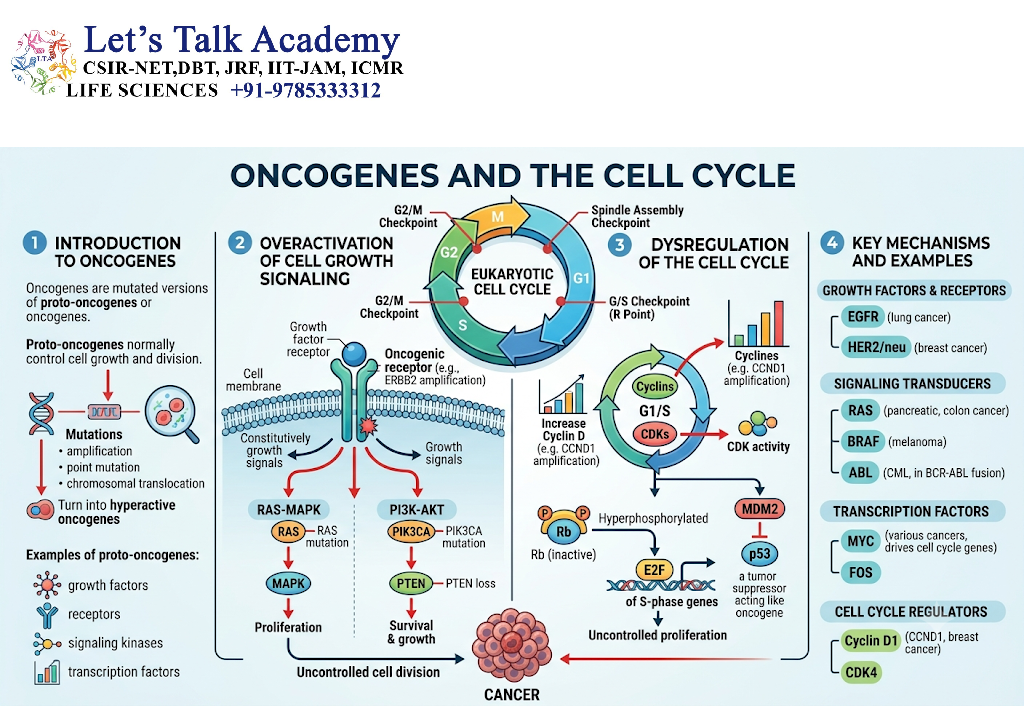
The cell cycle is tightly regulated to ensure that cells divide only when appropriate.
The major phases are:
G1 → S → G2 → M
Growth signals influence progression through these stages.
One important regulatory pathway involves the Cyclin D–CDK–RB–E2F axis.
In a simplified model:
Cyclin D/CDK activation → RB phosphorylation → E2F activation → S-phase gene expression → DNA replication
Oncogenic activation of growth signaling can increase cyclin production or CDK activity, thereby promoting inappropriate cell-cycle entry.
This illustrates how extracellular signaling can ultimately control nuclear events and DNA replication.
9. Oncogenes and Apoptosis
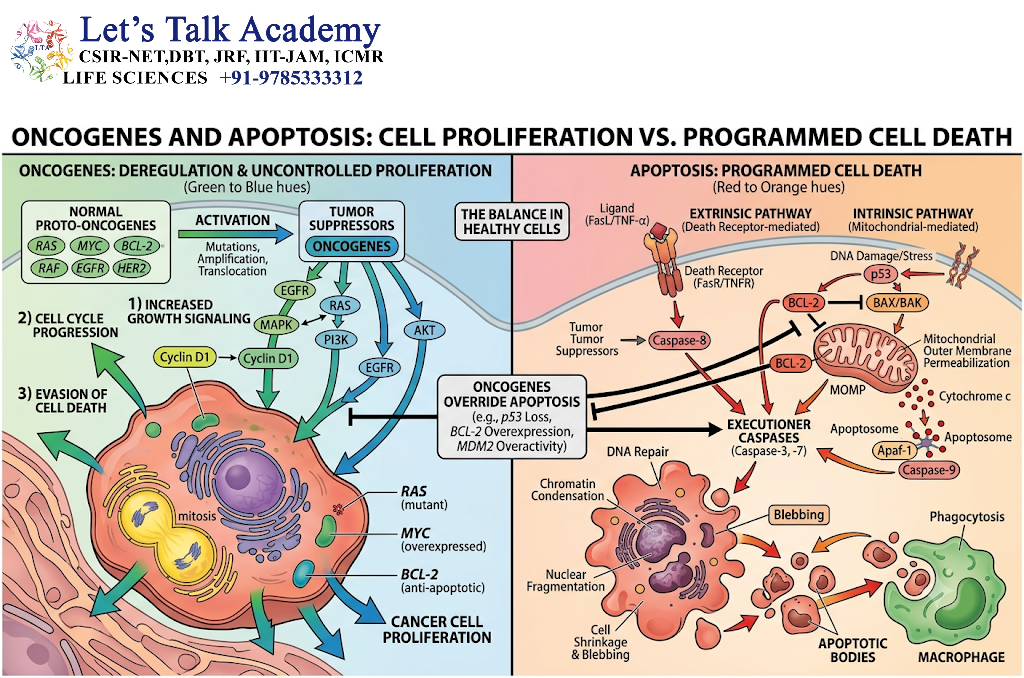
Apoptosis is programmed cell death that eliminates cells that are damaged, unnecessary, or potentially harmful.
Cancer cells frequently acquire mechanisms that allow them to escape apoptosis.
Oncogenes can contribute to this process by:
- Activating survival pathways
- Increasing anti-apoptotic proteins
- Inhibiting pro-apoptotic signaling
- Altering mitochondrial death pathways
BCL-2 is an important example because its oncogenic effect is primarily associated with increased cell survival.
Thus, an oncogenic alteration may allow a cell to survive rather than directly forcing it to divide.
10. Oncogenes and Cancer Development
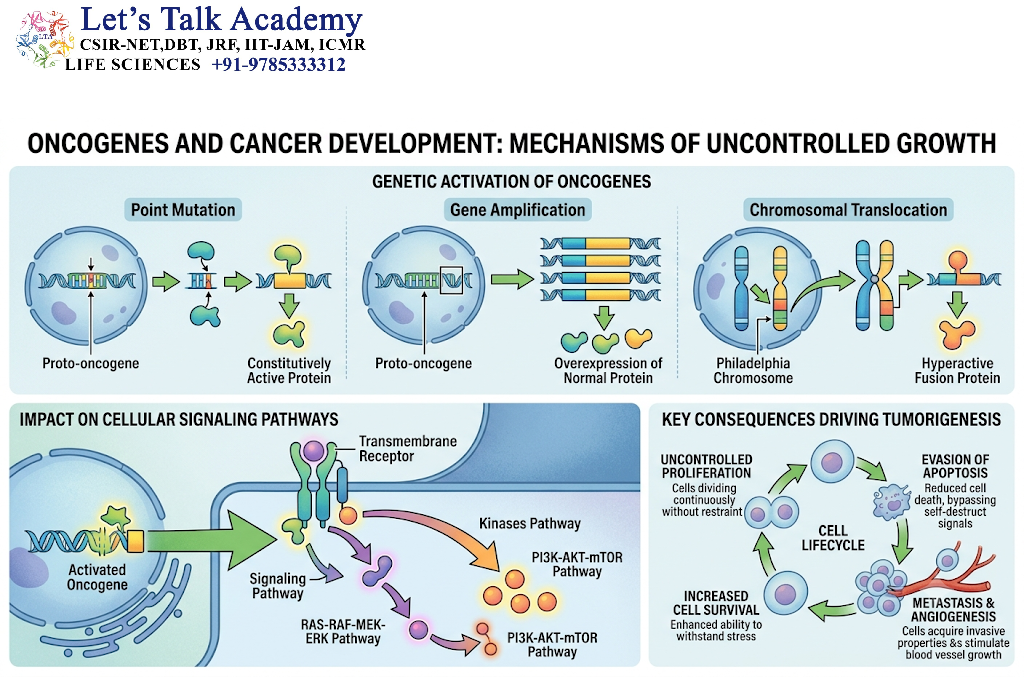
Cancer is generally a multistep process rather than the consequence of a single genetic alteration.
A normal cell can progressively acquire genetic and epigenetic abnormalities.
A simplified sequence is:
Normal cell → initiating alteration → clonal expansion → additional alterations → tumor progression → malignant phenotype
Different cancer types acquire different combinations of genetic changes.
Oncogenes may provide an early proliferative advantage, while additional alterations affecting tumor suppressors, DNA repair, apoptosis, metabolism, invasion, and other cellular processes can contribute to progression.
10.1 Clonal Selection
When a genetic alteration provides a growth advantage, the affected cell may produce more daughter cells than neighboring cells.
If one of those cells acquires another advantageous alteration, that clone may expand further.
Over time, this process produces genetically heterogeneous tumor populations.
This concept is important because it explains why tumors can contain cells with different genetic profiles and why tumor progression can involve successive waves of selection.
11. Genetic Mechanisms of Oncogenic Activation
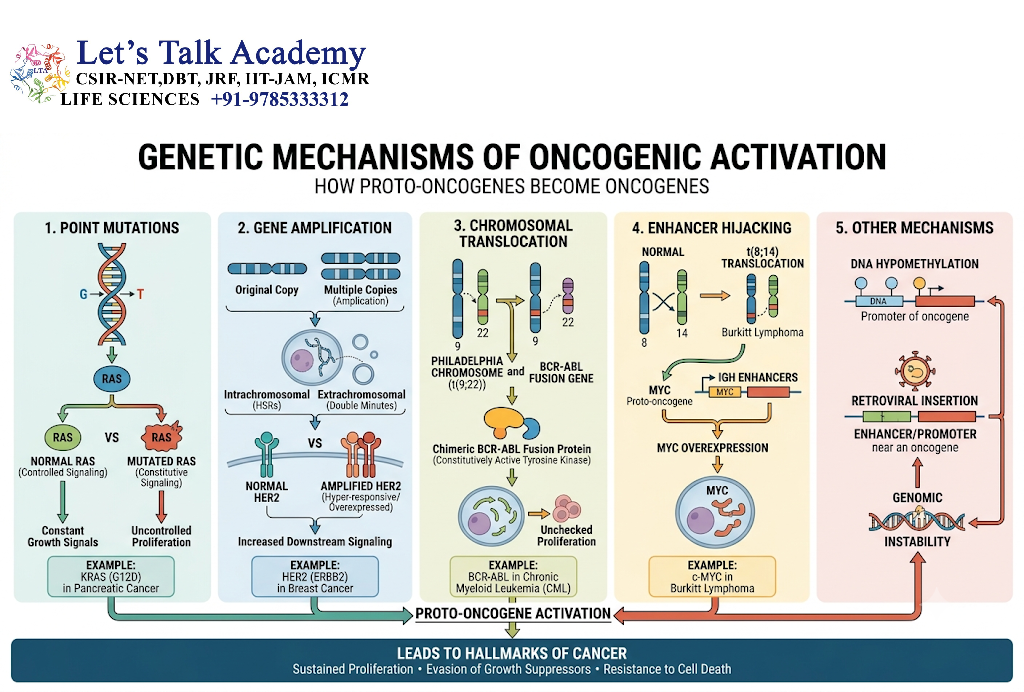
The principal mechanisms can be summarized as follows:
11.1 Point Mutation
A nucleotide change alters protein function and creates constitutive activity.
Example: Activating mutations in RAS.
11.2 Gene Amplification
Increased gene copy number produces excessive protein.
Example: ERBB2/HER2 amplification in appropriate tumor contexts.
11.3 Chromosomal Translocation
A proto-oncogene is placed under a different regulatory element or becomes fused to another gene.
Example: BCR-ABL.
11.4 Promoter or Enhancer Activation
Regulatory DNA changes cause excessive transcription.
11.5 Gene Fusion
Two genes become physically joined, producing an abnormal protein.
11.6 Abnormal Protein Stability
Changes can cause an oncogenic protein to persist longer than normal, extending its signaling activity.
12. Experimental Identification of Oncogenes
The discovery of oncogenes has relied on several molecular and genetic approaches.
12.1 Transformation Assays
DNA from tumor cells can be introduced into suitable recipient cells.
If the introduced DNA causes abnormal cellular growth or transformation, researchers can identify the responsible genetic sequence.
This approach played an important historical role in identifying cellular oncogenes.
12.2 DNA Sequencing
Modern sequencing allows researchers to identify mutations in cancer genomes.
Comparing tumor DNA with normal tissue DNA helps distinguish cancer-associated alterations from inherited or normal genetic variation.
12.3 Cytogenetic Analysis
Chromosomal abnormalities can be identified through cytogenetic approaches.
Translocations, deletions, duplications, and amplifications can reveal regions containing cancer-driving genes.
12.4 Gene Expression Analysis
Abnormally high expression of a gene can suggest oncogenic activation, especially when combined with evidence of gene amplification or pathway activation.
12.5 Functional Genomics
Modern functional approaches can determine whether a candidate mutation or gene alteration actually contributes to cellular transformation.
This distinction is important because a tumor may contain many mutations that are biologically incidental or “passenger” alterations, while a smaller group of “driver” alterations actively contributes to tumor behavior.
13. Oncogenes, Drivers, and Passenger Mutations
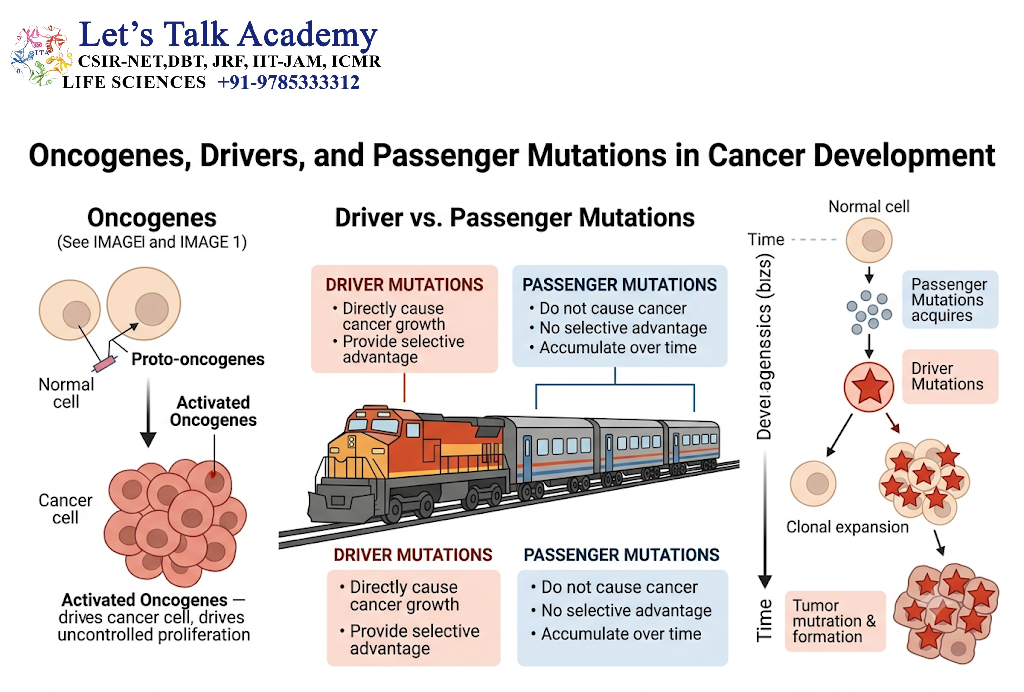
Not every genetic alteration found in a tumor is responsible for cancer development.
13.1 Driver Alterations
A driver alteration contributes to the selective advantage of a cancer cell.
Examples can include:
- Activating RAS mutations
- MYC activation
- BCR-ABL formation
- HER2 amplification
13.2 Passenger Alterations
Passenger alterations occur during tumor evolution but do not provide a substantial growth advantage.
This distinction is important in cancer genomics because tumor genomes may contain a very large number of genetic changes.
Understanding which alterations are functional drivers helps researchers identify biologically important pathways and potential therapeutic targets.
14. Molecular Consequences of Oncogene Activation
Activation of oncogenes can produce several major cellular effects.
14.1 Increased Cell Proliferation
The cell receives persistent signals to enter or continue the cell cycle.
14.2 Increased Cell Survival
Survival pathways become activated, reducing the likelihood of apoptosis.
14.3 Altered Differentiation
Certain oncogenic alterations interfere with normal cellular differentiation, causing cells to retain immature or abnormal characteristics.
14.4 Metabolic Reprogramming
Cancer cells frequently alter metabolic pathways to support rapid growth and biosynthesis.
Oncogenic signaling can influence glucose metabolism, lipid metabolism, nucleotide production, and protein synthesis.
14.5 Genomic Instability
Although oncogenes do not always directly cause DNA repair defects, persistent oncogenic signaling can generate cellular stress and interact with pathways controlling genomic integrity.
14.6 Tumor Microenvironment Changes
Cancer cells can influence surrounding stromal cells, blood vessels, immune cells, and extracellular matrix components.
Thus, oncogenic signaling can have effects extending beyond the individual tumor cell.
15. Oncogenes and Molecular Diagnosis
Knowledge of oncogenes has transformed the molecular understanding of cancer.
Specific genetic alterations can sometimes be detected using:
- PCR-based methods
- DNA sequencing
- Fluorescence-based cytogenetic methods
- Copy-number analysis
- Immunohistochemistry
- RNA-based assays
- Next-generation sequencing
Detection of a particular oncogenic alteration can provide information about the molecular characteristics of a tumor.
Importantly, the biological and clinical interpretation of a genetic alteration depends on tumor type, molecular context, and the specific alteration involved.
16. Oncogenes as Therapeutic Targets
The identification of oncogenic pathways has also contributed to the development of targeted therapies.
The basic principle is:
Oncogenic alteration → abnormal molecular dependency → therapeutic inhibition
For example, tumors driven by particular kinase abnormalities may be sensitive to inhibitors that block the relevant kinase pathway.
The BCR-ABL system is a classic illustration of this principle. Understanding the abnormal kinase activity created by the fusion protein provided a molecular basis for targeted inhibition.
However, targeted therapy can encounter challenges such as:
- Secondary mutations
- Alternative pathway activation
- Tumor heterogeneity
- Drug resistance
- Changes in gene dosage
- Activation of bypass signaling pathways
Therefore, oncogene-targeted treatment is an evolving area of molecular oncology.
17. Important Examples of Oncogenes
| Oncogene | Protein Type | Major Mechanism | Major Biological Effect |
|---|---|---|---|
| RAS | Small GTPase | Activating mutation | Persistent proliferative signaling |
| MYC | Transcription factor | Overexpression/amplification/rearrangement | Increased growth and proliferation |
| BCR-ABL | Fusion tyrosine kinase | Chromosomal translocation | Constitutive kinase signaling |
| ERBB2/HER2 | Receptor tyrosine kinase | Gene amplification/overexpression | Increased growth signaling |
| RAF | Serine/threonine kinase | Activating alteration | MAPK pathway activation |
| BCL-2 | Apoptosis regulator | Abnormal expression | Increased cell survival |
| Cyclin D1 | Cell-cycle regulator | Overexpression/amplification | Increased cell-cycle progression |
These examples demonstrate that oncogenes can operate at very different levels of cellular regulation, from membrane receptors to intracellular signaling proteins, transcription factors, cell-cycle regulators, and apoptosis-related proteins.
18. Oncogene Signaling: An Integrated View
A useful way to integrate the major concepts is to follow a signal from outside the cell to the nucleus.
Growth factor
↓
Receptor tyrosine kinase
↓
RAS
↓
RAF
↓
MEK
↓
ERK
↓
Transcription factors
↓
Cyclins and growth-related genes
↓
Cell-cycle progression
At the same time, parallel pathways can promote survival:
Receptor signaling
↓
PI3K
↓
AKT
↓
mTOR and survival-associated targets
↓
Cell growth and survival
An oncogenic alteration at one or more points in these networks can make signaling excessive or independent of normal external control.
19. Oncogenes and the Hallmarks of Cancer
Oncogenes contribute to several biological properties associated with cancer.
They can support:
- Sustained proliferative signaling
- Resistance to cell death
- Increased cellular growth
- Altered metabolism
- Abnormal differentiation
- Tumor-promoting interactions with the microenvironment
- Adaptation to cellular stress
Not every oncogene produces all of these effects directly. Rather, oncogenic signaling interacts with multiple cellular pathways, allowing cancer cells to acquire complex phenotypes over time.


