
1. Introduction
The cell cycle is the highly regulated sequence of events through which a cell grows, duplicates its genetic material, and divides into daughter cells. In normal tissues, cell division is carefully controlled so that the number of cells remains appropriate for the needs of the organism.
Cancer develops when this regulatory system becomes abnormal.
Cancer cells can acquire the ability to:
- Divide continuously
- Ignore normal growth-inhibitory signals
- Avoid programmed cell death
- Bypass cell-cycle checkpoints
- Replicate despite DNA damage
- Accumulate genetic abnormalities
- Invade surrounding tissues
- In some cancers, spread to distant organs
Therefore, cancer can be understood partly as a disease of abnormal cell-cycle regulation.
A simplified relationship is:
Normal cell-cycle control → controlled proliferation
Loss of cell-cycle control → excessive proliferation → accumulation of abnormalities → cancer
2. Definition of Cell Cycle
The cell cycle is the ordered series of molecular and cellular events through which a cell grows, duplicates its DNA, and produces two daughter cells.
The major stages are:
- G₁ phase
- S phase
- G₂ phase
- M phase
Some cells can leave the active cycle and enter a resting state called G₀.
General sequence
G₁ → S → G₂ → M → G₁
G₁ Phase
During G₁:
- Cell growth occurs
- Proteins and organelles are synthesized
- Environmental signals are assessed
- The cell determines whether conditions are suitable for DNA replication
S Phase
The S phase is the DNA synthesis phase.
During this phase:
- DNA is replicated
- Each chromosome produces two sister chromatids
- Histones and other DNA-associated proteins are synthesized
G₂ Phase
During G₂:
- Additional cell growth occurs
- Proteins required for mitosis are produced
- DNA replication is checked
- The cell prepares for mitosis
M Phase
The M phase includes:
- Mitosis
- Cytokinesis
During mitosis, duplicated chromosomes are separated into daughter cells.
3. G₀ Phase
Some differentiated cells temporarily or permanently leave the active cell cycle and enter G₀.
Examples include many:
- Neurons
- Mature muscle cells
Other cells can return from G₀ to the cell cycle following appropriate growth signals.
This ability differs between cell types.
4. Why Cell-Cycle Regulation Is Important
Uncontrolled cell division is potentially harmful because every round of DNA replication creates opportunities for genetic errors.
Normal cell-cycle regulation ensures that:
- DNA is replicated accurately
- Damaged DNA is repaired
- Chromosomes are correctly distributed
- Cell division occurs only when appropriate
- Severely damaged cells are eliminated
When these safeguards fail, abnormal cells can survive and proliferate.
5. Major Regulators of the Cell Cycle
The cell cycle is controlled by several groups of proteins.
The most important include:
- Cyclins
- Cyclin-dependent kinases (CDKs)
- CDK inhibitors
- Tumor suppressor proteins
- Growth-factor signaling pathways
- DNA-damage response proteins
6. Cyclins
Cyclins are regulatory proteins whose concentrations change during the cell cycle.
Different cyclins activate different CDKs.
Important examples include:
| Cyclin | Major associated CDKs | Major role |
|---|---|---|
| Cyclin D | CDK4/6 | G₁ progression |
| Cyclin E | CDK2 | G₁/S transition |
| Cyclin A | CDK2/CDK1 | S phase and G₂ |
| Cyclin B | CDK1 | Entry into mitosis |
Cyclins do not function alone. They regulate cell-cycle progression primarily by activating CDKs.
7. Cyclin-Dependent Kinases
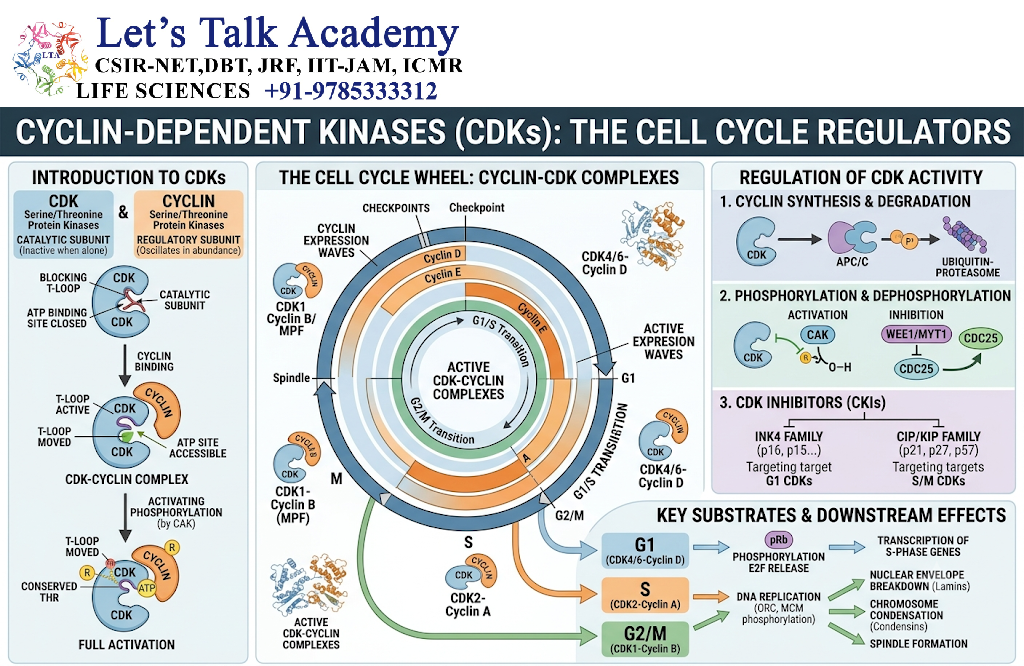
Cyclin-dependent kinases (CDKs) are protein kinases that phosphorylate specific target proteins.
Their activity depends on association with cyclins and additional regulatory mechanisms.
General mechanism:
Cyclin production → Cyclin binds CDK → CDK activation → Phosphorylation of target proteins → Cell-cycle progression
Abnormal activation of cyclin-CDK pathways can contribute to cancer.
8. CDK Inhibitors
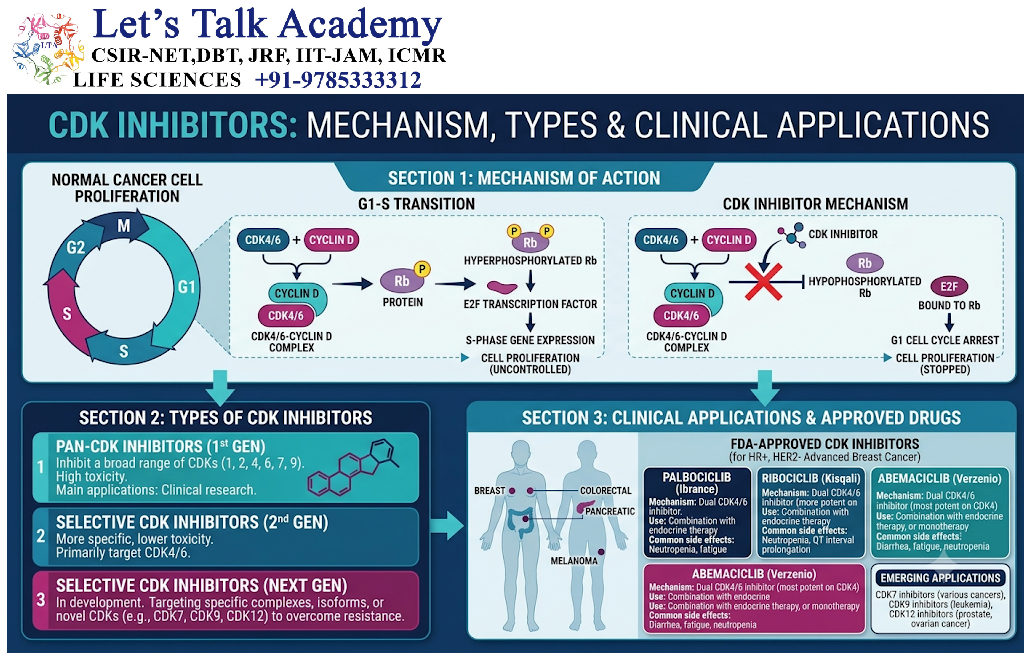
CDK inhibitors reduce CDK activity and therefore help prevent inappropriate cell-cycle progression.
Important families include:
- INK4 family
- Cip/Kip family
Examples:
- p16
- p21
- p27
These proteins can act as important brakes on cell proliferation.
9. Cell-Cycle Checkpoints
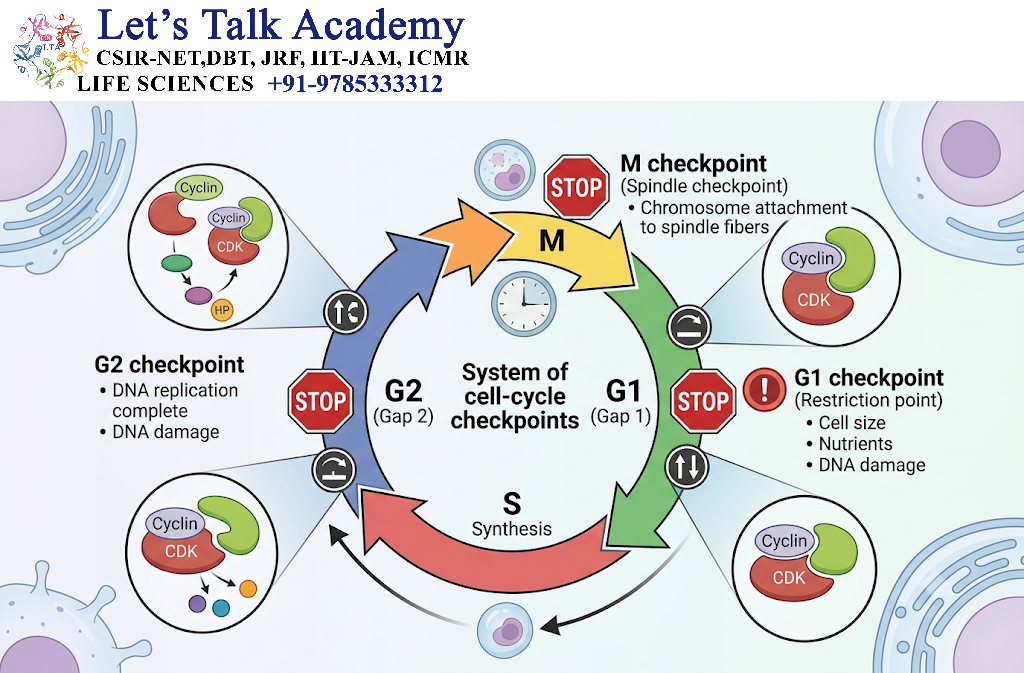
A checkpoint is a regulatory control mechanism that determines whether a cell is ready to proceed to the next stage of the cell cycle.
Major checkpoints include:
- G₁/S checkpoint
- G₂/M checkpoint
- Spindle assembly checkpoint
These checkpoints help maintain genomic stability.
10. G₁/S Checkpoint
The G₁/S checkpoint is particularly important because it determines whether a cell should begin DNA replication.
The cell evaluates:
- Cell size
- Nutrient availability
- Growth signals
- DNA integrity
- Environmental conditions
If DNA is damaged, progression can be delayed or stopped.
Cancer and the G₁/S Checkpoint
Cancer cells may acquire abnormalities that allow them to pass this checkpoint despite DNA damage.
This can result in:
DNA damage → checkpoint failure → DNA replication → mutation propagation
11. RB Protein and the G₁/S Transition
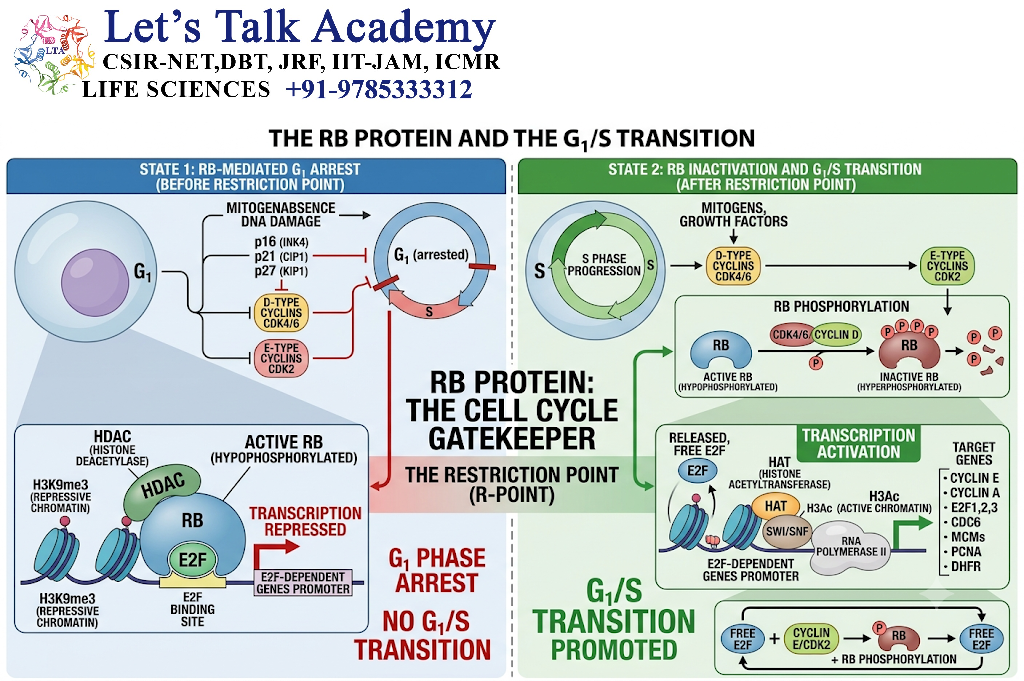
The RB1 gene encodes the retinoblastoma protein, commonly called RB.
RB is an important regulator of the G₁/S transition.
When RB is active, it restrains transcription factors such as E2F, limiting expression of genes needed for S-phase entry.
When appropriate growth signals activate cyclin-CDK complexes, RB becomes phosphorylated, reducing its inhibitory effect on E2F.
General pathway:
Growth signals → Cyclin D-CDK4/6 → RB phosphorylation → E2F activation → S-phase gene expression → DNA replication
Loss of RB pathway control can therefore promote inappropriate entry into S phase.
12. p53 and the Cell Cycle
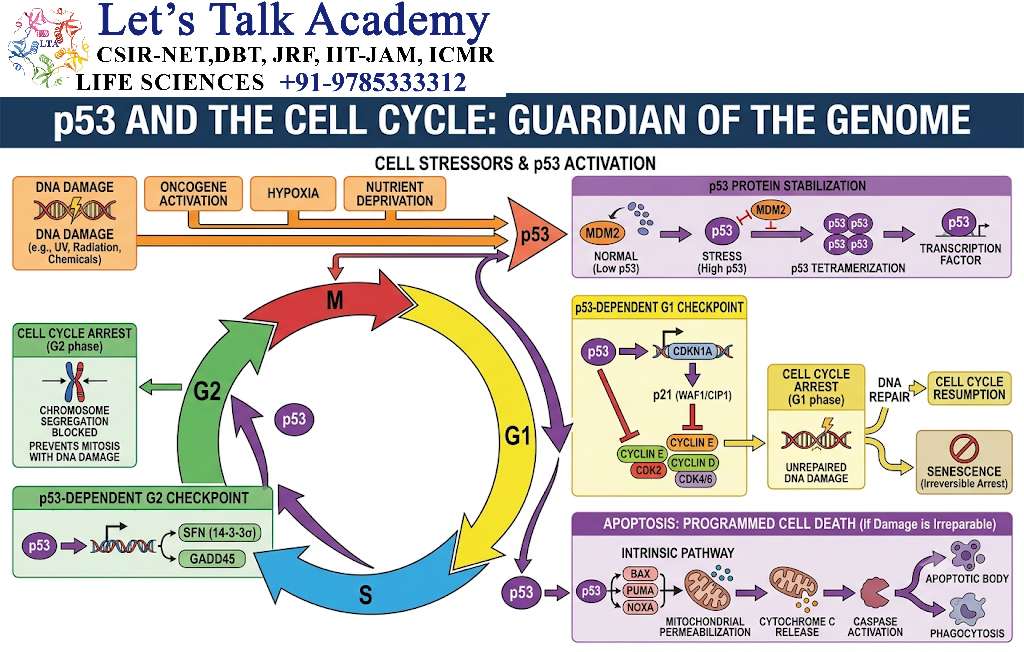
The TP53 gene encodes p53, one of the most important tumor suppressor proteins.
p53 responds to:
- DNA damage
- Oncogenic stress
- Cellular stress
- Other conditions associated with genomic instability
One major pathway is:
DNA damage → p53 activation → p21 production → CDK inhibition → Cell-cycle arrest
This gives the cell time to repair DNA.
If the damage cannot be adequately repaired, p53 can promote:
- Apoptosis
- Senescence
13. G₂/M Checkpoint
Before entering mitosis, cells must ensure that DNA replication has been completed properly.
If DNA remains damaged or incompletely replicated, the cell can delay mitotic entry.
The G₂/M checkpoint therefore prevents cells from dividing with major DNA abnormalities.
Defects in this checkpoint can increase genomic instability.
14. Spindle Assembly Checkpoint
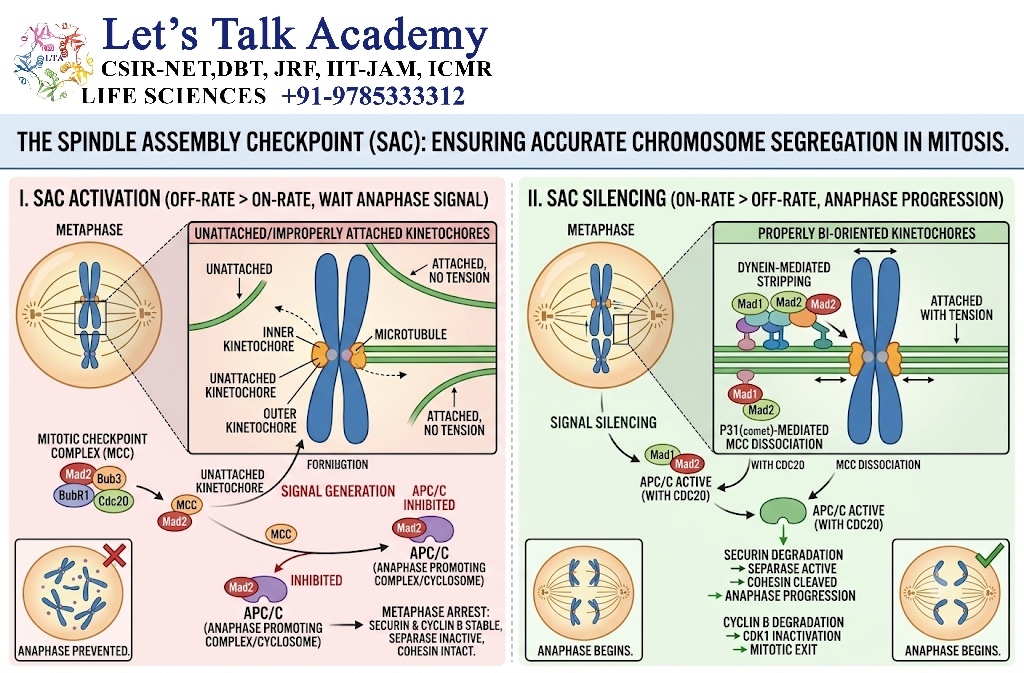
During mitosis, chromosomes must attach correctly to the mitotic spindle.
The spindle assembly checkpoint ensures that chromosomes are appropriately attached before chromosome separation occurs.
Failure can lead to:
- Chromosome missegregation
- Aneuploidy
- Chromosomal instability
Chromosomal instability is common in many cancers.
15. Cancer as a Disease of Cell-Cycle Deregulation
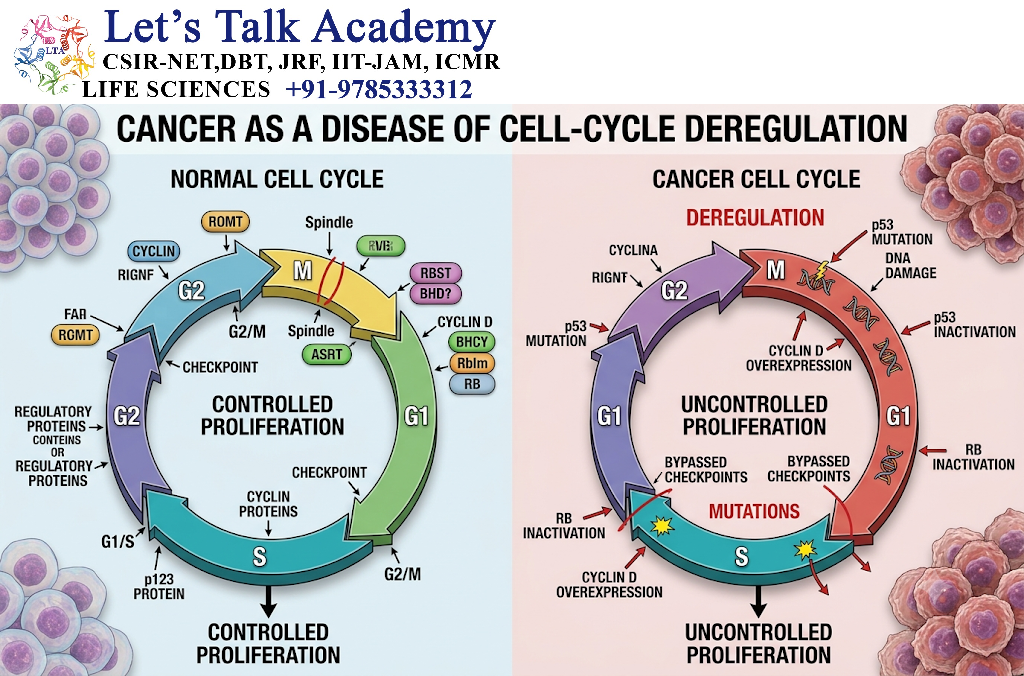
Cancer cells frequently acquire abnormalities affecting:
- Growth-factor receptors
- Intracellular signaling pathways
- Cyclins
- CDKs
- CDK inhibitors
- RB pathway
- p53 pathway
- DNA-repair systems
- Apoptotic pathways
The combined effect is loss of normal growth control.
16. Oncogenes and Cell-Cycle Activation
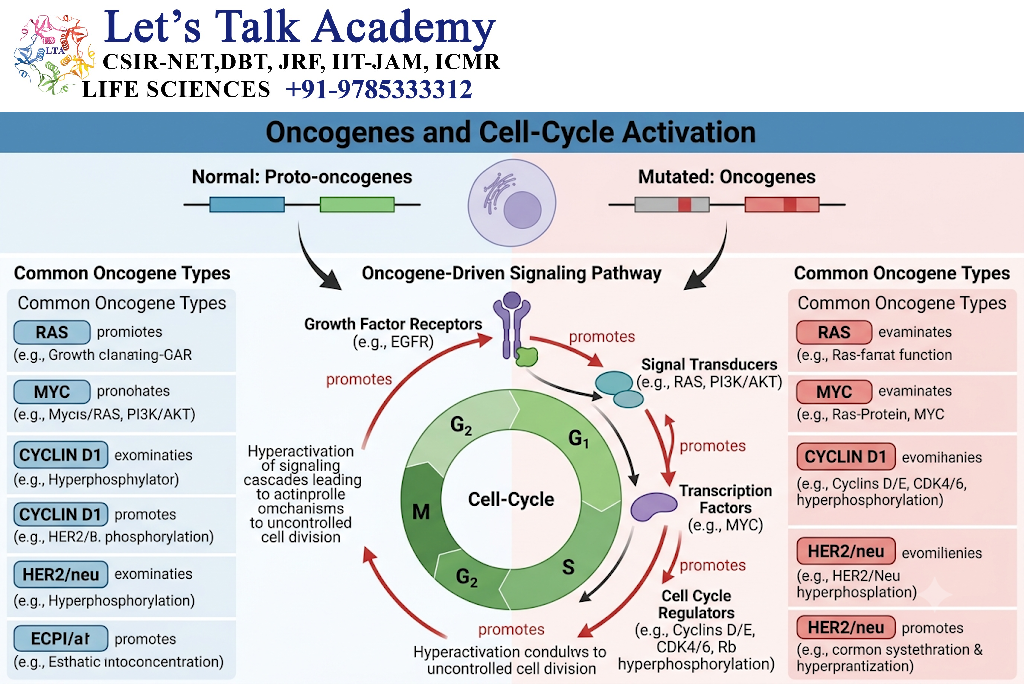
Proto-oncogenes are normal genes that promote cell growth or survival.
When they become abnormally activated, they can become oncogenes.
Examples include:
- RAS
- MYC
- ABL
- Certain growth-factor receptors
An oncogene may promote cancer by increasing:
- Cell proliferation
- Growth signaling
- Survival
- Metabolic activity
For example:
Growth signal → RAS/MAPK pathway → MYC and other growth-promoting programs → increased proliferation
If such pathways become constitutively active, cells may continue proliferating without normal external signals.
17. Tumor Suppressor Genes and Cell-Cycle Control
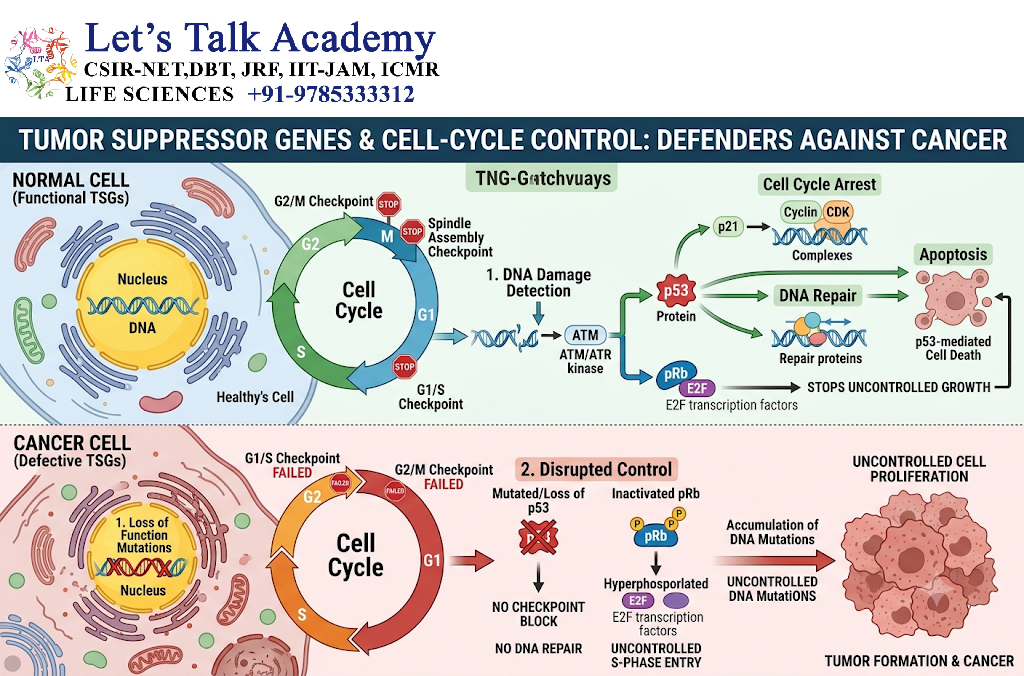
Tumor suppressor genes normally restrict inappropriate proliferation.
Important examples include:
- TP53
- RB1
- CDKN2A
- APC
- PTEN
- BRCA1
- BRCA2
Loss of tumor suppressor activity can remove important restrictions on cell growth.
Important relationship
Oncogene activation = accelerator stuck on
Tumor suppressor loss = brakes fail
Cancer development often involves abnormalities in both growth-promoting and growth-inhibiting systems.
18. DNA Damage and Cancer
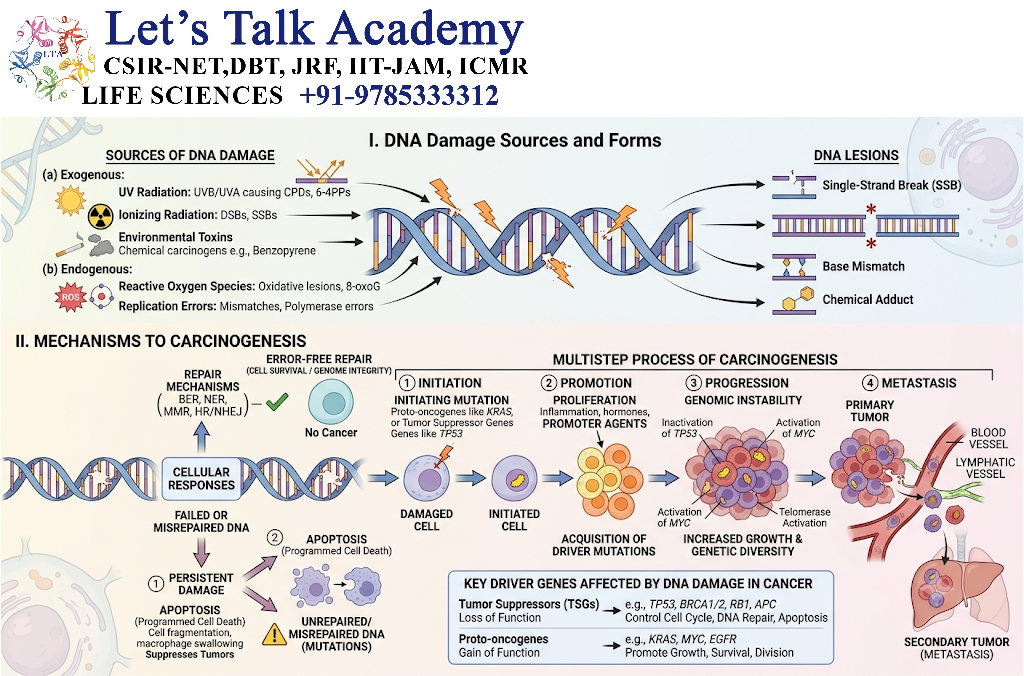
DNA damage occurs continuously because of:
- Normal cellular metabolism
- Reactive oxygen species
- Radiation
- Certain chemicals
- Replication errors
- Environmental exposures
Normally, DNA repair systems correct many forms of damage.
When repair mechanisms fail, mutations can accumulate.
General pathway:
DNA damage → Repair
or
DNA damage → Cell-cycle arrest → Repair
or, if damage is severe:
DNA damage → Apoptosis/Senescence
Cancer may develop when damaged cells escape these protective mechanisms.
19. Apoptosis and Cancer
Apoptosis is programmed cell death.
It removes cells that are:
- Unnecessary
- Severely damaged
- Potentially dangerous
Cancer cells may avoid apoptosis by:
- Disrupting p53 signaling
- Increasing anti-apoptotic proteins
- Reducing pro-apoptotic signaling
- Altering death-receptor pathways
Therefore:
Normal cell → damage → apoptosis
whereas:
Cancer cell → damage → survival → continued proliferation
20. Cellular Senescence
Cellular senescence is a state of stable proliferative arrest.
A senescent cell remains metabolically active but generally does not continue dividing.
Senescence can act as a barrier against tumor development.
Cancer cells may acquire mechanisms that allow them to bypass or escape senescence.
21. Telomeres and Cancer
Telomeres are repetitive DNA sequences at chromosome ends that protect chromosomes from degradation and inappropriate fusion.
During normal cell division, telomeres generally become shorter.
Many cancer cells activate telomerase, an enzyme that helps maintain telomere length.
This allows cells to continue dividing beyond the normal limits of many somatic cells.
Thus:
Telomere shortening → replicative limit
whereas:
Telomerase activation → telomere maintenance → extended proliferative capacity
22. Cancer and Loss of Contact Inhibition
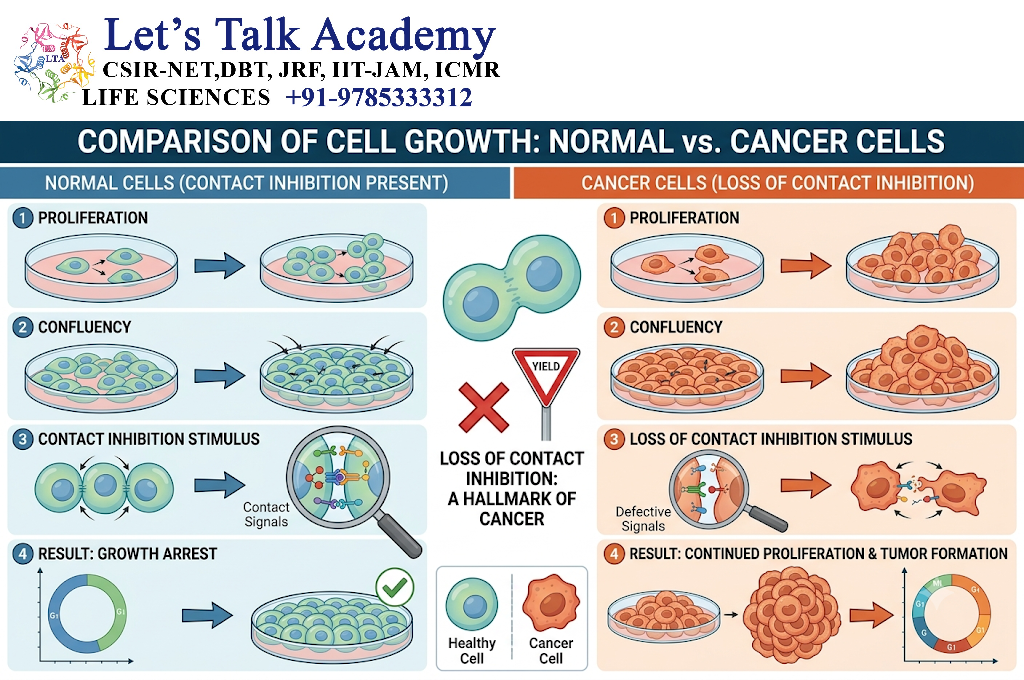
Normal cells often respond to neighboring cells and tissue organization.
Many cancer cells lose normal growth-control responses associated with cell density and tissue architecture.
They may continue proliferating even when surrounding cells would normally provide inhibitory signals.
This contributes to abnormal tissue mass formation.
23. Cancer and Growth-Factor Signaling
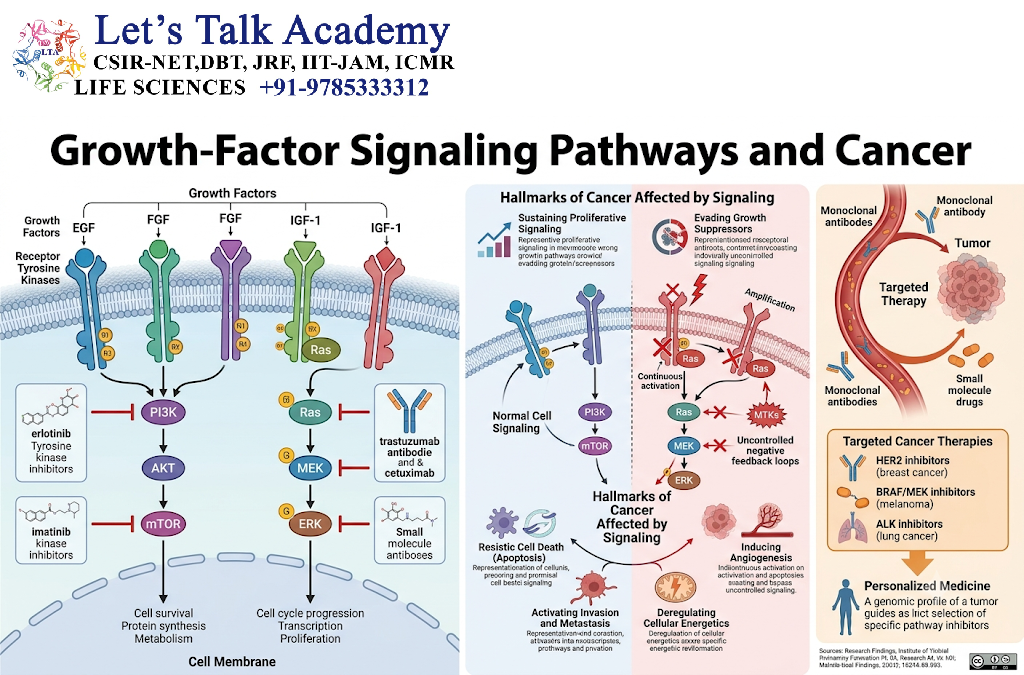
Normal cell division often requires appropriate extracellular growth signals.
Growth factors bind receptors and activate intracellular pathways.
Important pathways include:
- RAS–RAF–MEK–ERK
- PI3K–AKT–mTOR
- JAK–STAT
- WNT–β-catenin
Cancer can arise when these pathways become persistently activated.
For example:
Growth factor → receptor → RAS → RAF → MEK → ERK → transcriptional changes → proliferation
Mutations affecting this pathway can result in persistent proliferative signaling.
24. WNT and β-Catenin Pathway
The WNT/β-catenin pathway is important in cell proliferation, differentiation, and tissue development.
The tumor suppressor APC is an important regulator of β-catenin signaling.
Loss of APC function can cause abnormal β-catenin accumulation and increased expression of genes associated with cell proliferation.
APC abnormalities are particularly important in colorectal tumor development.
25. PI3K-AKT-mTOR Pathway
The PI3K-AKT-mTOR pathway regulates:
- Cell survival
- Growth
- Protein synthesis
- Metabolism
Abnormal activation can promote cancer-cell survival and proliferation.
The tumor suppressor PTEN normally opposes PI3K signaling.
Therefore:
Loss of PTEN → increased PI3K-AKT signaling → increased survival and growth
26. MYC and Cell Proliferation
MYC is a transcription factor that regulates genes involved in:
- Cell growth
- Metabolism
- Protein synthesis
- Cell-cycle progression
Abnormal MYC activation can strongly promote proliferation.
Because MYC regulates many cellular processes, excessive MYC activity can contribute to several types of cancer.
27. Cancer and Genomic Instability
Genomic instability refers to an increased tendency of cells to acquire genetic abnormalities.
These abnormalities can include:
- Point mutations
- Deletions
- Insertions
- Gene amplification
- Chromosomal rearrangements
- Aneuploidy
Genomic instability provides opportunities for cancer cells to acquire additional characteristics that support survival and proliferation.
28. Cancer Cell-Cycle Progression
A typical cancer cell may show:
Persistent growth signaling
↓
Cyclin/CDK activation
↓
Checkpoint bypass
↓
DNA replication despite damage
↓
Repeated cell division
↓
Accumulation of mutations
↓
Clonal expansion
↓
Tumor formation
Different cancers can use different molecular routes to reach this state.


