In a genetic assay, randomly generated fragments of yeast DNA were cloned into a bacterial plasmid containing gene ‘X’ essential for yeast viability on minimal media. The recombinant plasmid was […]
In a genetic assay, randomly generated fragments of yeast DNA were cloned into a bacterial plasmid containing gene ‘X’ essential for yeast viability on minimal media. The recombinant plasmid was […]
The amino acid arginine is encoded by six codon: CGU, CGC, CGA, CGG, AGA, and AGG. Assuming inosine is not an option in the tRNA anticodon, what is the minimum […]
Some of the steps in the process of eukaryotic DNA replication mentioned below require hydrolysis of ATP. (A) Phosphodiester bond formation (B) DNA strand separation by helicase (C) Clamp-loader association […]
The polysome can be describes as (1) A special ribosome occurring in prokaryotes (2) A DNA strand which is being transcribed by may RNA polymerase(3) String of RNA occupied by […]
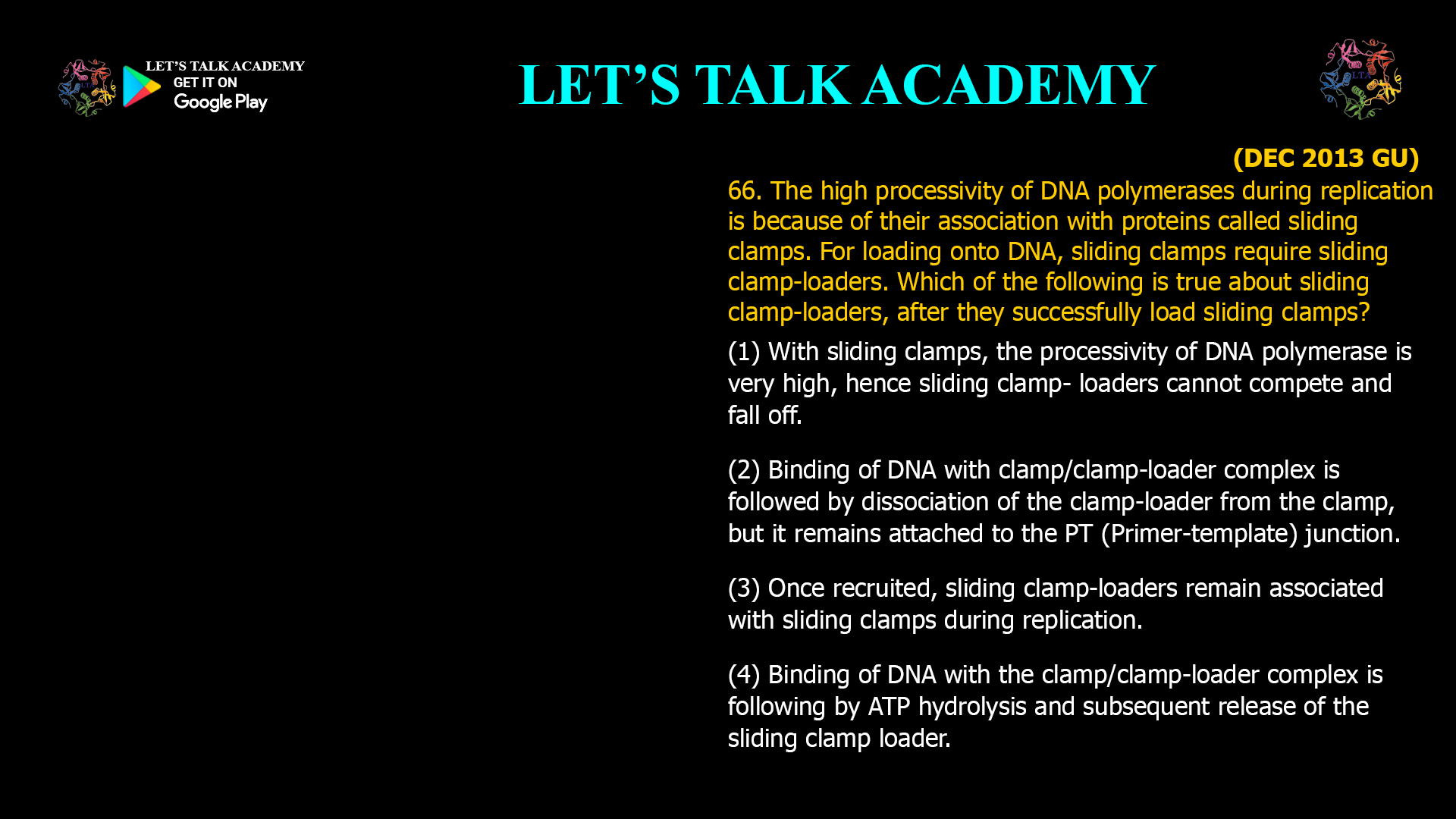
The high processivity of DNA polymerases during replication is because of their association with proteins called sliding clamps. For loading onto DNA, sliding clamps require sliding clamp-loaders. Which of the […]
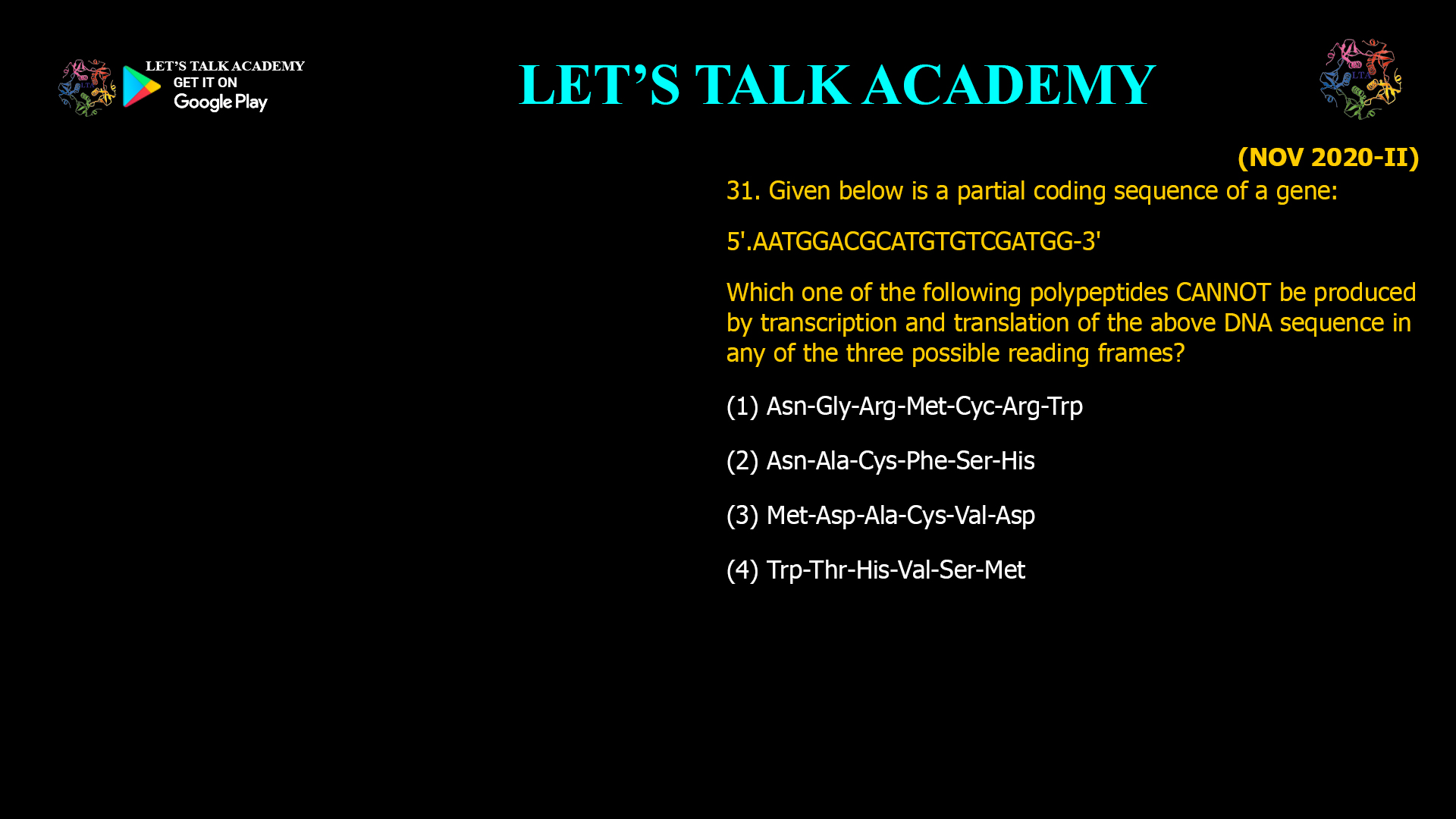
Given below is a partial coding sequence of a gene: 5′.AATGGACGCATGTGTCGATGG-3′ Which one of the following polypeptides CANNOT be produced by transcription and translation of the above DNA sequence in […]
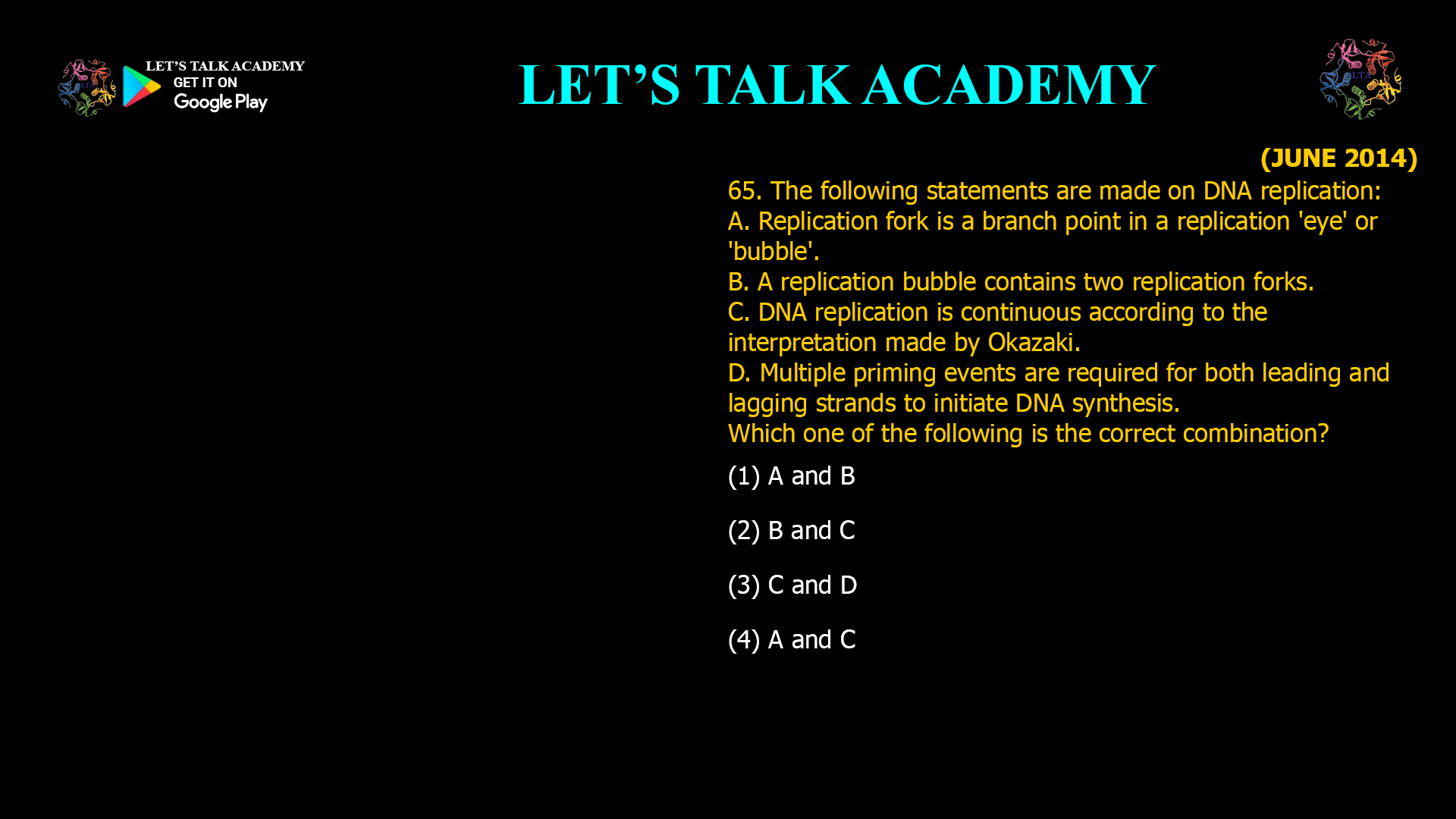
65. The following statements are made on DNA replication: A. Replication fork is a branch point in a replication ‘eye’ or ‘bubble’. B. A replication bubble contains two replication forks. […]
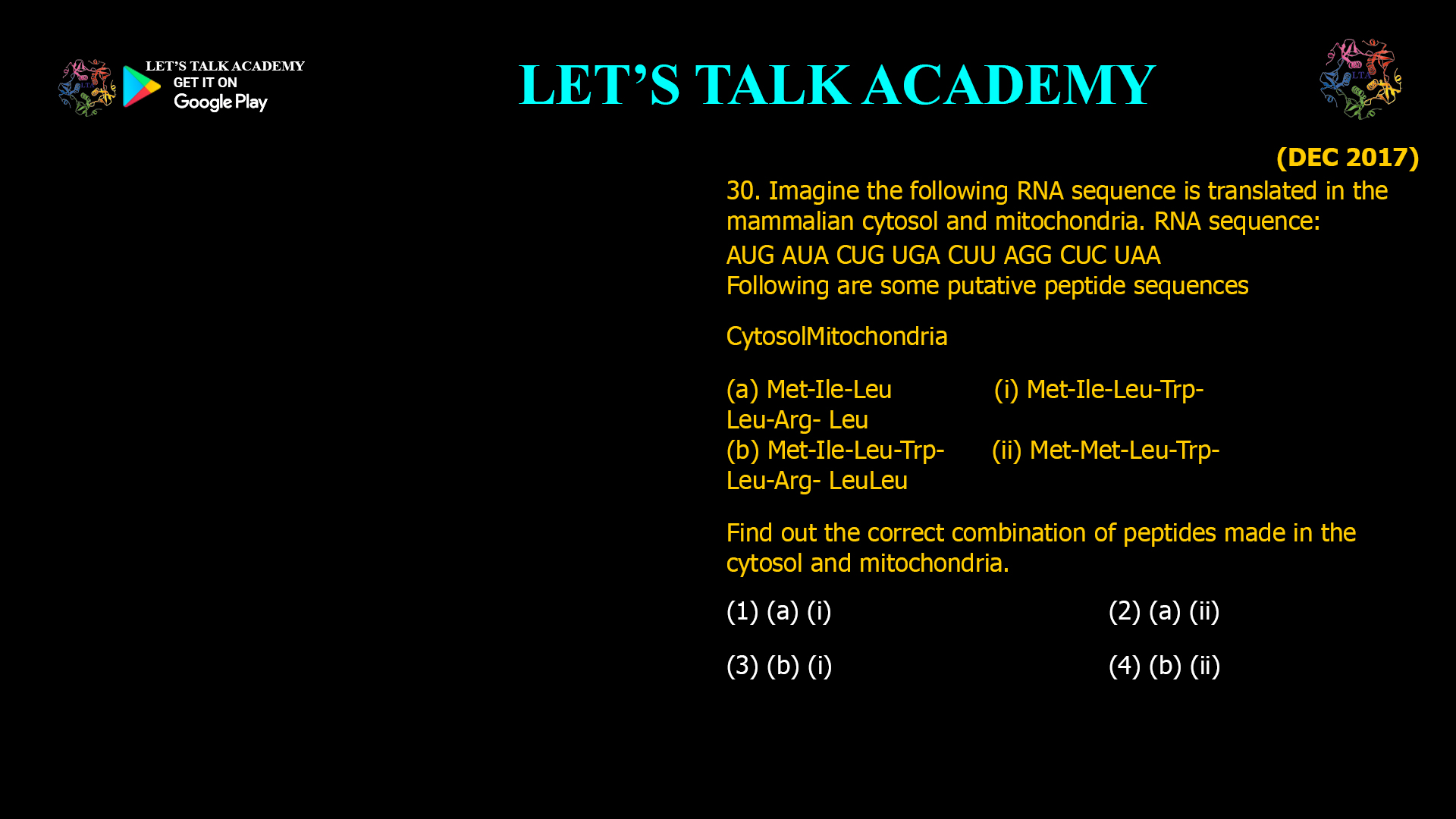
Imagine the following RNA sequence is translated in the mammalian cytosol and mitochondria. RNA sequence: AUG AUA CUG UGA CUU AGG CUC UAA Following are some putative peptide sequences CytosolMitochondria […]
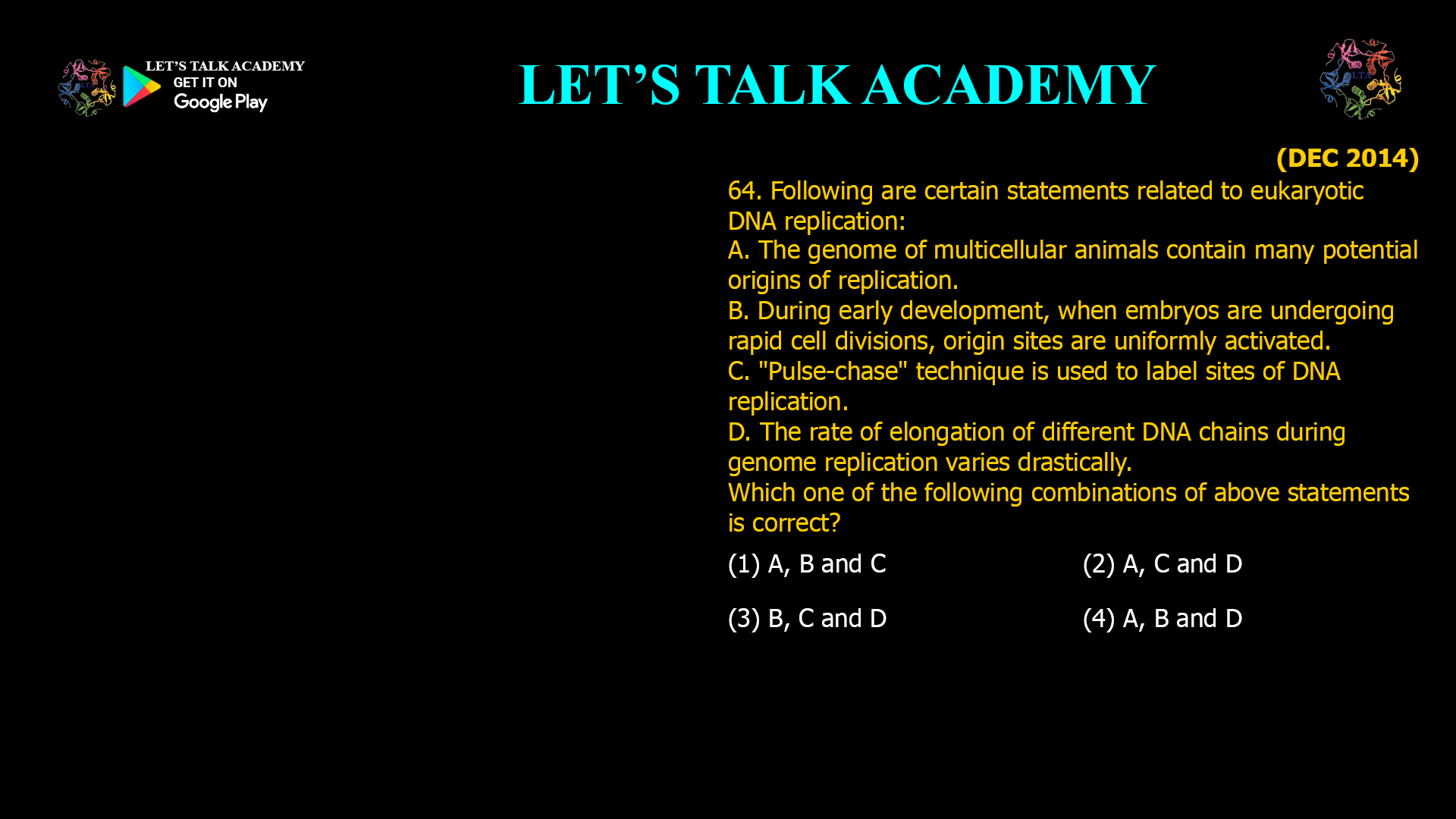
Following are certain statements related to eukaryotic DNA replication: The genome of multicellular animals contain many potential origins of replication. During early development, when embryos are undergoing rapid cell divisions, […]
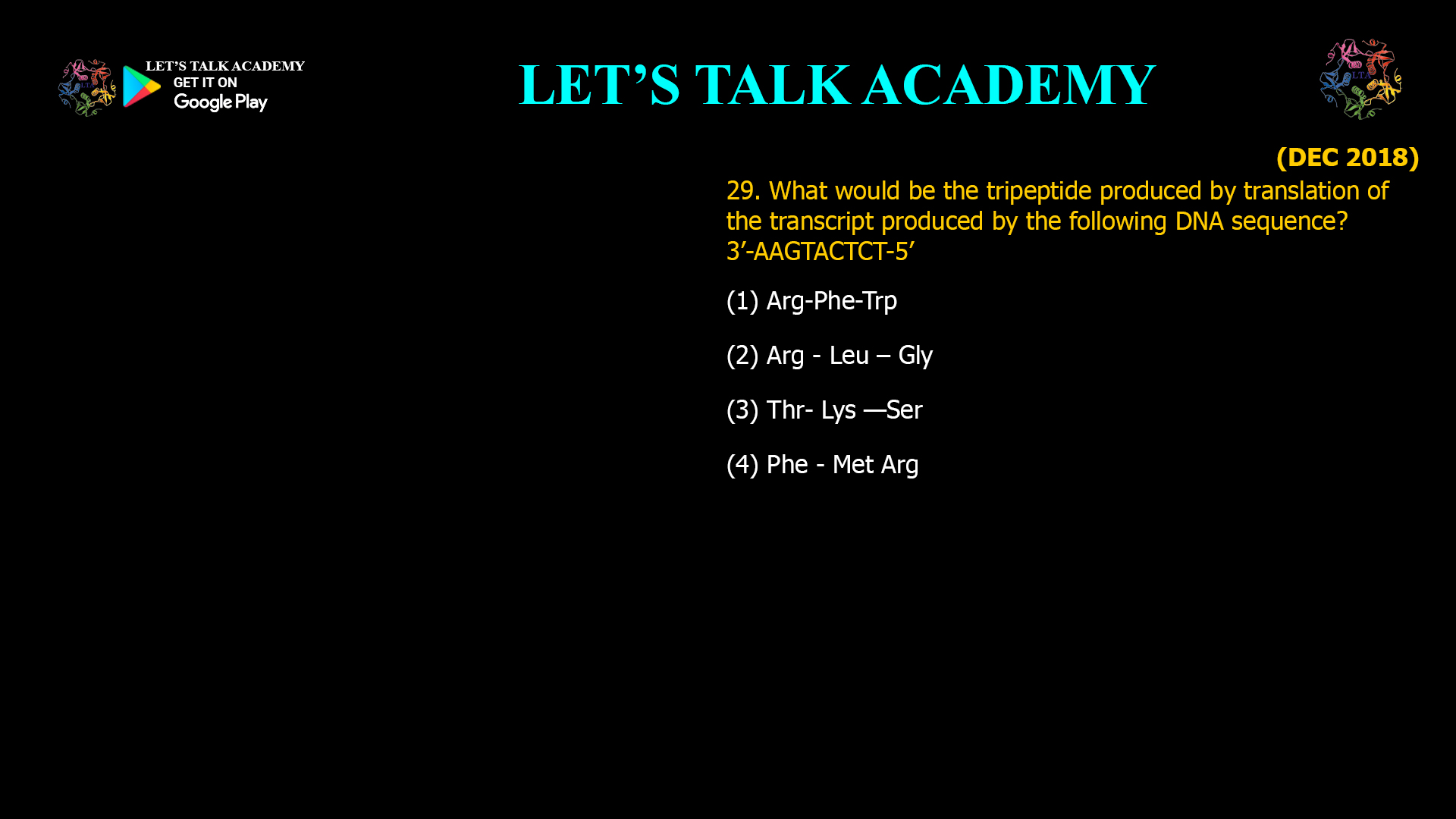
What would be the tripeptide produced by translation of the transcript produced by the following DNA sequence? 3’-AAGTACTCT-5’ (1) Arg-Phe-Trp (2) Arg – Leu – Gly (3) Thr- Lys —Ser […]


