
1. Introduction
The development of a multicellular organism begins with a single fertilized egg, yet that single cell eventually gives rise to hundreds of different cell types. Neurons, muscle cells, blood cells, epithelial cells, liver cells, and many other specialized cells differ greatly in their structure and function. An important question in developmental biology is therefore:
If most cells in an organism contain essentially the same genome, how do they become so different from one another?
Two fundamental concepts help answer this question: genomic equivalence and cytoplasmic determinants.
Genomic equivalence refers to the principle that most differentiated cells of an organism retain essentially the same genetic information as the original fertilized egg, even though they express different sets of genes. Cytoplasmic determinants are molecules present in the cytoplasm, particularly during early development, that become unequally distributed among daughter cells and can influence their developmental fates.
These concepts are closely related to differential gene expression, cell determination, cell differentiation, maternal-effect genes, asymmetric cell division, nuclear transplantation, and developmental pattern formation.
Understanding these principles provides a foundation for studying how genotype is converted into diverse cellular phenotypes during embryonic development.
2. Genomic Equivalence
2.1 Definition of Genomic Equivalence
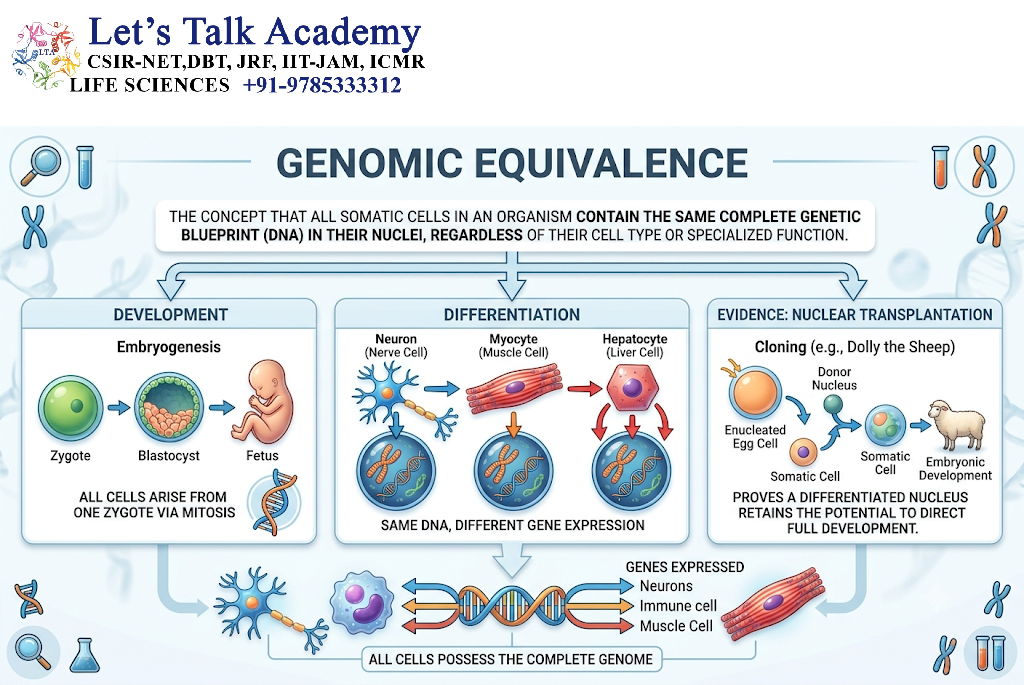
Genomic equivalence is the concept that most cells within an organism contain essentially the same complete set of genetic information, despite having different structures and functions.
For example, a neuron and a liver cell are highly different in morphology and physiological function. Nevertheless, their nuclei generally contain the same genome.
The difference between these cells is therefore not primarily due to possession of completely different genomes. Instead, the major difference lies in which genes are expressed, when they are expressed, and at what level they are expressed.
Thus:
Same genome ≠ same gene expression
This distinction is one of the central principles of developmental biology.
2.2 Genome Versus Gene Expression
The genome contains the complete genetic information of an organism, whereas gene expression determines which portions of that information are functionally used by a particular cell.
A simplified representation is:
Same genome → different gene-expression patterns → different proteins → different cellular properties → different cell types
For example, a pancreatic β-cell expresses genes required for insulin production, whereas a neuron expresses genes required for neurotransmission and neuronal signaling.
Both cells retain much of the same genomic information, but their transcriptional programs are different.
2.3 Why Cells with the Same Genome Become Different
Cellular differentiation occurs because cells activate and repress different sets of genes.
Differences in gene expression can result from:
- Transcription factors
- Enhancers and silencers
- DNA methylation
- Histone modifications
- Chromatin remodeling
- Non-coding RNAs
- Cell-cell signaling
- Extracellular signals
- Cytoplasmic determinants
Therefore, differentiation is largely a problem of selective gene expression and cellular regulation, rather than a simple loss of genes from most differentiated cells.
3. Molecular Basis of Genomic Equivalence
3.1 Differential Gene Expression
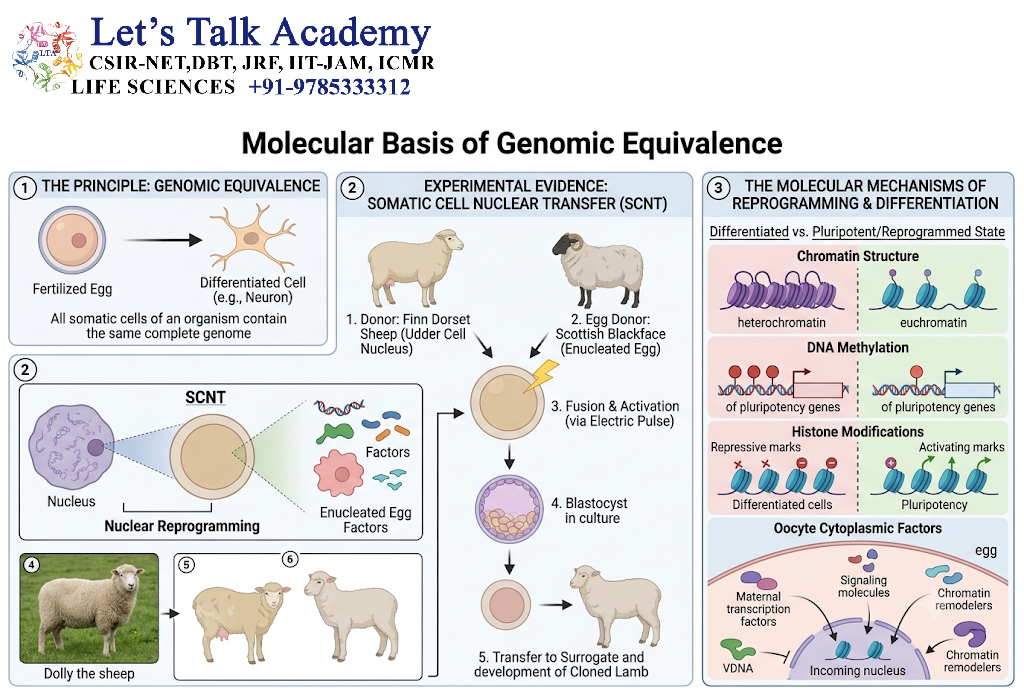
Differential gene expression is the primary mechanism through which genetically similar cells acquire different phenotypes.
During differentiation, some genes are activated while others are repressed.
For example:
Gene A active + Gene B inactive → Cell type 1
Gene A inactive + Gene B active → Cell type 2
The DNA sequence may remain largely unchanged, but the expression pattern differs.
3.2 Transcription Factors
Transcription factors are proteins that regulate gene expression by binding specific DNA sequences and influencing transcription.
During development, transcription factors can activate lineage-specific genes and repress genes associated with alternative cell fates.
Some transcription factors function as master regulators because their activation can initiate extensive changes in cellular identity.
3.3 Epigenetic Regulation
Epigenetic mechanisms regulate gene activity without changing the underlying DNA sequence.
Important mechanisms include:
- DNA methylation
- Histone modification
- Chromatin remodeling
- Nucleosome positioning
- Non-coding RNA-mediated regulation
Epigenetic mechanisms allow cells with the same genome to maintain different patterns of gene expression.
3.4 Chromatin Organization
DNA is packaged into chromatin.
The accessibility of chromatin influences whether transcriptional machinery can reach particular genes.
Regions of relatively open chromatin are generally more accessible for transcription, whereas tightly compacted chromatin is often associated with transcriptional repression.
Therefore, chromatin structure provides another layer through which genetically equivalent cells can develop different identities.
4. Experimental Evidence for Genomic Equivalence
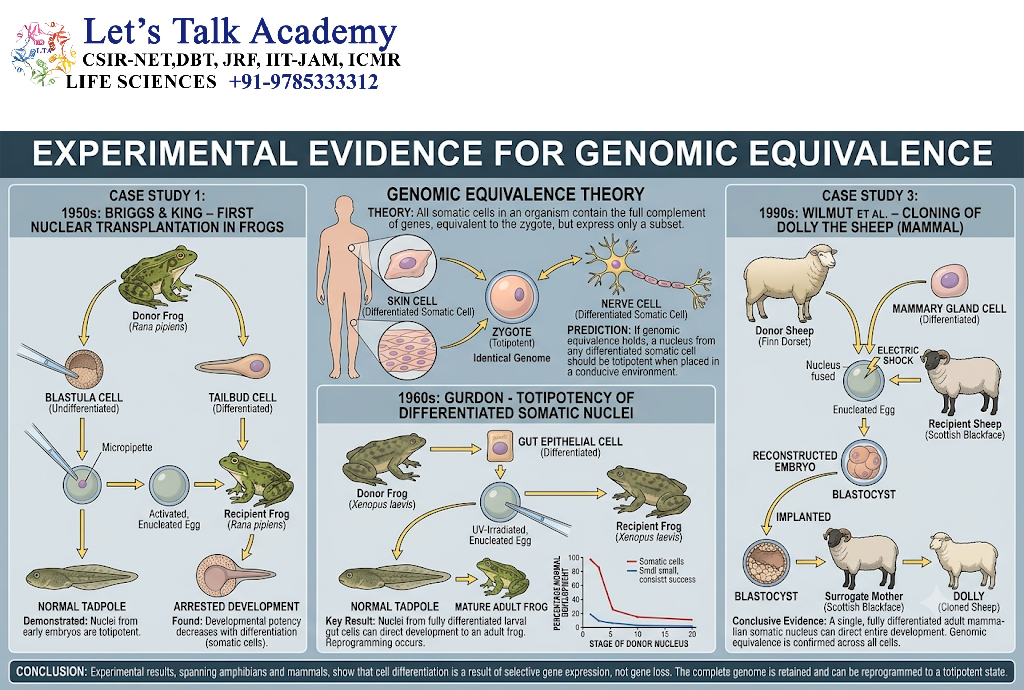
The concept of genomic equivalence has been supported by classical developmental experiments, particularly nuclear transplantation experiments.
4.1 Nuclear Transplantation
In nuclear transplantation, the nucleus of a differentiated cell is transferred into an enucleated egg or oocyte.
The recipient egg contains cytoplasm but lacks its original nucleus.
If the transferred nucleus can direct development, this provides evidence that the differentiated nucleus retains substantial genetic information required for development.
4.2 Briggs and King Experiments
Robert Briggs and Thomas King performed pioneering nuclear transplantation experiments in amphibians during the twentieth century.
They transplanted nuclei from embryonic cells into enucleated frog eggs.
Their work provided important evidence that nuclei from differentiated developmental stages could retain genetic information capable of supporting development, although developmental potential could become progressively restricted during differentiation.
4.3 Gurdon Experiments
John Gurdon’s nuclear transplantation experiments in frogs provided further influential evidence for genomic equivalence.
Nuclei from differentiated intestinal cells of Xenopus were transplanted into enucleated eggs, and some reconstructed embryos developed.
The experiments demonstrated that a differentiated nucleus could retain genetic information capable of supporting development.
This work became a landmark demonstration of nuclear reprogramming.
4.4 Significance of Nuclear Transplantation
Nuclear transplantation demonstrated an important principle:
Differentiation does not necessarily require permanent loss of most genetic information.
Instead, differentiation can involve changes in the activity and organization of genetic information.
The cytoplasm of the recipient egg can provide molecular factors capable of reprogramming the transferred nucleus toward an embryonic developmental state.
5. Exceptions and Limitations to Genomic Equivalence
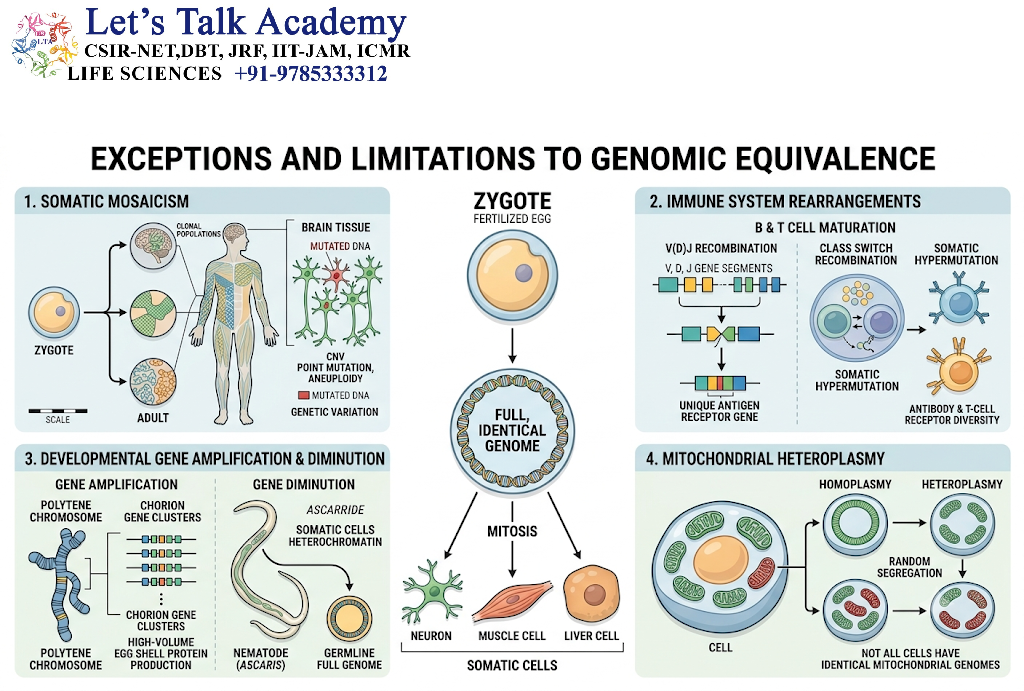
Genomic equivalence is a powerful general principle, but it should not be interpreted as meaning that every cell contains exactly the same DNA sequence.
Several important exceptions exist.
5.1 Red Blood Cells
Mature mammalian erythrocytes lose their nuclei during differentiation.
Therefore, mature red blood cells do not contain a conventional nuclear genome.
Their developmental precursors, however, contain nuclei and genomic DNA.
5.2 Immune Cell Gene Rearrangement
During the development of B and T lymphocytes, specific genomic regions undergo somatic rearrangement.
This produces diverse antigen receptors.
Therefore, immune cells provide an important example in which particular genomic regions are deliberately rearranged during differentiation.
5.3 Mitochondrial Genome
Cells contain mitochondrial DNA in addition to nuclear DNA.
The mitochondrial genome is inherited and replicated separately from nuclear chromosomes.
Consequently, genomic equivalence generally refers primarily to the nuclear genome and does not imply identical mitochondrial genomes in every cell.
5.4 Somatic Mutations
Cells can accumulate mutations during an organism’s lifetime.
Therefore, genetically related cells may acquire different somatic mutations.
Genomic equivalence should consequently be understood as a broad developmental principle rather than an absolute claim that every cell contains a perfectly identical DNA sequence.
6. Cytoplasmic Determinants
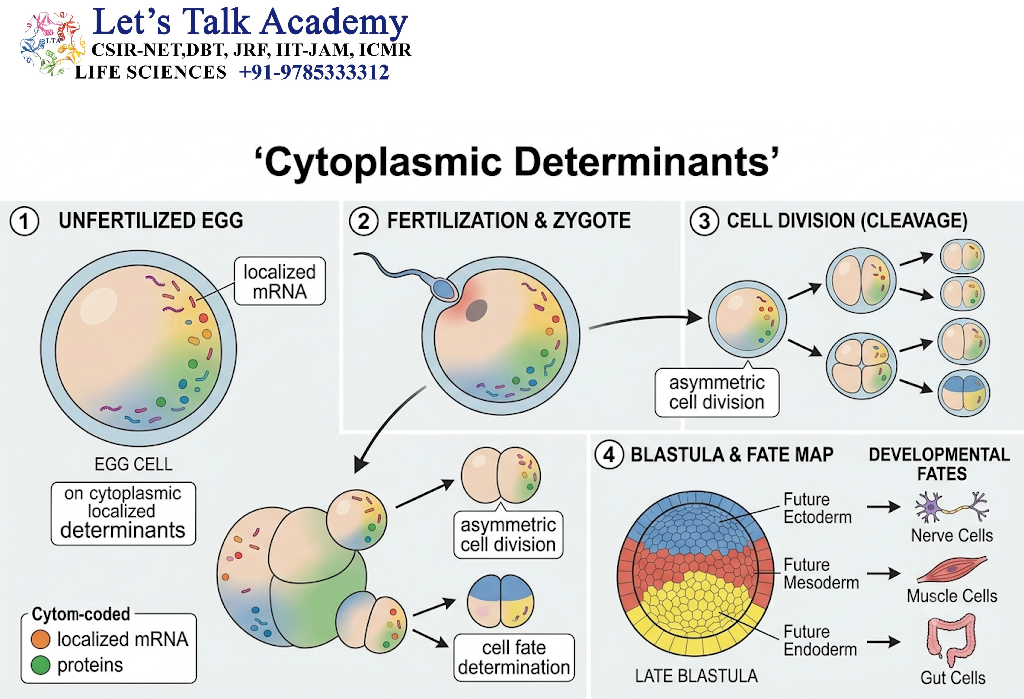
6.1 Definition
Cytoplasmic determinants are molecules or cellular components present in the cytoplasm that influence the developmental fate of cells.
During early embryonic development, these determinants can become unequally distributed between daughter cells.
The daughter cells therefore inherit different molecular information even though their nuclei may initially contain equivalent genomes.
Cytoplasmic determinants can include:
- Maternal RNAs
- Maternal proteins
- Transcription factors
- Signaling molecules
- RNA-binding proteins
- Regulatory complexes
- Localized organelles or other cytoplasmic components
6.2 Maternal Contribution
The egg contains substantial amounts of RNA, proteins, nutrients, and regulatory molecules deposited during oogenesis.
These maternally supplied molecules can control early embryonic events before the embryonic genome becomes fully active.
Such factors are often called maternal determinants or maternal-effect products, depending on the biological context.
6.3 Unequal Distribution
If a determinant is localized to one region of an egg, cell division can distribute that determinant unequally.
For example:
Localized determinant → asymmetric inheritance → different intracellular regulatory states → different gene expression → different cell fates
This provides a direct mechanism for generating cellular differences during early development.
7. Maternal Cytoplasmic Determinants
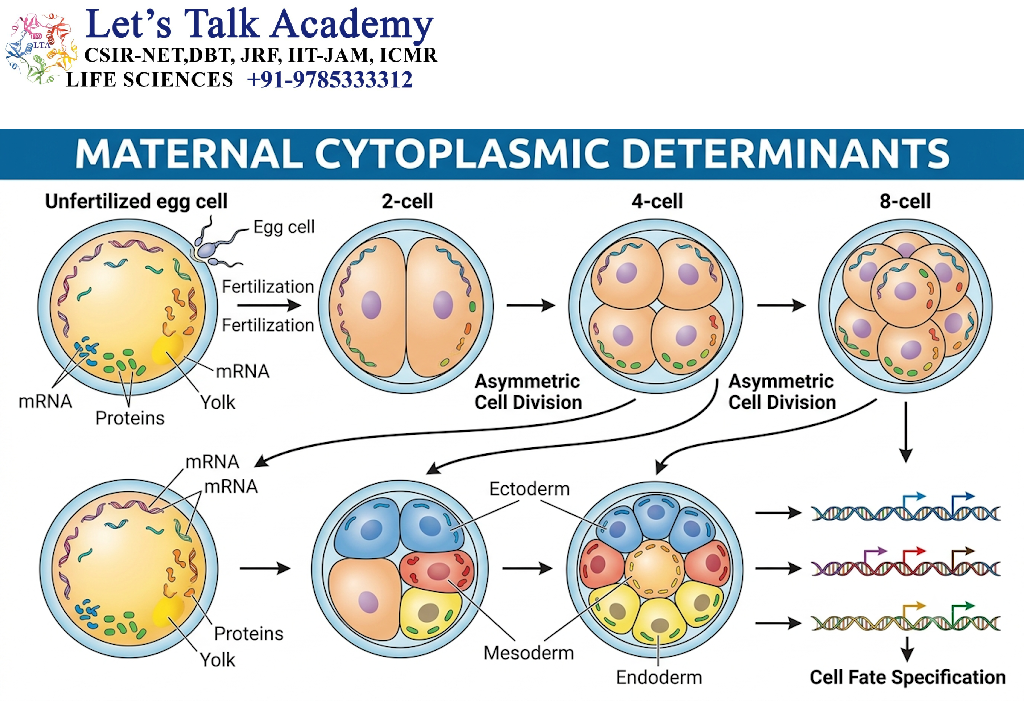
7.1 Maternal mRNAs
Maternal mRNAs are transcripts produced during oogenesis and stored in the egg.
After fertilization, these RNAs can be translated to produce proteins required for early embryonic development.
In many organisms, maternal transcripts are especially important before widespread activation of the embryonic genome.
7.2 Maternal Proteins
Maternal proteins can function as:
- Transcription factors
- Signaling molecules
- Enzymes
- Cell-cycle regulators
- Cytoskeletal regulators
Their spatial distribution can influence early embryonic patterning.
7.3 Maternal-to-Zygotic Transition
A major transition during early embryogenesis is the shift from dependence on maternally supplied products toward increasing control by the embryo’s own genome.
This process is known as the maternal-to-zygotic transition.
It involves:
- Activation of the embryonic genome
- Progressive degradation of maternal RNAs
- Production of zygotic transcripts
- Remodeling of gene-regulatory networks
The timing of this transition varies among organisms.
8. Cytoplasmic Determinants and Cell Fate
8.1 Asymmetric Cell Division
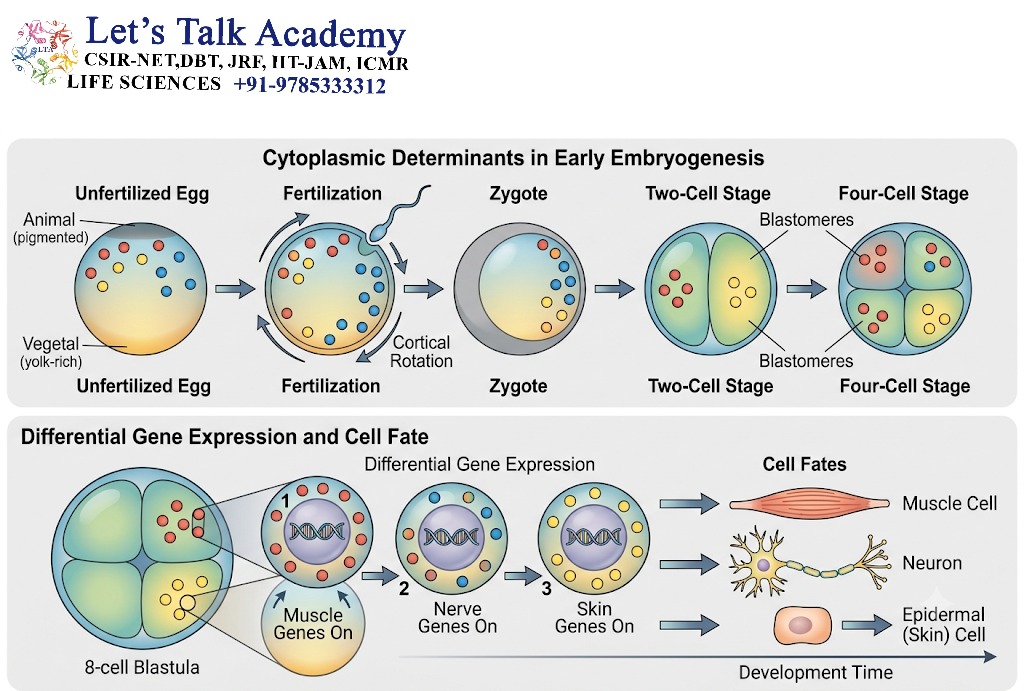
Cytoplasmic determinants are particularly important during asymmetric cell division.
If a dividing cell contains a localized determinant, the two daughter cells may inherit different amounts of that molecule.
Although both daughter cells contain equivalent or nearly equivalent genomes, their internal molecular environments differ.
This can initiate different transcriptional programs.
8.2 Developmental Consequences
A determinant may activate a transcription factor in one daughter cell but not the other.
This can lead to:
Different determinant inheritance → different transcription factor activity → different target gene expression → different cell fate
Thus, cytoplasmic determinants can act as an early source of developmental asymmetry.
9. Classic Example: Cytoplasmic Determinants in Drosophila
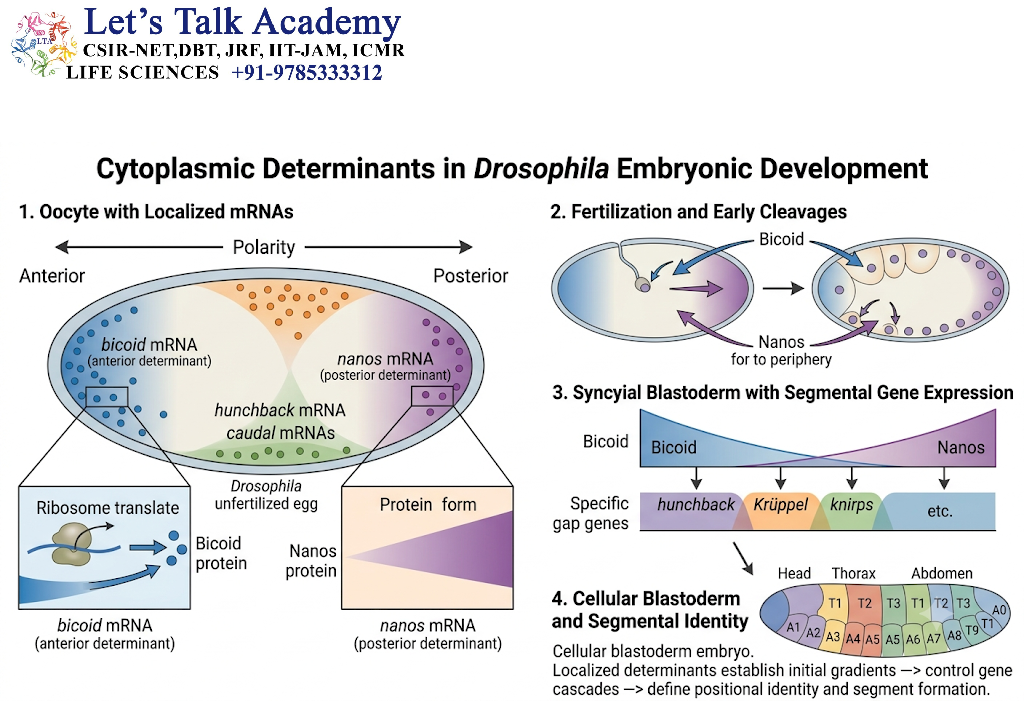
The fruit fly Drosophila melanogaster provides one of the best-known models for understanding maternal determinants.
During oogenesis, maternal gene products become localized within the developing egg.
After fertilization, these localized molecules help establish positional information.
9.1 Bicoid
Bicoid is a classic example of a maternal determinant in Drosophila.
Bicoid mRNA becomes localized toward the anterior region of the developing oocyte.
After fertilization, the mRNA is translated and produces a Bicoid protein gradient.
Higher Bicoid concentrations occur toward the anterior region.
Bicoid functions as a transcription factor and helps activate genes required for anterior developmental identities.
Thus:
Localized bicoid mRNA → Bicoid protein gradient → differential transcription → anterior-posterior patterning
9.2 Nanos
Nanos is another important maternal determinant associated with posterior development.
Nanos protein helps regulate target mRNAs and contributes to the specification of posterior structures.
The combined activity of maternal determinants establishes positional information that later becomes refined by additional developmental signaling networks.
10. Cytoplasmic Determinants in Other Organisms
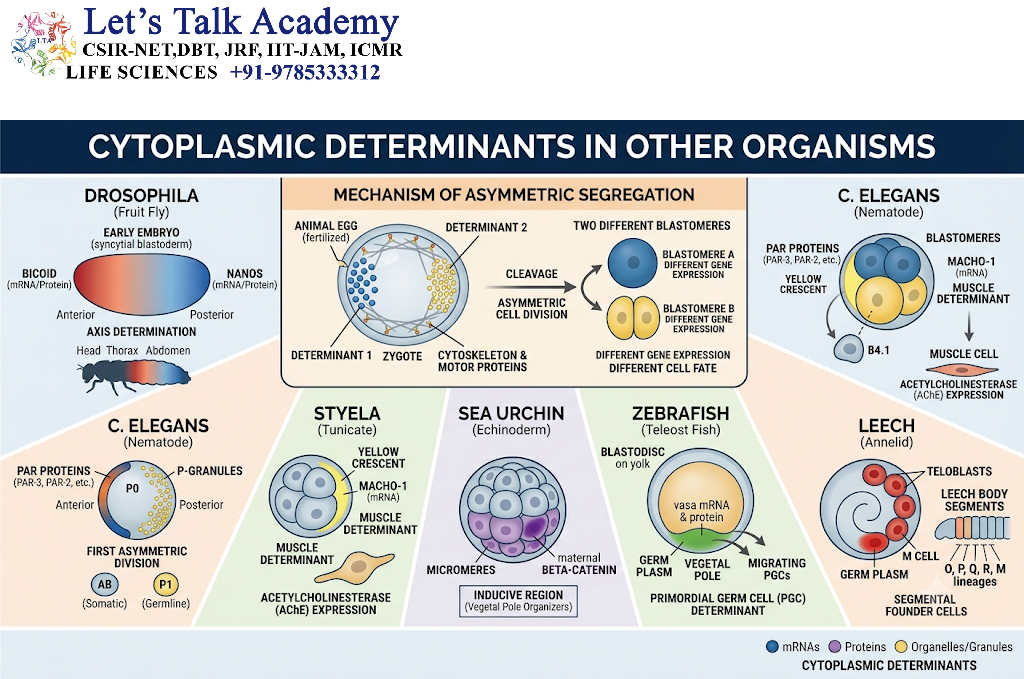
Cytoplasmic determinants are not restricted to insects.
Different organisms use different molecular mechanisms to establish early developmental asymmetries.
Examples include:
- Caenorhabditis elegans
- Amphibians
- Fish
- Tunicates
- Other invertebrate and vertebrate developmental systems
The molecular details differ, but the general principle remains similar:
Localized maternal or cytoplasmic information can influence cell fate during early development.
11. Genomic Equivalence Versus Cytoplasmic Determinants
These two concepts should be clearly distinguished.
| Feature | Genomic Equivalence | Cytoplasmic Determinants |
|---|---|---|
| Main concept | Cells retain broadly similar genetic information | Cytoplasmic factors influence cell fate |
| Location | Mainly nucleus | Cytoplasm |
| Major components | DNA and chromosomes | RNAs, proteins and other cytoplasmic factors |
| Major role | Provides developmental genetic potential | Provides localized regulatory information |
| Importance | Explains how different cells can retain the same genome | Explains how initially similar cells can receive different developmental instructions |
| Major mechanism | Differential gene expression | Unequal inheritance or localized activity |
| Experimental connection | Nuclear transplantation | Embryological and localization experiments |
The two concepts are complementary rather than contradictory.
Genomic equivalence explains the potential contained within the nucleus, whereas cytoplasmic determinants help explain how different developmental programs can initially be established.
12. Genomic Equivalence and Differential Gene Expression
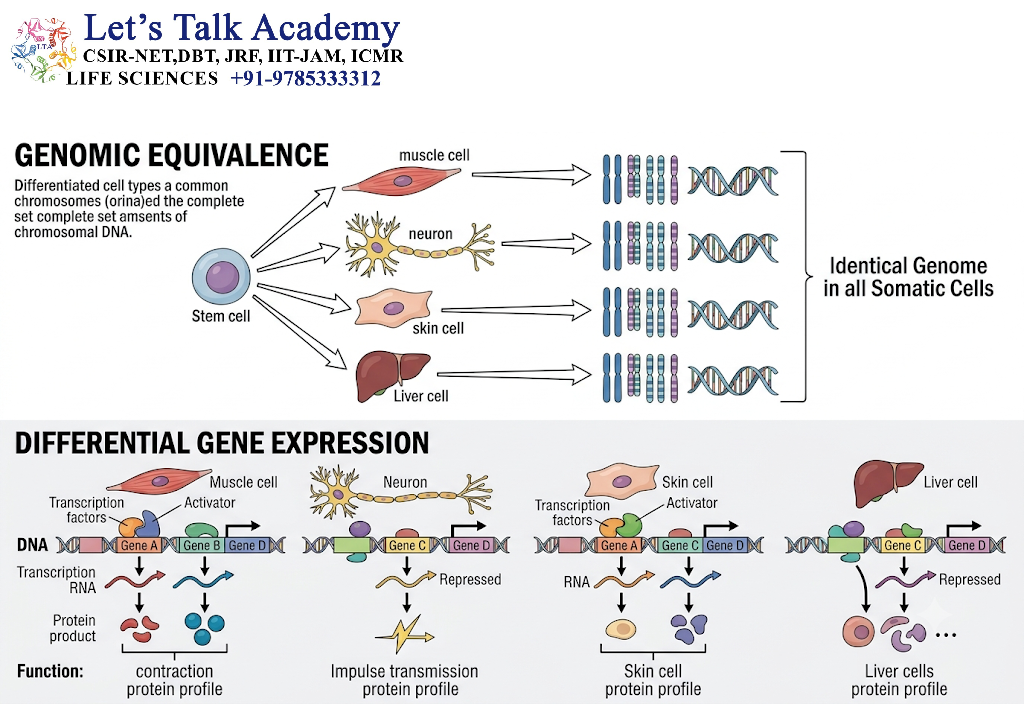
The relationship can be represented as:
Genomic equivalence
↓
Different regulatory signals
↓
Differential gene expression
↓
Different proteins
↓
Different cellular structures and functions
↓
Cell differentiation
The genome provides the information, but developmental regulation determines how that information is used.
13. Cytoplasmic Determinants and Differential Gene Expression
The relationship between cytoplasmic determinants and gene expression can be represented as:
Cytoplasmic determinant
↓
Activation or inhibition of regulatory protein
↓
Transcription factor activity
↓
Target gene regulation
↓
Cellular differentiation
Therefore, cytoplasmic determinants are not usually thought of as replacing genomic information. Instead, they influence the interpretation and expression of genomic information.
14. Autonomous and Conditional Specification
Developmental biologists often distinguish between different modes of cell specification.
14.1 Autonomous Specification
In autonomous specification, a cell’s fate is strongly influenced by determinants inherited from the parent cell.
If the relevant determinant is removed or redistributed, the developmental outcome may change.
This mechanism is closely associated with localized cytoplasmic determinants.
14.2 Conditional Specification
In conditional specification, cell fate depends strongly on interactions with neighboring cells and extracellular signals.
A cell can adopt different fates depending on its developmental environment.
Conditional specification is closely associated with:
- Cell-cell signaling
- Inductive interactions
- Morphogen gradients
- Receptor-mediated signaling
14.3 Comparison
Autonomous specification:
Determinant inheritance → intrinsic developmental program
Conditional specification:
Cell interaction → signal reception → altered gene expression → developmental fate
Many embryos use combinations of both mechanisms.
15. Induction and Cytoplasmic Determinants
Induction occurs when one group of cells influences the developmental fate of another group through signaling.
This differs from a cytoplasmic determinant because the developmental information is communicated between cells rather than simply inherited through the cytoplasm of the dividing cell.
Important signaling mechanisms include:
- Notch signaling
- Wnt signaling
- Hedgehog signaling
- TGF-β signaling
- FGF signaling
Thus, development can involve both:
Intrinsic information + extrinsic information
Cytoplasmic determinants provide intrinsic information, whereas inductive signaling provides important extrinsic information.
16. Morphogens and Cytoplasmic Determinants
Morphogens are signaling molecules that can form concentration gradients and influence cell fate according to their local concentration.
Although both morphogens and cytoplasmic determinants can establish spatial differences, they are conceptually distinct.
A cytoplasmic determinant is typically localized within a cell or deposited maternally, whereas a morphogen commonly acts through signaling between cells or tissues.
Both can produce:
Spatial molecular difference → differential gene expression → different cell fate
17. Nuclear-Cytoplasmic Interaction
Development depends on continuous communication between the nucleus and cytoplasm.
The nucleus contains genomic information, while the cytoplasm contains proteins, RNAs, organelles, signaling components, and metabolic systems that regulate cellular activity.
A simplified model is:
Nucleus → RNA → protein → cellular activity
and
Cytoplasmic signals → transcription factors/chromatin → gene expression
This bidirectional interaction is essential for development and differentiation.
18. Nuclear Reprogramming
Nuclear transplantation experiments revealed that cytoplasmic environments can influence the developmental state of a nucleus.
When a differentiated nucleus is introduced into an appropriate oocyte or egg cytoplasm, cytoplasmic factors can remodel nuclear gene expression.
This phenomenon is known as nuclear reprogramming.
The principle can be represented as:
Differentiated nucleus + reprogramming cytoplasm → altered gene expression → embryonic developmental potential
This concept later became highly significant in the development of induced pluripotent stem-cell technology.
19. Connection with Stem Cells
Genomic equivalence is closely related to stem-cell biology.
Stem cells and differentiated cells may contain broadly equivalent genomes, but their gene-expression patterns are very different.
For example:
Stem cell
→ pluripotency genes active
→ differentiation genes selectively regulated
→ self-renewal maintained
Whereas:
Differentiated cell
→ lineage-specific genes active
→ pluripotency network suppressed
→ specialized cellular function established
This demonstrates that cellular identity depends heavily on gene regulation rather than simply on the DNA sequence present in the nucleus.
20. Genomic Equivalence and Cellular Differentiation
Differentiation can be understood as a progressive change in gene-expression state.
Early developmental state
Many developmental options remain available.
Intermediate state
Specific lineage-associated genes become activated.
Mature state
A stable pattern of gene expression supports specialized cellular functions.
For example:
Mesodermal progenitor → muscle precursor → mature muscle cell
During this process, the genome is retained broadly, but the pattern of gene activity becomes progressively specialized.
21. Experimental Significance
The concepts of genomic equivalence and cytoplasmic determinants are important because they explain fundamental developmental questions.
They help researchers understand:
- How a single fertilized egg produces many cell types
- How cell fate becomes established
- How maternal information controls early development
- How gene expression changes during differentiation
- How asymmetric cell divisions generate different daughter cells
- How nuclei can be experimentally reprogrammed
- How cellular identity can change without replacing the genome
These principles form an important conceptual bridge between classical embryology and modern molecular developmental biology.
22. Important Experimental Approaches
Several experimental approaches have contributed to our understanding of these concepts.
22.1 Nuclear Transplantation
Used to test whether differentiated nuclei retain developmental genetic information.
22.2 Cell Lineage Tracing
Used to determine the descendants of individual cells during development.
22.3 Gene Knockout and Knockdown
Used to determine whether specific genes are required for particular developmental processes.
22.4 Reporter Gene Analysis
Used to determine where and when specific genes are expressed.
22.5 RNA Localization Studies
Used to determine whether particular maternal transcripts are spatially restricted within an egg or embryo.
22.6 In Situ Hybridization
Used to visualize the spatial distribution of specific RNA molecules within tissues or embryos.
22.7 Immunostaining
Used to determine the localization of specific proteins.
These techniques collectively connect molecular distribution with developmental outcomes.
23. Important Terms and Their Meanings
23.1 Genomic Equivalence
The principle that most cells of an organism retain broadly the same genetic information despite having different phenotypes.
23.2 Cytoplasmic Determinant
A localized cytoplasmic molecule or component that can influence the developmental fate of a cell.
23.3 Maternal Effect
A developmental effect caused by gene products supplied by the mother to the egg, rather than by the immediate transcriptional activity of the embryo’s own genome.
23.4 Differential Gene Expression
The selective activation or repression of different genes in different cells.
23.5 Cell Fate
The developmental outcome that a cell adopts or is committed to under particular conditions.
23.6 Determination
A developmental state in which a cell has acquired a particular fate, even if its visible differentiated characteristics have not yet appeared.
23.7 Differentiation
The process through which a cell acquires specialized structural and functional characteristics.
23.8 Induction
A process in which one group of cells influences the developmental fate of another group through signaling.
23.9 Reprogramming
A process in which the gene-expression and epigenetic state of a differentiated cell is altered to establish a different cellular identity.
24. Common Conceptual Confusions
24.1 Genomic Equivalence Does Not Mean Identical Cells
Two cells can have essentially the same genome but completely different functions.
The difference lies largely in gene expression and cellular regulation.
24.2 Cytoplasmic Determinants Do Not Replace the Genome
Cytoplasmic determinants influence gene regulation; they do not generally provide a separate complete genome.
24.3 Differentiation Does Not Usually Mean Complete Gene Loss
Most differentiation involves selective gene regulation rather than the physical deletion of most genes.
24.4 Determination Is Different from Differentiation
A determined cell has acquired a developmental commitment, whereas a differentiated cell has developed recognizable specialized characteristics.
These terms describe related but distinct stages of cellular development.
25. Integrated Model
The relationship among genomic equivalence, cytoplasmic determinants, signaling, and differentiation can be summarized as follows:
Same genome
↓
Unequal determinants and/or extracellular signals
↓
Different transcription factor activity
↓
Differential gene expression
↓
Epigenetic stabilization
↓
Different proteins
↓
Different cellular structures
↓
Different cell functions
↓
Cell differentiation
This model captures one of the most important ideas in developmental biology: cellular diversity can arise from differential regulation of a shared genome.


