
1. Introduction
Cells do not function as isolated units. In multicellular organisms, cells continuously communicate with one another to coordinate growth, development, metabolism, immune responses, tissue organization, reproduction and maintenance of internal stability.
Even unicellular organisms communicate with their environment and, in many cases, with other cells of the same or different species.
Cell communication involves the production, transmission, reception and interpretation of biological signals.
A general communication sequence can be represented as:
Signaling cell → Signal → Receptor → Intracellular signaling pathway → Cellular response
The signal may travel only a short distance or may reach cells located far away.
For example:
- Hormones can travel through the bloodstream.
- Neurotransmitters can act across a synaptic junction.
- Local signaling molecules can affect neighboring cells.
- Membrane-bound molecules can communicate through direct cell-cell contact.
The ability of cells to communicate allows individual cells to behave as coordinated components of tissues and organisms.
2. Definition of Cell Communication
2.1 Definition
Cell communication is the process by which cells receive, transmit, process and respond to information through chemical, physical or direct contact-based signals.
Cell communication generally involves four major events:
- Signal production
- Signal reception
- Signal transduction
- Cellular response
However, signaling also includes mechanisms that regulate and terminate the response.
3. Importance of Cell Communication
Cell communication is essential for maintaining the organization and functioning of biological systems.
Major functions include:
- Regulation of cell growth
- Cell division
- Cell differentiation
- Metabolism
- Immune responses
- Nervous-system communication
- Tissue development
- Reproduction
- Wound healing
- Maintenance of homeostasis
- Programmed cell death
- Adaptation to environmental changes
Without communication, cells would not be able to coordinate their activities effectively.
4. Basic Components of Cell Communication
A typical signaling system contains several components.
4.1 Signaling Cell
The cell that produces or releases the signal is called the signaling cell.
It may release:
- Hormones
- Neurotransmitters
- Growth factors
- Cytokines
- Lipid mediators
- Small signaling molecules
4.2 Signaling Molecule
The signaling molecule carries biological information.
Examples include:
- Insulin
- Adrenaline
- Acetylcholine
- Growth factors
- Cytokines
- Nitric oxide
4.3 Target Cell
The cell capable of detecting and responding to a particular signal is called the target cell.
A cell responds only when it possesses the appropriate receptor or signaling machinery.
4.4 Receptor
A receptor is a protein that recognizes a signaling molecule and converts its binding into a cellular signal.
Receptors may be located:
- On the plasma membrane
- Inside the cytoplasm
- Inside the nucleus
4.5 Signal Transduction Machinery
After receptor activation, intracellular proteins transmit the signal through biochemical pathways.
These may include:
- G proteins
- Protein kinases
- Protein phosphatases
- Small GTPases
- Adaptor proteins
- Scaffold proteins
- Second messengers
4.6 Effector
An effector is a molecule or protein whose activity is changed by the signaling pathway.
Examples include:
- Metabolic enzymes
- Ion channels
- Cytoskeletal proteins
- Transcription factors
4.7 Cellular Response
The final response may involve:
- Gene expression
- Enzyme activation
- Cell movement
- Secretion
- Contraction
- Growth
- Division
- Differentiation
- Survival
- Apoptosis
5. General Signaling Sequence
The general process of cell communication can be summarized as:
Signal production
↓
Signal release or presentation
↓
Signal reaches target cell
↓
Receptor recognition
↓
Signal transduction
↓
Signal amplification and integration
↓
Cellular response
↓
Signal termination
This basic pattern is shared by many different signaling systems.
6. Principle of Signal Specificity
One of the fundamental principles of cell communication is specificity.
A signaling molecule does not necessarily affect every cell in the body.
Only cells containing the appropriate receptor and downstream signaling machinery can respond effectively.
For example:
Hormone → Receptor-positive cell → Response
while:
Hormone → Receptor-absent cell → No direct receptor-mediated response
Thus:
Signal specificity depends strongly on receptor expression and cellular context.
7. Types of Cell Communication
Cell communication can be classified according to the distance and mechanism through which signals act.
Major types include:
- Endocrine signaling
- Paracrine signaling
- Autocrine signaling
- Synaptic signaling
- Contact-dependent signaling
- Direct intercellular communication
8. Endocrine Signaling
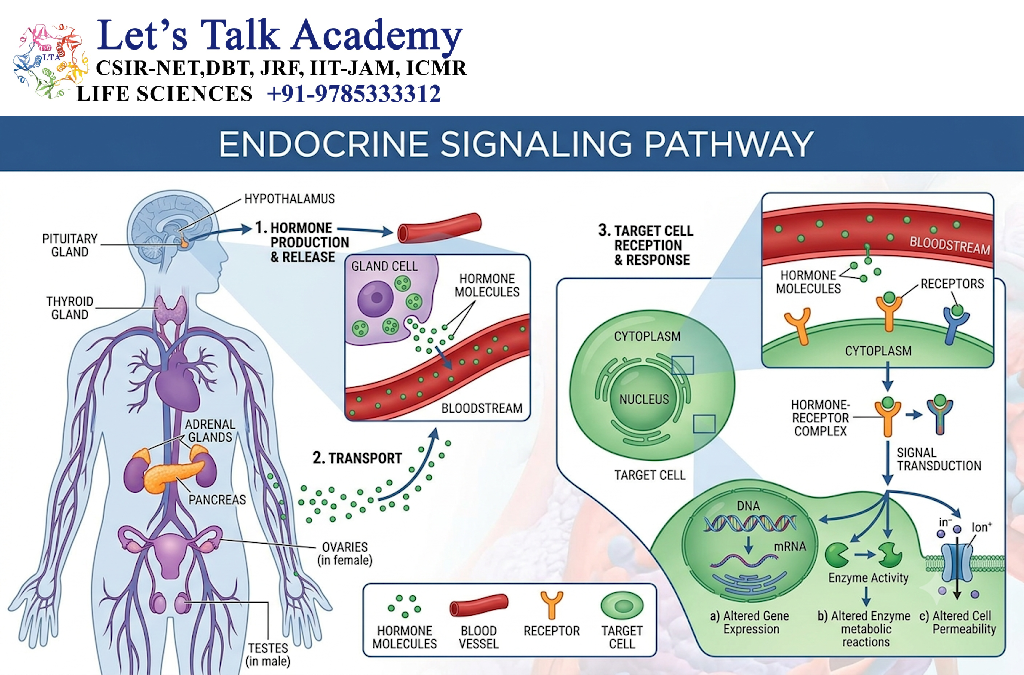
In endocrine signaling, specialized cells release hormones into the circulation.
The hormones travel relatively long distances and act on target cells elsewhere in the organism.
8.1 General Mechanism
Endocrine cell
↓
Hormone release
↓
Blood circulation
↓
Distant target cell
↓
Receptor
↓
Cellular response
8.2 Example
Insulin is released by pancreatic β-cells and acts on target tissues such as skeletal muscle, adipose tissue and liver.
Endocrine signaling is important for:
- Metabolism
- Growth
- Reproduction
- Development
- Homeostasis
9. Paracrine Signaling
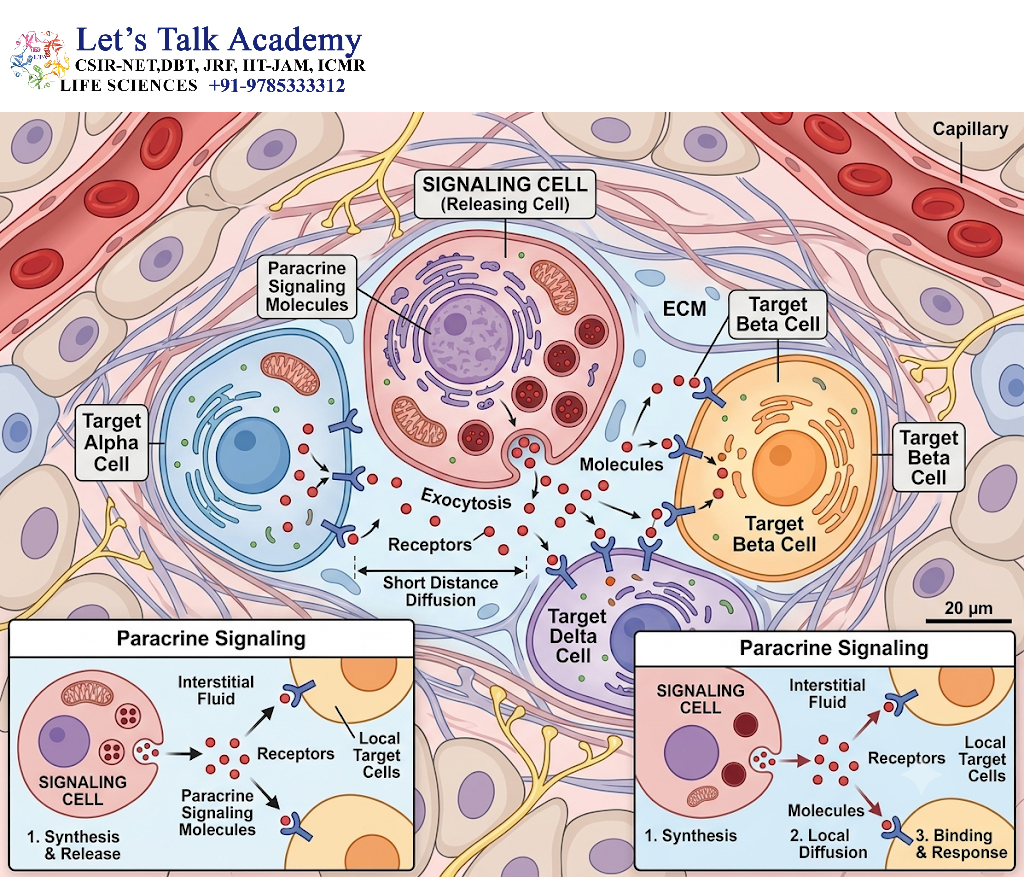
In paracrine signaling, signaling molecules act mainly on nearby cells.
The signaling molecule generally does not travel through the entire body to reach distant targets.
9.1 General Mechanism
Signaling cell
↓
Local signal
↓
Nearby target cell
↓
Cellular response
Examples include many growth factors and local inflammatory mediators.
Paracrine signaling is important in:
- Tissue repair
- Development
- Local immune responses
- Cell proliferation
10. Autocrine Signaling
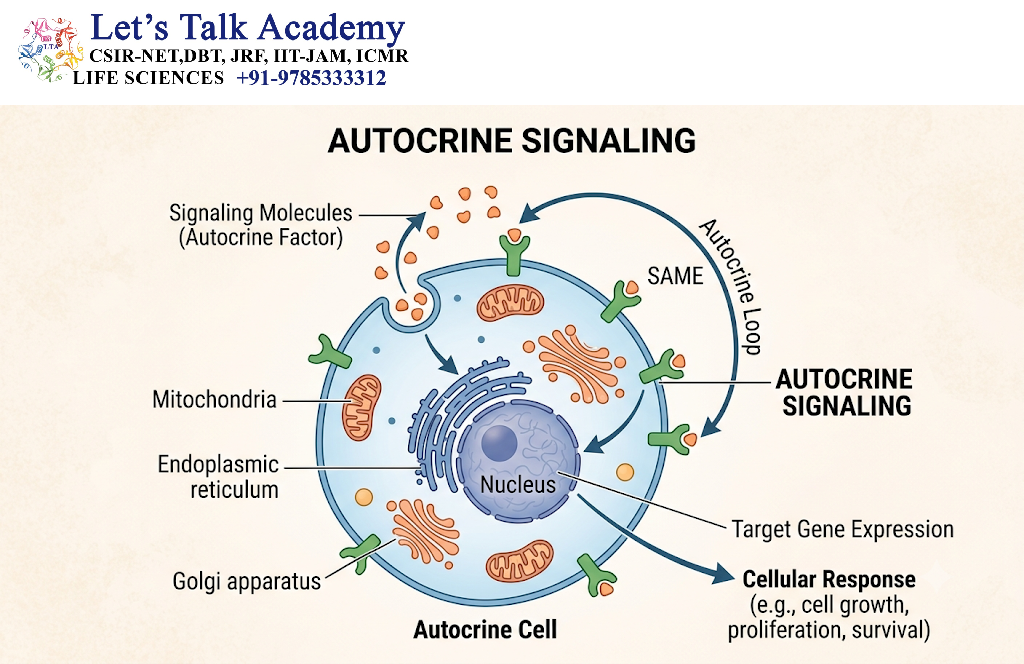
In autocrine signaling, a cell releases a signaling molecule that acts on the same cell that produced it.
Cell
↓
Signal release
↓
Same cell receptor
↓
Cellular response
Autocrine signaling can regulate:
- Cell survival
- Proliferation
- Differentiation
- Immune-cell activity
11. Synaptic Signaling
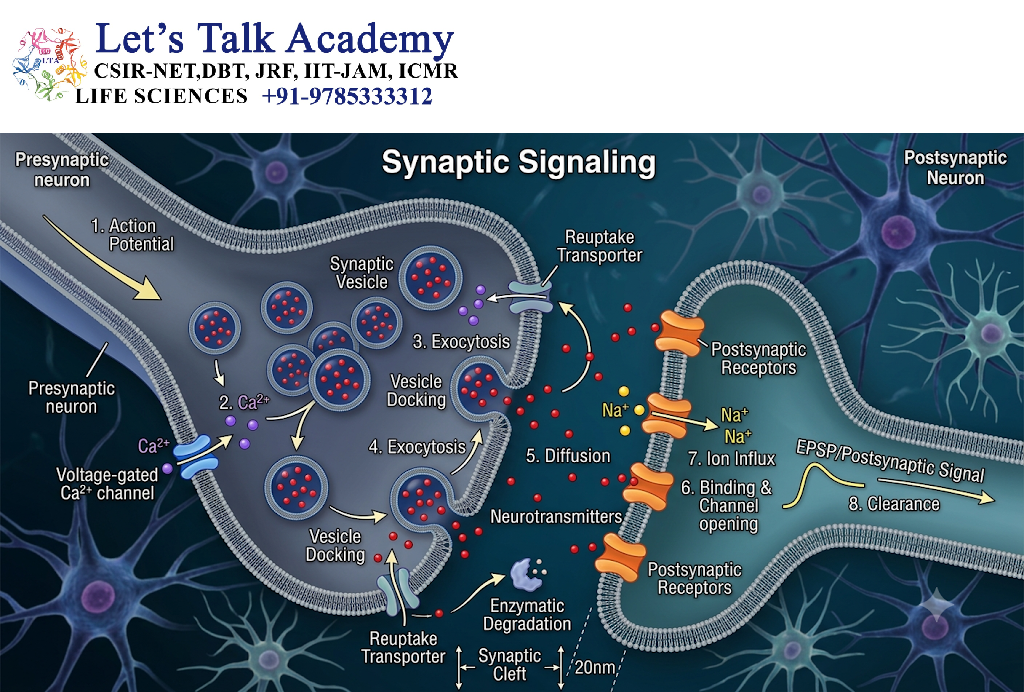
Synaptic signaling is characteristic of the nervous system.
A neuron conducts an electrical signal along its axon and releases neurotransmitters at a specialized junction called a synapse.
11.1 General Mechanism
Electrical signal
↓
Axon terminal
↓
Neurotransmitter release
↓
Synaptic cleft
↓
Receptor on target cell
↓
Cellular response
Examples of neurotransmitters include:
- Acetylcholine
- Glutamate
- GABA
- Dopamine
- Serotonin
Synaptic signaling provides highly localized and rapid communication.
12. Contact-Dependent Signaling
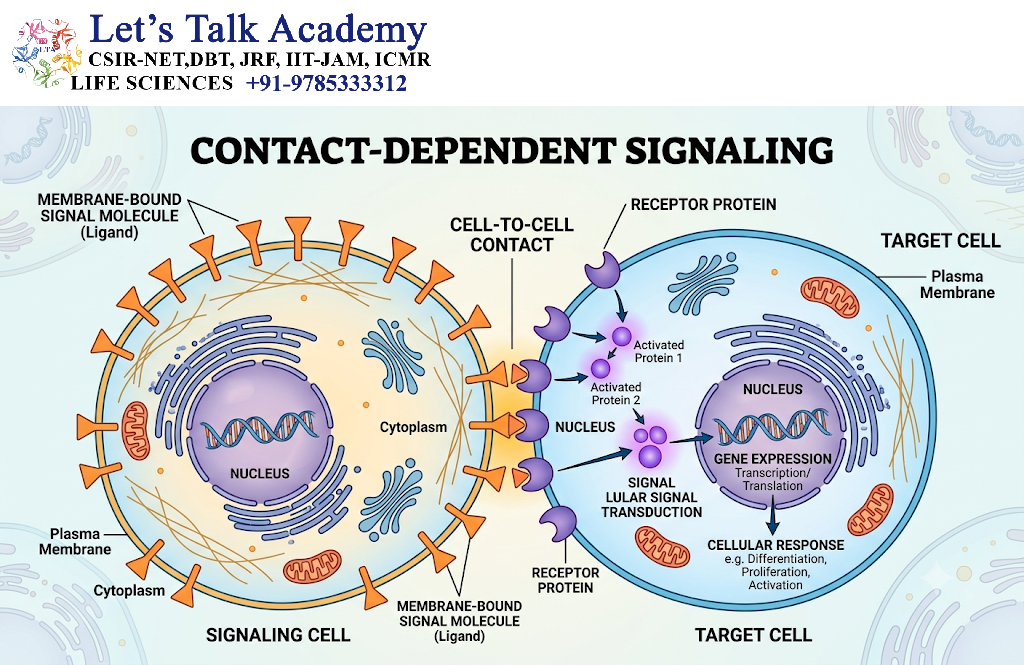
In contact-dependent signaling, the signaling molecule remains attached to the membrane of one cell and interacts directly with a receptor on a neighboring cell.
12.1 General Mechanism
Cell A membrane-bound signal
↓
Direct contact
↓
Cell B receptor
↓
Intracellular signaling
↓
Response
This type of communication is particularly important during:
- Embryonic development
- Cell differentiation
- Tissue organization
- Immune responses
13. Direct Cell-Cell Communication
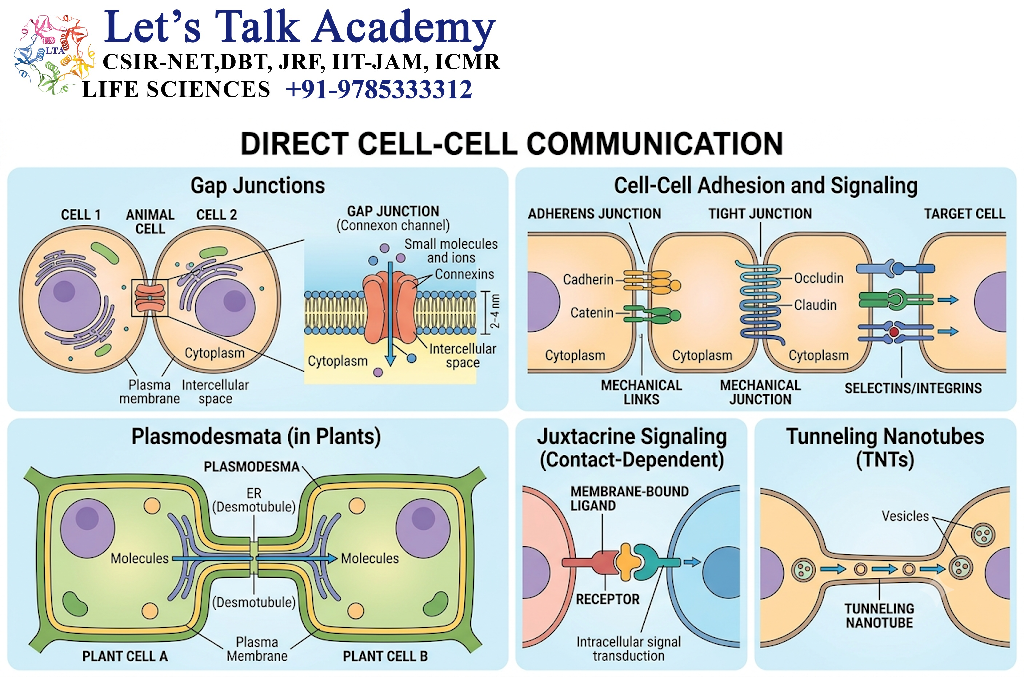
Cells can also communicate directly through specialized structures.
13.1 Gap Junctions
Animal cells can form gap junctions, which create channels between neighboring cells.
These channels permit the movement of certain:
- Ions
- Small metabolites
- Small signaling molecules
This allows neighboring cells to coordinate their activities.
13.2 Plasmodesmata
Plant cells communicate through plasmodesmata, membrane-lined channels connecting adjacent cells through the cell wall.
They allow regulated movement of certain molecules between neighboring plant cells.
14. Signaling Molecules
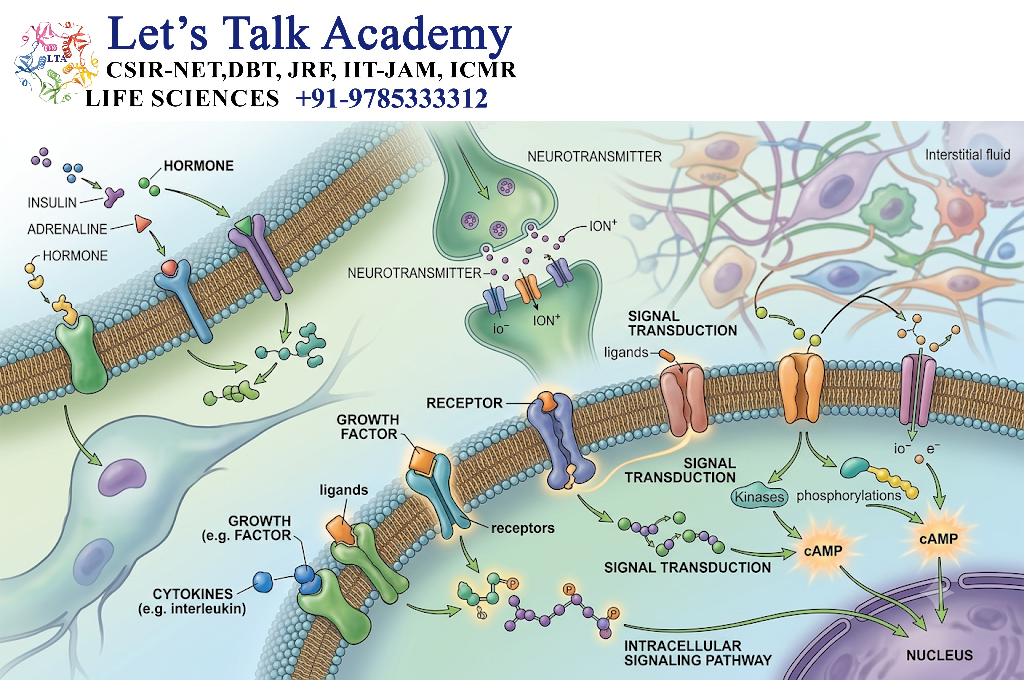
Different classes of molecules can function as signals.
14.1 Peptide and Protein Signals
Examples:
- Insulin
- Growth factors
- Cytokines
These generally interact with cell-surface receptors because many are unable to freely cross the plasma membrane.
14.2 Steroid Hormones
Steroid hormones are lipid-soluble and can cross the plasma membrane.
They often interact with intracellular receptors.
Examples include:
- Cortisol
- Estrogen
- Progesterone
- Testosterone
14.3 Amino-Acid-Derived Signals
Examples include:
- Adrenaline
- Thyroid hormones
- Melatonin
Their receptors and mechanisms vary.
14.4 Lipid-Derived Signals
Examples include:
- Prostaglandins
- Leukotrienes
- Other lipid mediators
14.5 Gases
Some gases can act as signaling molecules.
An important example is:
Nitric oxide (NO)
NO can diffuse across membranes and activate soluble guanylyl cyclase in target cells.
15. Receptors and Signal Detection
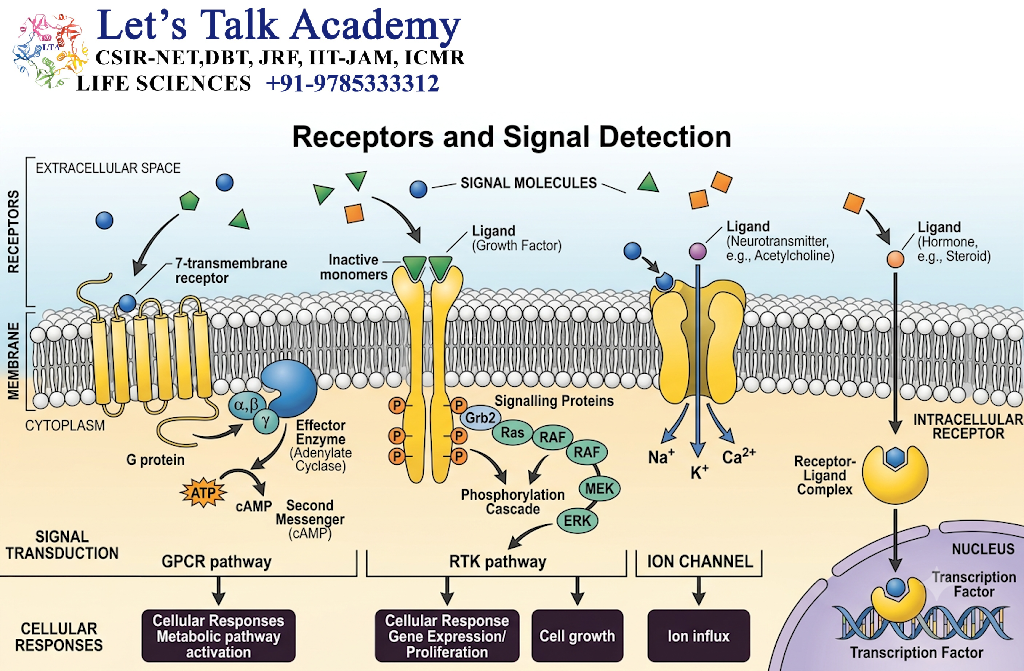
Receptors are central to cellular communication because they allow cells to distinguish specific signals.
Two broad categories are:
- Cell-surface receptors
- Intracellular receptors
16. Cell-Surface Receptors
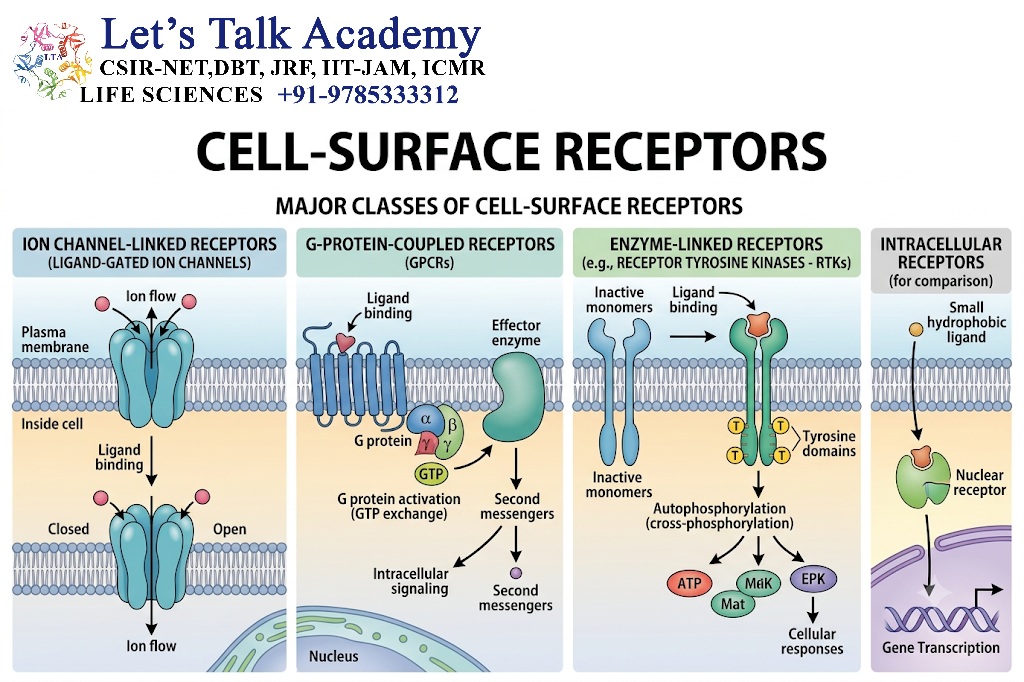
Cell-surface receptors detect signals that cannot readily cross the plasma membrane.
Major classes include:
- G-protein-coupled receptors
- Receptor tyrosine kinases
- Cytokine receptors
- Receptor serine/threonine kinases
- Receptor guanylyl cyclases
17. G-Protein-Coupled Receptors
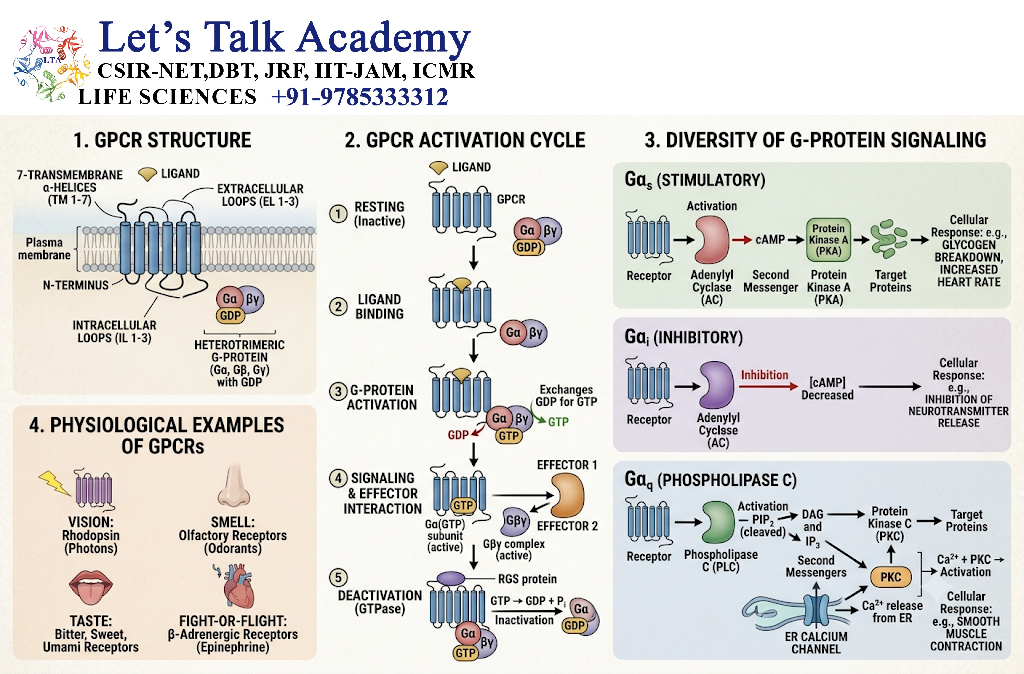
GPCRs are membrane proteins containing seven transmembrane regions.
They interact with heterotrimeric G proteins containing:
- α subunit
- β subunit
- γ subunit
A simplified pathway is:
Ligand
↓
GPCR
↓
G protein
↓
Effector
↓
Second messenger
↓
Cellular response
Examples of downstream systems include:
- cAMP
- IP₃
- DAG
- Ca²⁺
18. Receptor Tyrosine Kinases
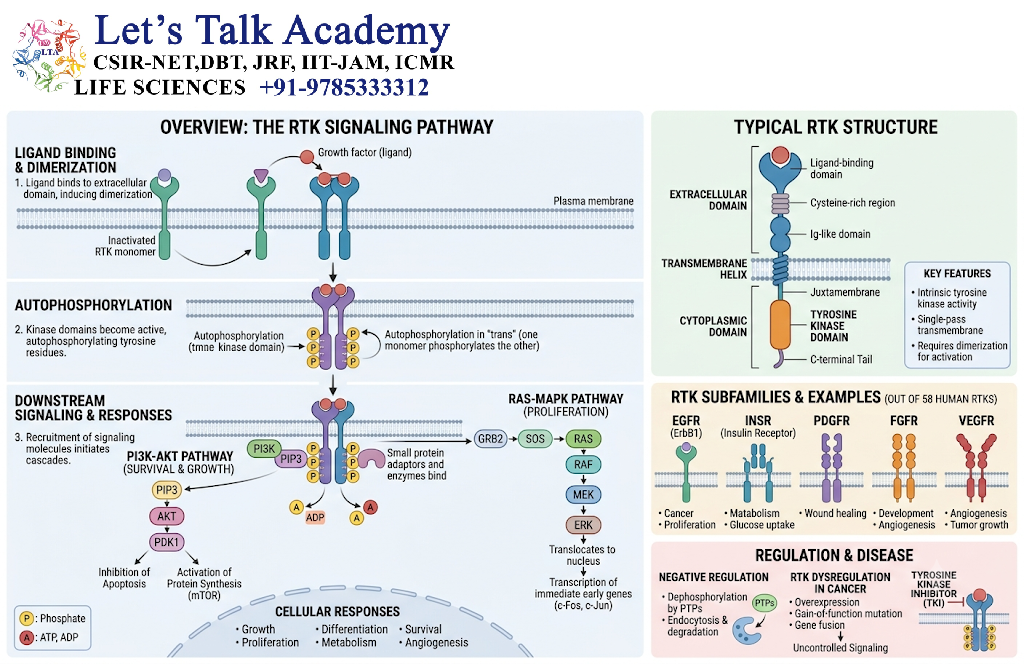
Receptor tyrosine kinases, or RTKs, are important receptors for many growth factors and hormones.
A typical mechanism is:
Ligand binding
↓
Receptor activation
↓
Tyrosine phosphorylation
↓
Adaptor protein recruitment
↓
Signaling pathways
↓
Cellular response
Important downstream pathways include:
- Ras-MAPK
- PI3K-AKT
- PLCγ
19. Intracellular Receptors
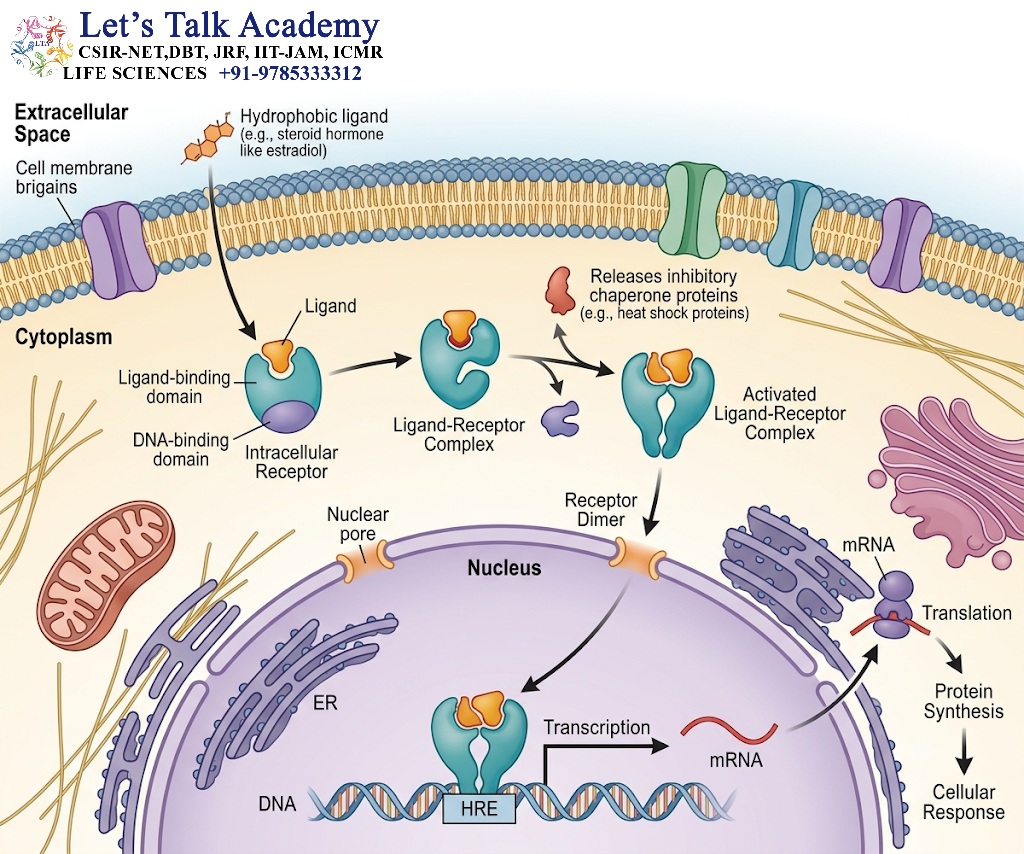
Some signaling molecules are sufficiently lipid-soluble to cross the plasma membrane.
They can bind receptors in the:
- Cytoplasm
- Nucleus
Examples include receptors for:
- Steroid hormones
- Thyroid hormones
- Retinoids
- Vitamin D
The activated receptor can regulate gene transcription.
General pathway:
Lipid-soluble signal
↓
Cell entry
↓
Intracellular receptor
↓
DNA regulatory region
↓
Gene transcription
↓
Protein production
↓
Cellular response
20. Signal Transduction
Signal transduction is the process through which receptor activation is converted into intracellular molecular events.
It may involve:
- Protein phosphorylation
- G-protein activation
- Second messengers
- Small GTPases
- Protein-protein interactions
- Changes in ion concentrations
- Changes in gene expression
A general pathway is:
Receptor
↓
Signal transduction proteins
↓
Second messengers / kinase cascades
↓
Effector proteins
↓
Cellular response
21. Second Messengers
Second messengers are intracellular molecules that help transmit signals from activated receptors.
Major examples include:
- cAMP
- cGMP
- IP₃
- DAG
- Ca²⁺
For example:
Receptor
↓
Adenylyl cyclase
↓
cAMP
↓
PKA
↓
Target proteins
↓
Response
Second messengers can rapidly distribute and amplify signals.
22. Signal Amplification
A major principle of cell communication is signal amplification.
A small extracellular signal can produce a large intracellular response.
For example:
One ligand-receptor interaction
↓
Multiple signaling proteins
↓
Many second-messenger molecules
↓
Many protein kinase molecules
↓
Many phosphorylated targets
Amplification allows cells to respond effectively even when signaling molecules are present at relatively low concentrations.
23. Signal Integration
Cells often receive multiple signals simultaneously.
For example:
Growth signal + nutrient signal + stress signal
These pathways interact and are integrated to determine the appropriate response.
The final response may therefore depend on the combination of signals rather than a single signal.
24. Signal Crosstalk
Crosstalk refers to communication between different signaling pathways.
For example:
MAPK pathway ↔ PI3K-AKT pathway
or:
Ca²⁺ signaling ↔ kinase signaling
Crosstalk allows cells to coordinate complex biological responses.
25. Signal Regulation
Signaling pathways must be carefully controlled.
Major regulatory mechanisms include:
- Receptor desensitization
- Receptor internalization
- Receptor degradation
- Protein phosphorylation
- Protein dephosphorylation
- Second-messenger degradation
- Negative feedback
- Positive feedback
- Protein degradation
A basic regulatory principle is:
Activation ↔ Inhibition
The balance between these processes determines the final signaling output.
26. Signal Termination
Cellular signaling must eventually be terminated or reduced.
Termination can occur through:
- Removal of the ligand
- Receptor inactivation
- GTP hydrolysis
- Second-messenger degradation
- Protein dephosphorylation
- Receptor internalization
- Protein degradation
For example:
cAMP signaling
↓
Phosphodiesterase activity
↓
cAMP degradation
↓
Reduced PKA activity
27. Cellular Responses to Signals
Different signaling pathways can produce different types of cellular responses.
27.1 Changes in Metabolism
Signaling pathways can activate or inhibit metabolic enzymes.
27.2 Changes in Gene Expression
Signals can activate transcription factors and alter gene expression.
27.3 Cell Growth
Growth-factor signaling can stimulate pathways controlling cell growth and proliferation.
27.4 Cell Differentiation
Signals can alter gene-expression programs that determine specialized cell functions.
27.5 Cell Movement
Signaling pathways regulate cytoskeletal proteins and cell migration.
27.6 Secretion
Ca²⁺ and other signaling pathways can regulate exocytosis.
27.7 Cell Survival
Growth and survival signals can activate pathways that promote cell survival.
27.8 Apoptosis
Changes in signaling can either promote survival or activate programmed cell death.
28. Signal Strength, Duration and Location
The final cellular response depends on more than simply whether a signal is present.
Important properties include:
- Signal concentration
- Signal intensity
- Duration
- Frequency
- Location
- Cellular context
For example, the same pathway may generate different responses when activated briefly versus continuously.
Therefore:
Signal information = intensity + duration + timing + location + cellular context
29. Compartmentalization of Signaling
Signaling molecules are often organized into specific cellular compartments.
Important signaling locations include:
- Plasma membrane
- Cytoplasm
- Endosomes
- Endoplasmic reticulum
- Mitochondria
- Nucleus
Compartmentalization increases signaling specificity.
For example, a signaling protein located near a receptor can respond more rapidly than the same protein located elsewhere in the cell.
30. Scaffold Proteins
Scaffold proteins organize signaling components into complexes.
A simplified arrangement is:
Scaffold
↓
Kinase 1 → Kinase 2 → Kinase 3
Scaffold proteins can:
- Increase pathway efficiency
- Promote specificity
- Organize signaling components
- Limit inappropriate interactions
31. Reversibility of Signaling
Many signaling events are reversible.
For example:
Protein kinase → phosphorylation
Protein phosphatase → dephosphorylation
Similarly:
GTP-bound protein → GDP-bound protein
Reversibility allows cells to rapidly switch signaling states.
32. Feedback Regulation
Feedback mechanisms help maintain signaling balance.
32.1 Negative Feedback
Pathway activation
↓
Inhibitory regulator
↓
Reduced pathway activity
Negative feedback prevents excessive responses.
32.2 Positive Feedback
Pathway activation
↓
Further activation
↓
Signal amplification
Positive feedback can generate strong or sustained responses.
33. Communication Through Electrical Signals
Not all cell communication depends on chemical messengers.
Electrical signals are particularly important in:
- Neurons
- Muscle cells
Changes in membrane potential can rapidly transmit information.
In neurons:
Ion movement
↓
Membrane potential change
↓
Action potential
↓
Neurotransmitter release
↓
Target-cell response
34. Cell Communication in Development
Cell communication is essential during embryonic development.
Signals help determine:
- Cell proliferation
- Cell differentiation
- Cell migration
- Tissue organization
- Organ formation
Cells use combinations of signaling pathways rather than relying on a single universal signal.
35. Cell Communication in the Immune System
Immune cells communicate using:
- Cytokines
- Chemokines
- Cell-surface receptors
- Antigen-receptor interactions
- Costimulatory signals
These signals coordinate:
- Immune-cell activation
- Cell migration
- Inflammation
- Immune-cell differentiation
- Regulation of immune responses
36. Cell Communication in Nervous System
Neurons use both electrical and chemical signals.
The general sequence is:
Electrical signal
↓
Action potential
↓
Ca²⁺ entry
↓
Neurotransmitter release
↓
Receptor activation
↓
Postsynaptic response
This system allows rapid communication between neurons and target cells.
37. Cell Communication in Plants
Plants also possess sophisticated communication systems.
Plant cells communicate through:
- Plant hormones
- Electrical signals
- Calcium signaling
- Reactive oxygen species
- Plasmodesmata
- Peptide signals
Important plant hormones include:
- Auxin
- Cytokinin
- Gibberellins
- Abscisic acid
- Ethylene
- Jasmonates
- Salicylic acid
These signaling systems regulate growth, development and responses to environmental conditions.
38. Cell Communication and Homeostasis
Homeostasis requires continuous communication between cells and tissues.
For example, regulation of blood glucose involves communication between:
- Pancreatic cells
- Liver cells
- Muscle cells
- Adipose cells
Hormonal signals coordinate glucose storage, utilization and production.
Thus:
Cell communication → coordinated physiological response → homeostasis
39. Abnormal Cell Communication
Defects in cell communication can disturb normal cellular behavior.
Potential consequences include:
- Uncontrolled cell proliferation
- Abnormal metabolism
- Excessive inflammation
- Developmental abnormalities
- Impaired immune responses
- Abnormal cell survival
- Neurological dysfunction
Many diseases involve altered signaling pathways rather than a complete absence of signaling.
40. Major Principles of Cell Communication
The major principles can be summarized as follows:
40.1 Specificity
Signals act through specific receptors and signaling machinery.
40.2 Amplification
Small signals can produce large responses.
40.3 Integration
Cells combine information from multiple signaling pathways.
40.4 Adaptation
Cells can become less responsive to persistent stimulation.
40.5 Modularity
Signaling pathways are composed of reusable molecular components.
40.6 Crosstalk
Different pathways interact with each other.
40.7 Compartmentalization
Signaling is organized spatially within cells.
40.8 Reversibility
Many signaling reactions can be switched on and off.
40.9 Termination
Signals must eventually be reduced or terminated.
41. Comparison of Major Types of Cell Communication
| Type | Distance | Main Mechanism | Example |
|---|---|---|---|
| Endocrine | Long distance | Hormones through circulation | Insulin |
| Paracrine | Short distance | Local mediators | Growth factors |
| Autocrine | Same cell | Signal acts on producing cell | Some immune signals |
| Synaptic | Very short, specialized | Neurotransmitter release | Acetylcholine |
| Contact-dependent | Direct neighboring cells | Membrane-bound ligand/receptor | Developmental signaling |
| Gap junction/plasmodesmata | Direct cell-cell | Intercellular channels | Ion/small-molecule transfer |
42. Integrated Cell Communication Flowchart
Signaling cell
↓
Signal production
↓
Signal release/presentation
↓
Signal reaches target cell
↓
Specific receptor recognition
↓
Signal transduction
↓
Second messengers / protein kinases / G proteins
↓
Signal amplification and integration
↓
Effector activation
↓
Cellular response
↓
Feedback regulation
↓
Signal termination
43. Example: Insulin Signaling
Insulin provides an important example of cell communication.
Insulin release
↓
Insulin receptor activation
↓
Receptor tyrosine kinase activity
↓
Intracellular signaling proteins
↓
PI3K-AKT pathway
↓
Changes in metabolism and glucose transporter trafficking
↓
Increased glucose uptake in responsive tissues
This demonstrates how an extracellular hormone can produce a coordinated intracellular response.
44. Example: Adrenaline Signaling
Adrenaline
↓
β-adrenergic GPCR
↓
Gs protein
↓
Adenylyl cyclase
↓
cAMP
↓
PKA
↓
Phosphorylation of target proteins
↓
Cellular response
This example illustrates receptor-mediated signaling, second-messenger production, amplification and protein phosphorylation.
45. Biological Significance of Cell Communication
Cell communication is essential for:
- Maintaining homeostasis
- Coordinating metabolism
- Regulating growth
- Controlling cell division
- Guiding development
- Maintaining tissue organization
- Coordinating immune responses
- Controlling nervous-system activity
- Regulating reproduction
- Controlling apoptosis
- Responding to environmental changes
- Coordinating multicellular functions


