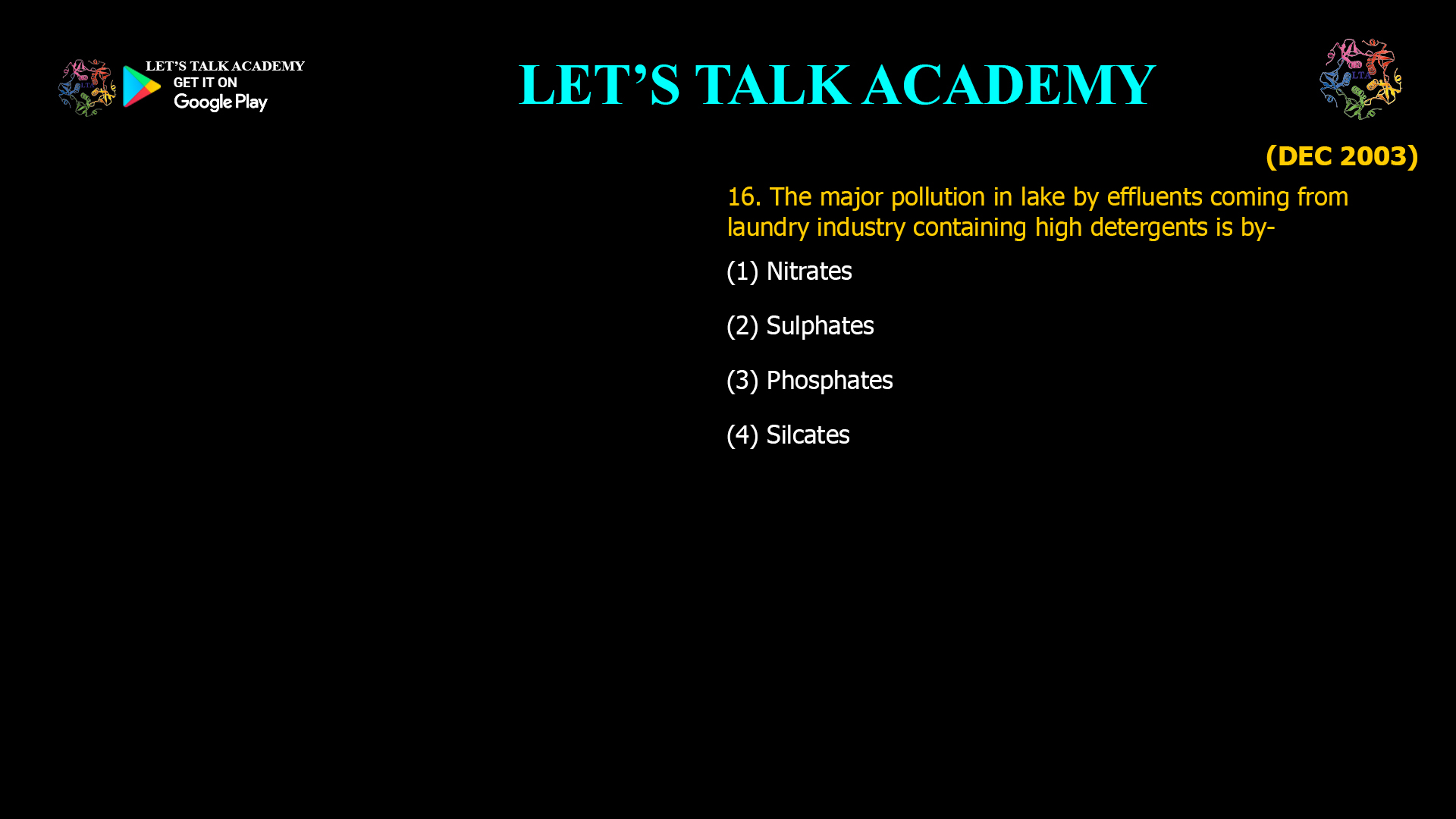
- The major pollution in lake by effluents coming from laundry industry containing high detergents is by-
(1) Nitrates (2) Sulphates
(3) Phosphates (4) Silcates
The laundry industry is a major contributor to water pollution in lakes and rivers, primarily due to the discharge of effluents containing high levels of detergents. Among the various components in these detergents, phosphates stand out as the most significant pollutant, causing widespread environmental harm. This article explores why phosphates are the main concern, how they affect aquatic ecosystems, and what can be done to mitigate their impact.
Introduction to Laundry Industry Effluents
Laundry operations generate large volumes of wastewater that often contain high concentrations of detergents. These detergents are complex mixtures of chemicals designed to remove dirt, grease, and stains from fabrics. When laundry wastewater is discharged into lakes—either directly or through municipal sewage systems—it introduces a range of substances, including surfactants, enzymes, fragrances, and, most notably, phosphates.
The Role of Phosphates in Detergents
Phosphates are commonly added to laundry detergents as water softeners and cleaning boosters. They help break down organic matter and prevent mineral deposits on clothes and washing machines. In many countries, laundry detergents contain approximately 35–75% phosphate salts, making them a significant source of phosphorus in wastewater.
How Phosphates Pollute Lakes
When phosphate-rich laundry effluents enter lakes, they act as powerful fertilizers for aquatic plants and algae. This process, known as eutrophication, leads to several ecological problems:
-
Algal Blooms: Phosphates stimulate the rapid growth of algae, resulting in dense algal blooms that cover the water surface.
-
Oxygen Depletion: As algae die and decompose, the process consumes large amounts of oxygen, creating hypoxic (low-oxygen) or anoxic (oxygen-free) conditions in the water.
-
Fish Kills: The lack of oxygen suffocates fish and other aquatic organisms, leading to mass die-offs.
-
Loss of Biodiversity: Prolonged eutrophication reduces the diversity of aquatic life, as only a few tolerant species can survive under these conditions.
-
Water Quality Degradation: Algal blooms make water murky, block sunlight, and can produce toxins harmful to humans and animals.
Comparing the Options
Let’s examine the options provided and why phosphates are the major pollutant:
-
Nitrates: While nitrates can also contribute to eutrophication, they are not the primary pollutant from laundry detergents. Nitrates are more commonly associated with agricultural runoff.
-
Sulphates: Sulphates are present in some detergents but do not cause eutrophication or significant ecological harm in lakes.
-
Phosphates: The correct answer. Phosphates are the main cause of eutrophication and algal blooms in lakes receiving laundry effluents.
-
Silicates: Silicates are not a major component of laundry detergents and do not contribute significantly to lake pollution.
Additional Harmful Effects of Laundry Effluents
While phosphates are the major concern, other components in laundry detergents can also harm aquatic ecosystems:
-
Surfactants: These chemicals can be toxic to fish and other aquatic organisms, damaging their gills and mucus layers.
-
Heavy Metals and Pesticides: Some detergents may contain trace amounts of heavy metals or pesticides, which can further degrade water quality and harm aquatic life.
-
Oxygen-Reducing Substances: Certain detergent ingredients can chemically reduce oxygen levels in water, exacerbating the effects of eutrophication.
Real-World Examples and Impacts
The impact of phosphate-based detergents on lakes has been documented worldwide. For example, in Lake Ontario and many European lakes, the introduction of phosphate-rich wastewater has led to severe algal blooms and fish kills. In response, many countries have restricted or banned the use of phosphates in household and industrial detergents, leading to significant improvements in water quality.
The Science Behind Eutrophication
Eutrophication is a natural process, but human activities—especially the discharge of phosphates from detergents—have accelerated it to harmful levels. The excess nutrients fuel the growth of primary producers (algae and aquatic plants), disrupting the balance of aquatic ecosystems. The decomposition of this organic matter consumes oxygen, creating dead zones where most aquatic life cannot survive.
Mitigating the Impact of Laundry Effluents
Reducing the environmental impact of laundry industry effluents requires a multi-pronged approach:
-
Phosphate Bans: Many countries have banned or restricted the use of phosphates in detergents, leading to a dramatic reduction in eutrophication.
-
Improved Wastewater Treatment: Advanced treatment technologies can remove phosphates and other pollutants from laundry wastewater before it is discharged into lakes.
-
Eco-Friendly Detergents: The use of biodegradable, phosphate-free detergents can significantly reduce the environmental footprint of laundry operations.
-
Public Awareness: Educating consumers and industries about the environmental impacts of detergents can encourage the adoption of safer products and practices.
The Broader Environmental Context
The pollution of lakes by laundry effluents is part of a larger pattern of nutrient pollution affecting freshwater ecosystems worldwide. Agricultural runoff, urban stormwater, and industrial discharges all contribute to the problem, but the role of phosphates from detergents is especially significant in urban and industrial settings.
Key Takeaways
-
Phosphates from laundry detergents are the major pollutant in lakes receiving laundry industry effluents.
-
Phosphates cause eutrophication, algal blooms, oxygen depletion, and fish kills.
-
Other detergent components, such as surfactants and heavy metals, can also harm aquatic life.
-
Phosphate bans and improved wastewater treatment have proven effective in reducing lake pollution.
-
Eco-friendly detergents and public awareness are essential for protecting aquatic ecosystems.
Summary Table
| Pollutant | Source in Laundry Effluents | Ecological Impact |
|---|---|---|
| Phosphates | High | Eutrophication, algal blooms |
| Nitrates | Low | Minor contribution |
| Sulphates | Low | Negligible |
| Silicates | Very low | Negligible |
Conclusion
The major pollution in lakes caused by effluents from the laundry industry containing high detergents is due to phosphates. These compounds drive eutrophication, leading to algal blooms, oxygen depletion, and the loss of aquatic biodiversity. Addressing this issue requires reducing phosphate use in detergents, improving wastewater treatment, and promoting eco-friendly laundry practices. By taking these steps, we can protect our lakes and ensure healthy aquatic ecosystems for future generations.
In summary, the correct answer is:
(3) Phosphates.
Phosphates are the primary pollutants from laundry detergents responsible for the degradation of lake water quality.


3 Comments
Kirti Agarwal
November 6, 2025Phosphate
Kajal
November 15, 2025Phosphate
Sakshi Kanwar
November 28, 2025Phosphates are the primary pollutants from laundry detergents