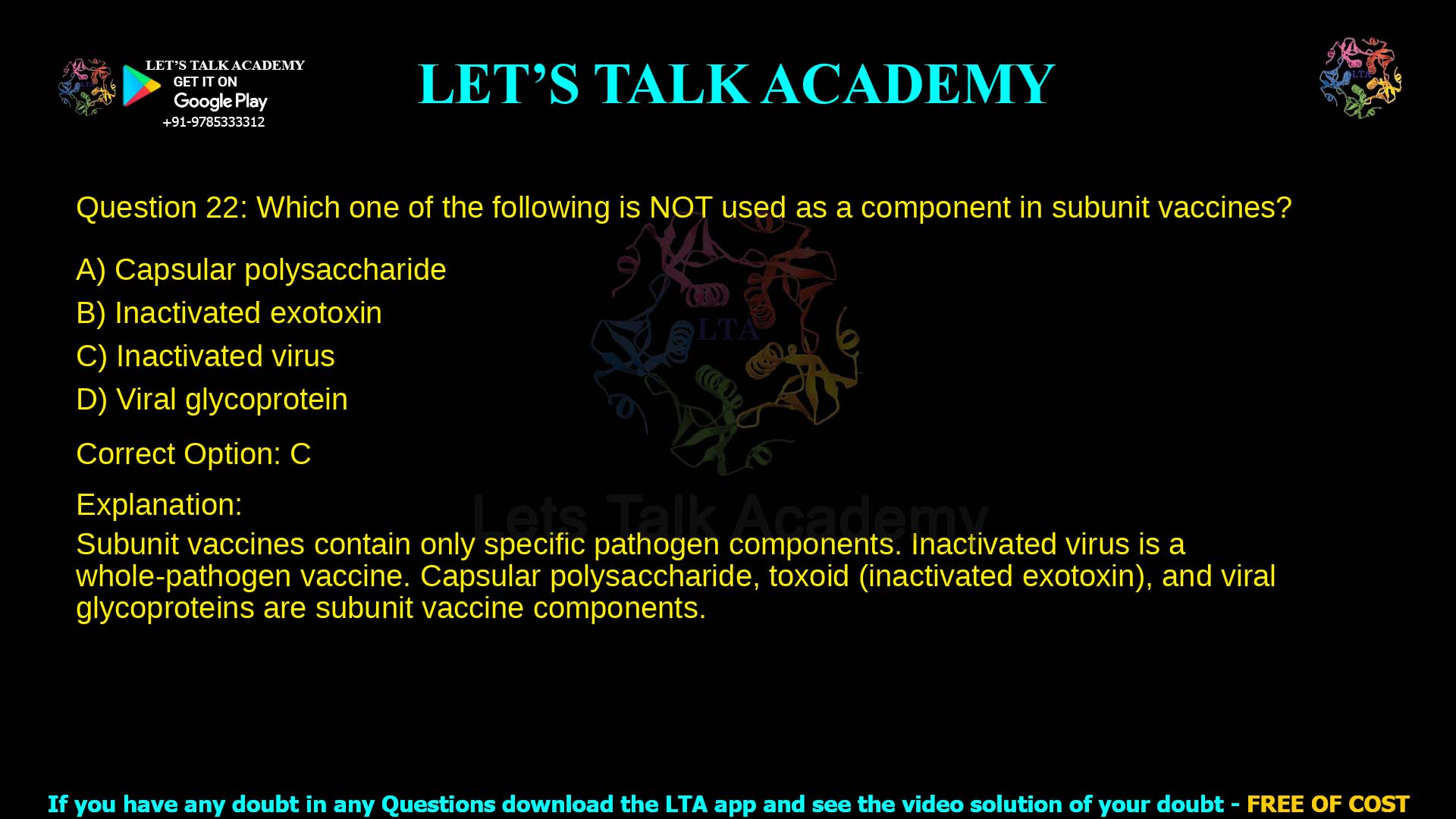
Q.22 Which one of the following is NOT used as a component in subunit vaccines?
(A) Capsular polysaccharide
(B) Inactivated exotoxin
(C) Inactivated virus
(D) Viral glycoprotein
Answer: (C) Inactivated virus
Subunit vaccines contain only specific antigenic fragments of pathogens, unlike whole-organism vaccines. Inactivated virus represents the entire killed pathogen, classifying it as an inactivated vaccine rather than a subunit type.
Option Analysis
Capsular polysaccharide (A): Pure bacterial capsular polysaccharides serve as antigens in subunit vaccines, such as the Vi capsular polysaccharide vaccine against typhoid fever. These purified sugar molecules from bacterial coats trigger immune responses without whole bacteria.
Inactivated exotoxin (B): Detoxified bacterial exotoxins, known as toxoids, function as protein subunit components. Examples include tetanus toxoid and diphtheria toxoid vaccines, where toxicity is chemically neutralized while preserving immunogenicity.
Inactivated virus (C): This uses complete viruses killed by heat or chemicals, as in polio or influenza inactivated vaccines. Such whole-pathogen formulations differ from subunit vaccines, which employ isolated proteins or polysaccharides only.
Viral glycoprotein (D): Surface glycoproteins like hepatitis B surface antigen or HPV L1 protein form core components of recombinant subunit vaccines. These purified viral proteins elicit targeted antibody responses.
Subunit vaccines represent a key advancement in immunology, using purified pathogen fragments like capsular polysaccharide or viral glycoprotein to safely stimulate immunity without risking infection. For CSIR NET Life Sciences aspirants tackling questions on subunit vaccines components, understanding distinctions from inactivated vaccines proves essential.
Core Features of Subunit Vaccines
These vaccines isolate specific antigens—proteins, polysaccharides, or peptides—avoiding whole pathogens found in live attenuated or inactivated virus formulations. Examples include:
-
Hepatitis B vaccine (recombinant surface antigen protein).
-
HPV vaccine (L1 capsid protein forming virus-like particles).
Advantages encompass safety for immunocompromised patients and stability, though they often need adjuvants for robust responses.
Why Inactivated Virus is Excluded
Inactivated virus vaccines contain entire killed pathogens, contrasting with subunit approaches limited to antigenic subunits. Polio Salk vaccine exemplifies this whole-virus category, not subunit design. This distinction appears frequently in CSIR NET immunology MCQs.
Real-World Subunit Examples
| Component | Vaccine Example | Pathogen Target |
|---|---|---|
| Capsular polysaccharide | ViCPS typhoid vaccine | Salmonella Typhi |
| Inactivated exotoxin (toxoid) | Tetanus toxoid | Clostridium tetani |
| Viral glycoprotein | Rift Valley fever Gn/Gc | RVFV virus |
Mastering subunit vaccines components aids CSIR NET success in Unit 12 (Applied Biology), emphasizing precise antigen selection for vaccine efficacy.


