
1. Introduction
The genetic information of an organism is stored in its DNA sequence. However, the DNA sequence alone does not determine when, where, and to what extent every gene will be expressed. Cells require additional regulatory mechanisms that control gene activity without changing the underlying DNA sequence. These mechanisms are collectively known as epigenetic regulation.
Epigenetic regulation is essential for controlling gene expression during development, cellular differentiation, environmental responses, maintenance of cellular identity, and many other biological processes.
A useful way to understand epigenetic regulation is to consider DNA as a large library. The DNA contains the complete collection of genetic information, but a cell does not need to read every book at the same time. Epigenetic mechanisms help determine which sections of the genome are accessible, which genes are active, and which genes remain silent.
The major mechanisms involved in epigenetic regulation include:
- DNA methylation,
- histone modifications,
- chromatin remodeling,
- nucleosome positioning,
- non-coding RNA-mediated regulation,
- genomic imprinting,
- X-chromosome inactivation.
These mechanisms often work together rather than acting independently.
1.1 Definition of Epigenetic Regulation
Epigenetic regulation is the control of gene activity through molecular mechanisms that alter chromatin structure or gene accessibility without requiring a change in the underlying DNA sequence.
Epigenetic changes can influence whether genes are:
- activated,
- repressed,
- expressed at higher levels,
- expressed at lower levels,
- maintained in a stable transcriptional state.
The term “epigenetic” emphasizes regulatory information that operates in addition to the DNA sequence itself.
1.2 Importance of Epigenetic Regulation
Epigenetic regulation is important because it allows cells containing essentially the same genome to perform very different functions.
For example, a neuron and a liver cell contain largely the same DNA sequence, but they express different sets of genes. Epigenetic mechanisms contribute to maintaining these cell-specific patterns of gene expression.
Epigenetic regulation is involved in:
- embryonic development,
- cell differentiation,
- tissue-specific gene expression,
- genomic imprinting,
- X-chromosome inactivation,
- cellular memory,
- response to environmental signals,
- genome stability,
- suppression of transposable elements.
2. Basic Principles of Epigenetics
2.1 DNA Sequence and Gene Regulation
The DNA sequence provides the genetic instructions of a cell.
Epigenetic mechanisms generally do not alter the sequence of DNA bases. Instead, they modify the molecular environment around DNA and influence its accessibility to regulatory proteins.
Therefore, two cells can contain the same gene but express it differently because the gene exists in different regulatory chromatin states.
2.2 Epigenetic Marks
Epigenetic marks are molecular modifications associated with DNA or chromatin.
Important examples include:
- DNA methylation,
- histone acetylation,
- histone methylation,
- histone phosphorylation,
- histone ubiquitination.
These modifications can affect chromatin structure or recruit proteins that regulate gene activity.
2.3 Dynamic Nature of Epigenetic Regulation
Epigenetic regulation is dynamic.
A gene can move from a relatively inactive state to an active state in response to developmental signals or environmental conditions.
Similarly, genes can become repressed when a cell undergoes differentiation or responds to particular signals.
Thus, epigenetic regulation provides flexibility while also allowing stable cellular states to be maintained.
3. Chromatin as the Basis of Epigenetic Regulation
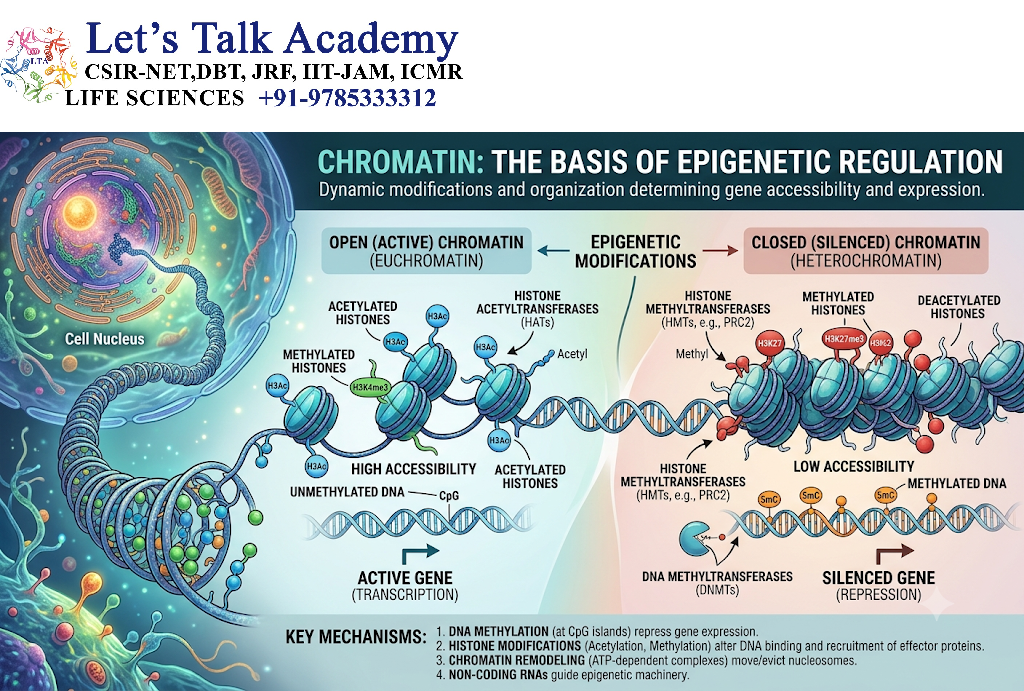
3.1 Chromatin
Chromatin consists primarily of DNA associated with histones and other proteins.
The basic structural unit of chromatin is the nucleosome.
Approximately 147 base pairs of DNA are wrapped around a histone octamer.
3.2 Open Chromatin
Open chromatin is generally more accessible to transcription factors and RNA polymerase.
It is commonly associated with transcriptionally active genes.
This type of chromatin is often referred to as euchromatin.
3.3 Compact Chromatin
Compact chromatin restricts access to DNA.
It is commonly associated with transcriptional repression.
This type of chromatin is often referred to as heterochromatin.
3.4 Chromatin Accessibility
Epigenetic regulation can change chromatin accessibility.
For example:
Chromatin opening → increased DNA accessibility → transcription generally favored
Chromatin compaction → reduced DNA accessibility → transcription generally repressed
These relationships are general and depend on the particular genomic region and cellular context.
4. Major Mechanisms of Epigenetic Regulation
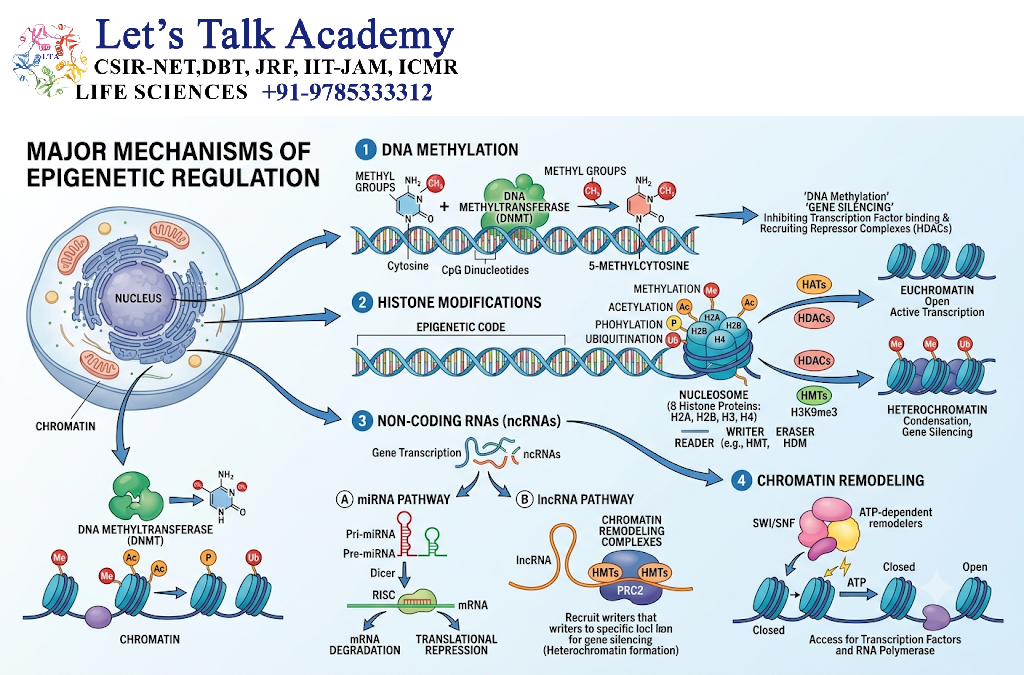
The major mechanisms include:
- DNA methylation
- Histone modification
- ATP-dependent chromatin remodeling
- Nucleosome repositioning
- Histone variant incorporation
- Non-coding RNA-mediated regulation
- Higher-order chromatin organization
These mechanisms interact extensively.
5. DNA Methylation
5.1 Definition
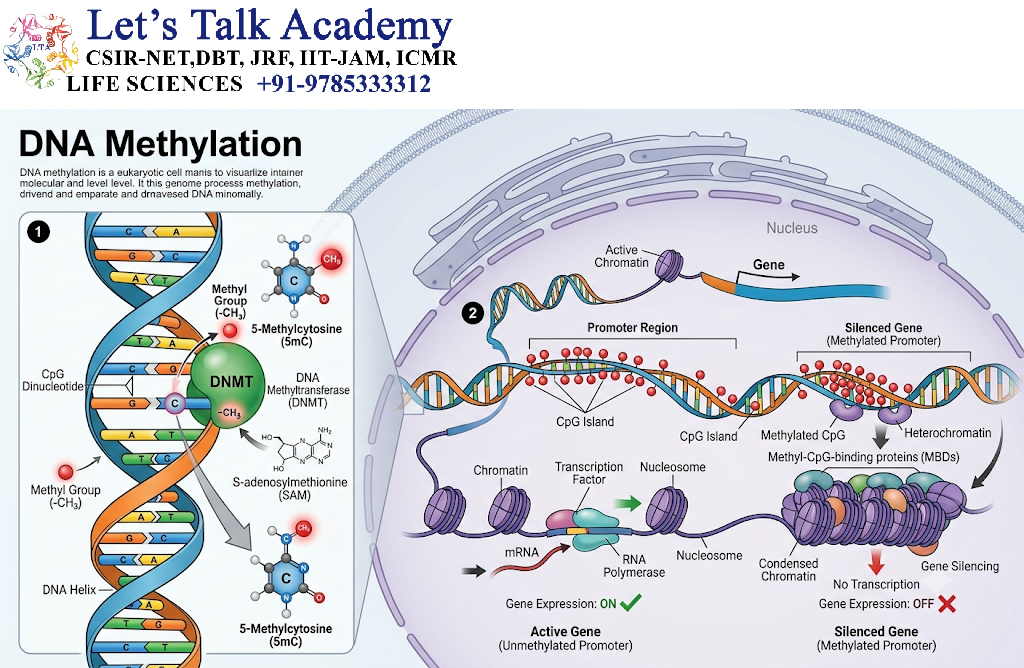
DNA methylation is one of the best-characterized epigenetic modifications.
In mammals, it commonly involves the addition of a methyl group to the 5-position of cytosine, producing 5-methylcytosine.
Methylation frequently occurs at CpG sites.
5.2 DNA Methyltransferases
DNA methylation is established and maintained by enzymes called DNA methyltransferases (DNMTs).
Important members include:
- DNMT1,
- DNMT3A,
- DNMT3B.
5.3 De Novo Methylation
DNMT3A and DNMT3B have major roles in establishing new DNA methylation patterns.
This process is called de novo methylation.
It is particularly important during development and cellular differentiation.
5.4 Maintenance Methylation
After DNA replication, methylation patterns need to be copied onto newly synthesized DNA.
DNMT1 plays a major role in maintaining DNA methylation patterns.
This allows epigenetic information to be transmitted through cell divisions.
6. DNA Methylation and Gene Silencing
6.1 Promoter Methylation
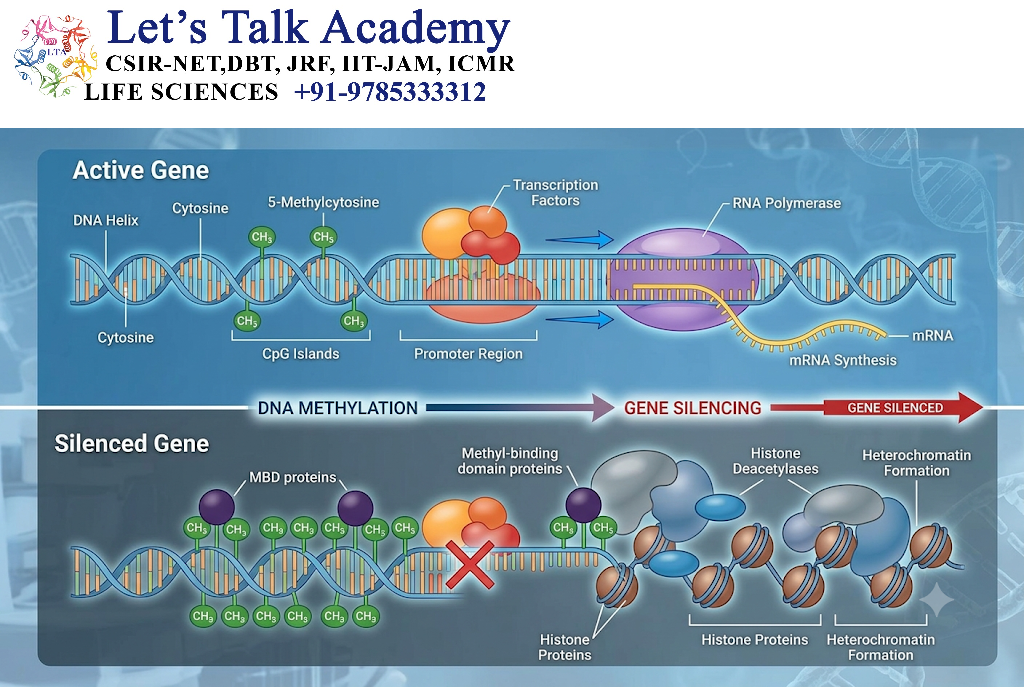
DNA methylation at promoter regions, particularly CpG-rich promoter regions, is frequently associated with reduced gene expression.
Methylation can:
- interfere with transcription-factor binding,
- recruit methyl-CpG-binding proteins,
- promote repressive chromatin,
- reduce transcriptional accessibility.
6.2 Methyl-CpG-Binding Proteins
Proteins that recognize methylated DNA can recruit additional chromatin-modifying factors.
These proteins can promote:
- histone deacetylation,
- chromatin compaction,
- transcriptional repression.
Thus, DNA methylation and histone modifications can cooperate to maintain gene silencing.
7. DNA Demethylation
7.1 Definition
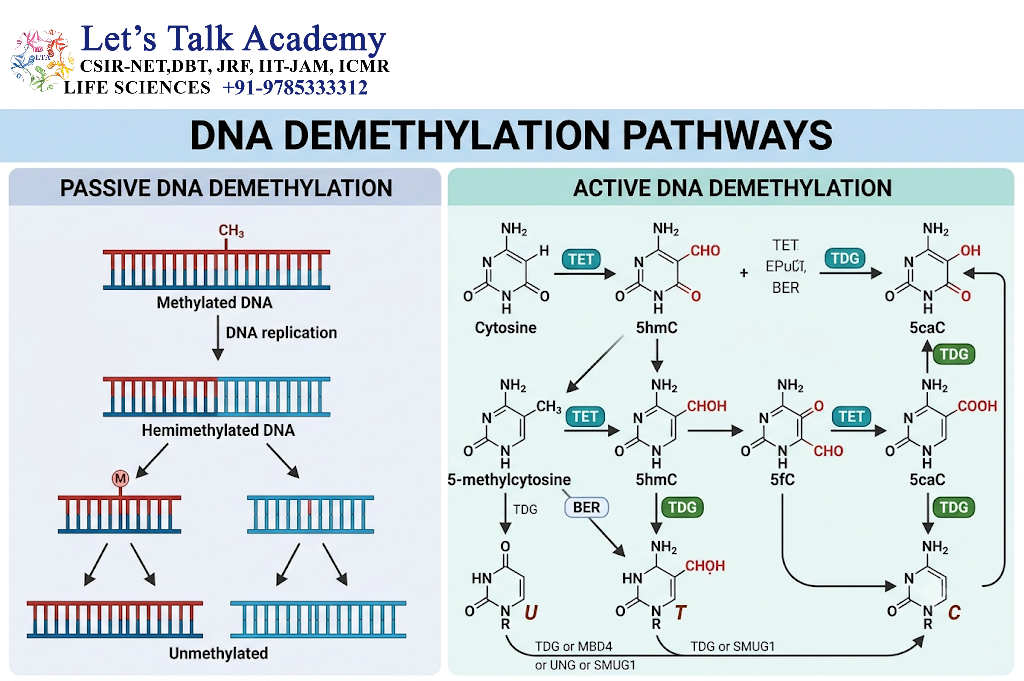
DNA demethylation refers to the removal or loss of DNA methylation.
It can occur through:
- passive mechanisms,
- active enzymatic pathways.
7.2 TET Proteins
TET enzymes contribute to active DNA demethylation pathways.
They oxidize 5-methylcytosine into modified forms such as:
- 5-hydroxymethylcytosine,
- 5-formylcytosine,
- 5-carboxylcytosine.
These modified bases can subsequently be processed through DNA repair-associated pathways.
7.3 Biological Importance
DNA demethylation is important during:
- development,
- cellular reprogramming,
- changes in cell identity,
- regulation of tissue-specific genes.
8. Histone Modifications
8.1 Definition
Histones contain amino-terminal tails that can undergo different chemical modifications.
These modifications can influence:
- chromatin compaction,
- protein recruitment,
- transcription,
- DNA repair,
- chromosome organization.
8.2 Major Histone Modifications
Important histone modifications include:
- acetylation,
- methylation,
- phosphorylation,
- ubiquitination,
- sumoylation.
9. Histone Acetylation
9.1 Histone Acetyltransferases
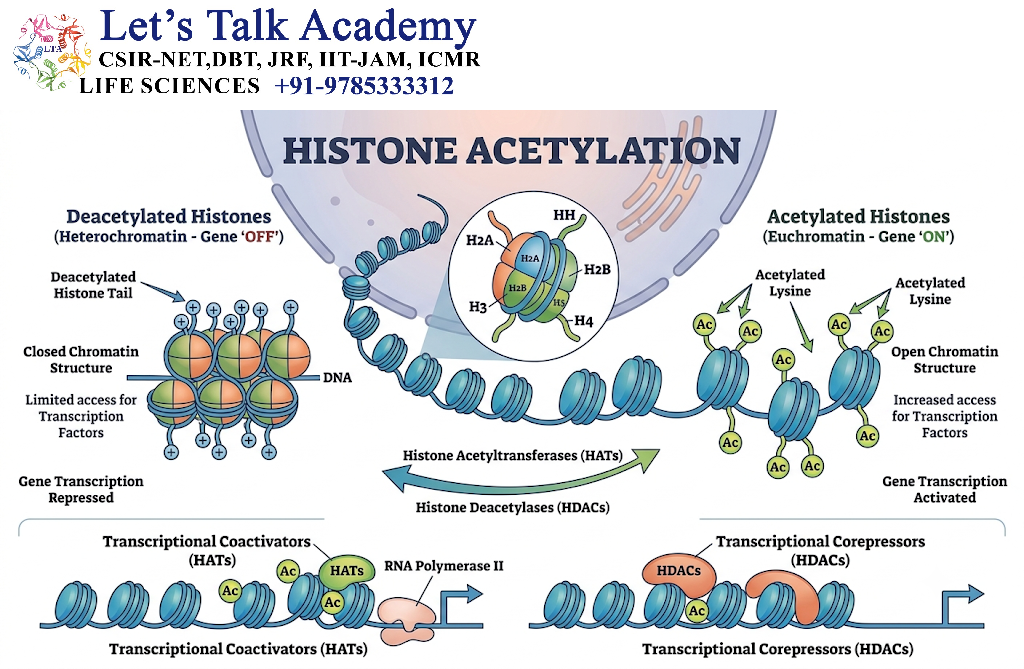
Histone acetyltransferases, or HATs, add acetyl groups to histone lysine residues.
Acetylation reduces the positive charge of lysine and can weaken interactions between histones and DNA.
This often contributes to a more accessible chromatin state.
9.2 Histone Deacetylases
Histone deacetylases, or HDACs, remove acetyl groups from histones.
Deacetylation is frequently associated with chromatin compaction and transcriptional repression.
9.3 Functional Significance
The balance between HAT and HDAC activity helps regulate the accessibility of genes.
A simplified relationship is:
HAT activity ↑ → histone acetylation ↑ → accessibility generally ↑
HDAC activity ↑ → histone acetylation ↓ → accessibility generally ↓
The actual effect depends on the genomic region and other regulatory mechanisms.
10. Histone Methylation
10.1 Definition
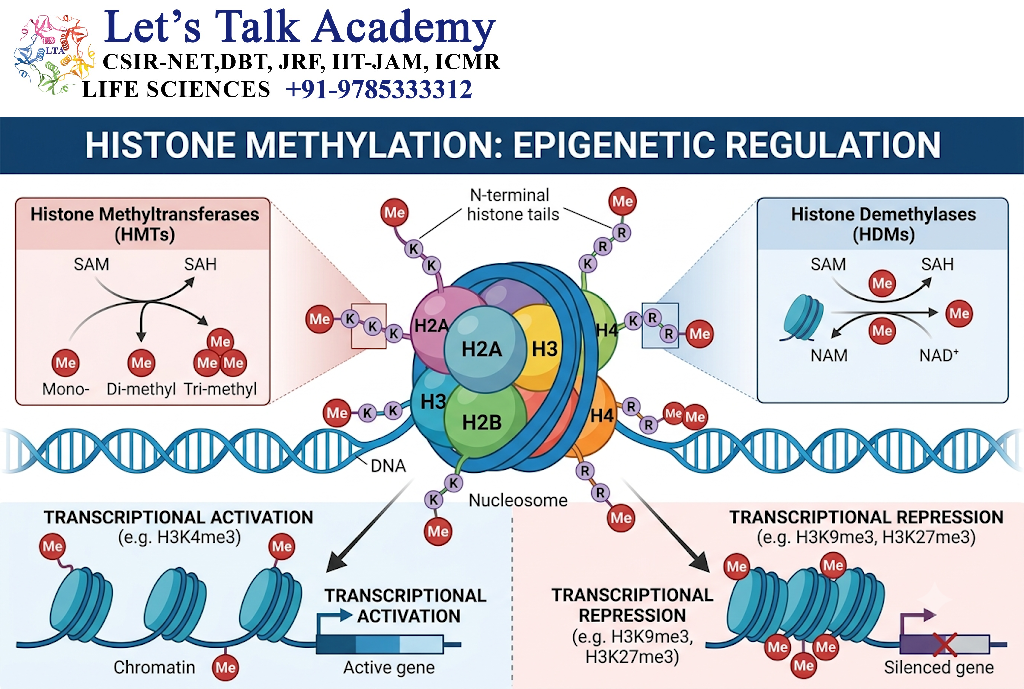
Histone methylation involves the addition of one, two, or three methyl groups to specific amino acid residues.
The major targets are lysine and arginine residues.
10.2 Histone Methyltransferases
Histone methyltransferases add methyl groups to histones.
10.3 Histone Demethylases
Histone demethylases remove methyl groups from specific histone residues.
10.4 Activation and Repression
Histone methylation does not have a single universal effect.
For example:
H3K4me3 → commonly associated with active promoters
H3K9me3 → commonly associated with heterochromatin and repression
H3K27me3 → commonly associated with Polycomb-mediated repression
Therefore, the effect of histone methylation depends on the modified residue and its location.
11. Histone Phosphorylation
11.1 Definition
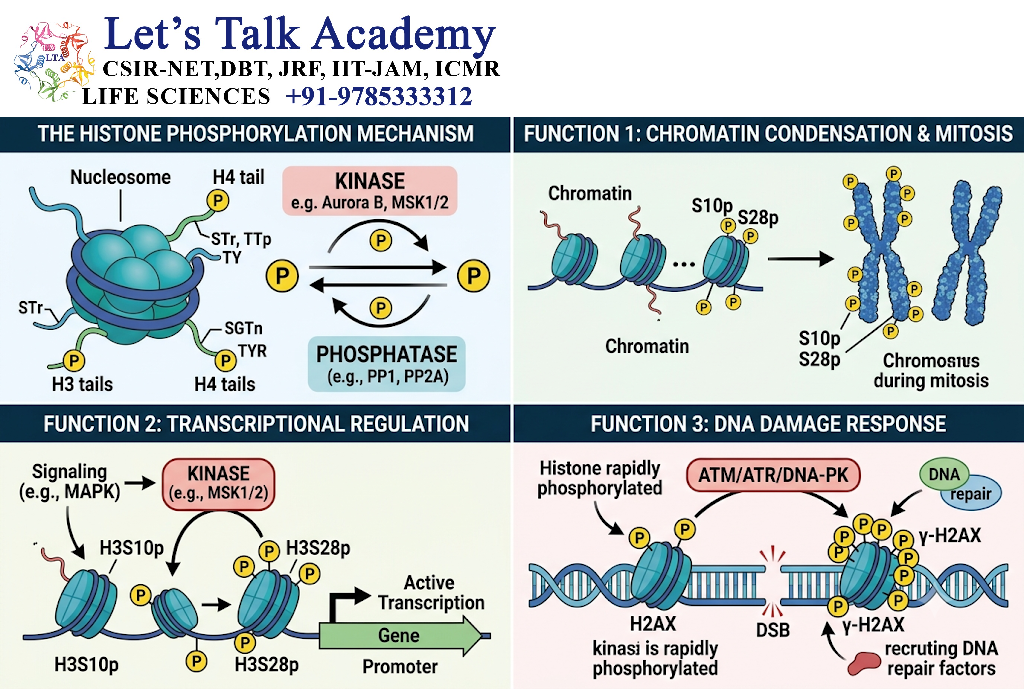
Histone phosphorylation involves addition of phosphate groups to histone proteins.
It participates in:
- transcriptional regulation,
- DNA damage responses,
- chromosome condensation,
- cell-cycle regulation.
11.2 γ-H2AX
When DNA double-strand breaks occur, histone H2AX can become phosphorylated to produce γ-H2AX.
γ-H2AX serves as an important molecular signal around sites of DNA damage and helps recruit DNA repair factors.
12. Histone Ubiquitination
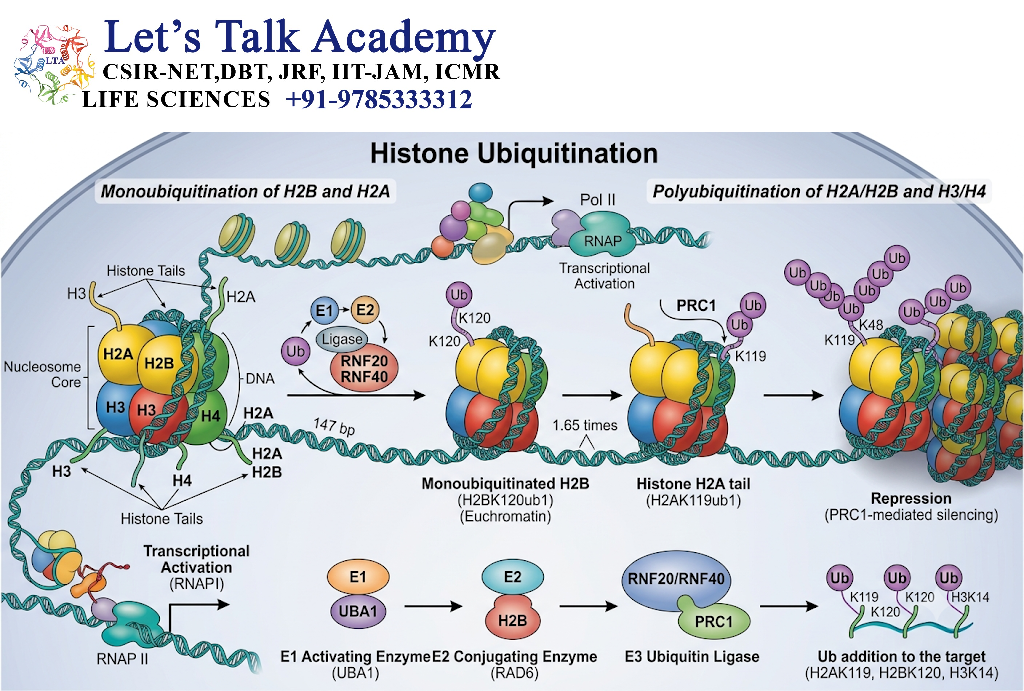
12.1 Definition
Histone ubiquitination involves attachment of ubiquitin to specific histone residues.
Unlike ubiquitination of many proteins that leads to degradation, histone ubiquitination often functions as a regulatory modification.
12.2 Functional Role
Histone ubiquitination can influence:
- transcription,
- DNA repair,
- chromatin organization,
- other histone modifications.
For example, H2B ubiquitination can promote molecular events associated with active transcription and downstream histone methylation.
13. Histone Code
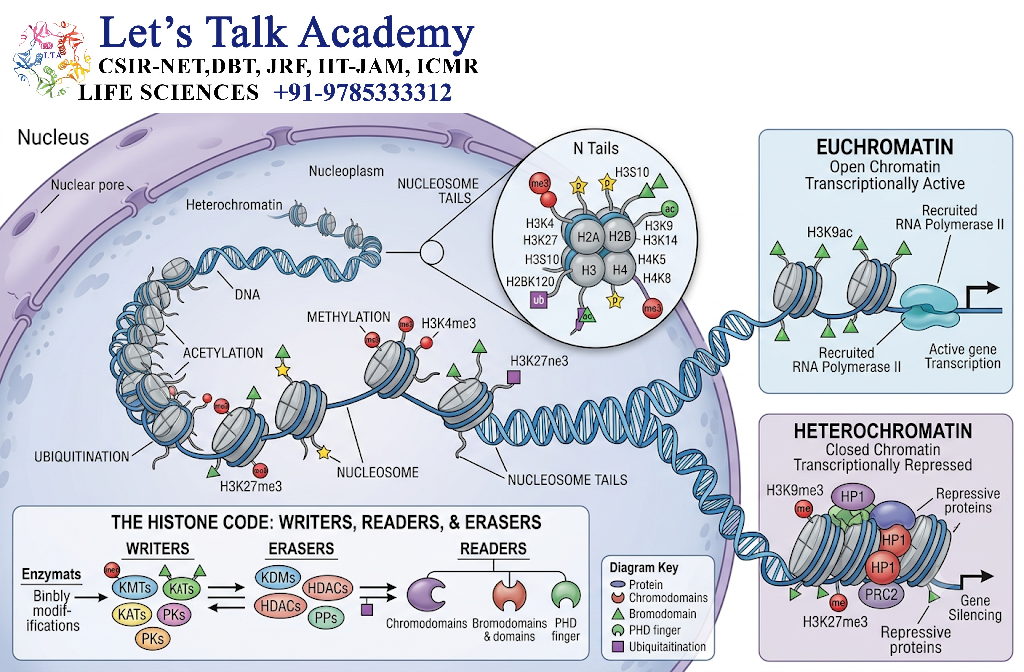
13.1 Concept
The histone code hypothesis proposes that combinations of histone modifications create regulatory information that can influence chromatin structure and gene activity.
A single modification may have limited meaning when considered alone.
The combination of multiple modifications can produce a specific chromatin state.
13.2 Readers, Writers, and Erasers
The regulation of histone modifications can be understood using three functional categories.
Writers add modifications.
Erasers remove modifications.
Readers recognize modifications and recruit other regulatory proteins.
This system allows chromatin modifications to act as molecular signals.
14. ATP-Dependent Chromatin Remodeling
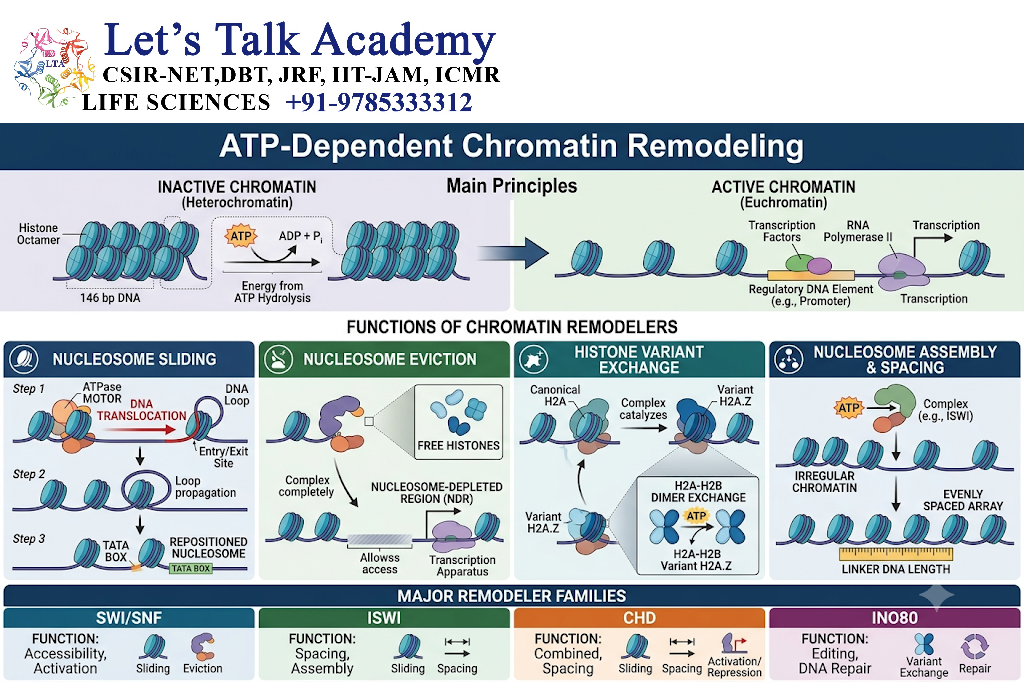
14.1 Definition
Chromatin-remodeling complexes use energy from ATP hydrolysis to alter nucleosome organization.
They can:
- move nucleosomes,
- remove nucleosomes,
- reposition nucleosomes,
- exchange histone variants.
14.2 Major Remodeling Families
Important ATP-dependent chromatin-remodeling families include:
- SWI/SNF,
- ISWI,
- CHD,
- INO80/SWR1.
14.3 Role in Gene Activation
Remodeling complexes can expose promoter and enhancer regions by repositioning nucleosomes.
This allows transcription factors and RNA polymerase-associated machinery to gain access to DNA.
14.4 Role in Gene Repression
Chromatin remodeling can also establish nucleosome arrangements that reduce accessibility.
Therefore, remodeling complexes can participate in both gene activation and gene repression.
15. Nucleosome Positioning
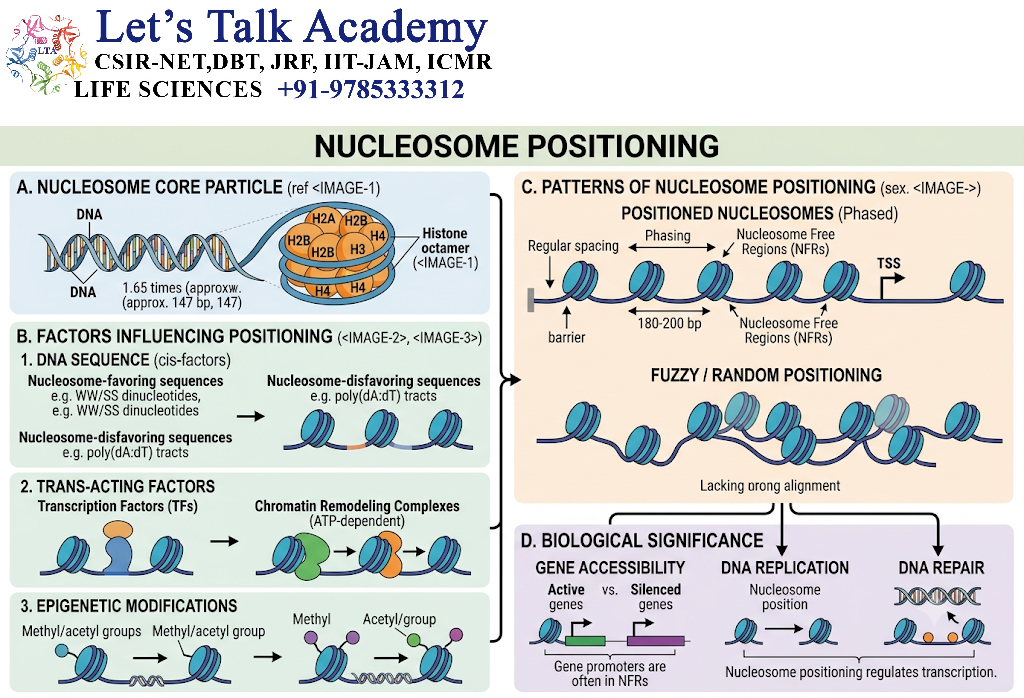
15.1 Definition
Nucleosome positioning refers to the location of nucleosomes along DNA.
The position of nucleosomes can determine whether regulatory DNA sequences are accessible.
15.2 Promoter Regulation
If a nucleosome occupies an important promoter region, transcription-factor binding may be restricted.
When remodeling complexes reposition or remove that nucleosome, promoter accessibility can increase.
15.3 Enhancer Regulation
Similar mechanisms operate at enhancers.
Changes in nucleosome positioning can influence transcription-factor binding and enhancer activity.
16. Histone Variants
16.1 Definition
Histone variants are alternative forms of canonical histones.
They can provide specialized properties to chromatin.
Examples include:
- H2A.Z,
- H3.3,
- CENP-A,
- H2A.X.
16.2 CENP-A
CENP-A is a specialized histone H3 variant associated with centromeric chromatin.
It contributes to centromere identity and chromosome segregation.
16.3 H2A.X
H2A.X participates in DNA damage signaling.
Its phosphorylated form, γ-H2AX, accumulates around DNA double-strand breaks.
17. Non-Coding RNA and Epigenetic Regulation
17.1 Definition
Not all RNA molecules encode proteins.
Non-coding RNAs can perform important regulatory functions.
They include:
- microRNAs,
- small interfering RNAs,
- long non-coding RNAs,
- other regulatory RNA species.
17.2 Long Non-Coding RNAs
Long non-coding RNAs can interact with chromatin-modifying proteins and influence gene expression.
They may act by:
- recruiting chromatin modifiers,
- organizing regulatory complexes,
- affecting transcription,
- influencing chromosome structure.
17.3 XIST
XIST is a major example of a long non-coding RNA involved in epigenetic regulation.
It plays a central role in X-chromosome inactivation in female mammals.
18. RNA-Mediated Gene Silencing
18.1 RNA Interference
RNA interference, or RNAi, is a mechanism in which small RNA molecules guide regulatory proteins to complementary RNA sequences.
This can lead to:
- mRNA degradation,
- translational repression.
18.2 Small RNA and Chromatin
In some organisms, small RNA pathways can also contribute to transcriptional silencing by directing chromatin-modifying activities to specific genomic regions.
19. Genomic Imprinting
19.1 Definition
Genomic imprinting is an epigenetic phenomenon in which the expression of a gene depends on its parental origin.
A particular gene may be preferentially expressed from:
- the maternal allele,
- or the paternal allele.
19.2 Establishment of Imprints
Imprinting marks are established in germ cells.
They are maintained after fertilization and during subsequent cell divisions.
19.3 Biological Significance
Genomic imprinting demonstrates that two alleles with the same DNA sequence can behave differently because of epigenetic information.
20. X-Chromosome Inactivation
20.1 Definition
In female mammals, one of the two X chromosomes is largely inactivated in somatic cells.
This process is called X-chromosome inactivation.
It helps achieve dosage compensation between individuals with different numbers of X chromosomes.
20.2 Role of XIST
The XIST long non-coding RNA coats the chromosome from which it is expressed.
It recruits factors that establish a repressive chromatin environment.
20.3 Barr Body
The inactive X chromosome becomes highly condensed and can appear as a Barr body in many interphase nuclei.
21. Polycomb-Mediated Epigenetic Regulation
21.1 Polycomb Group Proteins
Polycomb group proteins are important chromatin regulators involved in transcriptional repression.
They are particularly important for maintaining developmental gene-expression programs.
21.2 PRC2
Polycomb Repressive Complex 2, or PRC2, catalyzes the formation of H3K27me3.
This modification is strongly associated with transcriptional repression.
21.3 PRC1
Polycomb Repressive Complex 1, or PRC1, contributes to chromatin compaction and transcriptional repression.
PRC1 and PRC2 can cooperate to maintain repressed chromatin states.
22. Heterochromatin Formation
22.1 Definition
Heterochromatin is a relatively condensed chromatin state generally associated with transcriptional repression.
It can be:
- constitutive,
- facultative.
22.2 Constitutive Heterochromatin
Constitutive heterochromatin is commonly found in repetitive genomic regions such as:
- centromeric regions,
- pericentromeric regions,
- many telomeric regions.
22.3 Facultative Heterochromatin
Facultative heterochromatin can change between relatively active and inactive states.
The inactive X chromosome is an important example.
23. Epigenetic Regulation of Transposable Elements
23.1 Transposable Elements
Transposable elements are DNA sequences capable of moving or generating copies within the genome.
Uncontrolled transposable-element activity can disrupt genes and genomic structure.
23.2 Epigenetic Silencing
Cells use mechanisms such as:
- DNA methylation,
- repressive histone modifications,
- heterochromatin formation,
- small RNA pathways,
to suppress many transposable elements.
This contributes to genome stability.
24. Epigenetic Regulation During Development
24.1 Early Development
During early development, extensive epigenetic reprogramming occurs.
DNA methylation and chromatin states can be reorganized as cells transition from early embryonic states toward differentiated cell types.
24.2 Cell Differentiation
Differentiation involves selective activation and repression of genes.
For example, a muscle cell requires expression of genes involved in muscle structure and function, while many genes required by neurons remain inactive.
Epigenetic mechanisms help maintain these cell-specific gene-expression patterns.
24.3 Cellular Identity
Once a cell becomes differentiated, epigenetic mechanisms help preserve its identity through subsequent cell divisions.
25. Epigenetic Memory
25.1 Definition
Epigenetic memory refers to the maintenance of a particular gene-expression state through cell divisions.
25.2 Mechanism
After DNA replication, some DNA methylation patterns and chromatin-associated information can be restored or maintained.
Histone modifications and chromatin-binding proteins can also contribute to the inheritance of regulatory states.
25.3 Significance
Epigenetic memory allows daughter cells to retain characteristics associated with their cellular lineage.
26. Epigenetic Inheritance
26.1 Mitotic Inheritance
Epigenetic states can frequently be transmitted from a parent cell to daughter cells during mitotic divisions.
This is important for maintaining tissue-specific gene-expression patterns.
26.2 Transgenerational Inheritance
Some epigenetic effects can under certain circumstances persist across generations.
However, true transgenerational inheritance in mammals is complex because extensive epigenetic reprogramming occurs during germ-cell development and early embryogenesis.
Therefore, not every epigenetic change acquired during an individual’s lifetime is transmitted to offspring.
27. Environmental Influence on Epigenetic Regulation
27.1 Environmental Signals
Epigenetic states can respond to environmental and physiological conditions.
Factors that can influence epigenetic regulation include:
- nutrition,
- cellular stress,
- hormones,
- developmental signals,
- toxins,
- inflammation-associated signaling.
27.2 Nutritional Influence
Several nutrients participate indirectly in epigenetic regulation because they contribute to the production of molecular cofactors required for DNA and histone modifications.
For example, cellular metabolism influences the availability of metabolites used by chromatin-modifying enzymes.
27.3 Stress and Epigenetic Changes
Cellular stress can alter signaling pathways and transcriptional programs, which may lead to changes in chromatin states.
These changes can influence the expression of genes involved in adaptation and cellular survival.
28. Metabolism and Epigenetic Regulation
28.1 Connection Between Metabolism and Chromatin
Epigenetic regulation is closely connected with cellular metabolism.
Many chromatin-modifying enzymes require metabolites or metabolic intermediates.
Examples include:
- acetyl-CoA,
- S-adenosylmethionine,
- NAD⁺,
- α-ketoglutarate.
28.2 Acetyl-CoA
Acetyl-CoA provides acetyl groups used by histone acetyltransferases.
Changes in cellular metabolism can therefore influence histone acetylation.
28.3 S-Adenosylmethionine
S-adenosylmethionine, or SAM, serves as an important methyl-group donor for DNA and histone methylation reactions.
Thus, cellular metabolism can directly influence epigenetic regulation.
29. Epigenetic Regulation and Gene Expression
29.1 Transcriptional Activation
Gene activation commonly involves:
- transcription-factor binding,
- recruitment of coactivators,
- chromatin remodeling,
- active histone modifications,
- increased DNA accessibility,
- recruitment of transcription machinery,
- RNA synthesis.
29.2 Transcriptional Repression
Gene repression can involve:
- repressor binding,
- recruitment of corepressors,
- histone deacetylation,
- repressive histone methylation,
- DNA methylation,
- chromatin compaction,
- reduced transcription.
30. Epigenetic Regulation at Multiple Levels
Epigenetic regulation does not occur at only one stage.
It can influence:
DNA level
→ DNA methylation
Chromatin level
→ histone modifications
Nucleosome level
→ nucleosome positioning and remodeling
Chromosome level
→ higher-order chromatin organization
RNA level
→ non-coding RNA-mediated regulation
Nuclear level
→ three-dimensional genome organization
This multilayered control enables highly precise regulation of gene activity.
31. Three-Dimensional Genome Organization
31.1 Chromatin Loops
DNA can form loops that bring distant regulatory regions into physical proximity.
This allows enhancers to communicate with promoters.
31.2 CTCF
The protein CTCF contributes to genome organization and can participate in the formation of chromatin boundaries and loops.
31.3 Topologically Associated Domains
Topologically associating domains (TADs) are regions of the genome in which DNA sequences interact relatively frequently with one another.
TAD organization helps regulate interactions between genes and their regulatory elements.
32. Epigenetic Regulation and DNA Repair
32.1 Chromatin Accessibility
DNA damage must be detected and repaired even though DNA is packaged into chromatin.
Chromatin therefore undergoes local changes that allow repair proteins to access damaged DNA.
32.2 Histone Modifications
Histone modifications can signal the presence of DNA damage and recruit repair proteins.
γ-H2AX is an important example.
32.3 Restoration of Chromatin
After DNA repair, chromatin organization is restored or reorganized to re-establish the appropriate regulatory state.
33. Epigenetic Regulation and Genome Stability
Epigenetic mechanisms contribute to genome stability by:
- suppressing transposable elements,
- maintaining heterochromatin,
- regulating repetitive DNA,
- supporting chromosome structure,
- coordinating DNA repair.
Disruption of these processes can increase genomic instability.
34. Epigenetic Regulation and Cancer
34.1 Abnormal DNA Methylation
Cancer cells can show abnormal DNA methylation patterns.
These may include:
- excessive methylation of particular tumor-suppressor gene promoters,
- reduced methylation across other genomic regions.
34.2 Histone Modification Abnormalities
Changes in histone-modifying enzymes can alter gene-expression programs.
34.3 Chromatin Remodeling Defects
Mutations affecting chromatin-remodeling proteins can disrupt normal control of gene expression and cellular differentiation.
34.4 Importance
Epigenetic abnormalities can contribute to cancer development by altering the expression of genes involved in:
- cell proliferation,
- differentiation,
- DNA repair,
- apoptosis,
- cellular metabolism.
35. Epigenetic Regulation in Developmental Disorders
Changes in epigenetic regulators can affect normal development.
Because developmental processes depend on precise timing and location of gene expression, abnormal DNA methylation, histone modification, chromatin remodeling, or imprinting can disrupt developmental programs.
36. Epigenetic Reprogramming
36.1 Definition
Epigenetic reprogramming refers to large-scale changes in epigenetic states.
It occurs naturally during:
- germ-cell development,
- early embryonic development,
- cellular reprogramming.
36.2 Purpose
Reprogramming helps establish new developmental states and erase or reorganize certain epigenetic information.
36.3 Cellular Reprogramming
The introduction of specific transcription factors can reprogram differentiated cells into pluripotent-like states.
This demonstrates that cellular identity depends not only on DNA sequence but also on gene-regulatory and epigenetic states.
37. Epigenetic Regulation in Plants
37.1 DNA Methylation
Plants use DNA methylation extensively to regulate:
- gene expression,
- transposable elements,
- genome stability.
37.2 Small RNA Pathways
Small RNAs play important roles in directing DNA methylation and transcriptional silencing in plants.
37.3 Development
Epigenetic mechanisms participate in plant development, flowering, environmental responses, and genome defense.
38. Epigenetic Regulation in Animals
In animals, epigenetic regulation contributes to:
- embryonic development,
- tissue differentiation,
- genomic imprinting,
- X-chromosome inactivation,
- cellular memory,
- genome stability.
Mammalian epigenetic regulation involves coordinated action of DNA methylation, histone modifications, chromatin remodeling, and non-coding RNAs.
39. Writers, Erasers, and Readers
39.1 Writers
Writers establish epigenetic modifications.
Examples include:
- DNA methyltransferases,
- histone acetyltransferases,
- histone methyltransferases.
39.2 Erasers
Erasers remove epigenetic modifications.
Examples include:
- histone deacetylases,
- histone demethylases,
- enzymes involved in DNA demethylation.
39.3 Readers
Readers recognize specific epigenetic modifications.
They can recruit additional proteins that regulate:
- transcription,
- chromatin compaction,
- DNA repair,
- chromosome organization.
40. Comparison of Major Epigenetic Mechanisms
| Mechanism | Main molecular target | General effect |
|---|---|---|
| DNA methylation | DNA cytosine | Frequently associated with repression |
| Histone acetylation | Histone lysines | Often promotes accessibility |
| Histone deacetylation | Histone lysines | Often promotes repression |
| Histone methylation | Histone lysine/arginine | Can activate or repress depending on site |
| Chromatin remodeling | Nucleosomes | Changes DNA accessibility |
| Non-coding RNA | RNA/chromatin regulatory machinery | Can activate or silence genes |
| Heterochromatin formation | Chromatin | Generally promotes silencing |
| Polycomb regulation | Histones/chromatin | Maintains developmental gene repression |
41. Epigenetic Regulation and Cellular Differentiation
41.1 Same Genome, Different Cell Types
Most cells of a multicellular organism contain essentially the same genome.
However, cells differ in their patterns of gene expression.
For example:
Neuron → expresses neuronal genes
Muscle cell → expresses muscle-specific genes
Liver cell → expresses liver-specific genes
Epigenetic regulation helps establish and maintain these patterns.
41.2 Stable Gene Repression
Genes that are not required by a particular cell type can be maintained in repressed chromatin states.
This prevents unnecessary expression and contributes to cellular specialization.
42. Epigenetic Regulation and Cellular Memory
42.1 Maintenance of Cell Identity
Once a cell becomes differentiated, epigenetic mechanisms help preserve its transcriptional state.
For example, a liver cell generally continues to express liver-associated genes after cell division.
42.2 Molecular Memory
DNA methylation patterns, histone modifications, nucleosome organization, and chromatin-associated proteins can collectively contribute to this cellular memory.
43. Reversibility of Epigenetic Regulation
One important characteristic of many epigenetic modifications is that they can be modified or reversed.
For example:
DNA methylation ↔ demethylation
Histone acetylation ↔ deacetylation
Histone methylation ↔ demethylation
This reversibility allows cells to respond to developmental and environmental signals.
However, some epigenetic states can be highly stable and maintained over many cell divisions.
44. Epigenetic Regulation and Transcriptional States
A gene can generally exist in several regulatory states:
Active state
→ accessible chromatin
→ active regulatory marks
→ transcription occurs
Poised state
→ regulatory machinery is partially prepared
→ gene can be activated under appropriate conditions
Repressed state
→ reduced accessibility
→ repressive chromatin marks
→ transcription is reduced or absent
The transition between these states is controlled by multiple interacting mechanisms.


