A cardiac patient was admitted to the hospital after a heart block was detected, specifically ‘infra-Hisian block’. The doctors identified the problem in the bundle of His. Which one of […]
Blog
CSIR NET Life Science Previous Year Questions and Solution on Animal Physiology
Identifying Blood Vessels: Why Thick Walls and Valves Distinguish Arteries and Veins
Blood vessel A has thick wall, narrow lumen and no valves while blood vessel B has thin wall, wide lumen and have valves. Here A and B are (1) A […]
CSIR NET Life Science Previous Year Questions and Solution on Animal Physiology
Differences Between Arteries and Veins: Valves, Blood Flow, and Wall Structure Explained
Which statement is correct regarding arteries and veins? (1) Arteries has no valve while veins has bicuspid valves (2) There is no difference (3) Arteries carry deoxygenate blood and has […]
CSIR NET Life Science Previous Year Questions and Solution on Animal Physiology
“Understanding Hemolysis of Red Blood Cells: The Role of Sodium Chloride Concentration”
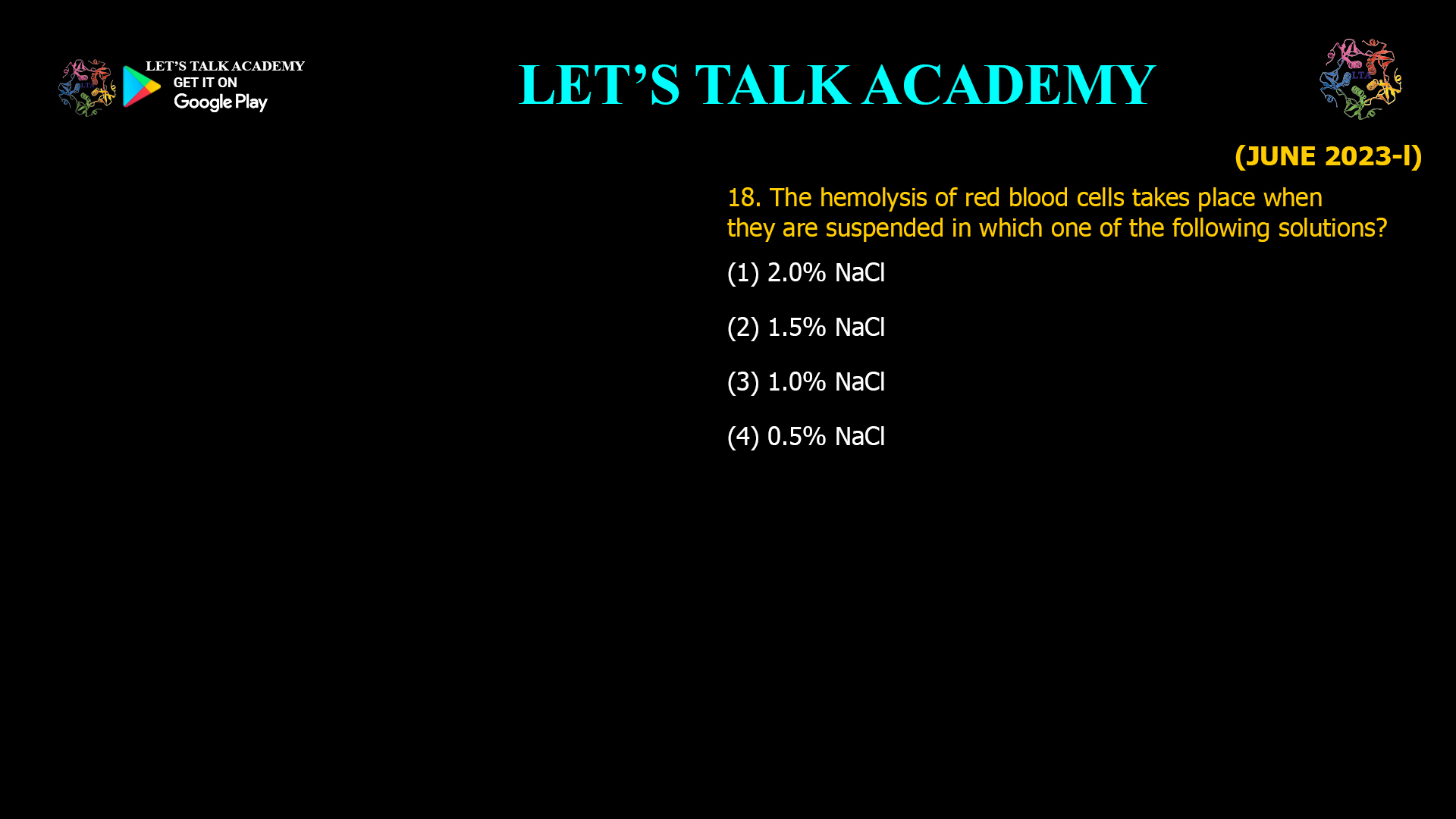
The hemolysis of red blood cells takes place when they are suspended in which one of the following solutions? (1) 2.0% NaCl (2) 1.5% NaCl (3) 1.0% NaCl (4) 0.5% […]
CSIR NET Life Science Previous Year Questions and Solution on Animal Physiology
“Why Menstrual Blood Does Not Usually Contain Clots: The Role of Plasmin”
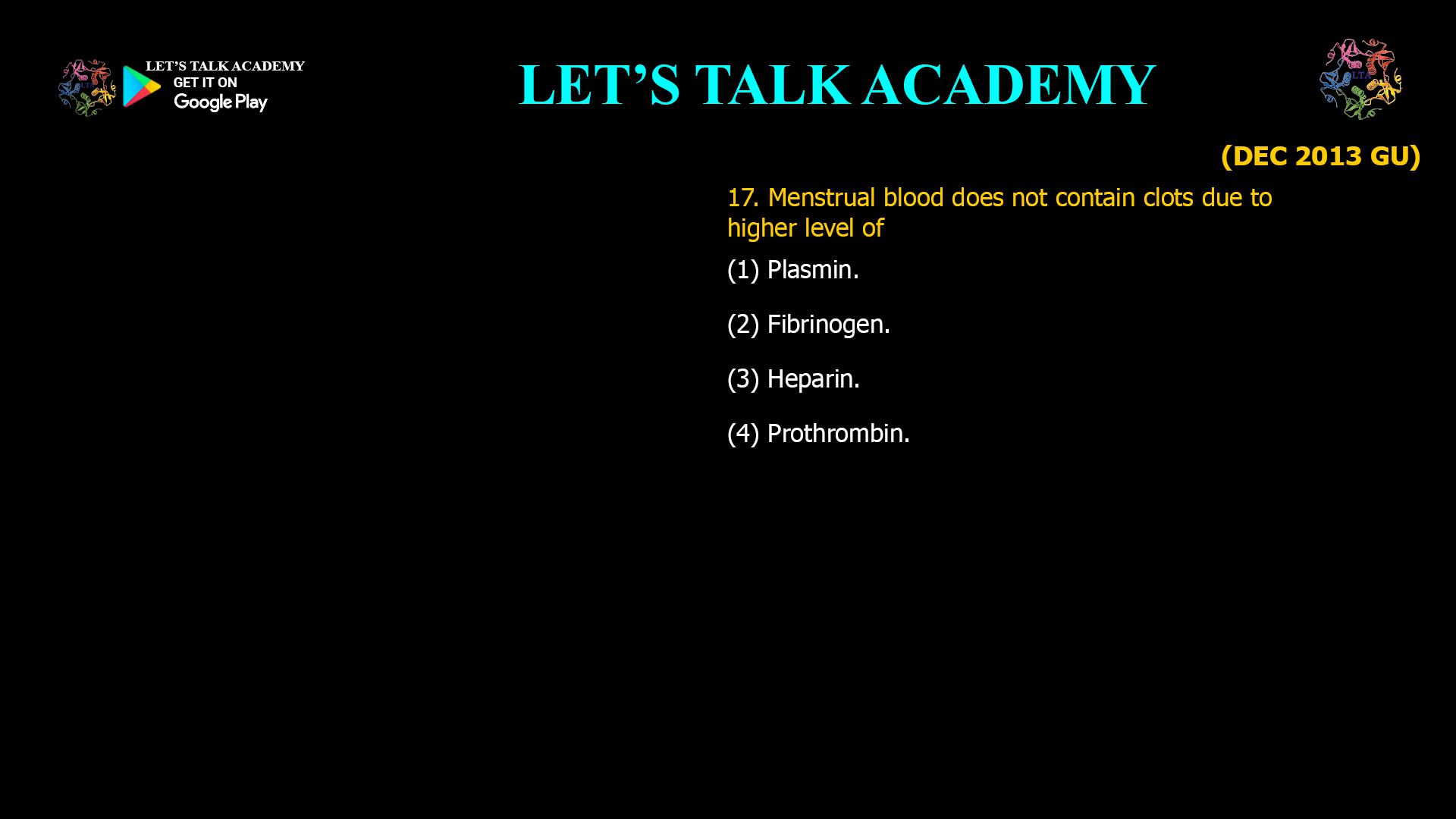
17. Menstrual blood does not contain clots due to higher level of (1) Plasmin. (2) Fibrinogen. (3) Heparin. (4) Prothrombin Introduction Menstrual blood differs from other types of bleeding […]
CSIR NET Life Science Previous Year Questions and Solution on Animal Physiology
“Understanding Bone Marrow Cells and Peripheral Blood: Which Cells Never Appear in Circulation?”
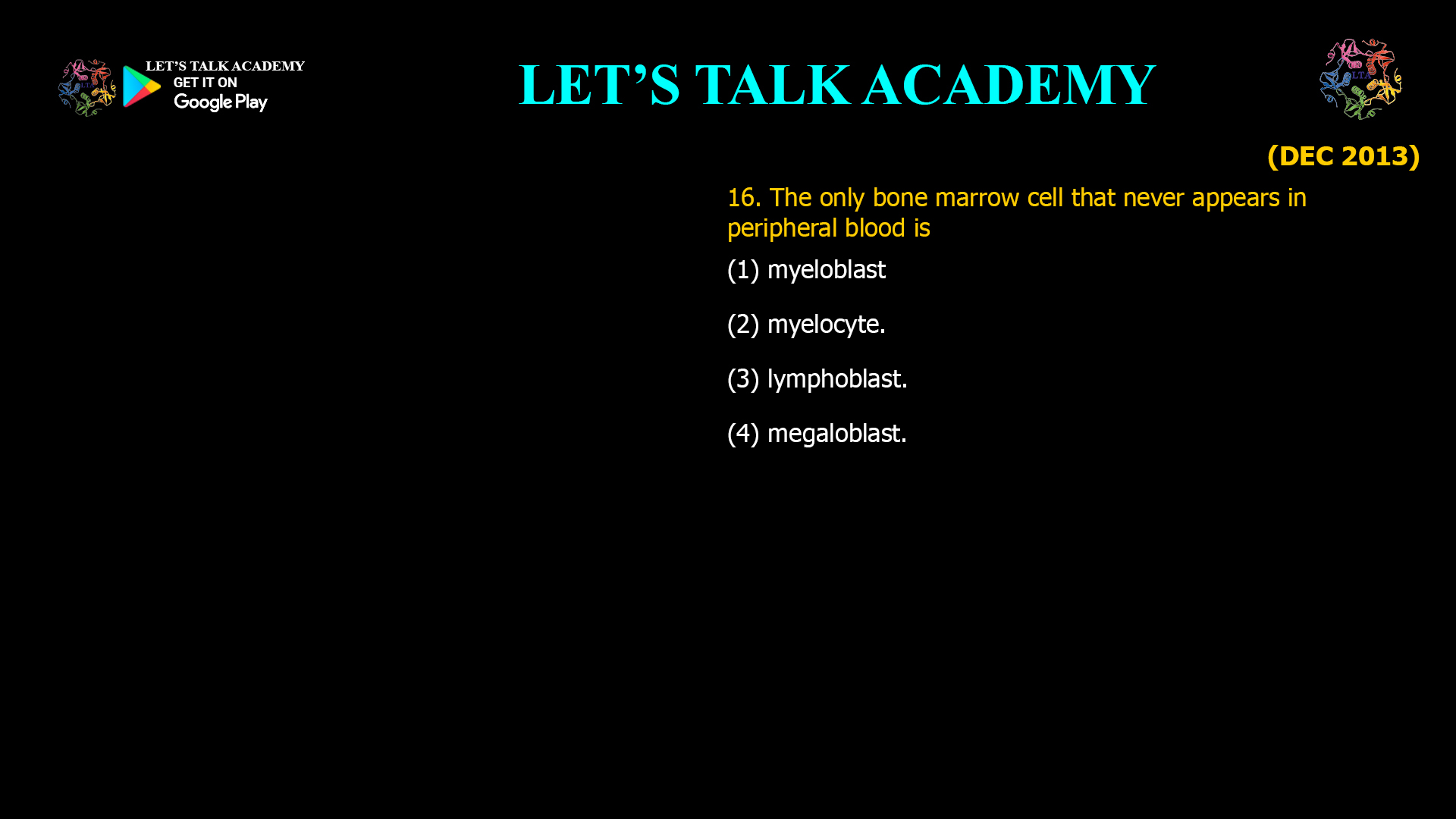
The only bone marrow cell that never appears in peripheral blood is (1) myeloblast (2) myelocyte. (3) lymphoblast. (4) megaloblast. Introduction Blood cell formation or hematopoiesis primarily takes place in […]
CSIR NET Life Science Previous Year Questions and Solution on Animal Physiology
“Effective Methods to Separate Red and White Blood Cells: Density Gradient Centrifugation and FACS Explained”
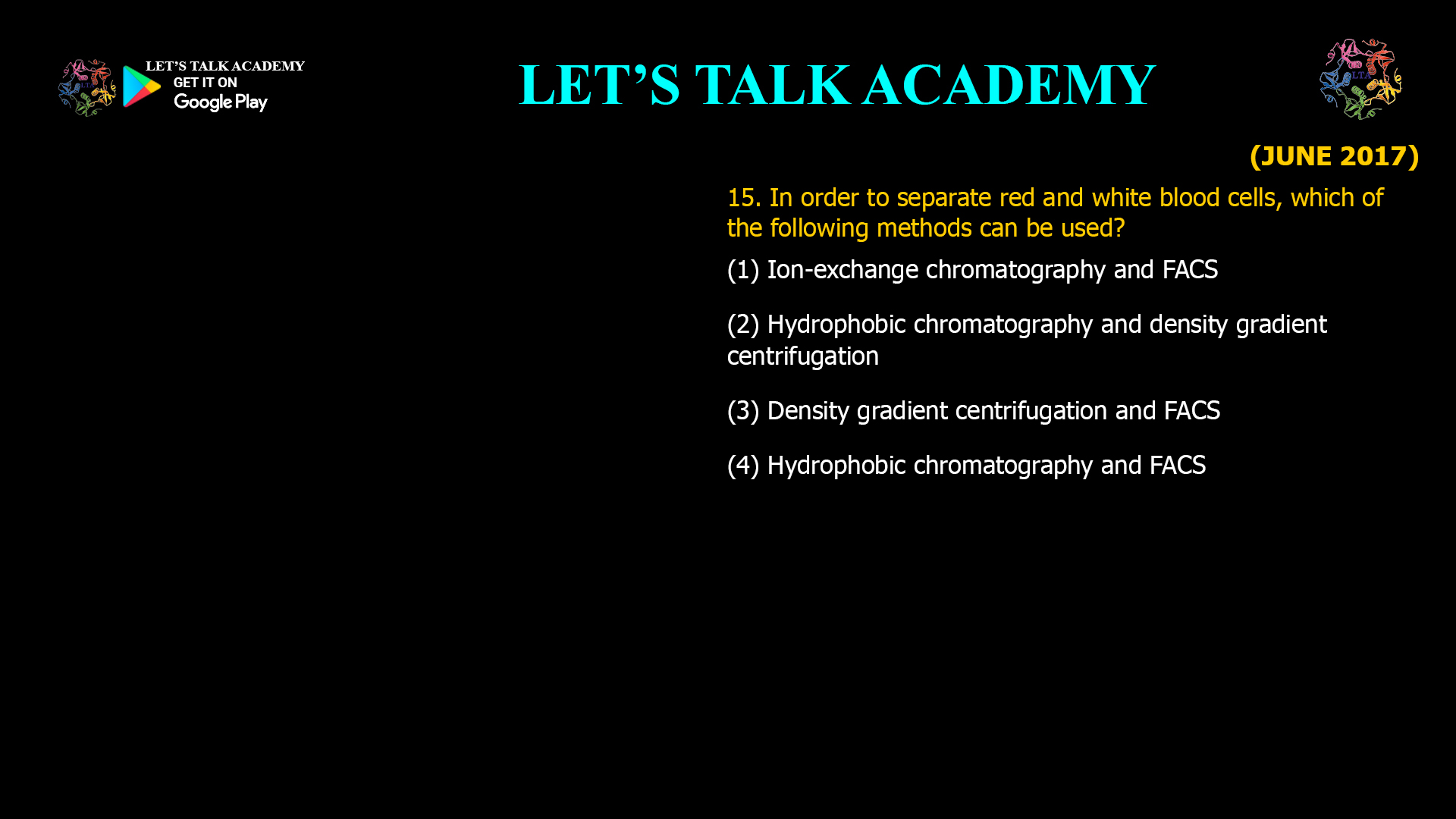
In order to separate red and white blood cells, which of the following methods can be used? (1) Ion-exchange chromatography and FACS (2) Hydrophobic chromatography and density gradient centrifugation (3) […]
CSIR NET Life Science Previous Year Questions and Solution on Animal Physiology
“Vitamins Essential for Red Blood Cell Maturation: The Role of Folic Acid, Vitamin B12, Pyridoxine, and Tocopherol”
The maturation of red blood cells does not depend on (1) folic acid (2) vitamin B12 (3) pyridoxine (4) tocopherol Introduction Maturation of red blood cells (RBCs) is a tightly […]
CSIR NET Life Science Previous Year Questions and Solution on Animal Physiology
“The Most Powerful Buffer System in Blood: Understanding Bicarbonate Buffer”
13. Which one of the following is the most powerful buffer system of blood? (1) Bicarbonate (2) Phosphate (3) Proteins (4) Haemoglobin Introduction Maintaining a stable blood pH (~7.35-7.45) is […]
CSIR NET Life Science Previous Year Questions and Solution on Animal Physiology
“Correcting Common Misconceptions About Blood: Mature RBC Size and Blood Cell Functions Explained”
Which statement is not correct for blood? (1) Mature RBC is of larger size as compare to its precursor cells (2) Platelets play important role in blood clotting (3) Neutrophils […]


