The correct answer is (4) B ⟶ C (Enzyme EB). Introduction Multistep biochemical pathways often involve several enzyme-catalyzed reactions, each with unique kinetic properties. The rate-limiting step determines the overall speed […]
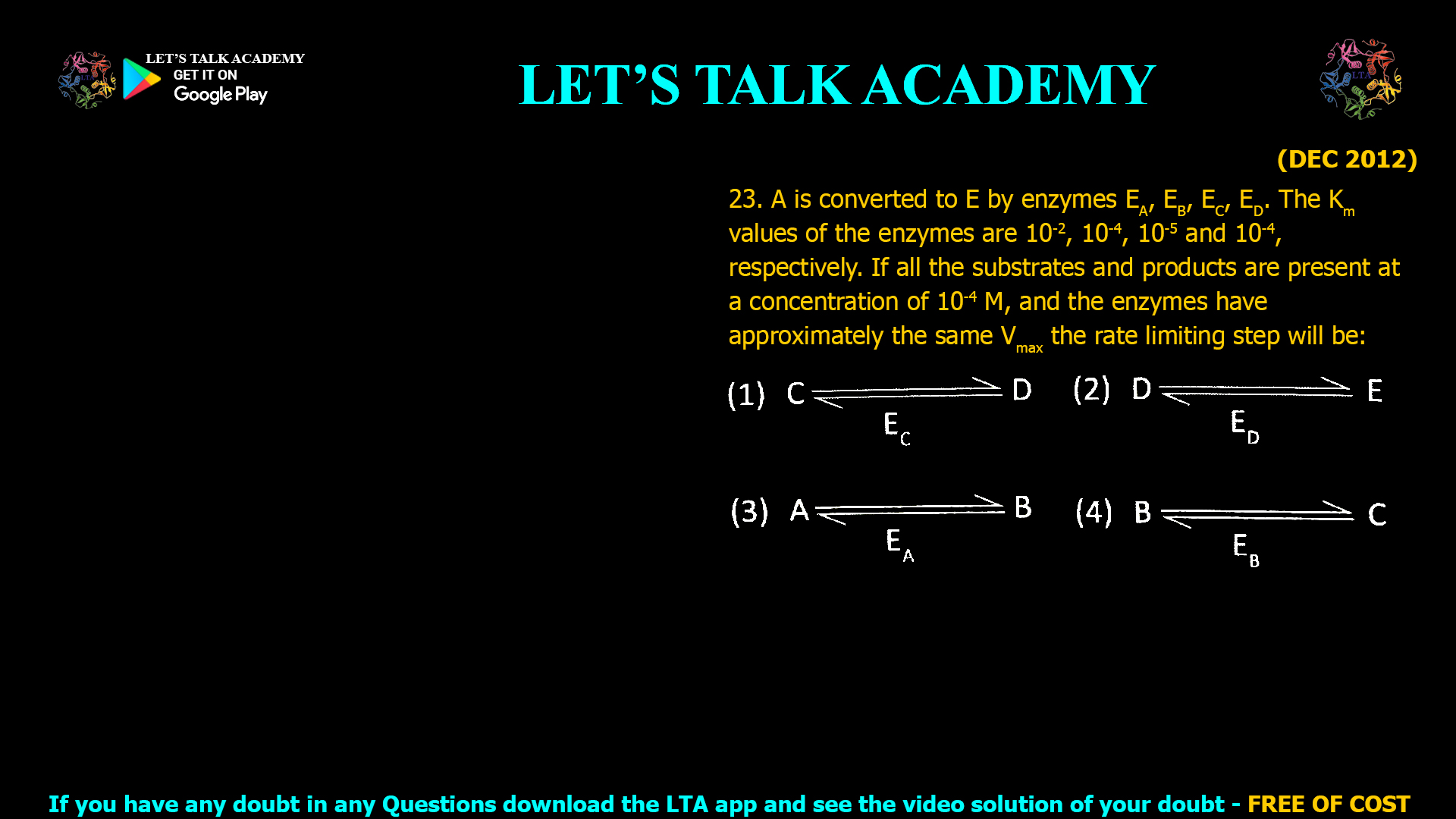
The correct answer is (4) B ⟶ C (Enzyme EB). Introduction Multistep biochemical pathways often involve several enzyme-catalyzed reactions, each with unique kinetic properties. The rate-limiting step determines the overall speed […]
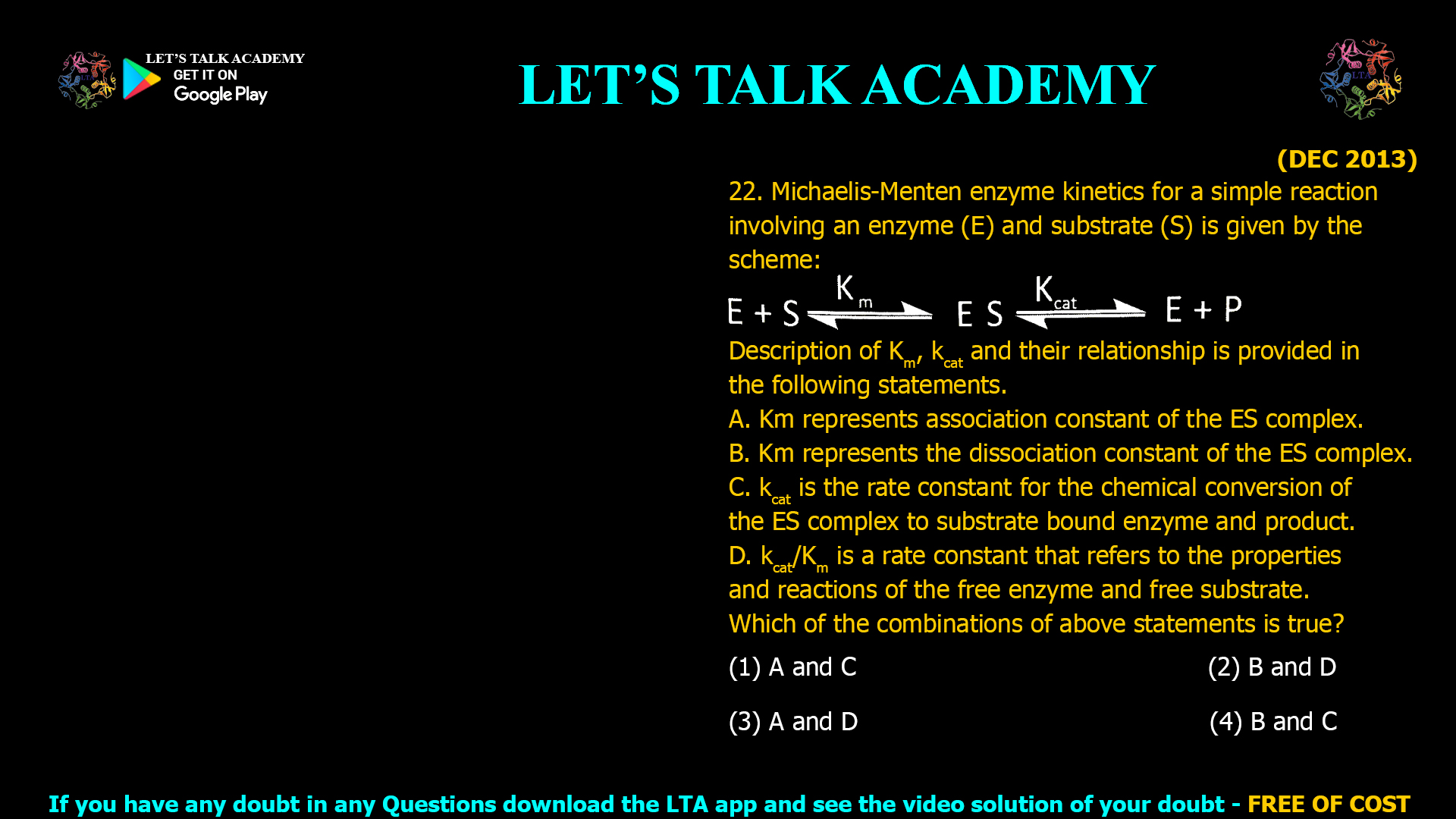
The correct answer is (2) B and D. Introduction Michaelis-Menten kinetics is essential for understanding how enzymes catalyze biochemical reactions. Two critical parameters—Km (Michaelis constant) and kcat (turnover number)—describe how efficiently […]
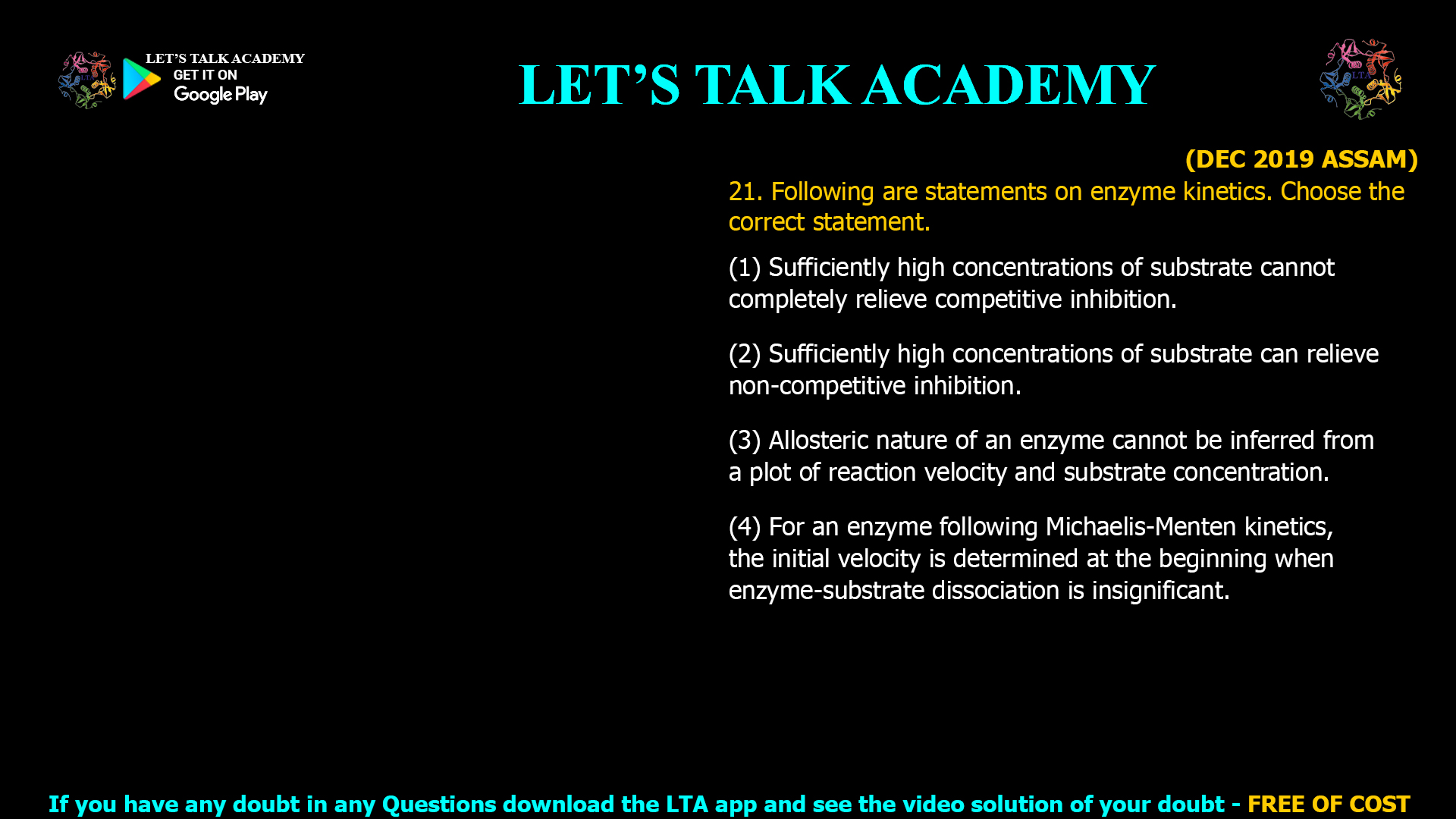
(DEC 2019 ASSAM) 21. Following are statements on enzyme kinetics. Choose the correct statement. (1) Sufficiently high concentrations of substrate cannot completely relieve competitive inhibition. (2) Sufficiently high concentrations of […]

(DEC 2006) 20. The steady state hypothesis for enzyme suggest that (1) Rate of formation of ES complex is equal to rate of breakdown of ES complex (2) Rate of […]
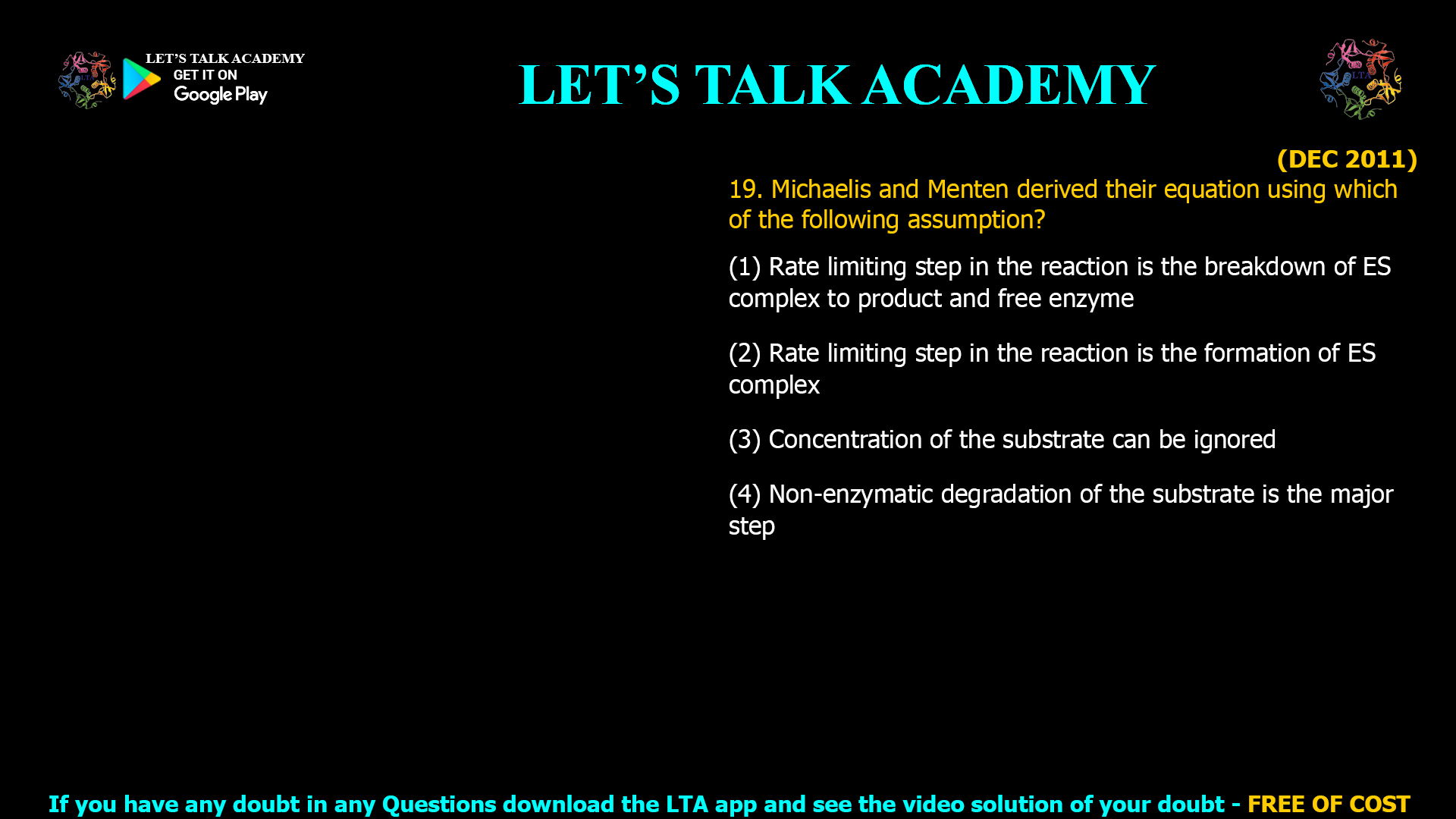
(DEC 2011) 19. Michaelis and Menten derived their equation using which of the following assumption? (1) Rate limiting step in the reaction is the breakdown of ES complex to product […]

(JUNE 2011) 18. A researcher has isolated a restriction endonuclease that cleaves at only one specific 10 base pair site. A) Would this enzyme be useful in protecting cells from […]
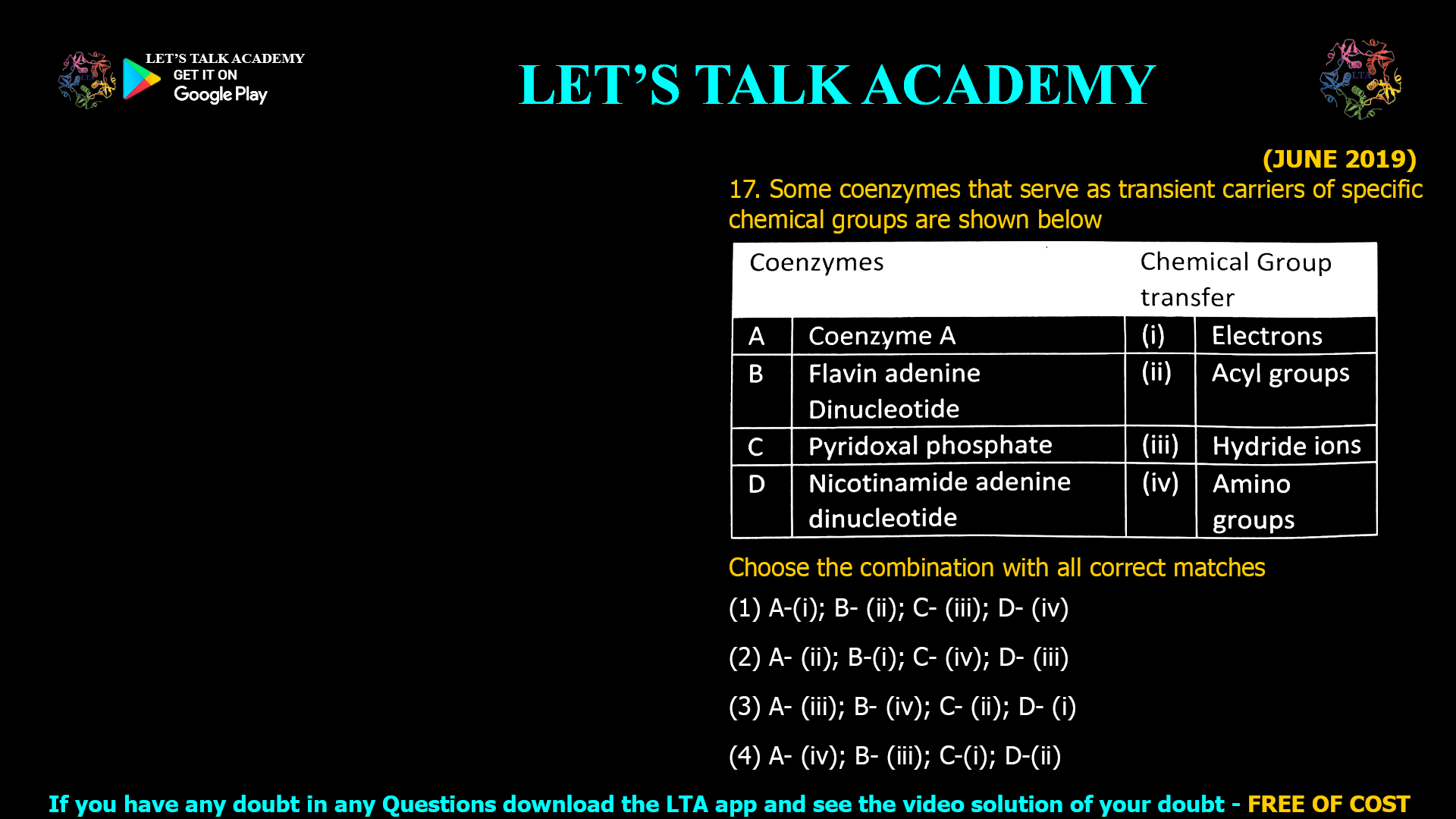
The correct answer is (2) A-(ii), B-(i), C-(iv), D-(iii). Introduction Coenzymes are vital non-protein molecules that partner with enzymes to catalyze a wide range of biological reactions. They often serve as […]

The correct answer is (3) 10. Introduction Understanding the relationship between rate constants and equilibrium constants in enzyme-catalyzed reactions is critical in biochemistry. Enzymes accelerate reactions but do not alter their […]

(NOV 2020-1) 15. The rate constant for conversion of a substrate into the product is 10-4 s-1, while the reverse rate constant 10-6 s-1. An enzyme enhance the rate of […]

(DEC 2017) 14. From the following statements A. Enzymes enhance reaction rates by a factor of 2 to 10. B. The activation energy for a reaction is lowered by enzymes. […]


